

Geothermal
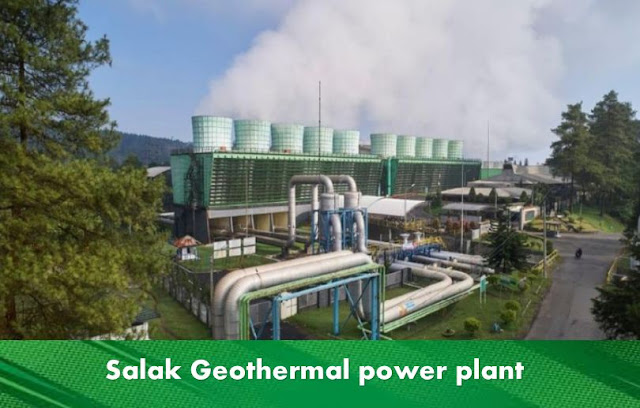
Salak Geothermal power plant- Indonesia
The Salak Geothermal Power Plant is a geothermal power plant located in West Java, Indonesia. It is owned and operated by PT Pertamina Geothermal Energy, a subsidiary of the state-owned oil and gas company, Pertamina.
The Salak Geothermal Power Plant was built in the 1990s, and it began commercial operation in 1994. The plant has a total installed capacity of 377 MW, making it one of the largest geothermal power plants in the world.
The Salak geothermal field is located in the area surrounding Mount Salak, and it is one of the largest geothermal fields in Indonesia, with estimated reserves of over 1 GW. The field is characterized by high temperatures and pressures, and it contains both liquid and vapor-dominated reservoirs.
The Salak Geothermal Power Plant is an important contributor to Indonesia’s energy mix, providing a significant amount of electricity to the Java-Bali power grid. In addition to its commercial operation, the plant is also involved in research and development activities related to geothermal energy, including exploration, drilling, and reservoir management.
Overall, the Salak Geothermal Power Plant represents an important investment in Indonesia’s energy infrastructure, and it has helped to establish the country as a global leader in geothermal energy development. Geothermal power is an important source of renewable energy in Indonesia, and the government has set ambitious targets for the development of geothermal energy in the country.
History of Salak Geothermal power plant- Indonesia
The Salak Geothermal Power Plant has a relatively long history, dating back to the 1970s when the Indonesian government began exploring the country’s geothermal resources as a potential source of electricity.
In the early 1980s, a consortium of companies including Unocal and Chevron began developing the Salak geothermal field. The first exploratory well was drilled in 1983, and by the mid-1980s, the consortium had drilled several more wells and completed a pilot plant.
In 1987, the Indonesian government awarded Pertamina, the state-owned oil and gas company, a contract to develop the Salak geothermal field. Pertamina formed a subsidiary, Pertamina Geothermal Energy, to manage the project.
Construction of the Salak Geothermal Power Plant began in the early 1990s, and the plant began commercial operation in 1994. At the time, it was one of the largest geothermal power plants in the world, with an installed capacity of 270 MW. In the years since, additional units have been added to the plant, bringing its total installed capacity to 377 MW.
Today, the Salak Geothermal Power Plant is a key component of Indonesia’s energy mix, providing a significant amount of electricity to the Java-Bali power grid. The plant is also involved in research and development activities related to geothermal energy, and it has helped to establish Indonesia as a global leader in geothermal energy development.
Salak Geothermal power plant- Indonesia, operated by
The Salak Geothermal Power Plant in Indonesia is operated by PT Pertamina Geothermal Energy (PGE), a subsidiary of PT Pertamina (Persero). Pertamina Geothermal Energy is the largest geothermal energy producer in Indonesia, with a total installed capacity of more than 1,300 MW. The Salak Geothermal Power Plant is located in the Mount Salak area in West Java, Indonesia and has a capacity of 377 MW, making it one of the largest geothermal power plants in the world.
Salak Geothermal power plant- Indonesia, financial and international investment
The Salak Geothermal Power Plant in Indonesia has received financial and international investment support over the years.
In 2014, the Japan International Cooperation Agency (JICA) provided a loan of JPY 19.98 billion (approximately USD 192 million) for the expansion of the Salak Geothermal Power Plant. The loan was provided under the scheme of “Project Finance for Japanese Companies Overseas,” which aims to promote Japanese technology and know-how overseas.
In addition, in 2016, the International Finance Corporation (IFC), a member of the World Bank Group, provided a loan of USD 150 million to PT Pertamina Geothermal Energy for the development of its geothermal power plants, including the Salak Geothermal Power Plant. The loan was aimed at helping Indonesia meet its growing energy demands while reducing its carbon footprint.
The Salak Geothermal Power Plant has also received investment from other international financial institutions, such as the Asian Development Bank (ADB), the European Investment Bank (EIB), and the Multilateral Investment Guarantee Agency (MIGA).
These financial and international investment support have helped to develop and expand the Salak Geothermal Power Plant, making it a significant contributor to Indonesia’s renewable energy mix.
Salak Geothermal power plant- Indonesia, energy contribution
The Salak Geothermal Power Plant in Indonesia is a significant contributor to the country’s renewable energy mix. With a capacity of 377 MW, it provides a substantial amount of electricity to the grid, helping to meet Indonesia’s growing energy demands.
According to PT Pertamina Geothermal Energy, the Salak Geothermal Power Plant generated more than 2,900 GWh of electricity in 2020, which is equivalent to the electricity consumption of around 1.1 million households in Indonesia. The plant’s contribution to the country’s energy mix also helps to reduce carbon emissions, as geothermal energy is a clean and renewable source of power.
Overall, the Salak Geothermal Power Plant plays a vital role in Indonesia’s efforts to increase its renewable energy capacity and reduce its dependence on fossil fuels. The country has set a target of achieving 23% renewable energy in its energy mix by 2025, and geothermal energy is expected to play a significant role in achieving this target.
https://www.exaputra.com/2023/04/salak-geothermal-power-plant-indonesia.html


 As shown at left, it’s possible to use helium ballons to lift a wind turbine high into the troposphere, where wind currents are stronger and more stable than they are near the Earth’s surface. Experiments with such devices have been being conducted since long before 2GreenEnergy came on the scene in 2009.
There are intrinsic limitations to this approach, however. Long tethers can run afoul of aviation, and they face extreme stress and operational complexity. Translation: huge costs, which is why we don’t see these in commercial use.
Did China test one of these? Probably. About 20 years ago.
 I’m sure there are tens of millions of idiots who believe what U.S. House Speaker Mark Johnson said at left. Yet the majority of Americans understand that:
ICE is a lawless institution.
Trump consistently violates the Constitution by usurping the power that should reside in congress.
Our illegal war in Iran is endangering the entire planet, as is our war on clean energy.
Violent crime has been falling steadily since the early 1990s; Republicans taking credit for it is a lie.
Causing (some) voters to believe the lie that our elections are rigged endangers our democracy. So is voter suppression.
Committing war crimes like the bombing of small boats off the coast of Venezuela helps to create a lawless world.
 At left is the type of logic that can appeal only to a MAGA Trump supporter.
Ukraine is fighting …. for its life after having been invaded by a powerful war criminal.
Trump is fighting …. to stay out of prison after having attempted to overthrow the U.S. federal government and raping children.



-
Climate Change1 year ago
Guest post: Why China is still building new coal – and when it might stop
-
Greenhouse Gases1 year ago
Guest post: Why China is still building new coal – and when it might stop
-

 Greenhouse Gases2 years ago
嘉宾来稿:满足中国增长的用电需求 光伏加储能“比新建煤电更实惠”
-

 Climate Change2 years ago
嘉宾来稿:满足中国增长的用电需求 光伏加储能“比新建煤电更实惠”
-
Climate Change2 years ago
Bill Discounting Climate Change in Florida’s Energy Policy Awaits DeSantis’ Approval
-

 Renewable Energy10 months ago
Sending Progressive Philanthropist George Soros to Prison?
-
Greenhouse Gases1 year ago
嘉宾来稿:探究火山喷发如何影响气候预测
-

 Carbon Footprint2 years ago
US SEC’s Climate Disclosure Rules Spur Renewed Interest in Carbon Credits