

For years, fisherman Sami Uddin lived and worked on a small patch of coastal land in southeastern Bangladesh – until the site was earmarked for development including a new cyclone-resistant deep-sea port, funded by Japan in the name of climate change adaptation.
“The development is [meant to help us] all, but the reality is that it takes our homes, professions, and they are forcing us to be evicted from our village,” Uddin, 51, said close to the port site in Matarbari, adding that new fishing restrictions nearby have fuelled local people’s anger.
The deep-sea port – being built next door to a new coal-fired power plant, also financed by Japan – is a centrepiece of Bangladesh’s ambitions to develop a “Singapore-style” economic hub on its climate-vulnerable Bay of Bengal coastline, a low-lying belt of densely populated land, prone to deadly tropical cyclones and flooding.
Funded with a $726-million concessional loan, half of which was counted by Japan as climate adaptation finance, the port marks the biggest single climate adaptation project being funded by a wealthy country in 2023, according to an analysis by Climate Home News of the latest data compiled by the Organisation for Economic Co-operation and Development (OECD).
But like other foreign-funded projects classed as “climate adaptation”, Climate Home’s reporting raises questions about whether the port investment will help climate-vulnerable local communities cope with the effects of more extreme weather and rising seas.
Japan’s development agency said the resilience measures to protect the port are crucial to preventing economic shocks and the disruption of essential services in case of disasters, while some interventions could also keep local people safer when storms hit.
COP30 president warns of ‘dystopian scenario’
Climate adaptation is set to be a key theme at next month’s COP30 UN climate summit in Brazil, and calls are growing for rich nations to increase their support for projects to help developing countries that are bearing the brunt of worsening climate impacts.
COP30 president André Aranha Corrêa do Lago said last week that the UN talks should take concrete steps to help vulnerable people adapt to a warming world and avoid a “dystopian scenario” in which only the rich can afford to protect themselves from climate threats.
But with just a fraction of needs for adaptation funding currently being met, according to the latest UN estimates, climate campaigners told Climate Home News that mega-projects like Matarbari are not the best way to protect the world’s poorest people from climate change.
-
Hurricane Melissa’s destruction shows need for climate resilience push
Innovative policies on debt relief and investment could plug finance gaps that are leaving small island nations exposed to climate disasters and rising seas -
Climate adaptation can’t be just for the rich, COP30 president says
Vulnerable people should not be left to fend for themselves in a warming world, Brazil’s COP president says, calling for the UN climate summit to agree concrete ways to help them


They are also sounding the alarm about how a lack of uniform reporting rules and poor transparency in the data give countries free rein over what they label as adaptation finance.
Some donors “cheat” by focusing more on inflating numbers than on delivering real impact, said John Nordbo, senior climate advisor at NGO CARE Denmark and co-author of the annual “Climate Finance Shadow Report”.
“They label large projects with little or no adaptation component as ‘climate finance’,” he told Climate Home News. “It’s misleading – and when exposed, it undermines trust in the entire global climate regime.”
The $363 million provided by Japan for the Matarbari port was counted as adaptation finance under official data used to measure whether donors are meeting their promises on climate finance made at UN talks. It accounted for an estimated 15% of Japan’s total contributions to climate adaptation in 2023 – the latest year for which data is available.

“No one must be left behind”
When, at COP26, Japan committed to doubling its assistance for adaptation to $14.8 billion in public and private finance by 2025, its then Prime Minister Fumio Kishida told fellow world leaders “no one must be left behind as we confront the issue of climate change”. He added that investments would focus on disaster risk reduction.
Japan said the delivery of that pledge was “on track” in its latest assessment report for the UN earlier this year.
But Climate Home’s analysis of the data from the OECD – the main body tracking global climate finance flows from industrialised nations – found that in 2023 Tokyo channelled at least a third of its bilateral adaptation finance into large-scale infrastructure projects and broad health programmes that lacked clear climate adaptation objectives.
It counted loans worth hundreds of millions of dollars for the construction of mass rapid transit in Jakarta and the rollout of universal health coverage in Egypt as adaptation finance, for example. It offered no explanation in project documents of how either initiative would strengthen resilience to climate impacts.
It also reported a $200-million grant to the global vaccine alliance, Gavi, to support its COVID-19 response as having “significant” relevance for climate adaptation. In an assessment of Gavi in 2024, the Multilateral Performance Network described as a “serious challenge” the fact that addressing climate change was not yet a core objective within the alliance’s strategy.
Md Shamsuddoha, a former climate negotiator for Bangladesh who now leads the Center for Participatory Research and Development, said Japan repackages “pure investment projects” for infrastructure development as climate finance to show it is meeting its commitments made under the UN climate regime.
“Japan should not do this, because that is no climate finance at all,” Shamsuddoha added.
Japan’s Ministry of Foreign Affairs and its overseas aid arm, the Japan International Cooperation Agency (JICA), were approached for comment on the adaptation relevance of these projects, but had not responded by the time of publication.
Roadbuilding and energy projects
Climate Home’s analysis found Japan was not alone among major donors in labelling funds for large transport and energy infrastructure projects, or broad health programmes, as bilateral climate adaptation finance, which tends to be provided in grant form or as highly concessional lending to the poorest nations.
France and South Korea have used a similar approach, according to our analysis of the data from the OECD.
The three countries’ bilateral funding for those projects totalled at least $4 billion in 2023, but South Korea and France do not disclose the exact portion they have counted as climate adaptation finance.
According to the OECD data, France described loans provided for energy projects in developing countries as having a primary objective of adaptation, without giving a clear explanation of how they would boost climate resilience. They include strengthening electricity grids in Pakistan and Argentina, a hydropower plant in Tanzania and work to develop decarbonisation plans in Uzbekistan.
South Korea is not part of the group of developed countries under the UN climate regime and is therefore not obliged to provide climate finance to poor nations. But, in recent years, the country – one of the world’s largest economies – has hailed its “significant” support to the Global South for climate adaptation interventions.
Transport projects made up a significant portion of South Korea’s adaptation spending in developing countries in 2023. It counted the construction of a railway bridge in Bangladesh, a major highway in Vietnam and road networks in Cambodia and the Philippines among its top adaptation projects.
Hanna Hakko, a senior policy advisor at think-tank E3G, said developing countries have a critical need to build new resilient infrastructure and climate-proof what they already have.
“However, there is a need for clarity and guardrails around what counts as resilient infrastructure and to ensure impacted communities benefit from these projects and environmental impacts are minimised,” she added.
The climate ministries of South Korea and France had not responded to Climate Home’s request for clarifications on their adaptation finance at the time of publication.
Limited transparency in reporting system
Other donor governments such as Denmark, Switzerland and Finland take a more conservative approach, only counting pure climate adaptation activities or funding donated as grants in their spending.
But limited transparency in the reporting system makes it difficult to tell how much money overall is directed at efforts that truly help the most vulnerable communities to better cope with the escalating impacts of climate change.
Countries disclose brief and vague descriptions of the projects, often failing to offer details on their relevance for climate adaptation, Climate Home found.
Foreign aid cuts put adaptation finance pledge at risk, NGOs warn
Some European countries, including Germany, France and Italy, did not even identify a specific project or recipient nation for non-concessional funding worth hundreds of millions of dollars that was tagged as adaptation finance.
Ian Mitchell, a senior policy fellow at the Center for Global Development, said the problem lies with setting international goals to provide a certain amount of finance without a broadly agreed definition of what that finance can consist of.
“It is a pretty damaging state of affairs because these agreements are reached to motivate other countries to undertake climate action,” he added.
Focus on plugging adaptation gap
At the COP26 climate summit in Glasgow four years ago, developed countries committed to doubling adaptation funding for developing nations from 2019 levels to reach at least $40 billion by 2025.
That promise now looks set to be broken. According to the latest UN Environment Programme Adaptation Gap Report, international public adaptation funding from wealthy governments stood at only $26 billion in 2023 – falling slightly from the previous year.
UNEP’s report, released on Wednesday, warns that this year’s target “will be missed if current trends continue”.
Since 2023, widespread cuts to aid budgets amid geopolitical tensions and fiscal pressures have likely put the Glasgow goal further out of reach. Least-developed countries (LDCs), meanwhile, are pushing for a new goal to be set at COP30 to boost adaptation finance to about $100 billion a year by 2030.
Brazil’s COP presidency also wants to elevate climate adaptation, which has long missed out on political attention and funding directed instead to efforts to cut greenhouse gas emissions.
The renewed focus on adaptation in Belém could also increase scrutiny of how donor countries are allocating climate finance in countries like Bangladesh, and whose interests they are serving.
Climate-friendly coal plant?
Japan’s investments in Matarbari, for example, come as the country seeks to develop its economic ties with Bangladesh and counter China’s growing influence in the region.
Even the 1,200-megawatt coal-fired power plant, which JICA has financed with loans worth more than $2 billion, was counted by Japan as climate finance. It said the technology installed by Japanese firms made the plant more efficient, leading to a reduction in emissions compared to a conventional station.
The plant is expected to spew into the atmosphere nearly 7 million tonnes of carbon dioxide a year – equivalent to the total annual emissions generated by a small country like Mauritius.
As ships needed to deliver coal to fuel the plant, the developers built a port and a navigation channel connecting it to the ocean. Those facilities are now being expanded with the construction of the neighbouring deep-sea commercial port, which Japan agreed to fund in 2023 with a $726-million concessional loan.
Expected to be completed in 2029 by Japanese companies, the project aims to increase Bangladesh’s ability to handle cargo and spur economic activity in the area.
Takahiro Okamoto, who oversees the project at JICA’s Bangladesh office, said the inclusion of protections, like breakwaters, retaining walls and raised embankments, will shield the port and its access road from the impact of storm surges and cyclones.
“By allowing larger, more efficient ships to dock directly, the project reduces the country’s reliance on smaller, vulnerable ports and trans-shipment hubs in other countries, which might be more susceptible to disruptions from climate change and other factors,” Okamoto added.
Loss of salt and shrimp farms
Amid the bustle of construction activity, local residents in the area were sceptical about whether the development will make them better prepared for tidal surges or more frequent and severe storms.
Even if it does, they said the cost to their communities has been too high.
Over a third of the salt and shrimp farms in the area would be lost as a result of the construction, an impact assessment carried out by JICA found, adding that the mega-project would affect an area inhabited by almost 800,000 people.

Habibur Rahman, an unemployed 24-year-old man, said the development was not offering stable job opportunities for locals, while the coal power plant was causing growing pollution and damaging fishing activities.
“The [port] authority did not take a single project to develop our lives,” Rahman said.
Chittagong Port Authority and the Shipping Ministry did not reply to requests for comment.
JICA’s Okamoto said contractors are encouraged to employ local residents “as much as possible”, while 500 people have so far been trained under a programme that supports alternative income-generating activities.
He added that embankments built along the access road to the port to protect it would also serve as evacuation routes in disasters and that further protective measures may be considered as part of a separate plan being worked on by the Bangladesh government.
In the meantime, rising sea levels and stronger tidal flooding continue to chip away at the coast and swallow homes in the area, local media have reported.
“In no way [is] this an adaptation or resilience project,” Shamsuddoha said of the Matarbari development, saying it did not represent “resilient livelihoods” that would support coastal communities.
While developed countries pour their money into headline climate investment projects, the human dimension of adaptation is “completely missing”, he added.
The post Business-as-usual: Donors pour climate adaptation finance into big infrastructure, neglecting local needs appeared first on Climate Home News.

Participants at COP31 in Antalya will have a “duty” not to interfere in Türkiye’s internal affairs under the country’s hosting deal with the UN, reviving a clause dropped for last year’s climate summit in Brazil that human rights groups warn could put activists at risk.
Türkiye has faced growing criticism from human rights groups over the jailing of opposition figures, journalists and activists and imposed a blanket protest ban around July’s summit of the NATO military alliance in Ankara.
The contested provision is included in the binding agreement between the UN climate secretariat and the Turkish government that sets out responsibilities over logistical arrangements and details participants’ rights and obligations.
The document, signed in June but only made public on Wednesday, gives accredited COP31 attendees immunity from legal action over what they say, write or do in connection with the conference. Climate Home News understands that this safeguard can be applied to what takes place both inside and, in certain circumstances, outside of the UN-controlled COP “Blue Zone”. For the first time, this protection explicitly continues after the summit ends.

But participants enjoying these “privileges and immunities” also have a duty to respect Türkiye’s laws and regulations and not to interfere in its internal affairs, the agreement states. Rights groups fear its wide-ranging formulation could be used to discourage criticism of the host government.
Climate Home News understands that whether an action is covered by the immunity or infringes on the host’s internal affairs would be evaluated on a case-by-case basis, with close coordination between the country’s authorities and the UN climate change body.
A separate provision states that immunity shall be waived where the UN believes it would “impede the course of justice”.
‘Chilling effect’
Those same provisions featured in the host country agreements for COP28 in the United Arab Emirates and COP29 in Azerbaijan, both regarded as authoritarian regimes, before being dropped for COP30 in Brazil.
Ann Harrison, climate justice policy advisor at Amnesty International, said it is “extremely disappointing” that the COP31 agreement re-introduced clauses that could “hinder the ability of human rights defenders and civil society organisations to conduct their work safely”.
COP31 electrification pledge leaves out clean power commitment
She added the provisions could have a “wider chilling effect” on rights to freedom of expression and peaceful assembly, given concerns over the human rights situation in Türkiye, including laws that “have shrunk civic space” and their “abusive” implementation by authorities.
The UN climate change body declined to comment.
Rights groups have documented blanket protest bans, unlawful use of force by the police and prosecutions of journalists, human rights defenders and lawyers across Türkiye in the last year.
Arrests and protest bans
Last July, environmental activist Esra Işık was sentenced to more than two years for “resisting” a public official over what Amnesty International described as a peaceful protest against an urgent expropriation order linked to the expansion of coal mining in south-western Türkiye. She is appealing the conviction.
Ahead of a summit of the NATO alliance in the capital Ankara in July, authorities put in place a 13-day blanket ban on demonstrations, citing “national security”, and arrested over 200 people. Human Rights Watch said the crackdown showed Türkiye’s “ruthless intolerance of freedom of speech and assembly”.
Earlier this month, Turkish police detained dozens of people as part of what rights groups described as the government’s widening crackdown on LGBTQ+ activists and venues.
Questioned by media as to how he would guarantee the right to protest at COP31, Kurum said earlier in September that his team would “try to meet” any request they receive from civil society and give them “a free space to express themselves”.
“Don’t worry, thinking you will not be able to voice your opinions or really share your thoughts,” he said in an attempt to reassure campaigners, adding that he had put former deputy environment minister Mehmet Birpinar in charge of liaising with civil society.
Civic space needed
Camilla Pollera, human rights and climate change campaigner at the Center for International Environmental Law (CIEL), said meaningful participation at COP31 is fundamental to the legitimacy of climate action.
“At a climate summit, civil society participation necessarily includes being present, speaking out, scrutinising governments’ decisions and climate policies, and advocating for communities most vulnerable to climate change,” she added.
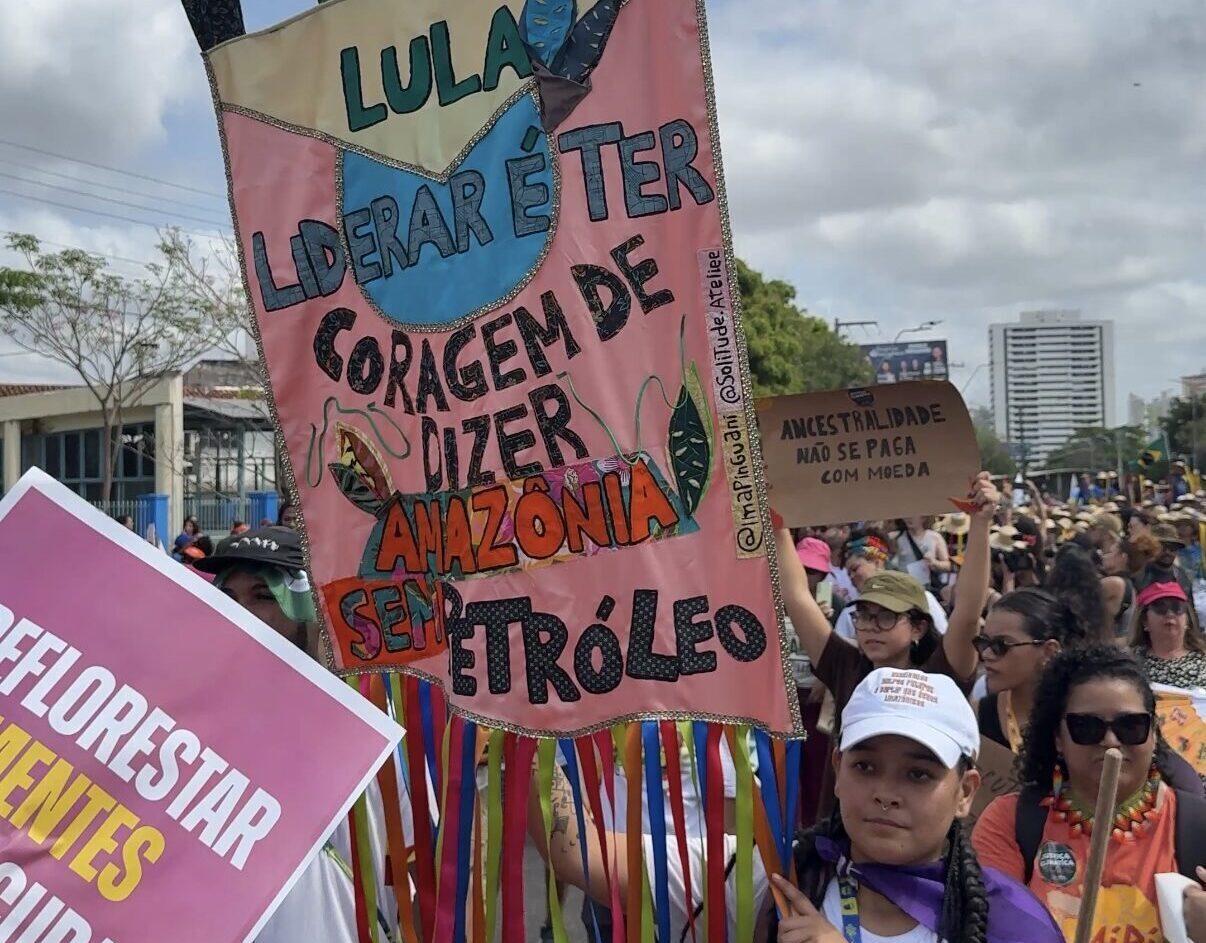
At last year’s COP30 summit, thousands of Indigenous people and climate activists peacefully marched through the Amazonian city of Belém in the first major demonstration outside the UN venue in four years. Smaller-scale demonstrations were largely confined to the “Blue Zone” at COP27 in Egypt, COP28 in the UAE and COP29 in Azerbaijan.
In two other separate incidents in Belém, members of the Munduruku tribe blocked access to the conference centre for hours, demanding an end to development projects in their ancestral land, and protesters stormed through the venue clashing with UN security officials.
The COP31 hosting agreement keeps some of the safeguards previously hailed by civil society groups. The government and the UN secretariat commit to upholding “the fundamental human rights” of all participants in the agreement’s preamble.
Under the deal, Türkiye also needs to ensure that security personnel follow “the highest ethical and professional standards and are expected to behave with integrity and respect”.
The post COP31 attendees told not to interfere in Türkiye’s “internal affairs” appeared first on Climate Home News.
COP31 attendees told not to interfere in Türkiye’s “internal affairs”
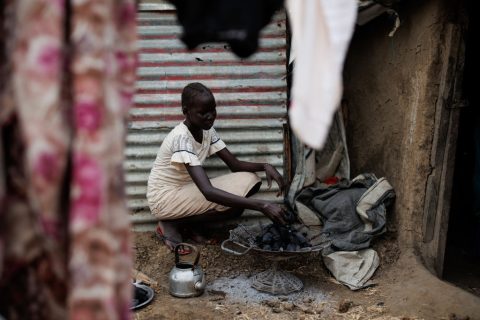
As rising seas submerge growing swathes of land, countries that lose territory should still keep their national boundaries, sovereign rights and UN membership, according to a political declaration adopted at the UN General Assembly in New York on Thursday.
The declaration, which was championed by climate-vulnerable small island states, affirms “the presumption in favour of continued statehood” in the face of sea level rise fuelled by climate change, and urges countries to work together to assist communities affected by encroaching oceans.
Speaking at a high-level UN meeting to address the existential threats posed by sea level rise, Cabo Verde’s Prime Minister Francisco Carvalho, one of the initiative’s co-facilitators along with Australia, said the adoption of the text by consensus sends “a message of hope”.
“This declaration has a very special meaning. For us, sea level rise is neither a distant threat nor a theoretical concern,” he said, adding that rising seas put at risk key infrastructure, water resources and economic growth in small island states.
In the Pacific, sea levels have risen at twice the global rate, dramatically increasing coastal flooding events from two to 20 a year in the Republic of the Marshall Islands, and from zero to 102 events per year in American Samoa, according to the World Meteorological Organization (WMO).
Surangel Whipps Jr., president of the Pacific island of Palau, said the summit in New York represents a “moment of international solidarity”, and highlighted that small island states will remain permanent members of the UN.
-
Push for cooking to be part of COP31’s electrification agenda
The President of Kenya and the British climate envoy said Africa should use the global electrification push to roll out clean cooking -
Germany unveils plan to end use of fossil fuels in energy sector by 2045
Germany became the third country to publish a roadmap to phase out fossil fuels after France and the Netherlands, as the UN chief calls on all governments to follow -
UN Climate Summit: UN chief says world has tools to end fossil fuel age
At the UN Secretary-General’s climate summit in New York, countries shared their energy transition plans while Nepal and island nations advocated for more international support

Declaration recognises statehood
An advisory opinion by the world’s top maritime court, the International Tribunal on the Law of the Sea (ITLOS), first upheld in 2024 that countries do not have to shrink their maritime borders even if they lose land territory due to sea level rise. This was reiterated by the International Court of Justice in last year’s landmark ruling on the climate obligations of states.
The new declaration endorsed by all governments at the UN General Assembly stresses that sea level rise “is not a distant scenario but a real and lived experience for many”, and notes that international law must be implemented in global responses to rising seas.
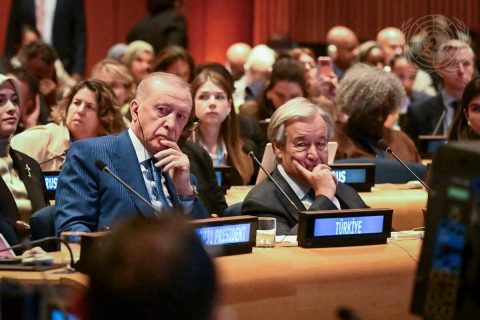
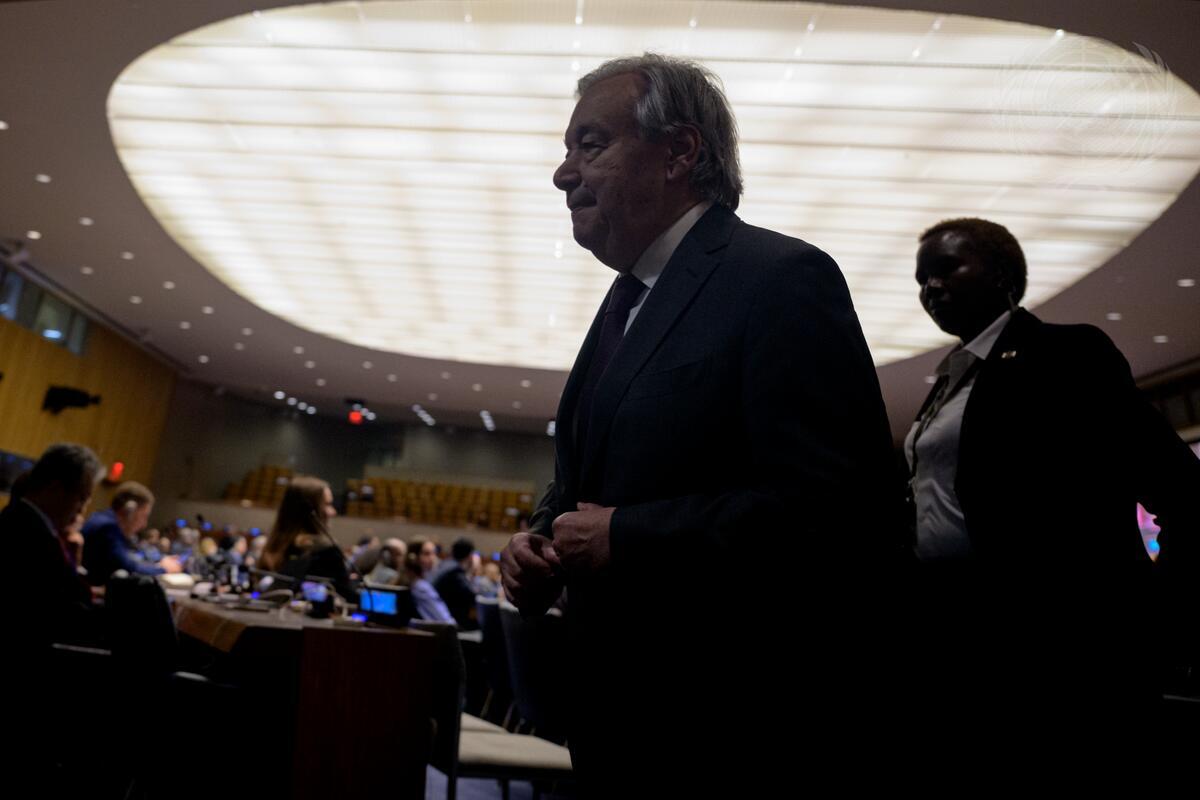
UN Secretary-General António Guterres said the “milestone must now be translated into action”, adding that the declaration should encourage an “ongoing dialogue” at the “highest possible level” leading to practical outcomes. Pacific islands have proposed an international treaty on sea level rise that would provide more legal certainty.
“Those on the frontlines must be front and centre on every decision. We cannot allow countries and cultures to vanish beneath the waves,” he said. “The SOS has gone out. The world must answer.”
At regional summit, Pacific islands ask for COP31 support for clean energy and finance
Goodwin Friday, prime minister of St. Vincent and the Grenadines, said measures to protect vulnerable states will require adequate finance. “Investing in resilience now is more cost-effective than paying the far greater price for loss and damage later,” he added.
Championed by Australia’s COP31 co-presidency, Pacific islands have sought to put adaptation to sea level rise and ocean conservation at the top of the political agenda by inviting world leaders to attend the pre-COP31 summit co-hosted by Fiji and Tuvalu in October.
Tuvalu will also host the second global fossil fuel phase-out summit in April 2027, after around 60 governments met this year in Santa Marta, Colombia, to discuss ending their dependence on coal, oil and gas.
“Our coastlines, our reefs and our communities are living with the consequences of fossil fuel dependence every day, and our people have earned the right to help shape the way forward,” Lynda Tabuya, Fiji’s climate minister, said in a statement announcing details of the conference.
Ocean monitoring gets a boost in New York
Amid record-breaking marine heat and seas rising at unprecedented speed, governments in New York announced new commitments to protect the world’s ocean, as efforts to bolster marine ecosystems and coastal communities rise up the political agenda.
On Wednesday, the EU and Canada announced more funding for a new Europe-led ocean monitoring system called OceanEye, launched in the aftermath of a failed attempt by the Trump administration to dismantle the largest existing network of deep-sea observatories.
During an event at UN headquarters in New York, EU President Ursula von der Leyen and Canadian Prime Minister Mark Carney announced around $163 million in new funding for the initiative, with the EU pledging €92 million ($105m) on top of existing seed funding and Canada pledging C$82 million (US$58m) over five years.
According to an EU statement, while OceanEye will collaborate with the Global Ocean Observing System, that network “remains vulnerable to financial shortfalls and geopolitical disruptions”. A group of 30 countries from Europe, Africa and the Americas joined an international initiative in support of OceanEye, including large coastal nations like Brazil, Namibia and Mexico.
Von der Leyen said OceanEye “can make us the leading ocean data provider in a matter of years”, including by launching new satellites and installing new observatories in the deep ocean. “From outer space to the deepest ocean, our funding helps us keep watch beneath the waves,” she added.
Carney said the initiative would help protect Canada’s Arctic region with real-time monitoring operating year-round. “We can’t protect what we can’t see,” he said, also highlighting that Canada had expanded conservation of its ocean territory from 1% a decade ago to 15% now.
In New York, a group of 19 countries said they are either developing or implementing plans to sustainably manage all of their ocean territory, with 12 new nations joining the initiative. In a joint communiqué, they called on more countries to sign up ahead of COP31.
Warnings of El Niño-fuelled extreme heat
Scientists and world leaders have raised the alarm over this year’s record-breaking marine temperatures, which have persisted above historical peaks for more than 100 days as the naturally occurring El Niño phenomenon intensifies in the Pacific.
Extreme ocean heat could become a threat to coastal ecosystems and communities, experts fear. Water temperatures 1.5C above normal levels have also rapidly fuelled a strong hurricane in the Pacific in recent days.
Despite scientific calls for additional ocean conservation efforts, a report launched this week in New York warned that efforts to protect ocean ecosystems are lagging behind, with only 10% of the global ocean covered by conservation areas and just 3.5% designated as “effectively protected”.
The post Threatened by rising seas, small islands secure right to keep their statehood appeared first on Climate Home News.
Threatened by rising seas, small islands secure right to keep their statehood
President William Ruto of Kenya has called for COP31’s electrification agenda – a flagship initiative to accelerate the electrification of the global economy – to include a push for electric cookers to replace polluting firewood and charcoal.
The Turkish and Australian co-hosts of the November summit want governments to sign up to a pledge to increase electricity’s share of final energy consumption to 35% globally by 2035 and 50% by 2050. It is currently around 23%.
“We should arrive at COP31 with clean cooking firmly embedded in that electrification and efficiency agenda,” Ruto said during an event on clean cooking organised by the International Energy Agency (IEA) and the governments of Kenya, Norway and the US at the ongoing UN General Assembly in New York on Tuesday.
“The kitchen is where the energy transition enters daily lives for nearly one billion people,” the Kenyan president said. He added that schools, hospitals and prisons – as well as homes – need to switch to clean cooking fuels.
COP31 electrification pledge leaves out clean power commitment
Ruto said that – as well as the climate, health and gender equality benefits of clean cooking – electric cooking can make investment in electricity generation and networks more profitable and ensure households get more value from electricity connections.
LPG or electricity?
According to the IEA, about 6% of sub-Saharan African households – overwhelmingly in southern Africa – used electricity to cook in 2024 – while just under a fifth used liquefied petroleum gas (LPG).
Despite being a fossil fuel and worse for indoor air quality than electric cookers, LPG is widely regarded as a clean-cooking fuel as the damage it does to the climate and to health is far less than the firewood and charcoal on which most sub-Saharan Africans rely on.
A new IEA report on electrification found that electric cookstoves are 10% cheaper over their lifetimes than LPG stoves. But they are more expensive upfront so restricted access to finance holds back their adoption, as do power cuts, a lack of access to electricity and cultural preferences.
At the event in New York, some speakers promoted electric cookers while others stressed “technology neutrality”, implying that LPG should be used where appropriate.

UK climate envoy Rachel Kyte was more in the former camp, saying that “clean cooking must be fit for the modern age of energy transitions and the age of electricity” and “genuinely clean and future-facing”, adding that countries can “ride the trends of electrification” to roll out clean cooking.
As disruptions to oil and gas supply chains push up the cost of cooking gas, Kyte asked: “Why should households and governments be locked into solutions that are simply going to be a victim to fossil fuel and price volatility”.
Alexander De Croo, administrator of the United Nations Development Programme, said that renewable energy offers the best potential to achieve clean cooking because decentralised clean power can get to everywhere on the African continent.
Echoing Kyte, he added that “[renewables] detaches you from the volatility of fossil fuel that you see today, very often”, adding that it poses a very low level of risk compared with other energy systems and is one of the easiest ways of reducing emissions throughout the world.
But Fatih Birol, head of the International Energy Agency (IEA), said that country realities are different and so the pathways to achieving clean cooking will require different combinations of LPG, electricity, bioenergy and other solutions.
Technology neutrality
With half of the about two billion people lacking access to clean cooking globally living in Africa, the African Union’s commissioner for infrastructure and energy Lerato Mataboge said the continent prioritises “technology neutrality” and does not have a preference for electricity or LPG if either would help achieve clean cooking.
She said national circumstances of African countries must be respected, adding that the continent needs a range of affordable, reliable and safe cooking solutions as well as approaches that allow countries to select technologies that are “appropriate to their resources, infrastructure and household needs”.
She added that financing decisions should not exclude viable solutions “solely because of the energy source from whence they come”. Whatever clean-cooking technology is used, she said that “affordability must extend beyond the purchase of a stove. We must ask if a household can afford the next cylinder refill or the next electricity payment”, she said.
-
UN Climate Summit: UN chief says world has tools to end fossil fuel age
At the UN Secretary-General’s climate summit in New York, countries shared their energy transition plans while Nepal and island nations advocated for more international support -
UN backs push to upgrade grids slowing clean power uptake in Africa and SE Asia
The Global Grids Accelerator will help turn national and regional plans to expand electricity infrastructure into viable projects on the ground -
Despite “real progress”, third of countries still lack early warning systems
About 60 nations have yet to put in place a multi-hazard early warning system to protect people from disasters before they happen, the UN says

Dola Oluteye, senior fellow in energy and transport policy at the UCL Energy Institute, agreed, telling Climate Home News that – while electric cooking is viable in parts of Africa where reliable electricity, affordable appliances and suitable infrastructure already exist – those conditions remain out of reach for much of the continent.
She warned that making electric cooking the only measure of a clean cooking transition could slow progress in countries where other technologies offer a more immediate solution. “My concern is a purity trap,” Oluteye said.
She pointed to an IEA scenario forecasting that, with clean cooking rolled out quickly, over 60% of people gaining access to clean cooking in Africa from 2024 to 2040 would do so through LPG, compared with 17% through electricity. Bioethanol and biogas combined would account for 11% while advanced biomass cookstoves make up 10%.

“The intermediate solutions cannot be abandoned while the grid catches up,” she said, but added that if handled well, cooking could be “one of the best things that could happen to African electrification”, providing the predictable demand that gives utilities a reason to invest in electricity networks and reliability.
Amina Mohammed, UN deputy secretary-general and former Nigerian environment minister, warned at the New York event against repeating the experience of programmes that supplied cooking technologies without adequately considering whether they actually worked for the women expected to use them.
Speaking after Birol, Ruto, US energy secretary Chris Wright and Norwegian international development minister Åsmund Aukrust, Mohammed joked that she was responding to “four men for whom this is a big women’s problem”.
After Birol said that the IEA had been working on the issue for 25 years, Mohammed said the fact that the problem had not been solved in that time was “probably an indictment of the international community on what is supposed to be a huge problem for women and a billion of them”.
The post Push for cooking to be part of COP31’s electrification agenda appeared first on Climate Home News.
Push for cooking to be part of COP31’s electrification agenda



-

 Greenhouse Gases2 years ago
嘉宾来稿:满足中国增长的用电需求 光伏加储能“比新建煤电更实惠”
-
Climate Change1 year ago
Guest post: Why China is still building new coal – and when it might stop
-
Greenhouse Gases1 year ago
Guest post: Why China is still building new coal – and when it might stop
-

 Climate Change2 years ago
嘉宾来稿:满足中国增长的用电需求 光伏加储能“比新建煤电更实惠”
-
Climate Change2 years ago
Bill Discounting Climate Change in Florida’s Energy Policy Awaits DeSantis’ Approval
-

 Renewable Energy11 months ago
Sending Progressive Philanthropist George Soros to Prison?
-
Greenhouse Gases1 year ago
嘉宾来稿:探究火山喷发如何影响气候预测
-

 Carbon Footprint2 years ago
US SEC’s Climate Disclosure Rules Spur Renewed Interest in Carbon Credits