

Featured image sourced from Tesla Robotaxi
Tesla has cleared a major hurdle in its push toward fully autonomous transportation. As per reports, the Texas Department of Licensing and Regulation (TDLR) has granted Tesla Robotaxi LLC a permit to operate as a transportation network company (TNC) across the state.
This green light allows the electric vehicle giant to roll out its ride-hailing service, both with and without human safety drivers. It marks its boldest step yet into the competitive robotaxi market.
The permit, issued this week, remains valid until August 6, 2026, setting the stage for Tesla to expand beyond its current limited service in Austin and directly challenge rivals like Uber, Lyft, and Waymo.
A Big Win for Tesla’s Autonomous Ride-Hailing Battle
Tesla’s latest permit authorizes the company to legally deploy fully driverless vehicles across Texas without a safety driver in the car, aligning perfectly with Elon Musk’s long-standing vision of a driverless future.
The company has been operating a pilot program in Austin since June 22, 2025, offering rides to a select group of influencers and industry analysts. These early riders, many of them active Tesla promoters on platforms like X and YouTube, have been experiencing trips in Model Y vehicles equipped with Tesla’s newest partially automated driving systems.
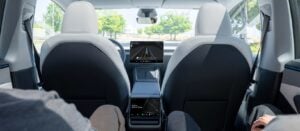
Although the cars currently run with a “valet” sitting in the passenger seat to step in during emergencies, they are also monitored remotely by Tesla’s operations center staff. With the new permit, Tesla now has the legal right to remove that in-person safety presence altogether.
Going Statewide: From Austin to All of Texas
Until now, Tesla’s robotaxi program was limited to small-scale trials in Austin. The TDLR permit changes that entirely, giving Tesla permission to operate anywhere in Texas. That includes bustling urban centers like Dallas and Houston, where demand for ride-hailing is strong.
More importantly, the permit gives Tesla the ability to expand rapidly—something Musk has hinted at repeatedly. On a recent earnings call, he predicted Tesla could serve half of the U.S. population with robotaxi services by the end of 2025.
The approval also places Tesla in a direct turf war with Waymo, Google’s self-driving unit, which already operates a robotaxi fleet in Austin through a partnership with Uber.
First Steps into Driverless Service
Tesla’s push into Texas marks the first time the company has deployed autonomous vehicles with paying passengers. This milestone puts it ahead of many automakers still in the testing phase.
In a surprise twist, just days after securing the Texas license, Tesla was spotted testing its robotaxi in Miami without any safety driver at all. While that was outside the Texas jurisdiction, it hints at Tesla’s national ambitions and confidence in its self-driving system.
Why Texas Matters for Tesla
Texas is a proving ground for Tesla’s robotaxi. The state has generally been friendly to autonomous vehicle testing and has clear legal frameworks that support driverless deployment.
By securing the TDLR permit, the company gains the freedom to launch fully driverless services statewide, scale operations without the legal hurdle of keeping human supervisors in every vehicle, and position itself as a first mover ahead of competing EV makers and robotaxi operators.
If successful, Texas could become the blueprint for Tesla’s expansion into other large, car-dependent states.
TSLA Stock Jumps on Robotaxi Momentum
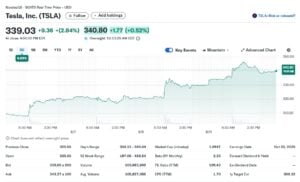
Investor excitement has been quick to follow Tesla’s progress. After Elon Musk confirmed that Austin’s robotaxi service will open to the general public next month, TSLA shares surged more than 5%, closing at $346.50.
This rally reflects investor belief that robotaxi services could become a major revenue stream for Tesla, complementing its core EV sales. Analysts say the Texas approval strengthens Tesla’s first-mover advantage in the driverless ride-hailing market and could accelerate its push toward Musk’s ambitious target of serving half of the U.S. population by the end of 2025.
While the vision is ambitious, Tesla’s autonomous program hasn’t been without criticism. Early trial data in Austin shows around one notable system failure per vehicle every 2–8 days, equivalent to roughly 0.314 failures per day per car.
Videos posted online have captured incidents of Tesla’s robotaxis running stop signs, drifting into the wrong lanes, and failing to detect oncoming trains. The BBC highlighted that these issues have caught the attention of NHTSA, which confirmed it is in contact with Tesla to gather more information.
Early Performance and Safety Concerns
The NHTSA investigation adds to growing regulatory pressure. Reports suggest that Tesla has withheld certain incident data from public release, raising concerns about transparency in its robotaxi program.
Tesla’s self-driving systems face mounting scrutiny as new crash data raises safety concerns.
-
51 deaths since October 2024, including 2 linked to Full Self-Driving
-
Highest US crash rate in 2024: 26.67 accidents per 1,000 drivers — up 13.3% from 2023
-
Autopilot safety gap: 1 crash every 7.44 million miles on Autopilot vs. every 1.51 million miles without, as per Tesla’s Q1 2025 Vehicle Safety Report.
Statistically, Tesla currently has the highest crash rate of any U.S. automaker in 2024. Critics point out that while Musk often cites safety metrics favorable to Tesla, independent experts argue the data lacks consistent, third-party validation.
Musk’s Optimism vs. Robotaxi Reality
Elon Musk describes himself as “pathologically optimistic”, and his track record of bold promises supports that claim. Predicting that Tesla could cover half of the U.S. with robotaxi services within months is no small statement.
For now, Tesla’s Texas permit officially marks its entry into the state’s ride-hailing market. It puts the company in direct competition with Waymo, and brings Musk’s vision of a driverless future closer to reality.
However, Tesla still faces challenges. Experts are saying that it must improve safety, address regulatory concerns, and convince riders that its vision-only self-driving is as safe or safer than competitors using more sensors.
If Tesla succeeds, Texas could become the launchpad for a nationwide rollout, changing urban transportation and ride-hailing economics.
The post Tesla Robotaxi Secures Permit in Texas, Fuels TSLA Stock Surge and Market Buzz appeared first on Carbon Credits.

EU carbon credit claims changed on 27 September 2026, the day the Directive (EU) 2024/825 began to apply across the European Union. The change is narrow. It changes how a company can talk about the credits it buys. A product can no longer be called neutral on the strength of compensation alone; however, every specific, evidenced statement about what a company measured, reduced, and funded stays fully available.

The post Promoting Improved Cooking Practices in Nigeria appeared first on Terrapass.



-
Climate Change1 year ago
Guest post: Why China is still building new coal – and when it might stop
-

 Greenhouse Gases2 years ago
嘉宾来稿:满足中国增长的用电需求 光伏加储能“比新建煤电更实惠”
-
Greenhouse Gases1 year ago
Guest post: Why China is still building new coal – and when it might stop
-

 Climate Change2 years ago
嘉宾来稿:满足中国增长的用电需求 光伏加储能“比新建煤电更实惠”
-

 Renewable Energy12 months ago
Sending Progressive Philanthropist George Soros to Prison?
-
Climate Change2 years ago
Bill Discounting Climate Change in Florida’s Energy Policy Awaits DeSantis’ Approval
-
Greenhouse Gases1 year ago
嘉宾来稿:探究火山喷发如何影响气候预测
-

 Climate Change2 years ago
Analysis: China’s CO2 falls 1% in Q2 2024 in first quarterly drop since Covid-19