



- What timeline options were delegates debating?
- How did the timeline discussions unfold?
- What were the main points of disagreement?
- Why is the IPCC in a ‘serious funding crisis’?
- How have scientists reacted?
- What other issues remain unresolved?
- How are the IPCC AR7 reports progressing?
- How might the IPCC use AI and enhance gender inclusivity?

A quick search of terms like stewardship, climate adaptation, and climate resiliency yields a wealth of information. Yet, so much remains disconnected from the more profound human responsibility of protecting and nurturing the spaces we call home. These spaces—our homelands or homescapes—are not just abstract environmental concepts; they define our identity, relationships, and responsibilities to the world around us. They are shaped and sustained through the ecological knowledge and stewardship practices of those who inhabit them. And yet, a critical question arises: How do we, as human beings, truly honour and protect the sacred—the life we live, the land that sustains us, and the interdependent ecosystems that define our very existence?
Too often, humanity perceives climate as a background force, something we attempt to control rather than something we must adapt to. The imbalance we now face—climate change, biodiversity loss, soil degradation—stems from a fundamental misunderstanding: nature does not depend on us; instead, we rely on nature. The climate is not ours to dictate; it follows its natural laws, sustaining life for millions of years before human intervention. So where does this disconnect between people, environment, and climate originate? The answer, in part, lies in the absence of grounded ecological knowledge in our education systems.
Bioregionalism: Grounding Learning in Space and Place
Bioregionalism is a vital concept in addressing this disconnect—a way of understanding the world through ecological and cultural relationships within a given region. Bioregionalism teaches us to see land, water, plants, and animals not as separate entities but as interwoven elements of a living system, where human and non-human lives are interconnected. This framework shifts the focus from political boundaries to natural ones, encouraging stewardship practices that align with the unique characteristics of each region.
Bioregionalism, at its core, is about living in accordance with a place’s natural rhythms. It is about recognizing that every region has its ecological wisdom stored within the landscapes and carried forward by the people who have lived in harmony with it for generations. By integrating bioregional thinking into education, we can teach students to read the land, understand the waters, and observe the interdependence of life forms within their local environments.
Education as a Pathway to Ecological Literacy
Imagine an education system where learning extends beyond textbooks and classrooms, where students are introduced to the knowledge systems embedded in the life of plants, animals, and ecosystems. What if science classes involved studying the wisdom of the forests—learning how trees communicate, how soil regenerates, and how plant and animal communities sustain each other? What if geography lessons were rooted in the concept of homescapes, teaching students to see the land not just as a resource but as a living entity with agency and autonomy?
This is not a radical idea; it is an ancient one. Indigenous knowledge systems have long recognized the agency of nature, acknowledging that every tree, plant, and animal is part of a vast and intricate network of reciprocal relationships. The idea of stewardship is not about controlling nature but respecting it and understanding that every action has consequences that ripple through the ecosystem.

Source: Getty Images (Licenced, Unsplash+)
A Call to Action: Integrating Stewardship in Everyday Learning
To address climate change and environmental degradation, we must move beyond temporary solutions—tree-planting initiatives, carbon offsets, and green technologies—toward a fundamental shift in how we relate to the Earth. That shift begins with education. Stewardship must be embedded in early childhood education and carried through to post-secondary learning.
We must cultivate an education system that teaches children to observe the land with curiosity and care. Instead of asking, “How can we use this forest?” we should ask, “How does this forest sustain itself, and what role do we play in its survival?” Rather than teaching sustainability as a separate discipline, we should weave it into every subject—science, mathematics, history, and the arts—ensuring that students understand the ecological and cultural context.
Reconciliation with the Land: A Future Rooted in Resilience
As humanity faces the irreversible effects of climate change—rising sea levels, extreme weather patterns, ecosystem collapse—the urgency of reconciling our relationship with the land has never been greater. While some environmental changes may no longer be reversible, our approach to the future can be transformed. The path forward is not simply about mitigating damage; it is about reconstituting and reconciling our environment to restore balance.
This means supporting regenerative agriculture, restoring degraded landscapes, and fostering a profound cultural shift toward bioregional stewardship. It means moving away from extractive economies and toward caretaking economies, where the land is not seen as a commodity but as a community to which we belong.
By embracing bioregionalism, we shift our mindset from exploitation to reciprocity, from short-term gains to long-term resilience. When we look down at the soil rather than up at the sky for solutions, we begin to understand that climate adaptation is not about technological fixes but about reconnecting with the original knowledge systems that have always existed—knowledge that reminds us that the Earth does not belong to us; we belong to the Earth.
A Future Where Life Thrives, Not Just Survives
The urgency of climate change calls for more than reactive measures; it calls for a profound, structural transformation in how we live, learn, and govern our relationship with the land. Bioregionalism guides this transformation, grounding climate adaptation efforts in place-based knowledge and ecological wisdom. It reminds us that the solutions to climate change are not found in isolated policy decisions or technological interventions but in how we educate the next generation to see, respect, and care for the world around them.
Let’s take up the challenge of integrating ecological literacy and bioregional thinking into our education systems. We can create a future where humans act as stewards, not dominators—where forests, rivers, and lands are seen not as resources to be consumed but as relatives to be cared for.
This is not just an environmental imperative but a moral one; it is the work of our time and the legacy we will leave behind. Will we choose to thrive alongside the land, or will we merely fight to survive? The choice is ours, and the time to act is now.
– By Rye Karonhiowanen Barberstock
(Header Image Credit: Arnaud Measureur, Unsplash)
The post Connecting Stewardship to Climate Adaptation and Resiliency: A Bioregional Approach appeared first on Indigenous Climate Hub.
Connecting Stewardship to Climate Adaptation and Resiliency: A Bioregional Approach
Continue Reading
Three countries have been named by the Paris Agreement’s compliance committee for failing to submit a nationally determined contribution (NDC) and repeatedly snubbing offers of help with their climate plans.
After months of internal debate over whether to identify serial non-responders, the Paris Agreement’s Implementation and Compliance Committee (PAICC) named the three countries which have failed to engage with it over their NDCs on Friday.
It named Democratic Republic of Congo, Senegal and North Korea in a footnote of its annual report, adding that it decided to name them “with a view to facilitating engagement”, adding that representatives of the three nations had been invited to its meeting in early 2027 “with the purpose of identifying any challenges and constraints”.
“The Committee noted the importance of Parties engaging with the Committee in a timely manner, while noting that some delays may be due to the national capabilities and circumstances of the Parties”, the report said.
-
Under US pressure, World Bank says it will back gas “where appropriate”
The US wants the World Bank to expand its gas support while climate campaigners are pushing for it to end – its head spoke this week of limited backing for the fossil fuel -
IPCC scientists vow to press on with climate reports despite political deadlock
After governments again failed to agree a timeline, nearly 120 IPCC authors pledged to complete their assessment on time and with full scientific rigour -
Paris Agreement committee snubbed over missing NDC climate plans
Many governments have still not submitted a nationally determined contribution to the UN, breaching a key requirement of the Paris Agreement
In July, PAICC said 12 countries had ignored its repeated attempts to discuss why they had not published an NDC as required every five years under the 2015 Paris accord.
Members of the committee had been divided over whether to name them, but at a September meeting decided to do so in their annual report to the annual climate COP summit.
By the time the report was published on Friday, only Congo, Senegal and North Korea “had not communicated an NDC or submitted a [Biennial Transparency Report] and had not yet responded to any of the Committee’s notifications, despite several reminders issued by the Committee in this regard”.
Rainforest and renewable energy ambitions
The silence from Congo and Senegal is notable because the former is home to much of the Congo Basin rainforest while the latter has sought billions of dollars in climate finance to support its renewable energy ambitions.
After Brazil, Congo has more rainforest than any country in the world. This forest, and the country’s peatlands, absorb huge amounts of greenhouse gas but are fast being lost to expanding farmland, charcoal production, logging and mining.
Senegal signed a Just Energy Transition Partnership with Canada and wealthy European nations in 2023, to help it meet its renewable energy targets under the-then government of Macky Sall. It was chair of the Least Developed Countries group between January 2022 and December 2023.

Tejas Rao, who is researching the PAICC as part of a doctoral thesis at Cambridge University, said the governments of the three countries should engage with the committee.
“Engagement costs these governments very little and the committee has shown it will listen,” he said.
“Silence leaves the committee with no basis to help, and it leaves the [governments] exposed to the narrative that they are simply disengaged,” he told Climate Home News.
Paris Agreement requirement
The 2015 Paris Agreement requires all parties to publish an NDC every five years outlining their emissions reduction targets, with each plan meant to be more ambitious than the country’s last NDC.
The latest set – the third round of plans, with new targets for 2035 – was due in February 2025. While most countries missed this deadline, all but around 30 – mostly small emitters but including Egypt, Vietnam and Argentina – have now submitted them.
Over the year, the PAICC – which is made up of government climate officials from developed and developing countries – has been communicating with governments that have not submitted NDCs and trying to overcome barriers to them doing so.
Some nations have cited exceptional circumstances as the reason for not submitting an NDC, a process that requires a significant amount of work in tracking emissions and consulting on how to curb them across the economy. For example, a letter from a Sudanese official to the PAICC, seen by Climate Home News, said that the country’s civil war had led to the suspension of its NDC preparation.
-
IPCC scientists vow to press on with climate reports despite political deadlock
After governments again failed to agree a timeline, nearly 120 IPCC authors pledged to complete their assessment on time and with full scientific rigour -
Under US pressure, World Bank says it will back gas “where appropriate”
The US wants the World Bank to expand its gas support while climate campaigners are pushing for it to end – its head spoke this week of limited backing for the fossil fuel -
Who shapes climate science? The equity question facing the IPCC
Early completion of the next global climate science assessment reports risks excluding research from the Global South, which is key to ensuring the findings are fair
The US and Iran are not signed up to the Paris Agreement and so do not have active NDCs, nor does Taiwan, which is not a UN member state.
Rao said that because the PAICC is “facilitative and non-punitive”, naming the countries “is meant to open a door, not close one – the invited consultation is the point”.
“In recent months, governments that explained their constraints, whether capacity, finance or domestic process, have been met with follow-up and support rather than sanction, and the number of silent governments has fallen sharply,” Rao said.
The post Paris Agreement committee names three countries snubbing it over NDCs appeared first on Climate Home News.
Paris Agreement committee names three countries snubbing it over NDCs
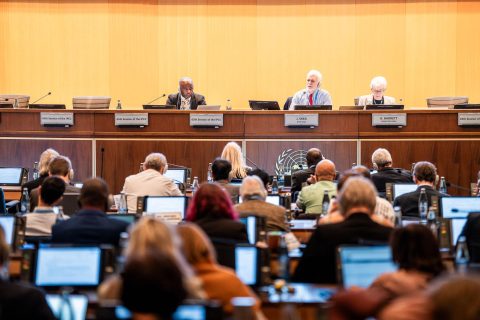
Countries have failed – for the sixth time running – to agree on the timeline for publishing the Intergovernmental Panel on Climate Change’s (IPCC) next set of influential reports.
The IPCC’s 65th session (IPCC-65) was seen by many to be the final opportunity for countries to agree on a schedule where its seventh assessment report (AR7) would be published in time for the UN’s second “global stocktake” of climate action.
Before last week’s meeting in Addis Ababa, Ethiopia, IPCC chair Prof Sir Jim Skea had warned that releasing the reports in time for the stocktake in 2028 would depend on a timelines being agreed by the end of 2026.
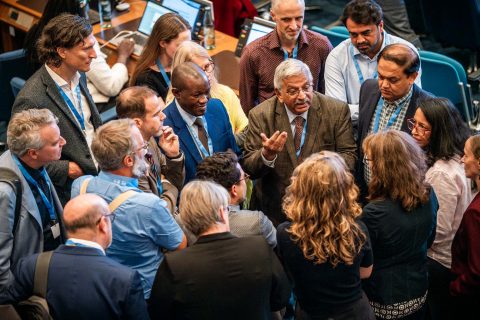
But the week-long meeting descended into fraught disagreements between governments, resulting in Skea “suspending” the talks on Friday evening with no decision made.
Countries were also unable to agree on the IPCC’s budget for the rest of the AR7 cycle, leaving the body with a “serious funding crisis”.
The IPCC has pledged to reconvene the meeting at the “earliest opportunity”; however, it has not yet given an indication of when this will be.
In his concluding remarks, Skea described the Addis Ababa summit as a “profound disappointment” and “among the most difficult IPCC meetings”, according to reporting from the Earth Negotiations Bulletin (ENB).
Some countries have reacted with dismay to the breakdown of negotiations, warning that a failure to have the IPCC’s latest assessments on climate adaptation and mitigation ready for the UN stocktaking exercise wou