


Introduction Sustainable Transportation: Building a Greener and Smarter Mobility System
Sustainable transportation is a concept that focuses on creating efficient and eco-friendly transportation systems to minimize environmental impact, improve public health, and enhance overall quality of life.
It encompasses various strategies and initiatives aimed at reducing greenhouse gas emissions, promoting energy efficiency, and providing equitable and accessible transportation options. By prioritizing sustainable transportation, communities can create more livable, resilient, and environmentally conscious urban environments.
Public Transportation
Public transportation plays a central role in sustainable transportation systems. Well-planned and efficient public transit networks, including buses, trams, subways, and light rail, can significantly reduce private vehicle usage and associated emissions.
By offering affordable, reliable, and accessible transportation options, public transit encourages people to choose greener alternatives, reducing traffic congestion and improving air quality. Additionally, advancements in technology, such as real-time information systems and contactless payment methods, enhance the convenience and appeal of public transportation, making it an attractive choice for commuters.
Promoting active transportation, such as walking and cycling, is another key component of sustainable transportation.
Designing cities and communities with safe and well-connected walking and cycling infrastructure encourages people to choose these modes of transportation for short trips, reducing the reliance on cars. By investing in pedestrian-friendly infrastructure, dedicated cycling lanes, and bike-sharing programs, cities can improve public health, reduce carbon emissions, and enhance the overall livability of urban areas. Encouraging active transportation also fosters a sense of community, reduces traffic congestion, and supports local businesses.
The transition to electric and low-emission vehicles is a crucial step towards achieving sustainable transportation systems. Electric vehicles (EVs) offer a clean and energy-efficient alternative to traditional gasoline-powered cars, as they produce zero tailpipe emissions. By expanding charging infrastructure, offering incentives for EV adoption, and supporting research and development in battery technology, governments and communities can accelerate the shift towards a greener transportation future. Additionally, promoting the use of low-emission vehicles, such as hybrid cars and vehicles powered by alternative fuels, further contributes to reducing carbon emissions and air pollution.
Transportation Demand Management
Transportation demand management strategies aim to optimize existing transportation systems by reducing the need for travel and managing travel demand effectively. These strategies include carpooling and ridesharing programs, congestion pricing, flexible work arrangements, and telecommuting.
By incentivizing shared mobility and reducing unnecessary trips, transportation demand management initiatives can help alleviate traffic congestion, lower emissions, and improve the overall efficiency of transportation networks.
Technological advancements and innovative solutions are transforming the landscape of sustainable transportation. Intelligent transportation systems, data analytics, and smart mobility platforms enable more efficient transportation planning and operation. These technologies provide real-time information on transit schedules, traffic conditions, and alternative routes, helping travelers make informed choices and optimize their travel patterns. Furthermore, the integration of shared mobility services, such as car-sharing and bike-sharing, with public transit systems creates seamless and multimodal travel experiences, enhancing convenience and reducing the need for private vehicle ownership.
Sustainable transportation is a fundamental aspect of building greener and smarter cities. By prioritizing public transportation, promoting active transportation, encouraging the adoption of electric and low-emission vehicles, implementing transportation demand management strategies, and leveraging technology and innovation, communities can create more sustainable, efficient, and inclusive transportation systems.
Embracing sustainable transportation not only helps mitigate climate change and reduce pollution but also improves public health, enhances accessibility, and fosters more vibrant and livable urban environments.
https://www.exaputra.com/2023/06/sustainable-transportation-building.html


Weather Guard Lightning Tech
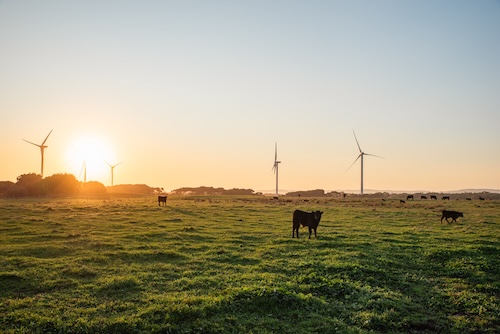
As Europe Shuns Chinese Turbines and Components, Who Will Fill the Gap?
While most of Europe has spent most of this year itemizing reasons it cannot, should not, and will not use Chinese wind turbines or components, accusations and arm-twisting tactics have garnered most of the attention.
But we invite you to consider a future – maybe just five, or ten years from now?- in which those same countries and companies are eagerly awaiting orders from wind turbine manufacturing facilities in… India.
What?!
You know that the country has a lot of installed wind.
You may think – and many in the industry would agree – that India’s blade manufacturers are a few revs behind blade-makers elsewhere in the world. But the country is newly committed to manufacturing and it’s busy installing more – provided that it’s made in India, with Indian technology, by Indian workers.
Of course, similar domestic-focused policy currents are running through European countries – where wind OEMs are almost inarguably a decade ahead of Indian manufacturers. But there’s an important reason why we say, “watch India” in wind turbine manufacturing.
It’s because you might learn something.
If you follow The Uptime Wind Energy Podcast, you probably heard this discussion a few weeks ago. It wasn’t the headline story – we try to highlight as many major news items and trends that we can, and follow up as credible information becomes available. India’s quiet moves to strengthen its own renewable energy industries didn’t grab the headlines. But it comprised a good bit of our panelists’ discussion.
With India’s expanding manufacturing capacity, and Suzlon’s strategic offerings for the European market (Blue Sky), there are reasons for European developers to take a closer look at Indian manufacturers.
If Europe continues to squelch deals with Chinese manufacturers due to data security issues, India is a relatively obvious candidate to fill the void, for several reasons:
- The country has depth and breadth in R&D: India (Suzlon, specifically) has a track record of involvement and relationships across the continent, as it operates research and development centers in Germany, the Netherlands, and Denmark.
- Indian service providers have reach: Inox and Adoni Wind operate multiple wind turbine manufacturing plants and wind farms throughout several Indian states, and Apraava Energy has been commissioning wind projects, working with multiple OEMs, for more than 16 years.
- The country’s energy sector has size: Tata Power is estimated to be worth about US$16 billion and employs 22,000 people.
And major manufacturers from other countries have had a strong presence in the country for years:
- GE Vernova has turbine blade and nacelle manufacturing operations and multiple tech/R&D centers in India;
- Vestas has a R&D technology center in Chennai; and
- China’s SANY Wind has had assembly facilities in India since 2017, and in 2024, it signed a licensing agreement with JSW allowing SANY to manufacture blades and generators for JSW – enabling JSW Neo Energy to produce wind turbine generators and major components in-country.
So while there is hard data suggesting that India is already a global hub for wind turbines, sometimes the real strength comes from soft skills. Like sharing information.
We’ve noticed that Indian manufactures aren’t stingy with information. They share what they learn in the field and on the shop floor, so that the whole industry can move faster to solve problems. That bodes well for the industry overall, and particularly well for companies who figure out how to solve problems that some manufacturers aren’t even ready to admit to having.
We’ll be watching India with a great deal of interest in the coming months. Subscribe to The Uptime Wind Energy Podcast and follow along with us.
We’re not financial analysts. We’re engineers who watch the wind industry very closely. This is what we’ve noticed, and we thought it was worth sharing.
Where do you think you’ll be looking for solutions, components, and service providers in the next few years or the next decade? Tell us what you think. We’d love to hear from you.
As Europe Shuns Chinese Turbines and Components, Who Will Fill the Gap?
 To the author of the meme here:
“Either” refers to two choices; “any” refers to three or more.
More importantly, it’s amazing how shamelessly the ultra-right wing exaggerates. The left side of the Democratic party would like to see the United States look like social democracies in places like Scandinavia. Having government programs that benefit the common person, e.g., Social Security, public schools, emergency relief, libraries, environmental responsibility, etc., does not equate to Stalinism.
 Some of my old prep school chums from the Class of 1973 convene via Zoom approximately every six weeks for a 90-minute discussion of current events, science, and anything else that sounds interesting.
Our professions range from medicine, law, finance, and business management. All from highly ranked colleges. Over 50% hold doctorate degrees.
Here’s something I find fascinating about the group: it includes one right-wing conservative. I don’t mean a Reaganite; I mean a Trump supporter. This guy is incapable of any thought that doesn’t come directly from Nexsmax.
It’s almost eerie how closely he toes the line of the far-right. Yesterday he echoed the Newsmax talking point and told the group that all Muslims holding public office are “very dangerous” and should be removed.
Now, the rest of us are sitting there, dumbfounded at this idea, unwilling waste our breath on this racist and utterly preposterous concept.
All this raises the question: How are our political viewpoints formed? How much of this is genetics? Epigenetics? Early childhood experiences? How do take a boy from among the best environments and turn him into someone who struggles to understand the most basic principles on which our country was founded?
https://www.2greenenergy.com/2026/11/09/principles-country-was-founded/



-
Climate Change1 year ago
Guest post: Why China is still building new coal – and when it might stop
-
Greenhouse Gases1 year ago
Guest post: Why China is still building new coal – and when it might stop
-

 Greenhouse Gases2 years ago
嘉宾来稿:满足中国增长的用电需求 光伏加储能“比新建煤电更实惠”
-

 Climate Change2 years ago
嘉宾来稿:满足中国增长的用电需求 光伏加储能“比新建煤电更实惠”
-

 Renewable Energy1 year ago
Sending Progressive Philanthropist George Soros to Prison?
-
Greenhouse Gases1 year ago
嘉宾来稿:探究火山喷发如何影响气候预测
-

 Climate Change2 years ago
Analysis: China’s CO2 falls 1% in Q2 2024 in first quarterly drop since Covid-19
-

 Climate Change1 year ago
嘉宾来稿:探究火山喷发如何影响气候预测