

Welcome to Cádiz
When we arrived in Cádiz in April, we knew that we would be spending the next months working on an experiment about underwater soundscapes. What we did not yet know was how much of our time would be spent carrying equipment through the city, rebuilding experimental frames, solving technical problems and trying to convince various pieces of equipment not to end up at the bottom of the Atlantic.
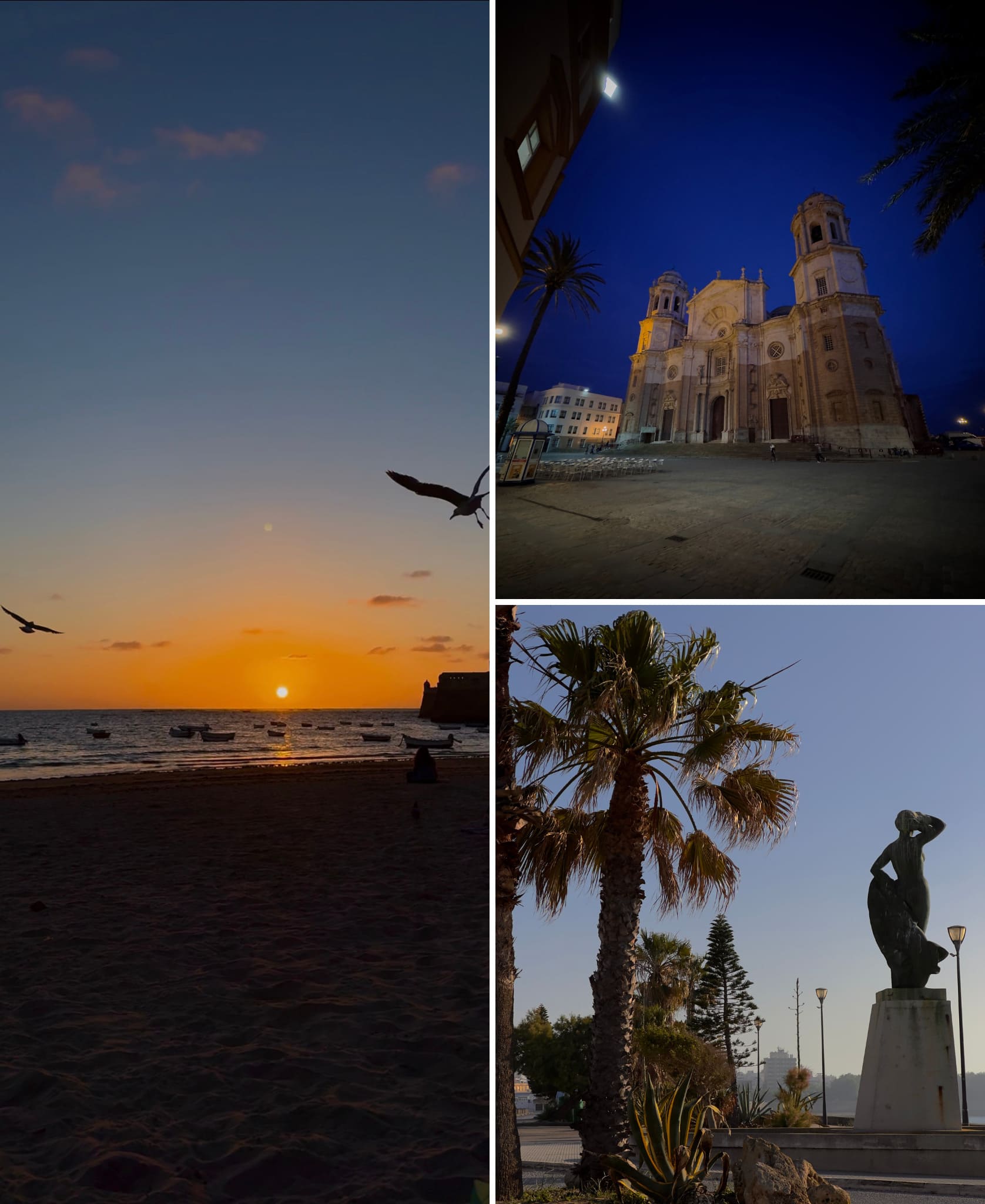
Cádiz itself was a pretty good and beautiful place to start.
The city is located at the very tip of a narrow peninsula and is surrounded by the Atlantic on almost all sides. There are beaches almost everywhere, small streets leading through the old town, the harbour with its many boats and plenty of places where you can simply sit down and watch the sea. It did not take us long to understand why Cádiz is sometimes called La Tacita de Plata, the Silver Cup.
Our first evening was still fairly relaxed. After arriving and settling in, we went out together for a drink and explored a little bit of the city. It was a good introduction to our new home. The next morning, however, the relaxed part was over and GAME 2026 officially began for us.
Our project focuses on how underwater soundscapes may influence the colonization of hard surfaces by marine sessile organisms. To investigate this, we used standardized PVC settlement panels mounted on experimental frames and exposed them to different underwater soundscapes.
Over the course of the experiment, we monitored which organisms settle on the panels and checked whether the developing communities differ between the different acoustic conditions. The panels themselves were only 15 x 15 cm in size, but the frames, which were holding them while they were underwater, were much larger and required quite a bit of construction and preparation.
So, before we could investigate anything, however, we had to build everything.
Building the experiment
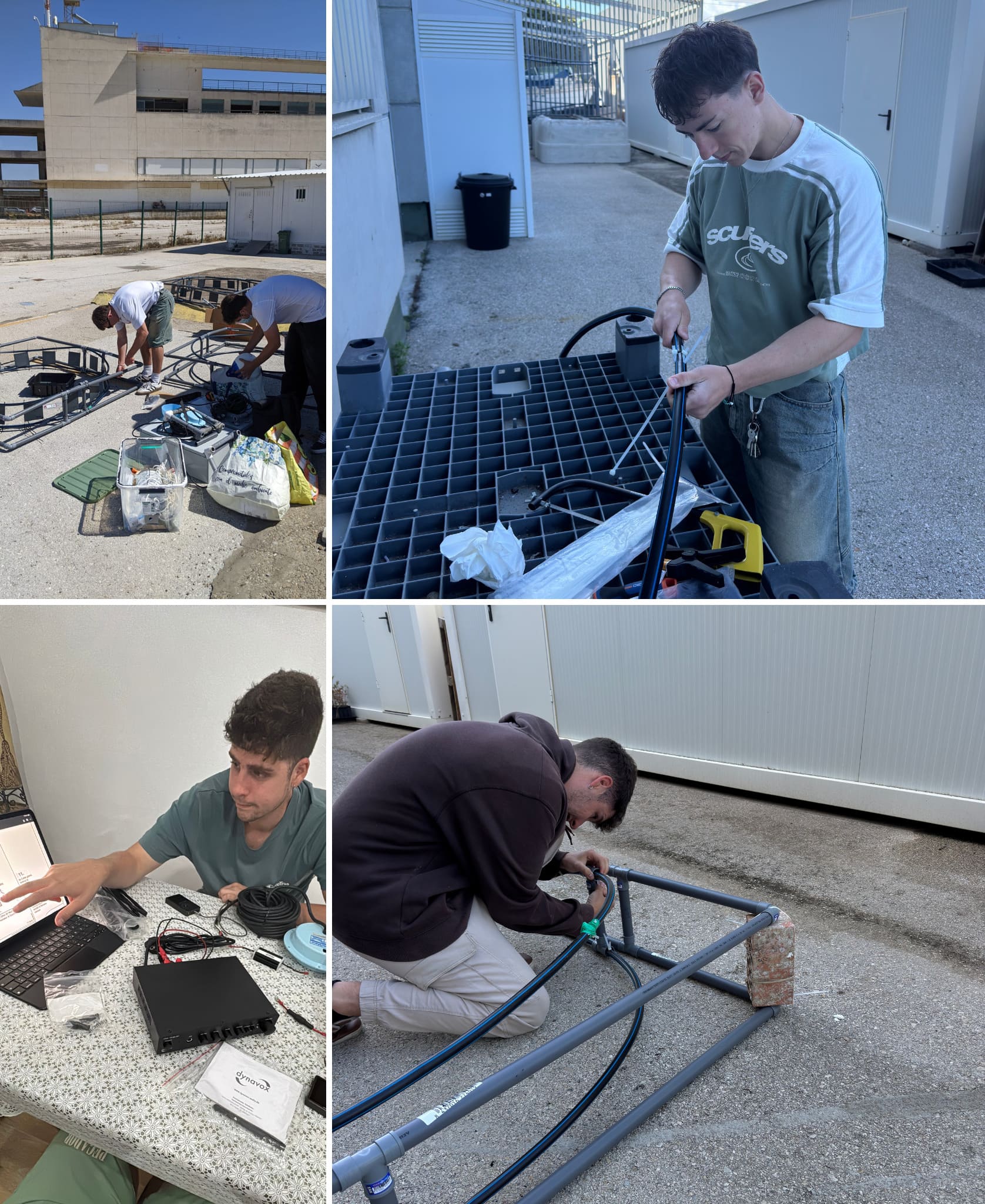
The first weeks in Cádiz were all about getting the experiment ready. Before the panels could go into the water, we had to prepare the equipment, rebuild the experimental frames and organize everything needed for the different parts of the experiment. Our setup consisted of large rectangular frames made from PVC pipes that carried the 15 x 15 cm settlement panels while they were in the water. In addition to this, we had speakers for the sound playbacks and ropes, buoys and weights that kept everything in position.
Although, there were frames left from a previous GAME project that was done in Cádiz, we decided to build new ones, which meant sourcing new material, cutting and assembling PVC pipes, preparing the panels and putting the different parts of the setup together. Some materials were bought locally, while others had to be ordered. This also resulted in one of our first small fieldwork adventures: transporting several metres of PVC pipes in a public transport bus through Cádiz was not exactly an everyday activity. We did not have a car at the time, and the large hardware store, where we bought some of the material, was quite far away, so getting everything back to Cádiz meant taking several buses while carrying long PVC pipes through crowded streets and vehicles. We bumped into things more than once, attracted a fair amount of attention and quickly realized that carrying several metres of PVC through a busy city is not as easy as it sounds. At one point, the combination of researchers, long PVC pipes and a local hardware store became what we jokingly refer to as the “Bus Hardware Store” episode.
Building the frames also taught us quite quickly that fieldwork rarely goes exactly according to plan. Some parts required a bit of improvisation and technical problem-solving, and when we reached a particularly stubborn technical issue, we even called Liam’s father in Germany for some additional advice. Although he was not directly involved in the project, his background in mechanical engineering and his experience with practical technical problems made him a useful person to call when we needed another perspective. A video call across Europe was not exactly part of the original plan, but it turned out to be a useful addition to our fieldwork toolkit.
At the same time as we worked on the set up, we were preparing the recordings of natural underwater soundscapes that would later be used for the experiment. For this, we built a deployment system consisting of a concrete-filled bucket, a wooden pole and a HydroMoth attached to the pole. The idea was simple: the heavy bucket keeps the structure stable on the seafloor, while the hydrophone records the surrounding natural soundscape above it. The practical part was considerably less simple. Several heavy loads of concrete had to be transported through Cádiz, and once the equipment reached the beach, getting the concrete-filled bucket into position was another workout altogether. We used a two-wheeled hand truck to move the heavy bucket across the beach and then into the shallow water. From there, we worked our way out by snorkeling and swimming, carrying and guiding the setup into position. The water was no more than about two metres deep, so there was no need for a boat.
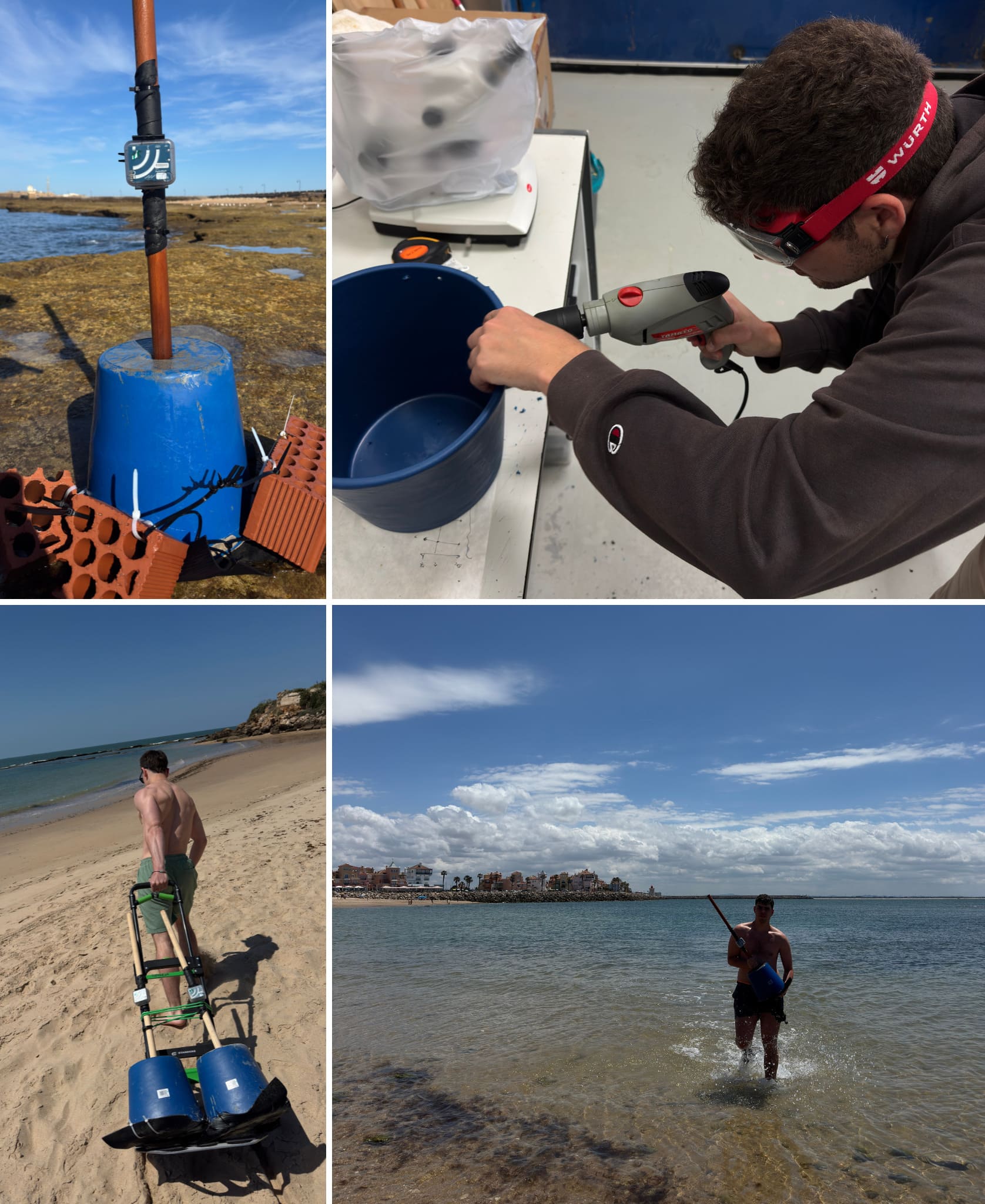
The setup may have looked a little unconventional, but it was based on the plans we deleoped for recording natural soundscapes during the preparative course in March. After plenty of cutting, drilling, tying, carrying and assembling, the first major pieces of the project were finally ready. The frames were taking shape, the equipment was coming together and our first soundscape recordings were underway.
With the construction phase coming to an end, there was only one major question left: where exactly will we put everything?
When the plan changed
Finding a suitable experimental site turned out to be one of the more complicated parts of the project.
Our original plans involved a site in a nearby marina, but the situation changed when we were informed that construction work was planned close to the site. The associated noise would have interfered with the acoustic conditions required for our experiment, making the location unsuitable for our setup. We therefore had to move the experiment to a different location at relatively short notice. This meant adapting the setup and transporting the frames again. In the end, we found our new home at Puerto América, at the north-eastern tip of the city.
The change was a good example of how fieldwork can sometimes require a little flexibility. You can spend weeks discussing the experimental design, the set up and the site selection, but once you actually arrive at the water, there are always things that you could not have predicted from a map.
The new location gave us enough space for the experimental setup and allowed us to continue with the project. Hence, the frames were finally transported to Puerto América, weighted and installed.
Getting the frames into the water was actually much easier than building them in the first place. Once we had transported the frames to the harbour, we were able to get them into position and secure them relatively smoothly. The real challenge had been the preparation on beforehand: assembling the large PVC structures, attaching all the necessary components and making sure that everything was ready for deployment.
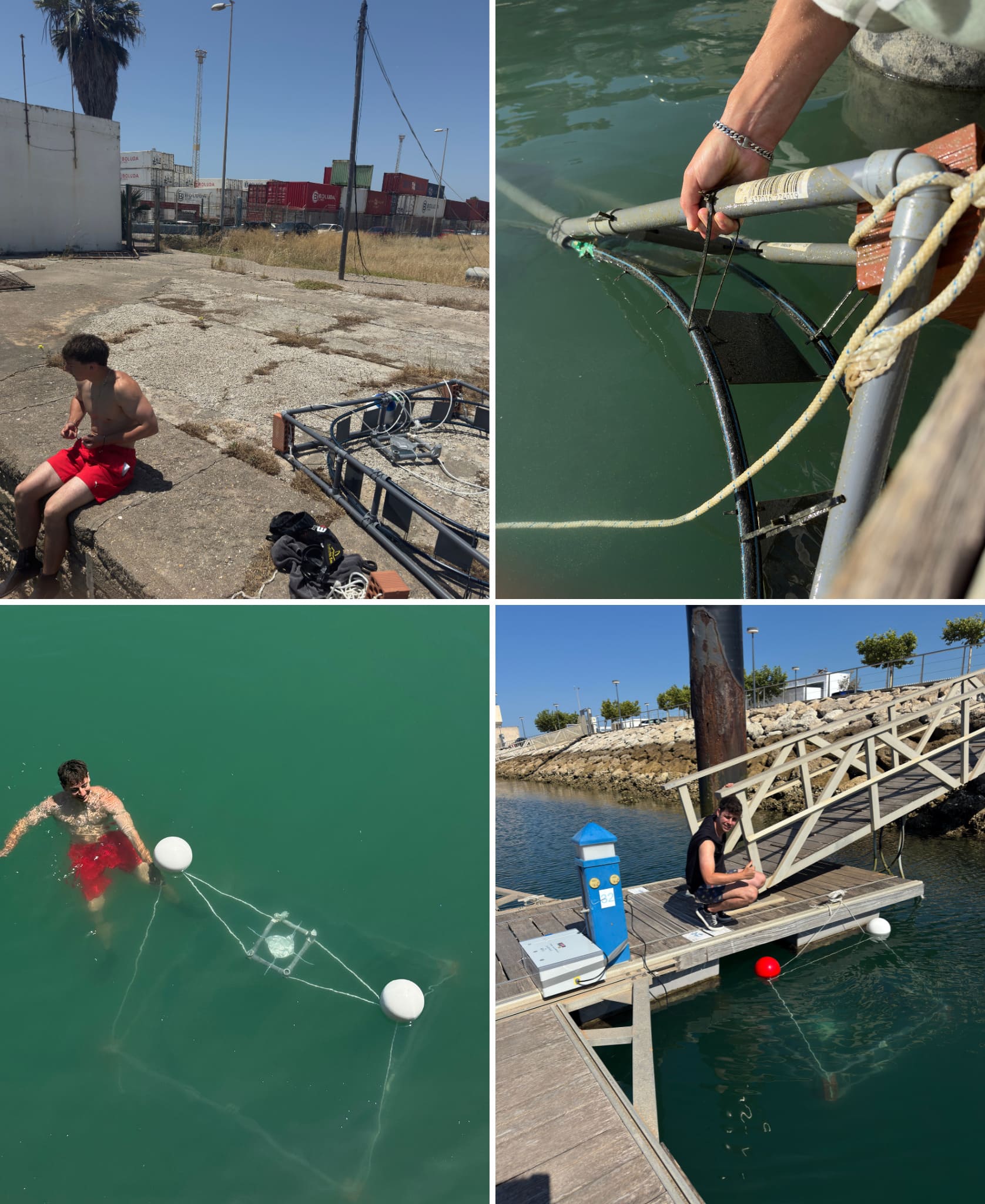
After weeks of preparation, the frames were finally in the water. The structures that we had spent so much time building on land were now ready to become the basis of our experiment.
From this point on, the focus shifted from building the experiment to monitoring what was happening around it.
Hydrophones, boats and one very expensive swim
Once the experiment was running, the HydroMoths became an important part of our regular monitoring. These small underwater recorders allowed us to record the acoustic conditions around our experimental frames and to measure the sound levels reaching the area of the experiment. This helped us to keep track of the underwater soundscape throughout the experimental period and to verify in hindcast what acoustic conditions the organisms on the settlement panels were actually exposed to.
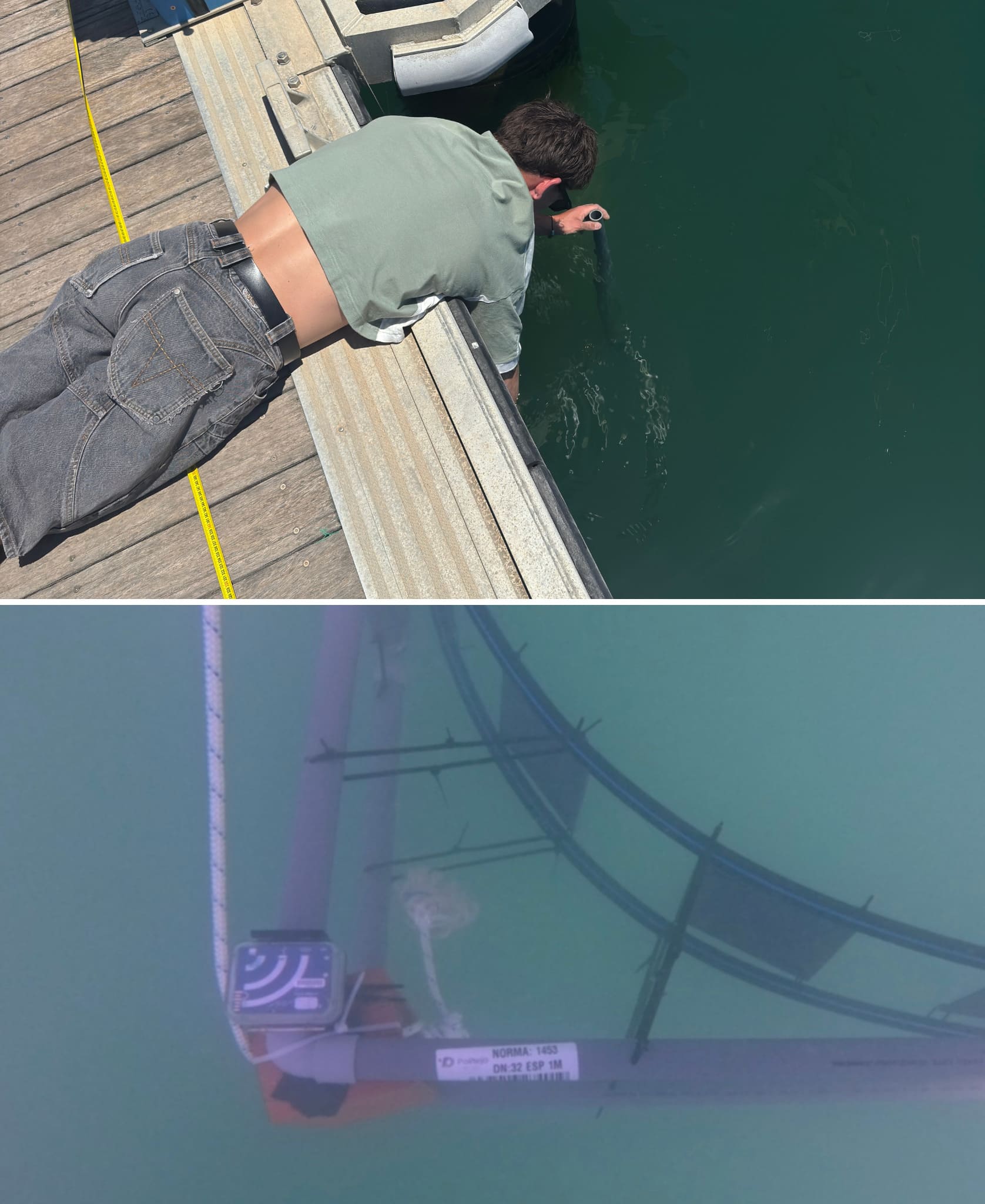
Of course, regular monitorings also meant regularly getting the equipment in and out of the water. And this was when one of our more memorable fieldwork incidents happened. One day, Liam was alone at the harbour and had a fairly straightforward task: retrieve a HydroMoth, download the data and put it back into the water. Everything went well until the moment when the HydroMoth decided to make the last part of the procedure considerably easier for itself.
It slipped out of his hands and disappeared into the water.
We tried to retrieve it by diving down, but the visibility was extremely poor. Finding a relatively small piece of equipment underwater turned out to be much harder than expected, and despite our efforts, we could not recover it. It was certainly not part of the original plan, but fortunately, the experiment could continue. The lost HydroMoth has since become one of those fieldwork stories that is much easier to laugh about afterwards.
The regular monitorings also revealed how quickly conditions around the experimental site can change. One day, for example, we arrived at the harbour and found a boat parked remarkably close to our experimental setup, almost directly next to our buoys. Luckily, nothing was damaged and the boat did not cause any problems for the frames, but it was certainly an unexpected sight when we arrived.
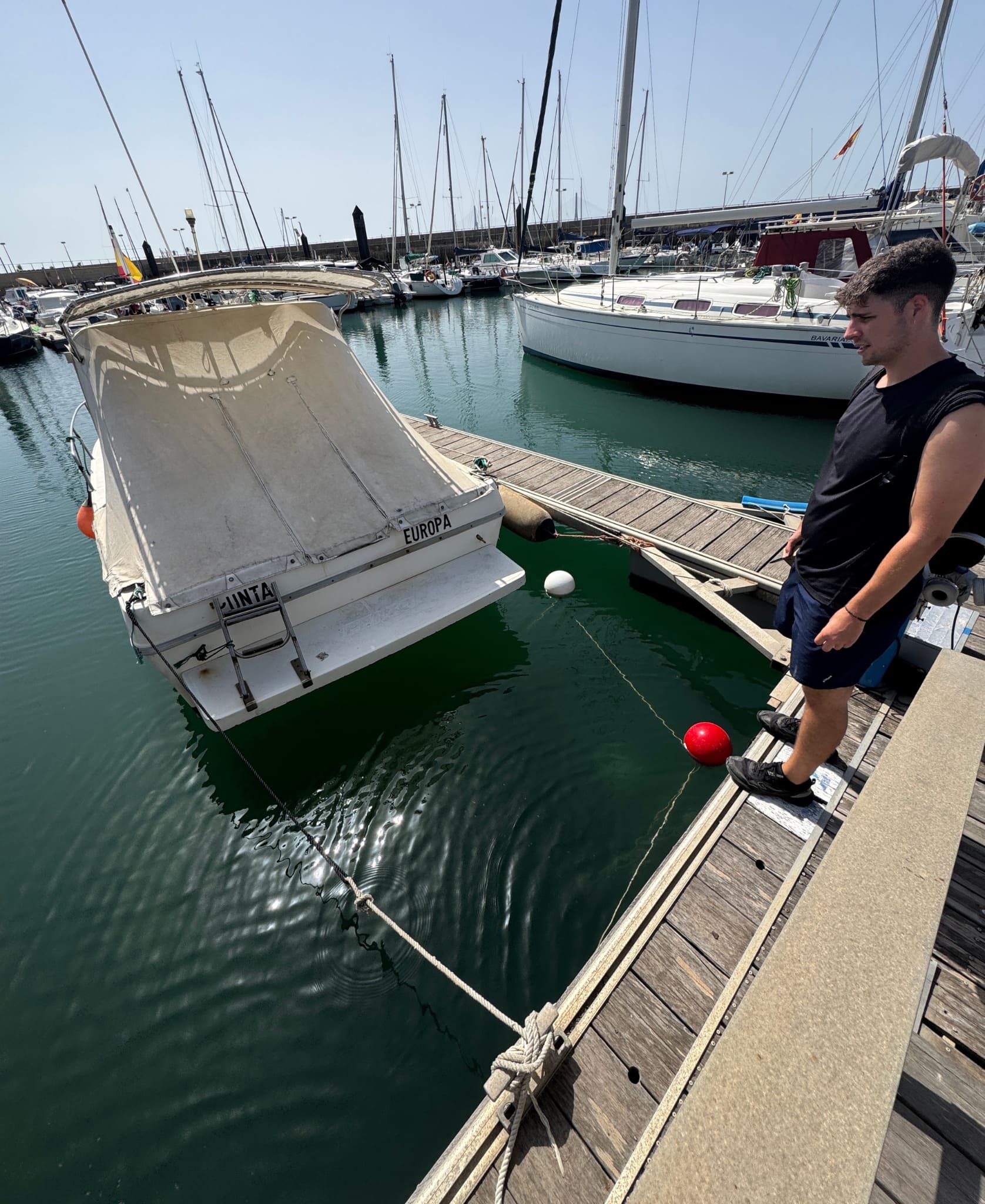
Working in a harbour means that we are sharing the space with many other users, and sometimes the surroundings have a few surprises in store for us. Fortunately, most of them have been harmless so far.
From PVC panels to marine communities
The most interesting changes, however, did not happen above the water.
They happened on the settlement panels.
At the beginning of the experiment, the panels were simply pieces of PVC. We sanded their surfaces and standardized them so that they would provide suitable settlement substrates for marine sessile organisms. After deployment, there was not much to see.
Then the first organisms started to arrive.
During the first sampling events, we began to see the panels changing. Small organisms had settled on the surfaces, and the communities became increasingly diverse. Ascidians and bryozoans were among those colonizers that became particularly noticeable, together with worms, crustaceans and algae.
Suddenly, the panels that we had spent weeks preparing were becoming real pieces of habitat.
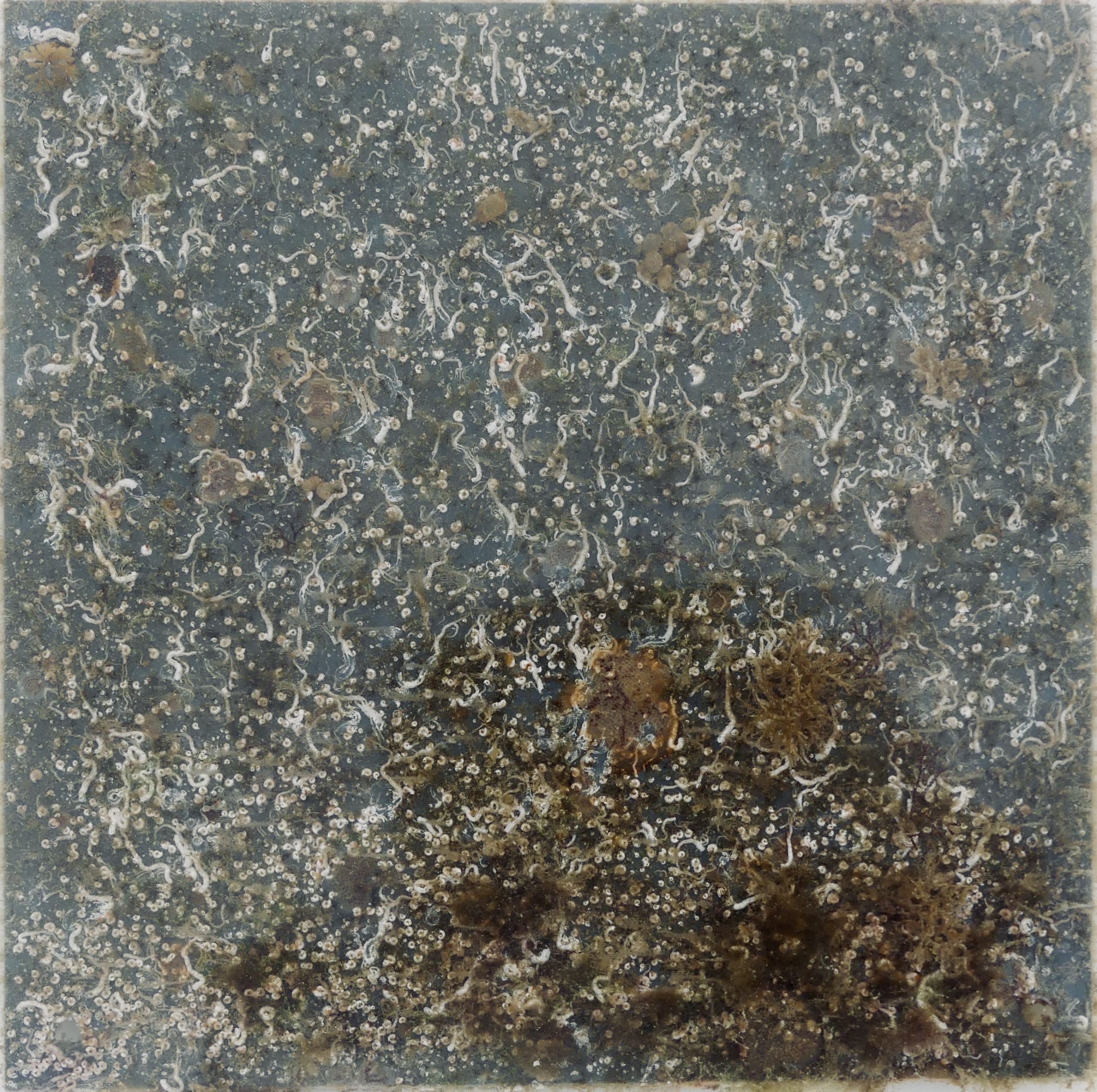
That was probably one of the most rewarding moments of the project. You knew exactly what a panel looked like before it went into the water. Then you retrieve it a few weeks later and had to figure out what has colonized it.
Some organisms were relatively easy to recognize. Others required a microscope, identification guides and considerably more patience.
Our supervisor was a huge help with this part of the project, especially when it came to identifying organisms that were less obvious at first glance. What initially looked like a small patch of something growing on a panel, could turn out to be an entirely different taxonomic group once you took a closer look.
And sometimes the organisms were simply fascinating to look at.
Despite the fauna and flora on the panels, we encountered small crustaceans, fish and other animals using the experimental structures as a habitat. One particularly photogenic shrimp even ended up on Liam’s hand during sampling.
The panels were therefore becoming more than just experimental units. They were small snapshots of the underwater world and the marine biodiversity around Cádiz.
The scientific question remained whether the different acoustic conditions influence the development of the communities. But before we could answer that, we had to document what was actually there.
And that meant sampling.
Sampling in the field
Our first sampling event made another aspect of fieldwork very clear: sometimes there is no perfect laboratory waiting for you at the harbour.
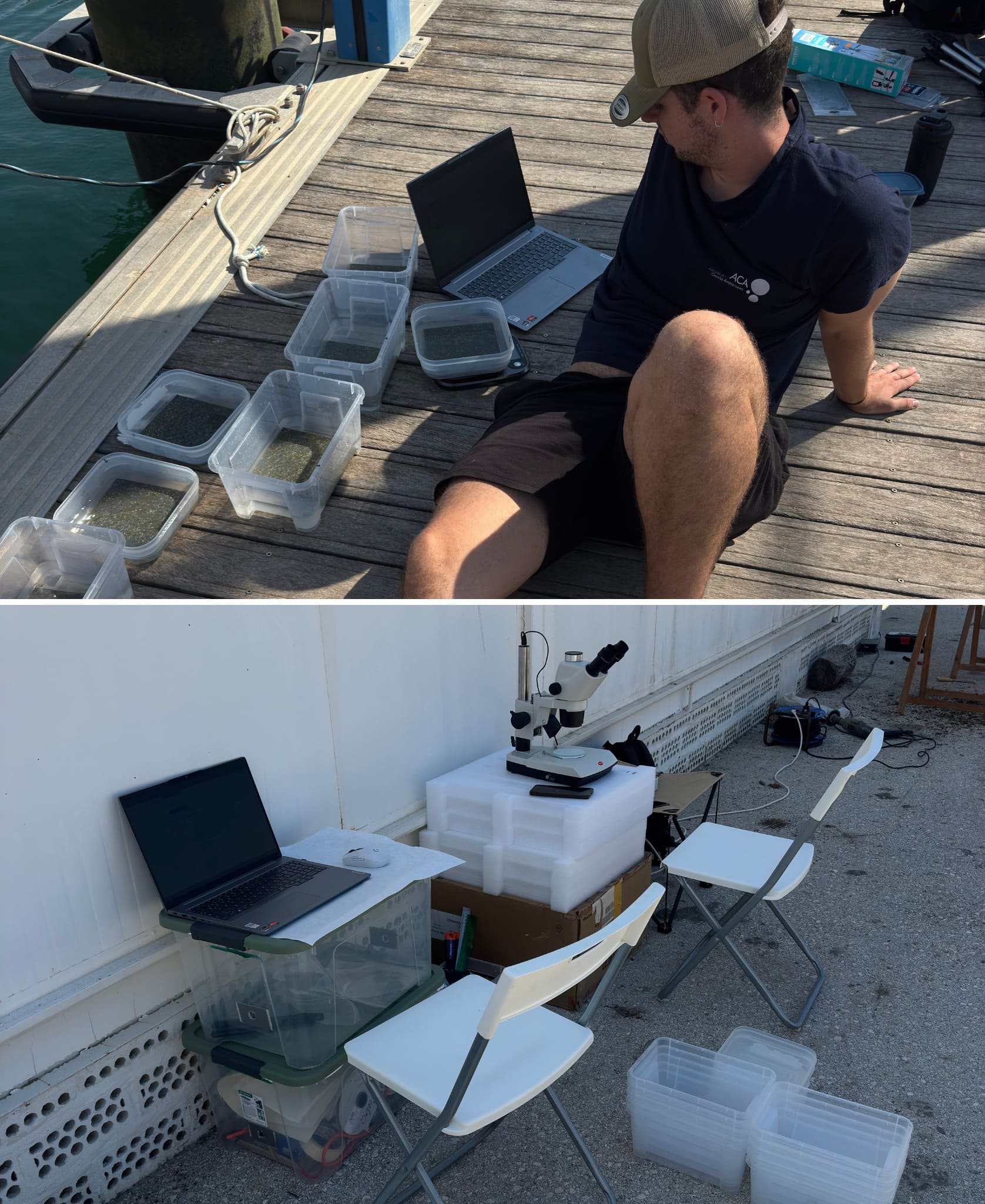
Since our experimental site was relatively far from the university facilities, we transported the equipment we needed directly to the field site by car. This included the microscope and the other equipment needed to examine, photograph and document the settlement panels.
There was no perfect laboratory waiting for us at the harbour. So, we built one.
We set up a small temporary workspace close to the experimental site and arranged everything we needed for the sampling. With the microscope, cameras, laptops, sampling equipment and the panels themselves, we quickly had our own little field laboratory ready to go.
Once everything was set up, the panels came out of the water. One by one, they were photographed, examined and assessed for the organisms that had settled on their surfaces. Some could be identified relatively easily, while others required a closer look under the microscope and a little more time.
The same basic procedure was repeated during the following sampling event, allowing us to compare how the panels had changed over time and which organisms had newly appeared or become more abundant.
Working directly at the field site also had its advantages. Instead of transporting the panels back and forth, we could examine and document them close to where the experiment was running and get an immediate impression of how the communities were developing.
Of course, the conditions were not always perfectly calm. Strong winds can make working at the harbour considerably more challenging, and this is where we really began to appreciate the Levante, the strong easterly wind that regularly affects the Cádiz area. By “appreciate”, we mean learning very quickly how much more complicated even a routine sampling day can become when the wind picks up. Even simple tasks require more coordination, especially when working with equipment and panels close to the water.
Nevertheless, the sampling days became one of the most interesting parts of the experiment so far. Every time we brought a panel out of the water, there was something new to discover.
The youngest member of the GAME team
There was also one very important member of the team who deserves a special mention.
During one of our most recent monitoring days, we had some unexpected assistance from a four-year-old.
While we were reading out the equipment, working on the frames and dealing with the usual collection of sampling tasks, our youngest helper decided that watching from the side was not enough. He wanted to participate.
So he did.
For a short time, we had officially found the youngest member of the GAME team. He may not have been able to explain the experimental design or tell us anything about sound pressure levels, but he was very enthusiastic about helping with the work. It was a small moment, but it was also a nice reminder that fieldwork is rarely as isolated as it can sound when described in a scientific paper. People around us had become part of the experience, whether they were helping with equipment, giving advice, asking questions or simply were curious about what two researchers are doing at the harbour with a collection of PVC pipes.
And occasionally, they became part of the team.
Life outside the frames
Of course, our time in Cádiz did not consist entirely of PVC, HydroMoths and sampling.
Living in Cádiz for several months also meant getting to know the city and the surrounding region outside the harbour. We spent a lot of our free time near the sea, whether that means going to the beach, playing sport or simply enjoying the city after a long day of fieldwork. With beaches, the old town and the harbour all within easy reach, there was usually no shortage of places to spend a few hours away from the experiment.
We have also used our time here to explore more of Andalusia. We visited Sevilla, where we could experience one of the region’s larger and more historic cities, and travelled to Tarifa, where we joined a whale watching trip and got to see some of the marine wildlife of the area from a completely different perspective.
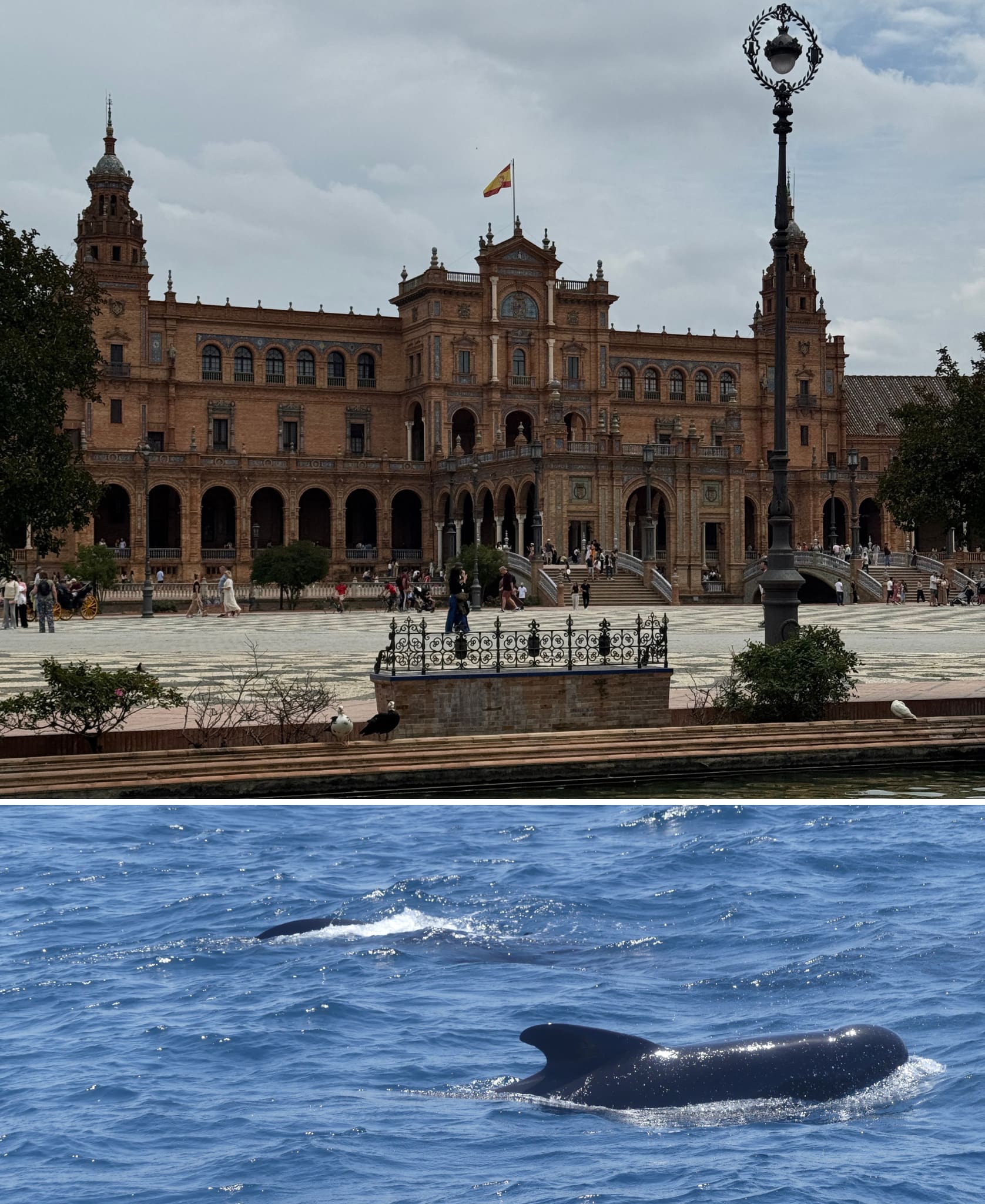
Other trips took us to places such as Zahara de la Sierra, a small mountain town overlooking the reservoir, and Ronda, famous for its spectacular location above the deep El Tajo gorge.
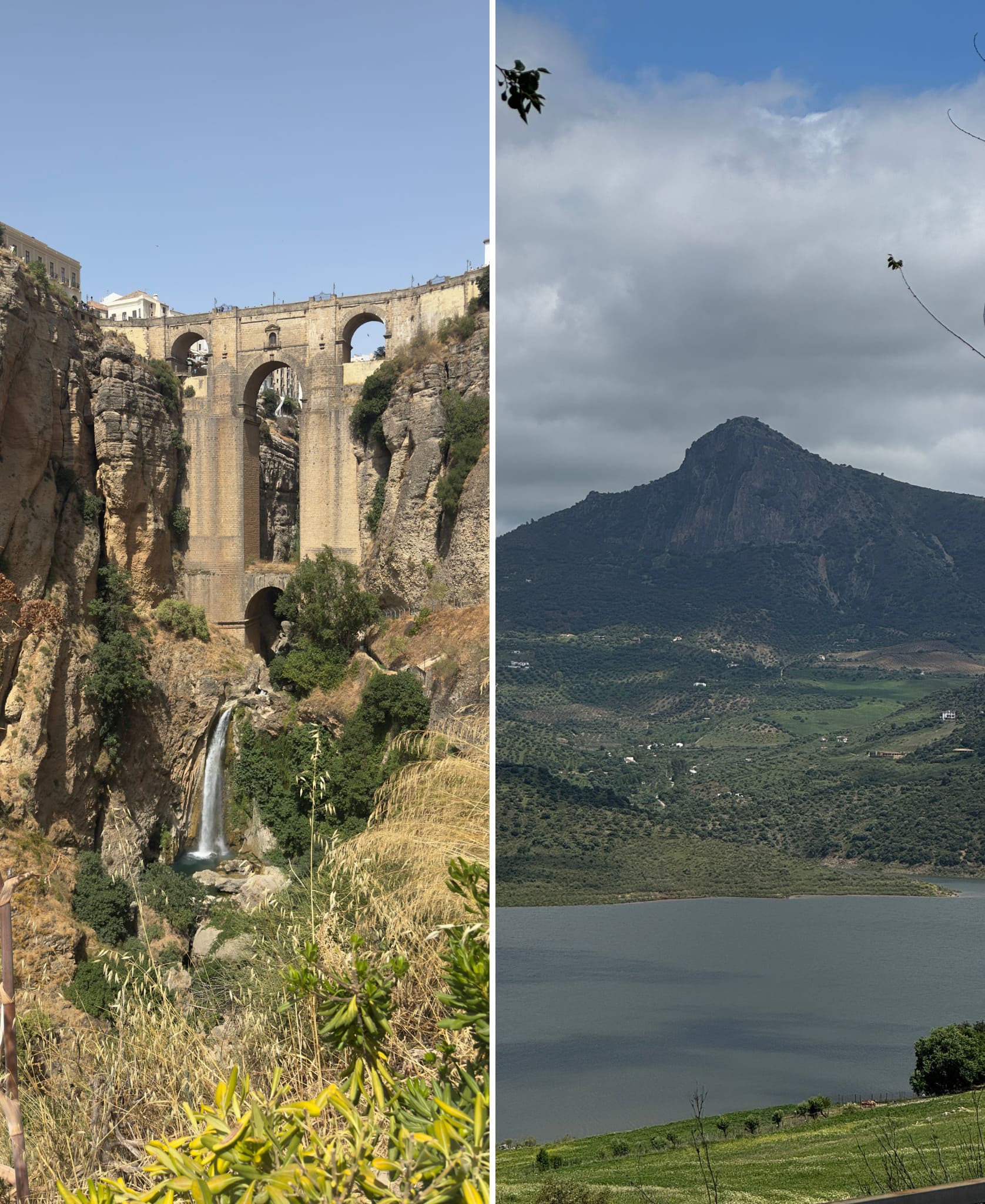
These trips were a welcome change from our usual routine and gave us the opportunity to see a little more of the region we called home for the duration of the project.
The weather had certainly helped. Temperatures were regularly around 30 degrees, although the strong winds could make the conditions feel very different. After spending a day working at the harbour, a few hours at the beach were therefore not the worst way to finish the day.
Andalusia has also experienced some major environmental events while we had been here. Large wildfires affected parts of the region during the summer, although Cádiz itself was not directly affected.
Then there was the solar eclipse.
Cádiz experienced a partial solar eclipse, which gave us the opportunity to witness something very different from our usual fieldwork. For a short time, the attention of the two marine biologists was directed away from the water and towards the sky.
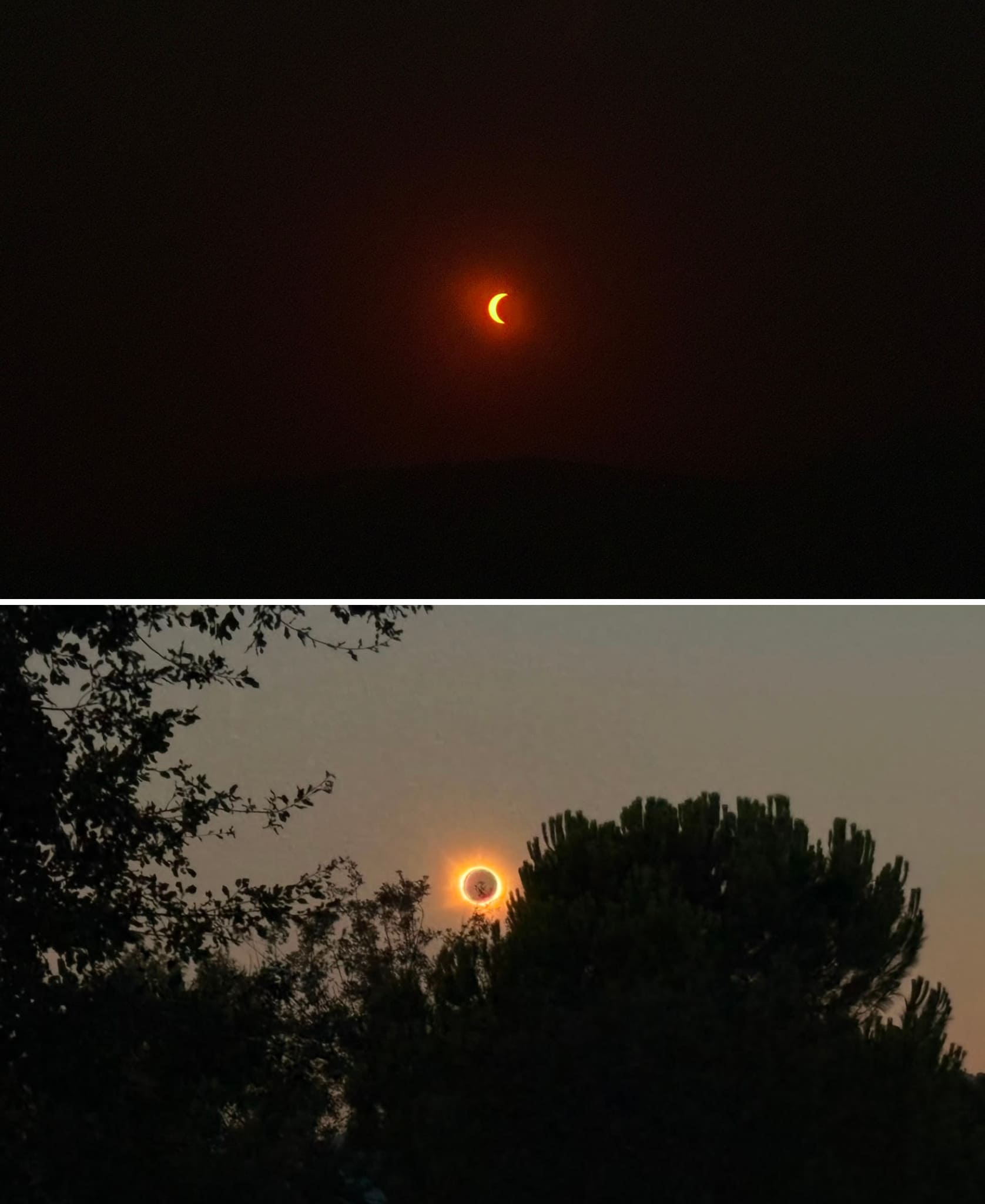
It was a nice change from looking down at the panels.
Poco a poco
Looking back at the time in Cádiz, the project had not developed exactly as we imagined it would.
We changed the experimental site. We rebuilt parts of the setup. We carried heavy concrete across the city. We improvised a sampling station outside. We dealt with strong winds, boats appearing where they were not supposed to be and one HydroMoth disappearing into the sea.
But at the same time, the experiment was running.
The frames were in the water. The HydroMoths were recording. The speakers were playing their experimental soundscapes. And the settlement panels slowly became colonized by marine organisms.
That is probably the most satisfying thing about seeing the project now compared with the beginning. In April, most of what we had was equipment, plans and a long list of things that still needed to be done. At the end, there was an actual marine community growing on the structures we built.
And all the observations that we made are now data that can be analysed.
Perhaps the best way to describe fieldwork in Cádiz is with a phrase we have heard and used plenty of times:
Poco a poco.
Little by little, the experiment was coming together.
Hasta luego, Cádiz!
Carlos & Liam

When I attended the OBIS Data Mobilization Workshop in the Azores (Thanks to the Air Center) this year, one observation immediately caught my attention: compared with countries such as the United States, Europe still appears surprisingly fragmented and underinvested in biodiversity data mobilization. The issue is not necessarily a lack of biodiversity research. European scientists produce enormous amounts of ecological data. The challenge is that publishing biodiversity observations into global infrastructures such as MBON/GBIF often remains an additional task rather than an integral part of funded research. In the United States, biodiversity data publication is frequently embedded in funding mechanisms and institutional mandates. Data management, curation, and dissemination seem to be recognized research activities. In much of Europe, including Denmark, researchers often mobilize data on top of their existing responsibilities, with limited dedicated funding for long-term stewardship.
I asked myself how is Denmark performing compared with its Nordic and neighboring countries?
Denmark is not lagging behind, but neither is it leading
The numbers reveal a mixed picture.
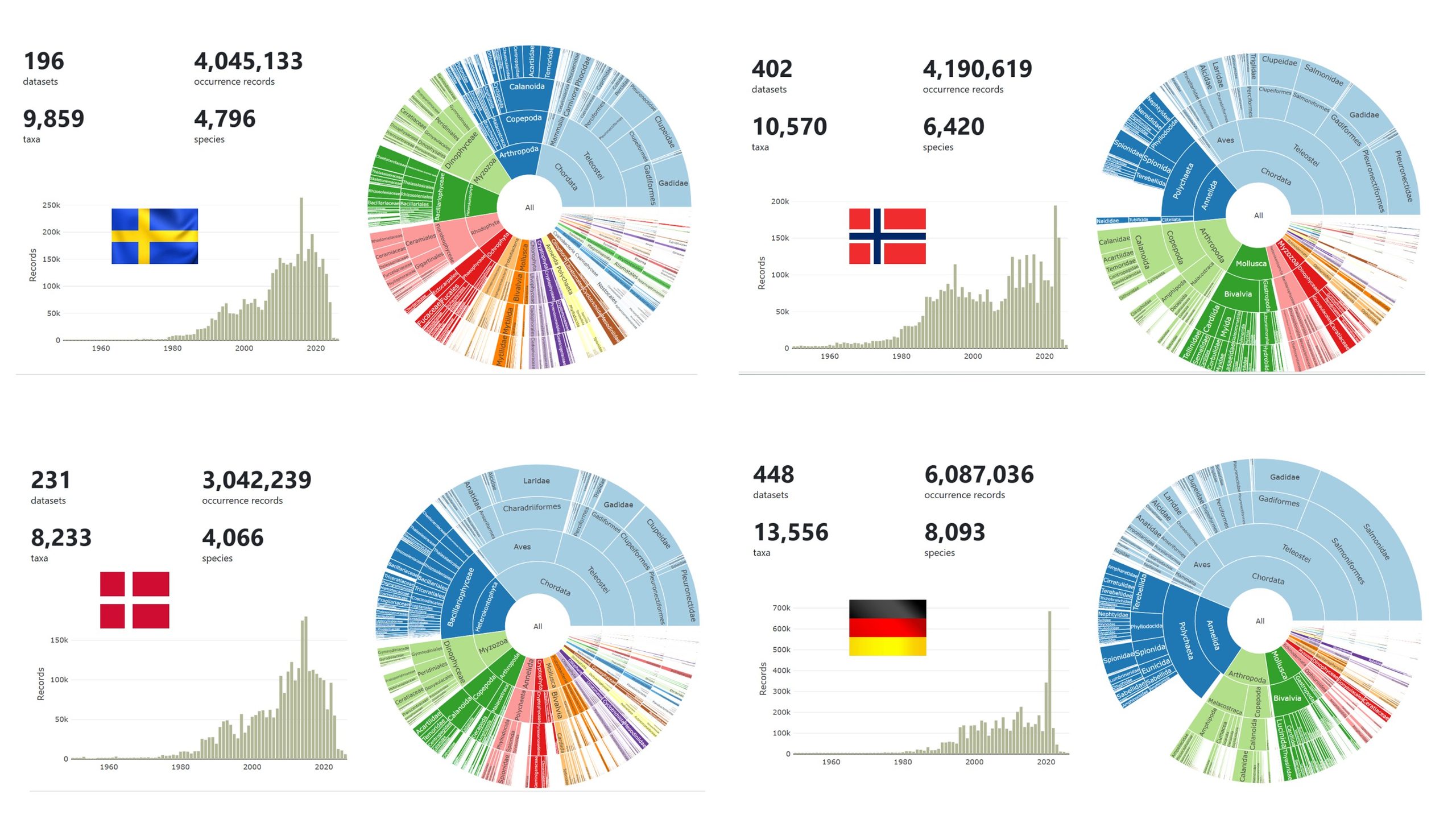
Germany clearly stands out as the regional leader, with both the highest number of datasets and the highest taxonomic coverage. Denmark has the lowest number of occurrence records and species represented among the four countries, despite having a very active biodiversity research community. What is striking is that Denmark does not fall dramatically behind in dataset numbers. Rather, the difference appears in scale and breadth. Danish datasets tend to contain fewer records and cover fewer taxa than those from Germany, Norway, and Sweden.
Different countries tell different biodiversity stories
The taxonomic breakdowns are equally revealing. Denmark should appreciate its fish and birds’ activists. Large portions of the records belong to Gadidae (cod family), Clupeidae (herring family), Laridae (gulls), and other marine vertebrates. This reflects Denmark’s historical strengths in fisheries monitoring, marine ecology, and seabird observations. However, many invertebrate groups, microorganisms, and less visible components of biodiversity remain comparatively underrepresented in global data sets despite active programs like national Program like MONIS.
Norway shows stronger contributions from invertebrate sides such as polychaetes, bivalves, copepods, and marine benthic fauna. The Norwegian data landscape appears heavily influenced by aquaculture sectores, long-term marine monitoring programs and offshore environmental surveys. There is greater representation of marine invertebrates, which are often critical indicators of ecosystem change.
What stood out in Sweden’s data profile is the relatively large contribution from copepods, diatoms, dinoflagellates, and macroalgae. These groups are often overlooked in biodiversity databases because they require specialized expertise and monitoring programs. Sweden’s contribution suggests sustained investment in aquatic ecosystem monitoring beyond commercially important species. Well done Sweden!
Germany’s profile appears the most diverse. While fish and vertebrates remain important, there are strong contributions from polychaete worms, molluscs, arthropods, plankton in general term and benthic organisms. Germany not only contributes more records but also appears to mobilize a wider variety of biodiversity data types. You made me proud Germany 
The real gap may be invisible biodiversity
One lesson from the workshop was that biodiversity databases often reflect what is easiest to observe, identify, and fund. Fish, birds, and mammals are well represented almost everywhere. The groups that drive ecosystem processes, such as jellyfish, zooplankton, benthic invertebrates, phytoplankton, and microbial communities, remain far less visible. This is particularly relevant for marine ecosystems. Some of the most important ecological changes currently occurring in our seas involve gelatinous zooplankton, plankton communities, and benthic assemblages, yet these groups remain underrepresented in many biodiversity repositories. For someone working with jellyfish and marine food webs, this raises an important question:
Are we documenting the biodiversity that is easiest to count, or the biodiversity that is most important for understanding ecosystem change?
This fall, Ocean Conservancy is celebrating its 41st annual International Coastal Cleanup® (ICC), once again bringing together volunteers to protect the beaches and waterways we all love. Ocean Conservancy recently hosted flagship events in Long Beach and Washington, D.C. that celebrated this global movement close to home.
Over the past four decades, nearly 20 million volunteers have rolled up their sleeves to remove more than 405 million pounds of trash from beaches and waterways around the world. And their impact extends far beyond what they collect. ICC volunteers have documented nearly 440 million individual items, creating the world’s largest marine debris database and providing invaluable information that helps Ocean Conservancy and others better understand—and tackle—ocean plastic pollution.
This year’s celebration continued that incredible legacy. At Alamitos Beach in Southern California, more than 150 volunteers gathered on September 19 and removed 1,109 pounds of trash, alongside members of Team USA Artistic Swimming and Olympic and Paralympic athletes. In Washington, D.C., 439 volunteers gathered on September 26 to remove 2,182 pounds of trash from Anacostia Park along the Anacostia River.


“I am so grateful to all of the volunteers who came out today for our ocean—and every volunteer who has made the last 41 years of impact possible,” said Ocean Conservancy’s Senior Director of Conservation Cleanups, Allison Schutes. “Every piece of plastic collected helps protect marine animals and habitats and contributes to research and advocacy.”
And the impact doesn’t stop when the cleanup ends. During International Coastal Cleanup events, volunteers do more than remove trash: They document what they find, helping build a clearer picture of the plastic pollution threatening our waterways and wildlife. Through the Clean Swell® app or paper data