


BC Hydro, the government-owned electric utility company, supplies electricity to 95% population of British Columbia. In April 2024, they called for acquiring 3,000 GWh of clean energy to bolster B.C.’s electricity grid. Quite surprisingly, the government recently announced an overwhelming response to BC Hydro’s call for clean energy. Independent producers across the province submitted proposals that boosted the capacity 3X more than what they expected, totaling 9,000 GWh.
Josie Osborne, Minister of Energy, Mines and Low Carbon Innovation
“We need more clean energy to power our homes, businesses and industries, to power growing communities and to power our future. Building an economy powered by clean, reliable and affordable electricity is one of the job-creation opportunities of our generation. Through regular calls for power and BC Hydro’s 10-year capital plan, we are creating over 10,000 construction jobs and driving sustainable growth across the province.”
From Diverse Projects to Economic Growth, BC Hydro Set to Revolutionize the Energy Landscape of British Columbia
Unlike other regions, British Columbia’s hydroelectric system offers a key advantage for integrating intermittent renewables like wind and solar. Hydroelectric dams, acting as energy reservoirs, can store water and release it when needed. This flexibility allows BC Hydro to balance the grid, ensuring consistent power amid adverse weather. Concisely, the hydroelectric dams are stable and reliable sources of clean energy.
- The 21 submitted proposals cover a wide range of renewable sources, with approximately 70% focusing on wind power, 20% on solar, and 10% on biomass and hydroelectric projects.
The projects span almost every region of British Columbia, namely the southern Interior, central Interior, north coast, Peace Region, and Vancouver Island. The government also highlighted that this was the first competitive energy call in over 15 years.
As BC Hydro evaluates the proposals, electricity purchase agreements are expected by December. Construction of these clean energy projects could start by fall 2028, bringing an estimated $2.3 to $3.6 billion in private investment and creating 800 to 1,500 jobs annually across the province.
Electricity Generation by Fuel Type (2021)

Source: Canada Energy Regulator
Ongoing Investments Driving BC Hydro’s Future
Chris O’Riley, president and CEO, of BC Hydro emphasized the significant changes they are making to enhance connections timeless in newly constructed homes and buildings.
He further added,
“In growing municipalities like Vancouver, where we are seeing substantial population growth and increasing residential, commercial and industrial customers clean electricity needs, we are embarking on significant upgrades to our electricity system, including adding new substations and expanding existing substations, transmission lines and distribution network to ensure we can continue to provide reliable and clean electricity to our customers.”
The company revealed that it is just not boosting clean electricity generation but also upgrading its transmission and distribution networks. In January 2024, the company rolled out a 10-year, $36 billion capital plan to expand infrastructure and support clean growth. These projects will create 10,500 to 12,500 jobs annually, while ensuring a stable energy supply as large projects, like the Site C dam, wrap up.

Source BC Hydro
Furthermore, it will be holding competitive power calls every two years to keep pace with British Columbia’s growing economy and the need for renewable energy. This approach also fortifies the electrical grid and ensures that clean energy reaches homes, businesses, and industries while keeping electricity rates affordable.
In addition to increasing the electricity generation in the province, BC Hydro is also investing to expand and strengthen its transmission and distribution system through its capital plan. Upgrading BC Hydro’s electricity grid will ensure that clean power can be delivered to new homes, businesses, and industries when and where they need it.
Latest: BC Hydro Unveils High-Powered EV Charging Stations
In its latest news release, the company unveiled its plans to expand its electric vehicle (EV) fast charging network, adding two new 180-kilowatt chargers in Vanderhoof. These chargers will help British Columbians transition from gas-powered vehicles to those that run on clean electricity.
George Heyman, Minister of Environment and Climate Change Strategy assured that,
“These new stations will help British Columbians travel quickly and reliably using clean energy,” stated. More charging options also contribute to our goal of reducing climate-changing emissions by 40% by 2030.”
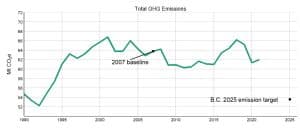 Source: Climate Change Accountability Report, British Columbia
This initiative reflects the growing enthusiasm for EVs among British Columbians. With over 170,000 EVs already on the road, BC Hydro anticipates this number could soar to between 700,000 and 900,000 in the next decade.
Overall, BC Hydro’s clean energy goals are set to transform the landscape of British Columbia. This shift will create a greener environment, allowing both residents and businesses to thrive.
The post Can BC Hydro’s Clean Energy Push Transform British Columbia’s Power Grid? appeared first on Carbon Credits.

EU carbon credit claims changed on 27 September 2026, the day the Directive (EU) 2024/825 began to apply across the European Union. The change is narrow. It changes how a company can talk about the credits it buys. A product can no longer be called neutral on the strength of compensation alone; however, every specific, evidenced statement about what a company measured, reduced, and funded stays fully available.

The post Promoting Improved Cooking Practices in Nigeria appeared first on Terrapass.


Ming Yang Eyes 33 MW Turbine, Greenvolt Delays FID
‘A strong start’: WA’s transition to renewable energy powerhouse aided by Premier’s announcement
WA EPA warned Woodside of ‘serious, significant and irreversible’ harms to Scott Reef from gas plans, new documents reveal
-
Climate Change1 year ago
Guest post: Why China is still building new coal – and when it might stop
-

 Greenhouse Gases2 years ago
嘉宾来稿:满足中国增长的用电需求 光伏加储能“比新建煤电更实惠”
-
Greenhouse Gases1 year ago
Guest post: Why China is still building new coal – and when it might stop
-

 Climate Change2 years ago
嘉宾来稿:满足中国增长的用电需求 光伏加储能“比新建煤电更实惠”
-

 Renewable Energy1 year ago
Sending Progressive Philanthropist George Soros to Prison?
-
Climate Change2 years ago
Bill Discounting Climate Change in Florida’s Energy Policy Awaits DeSantis’ Approval
-
Greenhouse Gases1 year ago
嘉宾来稿:探究火山喷发如何影响气候预测
-

 Climate Change2 years ago
Analysis: China’s CO2 falls 1% in Q2 2024 in first quarterly drop since Covid-19