

The future of solar energy in South Carolina is glowing with potential, as highlighted in The Economic Impact of the Solar Industry in South Carolina. This report, prepared by Dr. Joseph C. Von Nessen of the University of South Carolina, offers a compelling look at how the state’s solar industry is poised to deliver profound economic benefits while helping meet rising energy demands.
By 2035, the solar sector is projected to quadruple its current annual economic impact, injecting up to $19 billion into the state’s economy over the next decade. This growth in the solar sector will create more than 3,000 jobs and stimulate South Carolina’s economy while utilizing a maximum of 1.4 percent of agricultural land, allowing the state to position itself as a leader in solar development.
The Palmetto State has every reason to embrace a bright, sustainable energy future, but a lot has to happen for South Carolina to take advantage of this potential.
Is South Carolina ready for solar growth?
Legislative and utility program opportunities exist. Is the workforce ready? What about other land options besides agricultural land?
Legislation and Utility Programs
House legislation has been pre-filed to help move things forward. It is now up to legislators to ensure that renewables legislation will continue accelerating solar generation in South Carolina.
In addition to legislation, utility programs can be an opportunity or a roadblock for solar growth. Programs such as Duke Energy’s PowerPair, being piloted in North Carolina, can boost the opportunity to generate electricity from solar. Residents, public entities, businesses, and industry would all benefit from this opportunity. These programs need to be opened up to provide this opportunity to make these entities resilient.
Workforce
With this growth comes a need for more people in the solar industry to install, sell, and fulfill management and administrative roles at solar companies. Is South Carolina ready? Are the technical colleges and universities providing solar workforce training? Are high schools educating on renewable energy? There are great programs at Coastal Carolina University, Lexington Richland 5, and Richland School District Two; and new programs like the one by Solar United National are also paving the way for the solar workforce. The South Carolina Energy Office is a great resource for energy workforce training.
Let’s learn from these programs, expand education, and grow the solar workforce so South Carolina is ready for the demand.
It’s not just agricultural land
This new report acknowledges that 1.4% of agricultural land is a conservative estimate, which is correct. In addition to agricultural land, solar can also be installed on the roofs of homes, multifamily buildings, communities, churches, commercial buildings, land adjacent to churches, warehouses/distribution centers, roofs of industrial facilities, land adjacent to industrial facilities, military bases, healthcare facilities, etc.

South Carolina’s future is so bright we have to wear shades. Let’s harness this sun to generate electricity and usher in a bright future for the next generation.
The post South Carolina’s Solar Future is Bright appeared first on SACE | Southern Alliance for Clean Energy.

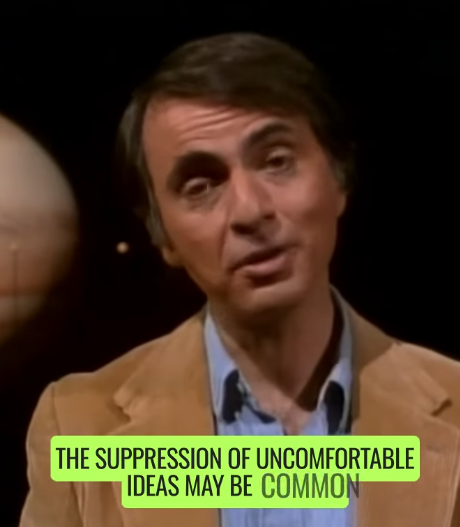 Seminal astrophysicist Carl Sagan explains why uncomfortable ideas may be banned in religion, they must not be shunned in science.
This is an important concept in American life today, as conspiracy theorists are convinced that climate change denial cannot be considered in scientific circles.
I happened to bring this up in my interview with Dr. V. Ramanathan of the Scripps Institution, who has been amassing data on global warming since the 1970s. He laughed, and explained, “If I could prove that human activity was not causing temperatures to rise, I’d be be one of the wealthiest and most famous scientists in world history.”
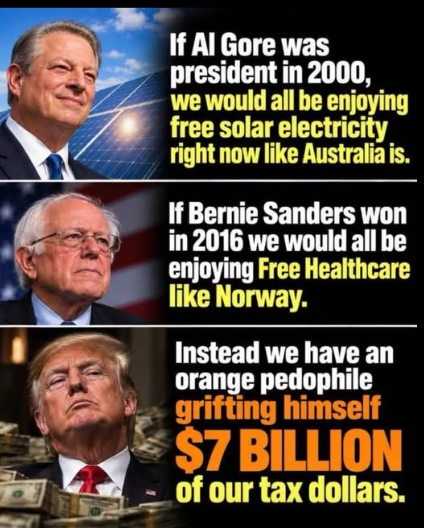 As suggested at left, a great deal of the hardship that has befallen the U.S. was simply bad luck. Al Gore came within a whisker of victory in 2000, a win that would have forever changed the course of our nation in terms of energy policy, education, healthcare, and international affairs.
If Bernie had become the 2016 nominee, we wouldn’t have had Hillary Clinton telling our country’s most mean-spirited and least-educated people that they were “deplorables,” ushering a criminal sociopath into the White House.
We Came Incredible Close to Averting the Disaster that Is Donald Trump
 Social democracies are nations in which the tax base provides everyone with healthcare and education, and where the richest and most powerful people are not free to ruin the environment.
I run into someone from one of these counties a couple of times a month, and I like to ask why their people are consistently at the top of the World Happiness Rankings. The normal response is always some variant of the following:
It’s hard to be happy living in a society that is indifferent to the suffering of others. It’s part of the very nature of human beings to care about one another.
Something else I notice about these places is that very few people are religious. Sweden, e.g., is about 80% atheist.
That means no childish tribalism, no ridiculous dogmas, no worries about eternal damnation, etc.



-
Climate Change1 year ago
Guest post: Why China is still building new coal – and when it might stop
-

 Greenhouse Gases2 years ago
嘉宾来稿:满足中国增长的用电需求 光伏加储能“比新建煤电更实惠”
-
Greenhouse Gases1 year ago
Guest post: Why China is still building new coal – and when it might stop
-

 Climate Change2 years ago
嘉宾来稿:满足中国增长的用电需求 光伏加储能“比新建煤电更实惠”
-

 Renewable Energy1 year ago
Sending Progressive Philanthropist George Soros to Prison?
-
Greenhouse Gases1 year ago
嘉宾来稿:探究火山喷发如何影响气候预测
-

 Climate Change2 years ago
Analysis: China’s CO2 falls 1% in Q2 2024 in first quarterly drop since Covid-19
-

 Climate Change1 year ago
嘉宾来稿:探究火山喷发如何影响气候预测