

As students across the Southeast prepare for another school year after an extremely hot summer away, we’re reminded that not all learning happens within the four walls of the classroom. For example, with the opening of her new solar installation and workforce center in Cleveland, Georgia, Olivia Amyette is equipping workers from diverse backgrounds with the skills they need to prosper in the flourishing solar industry. Meanwhile, 14 students in Georgetown, South Carolina recently spent three weeks learning how to install solar and EV infrastructure thanks to the nonprofit Solar United (and even got paid to do so).
But the truth remains that schools and universities—with their commitment to teaching and service, their leadership role within their communities, and their access to experts and resources—are uniquely suited to play a key role in the Clean Energy Generation. Across the U.S., nearly 100,000 public schools make up one the largest consumers of energy in the public sector. Additionally, nearly 480,000 school buses make up the largest mass transit fleet in the country. Fortunately, schools and colleges across the Southeast are stepping up to the clean energy plate.
From elementary schools making energy efficiency fun to high schools winning EV Grand Prix, we’ve picked a handful of our favorite new stories showcasing the clean energy progress happening within and outside of our classrooms, on our school buses, and even on our race courses (more on that below)!

Left photo of Clemson’s power plant courtesy of Clemson News; middle photo of South Side Elementary School Green Team member Campbell Latham courtesy of Amber Brophy/Six Rivers Media
Commission on Sustainability works tirelessly to create greener Clemson
The Clemson Tigers are trading orange for green, with the goal of becoming carbon-neutral by 2030. Doing so will require the University to eliminate or offset almost 190,000 tons of annual carbon emissions in just one generation. The Tigers have already made strides toward its ambitious goal. Clemson reduced building energy intensity by 20% by 2020 and pledged to increase renewable energy sourcing by 10% by 2025. Read more.
South Side Elementary makes saving energy fun
Teaching the ABCs of green! Students and teachers at Tennessee’s South Side Elementary School learned to save energy for a chance to win $25,000 through TVA’s EnergyRight School Uplift program. As part of the competition, students and teachers alike lowered their building’s electric and gas bills, practicing “green” habits while learning about renewable resources. Student-led Green Teams even assisted with school checks, turning off lights and unplugging electronics not in use. Read more.
EPA gives Miami-Dade Schools $19 million for more electric school buses
“Transitioning to a clean transportation future means cleaner air and less pollution, it means healthier kids and healthier communities.” Thanks to recent funding from EPA and Volkswagen, Miami-Dade County Public Schools will soon add 80 new electric school buses to its existing 20. That means 100 of the district’s 800 school buses will soon be 100% electric, giving their kids a clean ride to school. The county plans to match the school district by introducing at least 100 electric transport buses! Read more.

Left photo of Morehouse College’s Graves Hall courtesy of Jason Getz/Atlanta Journal-Constitution; middle photo of EV race cars courtesy of Dan Scanlan/Jacksonville Today; right photo of Catawba College’s rooftop solar courtesy of Catawba College
Morehouse College gets federal recognition for energy efficiency
Morehouse College was recently recognized for its efforts to make its Atlanta campus more energy efficient. The HBCU has achieved 31% energy savings from a 2017 baseline, meeting its Better Buildings Challenge goal four years ahead of schedule. Energy efficient improvements included installing LED lighting and upgrading the HVAC system in the Martin Luther King, Jr. International Chapel, as well as replacing heating and water systems in the school’s historic Graves Hall. Read more.
EV racers from Florida zip around FSCJ course
Zane Kay, a student at Florida State College at Jacksonville, recently raced his lightweight electric race car around a curvy Florida course. Part of the Electrathon America program, the race helps train high school and college students for the burgeoning EV market. Kay, who is part of his college’s automotive technology program, hopes to use the competition as a step toward his dream of working on full-size EVs. Read more.
Harold Miller remains the Godfather of EV
A former student reflects on the enormous impact of Harold Miller, a retired auto mechanics teacher at Northampton County High School in rural Gaston, North Carolina. In 1993, Harold formed the school’s North East Automotive Team, which set its sights on the regional EV Grand Prix competition slated for the spring of 1994. The small rural school’s unexpected victory would go on to inspire national press coverage and a 2004 book, “Electric Dreams.” 30 years later, Harold continues to champion the benefits of EVs and clean energy, true to his moniker, “The Godfather of EV.” Read more.
A Positive “Perfect Storm”: Catawba College’s Commitment to Clean Energy Career-Building
Catawba College in Salisbury, North Carolina recently became the first college in the Southeast and the 13th college in the country to achieve carbon neutrality, seven years ahead of its 2030 goal. Catawba achieved the milestone through a mix of on-site renewable energy, energy efficiency upgrades, carbon offsetting credits, and incentives from the Inflation Reduction Act. The college eventually plans to eliminate all fossil fuels and transition to 100% renewable energy. Read more.
Follow along each week
 These stories highlight just a few of the positive things happening in our area! Every day we see signs of hope. The Clean Energy Generation is creating a future powered by clean energy that leads to clean air and water, good jobs, and vibrant communities.
Would you like to see more stories like this? We’ve got just the thing for you! Every Thursday, we share the latest clean energy news on Instagram with #CleanEnergyNews. Join us as we celebrate the progress and signs of hope in the clean energy transition.
Join the Clean Energy Generation
Together, all of us who are taking action are part of the Clean Energy Generation movement. We’re coming together to create healthier communities and a more secure and sustainable environment, starting now. No matter your age, income, zip code, or abilities, you can play a role. You don’t have to have the answers, learning more is a great way to start. Join us, and we’ll share ideas, resources, tools, and practices to show how we can all be part of the transformation.
Join the Clean Energy Generation
The post Eco-Education: Schools Across the Southeast Are Embracing Clean Energy appeared first on SACE | Southern Alliance for Clean Energy.
Eco-Education: Schools Across the Southeast Are Embracing Clean Energy

 I join those who say that the human race has evolved to be tribal and selfish. We are largely indifferent to the needs of others, and the capitalist society we’ve built has only served to reenforce this.
As Tom Waits observed, “We’re monkeys with money and guns.”
Now, are there some extremely decent and kind people spread around the globe? Of course. But they tend not to be the billionaires who make all the important decisions as to the how our culture will conduct itself.
 Well, never is a long time, as they say.
Yet imagine this scenario, which is quite possible:
Trump is impeached and removed. Almost immediately, there is an incredible outpouring of information on an additional set of crimes committed by Trump and his administration. Simultaneously, the U.S. morphs into a social democracy, and its people enjoy quality education, access to healthcare, and prosperity, not unlike those in Northern Europe and elsewhere around the globe.
Yes, there will always be Republicans promising mass deportations and whatever else appeals to a dwindling MAGA base, but I would think they will have one hell of a hard time winning a national election.
 The GOP can say the American economy is skyrocketing. But then there’s that nasty little piece of reality that people can’t afford groceries and are suffering financially more generally.
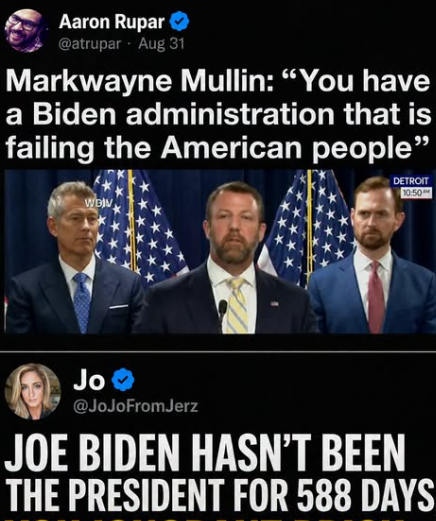
Or they can day that people are suffering financially, but it’s Biden’s fault. Oops. Biden left office 588 days ago.
Or they can say that the war in Iran has driven up gas prices, but that will turn immediately because we’ve won the war. Yikes. What can we say about all these bombs?
Or they can say that all the racial hatred and divisiveness is Obama’s fault. No, that’s problematic, since he’s been gone for almost 10 years.
Trump supporters may not be too sharp, but even they are having trouble accepting all this crap.



-
Climate Change1 year ago
Guest post: Why China is still building new coal – and when it might stop
-

 Greenhouse Gases2 years ago
嘉宾来稿:满足中国增长的用电需求 光伏加储能“比新建煤电更实惠”
-
Greenhouse Gases1 year ago
Guest post: Why China is still building new coal – and when it might stop
-

 Climate Change2 years ago
嘉宾来稿:满足中国增长的用电需求 光伏加储能“比新建煤电更实惠”
-
Climate Change2 years ago
Bill Discounting Climate Change in Florida’s Energy Policy Awaits DeSantis’ Approval
-

 Renewable Energy10 months ago
Sending Progressive Philanthropist George Soros to Prison?
-
Greenhouse Gases1 year ago
嘉宾来稿:探究火山喷发如何影响气候预测
-

 Carbon Footprint2 years ago
US SEC’s Climate Disclosure Rules Spur Renewed Interest in Carbon Credits