

Our annual Photo Contest is officially wrapped—and wow, you delivered! More than 1,000 ocean lovers shared their incredible ocean and wildlife photos. Thank you for keeping our ocean in focus during National Ocean Month and inspiring us with your creativity.
Now it’s time to meet the favorites. See the stunning photos that captured the hearts of our judges, staff and fellow ocean lovers.
Judges Choice Winner:
“Walrus Nursing” by Richard Rothstein
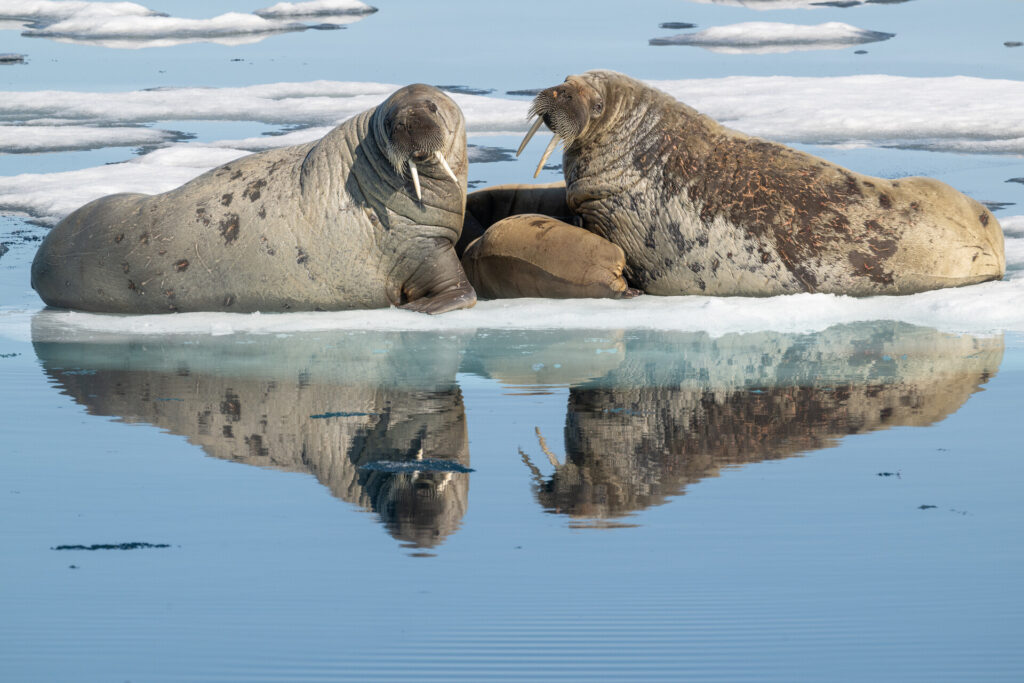
Our group was in a small skiff slowly moving among the icebergs when we came upon the scene in the image. Two female walruses were in what appeared to be a protective posture as one of the females was nursing a small calf. We remained a very respectable distance and did not approach. The walruses seemed to completely tolerate our presence as there appeared to be no alteration of their natural behavior. This was my first encounter with walruses, and it was truly an experience of a lifetime!!
A word from the judges:
“There’s such tenderness in this Arctic moment—two adult walruses framing the calf nursing between them, all mirrored in the glassy meltwater below. That reflection doubles the impact and gives the composition a beautiful symmetry, and the soft, even light shows off every wrinkle and whisker. A quiet, intimate family portrait set against the fragile backdrop of the sea ice these animals depend on.” – Angela J. Farmer
“I love this photograph! The composition is excellent with the reflections and the ice bergs in the background balancing the photograph. I also appreciate that the photographer captured this photo and it does not appear like the animals were stressed out in any way. They are acting and behaving natural in their natural habitat. Very important to me as a photographer to not disturb the animals by my presence. Good job!” – Harvey Hergett
“…Really beautiful and powerful. I loved the calm moment, the reflection and the connection between the walruses. It feels very natural, honest and emotional.” – Andrés Ballesteros
Staff Choice Winner:
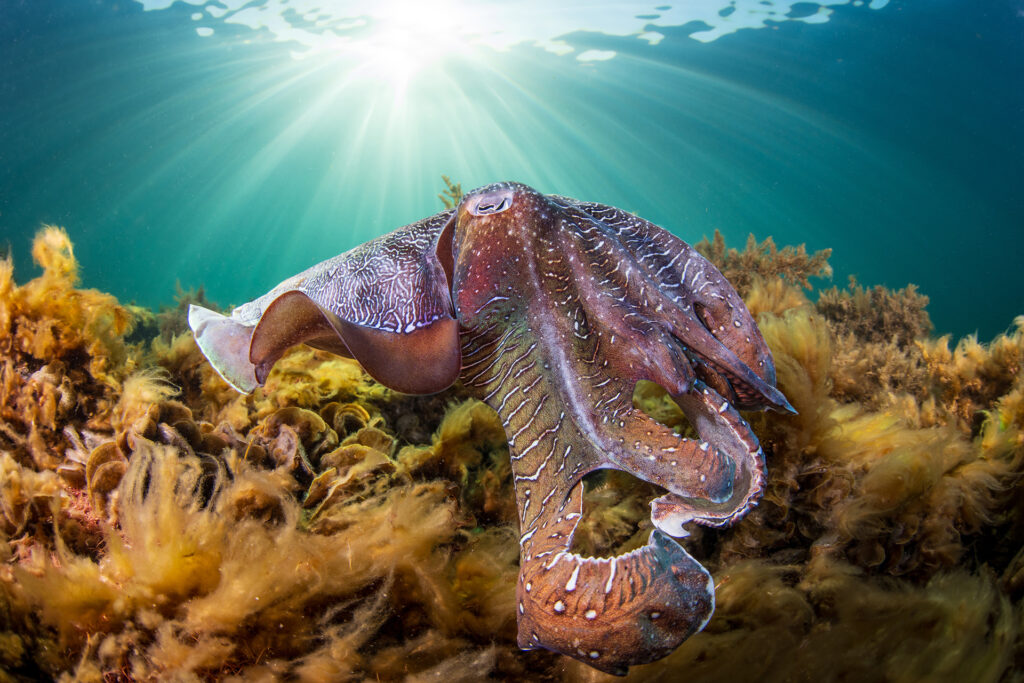
“The Lone Ranger” by Rowan Dear
(Rowan’s Instagram; Rowan’s Website)
A large male Giant Cuttlefish cruises around the shoreline of Whyalla, looking for a mate this season. Most of the Cuttlefish here are smaller and similar size to the females, however you will see some very large males who are 3-4 times the size of some males who will swim around and bully and dominate the other males and sometimes guard up to 3 females. The larger males are probably 2 years old and have been eating their way through summer waiting for the mating season in winter.
A word from the judges:
“This is an absolute showstopper—the sunburst breaking through the surface turns an ordinary dive into something almost cinematic. The cuttlefish’s intricate textures and shifting purple-to-copper tones are stunning, and the way the light rays guide your eye right down to it shows real mastery of natural underwater lighting. A rich, immersive image that makes you feel like you’re in the water with him.” – Angela J. Farmer
“I liked the angle of the shot as shooting upward on the subject gives it a more majestic feel.” – Harvey Hergett
People’s Choice Winner:
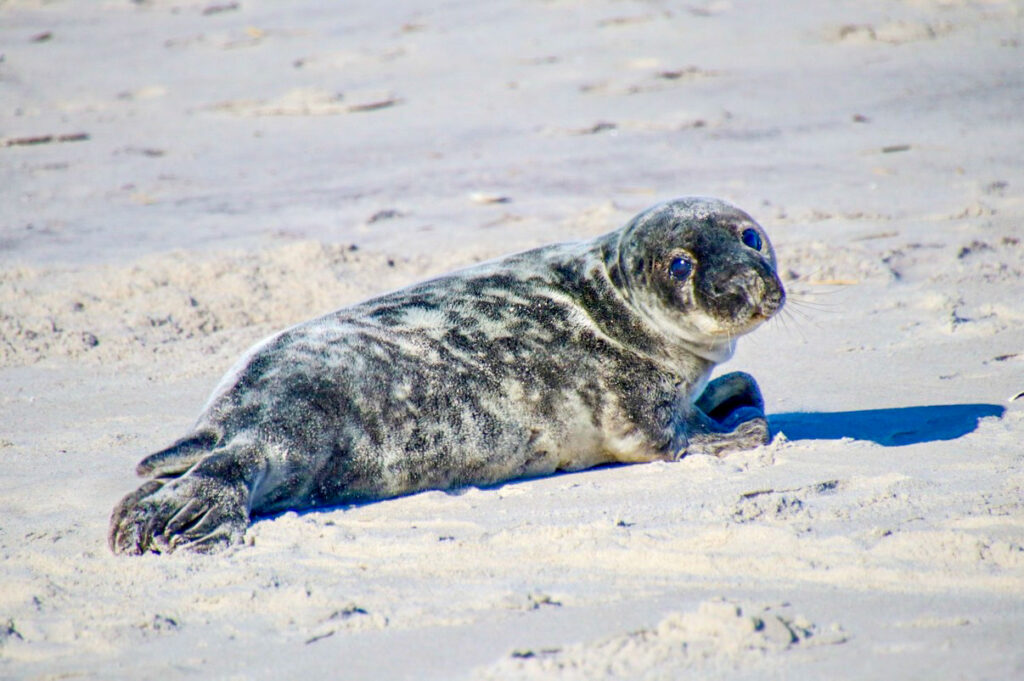
“Sweet Seal” by Nicole Pellegrino
(Nicole’s Instagram; Nicole’s Website)
This sweet seal was resting on the shore of Long Beach, NY on a bright sunny day in April 2024.
A huge thank you to everyone who entered, voted, shared and cheered on this year’s contest. And a mighty thanks to our expert judges: Angela J. Farmer, Harvey Hergett and Andrés Ballesteros. Congratulations to all our talented photographers—we can’t wait to see what you capture in 2027!
Enjoy the contest’s honorable mentions below and we’ll SEA you next year.
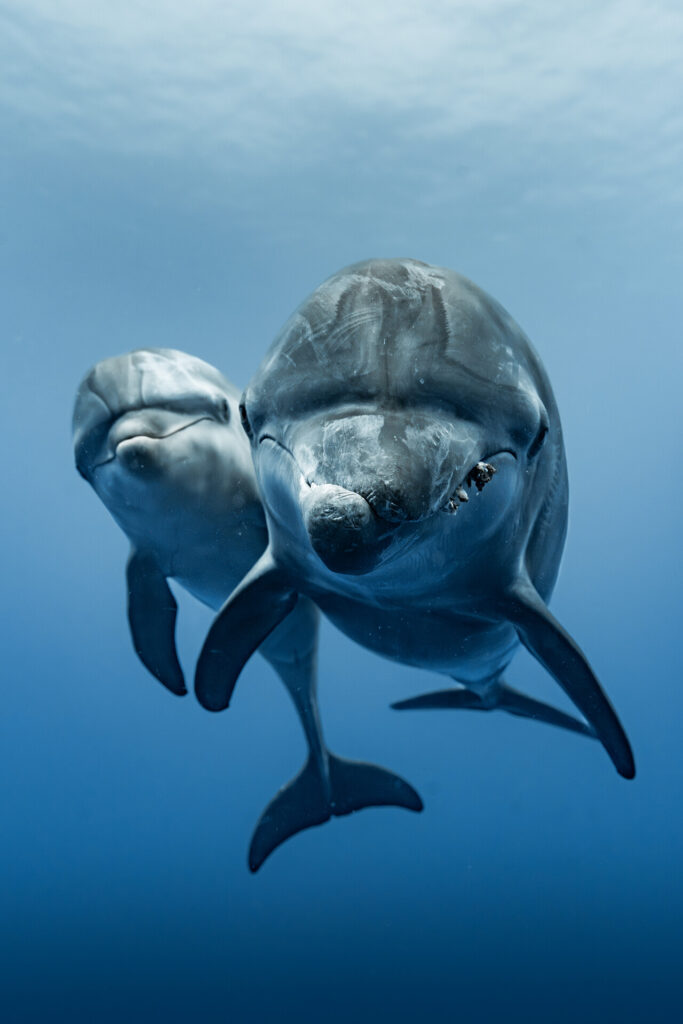
The post 2026 Ocean Conservancy Photo Contest Winners appeared first on Ocean Conservancy.
https://oceanconservancy.org/blog/2026/06/30/2026-photo-contest-winners/

If you’ve ever joined a beach cleanup, you’ve almost certainly picked up a plastic bottle. During Ocean Conservancy’s 2025 International Coastal Cleanup® (ICC), plastic beverage bottles were the top item collected by volunteers around the world. Plastic bottles have been among the top 10 items collected throughout the ICC’s entire 41-year history.
But where do those bottles really come from? We know rivers carry plastics of all shapes and sizes from inland communities to coasts and the ocean. What we know far less about is what makes plastic bottles move within rivers, what speeds them up or slows them down and how likely they are to reach the coast and become ocean pollution. Research on river plastics is growing worldwide, but studies in North America lag behind other regions.
Ocean Conservancy scientists, alongside a team of collaborators from 10 research institutions around the United States and Canada, set out to help close some of these pressing knowledge gaps.
How do you track a plastic bottle?
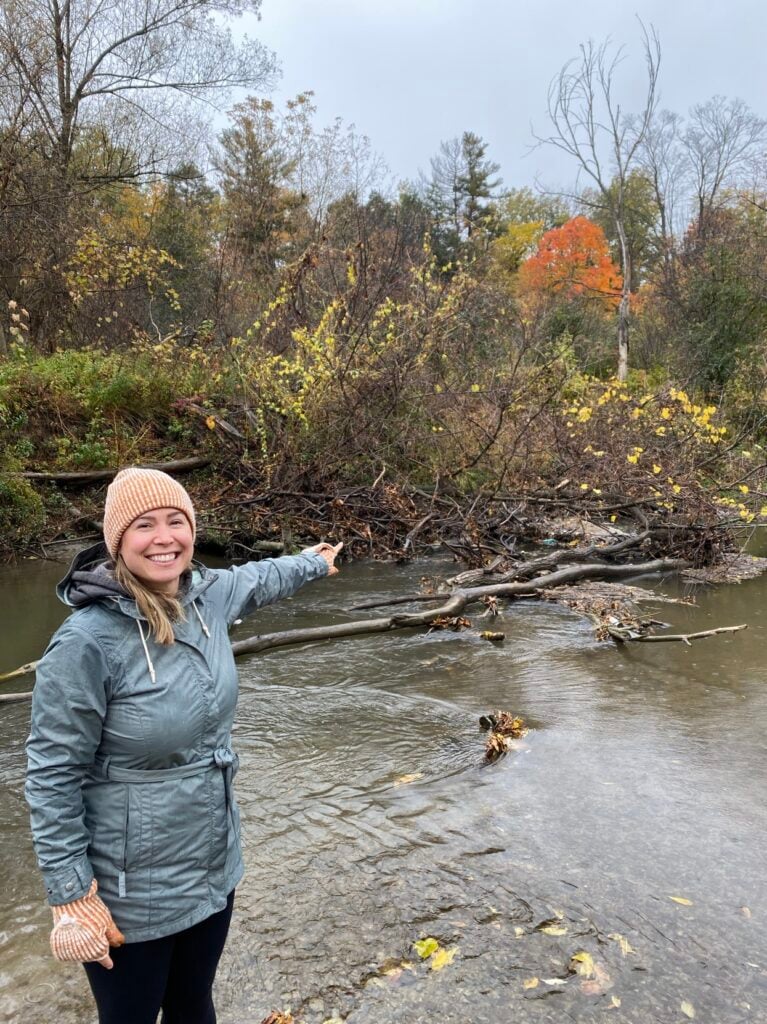
… with a little help from GPS! We modeled our research after a 2021 project in the Toronto Harbor conducted by our University of Toronto colleagues. Like the Toronto project, our research team outfitted floating plastic bottles with GPS tags that reported each bottle’s location at regular intervals. That let us calculate how far and how fast every bottle traveled. Over a two-year period, we released about 300 GPS-tagged bottles into 30 stretches of river in Los Angeles, California; California’s San Francisco Bay Area; Chicago, Illinois; Washington, D.C.; Miami, Florida; Boston, Massachusetts; and Toronto, Canada.
We chose each of these places on purpose.
The locations were selected to represent varied watershed types (ranging from temperate to subtropical climates and mountainous to flat terrain) and development intensity (suburban to densely urban). We followed the bottles for about three months each, through changing seasons, storms and rainfall before locating and retrieving them. And while the plan was always to recover the bottles at the end of the experiment, we also conducted cleanups in each watershed beforehand to make sure we were leaving things a little cleaner than we started.
What did we find?
Our bottles went on quite a journey! On average, each bottle traveled 3.8 miles, but distance traveled actually spanned a huge range depending on the bottle and location. For example, one of our bottles barely budged, moving just 240 feet over the deployment period. Another made it further than the length of a marathon, clocking in at 33 miles traveled.
We found river flow was a major driver of how far bottles went, but it wasn’t the only factor—the landscape around each river mattered too. Patterns in bottle movement revealed:
- Forest and vegetation in rivers slowed bottles down. The more forest cover upstream, the less likely a bottle was to reach the coast, because it got snagged in brush, branches and other natural obstructions.
- More urbanized stretches sped them up. Bottles moved farther and faster in more urbanized stretches of river, where there was typically less vegetation to catch them.
Using thousands of GPS points, as well as data about the river systems and watersheds we studied, we built a model to estimate where bottles reaching the coast or the Great Lakes may be coming from. It showed that within a one-year period, about half originate quite close to shore (within seven miles). The other half come from much farther inland, up to 120 miles away!
Why does this matter for our ocean?
Plastic bottles aren’t just unsightly. Ocean Conservancy’s recent, award-winning research found they can be deadly to marine life—either as whole items or after they break up into sharp fragments. There have been documented instances of seabirds like albatross dying after swallowing a plastic bottle whole.
Plastic bottles are among the most prolific plastic pollutants we see out there, and now we understand that many of those we find on beaches or in the ocean may be coming from far upstream.
That has big implications for how we tackle the problem. If half of the bottles reaching the ocean around North America or Great Lakes can start their trip more than 100 miles inland, prevention must happen upstream. Pollution-prevention models, like laws that incentivize the collection and recycling of plastic bottles before they end up in the environment, should be implemented more broadly to prevent plastic from becoming pollution in the first place. Cleanups and other efforts in coastal communities also remain critical. If we want to capture floating plastics like bottles before they reach the coast and eventually our ocean, communities within 120 miles from the ocean or Great Lakes should plan to do those cleanups on an annual basis, or even more frequently.
How can I help keep plastic bottles out of rivers and the ocean?
No matter where you live, the choices you make can help keep plastic out of the ocean:
- Support policies, like those Ocean Conservancy advocates, to stop plastic pollution at the source.
- Join a cleanup along your local river, creek or lakeshore. Every bottle picked up inland is one less that can wash out to sea.
- Choose reusables instead of single-use plastic bottles whenever you can.
We want to extend a huge thank-you to our amazing collaborators on this project at the University of New Hampshire, University of Toronto, Loyola University of Chicago, Smithsonian Environmental Research Center, Florida International University, Moore Institute for Plastic Pollution Research, San Francisco Estuary Institute, University of Waterloo, University of Southern California and University of New Mexico.
Our study, “GPS-Tracked Bottles in North American Rivers Show Marine Plastic Pollution Can Originate from Far Upstream,” was published in the November 13 issue of the scientific journal Environmental Science & Technology-Water. Read the full paper here.
This blog was co-written with Hannah De Frond. Hannah works with Ocean Conservancy and the University of Toronto Trash Team to manage the International Trash Trap Network (ITTN), a global network of local groups using trash traps to increase cleanup efforts, engage communities and inform upstream solutions.