

If you hold a 401(k), an IRA, or a single index fund, you own a sliver of hundreds of American companies, yet you almost certainly let someone else decide how those shares vote. Individual investors hold about 25% of all U.S. public equities, more than BlackRock, Vanguard, and State Street combined, yet only about one in eight of them votes the shares they own; the rest of those ballots get cast by a handful of asset managers and the proxy advisory firms they rely on, deciding who sits on corporate boards, how executives are paid, and what a company owes its workers, its customers, and the climate. This week’s two guests want to put that voice back in owners’ hands. Gabriel Grant, co-founder of the nonprofit Shareholder Democracy, is building the machinery to let everyday investors delegate their proxy votes to a civil-society organization they already trust, such as a labor union, a faith community, an environmental group, choosing a representative once and changing it whenever they want. Doug Heske, CEO of Newday Impact Investing and its Causeway platform, comes at the same problem from the engagement side, channeling revenue from values-aligned portfolios into work with more than 50 mission-aligned nonprofit partners and connecting investors and donors to the causes — and companies — they care about. Grant is building the rights layer that gets a vote counted; Doug is building the engagement layer that turns it into a continuing conversation with management. Their conversation brings the challenge into focus.
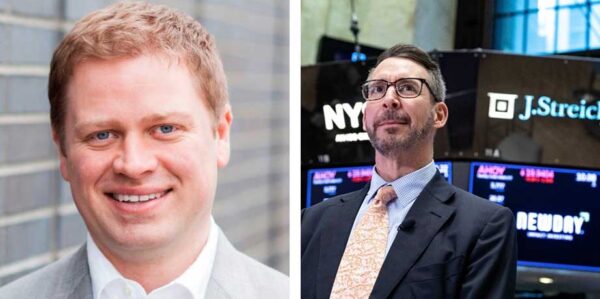
On this episode of Sustainability In Your Ear, learn how the proxy vote problem undercuts foundations whose endowments quietly vote against the shareholder proposals their own grantees are writing — one side of the house funds the change while the other votes it down, because the signal most managers are rewarded for is next year’s return. Coordinating millions of small owners across thousands of ballots was mechanically impossible for most of the last century, but the internet collapsed the cost of communication and AI is collapsing the cost of reading thousands of ballot items at once, which is what makes the idea newly buildable. Grant is quick to add that the vote is leverage, not the destination, because most of the value in corporate governance is created in dialogue with management. He is candid about the limits: one share, one vote will never be pure democracy. The thread the conversation dives into governance ideas pioneered by Dee Hock, the founder of Visa, who built a global network by getting rival banks to share sensitive data around one shared purpose. Hock’s “chaordic” thinking blends chaos, and offers a model that Grant and Doug believe is finally buildable for shareholders.
To learn more about Shareholder Democracy and delegate your proxy votes — or, if you have a brokerage account, to try the pilot that auto-forwards your ballots to the new voting platform — visit shareholderdemocracy.org. To explore Newday Impact Investing and the Causeway platform for values-aligned investing and giving, visit causewayimpact.com.
- Subscribe to Sustainability In Your Ear on iTunes
- Follow Sustainability In Your Ear on Spreaker, iHeartRadio, or YouTube
Interview Transcript
Mitch Ratcliffe (0:00)
Hello. Good morning, good afternoon, or good evening, wherever you are on this beautiful planet of ours. Welcome to Sustainability In Your Ear. This is the podcast conversation about accelerating the transition to a sustainable, carbon-neutral society, and I’m your host, Mitch Ratcliffe. Thanks for joining the conversation today.
We’re going to look at how individual investors can band together to drive the economy towards sustainable and just outcomes. Almost everyone listening owns a piece of corporate America, and almost no one knows how it votes. If you have a 401(k), an IRA, a pension, or a single index fund, you’re a shareholder, and every spring the shares with your name behind them get voted on hundreds of corporate ballots. These votes decide who sits on the board, how executives get paid, and what a company owes its workers, its customers, and the climate.
You almost certainly didn’t cast those votes. In fact, only 29.8% of shareholders did so in 2024, and for most of us, that voice is exercised by a very small number of asset managers and the proxy advisory firms that they lean on, often in directions that the actual owners would never choose.
For most of the 20th century, the question “Who does a company answer to?” kept narrowing until Milton Friedman shrank it to a single word: shareholders. What’s strange about this moment is that the ownership has spread to almost everyone, while the voice and power that comes with it has collected into very few hands.
That gap went unchallenged for so long because closing it was mechanically impossible. You simply couldn’t coordinate millions of small owners across thousands of ballots, but the internet made that kind of coordination cheap, and AI is starting to make it manageable, and the thing that couldn’t be done — letting ordinary owners express real preferences at scale — is suddenly worth taking seriously.
So one of my guests today is building the infrastructure to do exactly that. Gabriel Grant is the co-founder of Shareholder Democracy, a nonprofit effort to let everyday investors delegate their proxy votes to civil society organizations they already trust — for instance, a labor union or a faith community or an environmental group — so then those organizations can carry their members’ values into the boardroom.
Gabriel holds a PhD in leadership and sustainability from Yale, with earlier degrees in physics and ecological systems engineering from Purdue, and he founded the leadership firm Human Partners and co-founded the Byron Fellowship. He may be best known for a book that he wrote with his Shareholder Democracy co-founder, Jason Jay, of the MIT Sloan Sustainability Initiative. It’s called Breaking Through Gridlock, and it became an international bestseller about how people actually talk across deep disagreement. He’s someone whose life work is depolarizing hard conversations, and now he’s trying to build a voting machinery for one of the most polarized arenas of all, in finance.
It’s a project that resists easy political coding. One of the endorsements on Shareholder Democracy’s site comes from Kevin Hassett, a former chair of President Trump’s Council of Economic Advisers, and he makes the case that organizing owners to vote for their wishes is something people across the spectrum should want, so it’s not a right or left issue.
Joining the conversation as well is my occasional partner in these discussions, Doug Heske, CEO of Newday Impact Investing and Causeway Impact, and he comes at the same problem from the engagement side: how to connect investors with mission-driven nonprofits and with companies that take their stakeholders seriously. Where Gabriel is building the rights layer, Doug is building the engagement layer, and the interesting question is, what happens when these two layers come into contact?
We’ll talk about how delegating your proxy votes would actually work, and what has to fall into place legally, technologically, and culturally for it to do so, and what Shareholder Democracy is reaching for. We’ll sit with the hard question, whether one share, one vote can ever be democratic when wealthier owners carry more weight, and whether the same infrastructure that lets a community organize its shares could let a faction capture a company. Because I spent several years as a trustee of the Chaordic Commons, I also want to test Visa founder Dee Hock’s old idea that distributed authority held together by shared purpose can really create new opportunity for collaboration.
So you can learn a lot more by visiting ShareholderDemocracy.org — Shareholder Democracy is all one word, no space, no dash: ShareholderDemocracy.org. Or if you’d like to find out more about Newday Impact Investing and Causeway Impact, visit CausewayImpact.com — again, Causeway Impact is all one word, no space, no dash: CausewayImpact.com. So you own a sliver of corporate America. What would it take to get your voice back to the table? Let’s find out right after this brief commercial break, folks.
[COMMERCIAL BREAK]
Mitch Ratcliffe (4:57)
So we’ve got two guests today. Let me introduce them in sequence. First, Gabriel, welcome to Sustainability In Your Ear. How are you doing today?
Gabriel Grant (5:06)
I’m doing well. Thanks so much for having me here, Mitch.
Mitch Ratcliffe (5:09)
Well, thank you for joining us. And Doug, it’s a pleasure to have you back. How are you doing?
Doug Heske (5:13)
Likewise, Mitch — great to be back. I’m doing well, and very much looking forward to this conversation.
Mitch Ratcliffe (5:18)
Well, I’ve been excited about this, because we’ve talked a lot about the power of the shareholder, but that shareholder power is dilute at this point. Let’s start with the diagnosis. Most listeners hold shares without realizing it — they might have a 401(k), an IRA, a pension fund that’s indexed to the major market indices. What’s actually happening with their voting rights right now, and why should they care about their voting rights in the first place? Gabriel, tell us about it.
Gabriel Grant (5:46)
Yeah, happy to. I think some people are very content with the way the world is, and the way corporations are behaving, and capitalism is working, and if you’re in that bucket, then maybe everything is golden for you. But other people are starting to sort of lose hope for capitalism. They aren’t happy with the way businesses are behaving, or maybe they care about one of the 15 UN SDGs that require business behavior change in order to achieve that future.
And for those of you who care about one of those things — whether it’s human health or environmental health or human rights, something that requires business behavior change — then your access to that is your votes. And the reason why corporations are behaving the way corporations are behaving today is because that’s what we’re voting for, so changing our voting can give us access to those futures that we want to create.
Mitch Ratcliffe (6:52)
Gabriel, your site puts this really bluntly. It says that most portfolios, including donor-advised funds, are being voted against the values of the people who own them, and that’s even true for some major film philanthropic trusts. How did we get to this place where even a foundation’s investment arm can be working against its grantees’ values?
Gabriel Grant (7:12)
Well, I think that’s a long story that goes all the way back to the Dutch East Indies Trading Company and the first corporation, but I’ll try to make it short. If you think about even three decades ago, like in my lifetime, people often had a pension and they owned a couple of equities, stocks in their portfolio, and they would vote — they would vote for board members — and it felt more personal. It’s almost like you can imagine with the food system, when you knew your farmer, right? You had more of a relationship there.
And today it’s more like the industrial ag system, where you don’t know where your food comes from. People don’t know what’s in their portfolio. The diversified modern portfolio theory — their investments are diversified, sort of all over the place — so it’s sort of impossible to know everything that’s in there, much less vote. And so we’ve kind of wound up in a situation where sometimes people are never voting, but other times there’s an intermediary, and that intermediary is trying to do what everybody wants, or rather what they get rewarded for, which is competing on annual returns. So they’re voting to maximize the annual returns, because you’re choosing them because they have higher annual returns than the next guy, and so everybody ends up voting — who does vote — largely to maximize annual returns, which then, paradoxically, is not any individual’s interest.
So it becomes very acute in a foundation, because we wind up with one side of the house often tasked with maximizing the endowment, and they sometimes don’t vote at all. As I talked to one chief investment officer, they said time spent voting is time not spent stock picking, so we just focus on the stock picking. But then what happens is, on the other side of the house, in the foundation, they’re funding grantees that are trying to change business behavior and literally authoring shareholder proposals, and what’s most common is then the money in the endowment is literally being voted against the shareholder proposals that the foundation is funding.
Mitch Ratcliffe (9:33)
So as shareholder capitalism has scaled, it’s becoming increasingly depersonalized. Doug, you have built Causeway Impact to try to create a narrative around interventions that people can make with their investments and with their philanthropic money. How do you see the market reshaping itself now that we have the capacity to tune messaging right down to the individual because of AI and the internet?
Doug Heske (9:59)
Yeah. Mitch, thank you for that, and maybe an opening comment about what Gabriel was sharing about capitalism. I think that it’s not necessarily that capitalism is at fault today, it’s how we’re using capitalism, and it is in the nature of capitalism to evolve, right? We’ve moved from colonial capitalism to industrial capitalism to shareholder capitalism, and now, hopefully, stakeholder capitalism, and we’re big believers in that. And fundamentally, institutions we view as institutions that should be social institutions, right, and the power that these institutions have today is greater than they’ve ever had in history, so it is a responsibility of these institutions to make impact on more than just their shareholders.
So I’d also like to talk a little bit about the framework that has been adopted historically around ESG and CSR, because much of this has been created as a result of this, and I think that ESG and CSR deserve a lot more credit than they’ve gotten today. And certainly there’s been a lot of criticism over the last few years about the intentions of at least ESG. There were attempts to address what were a real problem: markets were systematically ignoring risks and opportunities associated with people, communities, and the environment, and after all, academic institutions were teaching that shareholder advocacy was primary, at least when I was going through business school. But ESG was never really designed to be a capital construction framework, it was designed to be a risk management tool, so ESG has become largely a measurement industry today, and we create scores, as we do here at Causeway today, rankings, disclosures, and reporting frameworks.
The assumption was that if we measured stakeholder impacts, capital would naturally flow towards better outcomes, but in practice that didn’t happen consistently, and there were too many that treated it as an asset class, unfortunately, rather than what it was really designed to do. So what ESG largely got wrong in this framework was treating stakeholders as data points rather than participants, and this is everything that we’re trying to do in the Causeway Impact system: really move people from this point of emotional connection to these impact pillars that we embrace to participation. And I think that’s what needs to happen in the marketplace as well. So employees become workforce metrics, communities became impact metrics, and environmental outcomes become carbon metrics. But at Causeway we think that the missing ingredient today is really agency, and this is what we’re trying to bring back to the investment construct. Stakeholder capitalism isn’t about producing a better sustainability report, it’s really about creating mechanisms through which stakeholders can actually influence outcomes.
Mitch Ratcliffe (13:08)
Gabriel, you want to give those data points their voice back by letting people delegate proxy votes to trusted nonprofits. Can you explain how that process would work?
Gabriel Grant (13:17)
Sure. I appreciate what you named there. We want people to have a voice, and right now we believe that people don’t feel like they have a voice — they don’t have a voice expressed in the boardroom, they don’t have a voice expressed when the shareholder resolutions are being created. And we think that the way that they can have a voice in this modern investment-theory, diversified-portfolio system is, instead of a direct democracy like I was talking about, where you elected the board members to the few stocks you owned, we need a representative shareholder democracy. And that’s how you have a voice in this complex system, is by having a representative.
And then the question is, well, who might be those trusted representatives that people aggregate their power, their voice, around? And we’re starting with organizations that already have the trust of the public, some of which have been doing shareholder advocacy for hundreds of years — so, for example, since the Dutch East Indies Trading Company, the churches have been doing shareholder advocacy and have had a lot of wins with human rights, et cetera.
And the mechanics: what we’re doing is we’re saying, let’s change the default, how we’re asking people for their vote. Rather than asking them to vote on a particular issue on a particular company at a particular moment in time — right, as the churches have done for 400 years — let’s ask them to vote with us by default, in perpetuity, like set it and forget it, until you want to change it, until you want to choose a different representative, which you could do at any time, or if you want to vote yourself. But we’re changing the ask, the call to action, from “vote this one time on this one issue on this one company” to “let’s allow you to use our voting recommendations by default,” so that you’re voting all the time with your representative, with the group that expresses your values, and without effort. So set it once, and then let it go.
Mitch Ratcliffe (15:29)
Does that involve using artificial intelligence, and if so, do we need new regulations to control how its behavior is disclosed?
Gabriel Grant (15:39)
Sure. So I’ll say that no, it doesn’t require using artificial intelligence. We don’t need AI to do shareholder democracy. It will involve artificial intelligence, as everything does today, right? Everybody is augmenting their workflows with artificial intelligence, and so it will be enabled through artificial intelligence, but it actually would not require it. Like, when you think about the number of people that have been involved in creating shareholder voting recommendations over the past decade, it’s not difficult to imagine — for instance, BlackRock has about 60 people working in stewardship. It’s not difficult to imagine that there could be 60 people working on human rights, 60 people working on human health, and 60 people working on the environment to create shareholder recommendations the way that’s been done over the previous years. But nevertheless, just like my everyday work, those 60 people can do a lot more with the assistance of AI.
Mitch Ratcliffe (16:48)
I’m thinking back to when I got my securities license. Are those people simply certified today by the SEC, or do we need another layer of validation and certification of their commitment to the values that you’re talking about? I’m trying to unpack the mechanical change here.
Gabriel Grant (17:06)
Right. I think that transparency is important. So I want to be able to know how — I want to be able to know that my representative voted, right? Like, you know, whether your congressman or woman showed up to vote — that track record is public, and so you don’t want a representative that doesn’t show up and vote. And I want to know how they voted. And so the transparency is important there. And then I think we can leave it open to markets, or, you know, public opinion, to reflect on whether or not that actually matches your values. I don’t think we have to certify people — you know, are you actually the human rights — but I think it becomes an economy of trust. So does the organization that you’re using their shareholder voting recommendations, do you trust them? And that’ll play out: if they don’t do a good job representing what you care about, then they’ll lose trust, and you’ll assign your votes somewhere else.
Doug Heske (18:17)
Mitch, I think — I think you asked a really interesting question here, and I’ve not been through my securities testing in many years, but I do think that there’s a tremendous amount of value in building in components to this testing experience that bring about an understanding of values-based investing as a part of the advice that individuals are giving. And I think one thing, as an extension to what Gabriel is saying, is that what AI makes possible is helping us understand these relationships at scale, instead of reducing everything to a simple ESG or an impact score. We can begin documenting thousands of interactions between companies, investors, nonprofits, employees, and communities, and then the question shifts from “what is this company’s rating” to “how does the company actually engage with the people who affect and are affected by its success.” So, you know, delegated voting tells a company what stakeholders want, engagement helps the company understand why. When those two things come together, governance becomes a really important conversation rather than just a transaction.
Gabriel Grant (19:32)
Yeah, I really want to reiterate and double-click on what Doug’s pointing to there, because often people focus on the voting. And if we had an AI that could vote, that could perfectly vote your values all the time, that would be entirely insufficient for a democratic corporate governance mechanism, because most of the value that gets created in this process is in the dialog, in the engagement with management. That’s where most of the solutions get created. It’s not in the voting. So you need a representative, you need a voice that’s engaging with management on your behalf — that is where most of the changes, the behavior changes, the innovation, that’s where the value gets created. It’s much more in the soft power in that dialog that the voting enables, not the voting itself.
Mitch Ratcliffe (20:30)
There’s another scale tension here, and that is with regard to the wealth inequity that we see these days. One share, one vote means that a wealthier shareholder carries more weight than a typical citizen. So how does delegating to a civic organization help potentially correct that, or does it simply shift the imbalance to whoever can mobilize the most assets? What are your thoughts about the legitimacy of the way that we come to a shared conclusion about the values a company will pursue?
Gabriel Grant (20:57)
Sure. I mean, often when we’re talking about the UN SDGs or human rights or human health or environmental health, we’re inherently talking about how do we care for people, or life forms, with less power, right? So let’s talk about future generations. Future generations don’t have any power today — they can’t come back and exert force onto us, they can’t coerce or reward us for leaving the planet better for them. So inherently we have a power asymmetry, where the only way that we can make it better for them is because we choose to.
So what Shareholder Democracy is doing is it’s creating a way for people with power to express something, anything, other than maximizing annual returns. And maybe you just want to maximize your 15-year returns instead of annual returns, but you’re sort of rewarding yourself 15 years in the future instead of one year in the future. But if you care about other people and the impact of your investments on other people — your grandchildren, maybe your own health, like you don’t want to give yourself cancer in 10 years — then there’s inherently this power asymmetry, which we can allow for people to choose something different.
We can’t necessarily, like I said, it’s hard to force or coerce. It’s very hard for, you know, people in extreme poverty, for instance, to force or coerce us into making the world better for them, but we can allow people to choose to work toward that and free them up. Is it democratic? Is it, like, sort of pure democracy, where there’s one person, one vote? No — and, like I said, we can’t have that, because future generations, your grandchildren, maybe your grandchild, my grandchildren that I don’t have yet, can’t have a vote. So we’re allowing that choice. But no, there’s no way to create a pure democratic system here. There’s only the opportunity to allow people to choose how they want to impact the future for themselves and others.
Mitch Ratcliffe (23:29)
We have the system we have, and we relitigate the election every day in the news by saying, did the decision come out the right way? Did it come out the wrong way? Who did it? Who’s responsible? Who won, who lost? All of that. Can you envision a campaign season for shareholder decisions, shareholder values, as another emanation of the way media will transform as a result of our new ability to communicate even more granularly? Like I asked before, will we start to see money being spent to influence which way those corporate proxy votes go?
Gabriel Grant (24:03)
I think absolutely. Yeah, I think absolutely. And you know, that was one of my fears, actually, was that we’d have kind of capitalism squared, like we just auction off the votes. And I learned, if I start working on this, you know, isn’t that one where we might end up? And somebody told me, well, that’s actually happening now. People are renting your votes, and you don’t know it, and then voting against your short-term profit interests. And you do that when your shares can be loaned out from your brokerage, and somebody else votes in their interest and not in your interests. And then there was actually a startup about a year ago that launched to do exactly what I feared, which was just auction off the vote — let’s create an eBay for shareholder votes —
Mitch Ratcliffe (25:04)
And another source of profit…
Gabriel Grant (25:05)
Right! The SEC, thankfully, shut that down. But yeah, I think there already is money moving to influence the vote, and that will continue. But I like how you pointed the attention at media. The way I think about our shareholder democracy today is, if you can imagine a country that’s actually a democracy by law, but nobody knows they live in a democracy, nobody knows they have a vote, they don’t know that their vote’s important, they don’t vote, they don’t know how to vote, and they probably need a representative — they’ve never heard of having a representative, there is nobody that is a representative for them to even choose — so that’s kind of the society we live in today. So if you can imagine this future where we have representatives, they’re competing for your votes, they’re running campaigns, then yes, it will become more front and center in our media and public relations campaigns, a lot of different sources, right? People that are trying to acquire your vote — you’ll be getting emails, instead of just asking you for donations, you’ll be getting emails asking you for your votes. So yeah, that will become much more front and center.
Mitch Ratcliffe (26:16)
Doug, what are your thoughts? Causeway, to a degree, is creating an environment where that debate can start to happen.
Doug Heske (26:23)
Mitch, I think foundationally this is a really, really important issue, because the proxy voting construct is messy, right? And anybody that’s owned individual shares before understands it’s really difficult to understand how to sort the wheat from the chaff related to what’s material and what’s immaterial here. So a vote by itself is a signal, engagement by itself is a conversation, but when you combine the two, you’re creating accountability. So imagine a nonprofit has spent years working on water quality, workforce development, public health, even veterans’ issues or financial inclusion. These organizations have built expertise, they’ve built relationships with affected communities, they’ve often engaged directly with companies on these issues.
So if investors choose to delegate voting authority to that organization, the vote isn’t coming from an abstract ideology or a proxy advisor sitting hundreds of miles away. It’s informed by actual experience working on the ground. And this is what I find so brilliant about the work of Shareholder Democracy: it is informed by the actual experience, and that’s really, really powerful. But what excites me is the possibility of creating this continuous feedback loop where ownership and impact have largely been disconnected. So this is where the system needs to go.
Mitch Ratcliffe (27:58)
Well, I think we can all agree that democracy and capitalism are pretty messy. It has led us to where we are, but this is a great place to take a quick commercial break, folks. Stay tuned, we’re going to be right back to continue the conversation.
[COMMERCIAL BREAK]
Mitch Ratcliffe (28:10)
Welcome back to Sustainability In Your Ear. Let’s get back to my discussion with Gabriel Grant, co-founder of Shareholder Democracy, and Doug Heske, CEO of Newday Impact Investing and Causeway Impact. They’re both working to empower individual shareholders in corporate decision-making. Gabriel, Doug, as we had that conversation earlier, I was thinking about the fact that business seems to love to tout the centrality of the shareholder in all of its decision-making, but actually loathes having them express their values. What are your thoughts on how management needs to rethink its relationship with shareholders, maybe moving past Milton Friedman’s rigid perspective?
Gabriel Grant (28:58)
Thanks for the question, Mitch. So it really depends on the management. So, for example, I had a long conversation with Paul Polman, the former CEO of Unilever, and he believes shareholder democracy is the antidote to the short-termism, because there’s a narrow set of activists — shareholder activists, not to be confused with shareholder advocacy — shareholder activists that are chasing the short-term profit, and they have a very loud voice. And so even if Paul knew, in order to build long-term value creation and a long-term business, he needed to take care of the stakeholders in the system, there is always an opportunity to cash out and make more money right now. And so without the shareholders engaged, he wouldn’t be able to focus on those long-term objectives.
So to him it was very important to have the shareholder engagement and be operating in the milieu of these tensions that represent the reality of people’s cares and concerns. I’m not saying there shouldn’t be someone out there expressing their short-term interest, if that’s their interest, but the reality of our world is there’s a greater diversity, complexity of objectives, of cares and concerns, that need to be addressed. And so if there’s no market signal, if there’s no way for those to be communicated to the management, then the management is beholden to the signal that is being sent. So Paul realized that it was liberatory to have a multitude of shareholders expressing different cares and concerns. Other CEOs would just prefer no shareholders who are expressing cares or concerns. So it really depends on, you know, maybe the level of consciousness or the mindset of the management that you’re talking about.
Mitch Ratcliffe (31:03)
Doug, what are your thoughts on the question of whether or not business loves to hear from its owners?
Doug Heske (31:08)
Yeah, I laugh cautiously, because I have sat in rooms with general counsels before, and I think that they largely — not in all circumstances, but some — view the shareholder voting process as a nuisance. And maybe they’re sharing that from the perspective of being a general counsel, because they’re in the midst of it, especially when things get messy. So I think one of the things that’s really important that we all need to be paying attention to is this rising generation, or the next generation of investors, and we at Causeway like to refer to them as dangerous consumers. And the reason we refer to them as dangerous consumers is that they are armed with information today that none of us have ever had before, given the acceleration of AI and information that can be accessed at their fingertips. So they are going to have a stronger voice on a go-forward basis, especially as they continue to build wealth.
So at Causeway, what we’re really interested in doing is creating a record of engagement — not just how people voted, and not just what companies disclosed, but whether meaningful dialog actually occurred. Were stakeholders heard? Did the company respond? Did outcomes improve? And then, of course, perhaps most importantly, did trust increase? So over time that engagement history becomes a form of institutional memory, I’ll call it. Companies can see which organizations are constructive partners, investors can see which organizations consistently produce thoughtful recommendations and respond to them, and then communities, of course, can see whether their concerns are actually influencing decisions at those organizations.
Mitch Ratcliffe (33:07)
Each of you is building a facet of how we do this. Gabriel, you have the rights management system, and Doug, you the engagement interface. What does the economy look like when this is working? How would the discussion about business’s role in society change if we had this kind of transparency?
Gabriel Grant (33:31)
Well, I’d like to say that I think we would align corporate purpose with societal values. So it would be more complex — companies would be integrating or internalizing externalities, rather than externalizing externalities. We’d be promoting people based on their ability to integrate all those objectives and create long-term value that satisfies societal cares and concerns, rather than promoting people that are good at externalizing the costs and focusing on a very single objective function. I think that management and board members would feel liberated to pursue the things that they care about, and so would employees. Like, often we’re taught in business that you’re not allowed to care about that, that’s not yours to care about, if we diversify — and that’s because the only market signal is to maximize annual returns. If the market signal gets diversified, and people’s diversity of cares and concerns are expressed through their shareholder voting and engagement, then all of a sudden it is your job to care about those things, because your shareholders care about those things. So it begins to feel very different in the workplace, and sort of a different experience for humanity. I also get to feel really good about my portfolio and what I own, because I know that my voice, my values, are being expressed through what I own, rather than owning things that are working against what I care about.
Mitch Ratcliffe (35:19)
Doug, your thoughts on the idea that we move from a business environment where “not my responsibility” is the primary statement by many organizations, to “that’s my responsibility and I’m going to take ownership of the outcome”? How do we tell that story differently?
Doug Heske (35:35)
Yes, I think that this is what’s really cool regarding what can happen from here, and this is what I find so exciting. It’s not just that we would have more people that can vote, it’s that more people can participate in creating the actual solutions. And the internet today has dramatically reduced the cost of communication, and certainly AI is dramatically reducing the cost of this understanding, but when you combine those two things, entirely new forms of collaboration become possible. And the opportunity isn’t to create a better shareholder meeting, it’s to create an ecosystem where investors, nonprofits, communities, and companies can continuously learn from one another and coordinate around this long-term value creation.
So, you know, Mitch, you’re certainly familiar with the work that we have done. We’re partnered with 50 nonprofits today that we work with across seven impact pillars. Every one of those partner organizations possesses a community, a very large community of people that at some level are emotionally attached and engaged in the impact cause. So, as an example, constituents of the Jane Goodall Institute obviously care about conservation. Constituents of the Sustainable Media Center, who you know well, which I often share as one of our most important partnerships, care about truth and responsibility in media. The Sustainable Media Center is, in effect, redesigning what I would call the public square, while Causeway is redesigning the civic operating system that runs within it. SMC recognizes that social media platforms were largely designed around engagement extraction — attention, advertising, and even algorithmic amplification — but their premise is that if younger generations are included as co-designers, we can create digital environments that better support human flourishing, civic participation, and healthy communities. And so our role as an organization is to help complement that.
Mitch Ratcliffe (37:50)
As I listen to this, and in my consulting recently, I’m hearing a lot more interest in an idea called chaordics. And I happen to have been on the board of trustees of the Chaordic Commons, which was founded by Dee Hock, the creator of the Visa network, the credit card network. “Chaord” was a new coinage of chaos and order, and Dee envisioned an environment where people — banks, in this case — shared data that they considered to be extremely sensitive customer data, so that they could complete transactions using a credit card. This is back in the late ’60s, early ’70s. The model that he created just asked one question: what’s the function of a bank? And it’s to transfer money. So if that’s all you focus on, and you say we can share information in the context of transferring money, then compete — and the competition was fierce for cardholder loyalty — we can have a successful environment where everybody can play. Small banks can join later, large banks don’t retain permanent control of the network. It was a distributed model. Is that more possible today? I certainly hear a lot of people asking the question, is the chaordic model a valuable model to finally begin to implement at scale. I’m curious if you’ve thought about that, and I know it’s a little esoteric.
Doug Heske (39:07)
I’ve been doing a lot of thinking about it, and I actually love the phrase, the combination of chaos and order. And I think he understood something decades before the technology existed, really, to fully implement it. Now that exists. The challenge isn’t choosing between centralized control and complete decentralization, it’s creating systems where distributed participants can coordinate around a shared purpose, and then connect it back to corporate governance. So for most of the history that I’ve been involved with, shareholder democracy wasn’t really possible, because the coordination costs were so overwhelming. But now all of that’s changed. We used to have millions of investors, thousands of companies, tens of thousands of ballot items, and almost no practical way for ordinary people to understand and participate. So now we create intermediaries — fund managers, proxy advisors, institutional investors — to aggregate those decisions on everyone’s behalf, and, going back to our previous conversations, most of those organizations, including the company, say, “Oh, well, we know better, you know, we know where your values should be placed.” So I think what’s changed isn’t necessarily human nature, but what has changed is the cost of coordination, and that’s really, really important. Now, Gabriel, what are your thoughts?
Gabriel Grant (40:37)
Well, I appreciate your framing, and for me it just speaks to the beauty of the possibility of capitalism — the self-organizing system that creates more flourishing results than a command-and-control system. And yet we’re diversifying the ability for signals to flow, for people to collaborate, coordinate around what they care about, whereas if you think of who controls the votes today, it’s more centralized.
Mitch Ratcliffe (41:10)
The idea that the company’s right, or the company defines the choices that the shareholders will vote on, is an interesting one. Do you anticipate sort of an initiative movement in the future where shareholders bring issues to boards and say, this is what you need to be voting on this year?
Gabriel Grant (41:25)
Well, yes, that’ll be an interim case. But the future I’m envisioning — right now, to get elected onto a board, you’re courting the votes from the people who control them, large asset managers, hedge funds, et cetera. So the future I’m envisioning, you’ll be courting the votes from the coalitions that control them, which will include human rights, human health organizations, environmental organizations, churches, unions, et cetera. So imagine, just to get on the board, you already had to run the campaign to appeal to what people care about. So then you have the representatives on the board that are both aligned with, and have the capacity, but are also liberated to pursue what their shareholders actually want. So then you don’t actually have to run those campaigns that you’re speaking to, Mitch, because you’ve already put the right people in and allowed them the freedom to run with and manage in a way that reflects societal values.
Mitch Ratcliffe (42:39)
I hear this, and at the same time, I think about a new capital structure that is emerging, where — and I’m going to use the phrase very guardedly — great men are given control of our future. And let’s take SpaceX as an example, where Elon Musk effectively controls the voting rights of about 84% of the shares of the company, even though he doesn’t own 84% of the shares of the company. Is there a great battle beginning here over the future of corporate governance, and what are the moments that we need to be watching for in order to understand which way the market is going to go?
Gabriel Grant (43:15)
Elon is a really interesting story to watch unfold, because when he started out, he very clearly believed in shareholder democracy, and the need. He said he didn’t want to own more than 25%, he didn’t want to have control of more than 25%, because he needed that feedback. He needed those voices other than his own, in case he went crazy, he would say. And he is in a position now to, you know, possibly control an enormous robot army, among other things. And so I think, you know, I would like to believe that in the midst of having to contend with the short-term interests — like, if you watch the shareholder calls, the questions over and over, no wonder why he didn’t appreciate the shareholder meetings, right? And management doesn’t want shareholder engagement, because if you watch those meetings, he’s talking about long-term value creation, and they’re bringing him back question after question after question about today’s stock price, and, you know, the next quarter. No wonder why he bemoans it.
And so eventually, where he lands is like, I just have to have all the control, I can’t have the shareholder democracy, I just have to control it myself. Well, you know, maybe that’s fair enough, but that doesn’t actually create a plan that transcends Elon, like it doesn’t outlive him. That’s not a governance model. I had this conversation with Yvon Chouinard at Patagonia back in 2010, maybe, which is, you know, that’s the benevolent dictator model. And I said, I’m not knocking your benevolent dictator model, like I’d like to be a benevolent dictator, I’d like to have a benevolent dictator — but benevolent dictators have a succession problem, you know. Even if they’re a benevolent dictator, they have a succession problem.
Mitch Ratcliffe (45:07)
Plato demonstrated that about 2,500 years ago.
Gabriel Grant (45:10)
Right. [Laughter= So, what’s your succession plan? And Elon doesn’t have a succession — I haven’t heard it, you know. He thought it needed to be democratic and diversified, but then the only signal that was coming through was short-term return, so then he changed his posture to “I just need to control it.” But that’s not a succession plan. So, you know, I wonder if Elon would see the beauty, the elegance, in shareholder democracy and the representative shareholder democracy that we’re building at ShareholderDemocracy.org, and actually see that as the preferred model for his organizations.
Mitch Ratcliffe (45:47)
I’m struck by the fact that Elon’s story is kind of Dickensian, as you describe it that way. Doug, what are your thoughts?
Doug Heske (45:55)
Yeah. So we’ve been spending a lot of time thinking through this right now, over the last year, and one of the things that we characterize this as is liquid democracy. And one of the things that we want to build into the Causeway Impact platform is an opportunity to collect votes from the individuals that are represented in our membership base that we can aggregate and use that as a mechanism to vote. I think that’s going to become really very much increasingly important, and I’m going to come back to this community of next-gen investors that have, or will have, enormous sway on a go-forward basis. They already represent 50% of American purchasing power today. They are developing their own blueprints for change, and that’s extending well beyond just providing capital, but actively getting involved and speaking up, actively using their voices for change. So I think that’s going to be a big, big driver going forward.
I think one of the things that needs to be repaired right now is the trust issue, and the technology problem is relatively easy, given where we are today. The trust problem is a much harder one, and that’s not going to be something that’s fixed overnight. And this is one of the reasons that we spend as much time as we do right now working with organizations like the Sustainable Media Center, because we are entering this era right now in what they refer to as a post-truth environment, where, you know, falsities can be manufactured with the press of a button. And when that trust erodes, especially with younger people right now, where they don’t trust really anything that they’re seeing online, then we have a major, major issue to contend with.
Mitch Ratcliffe (47:55)
So again, we’re in the messy middle of some sort of a transition. If a listener hears this and thinks, okay, I want to actually do something — whether they’re a retail investor, a foundation program officer, a nonprofit leader — what’s the first concrete step that each of you recommend they take?
Gabriel Grant (48:12)
So you can go to our website, ShareholderDemocracy.org, and put your information in. We’re building a movement, so right now it requires — we call them catalysts — the philanthropic leaders, the family members, the people that have means that want to pave the trail for everyone else, and the civil society organizations that want to go on the journey toward becoming a representative in the emerging representative shareholder democracy. Those are the organizations that we’re partnering with, but we need lots of volunteers, so you can share whatever you can give, or introductions. And then eventually we need everyone — we’ll need everyone, as we build the plumbing out, to click the emails you get and figure out who you want to vote your shares.
And actually, there is a pilot available. We partnered with iconik, and you can go to iconik’s website, and if you have a brokerage account — it’s a little clunky, we want to get the whole system down to one click, it’s a lot of clicks right now — but you can set up an email auto-forward to forward your control numbers to iconik, and then you can choose what nonprofit shareholder voting recommendations you want to vote with. So you can set that up. Eventually we want to get it so simple that when you set up an account anywhere, they just ask you, like, if you don’t vote, whose shareholder voting recommendations would you like to use? It should be one drop-down, or, you know, literally one click. But right now it’s a bunch of clicks. Still, you can do it: if you have those voting control numbers, you can set that up.
Mitch Ratcliffe (49:51)
That’s really interesting. Doug, what about the Causeway Impact approach?
Doug Heske (49:55)
Yeah, I actually think the most important thing people can do is to stop thinking of themselves today as spectators. Most Americans are already investors — we’ve talked about that — through their retirement plans and all of these other aggregated vehicles. Many belong to communities, nonprofits, faith organizations, professional associations. The question isn’t whether or not you have influence, as an organization or as an individual. The question is whether you’re exercising it intentionally, and this is what we try to do at Causeway.
So, for retail investors, the first step is simply to discover how your shares are being voted today. Number one, most people have no idea. Then look at your retirement accounts, look at your mutual funds and ETFs. Ask your asset manager whether they offer pass-through voting or proxy voting choices. If they do, start paying attention to this as well. And before trying to change the system, understand where your voice is currently residing. You know, ownership begins with awareness, and Mitch, as you know, there are these three paths that we embrace around getting informed, getting involved, and getting invested, which are all mechanisms to driving change.
If you’re a nonprofit leader, ask the simple question: do the issues you work on have corporate governance dimensions? You know, examples are workforce development, public health, housing, et cetera. Most nonprofits spend enormous amounts of energy trying to influence policy, but very few of them spend time thinking about influence through ownership today. So if you’re a foundation or a foundation program officer, I’d encourage you to think beyond just your grants. Most of these foundations are deploying 5% of their capital through philanthropy and 95% through investments, but there’s enormous power in that 95% that doesn’t get exercised, so—
Gabriel Grant (52:01)
It does get exercised — it gets exercised against the 5%.
Doug Heske (52:05)
Exactly. And those two things — this is foundationally what we do in our system, like these things have always operated in silos, on a very fragmented basis, and we’re trying to unify all of these things. I guess the thing that I would conclude with is, you know, we oftentimes hear from our investors that Causeway is doing a lot, and that’s by design. We’re building the trust infrastructure within our community of mission-aligned nonprofits, for-profit-for-purpose businesses, and individuals and institutions that are both investors and donors, and we believe that this meaningful change happens when capital, community, and purpose all become connected together. So whatever role that you’re in, the first step is always the same: find the intersection between what you care about and what you own. And then, once people begin making that connection, entirely new forms of participation can become possible.
Mitch Ratcliffe (53:03)
This conversation has illuminated many of the emerging levers we have for influence in society, and I want to thank you both for taking the time to talk with me today. Doug and Gabriel, thanks so much for spending time with us.
Gabriel Grant (53:16)
Thank you, Mitch.
Doug Heske (53:17)
Thank you.
[COMMERCIAL BREAK]
Mitch Ratcliffe (53:22)
Welcome back to Sustainability In Your Ear. You’ve been listening to a conversation with Gabriel Grant, co-founder of ShareholderDemocracy.org — that’s a nonprofit building the machinery that would let everyday investors delegate their proxy votes to civil society organizations they already trust — and Doug Heske, CEO of Newday Impact Investing and CausewayImpact.com, who works on the engagement side of that same problem. You can learn more about Gabriel and his team’s work at ShareholderDemocracy.org — Shareholder Democracy