

When Tropical Storm Ana made landfall in Malawi in 2022, it hit the landlocked country’s electricity system hard, destroying a third of its hydropower capacity and causing nationwide system shutdowns.
Even before the storm, Malawi’s power supply – generated mostly from renewables including solar and hydro – had been unreliable for many years, suffering from persistent outages.
The Malawian government is now hoping to improve the stability of its grid power with the construction of a battery energy storage system (BESS) in its capital that will charge up with surplus electricity generated when the sun is shining and hydropower dams are running, and release it when needed.
More than 80% of Malawi’s electricity comes from renewables and the country has been expanding capacity by adding more solar power while decommissioning 78 megawatts (MW) of diesel generation. But climatic impacts such as cyclones disrupt the grid and threaten to reverse energy transition gains.
West Africa’s first lithium mine awaits go-ahead as Ghana seeks better deal
To ensure a more stable supply, Malawi is building the 20 MW/30 megawatt hour (MWh) battery storage system in Lilongwe with support from the Global Energy Alliance (GEA), under Mission 300 – an initiative led by development banks and their partners to connect 300 million Africans to electricity by 2030.
The project in Malawi aims to stabilise the country’s grid, smooth its intermittent power supply, and reduce its reliance on diesel generators, as well as averting about 10,000 tonnes of carbon emissions per year.
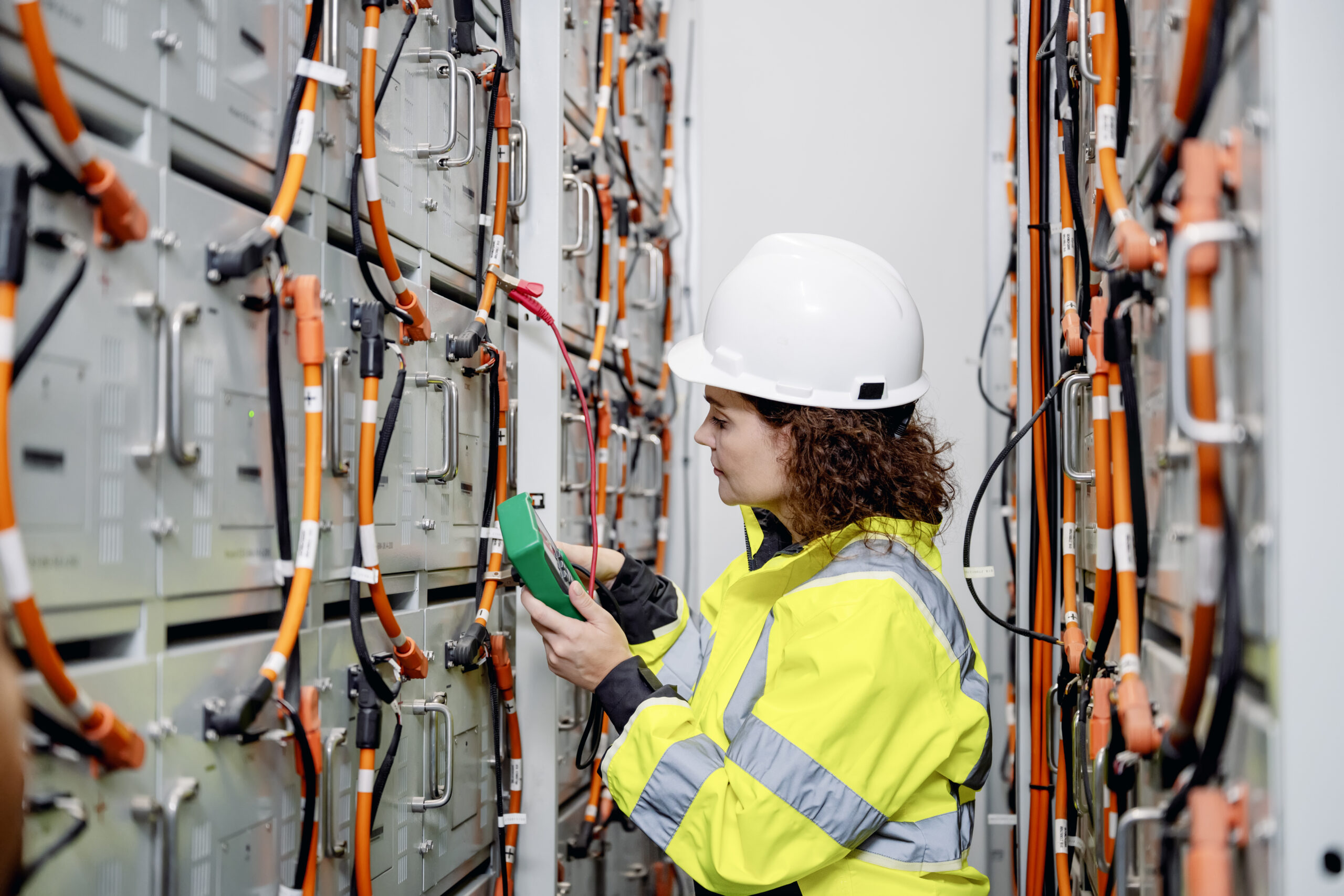
Battery energy storage systems act like giant power banks, absorbing clean electricity during periods of lower demand and releasing it for use when demand is high or generation drops. A typical BESS includes battery packs, inverters that allow electricity to flow between the batteries and the grid, transformers, and cooling and safety systems.
Damola Omole, director of the ‘Grids of the Future, Africa’ programme at the GEA, a philanthropic organisation, said BESS offers the “flexibility needed to smoothly integrate high levels of variable renewables” into the power grid. In doing so, it can reduce reliance on expensive diesel generation and protect consumers and industries from rising energy costs, he added.
Can BESS drive Africa’s industrialisation?
As calls to develop local green industries grow louder in Africa, Omole said there is a need to prioritise upgrading national grids with BESS so they can “transmit reliable, cost-reflective power directly to commercial clusters”.
While financiers previously doubted that intermittent solar and wind could meet the needs of industrial production, utility-scale BESS has demonstrated that renewables can deliver “predictable, steady output just like traditional fossil-fuel baseload power”, he added.
In recent years, African leaders, including William Ruto of Kenya, Felix Tshisekedi of the Democratic Republic of Congo (DRC) and Emmerson Mnangagwa of Zimbabwe, have called for the continent to use the energy transition to drive green industrialisation and create value from its resources at home.
At a mining investment conference in Nairobi in April, Ruto said Africa had stayed at the bottom of the value chain for too long but would now collaborate to process its minerals within the continent. “We will refine them here and we will manufacture them here,” he told African ministers and business executives.
Kenya seeks regional coordination to build African mineral value chains
However, deploying energy at scale to advance this industrial ambition has long been a problem, while about 600 million Africans still lack access to electricity. BESS could therefore become a critical technology in the continent’s development drive, experts say.
Michael Iwu, West Africa business development manager at Empower New Energy, which finances and co-develops renewable energy, said BESS is challenging the narrative that solar and wind power alone cannot provide enough reliable electricity to run factories and other energy-intensive industries. Modern battery systems can now support business operations for several hours, helping maintain production during grid outages, he added.
For GEA’s Omole, the key question has shifted to how quickly countries can build the battery storage, grid infrastructure and market frameworks needed to unlock the potential of renewables.
BESS to help renewables displace fossil fuels
While BESS is still in its initial stages of deployment in Africa, interest is growing as countries look for ways to make renewable energy more reliable.
South Africa is leading with the largest and first of its kind utility-scale BESS on the continent. With the capacity to discharge up to five uninterrupted hours of power, the system is keeping homes and businesses running in Worcester, a southwestern town of more than 100,000 people.
Egypt is also investing heavily in battery storage. In 2025, the country launched its first utility-scale BESS, a 300-MWh facility integrated with a 500 MW solar plant in the southern city of Aswan. It has also committed more than $1 billion to strengthen its electricity grid and update regulation to support battery storage projects.
Africa needs more than export bans to cash in on critical minerals, experts say
Falling battery prices are helping drive the rapid deployment of energy storage. According to BloombergNEF, battery packs for stationary storage (used in BESS) cost an average of $70 per kilowatt-hour in 2025, down 45% from 2024.
Soon the role of BESS in supporting the grid integration of wind and solar could reduce reliance on fossil fuels and help the world meet ambitious climate goals, according to a GEA report released in April.
Stephen Nicholls, director of South-Africa based energy think-tank African Energy Futures, said the rapid pace of technological development and the falling costs of BESS are attracting growing attention.
He said improvements in storage duration could further strengthen the role of renewables in industrial power systems. While most commercial and utility-scale battery systems currently provide around four to eight hours of storage, Nicholls said researchers are developing units capable of storing electricity for extended periods.
“The cheaper the storage and the longer the storage, the more [BESS] will replace fossil fuels like gas,” he added.

Limited awareness and data
However, significant obstacles to BESS deployment still stand in the way of its massive potential. Iwu of Empower New Energy said limited awareness of utility-scale BESS, as well as concerns about financing and a lack of long-term performance data continue to slow investment across Africa.
Governments and developers need to build more pilot projects and demonstration sites to generate evidence of the technology’s value and benefits and boost confidence among investors and policymakers, he added. To scale BESS, we need to “keep amassing this [evidence] data and keep talking about it and exploring it,” Iwu said.
Two to tango: How governments can unlock private investment for national climate goals
To help address those barriers, Omole said a BESS Consortium under the Global Energy Alliance is working with governments, development banks and other technical partners to de-risk the sector for private financiers by generating evidence from early projects, mobilising public finance to attract private capital, and introducing policies that make battery storage commercially viable.
“This coordinated action helps African nations bypass legacy infrastructure constraints, integrate massive volumes of clean energy, and secure the reliable power required for large-scale industrialisation,” Omole explained.
The post Can giant batteries unlock Africa’s green industrial future? appeared first on Climate Home News.
Can giant batteries unlock Africa’s green industrial future?

Three countries have been named by the Paris Agreement’s compliance committee for failing to submit a nationally determined contribution (NDC) and repeatedly snubbing offers of help with their climate plans.
After months of internal debate over whether to identify serial non-responders, the Paris Agreement’s Implementation and Compliance Committee (PAICC) named the three countries which have failed to engage with it over their NDCs on Friday.
It named Democratic Republic of Congo, Senegal and North Korea in a footnote of its annual report, adding that it decided to name them “with a view to facilitating engagement”, adding that representatives of the three nations had been invited to its meeting in early 2027 “with the purpose of identifying any challenges and constraints”.
“The Committee noted the importance of Parties engaging with the Committee in a timely manner, while noting that some delays may be due to the national capabilities and circumstances of the Parties”, the report said.
-
Under US pressure, World Bank says it will back gas “where appropriate”
The US wants the World Bank to expand its gas support while climate campaigners are pushing for it to end – its head spoke this week of limited backing for the fossil fuel -
IPCC scientists vow to press on with climate reports despite political deadlock
After governments again failed to agree a timeline, nearly 120 IPCC authors pledged to complete their assessment on time and with full scientific rigour -
Paris Agreement committee snubbed over missing NDC climate plans
Many governments have still not submitted a nationally determined contribution to the UN, breaching a key requirement of the Paris Agreement

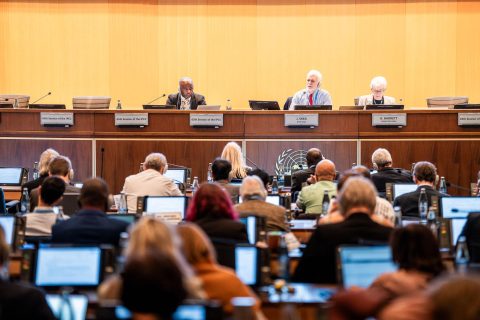

In July, PAICC said 12 countries had ignored its repeated attempts to discuss why they had not published an NDC as required every five years under the 2015 Paris accord.
Members of the committee had been divided over whether to name them, but at a September meeting decided to do so in their annual report to the annual climate COP summit.
By the time the report was published on Friday, only Congo, Senegal and North Korea “had not communicated an NDC or submitted a [Biennial Transparency Report] and had not yet responded to any of the Committee’s notifications, despite several reminders issued by the Committee in this regard”.
Rainforest and renewable energy ambitions
The silence from Congo and Senegal is notable because the former is home to much of the Congo Basin rainforest while the latter has sought billions of dollars in climate finance to support its renewable energy ambitions.
After Brazil, Congo has more rainforest than any country in the world. This forest, and the country’s peatlands, absorb huge amounts of greenhouse gas but are fast being lost to expanding farmland, charcoal production, logging and mining.
Senegal signed a Just Energy Transition Partnership with Canada and wealthy European nations in 2023, to help it meet its renewable energy targets under the-then government of Macky Sall. It was chair of the Least Developed Countries group between January 2022 and December 2023.

Tejas Rao, who is researching the PAICC as part of a doctoral thesis at Cambridge University, said the governments of the three countries should engage with the committee.
“Engagement costs these governments very little and the committee has shown it will listen,” he said.
“Silence leaves the committee with no basis to help, and it leaves the [governments] exposed to the narrative that they are simply disengaged,” he told Climate Home News.
Paris Agreement requirement
The 2015 Paris Agreement requires all parties to publish an NDC every five years outlining their emissions reduction targets, with each plan meant to be more ambitious than the country’s last NDC.
The latest set – the third round of plans, with new targets for 2035 – was due in February 2025. While most countries missed this deadline, all but around 30 – mostly small emitters but including Egypt, Vietnam and Argentina – have now submitted them.
Over the year, the PAICC – which is made up of government climate officials from developed and developing countries – has been communicating with governments that have not submitted NDCs and trying to overcome barriers to them doing so.
Some nations have cited exceptional circumstances as the reason for not submitting an NDC, a process that requires a significant amount of work in tracking emissions and consulting on how to curb them across the economy. For example, a letter from a Sudanese official to the PAICC, seen by Climate Home News, said that the country’s civil war had led to the suspension of its NDC preparation.
-
IPCC scientists vow to press on with climate reports despite political deadlock
After governments again failed to agree a timeline, nearly 120 IPCC authors pledged to complete their assessment on time and with full scientific rigour -
Under US pressure, World Bank says it will back gas “where appropriate”
The US wants the World Bank to expand its gas support while climate campaigners are pushing for it to end – its head spoke this week of limited backing for the fossil fuel -
Who shapes climate science? The equity question facing the IPCC
Early completion of the next global climate science assessment reports risks excluding research from the Global South, which is key to ensuring the findings are fair
The US and Iran are not signed up to the Paris Agreement and so do not have active NDCs, nor does Taiwan, which is not a UN member state.
Rao said that because the PAICC is “facilitative and non-punitive”, naming the countries “is meant to open a door, not close one – the invited consultation is the point”.
“In recent months, governments that explained their constraints, whether capacity, finance or domestic process, have been met with follow-up and support rather than sanction, and the number of silent governments has fallen sharply,” Rao said.
The post Paris Agreement committee names three countries snubbing it over NDCs appeared first on Climate Home News.
Paris Agreement committee names three countries snubbing it over NDCs