

SACE’s Electric Transportation Team was proud to support Western North Carolina’s Land of Sky Clean Vehicles Coalition (LOSCVC) for two of their many “Fueling Change” events celebrating National Drive Electric Week.
LOSCVC led these two events to give first responders, emergency service personnel, and public safety officials an opportunity to learn about electric vehicle technologies, safety, charging and fleet adoption. To complement the trainings, SACE’s team put the first responders and public safety officials in the driver’s seat, providing them with a first-hand experience driving an electric vehicle with an experienced EV driver in the passenger seat.
In the second quarter of 2023, electric vehicles made up over 7% of purchases in North Carolina representing a 56% increase from the previous year. This is the second highest growth in Southeast states. With the EV market expanding, training first responders and public safety officials is critical for ensuring they have the knowledge and tools they need to keep themselves and the communities they serve safe, while at the same time showcasing the availability and viability of electric fleet vehicles, such as police cruisers, that can replace gas fleet vehicles, saving local governments money in the long term.
The first event took place in Woodfin at the AB-Tech Public Safety Training Facility on Friday, September 22. It provided first responders with information on expectations and safety procedures when responding to incidents involving battery-electric or hybrid electric vehicles. Many first responders from the Western North Carolina region took the opportunity to drive one of the three EVs SACE made available. Most were surprised at the instant torque and how quiet the vehicles handle on the highway. See coverage from the event at WLOS.
“There’s a lot of differences between electric vehicle responses as opposed to the traditional gasoline,” A.B. Tech Woodfin Campus Director of Fire Services John Wilson said.

The second event in nearby Weaverville, NC was focused on law enforcement agencies who learned about opportunities to electrify their fleets. The event offered presentations from agencies and experts that have added electric vehicles to their fleet and featured two Ford Mach-e vehicles from the Weaverville Police Department’s fleet. WLOS’s story on the event can be found here.
“We are the first in the region to have electric vehicles and specifically an electric patrol vehicle.” Weaverville Police Department Chief Ron Davis


The events kicked off a week’s worth of programming hosted by the Land of Sky Clean Vehicles Coalition including an electric equipment expo, a roundtable on electrification workforce development, a hands-on workshop on vehicle-to-grid technology, a training for site-hosts for charging equipment, and Blue Ridge Parkway EV Drive. The week concluded with the Asheville National Drive Electric Week 2023 Car Show on October 1 and was a joint venture between the Blue Ridge EV Club, WNC Tesla Owners Group, Triangle Tesla Owners Group and Land of Sky Clean Vehicles Coalition. Events LOSCVC are hosting are essential for normalizing electric vehicle technology. As public servants become more aware of the benefits of battery electric vehicles to their communities and have the opportunity to experience those benefits firsthand, they become excited to adopt the technology.
SACE thanks our member Dave Erb, an automotive engineer, retired University of North Carolina at Asheville mechatronic engineering professor, and the Blue Ridge EV Club member, who helped with the events by bringing his Chevy Spark EV and expertise.
About Land of Sky Clean Vehicles Coalition
The Clean Vehicles Coalition is a Clean Cities program of the Land of Sky Regional Council in the Western North Carolina area, designated by the US DOE in 2012 as an official Clean Cities program for the five county area surrounding Asheville to promote the use of cleaner, alternative fuels and vehicles.
About the Southern Alliance for Clean Energy
Since 1985, the Southern Alliance for Clean Energy has worked to promote responsible and equitable energy choices to ensure clean, safe and healthy communities throughout the Southeast. Learn more at www.cleanenergy.org.
The Southern Alliance for Clean Energy’s Electrify the South program leverages research, advocacy, and outreach to accelerate the equitable transition to electric transportation across the Southeast. Visit ElectrifytheSouth.org to learn more and connect with us.
The post First Responder and Public Safety EV Trainings: SACE Supports Land of Sky Clean Vehicles Coalition’s National Drive Electric Week Events appeared first on SACE | Southern Alliance for Clean Energy.

Weather Guard Lightning Tech
Nordex Invests in Türkiye, Vestas Wins First V182 Order
Allen covers Nordex’s Türkiye expansion, Chinese turbine makers seeking European partners, Vestas’ first V182 order, and two Pennsylvania repowers.
The Uptime Wind Energy Podcast is brought to you by Weather Guard Lightning Tech, creators of the StrikeTape Ultra LPS retrofit. Subscribe to Uptime’s Substack newsletter. And check out Rosemary’s “Engineering with Rosie” Youtube channel. Have a question we can answer on the show? Email us!
 I’m not sure it’s as simple as this, insofar as Bush 41 and 43 weren’t criminal sociopaths.
I happened to be driving through Manhattan on the very day that Colin Powell was addressing the United Nations just a few miles away and claimed, and I think honestly, that Saddam Hussein had “weapons of mass destruction,” and must be stopped by a U.S. military invasion.
Contrast that against what we’re doing in Iran. Fifteen years ago, the Joint Comprehensive Plan of Action (JCPOA), included Iran, the P5+1 nations (the United States, China, Russia, France, the United Kingdom, and Germany), alongside the European Union made an agreement in which most of the developed world agreed that Iran must not have a nuclear weapon.
That stood firmly in place until Trump’s latest war crime, which is costing lives and choking the world economy, solely to defend our president’s neuroses.
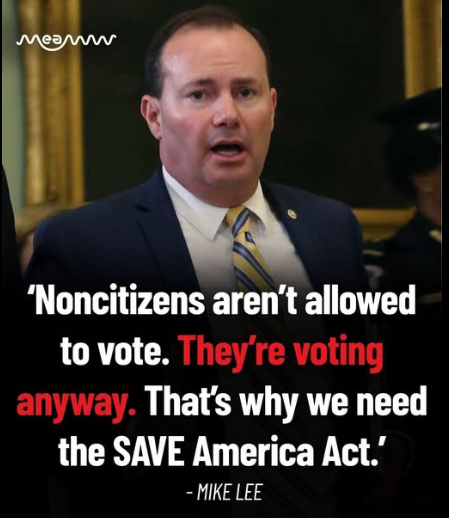 The Brennan Center at NYU’s seminal report on this issue, The Truth About Voter Fraud, found that most reported incidents of voter fraud are actually traceable to other sources, such as clerical errors or bad data matching practices. The report reviewed elections that had been meticulously studied for voter fraud and found incident rates between 0.0003 percent and 0.0025 percent.
Does that stop liars like Mike Lee from spreading disinformation of the subject? Of course not.
There is no judgement day. There is no Saint Peter standing in front of the Pearly Gates discerning good from evil and acting according.
That’s a lucky break for Mike Lee.



-
Climate Change1 year ago
Guest post: Why China is still building new coal – and when it might stop
-

 Greenhouse Gases2 years ago
嘉宾来稿:满足中国增长的用电需求 光伏加储能“比新建煤电更实惠”
-
Greenhouse Gases1 year ago
Guest post: Why China is still building new coal – and when it might stop
-

 Climate Change2 years ago
嘉宾来稿:满足中国增长的用电需求 光伏加储能“比新建煤电更实惠”
-

 Renewable Energy11 months ago
Sending Progressive Philanthropist George Soros to Prison?
-
Climate Change2 years ago
Bill Discounting Climate Change in Florida’s Energy Policy Awaits DeSantis’ Approval
-
Greenhouse Gases1 year ago
嘉宾来稿:探究火山喷发如何影响气候预测
-

 Climate Change2 years ago
Analysis: China’s CO2 falls 1% in Q2 2024 in first quarterly drop since Covid-19