

Welcome to Carbon Brief’s Cropped.
We handpick and explain the most important stories at the intersection of climate, land, food and nature over the past fortnight.
This is an online version of Carbon Brief’s fortnightly Cropped email newsletter. Subscribe for free here.
Key developments
Latin America news roundup
TREE FELLING FALLS: Political shifts in Brazil and Colombia have “had a significant impact on tree felling”, with large reductions in deforestation occurring in both countries over 2023, according to analysis from the University of Maryland and the World Resources Institute that was covered by BBC News. Tree loss in the Brazilian Amazon decreased by 39%, although in the Cerrado – an important savannah in Brazil – it increased by 6%. In Colombia, primary forest loss decreased by nearly 50%, compared to last year. But, the outlet added, “increased tree felling and fires in Bolivia, Laos and Nicaragua wiped out many of these gains”.
WHERE THERE’S SMOKE: According to satellite data released last week, Venezuela “is battling a record number of wildfires”, fuelled in part by intense drought in the region, Reuters reported. More than 30,000 “fire points” were recorded in the country during the first three months of the year. The newswire wrote: “Man-made fires that are often set to clear land for agriculture are spreading out of control thanks to high temperatures and low rainfall in northern South America, as well as a lack of prevention planning, researchers say.” A University of Oxford fire researcher said that the fires “could be a worrying sign for what’s ahead” when Brazil enters its dry season.
COMMISSION CHANGE: The scientific community must “speak out strongly” against proposed changes to Mexico’s National Commission for the Knowledge and Use of Biodiversity (CONABIO), two academics wrote in an editorial in the journal Science. They explained that the government intends to “reduce CONABIO from a multi-ministry federal government agency to a branch within the environment ministry” and argued that this change would “strip CONABIO of its independent voice, credibility and influence on national and international policy”. The government is expected to make a final decision by the end of this month.
DENGUE ‘SURGE’: The Pan American Health Organization (PAHO) warned of a “surge in dengue cases in the Americas”, with more than 3.5m cases recorded to date – “three times more cases than those reported for the same period in 2023”, which was itself a record year, PAHO director Jarbas Barbosa said. According to PAHO: “Several environmental and social factors contribute to the spread of dengue, including rising temperatures, extreme weather events and the El Niño phenomenon.” Urbanisation and population growth also play a role, the organisation added.
Africa drought ‘disaster’
NATIONAL EMERGENCIES: More than 24 million people in southern Africa face hunger, malnutrition and water scarcity due to the combined impact of drought and floods, according to a warning from the charity Oxfam, CNN reported. It comes after Zimbabwe joined Zambia and Malawi in declaring a state of disaster over the drought, according to Sky News. Zimbabwe president Emmerson Mnangagwa made the emergency declaration in a speech on 3 April, where he called for $2bn (£1.6bn) in humanitarian aid, the broadcaster said. The Associated Press (AP) spoke to a mother affected by the drought in Zimbabwe.
CLIMATE ROLE: The “erratic” weather in southern Africa, which has lurched between drought and floods in recent months, is likely “spurred” by human-caused climate change, which is making extreme events more unpredictable, the AP said. It added that conditions have been worsened by El Niño, the naturally occurring climate phenomenon that periodically affects much of the globe. In southern Africa, El Niño “means below-average rainfall” and “sometimes drought”, the newswire reported.
EXTREME CONTINENT: Many other parts of the continent continued to face severe – and, in many cases, record-breaking – extreme weather. Much of northern Africa continued to face extreme heat, with the Moroccan city of Oujda recording a “minimum temperature” for April that was 7C higher than the previous record, according to a Twitter account tracking extreme temperatures. That temperature was close to the all-time record, logged in the month of July. (“Minimum temperature” refers to the coolest temperature in a 24-hour period, with high minimum temperatures indicating dangerously hot nights.) West Africa also continued to face record heat. Carbon Brief reported on how Africa’s most populous nation, Nigeria, was coping with the extreme temperatures.
Spotlight
The ‘grave threat’ of ghost roads
In this spotlight, Carbon Brief reports on a new study detailing the impact of “ghost roads” on deforestation rates in the Asia Pacific region.
“Ghost roads” – illegal or informal roads that do not appear on any map – are fast expanding in biodiversity-rich tropical nations.
Carved out by farmers, miners, loggers, land grabbers and drug traffickers, these illicit roads give more direct access to pristine tropical forests – and help extractors carry out their activities while evading detection by authorities or NGOs.
The absence of ghost roads from official records or international datasets makes understanding the scale of their impact on tropical forests extremely difficult.
A new study published in Nature this week aimed to reverse this.
“I think we all knew that ghost roads were a serious problem, but they hadn’t been studied in a concerted way,” study author Prof Bill Laurance, a conservation biologist at James Cook University in Cairns, Australia, told Carbon Brief.
Volunteer army
The research team focused on three tropical islands in the Asia Pacific: Borneo, Sumatra and New Guinea.
To try to understand the extent of ghost roads on the islands, the researchers deployed an army of more than 200 trained volunteers.
These volunteers walked over 1.42m plots, each one square kilometre in area, noting down the existence of roads that were missing from leading global datasets.
Study lead author Jayden Engert, a conservation ecologist and PhD student at James Cook University, told Carbon Brief that a broad range of people volunteered to help out with the mapping effort:
“We found volunteers through many different avenues, chiefly by advertising within our university and at other universities. We also ran a volunteer Map-athon with the Facebook group ‘Wild Green Memes for Ecological Fiends’, which brought in a decent amount of volunteers and also helped to raise awareness of the issue.”
Ghosts detected
The mapping effort revealed 1.37m km of ghost roads – 3-6.6 times more roads than were present in leading road datasets.
“I was blown away by how many unmapped roads there were,” Engert told Carbon Brief.
To understand how the ghost roads could be affecting deforestation rates, the scientists developed a map of their study area and quantified the percentage of forest loss in each plot.
They then used modelling to determine how the forest loss correlated with 38 biological and socioeconomic factors related to tree cover, including population density, distance to the nearest city and protected-land status – as well as ghost-road density and distance from ghost roads.
The research found that ghost-road density had by far the strongest link with forest loss out of all of the 38 factors studied.
Furthermore, ghost-road building “almost always preceded local forest loss”, the researchers wrote in their study.
They also found that the relationship between road density and forest was nonlinear, “with deforestation peaking soon after roads penetrate a landscape and then declining as roads multiply and remaining accessible forests largely disappear”.
They concluded by saying:
“Collectively, our findings suggest that burgeoning, poorly studied ghost roads are among the gravest of all direct threats to tropical forests.”
Laurance told Carbon Brief that their findings are likely to apply to other parts of the tropics:
“There’s absolutely no doubt in my mind that other developing tropical nations are facing similar challenges with ghost roads. We also have been working in the Amazon and central Africa for the past several decades, and there we see many similar and equally daunting realities on the ground.”
News and views
FARM FLU: The US Department of Agriculture has confirmed cases of the “highly pathogenic” avian influenza in dairy cows in Idaho, bringing the number of confirmed outbreaks to 12 herds across five states, with other tests ongoing in presumptive positive cases. The country’s largest fresh egg producer also reported an outbreak, leading to “rising concern” despite assurances that the “risk to the public remains low”, the Associated Press reported. The detection of the virus in cattle raises “critical questions about whether the country is equipped to handle an influenza outbreak after the coronavirus pandemic…exposed the weaknesses in the nation’s public health infrastructure and decimated the public’s trust in key federal agencies”, the Washington Post reported.
INDIGENOUS INDONESIANS: Indonesian president-elect Prabowo Subianto must prioritise ratifying the country’s Indigenous Peoples bill, two Indigenous-rights activists argued in China Dialogue. The bill was first proposed in 2009, but president Joko Widodo failed to ratify it despite “repeated promises to do so”, the writers noted, adding: “Prabowo’s new government appears set to continue expanding Indonesia’s domestic resource-processing capabilities…signal[ling] the continued, unjust plunder of Indigenous territory.” Indonesia is home to around 22 million Indigenous people and more than 2,500 Indigenous communities. They face “deforestation, agricultural crises, marginalisation and discrimination and the usurpation of customary rights”, as well as voter disenfranchisement, the activists said.
NEW BIODIVERSITY CHIEF: BusinessGreen reported that German diplomat and environmental-policy expert Astrid Schomaker has been appointed the next executive secretary of the Convention on Biological Diversity (CBD), the UN body that oversees negotiations on biodiversity loss. According to the publication, Schomaker has spent the last seven years overseeing environmental diplomacy and global sustainable development at the European Commission. She replaces the acting executive secretary, British CBD veteran Dr David Cooper. Carbon Brief published an in-depth interview with the last permanent executive secretary, Tanzanian lawyer and diplomat Elizabeth Maruma Mrema, in 2022.
WHALE OF A TIME: Māori king Tuheitia Pōtatau Te Wherowhero VII and other Indigenous leaders in the Pacific have “urged the legal recognition of whales as persons with inherent rights”, according to the Pacific Islands News Association. The leaders are endorsing the He Whakaputanga Moana, or the Declaration for the Ocean, which “outlines a comprehensive plan” for protecting whales from “unsustainable practices, pollution and climate change”, the outlet explained. It will do so through establishing protected areas and integrating Indigenous knowledge with other science. Travel Tou Ariki, a high chief from the Cook Islands, said: “Whales play a vital role in the health of our entire ocean ecosystem…We must act with urgency to protect these magnificent creatures before it’s too late.”
BIG MEAT COP: Lobbyists from the world’s largest meat companies have celebrated a “positive outcome” from the last global climate summit, COP28, according to a DeSmog investigation. Speaking on a virtual panel organised by the trade outlet FeedStuffs, three representatives for US livestock firms said they were left “excited” and “enthusiastic” for their industry’s prospects after the summit, which saw countries commit to a series of voluntary pledges for tackling agricultural emissions without addressing meat consumption. Constance Cullman, the president of the US lobby group the Animal Feed Industry Association (AFIA) said COP28 left her organisation with “a far more positive outcome than we had anticipated”, according to DeSmog.
STANDING TOGETHER: Advocacy groups in Brazil, the Democratic Republic of the Congo, Guatemala, Kenya, Liberia and Mexico have launched a new initiative to protect environmental defenders, Liberia’s Daily Observer reported. The initiative will provide “partnerships, financial support and training” for civil-society organisations to protect them against the risks that environmental defenders face, such as threats, violence and smear campaigns, the newspaper said. Three environmental defenders were recently killed during protests in Kinjor, Liberia.
Watch, read, listen
WASTED WETLANDS: An investigation by Ireland’s Noteworthy found that the planting of non-native trees on peatlands could put some of the country’s “cleanest” rivers and streams at risk.
SALINE INHABITANTS: Hakai Magazine wrote about how Utah’s shrinking Great Salt Lake is imperilling the strange creatures found in its waters.
TREE SMUGGLING: A four-part investigation by the Africa Report, in collaboration with the Pulitzer Center’s Rainforest Investigations Network, examined timber trafficking from the Democratic Republic of the Congo.
ROCKY MOUNTAIN HIGH: A feature in High Country News explored how drones can be used in service of conservation of predators in the Rocky Mountains.
New science
Threat of mining to African great apes
Science Advances
Up to one-third of Africa’s great apes face risks from mining projects, new research found. The study looked at the overlap between industrial mining projects and great ape distribution in 15 African countries, excluding the Democratic Republic of the Congo due to a lack of available data. The research found that industrial mining projects overlap with the habitat of nearly 180,000 apes. It also found that the overlap was largest in west African nations, including Senegal and Sierra Leone. In the paper, the authors noted that the “rapid growth of clean energy technologies is driving a rising demand for critical minerals”, which are increasingly being mined in Africa.
The asymmetric impacts of international agricultural trade on water use scarcity, inequality and inequity
Nature Water
A new study found that the water “embedded” in agricultural trading “disproportionately benefits the rich and widens both the water scarcity and inequity gap between the poor and the rich”. Researchers used a global model of crop water requirements to simulate the amount of water used for irrigation for 26 different crops, then analysed how international trade affects water scarcity and inequity in eight countries. They found that the poorest people in developing countries “suffer[ed] from both increased water scarcity and inequity”, but poor populations in developed countries were more likely to benefit. They also identified the trade of staple crops as “the major driving factor” affecting these in most countries, due to the large volumes of staple crops traded.
Significant shifts in latitudinal optima of North American birds
Proceedings of the National Academy of Sciences
The optimal location for North American birds has shifted northward by an average rate of 1.5km each year in response to climate change, a new study found, representing a total distance moved of 82.5km over the past 55 years. The research uses modelling to estimate the “latitudinal optima” of 209 American bird species, drawing on bird population abundance data over the past half-century. It found that one-third of the species studied showed a “significant shift of their optimum” over the study period, with birds in western North America experiencing the biggest shifts. The results “directly implicate climate-induced increases in temperature as the primary driver” of bird abundance shifts, the researchers said.
In the diary
- 10-12 April: 2024 Ocean Decade conference | Barcelona
- 16-19 April: Scoping meeting for the Intergovernmental Panel on Climate Change (IPCC) special report on cities | Riga
- 19 April: Start of India’s general election
- 23-29 April: Fourth session of the Intergovernmental Negotiating Committee to develop an international legally binding instrument on plastic pollution, including in the marine environment | Ottawa
Cropped is researched and written by Dr Giuliana Viglione, Aruna Chandrasekhar, Daisy Dunne, Orla Dwyer and Yanine Quiroz. Please send tips and feedback to cropped@carbonbrief.org

The post Cropped 10 April 2024: ‘Ghost roads’ deforestation; Record wildfires; Southern Africa drought appeared first on Carbon Brief.
Cropped 10 April 2024: ‘Ghost roads’ deforestation; Record wildfires; Southern Africa drought

Saturday, 17 October 2026
7.18 AM AWST
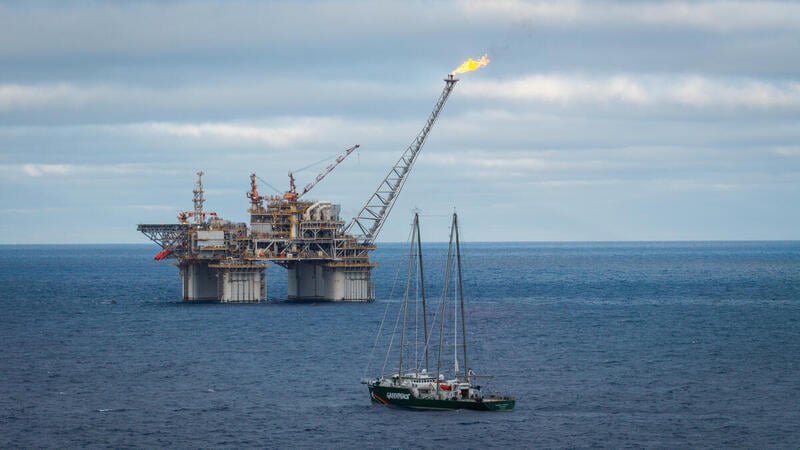
Hi folks! We’re joining you live from the Rainbow Warrior where we will be providing you with updates as our four activists continue scaling and occupying Woodside’s gas platform. The activists are peacefully protesting against Woodside’s latest gas expansion plans, the Browse project, which would see up to 57 toxic wells drilled at Scott Reef.
“Right now our activists are scaling Woodside’s massive Floating Production Unit. They are scaling the South-East pillar and the underside of the Helideck. They’ll be setting up camp soon and have plenty of provisions with them – so stick around!”
5:45 AM AWST
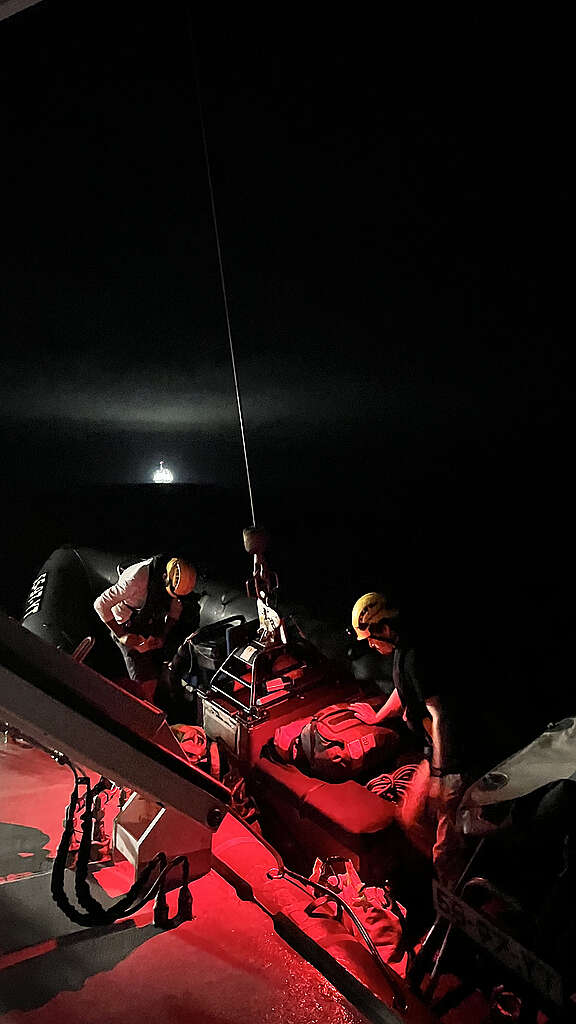
Our RHIBS are in the water! We’ve deployed our four activists and our ship crew on our small fast boats, headed to the gas platform. We’re carrying crew and equipment, plenty of food, all of our safety climbing gear, some big banners, cameras and a whole lot of heart… someone even has something to read after they get settled in.
5:26 AM AWST
Before sunrise activists prepared to launch RHIBS from the Rainbow Warrior.
Looking for a front seat view?
You can follow along with the Live Rainbow Warrior bow cam here!
Looking for more?
Follow us on Instagram for a peek behind the scenes and hear from our Rainbow Warrior crew.
Live blog: Greenpeace activists occupy Woodside gas project to save Scott Reef
Climate Change
Greenpeace activists climb and occupy Woodside’s Scarborough gas project calling on the Australian government to “Stop Woodside’s Dirty Gas” and “Save Scott Reef”
PERTH, Saturday 17 October 2026 — Four Greenpeace Australia Pacific activists are scaling and occupying a Floating Production Unit at Woodside’s Scarborough gas project off the coast of Western Australia, displaying banners reading: “Stop Woodside’s Dirty Gas. Save Scott Reef.”
- Photos and video available here and here. More will be uploaded throughout the day.
- Content and live updates will be uploaded to a live blog and to Instagram
Early this morning at 05:45 AWST, Greenpeace Australia Pacific activists launched from the Rainbow Warrior, Greenpeace’s flagship vessel, scaling and attaching themselves to a Floating Production Unit (FPU), a key piece of gas processing infrastructure at the Scarborough gas field over 200km off the coast of Exmouth.
Woodside has since confirmed it has initiated a temporary shut down of the FPU.
Greenpeace Australia Pacific is occupying the gas platform in peaceful protest of Woodside’s plans to drill for oil and gas at Scott Reef as part of its Browse proposal.
David Ritter, CEO at Greenpeace Australia Pacific, said: “Greenpeace Australia Pacific is taking action today to expose the unacceptable risk to Scott Reef posed by Woodside’s plans.
“Australians love our oceans. Woodside’s reckless Browse gas proposal would turn the magnificent Scott Reef into an industrial gas zone. Woodside wants to drill up to 57 toxic wells around Scott Reef, Australia’s largest oceanic reef, home to nesting green sea turtles, and endangered species like pygmy blue whales and the dusky sea snake; it is a place like nowhere else on Earth.
“Woodside has an alarming track record of oil spills, incidents and environmental neglect, and can’t be trusted with our oceans. From whaling in Albany in the seventies, to Woodside’s threat to Scott Reef today, there’s more than fifty years of history, of Greenpeace taking action off WA’s coasts to protect our oceans.
“There’s no future in new gas projects. Our future is in secure homegrown renewable energy, green industry and exports, where communities and places like Scott Reef are protected — there’s no future in dirty gas shipped offshore.
“The prospect of drilling for oil or gas on the Great Barrier Reef would be considered absolute madness today, but that is exactly the decision before the government: save Scott Reef or risk its destruction at the hands of a gas corporation.”
From aboard the Floating Production Unit, Dr Chris Holden, Greenpeace Australia Pacific activist said: “As a doctor, when I see new fossil fuel projects like Woodside’s Browse project being put forward, I can’t help but think about the impact this is going to have on the health of our communities and planet, and feel a sense of duty to act.
“Not only will this project do irrevocable harm to nature at Scott Reef, it will have a terrible impact on our climate, putting all of our lives at risk.
“On the Rainbow Warrior I’m carrying a copy of the 2025 Lancet countdown report, which warns that health impacts of climate change are worsening, with millions dying needlessly each year due to fossil fuel dependence, growing emissions, and failure to adequately adapt.
“With warnings like this from the leading global health professionals, our government simply can’t allow fossil fuel projects like Woodside’s Browse project to go ahead. It is their duty to do what is in the best interest of our communities.”
Almost half a million people have signed a petition calling on the government to Save Scott Reef and Woodside’s Browse gas project.
-ENDS-
Notes:
- Dial-in, SimSat and Zoom interviews with Geoff Bice, WA Campaign Lead at Greenpeace Australia Pacific, currently aboard the Rainbow Warrior, can be organised separately
Media contact:
Greenpeace Australia Pacific media team on +61 406 231 892 or +61 407 581 404
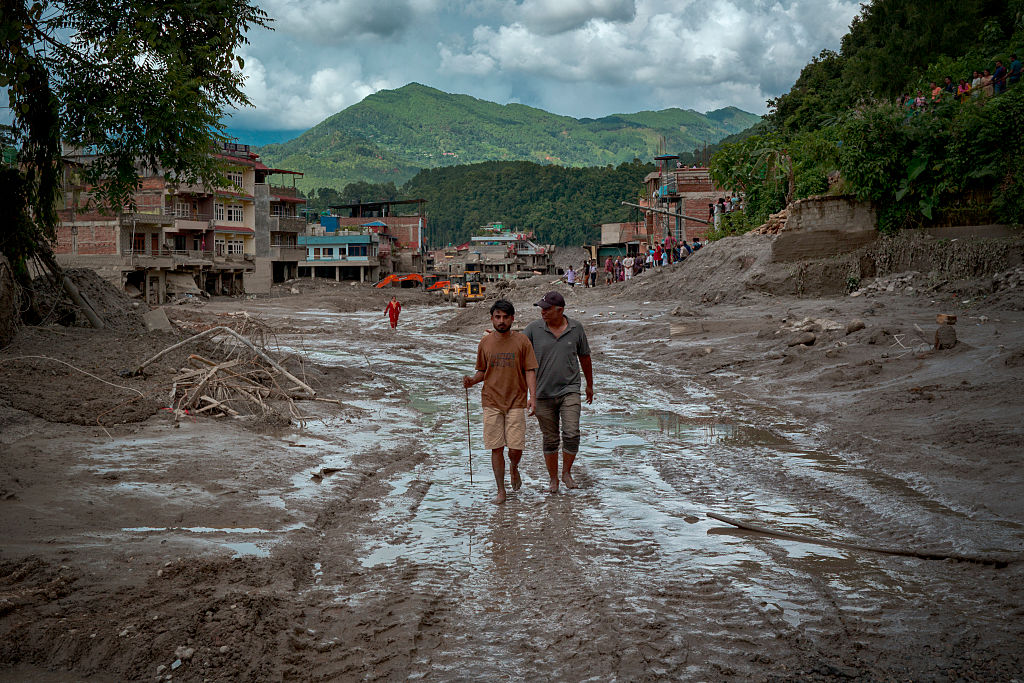
The board of the Fund for Responding to Loss and Damage (FRLD) will decide on Thursday on whether to “provisionally set aside” $20 million for Nepal to deal with some of the effects of the climate-driven flood it suffered in August.
The motion, seen by Climate Home News, has been drafted by a group of board members from both developed and developing countries and so is likely to pass easily at the fund’s first-ever extraordinary board meeting on October 22.
It invites the government of Nepal to submit a proposal for how to use the money, with the board then deciding at one of its regular board meetings whether to approve the proposal or not.
While Nepali officials have described $20 million as merely “symbolic” in the face of the $4.8 billion estimated costs of recovery and reconstruction, it would be the first time the new FRLD – agreed in 2022 months after devastating floods in Pakistan – has set aside money for a specific disaster.
Until now the fund has only taken requests through a single call for proposals, launched at COP30 in Belém last November, that gave countries six months to submit requests.
Most of the 180 projects the FRLD is currently considering are designed to help countries avoid damage from future climate disasters, for example by strengthening responses to floods in Bangladesh and Lagos.
The draft decision says Nepal’s proposal will serve as a pilot for how funding requests can be submitted outside of the fund’s current timetable. That could let governments seek funds quickly after a climate disaster strikes, rather than waiting for the next call.
This arrangement would set the fund apart from other United Nations funds designed for climate adaptation or cutting emissions like the Green Climate Fund.
Climate campaigners from Fill the Fund said the draft decision is “a real step forward” as it is “the first time this Fund has moved to respond to a specific disaster”.
Too little, too late
The FRLD was agreed by governments at COP27, set up and operationalised at COP28 in 2023 but has yet to award any money. The 180 funding requests it is currently considering would cost around $2.8 billion, but it only has $350 million to allocate.
The United Nations Secretary-General António Guterres has described the amount of money available in the fund as “ridiculously small” and Fill the Fund said $20 million “is a meaningful signal but it is a drop against an ocean of need”.
A glacial rock and ice collapse sent a torrent of water and debris through Nepal and the Chinese-administered region of Tibet on August 26. It k