

The US is urging countries to form a critical mineral trading bloc to shore up access to resources that are pivotal to manufacturing energy, digital and advanced technologies and technologies, and to reduce the world’s dependence on China for mineral supplies.
Washington says this mineral club would provide countries with a tariff-free trade zone to buy and sell critical minerals with guaranteed minimum prices, helping them compete with Chinese producers and create more resilient supply chains.
China dominates global mineral refining capacity for 19 of 20 key minerals needed to manufacture clean energy technologies and advanced digital infrastructure.
“The Trump administration is proposing a concrete mechanism to return the global critical minerals market to a healthier, more competitive state,” US Vice President JD Vance told government representatives from 54 countries and the European Union attending the first US-hosted critical minerals ministerial meeting on Wednesday.
Large economies like India, Japan, France, Germany and the UK as well as resource-rich emerging and developing economies such as Argentina, the Democratic Republic of the Congo and Zambia were represented at the event in Washington DC.
“We want to eliminate th[e] problem of people flooding into our markets with cheap critical minerals to undercut our domestic manufacturers,” Vance said, without naming China.
“We want members to form a trading bloc among allies and partners, one that guarantees American access to American industrial might, while also expanding production across the entire zone. The benefits will be immediate and durable,” he added.
“In the end, it’s all in the US interest of course,” Bryan Bille, a principal at Benchmark Mineral Intelligence, told Climate Home News. “At the same time, the Trump Administration realises that international cooperation is needed to address these challenges.”
“America needs you”
“It feels like ‘thank you for coming, America needs your help’,” Patrick Schröder, a senior research fellow at Chatham House, said of the meeting.
“The US now have realised they cannot solve their critical minerals problem just on their own. To really reduce dependence on China, they need this bigger group of countries,” he said.
There is potential for a mineral trading club to become useful to diversify supply chains and support mineral production in developing countries “but it can’t be all about supplying the US with minerals,” Schröder told Climate Home News.
-
West Africa’s first lithium mine awaits go-ahead as Ghana seeks better deal
Ghana wants to benefit from the scramble for lithium but its reliance on mining firms for revenue and expertise weakens its ability to negotiate preferential terms, experts say -
UK government faces legal challenge over deep sea mining permits to “opaque” firm
Greenpeace says UK may have acted unlawfully by transferring deep-sea mining licences to firm with US ties -
Africa records fastest-ever solar growth, as installations jump in 2025
Africa’s solar power installations have increased sharply, driven by utility-scale projects and privately financed rooftop and commercial systems


On Wednesday, the US signed 11 bilateral critical minerals agreements with Argentina, the Cook Islands, Ecuador, Guinea, Morocco, Paraguay, Peru, the Philippines, the UAE and Uzbekistan. This comes on top of 10 other deals signed in the past five months, including with Australia, Japan, South Korea, Saudi Arabia and Thailand. The EU and the US have committed to conclude a deal within the next 30 days. The US government says the deals will form the basis for global collaboration.
Secretary of the Interior Doug Burgum told a conference on Tuesday that “there is strong interest from another 20 countries” to sign similar deals.
The US also announced the creation of the Forum on Resource Geostrategic Engagement (FORGE), which will succeed the Minerals Security Partnership and enable member countries to collaborate on mineral policy and projects. It will be chaired by South Korea until June.
Prioritising cleantech
US officials emphasised the growing need for minerals to power artificial intelligence, data centres and the digital economy but made no reference to the booming demand from cleantech industries manufacturing batteries, heat pumps, solar panels and wind turbines.
For Schröder, Europe could play a role in shaping the initiative by prioritising cleantech industries.
Any price-floor mechanism “should also be linked to ensuring that mining and processing is done to the highest possible environmental standards” and support efforts to improve supply chain traceability, he said.
-
EU refuses to review “strategic” mineral projects for energy transition
Brussels says requests by NGOs to reassess the “strategic” designation of new mining projects because of environmental concerns are “unfounded” -
At ‘Davos of mining’, Saudi Arabia shapes new narrative on minerals
Over 100 countries attended the Future Minerals Forum in Riyadh, putting the Kingdom at the heart of discussions on minerals for the energy transition -
Push for global minerals deal meets opposition, more talks agreed
Colombia’s proposal for the UNEA to set up an expert group to identify options for governing mineral supply chains was rejected by a broad group of states


The Trump administration argues that setting a minimum price for minerals will help create a stable environment to attract long-term capital into new mining projects.
But how this will work in practice remains unclear and complex. Prices vary for each mineral, each stage of the value chain and across different countries. “All of that needs to be discussed and agreed,” said Schröder, warning that a trading club could easily become “a cartel” and risk breaching World Trade Organisation rules.
Chinese dependence
The US’s attempt to broker new alliances to secure mineral supplies comes as Washington is seeking to fast-track mining permits at home and announced plans to stockpile minerals to help shield domestic manufacturers from cheaper Chinese competition.
This is particularly acute when it comes to rare earths with China accounting for around 60% of mining output and more than 90% of global rare earths refining capacity.
The Trump administration has doubled down on efforts to diversify its mineral supplies, especially for rare earths, after American manufacturers faced supply shortages last year when China expanded export restrictions amid trade tensions with Washington.
Rare earths are pivotal to producing magnets that are used in wind turbines, electric vehicle motors as well as many other advanced technologies. Both countries reached a deal to lift the restrictions on supplies but some limits are still in place despite the truce.
“We just can’t be in a position where our entire economy… is in a position to be held hostage by someone that could change the world economy through a form of export controls,” US Secretary of the Interior Burgum said on Tuesday.
-
Gas flaring soars in Niger Delta post-Shell, afflicting communities
Since the multinational sold its assets in Nigeria’s oil hub, data analysis for Climate Home News shows flaring has risen, damaging local residents and the climate -
Africa records fastest-ever solar growth, as installations jump in 2025
Africa’s solar power installations have increased sharply, driven by utility-scale projects and privately financed rooftop and commercial systems -
A just agricultural transition takes root in Brazil
The Indigenous practice of agroforestry is enjoying a renaissance as the agricultural sector aims to decarbonise without sacrificing farmers’ livelihoods


Yet, for many resource-rich countries, the US’s national security strategy poses the biggest risk to global supply chain stability, said Cory Combs, head of critical mineral research at advisory firm Trivium China.
Ultimately, global efforts to diversify mineral value chain mean China will lose market share. “But it’s not going to lose its advantages,” he told Climate Home News.
“Industry will still buy every Chinese material they can possibly get their hands on, because it’s cheaper, it’s better, it’s faster and more reliable when you don’t have the export controls,” he said.
Project Vault
To help shore up mineral reserves in the short-term, President Donald Trump announced the establishment of a US critical mineral reserve earlier this week.
Project Vault will “ensure that American businesses and workers are never harmed by any shortage – we never want to go through what we went through a year ago,” he said.
The US Export-Import Bank is providing up to $10 billion in loans – the largest deal in the bank’s history – to procure and store minerals in warehouses across the US for manufacturers to use in case of a supply shock.
Dozens of companies have committed an additional $1.67bn in private capital to build up the reserve. EV battery manufacturer Clarios, GE Vernova, which produces wind turbines and grid electrification technologies, as well as carmakers Stellantis and General Motors and planemaker Boeing have said they would participate.
Mineral analysts warn that stockpiling might be a short-term solution to securing minerals but in the case of rare earths it could in fact deepen reliance on Beijing if Chinese supplies remain the cheapest on the market and are therefore used to fill the vault.
The post ‘America needs you’: US seeks trade alliance to break China’s critical mineral dominance appeared first on Climate Home News.
‘America needs you’: US seeks trade alliance to break China’s critical mineral dominance

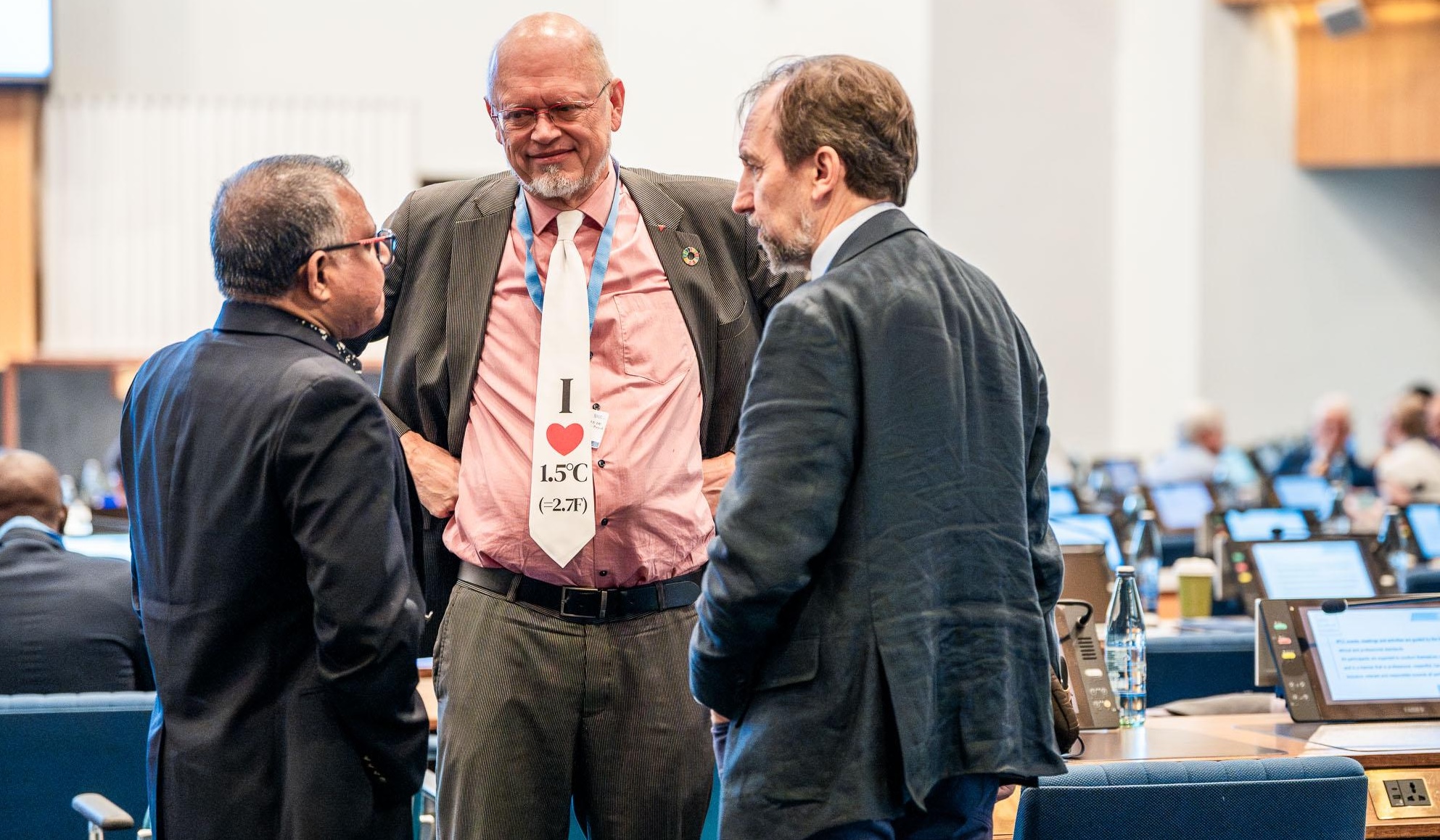
Scientists have vowed to keep working on the next flagship set of reports for the Intergovernmental Panel on Climate Change (IPCC), after a political row over the timeline for their release saw its latest session suspended on Friday evening without agreement.
During the weekend, government officials and scientists alike expressed disappointment over the inability to reach a compromise before some delegates from developing countries and small island states had to leave the week-long meeting in Ethiopia to catch flights home.
The disagreement – which has persisted since early 2024 – turns on whether the three key parts of the AR7 assessment should all be published before the conclusion of the UN’s next Global Stocktake of global climate action, which is due to be completed in late 2028.
The IPCC issued a statement after the close of the session, saying that “key agenda items” – the timelines for the three AR7 reports, as well as the IPCC budget – remain open and under discussion. It said the IPCC’s plenary session and its deliberations on the pending agenda “will resume at the earliest opportunity”, giving no further details of when.
IPCC Chair Jim Skea told delegates in closing remarks that recent months had been some of the most turbulent for the climate science panel and that, if there were stronger words than “profound disappointment” he would use them, according to a summary published by the Earth Negotiators Bulletin (ENB). IPCC discussions happen behind closed doors.
IPCC scientists remained committed
In an open letter, issued on Monday, a group of nearly 120 scientists – from a total of 664 AR7 authors – said they “stand committed to continue working to deliver the AR7 reports in a manner that is rigorous, timely and inclusive, in line with our mandate to be policy-relevant”.
“An assessment that arrives after the decisions it is meant to inform cannot serve its purpose,” they emphasised. “The second Global Stocktake in 2028 is such a decision point, and the world should not have to face it without the IPCCʼs latest assessment.”
Europe, small islands and the least developed countries, plus many Latin American and developed nations, want the IPCC to meet this deadline, arguing that the findings from the UN climate science body are irreplaceable in the UN climate policy-making process.
However, around a dozen developing countries plus Russia have argued that the reports should come later in order to allow for greater research input from the Global South – something that, in their view, would make the findings fairer. They also claim that a shorter timeline would put excessive pressure on experts.
-
Who shapes climate science? The equity question facing the IPCC
Early completion of the next global climate science assessment reports risks excluding research from the Global South, which is key to ensuring the findings are fair -
Governments that support climate science must stand firm against naysayers
The IPCC is meeting to decide the timing of its next major report, as some countries try to delay it and weaken the case for faster emissions cuts


The most vocal of this group at last week’s meeting were India and Saudi Arabia, according to the ENB summary and a developed country diplomat. Critics see this push for a longer timeline as an excuse to deprive government decision-makers of the latest science and ease pressure on emerging economies to raise their ambition, particularly on cutting emissions.
Commenting on last week’s meeting, France’s ambassador for climate negotiations Benoît Faraco said a broad coalition of developed and developing countries from all five continents, “united in their support for science and the timeline proposed by scientists”, had withstood pressure “from a few countries” seeking to slow down the process of adopting the IPCC reports.
He added that France would not back down and would “continue to fight tirelessly for science, protect the integrity of information, and convince our partners that without the best available scientific data, we will be less effective in tackling climate change and protecting our populations”.
Inclusivity proposal stalled
In a bid to unlock a solution for the AR7 timeline, countries discussed ways to improve the inclusivity of the IPCC’s work. One option put on the table was for the IPCC to expand its funding for delegates from developing countries to attend some or all of its sessions from one to two participants, according to the ENB summary and a delegate speaking to Climate Home News.
That would inc