


The United States is advancing its clean energy ambitions with the allocation of $6 billion in tax credits under the Inflation Reduction Act’s §48C Qualifying Advanced Energy Project Tax Credit (48C program). Administered by the Department of the Treasury and IRS, the funding will support over 140 projects across more than 30 states.
The focus: boosting clean energy manufacturing, recycling critical materials, and decarbonizing industrial processes. This move underscores the Biden administration’s commitment to building a low-carbon energy future while fostering economic growth in energy-dependent communities.
What is the 48C Program?
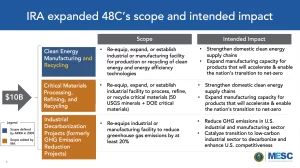
The 48C program was initially introduced in 2009 to encourage investments in clean energy infrastructure. Expanded under the Inflation Reduction Act (IRA), it now includes $10 billion in tax credits, with at least 40% reserved for energy communities—regions with economies historically tied to fossil fuels. These communities, often home to closed coal mines or retired power plants, are crucial for the nation’s equitable energy transition.
Since its inception, the program has successfully incentivized over 250 projects. It has unlocked over $44 billion in private investments and created an estimated 30,000 construction jobs.
The second round of tax credits focuses on three core areas:
Clean Energy Manufacturing and Recycling ($3.8 billion)
This allocation supports projects to bolster the domestic production of renewable energy components. Beneficiaries include facilities manufacturing hydrogen electrolyzers, solar photovoltaic systems, wind turbine parts, and EV battery components. These investments help localize clean energy supply chains, reducing dependence on imports and reinforcing energy security.
Critical Materials Processing and Recycling ($1.5 billion)
Critical materials like lithium, copper, and rare earth elements are essential for clean energy technologies. This funding supports refining and recycling these materials, addressing both supply chain vulnerabilities and environmental concerns.
For example, projects refining lithium for EV batteries or recycling spent lithium-ion batteries contribute to sustainable resource management.
Industrial Decarbonization ($700 million)
The industrial sector, responsible for nearly a quarter of U.S. greenhouse gas emissions, is a major focus of decarbonization efforts. This funding supports initiatives like installing heat pumps, electric boilers, and other advanced technologies that reduce carbon emissions.
Projects in this category aim to eliminate around 2.8 million metric tons of emissions annually, equivalent to taking over 600,000 cars off the road.
Key Impacts of the 48C Program
- Strengthening Domestic Supply Chains
The 48C program plays a critical role in addressing vulnerabilities in the U.S. clean energy supply chain. For instance, 80% of global solar panel components are produced in Asia, primarily China. The program incentivizes domestic production to reduce reliance on imports, fostering energy independence and strengthening national security.
Since its inception, the program has been associated with over $2 billion in domestic investments in advanced manufacturing projects, according to Department of Energy estimates.
- Supporting Energy Communities
Energy communities, often dependent on fossil fuel industries, face economic hardships as the nation transitions to cleaner energy. The 48C program reserves at least 40% of its $10 billion allocation for these regions, ensuring they reap the benefits of renewable energy growth.
This targeted support has led to infrastructure projects and job creation in historically underserved areas. For example, in 2023, regions like Appalachia and the Gulf Coast witnessed clean energy investments estimated at $1 billion, significantly boosting local economies.
- Reducing Carbon Emissions
By supporting decarbonization in heavy industries like steel, cement, and chemicals, the program significantly lowers greenhouse gas emissions. According to EPA estimates, initiatives funded under the 48C program have the potential to reduce carbon dioxide emissions by over 30 million metric tons annually—the equivalent of removing 6.5 million cars from the road each year.
This blend of economic, social, and environmental benefits underlines the 48C program’s pivotal role in steering the U.S. toward a sustainable and equitable energy future.
Ashley Zumwalt-Forbes, Deputy Director for Batteries and Critical Materials at the U.S. Department of Energy (DOE), remarked on the announcement, stating that:
“Particularly noteworthy is the allocation of $1.5 billion towards critical materials recycling, processing, and refining projects – a sector that has outsized importance in our nation’s economic security. “
- RELATED: Unlocking the Power of Critical Minerals with US DOE’s $45 Million Investment: A Focus on Antimony
Critical Minerals: Driving the Clean Energy Future
Critical minerals are at the heart of the global energy transition, powering technologies like EVs and renewable energy systems. The International Energy Agency (IEA) reports that demand for these materials surged in 2023, with lithium demand jumping by 30% and nickel, cobalt, and rare earths increasing by 8-15%.
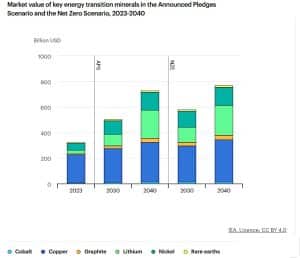
- By 2040, the combined market value of critical minerals could exceed $770 billion in the IEA’s Net Zero Scenario.
The United States and its allies are working to reduce dependence on foreign sources, especially China’s dominance over 60-70% of global lithium and cobalt supplies. Measures like the U.S. Defense Production Act aim to strengthen domestic production.
Canada has committed CA$3.8 billion to critical mineral initiatives, though experts emphasize the need to fast-track permitting and expand production.
Moreover, despite slower growth compared to 2022, critical mineral investments increased by 10% in 2023, per the IEA data. Lithium specialists led the surge, with investments rising 60%, even amid weak prices. Exploration spending grew by 15%, driven by Canada and Australia.
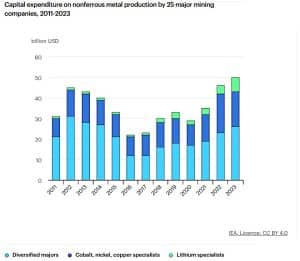
Venture capital spending also climbed 30%, with notable growth in battery recycling offsetting reduced funding for mining and refining start-ups. China’s investment in overseas mines hit a record $10 billion in the first half of 2023. The funding focuses on battery metals like lithium, nickel, and cobalt, underscoring its strategic interest in securing critical resources.
From Credits to Clean Energy Transformation
Overall, the clean energy sector requires rapid scaling to meet demand, particularly as the U.S. aims to transition to renewable energy sources. By leveraging the $6 billion allocation from the 48C program, America can position itself as a global leader in clean energy innovation.
By prioritizing domestic production, addressing supply chain vulnerabilities, and supporting energy communities, the 48C program is reducing emissions while laying the groundwork for a sustainable and low-carbon energy future.
- READ MORE: Trump’s Tariffs and Climate Rollbacks: How 2025 is Shaking Copper Markets and Clean Energy Goals
The post $6 Billion Tax Credits to Power America’s Clean Energy Future appeared first on Carbon Credits.


Most businesses that decide to act on their net-zero targets reach the same point of friction. Buying carbon credits has meant tracking down brokers, sitting through sales calls, and requesting a quote just to learn a price, sometimes with limited proof of what you are buying.

The earnings calls that quietly reframed climate from sustainability question to operating risk.
Three earnings calls in the last 18 months tell the story without any help from a press release.
Hershey, May 2024: cocoa price exposure compresses margin, and the company attributes part of the cost shock to West African weather. Olam, July 2024: coffee climate exposure quantified in the annual report. JBS, January 2025: supply chain climate disclosures expanded materially in response to investor pressure and regulatory expectation. None of these companies issued the announcement as climate news. They issued it as financial news. The climate-linked supply chain risk did not arrive with a sustainability framing; it arrived as a P&L line.
You are probably reading this article because you suspect the same thing is happening to your business. This piece walks through what is showing up on which earnings calls, how procurement and finance leaders are quantifying the exposure, and what serious corporates are doing about it before the regulator asks.
Where climate risk has already appeared in earnings
The pattern is consistent across resource-intensive sectors. A weather event compresses supply, the price spikes, the cost flows through the income statement, and the analyst on the call asks whether the event is anomalous or structural. Increasingly, the honest answer is the second one.
Cocoa is the cleanest example. The 2023 to 2024 West African harvest fell sharply on the back of erratic rainfall and disease. Cocoa futures more than tripled. Companies with concentrated West African sourcing absorbed the cost; companies with diversified sourcing absorbed less. The exposure was not climate as ESG topic. It was climate as cost of goods.
Coffee follows the same pattern. Brazilian and Vietnamese harvests have moved on weather more sharply across the last several seasons. Roasters with long-tenor supplier relationships and origin diversification have managed the volatility; roasters with spot-market exposure have not. Wheat, sugar, palm oil, beef: the same dynamic in different commodities, a pattern the IPCC AR6 Working Group II report projects will intensify across agricultural systems through mid-century.
What this means: climate risk is no longer a footnote in the 10-K. It is a line item the CFO has to explain on the call.
The three commodity exposures that hit margin first
For most companies with material Scope 3 exposure, three exposures dominate the near-term P&L risk.
- Concentrated single-origin sourcing in a climate-vulnerable region. If your tier-one supply for any material commodity sits in one geography, you have a concentration risk that climate amplifies. Diversification across origins is the obvious hedge, but it takes years to build and requires relationships you cannot acquire by tender.
- Supplier financial fragility under climate stress. Smallholder farmers, who supply a large share of the global cocoa, coffee, and palm oil market, do not carry the balance sheets to absorb yield shocks. When yields collapse, they exit. When they exit, your supply base shrinks, and the surviving suppliers raise prices. The risk is structural, not cyclical.
- Logistics and storage exposure to extreme weather. Hurricane disruptions to Gulf shipping, drought-driven Panama Canal restrictions, flooding in European inland waterways: each of these has moved input costs in the last three years, a pattern documented in Munich Re’s natural catastrophe data. The exposure shows up as a one-quarter event in the financial press but accumulates over time on the cost line.
TCFD and ISSB disclosure changes
The disclosure architecture has now caught up with the risk. The Task Force on Climate-related Financial Disclosures, whose recommendations are now embedded in the ISSB’s IFRS S2 climate standard, requires companies to disclose climate-related risks across physical and transition categories, with quantification where possible.
For physical risk specifically (the climate-linked supply chain risk you are reading about), the disclosure must address both acute exposures (extreme weather events) and chronic exposures (gradual changes in temperature, precipitation, and growing seasons). The disclosure must address the time horizon over which the risk is material, the parts of the value chain exposed, and the financial impact under different scenarios.
The CSRD imposes similar requirements under European law, with double materiality (both financial and impact materiality) embedded in the assessment. The practical effect: your auditors and your investor relations team now need a defensible answer to the climate-linked supply chain risk question, and the answer needs to be quantified.
What procurement and finance can do now
Three actions matter near-term.
Map your exposure. Most companies do not have a clear view of which tier-one and tier-two suppliers sit in which climate-vulnerable geographies. Without the map, you cannot quantify the risk, and without the quantification, you cannot disclose it credibly. The map is the foundation, and World Resources Institute climate risk research provides useful public tooling to start.
Diversify and deepen, in that order. Diversification across origins reduces concentration risk, but the deeper move is to invest in the resilience of the suppliers you already have. Regenerative practices, agroforestry, soil health interventions: these reduce yield volatility under climate stress and protect your input cost trajectory.
Embed the climate spend inside procurement, not outside it. Treating climate risk as a sustainability cost line subordinates it to the ESG budget. Treating it as a procurement and resilience investment puts it in the budget that matters, which is the cost-of-goods budget that the CFO defends quarterly.
Nature-based supply chain investments are the asset class designed for exactly this purpose. They sit inside the value chain, they reduce climate-linked supply risk, they generate verifiable Scope 3 reductions, and they produce the documentation an auditor and a regulator can both test.
If you are quantifying climate-linked supply chain risk in advance of the next earnings cycle or the next disclosure period, the carbon and sustainability experts at Carbon Credit Capital can help you map your exposure and structure a Dual-Value Model response that addresses reduction, resilience, and disclosure-readiness in a single program. Schedule a consultation.

More and more small and medium-sized businesses are hearing the same question from their larger customers: What is your carbon footprint? That question now travels down entire supply chains, and it arrives next to tender requirements, certification criteria, and rising customer expectations.




-
Climate Change1 year ago
Guest post: Why China is still building new coal – and when it might stop
-
Greenhouse Gases1 year ago
Guest post: Why China is still building new coal – and when it might stop
-

 Greenhouse Gases2 years ago
嘉宾来稿:满足中国增长的用电需求 光伏加储能“比新建煤电更实惠”
-

 Climate Change2 years ago
嘉宾来稿:满足中国增长的用电需求 光伏加储能“比新建煤电更实惠”
-
Climate Change2 years ago
Bill Discounting Climate Change in Florida’s Energy Policy Awaits DeSantis’ Approval
-

 Renewable Energy10 months ago
Sending Progressive Philanthropist George Soros to Prison?
-
Greenhouse Gases1 year ago
嘉宾来稿:探究火山喷发如何影响气候预测
-

 Carbon Footprint2 years ago
US SEC’s Climate Disclosure Rules Spur Renewed Interest in Carbon Credits