

According to a new report from Wood Mackenzie, China will hold more than 80% of the world’s solar polysilicon, wafer, cell and module manufacturing capacity from 2023 to 2026 following investments exceeding $130 billion this year alone.
“China’s solar manufacturing expansion has been driven by high margins for polysilicon, technology upgrades and for developing local manufacturing in overseas markets,” says Huaiyan Sun, a senior consultant at Wood Mackenzie and author of the report.
“China will still dominate the global solar supply chain and continue to widen the technology and cost gap with competitors.”
More than 1 TW of wafer, cell and module capacity is forecasted to come online by 2024, meaning China’s capacity is sufficient to meet annual global demand now through to 2032, based on Wood Mackenzie forecasts of annual demand growth.
Strong government policies in overseas markets have started to increase local solar manufacturing, but they are still not cost-competitive compared to Chinese supply. A module made in China is 50% cheaper than that produced in Europe and 65% cheaper than the U.S., according to the report.
The U.S. and India have announced more than 200 GW of planned module capacity since 2022, driven by the Inflation Reduction Act in the U.S. and the Production Linked Incentive in India.
“Despite considerable module expansion plans, overseas markets still cannot eliminate their dependence on China for wafers and cells in the next three years,” Sun says.
China will continue to be the global technological leader with its announcements to build more than 1 TW of N-type cell capacity, the next-generation technology after P-type. This represents 17 times more capacity than the rest of the world.
Looking outside China, India is forecasted to overtake Southeast Asia as the second-largest module production region by 2025, which will be driven by India’s strong PLI incentives.
Concerns about the market’s oversupply are mainly aimed at old production lines that produce lower efficiency products, such as the P-type and M6 cells. Demand for P-type cells began to decline in 2023, and Wood Mackenzie analysts expect it to be only 17% of supply by 2026.
“Oversupply will undeniably hinder some of the current expansion plans,” Sun adds. “More than 70 GW of capacity in China has been terminated or suspended in the past three months.”
The post Wood Mackenzie: China Will Continue to Dominate Solar Manufacturing Sector appeared first on Solar Industry.
Wood Mackenzie: China Will Continue to Dominate Solar Manufacturing Sector

 Maybe the protestors are less concerned about length of time in office, and more with criminal authoritarianism.
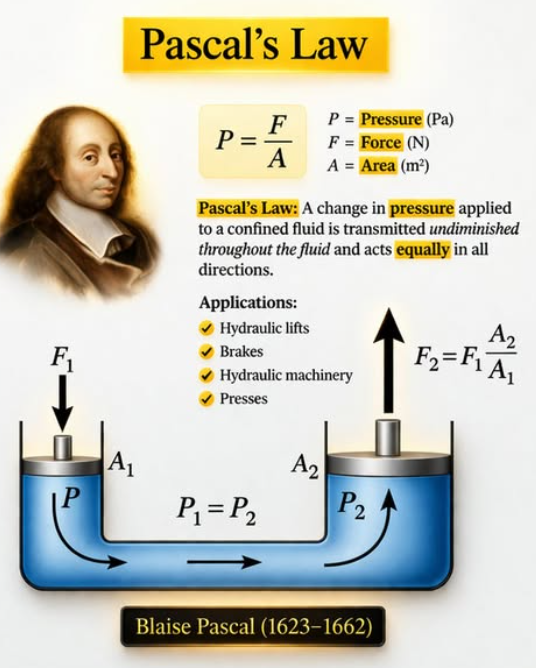 I have such respect for Pascal that I considered naming our son after him. (My wife wasn’t having it. Maybe if we lived in France?)
Pascal made important contributions to both math and physics but he’s perhaps best known for his philosophic “wager,” that it makes sense to believe in God, since if He exists, you’ll be very glad you did, and if He doesn’t, you haven’t lost anything. I counter that this is not how we accept or reject religious tenets.
 “Republican Patriots” writes: Howard Stern once again reveals the contempt so many in the entertainment elite hold for everyday Americans. He claims not to hate President Trump himself, but openly declares his hatred for those who support him, calling them stupid and saying he has no respect for them. This kind of arrogant dismissal shows how out of touch these Hollywood types have become with the hardworking people who built this country.
I’ve got news: contempt for Trump supporters is hardly limited to “these Hollywood types.” The vast majority of Americans–especially at this point–are neither greedy pigs nor hateful morons. We respect human rights and rule of law.



-
Greenhouse Gases8 months ago
Guest post: Why China is still building new coal – and when it might stop
-
Climate Change8 months ago
Guest post: Why China is still building new coal – and when it might stop
-

 Greenhouse Gases2 years ago
嘉宾来稿:满足中国增长的用电需求 光伏加储能“比新建煤电更实惠”
-
Climate Change2 years ago
Bill Discounting Climate Change in Florida’s Energy Policy Awaits DeSantis’ Approval
-

 Climate Change2 years ago
嘉宾来稿:满足中国增长的用电需求 光伏加储能“比新建煤电更实惠”
-
Climate Change Videos2 years ago
The toxic gas flares fuelling Nigeria’s climate change – BBC News
-

 Carbon Footprint2 years ago
US SEC’s Climate Disclosure Rules Spur Renewed Interest in Carbon Credits
-

 Renewable Energy5 months ago
Sending Progressive Philanthropist George Soros to Prison?