

Susana Malcorra is president and founder of GWL Voices and former foreign minister of Argentina. Mary Robinson is a GWL Voices member, former UN human rights commissioner and former Irish president.
Earth has just had the hottest August since records began. Wildfires tore through Europe, North America and Asia, killing dozens, forcing hundreds of thousands from their homes, and burning more than a million acres of land.
In Nepal, flash floods triggered by a glacial lake outburst killed more than a thousand people and left thousands missing – a disaster Nepal’s foreign minister said reflected the disproportionate share of climate consequences borne by countries like his. Just recently, the UN Environment Programme confirmed what scientists have long warned: the world is now on track to breach 1.5C of warming, likely within the next few years.
As the climate crisis intensifies, one question is central: who is at the helm?
GWL Voices’ report, published this summer, shows that women are very much on deck in climate and environmental governance, but they are not steering the ship.
-
UN chief urges countries to adopt fossil fuel transition plans with timelines
In his last speech to the UN General Assembly, António Guterres for the first time called on every nation to deliver a plan to phase out coal, oil and gas while protecting workers -
COP31 electrification pledge leaves out clean power commitment
Campaigners and experts say the goal’s effectiveness in reducing emissions may be limited unless countries agree to meet it using only clean energy
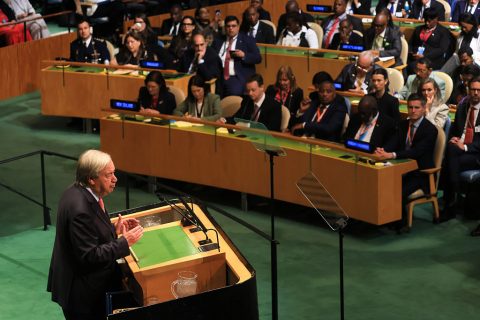
Of all climate COP Presidents since the annual conferences began over thirty years ago, three-quarters have been men. This matters because COP Presidents are among the most visible and influential roles in global climate governance. The climate COPs, however, are not the worst offenders. Another of the UN’s three environmental “sister conventions,” the UN Convention to Combat Desertification (UNCCD), has had a woman preside over its COP only three out of 17 times since 1997.
Structural inequality cascades down
Women’s underrepresentation is not a harmless coincidence. It’s a pattern that cascades down to other critical roles, including country delegates, heads of delegations, national focal points, and COP bureau members.
It is a structural inequality that limits the diversity of perspectives, priorities and decisions brought to bear on the environmental emergencies we face, and it is unfolding against a backdrop UN Women itself describes as one of “escalating conflicts, attacks on women’s rights, and environmental degradation.”
GWL Voices’ Spotlight on Women in Global Climate and Environmental Leadership shows that progress beyond the COPs is slow and sparse. While the Green Climate Fund has approached gender parity in its top leadership role over time, the IPCC, which is the body charged with compiling and communicating climate science to the world, has never appointed a woman to its top position of Chair in nearly four decades.
Gender focal points mainly women
Parity in environmental governance at the multilateral level remains extremely rare. There is, however, one role where women are, for once, not under- but substantially over-represented: when the task at hand is gender equality itself. Ninety percent of countries’ gender focal points under the biodiversity and climate conventions are women.
Relegating women to so-called “women’s issues” within climate and environmental governance is a particularly stark example of horizontal segregation, a pattern that repeats well beyond the multilateral level.
According to the Women in Politics Map 2026, prepared by UN Women and the Inter-Parliamentary Union, the largest share of women cabinet ministers worldwide sit in Women and Gender Equality ministries (90%) and family and children affairs (73%), while they remain sidelined in strategic areas including economic affairs (18%), foreign affairs (29%) and energy (12%).
‘Hectic’ in high heels? Women still face gender hurdles at UN climate talks
The danger of this segregation is that women’s rights come to be seen as women’s responsibility alone, which does nothing to advance equality, since the problem affects us all and requires everyone’s active engagement to solve.
Conversations about gender and climate too often focus on women’s vulnerability to climate impacts. That angle reflects a real problem, but it hides a second one: access to decision-making. Women are not simply “victims” of the climate and nature crisis, they are among its most experienced responders, its most consistent advocates, and, when given the chance, its most effective leaders.
Studies show women leaders’ impact
What if women had an equal seat at the decision-making table? Would environmental governance be more effective? The evidence says it would. Research by Norgaard and York (2005), Mavisakalyan and Tarverdi (2018), and Fredriksson and Wang (2011) finds that women leaders are more likely to support environmental protection, ratify environmental treaties, and adopt stricter climate policies.
Following last year’s COP30 – where the UN Framework Convention on Climate Change adopted a landmark, nine-year plan to mainstream gender equality across climate governance and implementation – GWL Voices called for the same principles: gender parity across all climate bodies, Indigenous women’s voices embedded in policy design, gender-responsive climate finance with transparent tracking, and real accountability for women-led initiatives. Its 2026 report is the evidence for why implementation of the Belém Gender Action Plan cannot wait any longer.
Why women’s leadership is central to unlocking the global phaseout of fossil fuels
As the world convenes for Climate Week NYC, weeks before the UN chooses its next Secretary-General, and less than two months before COP31, we raise our voices for this message to reach those who hold power.
Let’s start seeing the climate crisis as a governance crisis, one with an outrageous blindspot for women’s leadership, ingenuity and readiness to decide. We invite every government, institution or boardroom, and every person to read the spotlight report in full, identify the pattern in the ranks of their own organisations, and use whatever power they hold to break it.
Because when it comes to the climate crisis, women’s hands are already on deck; it’s time we let them steer.
The post Women are on deck – it’s time they steered appeared first on Climate Home News.

Other than the Australian and Turkish co-hosts, the only G20 nations to address the COP31 leaders’ summit with speakers at the “head of state or government” level will be the UK, Brazil and China, according to a provisional list released on Wednesday.
The list, which is published by the United Nations and subject to change, includes only 77 countries whose leaders are listed to speak at the summit in Antalya on November 11-12. That would be nearly a third fewer than the 116 who spoke at COP28 in Dubai three years ago.
Yvo de Boer, a former head of the UN’s climate secretariat, told Climate Home News that the low turnout and “the absence of many nations that should be showing leadership on climate action and support for developing nations” sends “the wrong signal at a difficult time”.
Amid geopolitical conflicts, a struggling global economy and an inevitable overshoot of the 1.5C global warming limit, de Boer said that “climate action needs a strong show of support, not empty seats at a leaders’ summit”.
-
UN sets steep emission cuts to reverse 1.5C overshoot by end of century
Emissions must by reduced by nearly 6% a year for the world to have a good chance of bringing global warming back down to the Paris Agreement limit, the Emissions Gap Report says -
Turkish giant sponsoring COP31 cut climate goals then cashed in on oil boom
COP31 sponsors should be screened for “climate integrity”. Yet Koç Holding has become a top partner while its oil refiner runs flat out and its climate targets slip

Earlier this week, UN Secretary-General Antonio Guterres said G20 countries should lead on climate action, adding that while they have varying responsibilities in tackling global warming, “all countries, especially the big emitters, must do more”. As major economies spanning developed and developing nations, G20 countries account for more than three-quarters of annual global emissions.
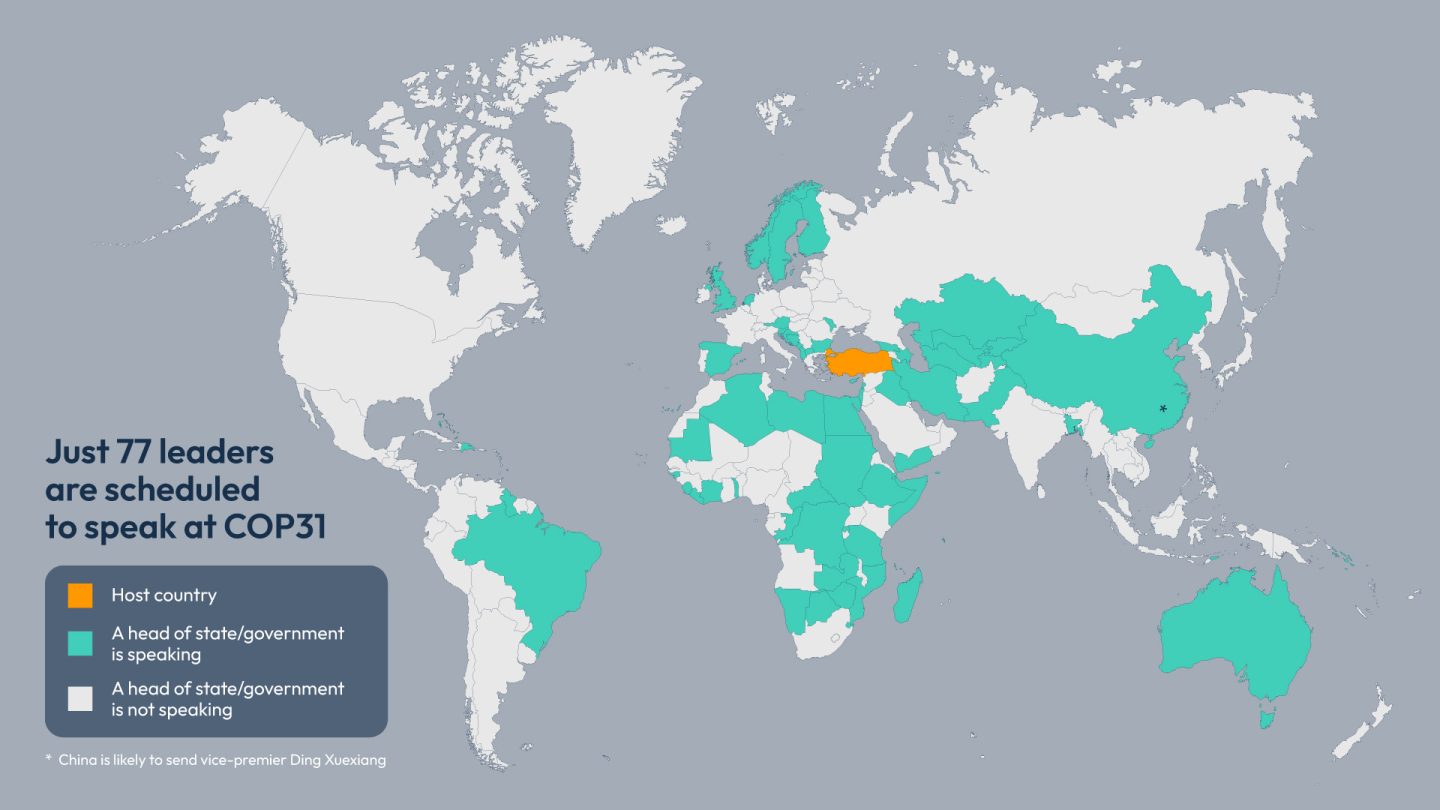
China is likely to be represented at COP31 by Vice-Premier Ding Xuexiang, as in the past three years, rather than President Xi Jinping, who has rarely left China since the COVID-19 pandemic and has not attended a climate COP since Paris in 2015.
British Prime Minister Andy Burnham is scheduled to speak, after telling parliament in September he would do so as part of his efforts to “meet the climate challenge” following a series of deadly heatwaves.
UK approves gas drilling despite admitting blow to “climate leadership” status
Brazil’s President Lula has also said he will attend. Depending on the result of Sunday’s election against his far-right rival Flávio Bolsonaro, he will speak at COP31 as either a recently re-elected or outgoing president.
While the COP31 summit is being hosted by Türkiye in Antalya, Australia has the formal role of President of Negotiations and its prime minister, Anthony Albanese, will speak at the summit. Türkiye’s President Recep Tayyip Erdogan is not on the UN’s speaker list but is likely to give an opening speech.
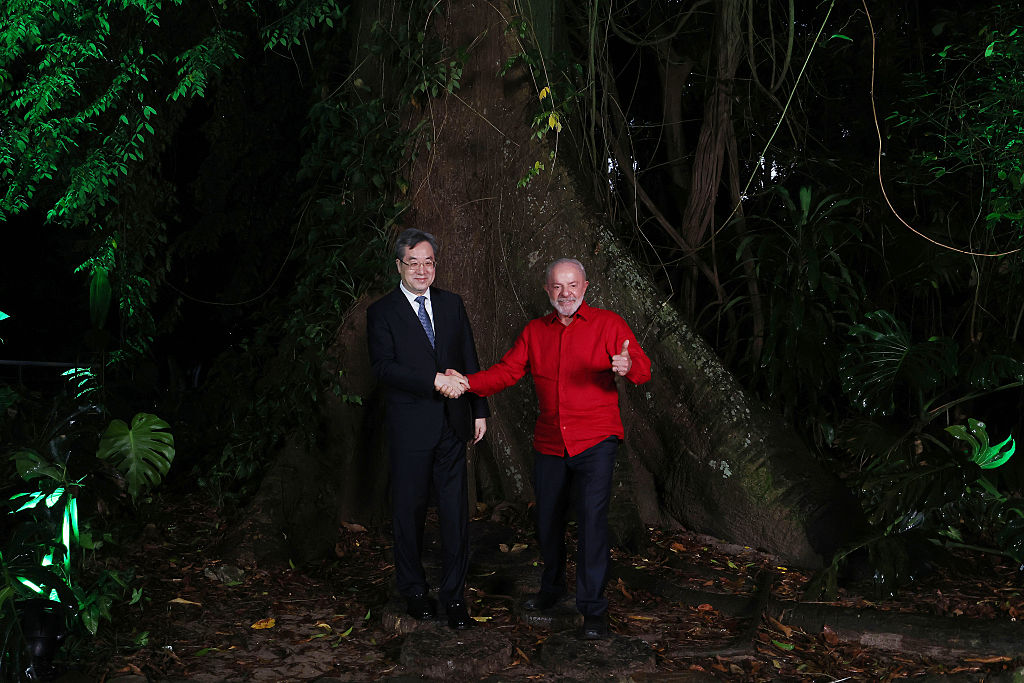
Many of the countries whose leaders are due to attend COP31 are those suffering the worst effects of climate change. About a third are African countries and a quarter are small island developing nations. Türkiye’s Central Asian and Balkan neighbours are also well-represented.
COP31 no-shows
Among the major emitters not on the list are French President Emmanuel Macron, German leader Friedrich Merz, Italy’s Giorgia Meloni, India’s Narendra Modi, Russia’s Vladimir Putin, Canada’s Mark Carney and Japan’s Sanae Takaichi.
Macron, who is struggling to deal with rising social unrest across France, will reportedly attend commemorations marking the end of the First World War and a European Political Community summit instead. It is not known whether the others will eventually decide to attend COP31, or what they will do instead.
Climate change-sceptic US President Donald Trump has never attended a COP and is withdrawing the US from the UN climate convention (UNFCCC), under which COP meetings are held, after quitting the Paris Agreement for a second time.
Argentina’s Javier Milei has considered exiting the Paris Agreement but has so far not done so, although his government is one of around 30 countries yet to submit an updated national climate plan to the UN.
The post Early speakers’ list suggests few powerful leaders will attend COP31 appeared first on Climate Home News.
Early speakers’ list suggests few powerful leaders will attend COP31
Muhammad Zulfikar Rakhmat is director of the China-Indonesia Desk at the Center of Economic and Law Studies (CELIOS). Bhima Yudhistira Adhinegara is executive director of CELIOS.
Indonesia bills its plans to mix wood with coal at dozens of power plants as a way to cut electricity generation emissions as the country transitions towards clean energy. But look closer, and the biomass co-firing plan could do far more harm than good.
Biomass co-firing involves mixing a small amount of wood or other plant matter, usually wood chips or wood pellets, into the coal that a power plant burns.
State electricity company PLN wants to use it at 52 coal-fired plants across the Southeast Asian nation – a target set out in its national electricity supply business plan and tied to Indonesia’s pledge, under its Nationally Determined Contribution to the Paris Agreement, to raise renewables to 23% of the energy mix. PLN originally aimed to secure 10.2 million tonnes of biomass a year by 2025; that target has already slipped to 2031, as the country struggles to line up enough supply.
Most plants only mix in a small amount of wood, often between 1% and 5% of the fuel load, meaning they do not even have to change machinery. In truth, it lets coal plants keep doing what they have always done, just with a little wood added to the mix.
That presents two big problems.
-
SE Asia speeds up plan for connected clean power grid after oil shock
Countries are redoubling efforts to link their grids to bolster energy security and reduce their dependence on fossil fuels – but many challenges remain -
China keeps Indonesia’s battery dream afloat but future less certain
Chinese capital and technology turned Indonesia into the world’s top nickel supplier, but its dependence on China and the rise of nickel-free batteries could upset its battery ecosystem plans -
Southeast Asia’s fragile grids threaten billions in clean energy investment
Renewables developers need reliable electricity infrastructure and stable policies to help the region meet climate goals and surging demand for power


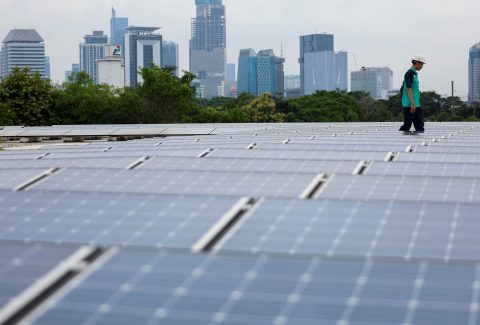
Firstly, creating additional demand for wood would put further deforestation pressure on the country’s thick and biodiverse tropical forests, already at risk from mining and palm oil plantations.
Secondly, by making old coal plants look a little greener on paper, the plan could hand them a reason to keep operating well beyond when they would otherwise be retired, meaning the fleet keeps emitting for longer than a genuine phase-out would allow.
This is not a real climate solution. It is coal wearing a green mask.
A threat to forests
To meet its co-firing mandate, Indonesia would need more than 10 million tonnes of wood pellets every year, an area of forest equivalent to 3.27 million football fields, according to a 2024 assessment by a group of NGOs.
The same report warned this could push deforestation as high as 2.1 million hectares a year, and found that a 10% cut in coal use through co-firing could threaten 10 million hectares of untouched forest in the areas where wood is collected. At Indonesia’s biggest power plants alone, switching just 10% of coal to wood could clear an area of forest roughly 35 times the size of Jakarta.
PLN and the forestry companies that supply it insist the wood comes from dedicated “energy plantation forests” – land set aside to grow fast-growing trees for fuel, not from clearing natural forest. But the same assessment found that of the 1.2 million hectares already designated for these plantations, more than 400,000 hectares still contain undisturbed tropical forest, which will come under growing pressure as demand rises. The claim that this wood comes from already-degraded land does not hold up to scrutiny.
Advocates of co-firing say wood is a clean fuel because trees can grow back. But when old natural forests are cleared to make way for fast-growing forestry plantations to grow trees for fuel, they release carbon that took decades or centuries to build up.
One study, by the Centre for Research on Energy and Clean Air (CREA), estimated that co-firing with just 10% wood across 52 power plants could create up to 26.5 million tonnes of carbon dioxide-equivalent emissions each year, once the clearing of land and the production of wood pellets are counted.
Wood pellets for export
Government rules have made this easier, not harder. Companies that already hold industrial timber plantation permits can convert them into energy plantations, giving them a ready-made legal route into the wood pellet business without applying for new forest land.
Indroyono Soesilo, chairman of the Indonesian Forestry Entrepreneurs Association (APHI), has publicly called on the government for tax breaks and relief from state forestry levies in exchange for making that switch.
Research by Trend Asia found that the push into energy plantations for biomass is dominated not by small or informal loggers but by large companies already notorious for deforestation, including APP Group, Korindo Group, Barito Pacific and Wilmar International. In short, some of the same companies long associated with clearing forests are being given an easier path and a green label to keep doing it.
-
COP30 roadmap to end deforestation will invite countries to draft domestic plans
After promising at COP30 to produce a voluntary global roadmap to stop forest loss by 2030, Brazil provided an update on the consultations this week -
Big banks’ lending to coal backers undermines Indonesia’s green plans
Foreign banks involved in Indonesia’s $20-billion Just Energy Transition Partnership have also funded companies working on coal power expansion, a TBIJ and Climate Home News investigation reveals

