

A United Nations initiative to ensure everyone on earth is protected by a multi-hazard early warning system (MHEWS) “has made real progress” but “too many people are still left exposed,” according to United Nations Secretary-General António Guterres.
Since Guterres launched the Early Warning Systems for All goal in 2022, the number of countries reporting that they have an MHEWS has increased from 113 to 136, the UN announced on Wednesday. Around 60 nations are still not covered 15 months ahead of the UN’s 2027 deadline.
“We must close the remaining gaps, reach every country, and ensure that by the end of 2027, every person on earth is protected”, outgoing UN chief Guterres said.
The UN said the largest gaps in coverage are mainly among the world’s least developed countries, small island developing states and fragile and conflict-affected nations. These countries are also among those hardest hit by climate change.
Guterres said that early warning systems “save lives, protect livelihoods and shield communities from disaster”, highlighting the Colombian Red Cross’s response to drought in June as an example.
At an event on the initiative in New York on Monday, Huw Beynon from the UN Disaster Risk Reduction Office said that the systems had helped during floods in Kenya last year and when recent cyclones hit Madagascar.
Jagan Chapagain, head of the International Federation of Red Cross and Red Crescent Societies, said in a statement that “reaching more people with early warnings is a success worth celebrating”.
Simple warnings not enough
The Early Warning Systems for All initiative supports about 160 countries and 31 countries have developed national roadmaps to install early warning systems. But Beynon said that, while most countries have a MHEWS, most also report limited capacity. “So you might have a warning disseminated but it’s not leading to the right action,” he said.
Speaking alongside Beynon, Nepali climate negotiator Manjeet Dhakal gave a recent example of this. He said Nepali authorities had sent text messages to 600,000 people – including him – who were in, or had recently been in, an area where flooding was likely.
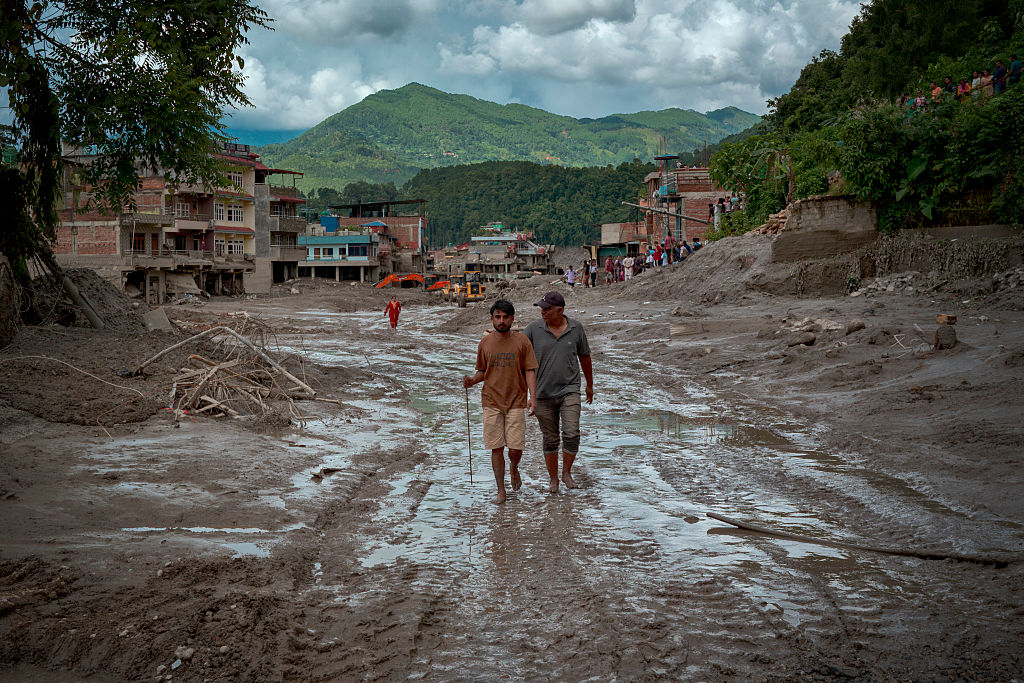
The flood, caused by a glacial rock-ice collapse, swept through the valley at huge speed, with a wave at least 30 metres above the river, killing thousands. But the messages did not “articulate the magnitude of this disaster”, he said, adding “these are humans who have to craft that message and that scale of disaster has never [previously] occurred”. The Straits Times has reported that these messages did not say how fast or big the flood would be and were sent too late for many.
When heavy rainfall led to floods in the Spanish city of Valencia in 2024, some text messages with warnings were only sent out after flooding had started and did not give residents clear instructions of how to act, such as moving to higher floors and not driving. Many Valencians drowned in their cars or in the underground garages of their apartment blocks, according to official reports.
Remaining barriers
Rohini Kohli, the UN Development Programme’s head of climate adaptation policy, told Monday’s New York event that a challenge for MHEWS in developing countries is a lack of foundational data.
This can include equipment to measure physical factors like rainfall, river levels and soil moisture or human factors like where peoples homes or power lines are located. The UN’s Systematic Observations Financing Facility is trying to bridge this “critical gap”, she said.
Another barrier, Kohli said, is that acting on early warnings is often the responsibility of local rather than national authorities and they need the capacity to respond in the right way. “Like most adaptation, local leadership has to be at the centre for design and delivery,” she said.
-
The response to Nepal’s disaster is a test for global climate institutions
Nepal’s recent flash flood represents a shared emergency the world over, as more and more communities become victims to a climate crisis they did not create -
As loss and damage fund stalls, Nepal crowdfunds flood relief
While the fund’s board continues to mull its request for $20 million, Nepal has raised nearly $90 million from individuals around the world -
UN chief urges countries to adopt fossil fuel transition plans with timelines
In his last speech to the UN General Assembly, António Guterres for the first time called on every nation to deliver a plan to phase out coal, oil and gas while protecting workers

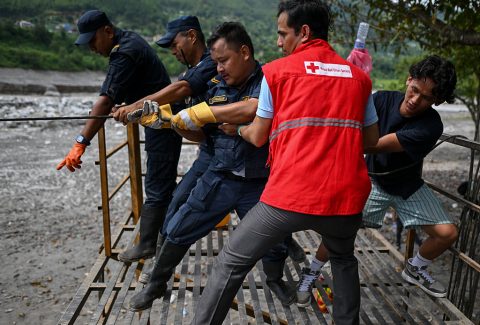
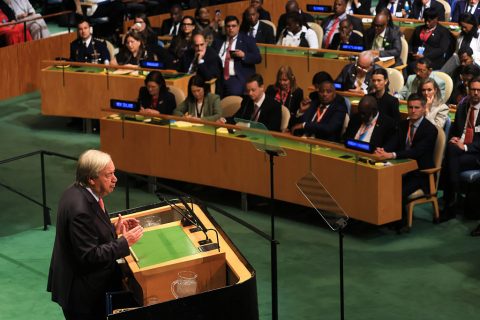
The IFRC’s Chapagain said that as “warnings alone are not enough”, authorities should “invest in trusted local actors so that communities can turn information into action and become agents of their own resilience, not simply recipients of alerts. Early action is what makes early warnings work.”
Kohli added that a lack of finance was also a problem for developing countries. She cited the UN’s adaptation gap report, which found that developing countries will need well over $300 billion a year by 2035 to adapt to climate change while they are currently receiving less than a tenth of that figure.
In 2022, the World Meteorological Organisation estimated that meeting the early warning systems for all goal would require a total of $1.5 billion.
The post Despite “real progress”, third of countries still lack early warning systems appeared first on Climate Home News.
Despite “real progress”, third of countries still lack early warning systems

More than a dozen countries, including Germany, South Korea, Pakistan and several small island states, have publicly backed the Turkish COP31 presidency’s flagship electrification pledge.
The voluntary pledge aims to raise electricity’s share of global final energy consumption to 35% by 2035, from 23% currently, but does not specify how that electricity should be generated.
The COP31 presidency is not expected to publish a full list of backers until next week, as it continues to rally support. But at least 14 countries have publicly endorsed the pledge, according to a Climate Home News analysis of speeches and official statements.
Alongside COP31 co-host Australia and COP32 host Ethiopia, they include Germany, Norway, Finland, South Korea, Pakistan, Zimbabwe, Eswatini, Togo and Liechtenstein, as well as the small island states of Palau, Seychelles and the Solomon Islands.
The European Union is widely expected to join the pledge this week, although member states still need to formally approve the decision, Politico reported. On Wednesday, President Ursula von der Leyen supported the pledge in her personal capacity and encouraged others to do the same.
Major economies still on the fence
Other major economies have welcomed COP31’s focus on electrification while stopping short of endorsing the pledge.
British Prime Minister Andy Burham said on Thursday that he was proud to support the summit’s focus on electrification. He said it matters for energy security, for creating good jobs in clean energy and manufacturing, and for lowering people’s bills.
-
Big fossil-fuel countries back Brazil-led transition roadmap
Some countries including Germany and the Netherlands call for the roadmaps to inform a key global review of climate progress in 2028 -
COP31 outcome needs to prioritise transition away from fossil fuels
Many countries are already working on parts of their transition, such as phasing out coal or ending fossil fuel subsidies, with more expected to follow soon
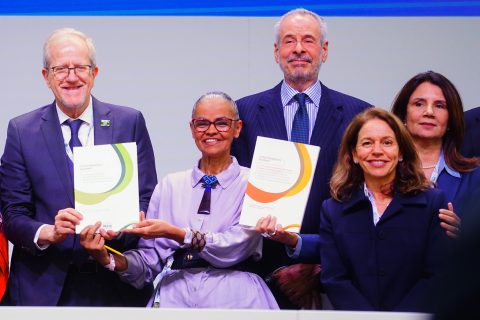

Brazil’s environment minister João Paulo Capobianco ssaid on Thursday that electrification was “an important front” in climate action, but warned it should not be pursued “for the sake of it”. It should instead serve as a means of improving efficiency and cutting emissions. He said Brazil would work with the Turkish proposal and suggest adjustments to allow “specific solutions” that reduce emissions, without giving details.
Saudi Arabia was more openly sceptical. Energy minister Prince Abdulaziz bin Salman told the leaders’ summit that emissions reduction is “what unites us”, “not necessarily the track to achieving it”. “The expansion of electrification does not necessarily mean cutting emissions, so long as we do not consider the sources of its production,” he said, adding that countries’ choices must be respected.
Clean power strings attached
Many of the nations formally backing the initiative have attached some strings to their support. At a high-level roundtable on Wednesday, the low-lying Pacific island nation of Palau said it would sign on to the pledge. But it added that electrification “must not become a substitute or a distraction” from the chief goal of transitioning away from fossil fuels.
Seychelles also endorsed the pledge but added that it must be connected with cleaner electricity. “Electrifying more activities while continuing to burn fossil fuels will not deliver the full economic or climate benefits,” the country’s representative told the roundtable.
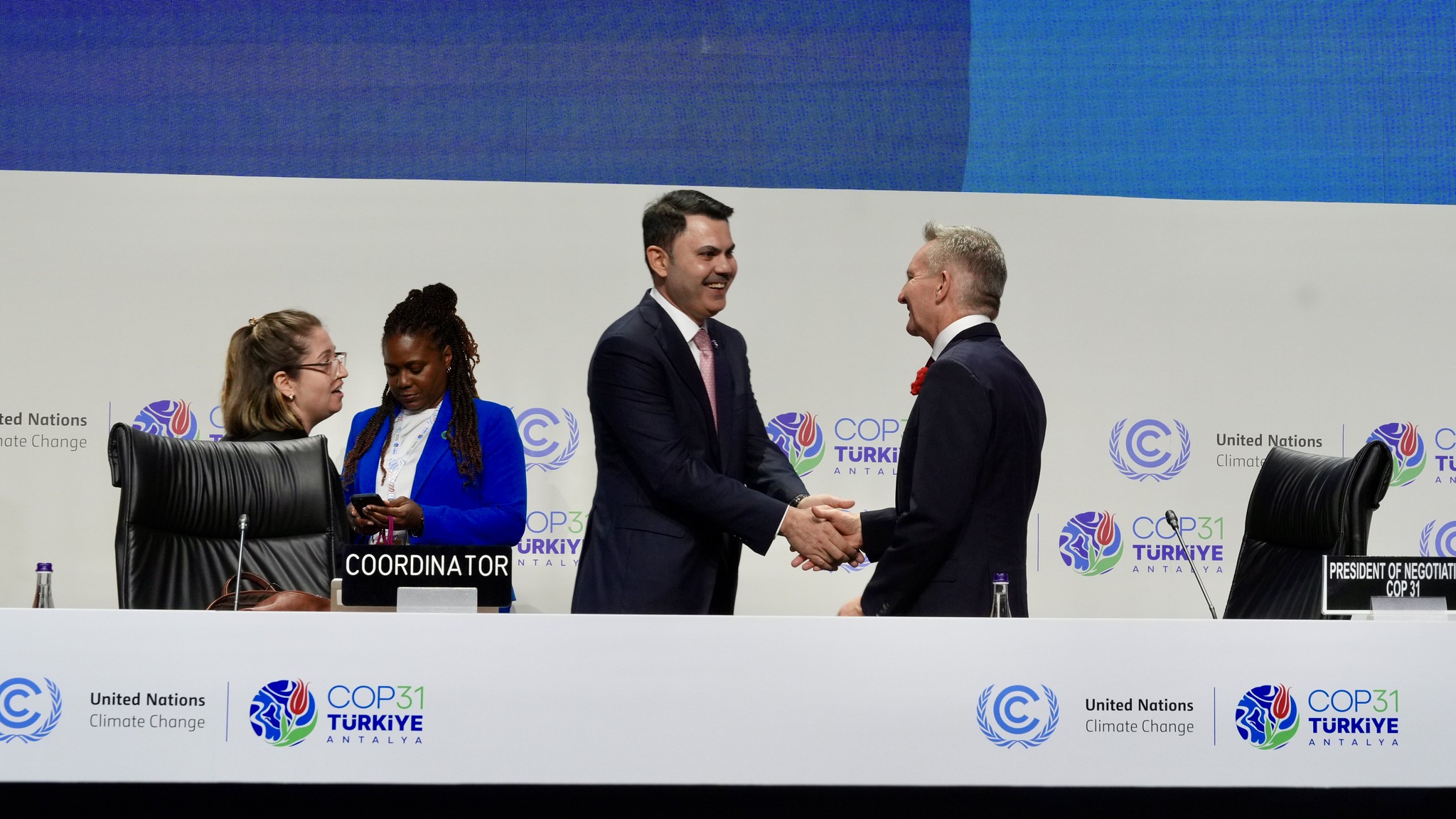
Australia’s climate and energy minister Chris Bowen, whose country is co-leading the pledge with Türkiye, has defended its design. “Electrification is almost always a good thing,” he told the Outrage and Optimism podcast recently. He argued that switching to an electric car cuts emissions by 60% even on a coal-fired grid, and by 90% when powered by solar.
Doug Arent, senior fellow at the WRI Polsky Center for the Global Energy Transition, said the most important thing “is that there is significant support for the concept of electrification”. He expects more countries to “recognise their pathway to be behind the 35 by 35” in the coming years.
Calls for finance
Other developing countries backing the pledge have underlined the critical importance of access to finance. Pakistan’s Prime Minister Shehbaz Sharif showed off his country’s people-led boom in rooftop solar and growing rollout of electric vehicles. But he added that “momentum without finance cannot be sustained,” and said the burden of new technologies cannot fall on countries already in debt.
Zimbabwe backed the pledge but warned of the high capital costs and financial bottlenecks facing developing countries. Its representative proposed a global electrification investment facility that would provide first-loss guarantees for projects under Mission 300, an initiative to connect 300 million people in Sub-Saharan Africa to electricity by 2030.
The Solomon Islands, another supporter of the pledge, asked for a dedicated finance access window for small island nations and least developed countries (LDCs).
Tuesday saw the launch of a global finance coalition backed by COP31 host Türkiye and COP32 host Ethiopia aimed at supporting clean electrification in developing countries.
Closing the roundtable, Türkiye’s energy minister Alparslan Bayraktar, who chaired the session, claimed the 35×35 pledge had found broad support worldwide. He called for a “smart” energy transition that draws on all available technologies, including carbon capture, use and storage.
The post COP31’s electrification pledge wins support, with caveats on clean power and finance appeared first on Climate Home News.
COP31’s electrification pledge wins support, with caveats on clean power and finance
Climate Change
Albanese must deliver credible action to end fossil fuel chokehold, not just rhetoric
ANTALYA,Türkiye, Thursday 12 November 2026 — In response to Prime Minister Albanese’s COP31 Leaders’ Summit address, Shiva Gounden, Head of Pacific at Greenpeace Australia Pacific, speaking from Antalya said:
“Prime Minister Albanese’s COP31 address was full of nice rhetoric, but once again failed to confront or even mention the root cause of the climate crisis — fossil fuels.
“In Antalya, UN climate chief Guterres told leaders to “tell the truth”. The truth is Australia can not credibly talk about its clean energy transition while continuing to expand the industry it needs to leave behind. Australia must reckon with reality; its damning track record of 38 coal and gas approvals since it took office in 2022.
“We meet in Antalya amidst a global energy shock and dire projections of 1.5°C overshoot. Overshoot means something in the Pacific — it means irreversible harm, lives and cultures lost forever, entire nations at stake. We must face the fierce urgency of now.
“Never before has the need to end the fossil fuel chokehold been so abundantly clear, as our Pacific communities again suffer the consequences of a global economy hooked on coal, oil and gas. The Pacific needs credible roadmaps and clear timelines to unhook from fossil fuels — Australia can’t keep saying implementation and not reflect it with credible action.”
ENDS
COP31 images and video available here in Greenpeace Media Library
Media contact: Kate O’Callaghan in Antalya (GMT+3) on +61 406 231 892 (Whatsapp/Signal)
Albanese must deliver credible action to end fossil fuel chokehold, not just rhetoric
A second set of world leaders give their speeches on Thursday before heading out of town and leaving their negotiators to it. After around 40 leaders spoke on Wednesday, today there will be just 25 or so including the UK’s Andy Burnham, Venezuela’s Delcy Rodriguez and Bangladesh’s Tarique Rahman.
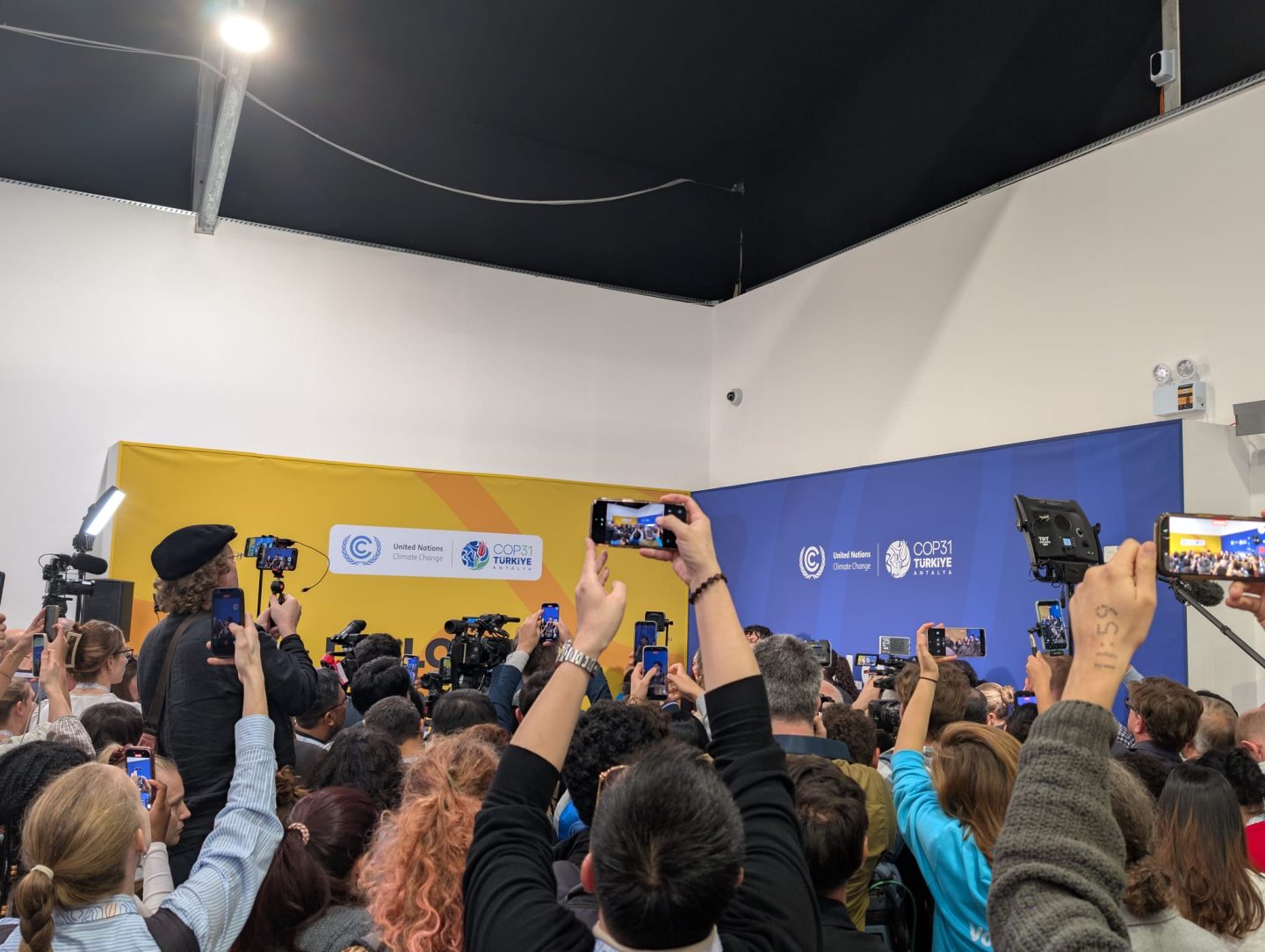
But Brazil’s President Lula is still there and is expected to keep grabbing headlines, along with California’s Governor – and maybe next US president – Gavin Newsom – and Swedish climate activist Greta Thunberg who has lost none of her star power, if the crowd around her in the press centre was anything to go by.
We’ll bring you highlights through the day on issues ranging from finance to methane, and update you on a pledging event for the Pacific Resilience Facility, which the climate-vulnerable region is relying on to keep small island nations as safe as possible in the face of intensifying storms, drought and sea level rise.
The post COP31 Bulletin Day 4: Burnham speaks with UK climate policy under fire appeared first on Climate Home News.
COP31 Bulletin Day 4: Burnham speaks with UK climate policy under fire


COP31’s electrification pledge wins support, with caveats on clean power and finance
Albanese must deliver credible action to end fossil fuel chokehold, not just rhetoric

