

Quick Key Facts
- Despite covering only around 25% of Earth’s land area, mountains host more than 85% of bird, mammal and amphibian species.
- Many of Earth’s rivers begin in mountains, and more than half of all people use freshwater from mountains every day.
- Six of the 20 plant varieties that feed most of the world’s population originate in mountains: barley, sorghum, tomatoes, apples, quinoa and potatoes.
- Mountain visits make up 15 to 20% of global tourism.
- Since 1950, mountains have been heating 25% to 50% faster than the global average.
- Even if global warming is limited to 1.5 degrees Celsius above pre-industrial levels, nearly all mountain glaciers will face considerable mass loss by 2100.
- The average Everest climber generates 18 pounds of waste, most of which stays on the mountain.
What Are Mountains and Why Should We Protect Them?
From the Alps and the Andes to Julie Andrews twirling in an alpine meadow in the opening scene of The Sound of Music, mountains have been a powerful force in human history and culture. They dominate our imaginations as they dominate our landscapes, towering over skyscrapers in cities from Tokyo to Seattle and forming islands from Hawaii to Iceland. A mountain, defined as a landmass significantly higher than its surroundings, comes in broadly four types: fold mountains, formed by the movements of tectonic plates; block mountains, created by rocks moving up and down; dome mountains, made from the movement of magma beneath the Earth’s crust and volcanoes.
While mountains are formed by geologic forces deep underground, they create space for unique ecosystems to form high above the Earth. Mountains’ harsh conditions and relative isolation have encouraged and sheltered varied biodiversity.
And what happens on mountains doesn’t stay on mountains. From crucial crops to glacial runoff, mountains have given many gifts to the human and non-human communities that live below them. Yet, society doesn’t treat mountains with the gratitude they deserve, threatening these majestic environments with the climate crisis, resource exploitation, pollution and overtourism. To preserve mountain ecosystems, it’s important for human communities to understand what mountains do for us and, in turn, what we can do for them.
What Are the Main Types of Mountain Ecosystems?
Mountain ecosystems vary wildly in climate and biodiversity. For example, mountains encompass the temperate European Alps and the Desert Mountains of Nevada to island-forming volcanoes like Hawaii’s Kīlauea and the world’s highest peaks in the Himalayas. The ecosystem changes within each individual mountain; this often depends on the altitude. For every 328 feet gained, the temperature falls by 0.9 to 1.1 Fahrenheit, and altitude conditions affect what species can survive and thrive in a particular spot. Similar plants and animals tend to thrive at similar altitudes (and latitudes moving north to south). These ecosystem bands are called life zones — below, we’ll detail out some of the most common.
Montane Forest
The first mountain life zone is the montane forest. Even if a mountain rises out of a lowland forest, the species in the montane forest tend to be distinct from those further below and will have more in common with trees that grow further north. In Europe, North America and temperate Asia, the trees in montane forests are typically conifers such as pines, mountain hemlocks and the unique larches of Washington State’s Cascades, with needles that turn yellow in the fall.
In the Southern Hemisphere’s temperate areas, montane forests are usually made up of one or two broadleaf species, such as eucalyptus in Australia, while in the tropics montane forests are usually evergreen rainforests. One unique tropical and subtropical type of montane forest is the cloud forest. These are evergreen rainforests whose moisture comes from clouds, which envelop the green in a constant mist. The clouds are first intercepted by the mountain slope and then filtered through the leaves. These forests, found in parts of Central and South America, Southeast Asia, Central and Southern Africa and Australia, are known for an abundance of plants like mosses, lichens and orchids that grow on other plants. The unique conditions that form cloud forests mean they’re home to many unique species, such as a carnivorous pitcher plant found in Borneo’s cloud forest called the Nepenthes hurrelliana.

Subalpine Zone
As altitude increases, climate conditions grow more extreme and trees have a harder time surviving. Eventually, they hit a point past which it is too cold, dry and low-oxygen for them to grow. This is called the tree line or timberline, and it typically occurs at the point on a mountain where temperatures during the warmest month average around 50 degrees Fahrenheit. The area immediately around the tree line is a transition area between tree-dominated and tree-free ecosystems. This is called the subalpine zone.
The trees that grow in the subalpine zone are often shorter than those below it. Some will grow in the shadow of rocks and won’t grow higher than the rock’s protection. Others will grow out instead of up. These low, wind-twisted trees are called krummholz, the German word for “crooked wood.” Between the krummholz are subalpine meadows where many species of wildflowers flourish, depending on the region. In temperate ecosystems, common flowers are heather, daisies, lupins and pasqueflowers.
Alpine Tundra and Grassland
Above the tree line, conditions grow even harsher, which limits what can grow. The plants that survive grow low to the ground year-round and include grasses, sedges, forbs and lichens. Grasses grow most frequently in alpine meadows, which are created when weather conditions have eroded rocks sufficiently to create soil. Alpine flowers have evolved to have hair on stems and leaves that protect them from the wind. One example is the Edelweiss, or Leontopodium nivale, which grows in the Alps and Carpatihians, a national symbol for several countries in the region. Other alpine flowers have red pigment to help turn the sun’s rays into heat or blue to protect against ultraviolet radiation, such as the Clusius’s gentian in the Swiss Alps.
Many alpine ecosystems around the world will have similar types of plants, including heather, gentians, plantains and buttercups. Tropical alpine regions in the Andes, the Himalayas, East Africa and Pacific islands feature a unique type of plant, a large herb with a rosette structure that can grow to be over 10 feet tall. WWF considers montane grasslands and shrublands to be their own biome. These ecosystems occur all over the world from the Páramo in the Northern Andes to the steppes of the Tibetan plateau. Even higher up, some mountains see ice and snow year-round, conditions that are inhospitable to most life. However, some organisms still find a way, such as ice worms and red algae in the North Cascades or the microbes that have been discovered beneath mountain glaciers.

What Are the Benefits of Mountains?
Mountains have a myriad of benefits, from housing ample biodiversity and providing freshwater to being recreational destinations where people can hike and ski.
Habitats and Biodiversity
Despite only covering around 25% of Earth’s land area, mountains are essential havens for biodiversity, hosting more than 85% of birds, mammals and amphibians and one-third of terrestrial species. They also include almost 25% of the world’s forests. The tropical Andes in South America are home to 45,000 plant species, while the mountains of New Guinea alone host 20,000 plant and animal species. Unique animals that shelter on mountains include iconic species like bighorn sheep, red pandas, orangutans, snow leopards, Rocky Mountain goats, the Himalayan tahr and the California and Andean condors.
The biodiversity importance of mountains comes in part from their elevation and their relative isolation from the landscape below. Their altitude and cooler temperatures allowed them to act as a refuge for cold-weather species as planetary temperatures warmed following the last Ice Age. In more recent history, they provide a haven for species pushed out of the lowlands by human activity. At the same time, the contained environments of mountains enable species to evolve and diverge relatively quickly, so that different but related species can survive on nearby mountain peaks, boosting overall biodiversity. Mountains can also support the biodiversity below them. For example, snowmelt from Mount Kilimanjaro waters the swamps of Amboseli National Park, which shelters 420 bird species and 50 large mammal species.
Water
Mountains are essential to the global freshwater supply, so much so that they’ve known as the “world’s water towers.” Mountains store water in glaciers, snowpacks, lakes and reservoirs that flow downhill at increased rates during warmer weather. Most of the Earth’s largest rivers begin in mountains, and more than half of all people use fresh water from mountains every day for drinking, sanitation, agriculture, electricity, industry, transportation, recreation and fisheries.
Certain ranges are especially important as regional water sources. Scientists have identified 78 mountain “water towers” that are especially vital, providing water to 1.9 billion people. The greatest number of people are dependent on the Indus river system coming out of the Himalayas in Asia. More than 200 million people in the region and 1.3 billion people downstream rely on water from the Hindu Kush-Himalayan mountain region alone, which is sometimes called the world’s “Third Pole” for its abundance of mountain glaciers. Other important “water tower” mountains are the European Alps, the U.S. Rockies and the southern Andes in South America. Cities that rely on mountain water include Tokyo, Rio de Janeiro, New York, Nairobi and Melbourne.
Food and Flowers
Because their harsher conditions put stress on plants, mountain soil is less nutrient-rich overall than lowland soil. Therefore, mountains aren’t used for agriculture on a large scale. That said, several important food crops and beloved garden flowers originated on mountains. These include six of the 20 plant varieties that feed most of the world’s population: barley, sorghum, tomatoes, apples, quinoa and potatoes. Potatoes, for example, were first domesticated in the Andes around 8,000 years ago. Gardens would also be noticeably less bright without mountains, as many popular flowers originated in mountains. More than 60% of wild tulip species evolved in the mountains of Central Asia.
Culture
Currently, between 0.3 billion and 2.3 billion people call mountains home. Communities who have lived on mountains for centuries have developed their cultures based on their alpine lifestyles.
The Sherpas live in the most mountainous part of the Tibetan and Nepalese Himalayas. They’ve become so well known for their mountaineering prowess that the term “sherpa” is now used for any mountain guide in the region, regardless of ethnicity. Switzerland’s iconic yodeling singing style originated from shepherds calling to each other across the Alps. In fact, most mountain ranges are home to Indigenous peoples and local communities who depend on them for sustenance and identity.
Many of these communities have developed unique Indigenous knowledge systems, such as languages, traditions and ways to make use of the land. Many cultures also consider certain mountains and glaciers sacred. Mount Kailas in Tibet is honored by Buddhism, Hinduism, Jainism, Sikhism and Bon. Other mountains that hold spiritual significance to different groups include Mount Everest, Mount Fuji, Mount Ararat, Mauna Kea, the Mount Olympus (of Greek mythology) and Mount Shasta, where the Winnemem Wintu people of California believe all of life bubbled up from a mountain spring.

Recreation
Mountains provide ample opportunities for recreation in nature, such as mountain and rock climbing, hiking, mountain biking, backpacking, camping, downhill and cross-country skiing, snowboarding and snowshoeing. They also host sites of cultural or historical significance, such as the Incan ruins of Machu Picchu in Peru, which draws millions of visitors annually. In fact, mountain visits make up 15 to 20% of global tourism. Mountain and snow tourism generated at least $4.9 billion in 2023, which is expected to grow to $8 billion by 2033.

Main Threats to Mountains
When you see craggy peaks towering above the lowlands or spewing ash and lava into the sky, mountains may seem invincible to the whims of humans. Yet their size and power can’t protect mountain ecosystems from the same environmental pressures that human activiy is placing on the rest of the world.
Climate Threats
Scientists have warned that climate change (driven by the burning of fossil fuels), is the greatest threat to mountain ecosystems.
Climate Shift
For every degree that lowlands warm, mountains warm on average 1.8 degrees Celsius. And since 1950, mountains have been heating 25% to 50% faster than the global average. This speed of warming can alter ecosystems faster than plants, animals and humans can adapt, increasing the risk that diseases or invasive species will rise to new mountain life zones and harm native species. The shifting of mountain life zones could threaten unique alpine species with mass extinction.
This rapid warming also threatens the snow and ice that shape alpine life, culture and recreation. One study found that the U.S. ski industry lost $5 billion between 2000 and 2019 due to a lack of snow and the cost of making artificial snow to compensate. Another calculated that 1 in 8 current ski areas wouldn’t get any natural snow cover by 2100. This would threaten local economies that depend on tourism as well as mountain biodiversity, as ski slopes are constructed in higher, more remote areas to chase the remaining snow, shrinking the undisturbed habitats home to mountain life.
Glacier Melt
Perhaps the climate mountain threat that could harm the largest amount of people is the melting of mountain glaciers. This threatens mountains’ status as the world’s water towers, putting the freshwater and energy of over a billion people at risk.
Non-polar glaciers lost around 267 metric gigatons of mass per year between 2000 and 2019 and doubled their rate of thinning during the same time period. A 2023 study found that even if warming is limited to 1.5 degrees Celsius, nearly half of all glaciers will melt by 2100. If warming is allowed to reach 2.7 degrees Celsius, 68% would melt. If it reached four degrees, 83% would disappear. Beyond the impact on mountain or mountain-reliant communities, the melting of these glaciers would also contribute to sea-level rise, pushing up water levels by just under 4 inches in the 1.5 degrees scenario and 4.5 inches in the 2.7 degrees of warming — submerging an area where more than 10 million currently live.
Mountain Disasters
Warmer temperatures and glacial melt also increase the risk of mountain disasters such as landslides, rockslides and floods. When glaciers retreat and mountain permafrost melts, this can cause flooding, as there is more water running down the mountain more quickly. It can also destabilize the ground, increasing the risk of land movements like landslides, rockslides and avalanches in warm or thick snow. The climate crisis has also increased the risk of a specific type of flood known as a glacial lake outburst flood. These floods occur when glacial meltwater pools in lakes that are then destabilized by an earthquake, rain storm or dam breach, sending massive amounts of water down the hillside. The number, volume and area of these lakes have increased by 50% since 1990, and 15 million people are now threatened by these types of floods, especially in the Himalayas and the Andes.
Other Threats
The high biodiversity of mountain ecosystems also makes them vulnerable to human threats. Because mountain species have evolved to succeed in such unique environments, they can be easily harmed if that unique ecosystem is threatened. For example, the Taita thrush is only found in the Taita hills of Kenya; it can’t survive in the drier grasslands below.
Habitat / Biodiversity Loss
Human activity can threaten mountain ecosystems directly through development, deforestation and the introduction of invasive or pest species. When a larger number of humans move up into the mountains to live or farm, this can displace native plants and animals and increase human-wildlife conflict when the wild mountain species eat crops or livestock. Poachers also target lower mountain mammals.
In the past, mountain forests haven’t experienced aggressive deforestation like lowlands have. However, this is starting to change. Between 2000 and 2018, humans cleared 78 million hectares of montane forest. The main causes of this deforestation were commercial logging, tree clearing for agriculture and wildfires. The most deforested mountain areas tended to coincide with tropical biodiversity hotspots.
One example of this trend is Southeast Asia, which is home to around half of all tropical montane forests. There, upland forest loss has accelerated in the 2010s, accounting for 42% of the region’s total as of 2019. Mountain forest loss can also increase the risk of flooding and erosion, worsening water quality and affecting native flora and fauna. Species that might need to shift their range to accommodate rising temperatures have less habitat to work with. Southeast Asia’s mountain forests are also especially adept at storing carbon compared with lowland forests, so removing them makes it harder to keep both local and global temperatures lower.
Pollution
The main sources of pollution for mountains are human activities like logging, mining, logging, agriculture, grazing and recreation, as well as the transport of smaller pollutants through the atmosphere. Air pollution from urban or industrial centers can travel to mountains, where it not only worsens air quality but also enters plant tissue, soil and water. This pollution has harmed forests in the Carpathian mountains and brought smog to Great Smoky Mountains National Park, where at one point ozone had harmed almost half of the black cherry trees and 79% of milkweed plants sampled. Microplastics have also been found high in mountain ranges, from Mount Everest to the Alps.
Overtourism
While mountain recreation can provide an economic boost to local communities and offer visitors a chance to learn about and appreciate mountains, it has a downside. Sometimes, mountain tourists are not as respectful as they should be or tours are not designed to account for the impact of visitors to vulnerable ecosystems.
Increased visitors can bring more construction of tourist infrastructure like ski lodges or cabins, increased vehicle traffic that emits air pollution, noise and light pollution that disturbs animals, problems with proper waste disposal, disturbance of mountain wildlife and negative encounters with local communities.
One example of overtourism gone wrong is Mount Everest, the world’s tallest mountain from sea level and a major climbing destination. So much waste has accumulated on Everest that it has been called the “world’s highest garbage dump.” Around 100,000 people visit Everest’s Sagarmatha National Park every year, and around 600 try to summit the mountain every climbing season. The average climber generates 18 pounds of waste, most of which stays on the mountain. In addition to larger debris like abandoned tents, oxygen canisters and even dead bodies, climbers also leave behind human waste. With increased melt and runoff from climate change, some of this waste has begun to flow into the local water supply, putting people downstream at risk from dangerous diseases like cholera and hepatitis A.
How to Protect Mountains
Humans have the power to harm mountain ecosystems, but we also have the power to protect them. The decisions we make as citizens, consumers, policymakers and tourists can have a positive impact on these magical environments.
Protecting Mountains From Climate Change
As previously discussed, climate change is one of the biggest threats to mountains and glaciers.
Mitigation
The most important way to protect mountains from the climate crisis is the same as the most important way to protect the entire Earth: We must phase out fossil fuels as rapidly as possible. This means both preventing development of new fossil fuel deposits, replacing oil, gas and coal with renewable sources of energy like wind and solar and transitioning from gas-powered cars to electric vehicles while improving public transportation options. In its most recent assessment, the Intergovernmental Panel on Climate Change recommends nearly halving greenhouse gas emissions by 2030 and reaching net zero by 2050 in order to limit global warming to 1.5 degrees Celsius above pre-industrial levels.
The second main driver of the climate crisis is the destruction of natural carbon sinks through deforestation and other forms of land-use change. This means that protecting mountain habitats has a double benefit for mountains: It preserves an individual ecosystem from immediate disturbance and it lowers the impacts of climate change on all mountains.
Adaptation
Even if world leaders succeed in winding down the use of fossil fuels and limiting global warming to 1.5 degrees Celsius of warming — something that seems increasingly unlikely — mountain communities will need to adjust to the climate impacts they’re already experiencing and the ones that are projected to continue, such as the loss of nearly half of mountain glaciers by 2100.
Some are already taking action. Resort employees on Switzerland’s Mount Titlis have started covering the mountain’s glacier with protective polyester fleece during the summer. Venezuela is restoring wetlands to deal with water shortages. And in the Hindu Kush Himalaya region of Pakistan, communities are working to establish an early-warning system for more frequent floods. The Adaptation at Altitude program seeks to help mountain communities become more resilient to climate change by researching effective solutions and sharing them across alpine regions.
Unfortunately, the IPCC found that current mountain adaptations are not fast, expansive or substantial enough to respond to a high level of climate risks. Policymakers can boost the adaptive ambition of mountain regions by fostering international collaboration. They can developing holistic projects that consider all the needs of mountain communities, support more research and data gathering and making sure mountain communities have the funds they need.
Protecting Mountains From Other Threats
Beyond climate change, there are other issues that can harm mountains.
Exploitation and Deforestation
Governments, corporations and individuals can take steps to protect mountain ecosystems from exploitation. Research into mountain deforestation found that deforestation was less likely to occur in protected areas, so conserving mountain ecosystems — and safeguarding the land rights of any Indigenous communities that steward them — is one immediate way to prevent further habitat and biodiversity loss.
Scientists say these protected areas should be large enough to give species space to move. Governments can also regulate extractive industries and support ecological restoration and agroforestry efforts. They can plan dams and other infrastructure in such a way that won’t disturb waterflow or wildlife. Restoration or reforestation projects should replant a variety of native species rather than single tree species in monoculture plantations.The international community could also negotiate treaties to specifically protect mountain ecosystems.
Tourism companies can follow best-practices to make sure that they are being mindful of the limits of mountain ecosystems and the rights of local communities. Larger food or lumber corporations can make sure that their supply chains are deforestation-free. Consumers can choose to support companies that respect mountain ecosystems and avoid those that don’t.
Responsible Climbing and Tourism
One of the most important ways individuals can protect mountains is to behave responsibly when they visit them. This means following the principle of “leave no trace” and taking anything you bring to a mountain with you when you leave. Other things you can do are travel during off-peak season or to less popular destinations, rely on non-fossil fuel transport when possible, support sustainable tourism companies, be respectful of Indigenous or local communities you encounter, buy second-hand gear or share equipment with others and spread awareness of these best practices to other hikers. If you are lucky enough to trek Mount Everest, make sure to offset your climb by bringing your waste back down with you.
Takeaway
“The mountains are issuing a distress call,” said United Nations Secretary-General António Guterres at a 2023 United Nations climate change conference.
That distress call comes in the form of melting glaciers, sudden floods, snowless ski slopes and falling forests. If human societies choose to ignore that call, they could usher in a future in which mountains are unrecognizable, as glaciers, snowpacks and entire niches of species disappear. However, if we can learn to work with mountains to stop exploitation, the outlook for mountains might be brighter.

The post What Mountains Provide and Why They Need Protection appeared first on EcoWatch.
https://www.ecowatch.com/mountains-protection-conservation-ecowatch.html

A durable set of eco-friendly dinnerware is a solid ingredient for a sustainably set table! But…
What is Sustainable Dinnerware?
Well looking for secondhand and vintage dinnerware is always a good start, whether that’s your grandmother’s porcelain dining sets or a pre-loved set of colorful plates and bowls at your local thrift store.
Another great place to look is estate sales. You can likely find full sets of dinnerware! If none of those options are available to you (or your just not finding something you love) you can check out a site like Etsy Used or Chairish.
*Important note on secondhand dinnerware: the FDA started regulating the use of lead in dinnerware in 1971. So you might want to avoid any dinnerware produced before 1971, unless it’s just for display!
Here are some qualities to look for when shopping for new sustainable dinnerware:
Sustainably sourced materials: such as responsibly-harvested bamboo and recycled glass.
Quality: when it comes to products you’re going to potentially use and wash daily, durability is an important factor to keep in mind. Also consider your lifestyle! Perhaps glass and porcelain aren’t the best choices if you have little ones, or you tend to drop things often. (Guilty!!)
Usefulness: You might also want to consider if you will be hand-washing or dishwashing your dinnerware. Some materials are too fragile for the dishwasher, so consider if you’ll have the time (and willingness) to hand wash them all the time. Because part of sustainability is that you’ll actually use the products and they won’t just sit and collect dust!
Ethical production: this could look like transparent local manufacturing or artisan-made and fair trade. In any case, an ethical dinnerware brand would prioritize fair living wages for the workers, ensure safe healthy conditions (this includes no toxic chemicals used in production!) and go above and beyond to consider the wellbeing of the people who work for them and/or produce their products.
Ownership and Equity: this means looking at who owns and profits from the brands we’re supporting; if a brand is owned by a person of color, it will be indicated in their description below (BIPOC-owned stands for Black, Indigenous, Person of Color-owned and WOC-owned stands for Woman of Color-owned).
Your Values: you may have other elements you look for in a brand, such as traditional craft preservation. Or perhaps it’s really important to you that a brand is giving back to their local community.
Where to Find Eco-Friendly Dinnerware
The eco-friendly tableware and sustainable dinnerware brands featured below meet at least one (though most of them meet several) of the above criteria.
In this roundup, you’ll find sustainable pottery (including ceramic plates, sustainable mugs, and more), recycled glassware, artisan-made ethical dinnerware, and everything in between to suit your needs. I hope that this variety of brands will help you set the table, whether that’s for fancy dinner parties, Friday night pizza, or something in between.
This article features affiliates and partners. As always, we only feature brands that meet strict standards for sustainability that we love — and that we think you’ll love too!
1. Zungleboo
Lightweight, shatterproof, and made from corn starch + bamboo fiber, Zungleboo creates family-friendly and eco-friendly dinnerware!
Their versatile plant-based bowls and plates are also dishwasher and microwave safe, making them easy to care for no matter how busy mealtime is. As Zungleboo writes on their website, their sustainable dinnerware is “from real plants, for real life”.
Categories: Bowls, Plates
Conscious Qualities: Eco Materials, WOC-Owned
Price Range: $$
Use code CONSCIOUS15 for 15% off!

2. Our Place
From the same brand that brought us their cult-favorite Always Pan, comes a gorgeous collection of non-toxic dinnerware and sustainable pottery.
Our Place has hand-painted main plates and side bowls made with recycled and virgin porcelain ceramic and dinner glasses handmade from recycled glass and colored with natural dyes.
Categories: Glassware, Bowls, Plates
Conscious Qualities: Eco Materials, Gives Back, WOC-Owned
Price Range: $$

3. Fable
Prioritizing timelessness and sustainability, Fable sources quality materials and simple designs that last the test of time.
The eco-minded dinnerware company partners with makers in Portugal, Germany, Italy, Japan, and the US that use conscious practices, like ethical employment, craftsmanship, and low-waste practices (like sourcing recycled clay).
Categories: Dinnerware, Drinkware, Cutlery, Serveware, and Decor
Conscious Qualities: Quality Craftsmanship, Low Waste Practices, Responsibly Sourced
Price Range: $$$

4. East Fork
East Fork’s ethically-made dinnerware and tableware is next level — their gorgeous sustainable ceramics, glassware, mugs, and other goods are exquisitely designed and built for durability.
Committed to creating local manufacturing jobs, all of East Fork’s eco-friendly pottery is made in Asheville, North Carolina and is working to center equity and inclusion throughout their business.
Categories: Plates, Bowls, Cups, Drinking Glasses, Flatware/Silverware,
Conscious Qualities: Locally-Made, Transparent Production
Price Range: $$$$

5. Urban Natural
Green home retailer Urban Natural has stunning eco-friendly tabletop goods from leading contemporary brands like Farmhouse Pottery and Ethnicraft.
The brands Urban Natural curates source natural materials, use time-honored processes, and take quality craftsmanship seriously.
Categories: Plates, Bowls, Cups & Mugs, Flatware
Conscious Qualities: Artisan Goods, Natural Materials, Locally and Ethically Made
Price Range: $$ – $$$

6. GOODEE
For artisanal plates that can elevate your tablescape, GOODEE is the answer.
From 100% porcelain stone ceramic plates hand-crafted in the ancient Japanese town of Arita and hand-painted plates made from Egyptian clay to marble patterned ecothylene® (upcycled BPA-free plastic) plates ideal for family-friendly daily wares, GOODEE has options for everyone.
Categories: Plates, Glassware, Cups & Mugs, Serving, Flatware
Conscious Qualities: Ethical Production, Craft Preservation
Price Range: $$$

7. Ekobo
Ekobo’s colorful eco-friendly dinnerware is available in a variety of colors and sizes, perfect for mixing and matching to create a unique sustainable table setting for any space.
The eco-friendly dinnerware from Ekobo is made from upcycled bamboo and the result is durable, dishwasher-safe, and non-toxic diningware.
Categories: Plates, Bowls, Cups, Trays, Baby Diningware
Conscious Qualities: Eco Materials
Price Range: $$

More Guides For An Eco-Friendly Kitchen:
Best Fair Trade and Eco-Friendly Tablecloths
Your Sustainable and Zero Waste Kitchen Guide
The Best Zero Waste Food Storage Options
The post 7 Ethical & Eco-Friendly Dinnerware Brands To Set Your Table Sustainably appeared first on Conscious Life & Style.
7 Ethical & Eco-Friendly Dinnerware Brands To Set Your Table Sustainably
Everyone wants to get a good night’s sleep, but conventional mattresses can often be full of questionable chemicals and synthetic materials — that you’ll be exposed to for one third of your day, every single day.
What Makes a Mattress Sustainable?
The materials matter most. A mattress made from certified organic cotton, wool, and natural latex is a fundamentally different product than one made from conventional foam and synthetic fibers.
Beyond materials, look for real transparency: does the company disclose exactly what they use, and where and how it’s manufactured? Vague claims like “eco-friendly” or “sustainably made” with no specifics are a red flag, not a green one.
Local, in-house manufacturing is also worth weighing, because a brand that owns its own factory (rather than outsourcing to an unnamed third party) generally has more direct visibility into its own labor and material sourcing, and more accountability if something’s wrong.
Mattress Materials to Look For (and Materials to Avoid)
Sustainable mattresses will be made from natural, non-toxic, and sustainably sourced materials, ideally backed by real certifications, not just marketing language.
Some eco-friendly materials to look out for:
- GOTS Certified Organic Cotton
- Sustainably sourced wool
- Natural Dunlop or Talalay Latex, ideally GOLS certified
- Non-toxic, water-based adhesives
The materials to be most cautious of are conventional polyurethane foam, plastics, and added chemical flame retardants — these are where the biggest health and environmental concerns tend to concentrate. That said, not all synthetic materials are equal: a foam that’s independently tested and certified (like CertiPUR-US®) can be a reasonably safer choice than an untested one, even if it’s not our top recommendation compared to natural latex. I’ll flag where a brand in this guide uses tested synthetic materials so you can weigh that tradeoff yourself.
Eco-Friendly Mattress Certifications to Know
Certifications add a layer of third-party accountability to a brand’s claims. Though none are perfect on their own, so it’s key to know what each one actually covers!
- GOTS Certified = the fabric (like the organic cotton cover) meets strict organic and safety standards, with labor protections built into the entire supply chain. This is the most rigorous certification for organic textiles specifically — but it’s fabric-specific, not a claim about the foam or latex inside.
- GOLS Certified = verifies that latex is made from certified organic latex, grown and processed to strict environmental and safety standards. A latex-specific certification, not a wood, fabric, or foam guarantee.
- Cradle to Cradle Certified (Gold) = evaluates a product across material health, circularity, clean air/climate, water/soil stewardship, and social fairness — one of the few certifications that can assess a whole mattress rather than a single material.
- GREENGUARD Gold Certified = the finished product was tested for low chemical emissions, including VOCs — the stricter tier of GREENGUARD certification.
- eco-INSTITUT Certified = a German certification measuring a material’s chemical emissions and verifying responsible sourcing — similar in spirit to GREENGUARD, but based in the EU.
- MADE SAFE® = screens against a list of thousands of chemicals known or suspected to harm human health. One of the more comprehensive certifications available, assessed at the product level.
- Rainforest Alliance Certified = verifies a product was produced in a socially, economically, and environmentally responsible way, particularly regarding forests and climate — commonly seen on natural latex specifically, since it’s often applied to rubber tree sourcing.
- OEKO-TEX® = tests the finished textile for harmful substances. OEKO-TEX offers several distinct certification tiers (STANDARD 100 being the most common), so it’s worth checking which specific OEKO-TEX label a brand holds.
- FSC Certified = wood-based materials (like a bed frame or wood mattress components) came from responsibly managed forests. Not a chemical-safety or textile certification.
- Fair Trade Certified = verifies that a factory meets standards for fair wages, safe working conditions, and ethical labor practices — a certification about how a product was made and by whom, not about the materials themselves.
Where to Find Eco-Friendly Mattresses
[Looking for bed frames too? Check out this guide.]
Note that some of the brands below are affiliates, meaning we’ll earn a commission at no additional cost to you if you choose to purchase through these links. As always, all brands meet rigorous criteria for sustainability and are brands we love — and that we think you’ll love too!
1. Savvy Rest
Best for fully customizable organic mattresses (even side-by-side for couples)

Based In: US | Made In: US
Conscious Qualities: GOTS-certified organic company and factories; organic wool, natural USDA- and GOLS- certified Dunlop or Cradle to Cradle Gold-certified Talalay latex and organic cotton
Price: $1199-$4799
One of the more standout features of Savvy Rest is their ability to customize your mattress to fit your needs. If you’re a couple, they can even customize each side. This B Corp also designs non-toxic furniture, including bed frames to complete your bedroom set.
*Use code CONSCIOUSSTYLE20 for 20% off at Savvy Rest!*
2. Avocado
Best for organic mattresses with nearly every possible certification

Based In: US | Made In: US
Conscious Qualities: Climate-neutral; No chemical retardants; Eco-Institut certified, sustainably-sourced Dunlop latex, GOTS-certified cotton and wool from their own sheep herd; Handcrafted in their own local GOTS-certified factories; Fair Trade, Greenguard Gold and Made Safe, and B-Corp certified
Price: $279-$3,339
Avocado is leading the way in sustainability efforts as far as mattress brands go. They offer a variety of eco-friendly mattresses to choose from depending on your needs, as well as crib mattresses and various household goods. They also have a 1-year trial to ensure you have ample opportunity to try their sustainable mattresses out before you commit.
3. My Green Mattress
Best for a full family lineup, crib to child and basic to luxury adult mattresses

Based In: US | Made In: US (Willowbrook, IL)
Conscious Qualities: GOTS-Certified Organic Cotton & Wool, GOLS-Certified Organic Latex, GREENGUARD Gold Certified, MADE SAFE® Certified
Price: $399 (Crib) – $2,399 (Cal King)
My Green Mattress handcrafts their entire lineup — crib, kids, and two adult tiers — in their own Illinois factory.
Their Natural Escape is the most luxurious pick, with extra latex cushioning for a plusher feel, while the Kiwi Organic Mattress offers that same organic cotton, wool, and latex construction in their standard everyday option. For kids, the Pure Eco Organic Kids Mattress is a lower-profile design made to fit bunk beds and trundle beds, and for babies, the Emily Organic Crib Mattress takes a firmer, simpler approach suited to safe infant sleep. All four come with a 365-night trial.
4. PlushBeds
Best for highly customizable non-toxic mattresses

Based In: US | Made In: US
Conscious Qualities: USDA-certified organic cotton, wool, and latex; GOTS organic cotton and wool; OEKO-TEX certified latex; FSC- Control Union- and Greenguard certified; ethical in-house production; sources ethically harvested materials
Price: $300-$2000
Plushbeds has almost every certification one could want in a sustainable mattress company. They have been making handcrafted mattresses for over a decade in GOTS and GOLS-certified factories. One notable initiative from Plushbeds is that they also provide annual scholarships to students working in environmental fields.
5. Spindle
Best for an affordable, family-run organic option

Based In: US | Made In: US
Conscious Qualities: family-run company, OEKO-TEX certified organic Dunlop latex, organic cotton, organic wool; no chemical fire retardants, rubber, or VOCS; donates 10% of proceeds to environmental organizations
Price: $1500-$1800
Spindle is a fourth-generation family-run company that deeply values their customers. Thanks to their direct-to-consumer model, they can offer high-quality sustainable mattresses at a competitive price. Like many of these companies, they offer a 365-day trial and a 10-year warranty. Spindle also donates one mattress per every 10 mattresses sold.
6. Medley
Best for a simple, no-frills organic latex mattress

Based In: US | Made In: US (Illinois)
Conscious Qualities: GOLS-Certified Organic Latex, Organic Cotton Cover, Natural Wool Barrier, 20-Year Warranty
Price: $1,895 – $3,495
Medley’s mattress keeps things simple: a single, GOLS-certified organic latex core (a minimum of 95% certified organic raw material, per GOLS’ standard) wrapped in a natural wool barrier and a quilted organic cotton cover handcrafted in an Illinois factory. The perfect addition to the furniture company’s non-toxic beds.
7. Saatva
Best for a luxury innerspring feel (not a fully organic build)

Based In: US | Made In: US (New Jersey, plus a nationwide factory network)
Conscious Qualities: CertiPUR-US® Certified Foam, OEKO-TEX® Standard 100 Certified Bedding, Recycled Steel Coils, No Fiberglass or Chemical Flame Retardants, Solar-Powered Factory
Price: Saatva Classic starts at $2,729 (Queen; varies by size)
Saatva’s best-selling Classic Mattress is a luxury innerspring, not an all-organic build — worth knowing upfront if you’re comparing it to the fully GOTS/GOLS-certified options elsewhere in this guide. Its cover uses organic cotton, and rather than fiberglass or chemical flame retardants, Saatva uses a natural plant-based thistle pulp and organic wool flame barrier. The coils are made from recycled, triple-tempered steel, and the base panels use REPREVE® recycled polyester (removing the equivalent of four plastic bottles per Queen mattress made).
Where Saatva differs most from the rest of this guide: their foam is CertiPUR-US® certified rather than natural latex — a meaningful synthetic-foam certification (tested for VOCs, flame retardants, heavy metals), but not the same as the GOLS-certified organic latex used by brands like Medley or My Green Mattress. Saatva does offer a separate GREENGUARD Gold and eco-INSTITUT certified natural latex mattress line for shoppers who want a fully natural core, so it’s worth specifying which Saatva mattress you’re looking at rather than assuming the flagship Classic and the natural latex line share the same materials.
Saatva also operates a solar-powered New Jersey factory, plants trees through a partnership with Evertreen (23,000 to date), and is an early member of the Sustainable Furnishings Council.
8. Birch
Best for affordable organic mattresses

Based In: US | Made In: US
Conscious Qualities: Fair Trade certified factory; sustainable supply chain; GOTS-certified organic cotton, organic birch wool, 100% natural Talalay latex; free of chemical fire retardants
Price: $1299-$2899
Birch handcrafts mattresses locally in the US from a variety of sustainable materials, with ergonomic pressure relief technology. They sell online and at numerous storefronts nationally. Their 100-day trial period and 25-year warranty take the risk out of trying these eco-friendly mattresses.
9. Naturepedic
Best for organic mattresses across every age, from baby to adult

Based In: US | Made In: US
Conscious Qualities: GOTS-certified cotton and wool, GOLS-certified latex; manufactures in their own factories in the US; Greenguard Gold, Rainforest Alliance, Made Safe, and FSC-certified; family-run company; 1% For The Planet member
Price: $259-$4799
Naturepedic designs wonderful organic mattresses for the whole family, from adult to baby size. Operating since 2003, this family-run company takes extra steps to produce toxic-chemical-free, luxury mattresses. They also sell online and in a variety of storefronts across the US.
10. Essentia
Best for a fully vegan, natural memory foam mattress

Based In: Canada | Made In: Canada
Conscious Qualities: 100% vegan, made in a certified organic factory, GOLS-certified organic Dunlop latex, GOTS-certified organic cotton; only natural memory foam mattress
Price: $649-$8790
Essentia offers four different eco-friendly collections tailored to your needs. Whether it’s spinal support, deeper sleep, or a custom design you’re after, Essentia likely has what you’re looking for. Each organic mattress is handcrafted in their GOTS and GOLS certified factory and comes with a 120-night trial.
You May Also Want to Check Out:
Your Ultimate Guide to Organic & Non-Toxic Bedding (15+ Brands!)
Eco-Friendly Bed Frames for a Sweet Sustainable Slumber
The Best Sustainable Furniture Brands To Complete Your Space
The post 10 Non-Toxic and Eco-Friendly Mattress Options for a Safer Sleep appeared first on Conscious Life & Style.
10 Non-Toxic and Eco-Friendly Mattress Options for a Safer Sleep
People are particular about their pillows — just like our mattress, a good pillow determines whether or not we have a great night’s sleep. Unfortunately, many pillows are made with synthetic materials and toxic finishes. Thankfully, there are a number of brands creating non-toxic and eco-friendly pillows that you can feel better about, and sleep better with.
Whether you’re looking for a travel pillow, body pillow, or sleep pillow, one of the eco-friendly pillow brands below is bound to have what you’re looking for.
What Goes Into a Sustainable & Non-Toxic Pillow?
When deciding if a pillow is sustainable, transparency is key. In general, if sourcing, materials, or production methods are unclear, the company is most likely not a sustainable one.
A sustainable pillow will be made from eco-friendly, non-toxic materials. This means no harmful chemicals or synthetic materials. The materials used will be sustainable and responsibly sourced, such as organic cotton and natural dye.
Sustainable pillows, and brands, will most likely have one or more of the certifications listed below. These certifications verify that the materials and production methods a company is using comply with trusted global standards.
Additionally, sustainable pillow companies will produce their products in a way that doesn’t involve exploitative labor. They will implement production methods that are eco-friendly and ethical – benefitting both their workers and the planet.
Non-Toxic Pillow Materials to Look for — and Materials to Avoid
These are the kinds of materials to look for for sustainable non-toxic pillows:
- GOTS-certified organic cotton
- Sustainably sourced organic kapok fiber
- GOLS organic certified latex
- Responsibly sourced or organic certified wool
- TENCEL Lyocell
- Hemp
- Buckwheat hulls
These are the materials we’d avoid.
- Synthetic polyurethane foam or memory foam
- Synthetic latex
- Polyester
Certifications for Eco-Friendly Pillows
Certifications add a layer of third-party accountability to a brand’s claims — though none of them are perfect on their own, so it’s worth knowing what each one actually covers.
- GOTS Certified = the fabric (like an organic cotton pillowcase) meets strict organic and safety standards, with labor protections built into the entire supply chain. This is the most rigorous certification for organic textiles specifically.
- GOLS Certified = verifies that latex filling is made from certified organic latex, grown and processed to strict environmental and safety standards. A latex-specific certification.
- USDA Organic = confirms that a grown material (like cotton or wool) was produced without synthetic pesticides or GMOs. This is a raw-material certification, not a finished-product one and it doesn’t cover dyes, fillers, or manufacturing chemicals added afterward.
- OEKO-TEX Standard 100 = tests the finished textile for harmful substances. OEKO-TEX actually offers several distinct certification tiers (STANDARD 100 being the most common), so it’s worth checking which specific OEKO-TEX label a brand holds rather than assuming they’re all equivalent.
- GREENGUARD Gold Certified = the finished product was tested for low chemical emissions, including VOCs. This is the stricter tier of GREENGUARD certification.
- eco-INSTITUT Certified = a German certification measuring a material’s chemical emissions and verifying responsible sourcing — similar in spirit to GREENGUARD, but based in the EU.
- MADE SAFE® = screens against a list of thousands of chemicals known or suspected to harm human health. One of the more comprehensive certifications available, assessed at the product level.
- FSC Certified = wood or paper-based materials (like packaging or textiles like viscose) came from responsibly managed forests. Not a chemical-safety certification.
- Fair Trade Certified = verifies that a factory meets standards for fair wages, safe working conditions, and ethical labor practices. This is a certification about how a product was made and by whom, not about the materials themselves.
- FLOCERT = the certifying body behind Fairtrade International’s certification — a different organization from Fair Trade USA (which issues “Fair Trade Certified”). Both cover similar ground (fair wages, ethical labor, transparent supply chains), but they’re separate certifying bodies with their own standards, so don’t assume a “FLO-Cert” claim and a “Fair Trade Certified” claim mean the exact same thing.
Where to Find Eco-Friendly Pillows
Note that some of the brands below are affiliates, meaning we’ll earn a commission at no additional cost to you if you choose to purchase through these links. As always, all brands meet rigorous criteria for sustainability and are brands we love — and that we think you’ll love too!
1. Circadian
Tested by CL&S Editor, Elizabeth
Sustainable Materials: Organic cotton, organic wool, USA-grown buckwheat, Dunlop latex, Kapok fibers
Based In: USA | Made In: USA
Price: $89 – $269
Crafted in their own New Jersey workshop for over four decades, Circadian knows organic pillows. And with six distinct natural pillow options, Circadian’s range fulfills most sleeping needs, whether you’re a side sleeper or back sleeper and whether you sleep hot or wake up with neck pain.
I’ve been having neck pain for months — even going to physical therapy for it — and the buckwheat pillow has been one of the most helpful things I’ve tried to alleviate neck pain. I tried memory foam, I tried a side sleeper pillow, but the firmness of the buckwheat has been the trick for me.

2. Avocado
Based In: USA | Made In: USA
Sustainable Materials: No chemical retardants; organic GOTS-certified cotton and kapok fiber, GOLS organic certified latex
Price: $25-$199
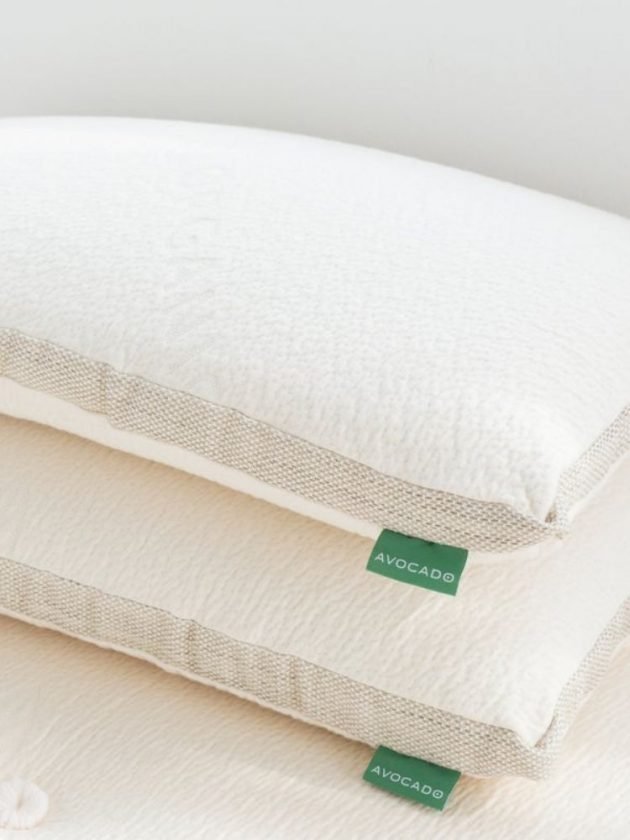
Avocado is one of the leading brands for eco-friendly pillows. They are a climate neutral B-corp that sources their materials from their own Fair-Trade farms in India and Guatemala. Each pillow is handcrafted in their local GOTS-certified factories.
Plus, Avocado has the trusted certifications you want like Gold Certified vegan, Eco-Institut certified and Made Safe certified.
3. Savvy Rest
Based In: USA | Made In: USA
Sustainable Materials: Organic wool, natural USDA and GOLS-certified Dunlop or Talalay latex, organic cotton, organic kapok fiber, natural dye
Price: $29-$239
*Use code CONSCIOUSSTYLE20 for 20% off*
Savvy Rest has a large selection of eco-friendly pillows, with eight different styles to choose from, including body and contour pillows. Savvy uses a variety of sustainable materials and even offers customizable filling options.
Savvy Rest is both a B Corp and a GOTS-certified organic company, as are their factories.

4. Coyuchi
Based In: USA | Made In: Sri Lanka
Sustainable Materials: GOLS Certified Organic Latex, GOTS certified Organic Cotton, sustainably sourced Down; reusable cloth bag packaging
Price: $68-$198
Coyuchi is a woman-owned, Made Safe Certified company. They produce four different types of organic latex pillows including a body pillow.
Coyuchi uses Fair-trade certified factories and a circular production process. They are also a 1% for the planet partner.

5. SOL Organics
Based In: US | Made In: India
Sustainable Materials: Certified 100% Organic cotton, 100% Canadian down, non-toxic dyes; pesticide & harmful chemical free, hypoallergenic
Price: $169
SOL Organics is a BIPOC-owned and family-run company. They are passionate about ethical production and only work with FLO, OEKO-TEX, GOTS, and Fair-Trade Certified manufacturers.
Responsibly made with care, you can sleep soundly on these sustainable down pillows.

6. Birch
Based In: USA | Made In: USA
Sustainable Materials: GOTS-certified organic cotton, organic birch wool, 100% natural Talalay latex, recycled polyester filling; chemical fire retardant free
Price: $75-$119
Birch offers two different non-toxic pillows. Their organic pillow comes with a 100 night trial and is Greenguard Gold and GOTS Certified.
Their eco-rest pillow is GOTS and Fair Trade certified. Both are handmade in a Fair Trade certified factory.

7. Sleep & Beyond
Based In: USA | Made In: Kyrgyzstan, India, China
Sustainable Materials: 100% natural or organic wool and latex; GOTS, Woolmark and OEKO-TEX Certified
Price: $49-$139
Sleep & Beyond is a BIPOC-owned company that offers nine different types of eco-friendly pillows, including a travel pillow. They have a handy comparison guide so you can easily find the best fit for you.
Sleep & Beyond produces everything in Fair-trade Certified and solar factories using zero waste production.

8. Buffy
Based In: USA | Made In: USA
Sustainable Materials: GRS or RCS certified BPA free Recycled PET filling, Eucalyptus Lyocell, hemp linen; packaging made from FSC certified recycled materials
Price: $49-$99
Buffy is best known for their “cloud-like” comforters but they also have an extensive pillow offering including travel pillows and body pillows.
Buffy is working toward closed loop and zero waste production and offsets their CO2 emissions.

9. Organic Textiles
Based In: USA
Sustainable Materials: 100% natural & organic latex, natural Australian wool, kapok fiber, natural down, GOTS and GOLS certified cotton
Price: $60-$117
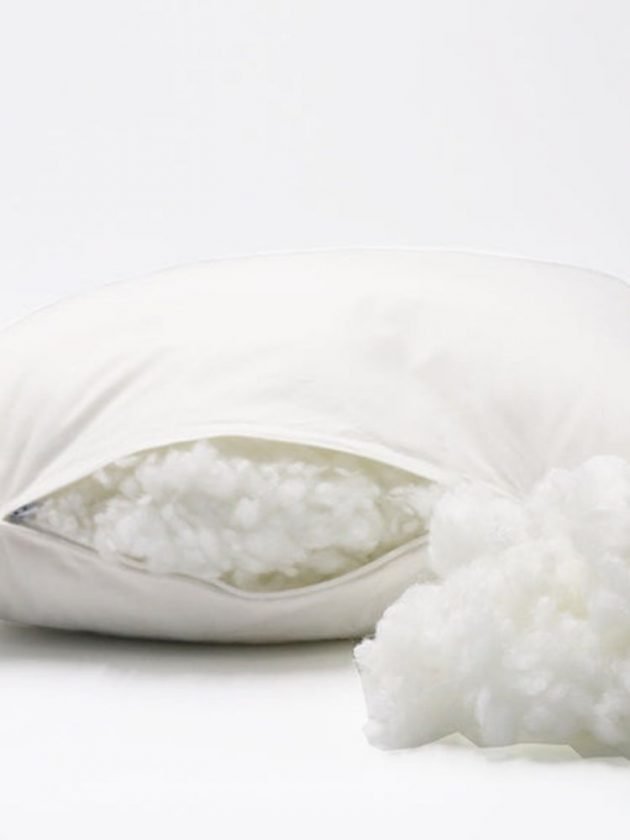
Organic Textiles is a great company for finding sustainable pillows from a variety of materials. They even offer extra pillow fillings for a customisable feel.
All of their products are pesticide & toxic chemical free as well as hypoallergenic. Organic Textiles is Green America Approved Certified and uses Fair-Trade manufacturers.
10. Boll & Branch
Based In: USA | Made In: USA, India
Sustainable Materials: OEKO-TEX standard locally and responsibly sourced Down, 100% organic cotton, hypoallergenic synthetic down alternative; recycled packaging
Price: $58-$168
Another great husband and wife owned company is Boll & Branch. They offer harmful chemical free, non-toxic Down and Down alternative pillows.

You May Also Want to Check Out:
15+ Sustainable & Organic Bedding Brands — Sorted by Material
Eco-Friendly Bed Frames for a Sweet Sustainable Slumber
Non-Toxic Mattresses for a Sound & Sustainable Sleep
The post The Top 10 Non-Toxic and Eco-Friendly Pillows for a Safer Slumber appeared first on Conscious Life & Style.
The Top 10 Non-Toxic and Eco-Friendly Pillows for a Safer Slumber



-
Climate Change1 year ago
Guest post: Why China is still building new coal – and when it might stop
-

 Greenhouse Gases2 years ago
嘉宾来稿:满足中国增长的用电需求 光伏加储能“比新建煤电更实惠”
-
Greenhouse Gases1 year ago
Guest post: Why China is still building new coal – and when it might stop
-

 Climate Change2 years ago
嘉宾来稿:满足中国增长的用电需求 光伏加储能“比新建煤电更实惠”
-

 Renewable Energy11 months ago
Sending Progressive Philanthropist George Soros to Prison?
-
Climate Change2 years ago
Bill Discounting Climate Change in Florida’s Energy Policy Awaits DeSantis’ Approval
-
Greenhouse Gases1 year ago
嘉宾来稿:探究火山喷发如何影响气候预测
-

 Carbon Footprint2 years ago
US SEC’s Climate Disclosure Rules Spur Renewed Interest in Carbon Credits