

In 2024, 91% of new large-scale renewable projects around the world made electricity for less money than any fossil-fuel option, according to the International Renewable Energy Agency. Solar power was 41% cheaper than the lowest-cost fossil fuel, and onshore wind was 53% cheaper. The technology that can lower energy bills, keep the grid stable, and create jobs is now the most affordable way to build power almost anywhere. So, here’s the big question our guest faces every day: if clean energy is this good and this affordable, why is it still so tough to get people to support it? Leah Qusba leads GoodPower, a nonprofit focused on strategic communications and research. For almost twenty years, it was known as Action for the Climate Emergency, but it changed its name during Climate Week 2025. Since Leah took over, the group has grown about ten times bigger, built a network of over 8,500 content creators who share facts about renewables, and started running live messaging tests through its Good Data Lab. The new name highlights that renewable power is good power, and the best way to win support is by showing how it affects people’s monthly bills. The decision to rebrand was based on data. Leah’s team learned that words like “climate” and “emergency” can shut down conversations in rural, conservative areas where most new wind and solar projects are built. GoodPower shifted its message to focus on jobs, community investment, and steady power bills.
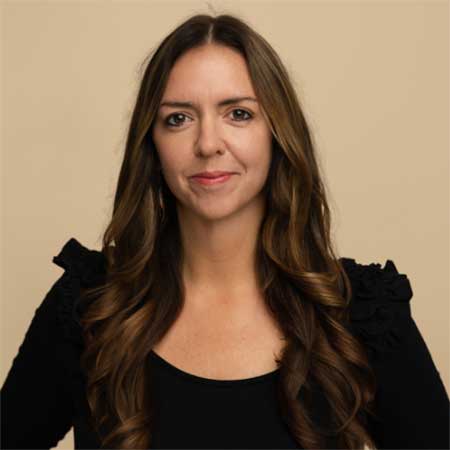
GoodPower also works to fight anti-renewables disinformation, which Leah says spreads fastest in the first day or two after a grid emergency. When Winter Storm Fern knocked out power in more than 20 states in January, the organization had a few days’ notice and quickly got its creator network ready to “prebunk” the usual claim that renewables caused the blackouts. This strategy, based on the Debunking Handbook, starts with the truth, points out the false claim, and then repeats the truth to make it stick. GoodPower uses the same idea in its AI tools: CleanCast predicts where local fights over new projects might start so communities can get accurate information early, and TrueVoice spots AI-generated comments in public records. Still, Leah says the best messengers are neighbors, since people trust those who share their experiences. For instance, when Boulder City, Nevada’s Republican mayor, Joe Hardy, talks about how solar and storage helped his town’s budget, it connects with other conservative communities in a way ads can’t.
GoodPower’s network of creators shares clean-energy messages through car-repair, food, and gaming videos. Leah calls this the raisin bread theory: the regular content is the bread, and the renewables message is the raisin. For communities already dealing with climate impacts, she highlights groups like Extreme Weather Survivors, which gives wildfire and flood survivors a way to push for policy changes from the ground up.
To learn more, visit goodpower.org and follow Leah Qusba on LinkedIn, where she is active and easy to reach.
- Subscribe to Sustainability In Your Ear on iTunes
- Follow Sustainability In Your Ear on Spreaker, iHeartRadio, or YouTube
Interview Transcript
Mitch Ratcliffe 0:10
Hello! Good morning, good afternoon, or good evening, wherever you are on this beautiful planet of ours. Welcome to Sustainability In Your Ear. This is the podcast conversation about accelerating the transition to a sustainable, carbon-neutral society. And I’m your host, Mitch Ratcliffe. Thanks for joining the conversation today. Let’s talk about accelerating that shift to renewables in detail.
The technology to lower our energy bills, build a more secure grid, and create millions of jobs already exists. Renewables are now the cheapest and fastest power to deploy almost anywhere on the planet, so here’s the puzzle my guest today wrestles with every single day. If the solutions are this good and this affordable, why is it so hard to build public support for them?
Part of the answer is that we’re trying to make the case for sustainable technologies in an openly hostile environment. Federal climate policy has been rolled back, and there are coordinated disinformation campaigns ready to blame wind and solar within hours of any grid emergency, whether or not the facts support those accusations. And the social platforms where most people get their information will quietly bury anything labeled climate, handing it only to people who already agree that it’s a concern. The audiences you need to reach most never see your message about sustainability.
Leah Qusba has built a career breaking through the noise to reach audiences intent on climate progress. She’s the CEO of GoodPower, an organization you may have known until recently as Action for the Climate Emergency, or ACE. She’s led it for more than 15 years, growing it roughly tenfold into one of the sharpest media and research operations in the climate space, and she runs real experiments on what messaging actually changes behavior, working with thousands of content creators to carry the conversation to people the movement has never reached before. Her own path started along Wisconsin’s Fox River, in a stretch of water she played in as a kid that later became an EPA Superfund site before she finished high school.
We’re going to explore how to sell the benefits of clean energy when the word climate itself becomes a liability, and how you fight disinformation when a lie travels faster than the truth, and why Leah ultimately believes affordability, not alarm, is the door most people will actually walk through when asked about climate. So, what can we do to shift the climate conversation? Let’s find out after this brief commercial break.
[COMMERCIAL BREAK]
Mitch Ratcliffe 2:41
Leah Qusba, welcome to Sustainability In Your Ear. How are you doing today?
Leah Qusba 2:45
I’m doing great. How are you?
Mitch Ratcliffe 2:46
Well, I’m well, thanks for taking the time to talk with me. It’s always interesting to speak to somebody who’s been dedicated to climate awareness for so long. You grew up in Wisconsin’s Paper Valley, and a river you played in, the Fox, became an EPA Superfund site while you were in high school. How much of your work derives from the experience of having played in that river, which was polluted and needed a cleanup?
Leah Qusba 3:10
Yeah, I certainly didn’t know it at the time, growing up in small-town USA in northeastern Wisconsin. I think it has impacted me dramatically and greatly. I kind of look back — it’s over, you know, 25 to 30 years ago at this point. I look back at that time and think, wow, there’s nobody organizing people around that type of environmental disaster. People were angry, they felt powerless. It took over a decade, and then the EPA said, well, we did our best, we can’t really fully clean this up in terms of all the PCBs in the river. So I look back on that time, and I think it did set me on the path that I’m on today.
Mitch Ratcliffe 3:52
We know so much more about the world, and part of the experience of living by a river that turned out to be so polluted is your own recognition. How do you use that approach to storytelling to help other people make the leap to understand where we are with regard to the climate?
Leah Qusba 4:09
Well, I often think about my dad, and what’s interesting about my dad is he’s a staunch conservative — he believes climate change is not man-made — and he recently became a supporter of solar, not because of me, not because of his own daughter’s influence, but actually his HVAC guy has a side business doing rooftop solar, and it was that conversation that convinced my dad. So I think what I take away is: rural speaks to rural, conservative speaks to conservative, neighbor speaks to neighbor.
I think in an internet environment where people trust what’s on the internet less and less, and with the rise of artificial intelligence and related content, I think all we have left is really each other, and so we really leverage that. How do we find stories of communities that already have solar, wind, and batteries, for example, to demystify what these technologies are for a neighboring town, county, or state? It really works.
Mitch Ratcliffe 5:11
In September, you changed the name of the organization from Action for the Climate Emergency to GoodPower. What stopped working about the words climate emergency?
Leah Qusba 5:21
Yeah, I mean, I think as the years went on and we were using this brand, we don’t want to fall into traps where climate, decarbonization, and energy issues are sort of unfairly politicized as left versus right. When we say words like climate in a rural conservative community, that can be a non-starter. When we say things like emergency, do we fall into the trap of being climate alarmists, as we have been dubbed? There’s a different way — there’s a bigger-tent approach where, depending on the audience you’re speaking to, there’s different ways in to showing the economic promise of the energy transition.
Right, what do communities get? Jobs, community investment, long-term leases for farmers and landowners that are, you know, nervous private equity is coming to buy their land for an Amazon logistics warehouse or a data center or something like that. So I think for us, our brand wasn’t working for enough of the American people, especially where, you know, ground zero for the energy transition happens to be rural red America, where a lot of this infrastructure needs to be built and is being built.
So we did it because we wanted a bigger tent that more people could get under and feel a sense of belonging — that, wow, I see something for me in the energy transition. I see something for me in what community benefits I could potentially reap from decarbonized power being built in my town or community. So it was really about creating that bigger tent for more people to get under.
Mitch Ratcliffe 6:51
Well, your dad’s experience is recognizing that there’s economic opportunity in advanced technology. Funny thing, it wakes you up to the opportunity, but it doesn’t address the fact that we’re being told that there’s a crisis all the time, and one of the issues that I seem to run into a lot is that even within the climate community there are very rigid differences of opinion about where to focus our effort and investment. How has the movement torn itself apart to a degree, even as it establishes real credibility because of the fact of the climate changing so rapidly?
Leah Qusba 7:25
I mean, when you just break it down to scientific terms, right? Climate change happens very slowly, and then all at once, I think, is the famous quote, right? How did I go broke? It started slowly, and then all at once. I think for us, what we have learned — we’ve been in business for about 18 years, and I’ve been at GoodPower for about 17 of those years — the number one voting issue, cycle after cycle, and now even young people in 2024, in the last presidential, even young people rated the economy as number one. Usually they’re voting on values issues, you know, racial justice and all sorts of other things. They rated the economy. So the economy isn’t working for most people. Nearly 70% of us in the US live paycheck to paycheck.
So we really, at GoodPower, recognize that people want immediate change. How are my energy bills going to go down? Why are prices at the gas pump going up and down like the stock market? Why aren’t they more predictable? The answer: homegrown power — solar, wind, batteries. It’s not exposed to global commodity risks like oil and gas, right? There’s no far-off war that is going to make the cost of the wind and the sun, which happen to be free — there is no fuel cost — it’s not going to make those go up and down in that way.
So I think it’s about connecting the everyday experiences and things people are constantly worried about. How am I going to keep my job? Am I going to be laid off? Will I be able to afford groceries this week? My energy bill doubled in the last year, and there’s no sight. How do we look at the energy transition as unlocking this generational economic opportunity, right? This potential economic renaissance for the middle class. It’s not just saving money and having more predictability and control and autonomy around one’s bills. It’s also about the wealth regenerating and the economic investment.
I’m from a rural community. These communities are emptying out. Young people are leaving. They need investment. They need new schools, new infrastructure, new roads. Farmers are struggling — hundreds close every year in the US. Well, great: let’s farm 300 acres of solar, along with my 3,000 acres of soybeans and corn. When I have a rough year, the solar still pays the bill. So I think there’s incredible economic potential here, and that hasn’t really been communicated effectively.
Mitch Ratcliffe 9:39
You argue that renewable power is good power, but at the same time, as you just pointed out, our energy bills are going through the roof. Are you arguing for truly distributed energy generation, or are you saying that there is a path to a collectively owned — whatever form that takes — infrastructure that allows us to really meet the electrical demands of the era we’re entering?
Leah Qusba 10:00
I think that’s a false choice. Our position is all of it. We are huge proponents of distributed energy resources, dispatchable power, some of the virtual power plant policies and investments that we’ve seen. We’re huge proponents of utility-scale and community-level renewable projects. We think battery energy storage — when you pair that, right, that’s the invention of the battery — is how we get to more reliable power. So all of it. I think we need all of it.
I think, you know, global energy volatility is really a hidden tax on American families that people are really exhausted having to pay, in the midst of a cost-of-living crisis where everything else is going up — healthcare, housing, groceries. When energy goes up, by the way, everything else goes up too. So I think it’s the predictability, it’s having more control and not being at the whims of these sort of global markets and importing that volatility into people’s lives that already feel chaotic.
Mitch Ratcliffe 10:59
And yet we need to press through the capital investment phase of this with determination, and it seems like the determination is being shaken by, let’s say, people at the White House. How do you tell a story in the face of such rigorous and often completely misleading responses from the other side of the political argument?
Leah Qusba 11:20
Well, I think the American people are pretty smart. Only 40% of Republicans actually approve of their own president’s energy policies right now. That’s from GoodPower’s own national poll we did with the University of Chicago back in mid-March. So there’s extremely low approval. People understand — they feel it. You have to fill your gas tank up, right, probably once, maybe twice a week. If you’re going on vacation, a lot more than that. You have to pay that energy bill and open it up, or go online and pay it every month. So it’s in your face constantly. Nobody’s seeing change, and when you have only 40% of your own party approving your energy policies and your agenda, that’s pretty abysmal.
So I think, from my perspective, when we look at the sort of all-of-government approach to kill renewables, we’re choosing energy winners and losers, and Americans are left kind of holding the bill. It’s simple economics 101 here — supply and demand. If we’re restricting the fastest, most affordable electrons from coming online, which happen to be from solar, storage, and wind right now, we’re going to drive up bills. I mean, my 11-year-old daughter would understand the economics of that.
Mitch Ratcliffe 12:28
AI is going to play a big part in how we ultimately tell the story, and part of the solution in terms of how we optimize everything that we do — simply because we have visibility into how things work in ways we would never have been able to pre-AI. How do you integrate that part of the story, that some of this investment is necessary to develop the intelligence that is going to help us untangle the crisis that we face?
Leah Qusba 12:53
I think the stark reality is that data centers are highly unpopular right now, and land use in general — land use projects across the country are really facing increasing public opposition. I am seeing some really bright lights within the news cycle around land-use development that is being done very responsibly, transparently, in an innovative way. I think about some of the Google data center announcements recently in the MISO region, where they’re looking creatively at how do we get electrons through virtual power plants, how do we invest in infrastructure, how do we invest in community benefits, how do we procure clean electrons to power our digital infrastructure. So I think there are some really good actors out there lifting up those stories where these developments are happening in a very positive way.
I think we can look to the utility-scale renewable energy sector — I mean, this is a lot of GoodPower’s work — but just telling the stories: people have reaped enormous benefits and are very happy with this infrastructure when it’s done in the right way, and it’s transparent, and it’s with stakeholder input. I think there’s a way to do land use that can be really uplifting to communities, but getting their input and involving them as stakeholders, I think, is absolutely essential.
I think the other piece of the story that we forget: big tech, right — technology has been the number one global procurer of decarbonized electrons on planet Earth for the last 15 years. So in other words, the growth of the renewable energy sector has been commensurate with the growth and advancement in the sort of digital revolution and technology. So again, there’s a right way to do it, and if we can uplift stories of where the community is on board with this infrastructure — because they’ve been consulted and they’ve gotten to weigh in, and they’re really getting a good deal out of it — I think the more we can do that, the better off we’ll be.
Mitch Ratcliffe 14:47
On the other hand, AI is also part of the problem, because it is used by algorithms to direct people away from the issue. You’ve said that when you mention climate in a video, it immediately gets relegated to a pile of links to people who already agree. In other words, we’re talking to the converted. How do you articulate that to somebody who is focused on the concerns they have about their community — particularly a rural community, where I live in one as well — when talking about the need for the investment in electrification and AI, which is also potentially part of the problem that we face in terms of being relegated to pools of people who agree and never get the opportunity to evangelize to others?
Leah Qusba 15:28
We don’t say anything to rural communities. We let rural communities talk to each other, so that’s what we enable. We basically find stories that are under-told and under-platformed. For example, here’s a farmer in rural Oklahoma, in western Oklahoma. They’ve had wind on their land for 20 years, put their kids through college. They were able to keep their generational farm that was handed down to them for six generations, and they wouldn’t have been able to keep it without the wind industry, right? So that could be very convincing to another farmer who’s facing closure in a neighboring plains state, or even within the Midwest generally.
So brands, I think, need to say less. I think what we need to do more of is find and mine those stories where the projects were built responsibly, the land-use development was done in a way that enriched the community and, you know, consulted the community. How do we find those stories? We’ve produced hundreds of these now over the last five years, all over the United States, all over Brazil, the UK, right, where we were trying to really build positivity and social permission and social acceptance of this infrastructure. The stories are all out there, and it’s just about platforming and telling them and breaking through when we see this news cycle that has been so anti-renewable from this particular administration. This is the counterbalance. Just go and ask the communities, and they’ll tell you how they feel about this infrastructure.
Mitch Ratcliffe 16:55
Can you give an example of a story that, for lack of a better word, sells the idea of economic prosperity built on renewables?
Leah Qusba 17:03
Yeah, I mean, really authentic, genuine stories. I’m thinking of a story from Mayor Joe Hardy in Boulder City, Nevada. Mayor Hardy is a Republican. He’s a staunch conservative. His story is about how economically secure Boulder City, Nevada, is for the next 25 years. He talks about solar and storage. He takes us out to the fields and shows us what that looks like, and that the community has no economic worries in terms of property tax revenue, and where those revenues are going, and how it’s investing in community infrastructure, schools, etc.
I think of another story in Oklahoma, of a school superintendent who talks about how the community benefit agreement that they signed with this wind developer built a new school, and what that means for children in a community that has not seen a lot of investment over the last few decades. And then we have countless stories of farmers, landowners, neighbors to these projects who talk about the community benefits agreements — what’s in them: long-term leases, new infrastructure, donations of emergency management vehicles, police cars, fire trucks.
And again, when you position the community as a stakeholder and it’s transparent and you consult them, we can strike deals here that really work for the industry and for building decarbonized power, and that really work for people in the communities who feel like, “Wow, I’m being invested in, I’m not being extracted from.” We’re not replicating those systems of extraction; we’re investing in building something together. I think that’s really special.
Mitch Ratcliffe 18:35
Is there a risk in the movement swinging so hard toward pocketbook messaging that it no longer talks about climate, or clean in contrast to the dirty systems — or is that exactly the point?
Leah Qusba 18:45
I also think this is a false question, because we do talk about climate. It’s important to talk about climate. 8% of voters under 35 rated climate as their number one issue in 2024. So a front-door climate message, and increasing the awareness and the pie — you know, the slice of people who are really motivated by a climate message that’s front-door — I think there is a huge audience out there. We speak to that audience.
I think the point is, this is not a one-size-fits-all solution, right? The internet and social media are increasingly fractured. Audiences are tribalized. Knowing what platform you’re on and who you’re speaking to — once you know that information, you should have a very sophisticated segmented strategy. How do we connect audience to messenger and message? If you’re trying to have a silver bullet, sort of, you know, one campaign to rule them all, I think that’s a recipe for failure, and in fact you can have polarizing effects. You can make people feel less inclined to support energy and climate policies that are going to drive forward a decarbonized economy by not having the right messenger, or even a polarizing messenger that could make them more entrenched in that opinion. So I think you can do more harm than good in some cases.
I think having empathy — whether you’re talking to somebody on the left side of the ideological spectrum or the right side of the ideological spectrum, or somewhere in between — really knowing who those people are and what moves them and what they’re about, and really trying to seek to understand them and not label them as something other, or “these are not my people.” I kind of hear a lot of that sometimes. Everybody’s our people. If you’re a person, you’re our people. And I think there’s a way to speak to literally anybody about these issues in a way that’s going to land with them, and that’s really the science of communication.
Mitch Ratcliffe 20:37
To be a people person takes real work, especially when you’re telling stories. There’s a lot to unpack in this strategy. Let’s take a quick commercial break and come back to continue this fascinating discussion. Stay tuned, folks.
[COMMERCIAL BREAK]
Welcome back to Sustainability In Your Ear. Now, let’s continue the conversation with Leah Qusba. She is CEO of GoodPower, which is a strategic communications nonprofit working to highlight the need for and benefits of renewable energy. Leah, how do you see the world of storytelling changing because we have the tools that AI unlocks to target and reach people better? Or are we going to be overwhelmed by misinformation? I’m just — where should we set the bar in our expectations about the future of storytelling?
Leah Qusba 21:25
What a deep and complex and fascinating question. So let me start with the platforms themselves, where people are now using Claude and ChatGPT and other AI platforms almost as Google search platforms, right? So they’re looking for information. So I think one way that we’re using these tools is really, how do we set the terms of what information comes up when people are searching around: is solar good or bad? You know, will this raise my bills, lower my bills? Right, so it’s basically like SEO, but for these AI platforms — it’s called AEO and GEO. So how do you do search optimization and get the facts, not the fiction, to pop up in search results? So we do some of that work, going to the source of when people are searching, what information are they getting.
I think then, you know, we think about AI as a technology when it’s really a set of complementary capabilities, right? We’ve got automation — how do we automate the tedious and repetitive things that humans don’t want to do, so we can focus on higher-level creative work? Predictive — right, how do we forecast where siting and permitting battles are going to be through 2030 around clean energy projects, or where opposition might be forming? So how do we predict the future? And then we’re all familiar with the generative capabilities around doing better analysis and communications and content creation, etc. And the way we look at these capabilities at GoodPower, it’s less about a single piece of technology; it’s about leveraging these capabilities to build custom models. So I can walk you through a few pieces of those technologies that we’ve sort of housed.
One product is called CleanCast, and this is a piece of predictive, AI-enabled technology. It helps us forecast where the renewable energy industry might build their projects, so it pipes in public opinion research from local counties, it pipes in the governmental, environmental, and regulatory constraints that might exist. Are there existing bans and moratoria? How does that state do permitting? Does it do it at the county level through a county commission, or is it a state process through a PUC or PSC? So all sorts of intelligence to help us predict: where are these projects going to be built? What’s the prime location? Can we get there first and inoculate the public to disinformation? Can we make them resilient and less vulnerable to disinformation?
The disinformation we see out there is astounding. There was a disinformation cluster last week trying to scare potato farmers, saying Frito-Lay won’t buy your potatoes if you host solar on your land, because they’ll have glass shards in them — your potatoes will have glass inside from the solar panels. We traced this disinformation to some potato trade industry associations that are funded predominantly by the fertilizer industry, and fertilizer is petrochemicals, right? So if you follow the money — how do we anticipate where disinformation or opposition is going to be? Where is the industry going, and how do we get there first? Generally, people remember what they hear first, right? So before the public understanding hardens around the disinformation, how do we get there first? So that’s an example of one product. I have a few more I could share with you as well.
Mitch Ratcliffe 24:41
Well, you also have a small army in what you call the Creator Collective — 8,500 creators, 350 to 400 million followers in food and fashion and gaming and all the things that creators do. How does the sustainability message travel through a network like that? Maybe the message begins with a car influencer, then you run into it in a fashion commentary as well.
Leah Qusba 25:03
Well, I think, going back to your previous question around the tribalization problem on social media — like, how do we break through when the algorithms just sort us into the, you know, left-of-center green climate bucket? We don’t want to be sorted into that bucket. So creator marketing is a way to get around that. We don’t generally lead with a sustainability message with everyone. We lead with the message we think is going to work with that audience.
So if we’re trying to reach a bunch of car bros or commuters that really could save thousands of dollars annually from switching to an EV — maybe they live in a rural commuter town, they drive to the city for work — we want to hire a bunch of car bros, right, creators that are talking about fixing cars, and they slip EV messaging into their regular content streams that are more entertaining for their audience. We call it the raisin bread theory, where most of the content stays the bread, and you’re sprinkling in the raisins.
You could apply this to any one of these content verticals. If we’re talking about regenerative agriculture and getting toxic chemicals out of our food supply, MAHA moms are a great example — suburban white women in the MAHA movement, right? We want to find a bunch of them, or doctors and nurses who are really universally credible messengers who talk about health content. So depending on the audience and the campaign’s goals, we look into that community and we decide: okay, who do we want to engage for this campaign, and who’s the right credible messenger for the audience?
Mitch Ratcliffe 26:26
So would you describe that as: you coordinate and plan a sequence of messages? Or is this something that continues to happen organically based on your urging?
Leah Qusba 26:35
We do both. We do long-term campaigns that are multi-year, sort of patient-capital investments to changing an entire community’s way that they think about these technologies, where maybe there was a huge gap in understanding. One example would be: over 55% of Americans say they’ve never or rarely even heard about battery energy storage. They don’t know what it is. Great — it’s a fantastic opportunity to provide some baseline education to a huge group of people, where these projects are probably going to be built. We can get there first, before any disinformation gets out around these projects.
Then we have things that are more reactive and tied to the news cycle. So, almost two decades I’ve been in this work, and we keep losing during these rapid-response, sort of high-attention moments. The wildfires in LA are a really great example from last January, and we actually lost that narrative — DEI was blamed, that we were too busy with DEI in California to, you know, do proper forest management. It was ridiculous, but when you looked online and did advanced social listening analysis of the narrative, there were more mentions where the disinformation around DEI took over the conversation, instead of “hey, climate change is making these disasters more costly, more dangerous, and by the way, insurers are leaving the market in California.” Who’s holding the bag for that? It’s not the polluters that caused the problem; it’s the ratepayers, the premium holders that live in that state. So how do we make those connections? So there’s both a rapid-response element where we’re gathering this intelligence from the news cycle and responding, and then there’s more long-term strategies that we’re building as well.
Mitch Ratcliffe 28:14
Talk a little about the rapid response. In January, Winter Storm Fern caused up to $6.7 billion in damage, and there were a lot of disinformation initiatives around that storm almost immediately, and they were blaming wind and solar for the grid not having stayed as resilient as it needed to be, ignoring the fact that it’s an ancient grid. What does an effective, fast counter-messaging effort look like? How do you move the truth at the speed of a lie when lies are propagating so quickly?
Leah Qusba 28:46
We actually did a rapid-response activation with our creator community that last weekend in January — I remember that vividly — and because Winter Storm Fern was a forecasted storm, we actually had a few days of lead time, so it wasn’t a same-day activation. We could plan and really activate our community.
So what we did: we used the best practices — sort of the gold standard for inoculation, or prebunking, is another way you can name it. It’s to prepare the audience for disinformation they might see, so that when they see it, it bounces off of them instead of sinks into them. So we follow the Debunking Handbook, and there’s a way to do it where you’re not reinforcing the disinformation. There’s a huge risk in social science of actually reinforcing the lie if you don’t do it in the right way, in terms of introducing the truth, talking about the disinformation, and ending with the truth. We call it the truth sandwich.
So we did that. We activated a couple dozen creators who got millions of views on their content, basically saying, look, the lights are going to go out because of this storm. It’s affecting over 20 states. It’s happening this weekend. If you see blaming or scapegoating — that, oh, the power went out because of those unreliable renewables — don’t be fooled, that’s not the reason. It’s actually inter-regional transmission in our aging grid, and literally frozen coal and gas supply.
And we can look back — we had people who went through Winter Storm Uri. We had some Texas moms who were in our rapid-response creator community that could talk about their own experience. Oh, the same thing: Governor Abbott actually said disinformation on national television in Texas, saying, “Oh, those frozen wind turbines, that’s why the lights went out.” So we actually had people from Winter Storm Uri, who went through that in ’21, that were part of this collection of creators that were activated and were able to speak to their own experience — that, oh, every time there’s extreme weather and the lights go out, renewables are scapegoated. Don’t be fooled, that’s not what it is, it’s this. And so it was very effective.
Mitch Ratcliffe 30:45
Now, you do a lot of randomized trials of different kinds of messaging, and I’m wondering if there’s an example of something that you didn’t expect to work but really did when you put it in the market — or conversely, something you thought was a surefire win that didn’t work at all.
Leah Qusba 30:59
You know what was surprising? We saw a speech that was televised on the Senate floor with Senator Brian Schatz from Hawaii. He was giving a speech on the Senate floor around how the Trump administration’s policies to block renewable energy were driving up the cost of electricity and utility bills for Americans, and that that will continue to happen. We said, wow, this is great — most people in our testing think Congress isn’t talking about these issues. So we said, why don’t we give this speech to our creators, have them clip it up and add some commentary to it, and we’ll have a bunch of them share it. And then we’ll do a randomized control trial, where the treatment audience saw the content — one of the pieces of creator content — and the control group saw nothing, or a placebo. Let’s see how this works.
And our research question was: does this help Democrats, or does it help Republicans? Like, what happens when we have people in Congress talking about this? And it turns out not only was it extremely effective at solidifying the idea that these policies to block renewables from being built are driving up bills — so it was very effective at education and awareness — it was very bad for the Republican party generally. Eleven points we were able to get in the treatment group on disfavor for how Republicans were handling energy policy and utility issues. So we found that to be fascinating. We didn’t think a single exposure of a speech of somebody in Congress talking about these issues would be that effective, or have that outsized of an impact.
Mitch Ratcliffe 32:27
One of the things I noted: you started off focused primarily on youth climate education, but as you pivot toward everyone’s energy bill — which is a very dinner-table kind of 30s-and-40s, you-got-kids, you-got-to-think-about-this-stuff kind of problem — how do you stay relevant to youth who continue to grow up into what they can see plainly is a crisis, but that is increasingly being cast as a pocketbook issue?
Leah Qusba 32:53
I think what’s fascinating, and the unique part of this story, is that I’ve been at GoodPower almost the entire time, so many of the young people I personally worked with in high school are now into their 30s. They’re working for social impact investors, they’re working at the EPA, they’re working for big foundations, some are working for hyperscalers and AI companies, and what’s fascinating is they’re taking those values around these issues into their professional lives.
I think, you know, this idea of kind of growing up and maturing within the movement — and I think post-COVID, when we see how COVID really affected the youth movement in general, and college campus organizing: nobody was in person, and you kind of got to be in person to do organizing, to build those relationships and pass the baton to underclassmen, etc. So I think, for us, seeing some of these young people mature themselves into the professional working world — this generation has now permeated the private sector, the public sector, and they’ve carried this sort of generational youth climate movement, sparked by Sunrise, you know, sparked by our organization, Power Shift Network. They have a whole new view, I think, that they’re bringing into corporate America right now, around their values and around how much they prioritize climate and energy policies that make sense.
I think they’re also living in a world where they can’t attain the same things their parents did financially. They can’t own a home, they can’t afford to buy a car, or even move out of their parents’ house. So I think our messaging around the economy — I think it works for young people that have kind of grown up in this movement and are very angry, like most Americans are, around this cost-of-living crisis.
Mitch Ratcliffe 34:37
The number of jobs represented by the capital that is being held in abeyance because of the misinformation must be incredibly frustrating for younger people. I mean, we can see the explosion of economic opportunity that would happen — it might look more like China, for instance. I was reading your 2030 plan; you’re leaning into AI and product development and breakthrough technology, and I’m wondering what those breakthrough technologies that you think are most important to understanding where we can go might be.
Leah Qusba 35:07
I think geothermal is really fascinating. Of course, anything that is zero carbon, I think, is really interesting to our organization when we think about the climate problem and decarbonizing the global economy. I think it’s a very nascent technology, so there’s some fair criticism there, but I would say uniquely it has this bipartisan support because it uses the same rigging and tools and equipment and skills as the fossil fuel industry, right — oil and gas and fracking workers. So I think there’s incredible bipartisan support as well, and I think as these technologies mature, we’ll be in a front-row seat, kind of looking and seeing how these develop and mature over time.
When we think about artificial intelligence tools, we think about it in a bit of a different way. I think one pervasive issue we’re seeing right now is AI manipulation and fabricated opposition in local siting — so AI-generated comments flooding decision-makers, and they don’t know what’s real and who’s real. So we built a product for that called TrueVoice that separates authentic local input from AI-manufactured opposition. We’re going to give it to community stakeholders, county commissioners, public service commissioners, the developers — everybody deserves to know: okay, what’s the probability that there was AI manipulation on this docket, and now how much do we weigh this? Maybe it’ll create new systems of what we prioritize and how we gather community input. Maybe there’ll be a premium on in-person hearings and showing up, you know, and reinvesting in local organizing.
So I think our use of these tools is really around identifying the cracks that could become fissures that could become huge cliffs for the work that we do in our pathway to accelerating decarbonization — and how do we fit within those, and how do we problem-solve and deliver solutions that don’t just solve our own problems at GoodPower, but sort of solve big, big systemic, sectoral problems.
Mitch Ratcliffe 37:04
As you think about where we are right now, and everything you just said in the context of what we’re looking toward in terms of the world we want to build — what are you most hopeful about right now?
Leah Qusba 37:13
Well, I think the market forces, much to President Trump’s chagrin, are just too strong to stop the industry. You know, we have a deadline coming up on July 4, where the PTC and ITC — right, if you haven’t begun substantial construction, and now this is being litigated, or this 5% test, you know, have you spent 5% of the project budget — you will not be eligible for the PTC and ITC, these important tax credits that make these projects more lucrative and more profitable and more desirable from a financial investment perspective.
But when you look at the impacts of this sort of arbitrary deadline that we’re all racing toward — yes, Rhodium Group says, you know, the industry is going to take a hit, and a lot fewer projects will be built, there’ll be more consolidation — but the industry is too mature, and decarbonized power is too attractive and affordable and clean and just desirable and homegrown and stable and secure. There’s just too many good things, I think, wrapped up in decarbonized power to stop it.
I think the same is true for electric transportation. If we look to the global south — we work in the global south and non-OECD economies — where you see these two-wheelers and people buying electric vehicles in droves, because they don’t want to import this volatility of the global oil market into their households either. We look to food and agriculture, the MAHA movement of regenerative agriculture, the best carbon capture solution nature offers. People don’t want poison in their food, and we’re seeing a movement around that, and we’re seeing people get very exhausted and disgusted with, you know, the administration’s actions with Monsanto recently.
And so I think there is too much momentum for any one person or one administration to stop what’s happening right now. Can we throw roadblocks? Can we create friction? Can we run interference? Of course. We see our role as removing those bottlenecks, and kind of the counterbalance to that. So I think that gives me hope. The question is, how much time will it take? Time is our greatest enemy, and if we can save time, I think that’s the point. That’s where we avoid the worst consequences, and we seize the most opportunity. So how do we save time?
Mitch Ratcliffe 39:22
How does the adaptation story fit into what you’re doing today? Obviously, we’re going to need to prepare for this.
Leah Qusba 39:28
I think there are fantastic organizations out there working more on adaptation, disaster relief, mutual aid — community-based organizations that are doing a lot of that work. I think it’s hugely, hugely important. We’re going to need to figure out how to live and thrive and support people. The stories out of New Orleans, you know — hey, people have to move; this is going to be us; we’re going to lose 60 miles inland, right? So it has to happen. That’s not work that GoodPower is leading.
There’s a group of organizations, and also environmental disaster survivors. Extreme Weather Survivors is a great organization led by a dear friend of mine named Sierra Kos. They’re doing incredible work to really platform disaster survivors and what it’s like to live through wildfires, lose everything, lose your insurance — what does it look like to be on the front lines of these climate consequences, and how do we really tell those stories and use them, I think, as a warning signal, but also as an education tool to move local, state, and federal policies further toward supporting people.
I think the last thing I’ll say is some of the insurance subrogation laws that are being proposed in Rhode Island and New York, California, Hawaii. These are some of the leadership states saying, wait a second, polluters caused this knowingly for four decades — why are my constituents being left holding the bag? Why are they footing the bill when this industry was complicit? There’s actually a huge state policy movement right now called insurance subrogation, where insurance companies can actually go and make the industry pay for this and clean up — have a superfund, basically, where these companies pay into it, and when these disasters happen, they have to help clean it up, and that bill should not go necessarily to the community or the homeowner. And the insurance companies, too, I think, always get the blame and the ire, but as this continues to happen, that market is going to be more and more difficult over time. So I think having a solution where those most responsible and complicit with driving this situation are also going to be helping to pay for it.
Mitch Ratcliffe 41:46
Leah, thanks so much for this incredibly inspiring conversation. How can folks keep track of what GoodPower is up to?
Leah Qusba 41:52
Oh, good. Go to goodpower.org. We’d love to hear from you. You can contact us, you can reach me on LinkedIn, where I’m active as well, and we’d love to be in touch. Thanks for having me.
Mitch Ratcliffe 42:02
Thank you very much for spending time with us today.
Leah Qusba 42:04
Take care.
[COMMERCIAL BREAK]
Mitch Ratcliffe 42:11
Welcome back to Sustainability In Your Ear. You’ve been listening to my conversation with Leah Qusba. She’s CEO of GoodPower, the climate and media research organization known until recently as Action for the Climate Emergency, and you can learn more about Leah and her team’s work at goodpower.org. GoodPower is all one word, no space, no dash — goodpower.org.
Let’s consider what it means when an organization that spent 18 years with the words climate emergency in its name concludes those words themselves have become an obstacle to connecting with an audience. Now, this was a data-driven decision. Only 8% of voters under 35 rated climate as their top issue in 2024, and young people ranked the economy first and most important. And that’s the movement’s critical base. If it’s to transform this economy, affordability is what people — especially young people, who want to buy their first home, want to buy their first EV, or would like to be able to put their kids through school. Those folks are the ones who are going to make the change that we’re talking about, who are going to vote — both with their wallet and at the ballot box — for a new world. GoodPower’s rebrand is a bet that the movement can meet them at the crossroads of economics and sustainability.
Leah accurately described global energy volatility as a hidden tax on American families. Every far-off war and commodity swing shows up in the utility bill and at the pump, while wind and sun carry no fuel costs at all. There’s only the capital investment involved in building the solar and wind systems in the first place; then you get free power. But with oil, those taxes are effectively paid to companies, not governments. And as we heard in last week’s interview with Shareholder Democracy’s Gabriel Grant, shareholders have not yet leveraged their voting power to exert control over the companies whose stocks they own, and those companies are ultimately accountable to those shareholders.
When you see the problem through the lens of the Trump administration’s hypocritical approach to market competition, in which they suppress emerging technology, the renewables argument becomes simple supply-and-demand mathematics. The fastest, cheapest form of energy is being blocked from coming to market, and the result is rising rates rather than economic resilience. This isn’t the proverbial 500-miles-per-gallon carburetor purportedly suppressed by the oil industry in the 1970s. This is a real technology ready to reduce the cost of living while doing immense good for the environment, and people see this. GoodPower’s polling with the University of Chicago found just 40% of Republicans approve of their party’s current energy policy.
There’s a real tension as we continue to reinvent the economy, and Leah’s decision to lean entirely on pocketbook messaging is a clear path to building support for solar, wind, geothermal, and other renewables, which will only become more plentiful, not run dry, over the next century, like fossil fuels ultimately will. Leah’s answer is audience segmentation: one message — a front-door climate message — for the audience that wants one, the people who are already convinced and who want to share that message; and on the other side, economics-based messaging for everyone else. The messenger now matters more than the message, and in an era of influencers, this really comes through bright and clear.
Leah’s father, a conservative who doubts human-caused climate change, went solar because his HVAC contractor made the case — not his daughter, who runs one of the country’s largest climate communication shops, but an HVAC contractor. As Leah said, rural speaks to rural, neighbor speaks to neighbor, and GoodPower has operationalized that instinct at scale. They have a creator collective of more than 8,500 content makers with a combined audience in the hundreds of millions, and they’re slipping what Leah calls raisins of clean energy content into the bread of car videos, food channels, and gaming streams. And they measure it. That’s a discipline that separates persuasion from wishful thinking. What you can measure, you can change. It remains too rare in a movement that too often assumes its urgent warnings will carry the day by themselves.
The last idea to revisit is a leading indicator, and that is that artificial intelligence has become the new front line of the information fight, on both sides of the aisle.
Mitch Ratcliffe 46:29
People now ask Claude and ChatGPT whether solar will raise their electric bills, so GoodPower practices answer engine optimization to make sure accurate information surfaces in the first AI response. Its CleanCast tool predicts where siting battles over solar installations, wind installations, and so forth will erupt, so that developers can inoculate communities before disinformation arrives — like the recent industry-funded campaign that told potato farmers that solar panels would result in glass shards in their crops. Another tool that GoodPower has come up with, the TrueVoice tool, launching now, separates authentic public comments from AI-manufactured opposition flooding county permitting dockets and congressional mailboxes.
So one of the good things about AI, at least, is that it allows us to cut through a lot of the noise that we’re being flooded with. But look, this is an arms race, and Leah is candid about the tools being young. These are nascent movements and a nascent set of technologies we’re building on. But the prebunking playbook worked with Winter Storm Fern in January, when creators reached millions with the truth about the aging grid before the wind-turbine scapegoating could harden into what would be perceived as truth by many people. There’s a clear strategic method evolving in real time, and we will keep tracking that race for the A