

The 2015 Paris Agreement to tackle climate change famously does not name the controversial root cause of the very problem it is intended to solve: fossil fuels.
In the year of its 10th anniversary, Gillian Cooper, political director of the Fossil Fuel Non-Proliferation Treaty Initiative (FFNPT), described the Paris accord as “our North Star” in efforts to limit global warming to 1.5 degrees Celsius.
“Unfortunately, as it is structured, it does not mention fossil fuels,” she added in an interview with Climate Home ahead of the mid-year UN climate talks in Bonn. “That is a massive omission because it is the root cause of over 80% of our emissions. So there is very little guidance as to how countries concretely will be able to transition from fossil fuels.”
Cooper argues that another international treaty is needed to provide that support to governments – a goal towards which her organisation has been working since 2020.
“The capacity of countries to transition from fossil fuels varies considerably across the globe and concrete solutions are needed to support an equitable, managed transition,” she said. “The treaty will provide greater guidance and support.”
Growing support for action on fossil fuels
In response to a call by Pacific Island nations back in 2015 for a moratorium on coal, the FFNPT initiative seeks to foster global cooperation to halt expansion of this planet-heating fuel, as well as oil and gas, and accelerate the transition to renewable energy. With 17 participating nations so far, it is in talks with more countries to sign up to the commitment.
Its members so far are Antigua and Barbuda, Bahamas, Colombia, Micronesia, Fiji, Nauru, Niue, Pakistan, Palau, Marshall Islands, Saint Kitts and Nevis, Samoa, Solomon Islands, Timor-Leste, Tonga, Tuvalu, and Vanuatu.
Cooper noted that meetings will be held with some delegations during the Bonn climate talks, especially target countries in Africa and Asia considered key due to their dependence on fossil fuels. “We are fairly confident that we will have more countries by the time we get to COP30,” she added.
Brazil’s current push to approve new oil exploration projects in the Amazon basin, with licences set to be auctioned in mid-June, would make it difficult for President Lula da Silva’s government to join the FFNPT.
The Amazon rainforest emerges as the new global oil frontier
But in its role as the COP30 Presidency, Brazil could create the political momentum needed to incorporate more ambitious language on fossil fuels in the final decisions stemming from November’s climate summit in Belem – something it has indicated it wants to do.
That aim is to drive forward the outcome of COP28 in 2023, in which countries agreed to transition away from fossil fuels in energy systems – but since then there has been little concrete progress within the UN climate process on how that could be done.
Resistance from major producers
A Fossil Fuel Non-Proliferation Treaty could help sidestep the objections of major oil and gas-producing nations, experts told a symposium in Bonn organised by the initiative.
Peter Newell, professor of international relations at the University of Sussex, said it is expected that big fossil fuel producers like Saudi Arabia or Russia will resist – but that might change as the world moves towards cleaner energy.
“These countries usually produce for export to Europe or other countries. So, if demand falls, it will be easier to convince them to reduce production,” Newell told Climate Home.
Against the common narrative of “fossil fuels are key to energy security”, he encouraged people to ask whose energy is being secured, how, and at what cost? And in response to the argument that fossil fuels are needed for development, he questioned why in many developing countries that are rich in fossil fuels, there is still so much energy poverty.

Newell believes that there will come a time when, due to the worsening impacts of climate change, or as the initiative gains more members, even big oil and gas nations might want to join the FFNPT.
“The challenge will be to have enough countries that want a strong version of the treaty and not the weaker version that large producers may seek to push,” he said.
Another hurdle is fighting disinformation around the initiative’s aims. “Those countries considering endorsing will want answers to tough questions about why they should join,” noted Newell.
Complementary to UN processes
Meanwhile, discussions about what shape a treaty to phase out fossil fuels could take are gathering momentum. At a ministerial meeting in late 2024 at COP29 in Baku, the initiative’s member countries highlighted the importance of identifying a framework.
One path would be through existing UN processes, such as the UN Framework Convention on Climate Change (UNFCCC) or the UN Environment Programme (UNEP). But there is a catch. “They are consensus-based decision-making forums,” said Cooper. “This dilutes the ambition that we are pursuing.”
And if an FFNPT were to be pursued via the UN General Assembly (UNGA), it would require a two-thirds majority of states to approve it – and likely take many years to advance.
Comment: COP30 must heed the elephant in the room: fossil fuels
“The other pathway is a dedicated process outside the UN,” said Cooper, noting that this is what happened in the case of the Mine Ban Treaty, the Convention on Cluster Munitions and the Treaty on the Prohibition of Nuclear Weapons. “A small group of progressive states can initiate a treaty process and start to change the norms and influence other multilateral spaces where climate change and fossil fuels can be discussed,” she added.
In that case, a connection with existing UN processes could be maintained, adopting a dual-track approach that is independent of the UN but still able to shape resolutions at the UNGA – for example, detailing countries’ needs in transitioning away from fossil fuels.
The analysis now being conducted by the FFNPT’s political and technical team will be presented to ministers of participating countries when they meet in Belem in November, so they can decide on a way forward. Building on this, the idea is to work on a diplomatic conference that would frame the issue and launch a mandate for the treaty.
Text or no text?
While initiative is called a “treaty”, it has yet to start work on a draft text. This is partly to avoid falling prey to the arguments, pressures and blocking that small details such as a comma or a verb can provoke, as often happens in the UN climate negotiations.
Whether a text will be developed will become clearer next year, but in the meantime, the initiative is researching and advising its member countries on areas of policy that are key to progressing their energy transition – work that could form the basis of a treaty, Cooper said.
Some of these levers were discussed at the FFNPT Research and Policy Symposium in Bonn ahead of the June negotiations. They include trade incentives and opportunities, legal and security aspects for actors involved in the transition, and financing mechanisms for a rapid and fair fossil fuel phase-out.

Funding a fossil fuel phase-out
“The [FFNPT] treaty has to recognize that many Global South countries are in what we call a climate debt trap,” said Jwala Rambarran, independent expert and senior policy advisor for the Vulnerable Twenty Group (V20) of nations.
“They require considerable investments to finance their climate resilience – and at the same time they have limited fiscal space simply because they are highly indebted. And part of that debt arises because they have to finance the response to a climate shock.”
The challenge for the treaty is to find ways to fund a just energy transition without worsening debt further and avoiding dependence on loans as the primary form of financing. From 2016 to 2022, 90% of financing provided by multilateral development banks was in the form of loans, according to the Organization for Economic Co-operation and Development (OECD).
“All of this is taking place within this global financial architecture that is 80 years old and was created when many of these countries did not even exist or they were part of colonial systems,” Rambarran said, pointing to the need for reform.
The idea of creating a new fund for the treaty emerged from ministerial discussions. A report by the OECD noted that as of 2022, more than 94 green climate funds had been set up, with 81 of them active, but their financial contribution accounted for less than 1% of global climate finance flows. So why create yet another?
That is being explored as part of the FFNPT discussions, said Rambarran, alongside issues such as: who would provide the money, who would be able to access the fund, would finance be provided as loans or grants, and would it be filled by donor countries or a tax on fossil fuels?
“I think it is good that the treaty is examining those questions and looking at the different types of mechanisms,” he added.
The post What could a Fossil Fuel Non-Proliferation Treaty look like? appeared first on Climate Home News.
What could a Fossil Fuel Non-Proliferation Treaty look like?

Unless you’re studying for a high school science exam, lithium, nickel, copper, and cobalt probably won’t carry much meaning beyond being elements on the periodic table. But if there is a time to pull out those dusty science books, it would be now.
Across various sectors, these minerals are of increasing importance, including – perhaps most prominently – renewable energy generation and storage, and electric vehicles; but also other large and growing sectors such as military and AI (e.g., for datacenters). And around the world, many governments and companies are competing to control who can dig them up.
The global minerals rush
These raw Earth materials are often called “critical minerals” by governments and the mining industry, typically a reflection of national political priorities rather than essential societal or energy transition needs. This risks turning these minerals into the focus of a new neo-colonial resource grab, with powerful countries and corporations racing to control them, and wasting their potential to power a fair and green transition.
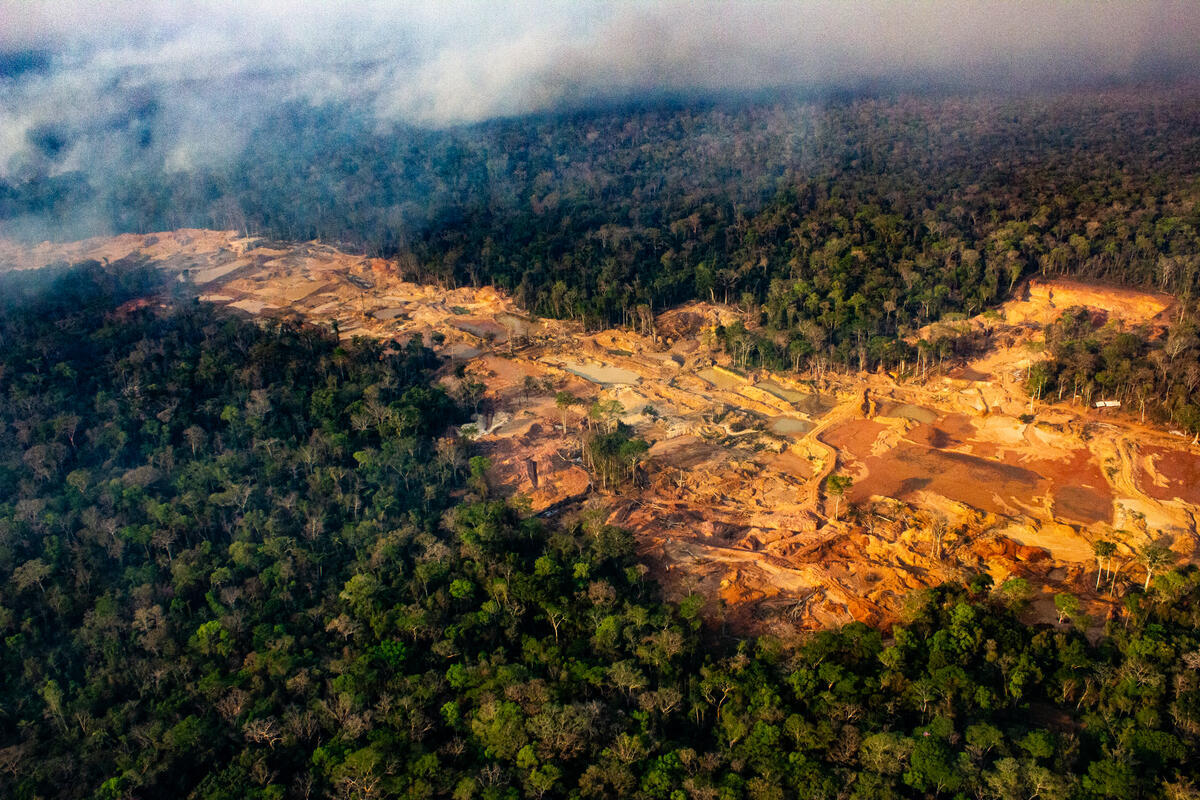
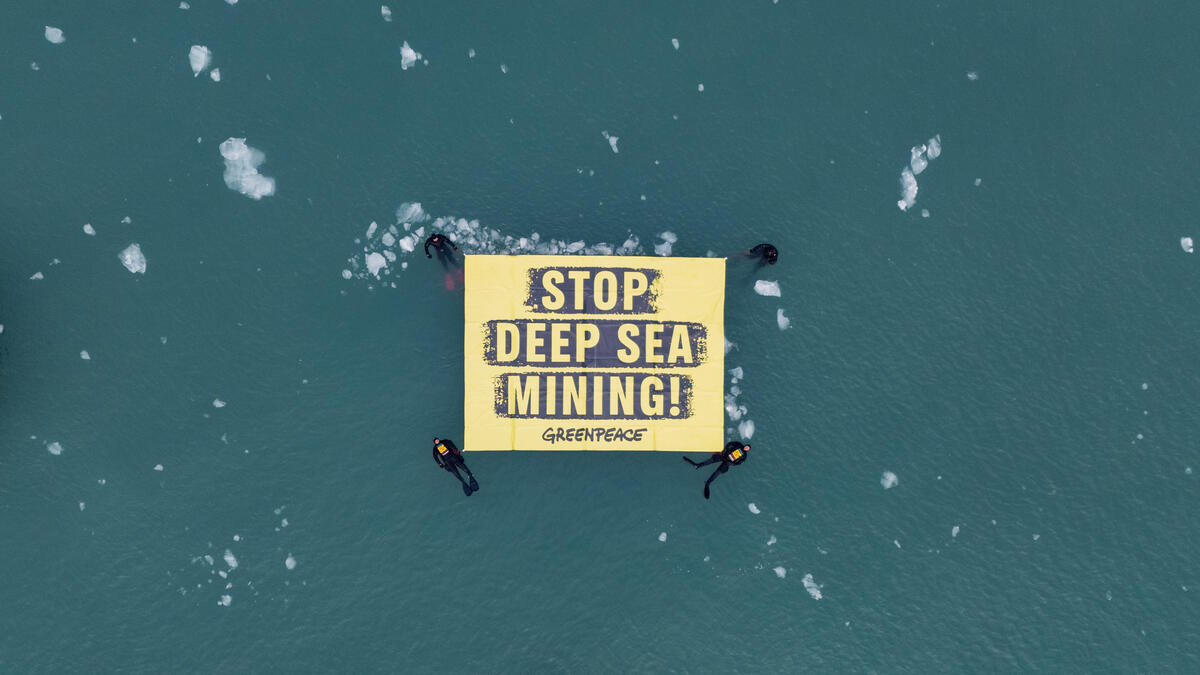
Globally – from Chile, Argentina, DRC, Indonesia, Sweden to the deep sea – the extractivist rush for minerals puts vital ecosystems, peoples’ rights and the lives and livelihoods of Indigenous Peoples and local communities at risk. The geopolitical scramble over minerals has also been linked to the current US government’s aggressive annexation threats to Greenland.
Minerals have different uses, and there are no guarantees that the minerals mined “in the name of energy transition” are used for wind turbines or energy storage. For example, big tech companies are consuming more and more of these minerals to expand AI infrastructure (such as datacenters). In addition to driving up energy demand and emissions, the vision of ‘progress’ advocated by big tech oligarchs also threatens to worsen extractive pressures on people and nature, and divert minerals away from energy transition. Moreover, mineral use in the expansion of AI-driven warfare systems has been found as a particularly concerning development.
In light of this, it is more important than ever to demand coordinated action to ensure that minerals are used where they matter most: principally, for a fast fair fossil fuel phase out and a transition to clean, affordable renewable energy and sustainable transport systems.
So how do we protect people and nature in the energy transition?
Reduce, recycle, restrict for a safeguarded energy transition
In a report commissioned by Greenpeace International, and authored by academics at the Institute for Sustainable Futures at the University of Technology, Sydney (UTS) in Australia, we’ve found that an ambitious energy transition can be achieved without mining in vital ecosystems – whether on land or at sea. With visionary leadership, sound policies, and innovative technologies, we can keep global warming within 1.5°C, safeguard vital ecosystems and reduce extractive pressures on people and nature.
Here’s five ways how:
1. Reduce mineral demand with improved public transport, car-sharing, and smaller, more efficient vehicles

Accessibility, efficiency, and reliability in how cities are governed make them great places to live in. Having improved public transport systems is one of the most effective ways to reduce the need for mineral-intensive electric vehicles and the batteries that power them. In addition to expanding high-quality public transport, employing car-sharing schemes, and investing in active mobility (e.g. walking and cycling infrastructure) would significantly decrease reliance on individual car ownership.
As an added bonus improving our public transport systems is essential not just for climate, but for connecting people to opportunities. Mobility justice is climate justice.
2. Incentivise and substitute battery technology towards alternatives requiring less lithium, cobalt, or nickel

Think about how many items you use that require batteries? Without it, our personal gadgets would be useless; we wouldn’t have advancement in items like electric cars or bikes; and batteries can also help store and use more eco-friendly sources of energy, such as solar and wind. But the production of large batteries is highly mineral-intensive.
Luckily, over the last decade, technological innovation has transformed the market. Lithium iron phosphate (LFP) batteries, now widely commercialised, eliminate the need for cobalt and nickel, reducing pressure on these supply chains. At the same time, sodium-ion (Na-ion) batteries are advancing rapidly, and offer a pathway to significantly reduce mineral demand for lithium, according to the report. It shows that, using innovative battery technologies and energy storage systems that do not require these key minerals would significantly reduce supply gaps for key minerals and ease potential development pressures for new mines targeting them.
3. Design for circularity and scale up recycling

We all know the drill by now – reduce, reuse, recycle. When it comes to transition minerals, this maxim is of key importance.
By maximising collection and the recovery of transition minerals from end-of-life transition technologies, recycling can significantly reduce the need for new extraction. Investing in advanced recycling technologies and collection systems, alongside policy incentives that reward high recycled mineral content in new products, ensures that transition minerals re-enter the supply chain.
Additional circularity measures like extending technologies’ lifespans, improving repairability, incentivising reuse, designing and standardising components for easy disassembly to help with repair and recycling, and enforcing extended producer responsibility (EPR), could also contribute to reducing overall mineral demands.
4. Prioritise mineral use for essential energy transition needs

Minerals are finite resources, and the practice of mining carries significant social, labour, and environmental risks. Therefore, the use of mineral resources should be prioritised where they matter most – in renewable energy and its storage and in electric mobility to enable a fast fair fossil fuel phase out.
Governments and industries must prioritise mineral use towards a fast, fair, and just energy transition. Coupled with supply chain transparency, prioritising minerals for energy transition ensures finite minerals are used to advance climate goals that benefit all people and the planet.
5. Protect key ‘Restricted Areas’ from mining development

Protecting human rights and ecological integrity is a non-negotiable foundation of a just and green transition. Restricted Areas have high environmental, ecological, and natural values, and may include Indigenous Peoples and local community territories. Defining and protecting these Restricted Areas is a crucial step to ensuring that mining of transition minerals respects the rights of Indigenous Peoples and local communities to their territories, and does not destroy biodiversity, critical natural ecosystems, natural carbon storage, freshwater systems and oceans.
After all, what is “critical” here is not a minerals scramble largely driven by geopolitical rivalry. Neither the AI race, nor the power and profit chased by States and corporations.
Critical are the ecosystems that all living beings on the planet depend on.
Critical are the rights of Indigenous Peoples and local communities.
Critical is meeting peoples’ needs and ensuring that current and future generations can live in a safe climate.
For this, it’s essential for our world leaders to take courageous and coordinated action to protect people and the planet, and ensure our Earth’s minerals help create a green and just future, rather than being exploited for short-term profit.
Author: Elsa Lee is the Co-Head of Biodiversity at Greenpeace International
Water negotiators are facing a worsening water supply forecast with record-low snowpack across the West.
Critical negotiations about the future of the Colorado River took a two-week hiatus last month after the seven states in the basin missed a key Valentine’s Day deadline for striking a deal, New Mexico’s water negotiator said Thursday.
Colorado River Negotiations Resume With Focus on Stopgap Measures
Climate Change
Climate-Fueled Wildfires and Dust Storms Drove Up Air Pollution Around the World Last Year
A new report shows air pollution threatens the majority of the world’s population, while information gaps increase the risks.
A new report on global air pollution shows that the majority of the world’s population breathes unhealthy air, and climate change is making the problem worse.
Climate-Fueled Wildfires and Dust Storms Drove Up Air Pollution Around the World Last Year



-
Greenhouse Gases7 months ago
Guest post: Why China is still building new coal – and when it might stop
-
Climate Change7 months ago
Guest post: Why China is still building new coal – and when it might stop
-

 Greenhouse Gases2 years ago
嘉宾来稿:满足中国增长的用电需求 光伏加储能“比新建煤电更实惠”
-
Climate Change2 years ago
Bill Discounting Climate Change in Florida’s Energy Policy Awaits DeSantis’ Approval
-

 Climate Change2 years ago
嘉宾来稿:满足中国增长的用电需求 光伏加储能“比新建煤电更实惠”
-
Climate Change Videos2 years ago
The toxic gas flares fuelling Nigeria’s climate change – BBC News
-

 Carbon Footprint2 years ago
US SEC’s Climate Disclosure Rules Spur Renewed Interest in Carbon Credits
-

 Renewable Energy5 months ago
Sending Progressive Philanthropist George Soros to Prison?