

Bitcoin’s recent drop below $70,000 reflects more than short-term market pressure. It signals a deeper shift. The world’s largest cryptocurrency is becoming increasingly tied to global energy markets.
For years, Bitcoin has moved mainly on investor sentiment, adoption trends, and regulation. Today, another force is shaping its direction: the cost of energy.
As oil prices rise and electricity markets tighten, Bitcoin is starting to behave less like a tech asset and more like an energy-dependent system. This shift is changing how investors, analysts, and policymakers understand crypto.
A Global Power Consumer: Inside Bitcoin’s Energy Use
Bitcoin depends on mining, a process that uses powerful computers to verify transactions. These machines run continuously and consume large amounts of electricity.
Data from the U.S. Energy Information Administration shows Bitcoin mining used between 67 and 240 terawatt-hours (TWh) of electricity in 2023, with a midpoint estimate of about 120 TWh.

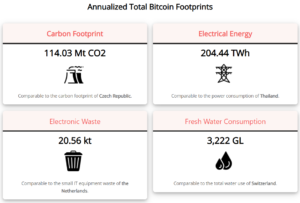
Other estimates place consumption closer to 170 TWh per year in 2025. This accounts for roughly 0.5% of global electricity demand. Recently, as of February 2026, estimates see Bitcoin’s energy use reaching over 200 TWh per year.
That level of energy use is significant. Global electricity demand reached about 27,400 TWh in 2023. Bitcoin’s share may seem small, but it is comparable to the power use of mid-sized countries.
The network also requires steady power. Estimates suggest it draws around 10 gigawatts continuously, similar to several large power plants operating at full capacity. This constant demand makes energy costs central to Bitcoin’s economics.
When Oil Rises, Bitcoin Falls
Bitcoin mining is highly sensitive to electricity prices. Energy is the highest operating cost for miners. When power becomes more expensive, profit margins shrink.
Recent market movements show this link clearly. As oil prices rise and inflation concerns persist, energy costs have increased. At the same time, Bitcoin prices have weakened, falling below the $70,000 level.
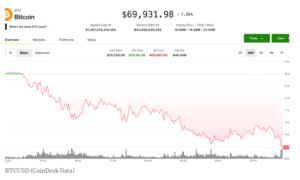
This is not a coincidence. Studies show a direct relationship between Bitcoin prices, mining activity, and electricity use. When Bitcoin prices rise, more miners join the network, increasing energy demand. When energy costs rise, less efficient miners may shut down, reducing activity and adding selling pressure.
This creates a feedback loop between crypto and energy markets. Bitcoin is no longer driven only by demand and speculation. It is now influenced by the same forces that affect oil, gas, and power prices.
Cleaner Energy Use Is Growing, but Fossil Fuels Still Matter
Bitcoin’s environmental impact depends on its energy mix. This mix is improving, but it remains uneven.
A 2025 study from the Cambridge Centre for Alternative Finance found that 52.4% of Bitcoin mining now uses sustainable energy. This includes both renewable sources (42.6%) and nuclear power (9.8%). The share has risen significantly from about 37.6% in 2022.
Despite this progress, fossil fuels still account for a large portion of mining energy. Natural gas alone makes up about 38.2%, while coal continues to contribute a smaller share.
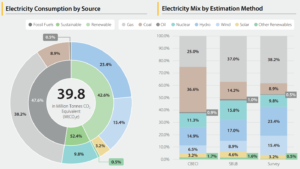
This reliance on fossil fuels keeps emissions high. Current estimates suggest Bitcoin produces more than 114 million tons of carbon dioxide each year. That puts it in line with emissions from some industrial sectors.
The shift toward cleaner energy is real, but it is not complete. The pace of change will play a key role in how Bitcoin fits into global climate goals.
Bitcoin’s Climate Debate Intensifies
Bitcoin’s growing energy demand has placed it at the center of ESG discussions. Its impact is often measured through three key areas:
- Total electricity use, which rivals that of entire countries.
- Carbon emissions are estimated at over 100 million tons of CO₂ annually.
- Energy intensity, with a single transaction using large amounts of power.
At the same time, the industry is evolving. Mining companies are adopting more efficient hardware and exploring new energy sources. Some operations use excess renewable power or capture waste energy, such as flare gas from oil fields.
These efforts show progress, but they do not fully address the concerns. The gap between Bitcoin’s energy use and its environmental impact remains a key issue for investors and regulators.
- MUST READ: Bitcoin Price Hits All-Time High Above $126K: ETFs, Market Drivers, and the Future of Digital Gold
Bitcoin Is Becoming Part of the Energy System
Bitcoin mining is now closely integrated with the broader energy system. Operators often choose locations based on access to cheap or excess electricity. This includes areas with strong renewable generation or underused energy resources.
This integration creates both opportunities and challenges. On one hand, mining can support energy systems by using power that might otherwise go to waste. It can also provide flexible demand that helps stabilize grids.
On the other hand, it can increase pressure on local electricity supplies and extend the use of fossil fuels if cleaner options are not available.
In the United States, Bitcoin mining could account for up to 2.3% of total electricity demand in certain scenarios. This highlights how quickly the sector is scaling and how closely it is tied to national energy systems.
Energy Markets Are Now Key to Bitcoin’s Future
Looking ahead, the connection between Bitcoin and energy is expected to grow stronger. The network’s computing power, or hash rate, continues to reach new highs, which typically leads to higher energy use.
Electricity will remain the main cost for miners. This means Bitcoin will continue to respond to changes in energy prices and supply conditions. At the same time, governments are starting to pay closer attention to crypto’s environmental impact, which could shape future regulations.
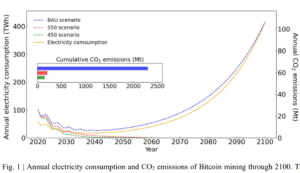
Some forecasts suggest Bitcoin’s energy use could rise sharply if adoption increases, potentially reaching up to 400 TWh in extreme scenarios. However, cleaner energy systems could reduce the carbon impact over time.
Bitcoin is no longer just a financial asset. It is also a large-scale energy consumer and a growing part of the global power system.
As a result, understanding Bitcoin now requires a broader view. Energy prices, electricity markets, and carbon trends are becoming just as important as market demand and investor sentiment.
The message is clear. As energy markets move, Bitcoin is likely to move with them.
The post Bitcoin Falls as Energy Prices Rise: Why Crypto Is Now an Energy Market Story appeared first on Carbon Credits.

The post Promoting Improved Cooking Practices in Nigeria appeared first on Terrapass.
For most companies, the largest figure in the carbon inventory is not the office, the vehicle fleet, or the electricity bill. It sits upstream, in the goods and materials a business buys to make and sell its products. These purchased inputs form the bulk of a company’s Scope 3 emissions, which routinely exceeds everything the business controls directly, and can add up to 90% of their global footprint.




-
Climate Change1 year ago
Guest post: Why China is still building new coal – and when it might stop
-

 Greenhouse Gases2 years ago
嘉宾来稿:满足中国增长的用电需求 光伏加储能“比新建煤电更实惠”
-
Greenhouse Gases1 year ago
Guest post: Why China is still building new coal – and when it might stop
-

 Climate Change2 years ago
嘉宾来稿:满足中国增长的用电需求 光伏加储能“比新建煤电更实惠”
-

 Renewable Energy12 months ago
Sending Progressive Philanthropist George Soros to Prison?
-
Climate Change2 years ago
Bill Discounting Climate Change in Florida’s Energy Policy Awaits DeSantis’ Approval
-
Greenhouse Gases1 year ago
嘉宾来稿:探究火山喷发如何影响气候预测
-

 Climate Change2 years ago
Analysis: China’s CO2 falls 1% in Q2 2024 in first quarterly drop since Covid-19