

US Wind Unionization, Blade Weather Damage Insights
This week, we cover the unionization of Vestas technicians in Michigan, and research revealing significant blade damage occurs in short but intense weather events. At the Atlantic Shores offshore farm, an environmental permit was remanded by a judge. Dermot Wind Farm in Texas, also known as the Amazon Wind Farm, is our wind farm of the week. Register for the start of our webinar series with SkySpecs!
Sign up now for Uptime Tech News, our weekly email update on all things wind technology. This episode is sponsored by Weather Guard Lightning Tech. Learn more about Weather Guard’s StrikeTape Wind Turbine LPS retrofit. Follow the show on Facebook, YouTube, Twitter, Linkedin and visit Weather Guard on the web. And subscribe to Rosemary Barnes’ YouTube channel here. Have a question we can answer on the show? Email us!
You are listening to the Uptime Wind Energy Podcast, brought to you by build turbines.com. Learn, train, and be a part of the Clean Energy Revolution. Visit build turbines.com today. Now here’s your hosts, Allen Hall, Joel Saxum, Phil Totaro, and Rosemary Barnes.
Allen Hall: Before we start the program this week on March 26th.
At 11:00 AM Uptime sits down with Josh Goryl CRO of SkySpecs, and their newly appointed CEO Dave Roberts for an exclusive conversation in our new joint webinar series. You may have heard about Dave recently stepping into the role. Now’s your chance to hear from him directly and we’ll dive into what’s new at SkySpecs, the latest industry insights, and what their newest announcement means for the future of wind turbine inspections.
Wind o and m. And asset health management, so don’t miss it. Tune in on March 26th, 11:00 AM Eastern, and we’ll include the webinar registration link in the show notes. Up in Michigan, wind turbine technicians who perform operations and maintenance on Vestas turbines have voted to join the Utility Workers Union of America.
Marks the first Vestas wind technicians in North America to unionize. The 11 member group voted nine to one, so someone abstained obviously in favor of organizing and will become members of the UWUA local 2, 2 3, which also represents winex at DTE in Michigan. Now these workers are responsible for operations and maintenance on about 120 odd turbines, including MCE.
So Joel, this one’s a little unique and maybe ’cause it’s Michigan unions are really strong in Michigan, have been for a hundred years. ’cause the auto workers, and this seems like an outgrowth of that, but what is the relationship with Vestus in unions? Is that something that they have done in Europe quite often and this is just carrying over into the United States?
Or is this. An American move.
Joel Saxum: I think it’s an American move. If you look at the state of Michigan, like you said, auto workers are there. They’re heavily unionized. And because they’re heavily unionized and that state has looked at them as, they do well. It’s in good middle class incomes and, that, that’s driven some progress over the last a hundred years in Michigan. My, some of my in-laws are from Michigan and they’re boilermakers and they’re all unionized. And when they say get that union job, they’ve got it. They’ve made it right. So I understand the city or the state of Michigan and some of the ideas around there.
And I think that if you, in wind, if you were to pick a state that would’ve unionized first. Michigan would be at the top of your list probably. So I don’t think it’s a Vesta thing necessarily. I think this is a local Michigan thing, but I don’t also believe, Vesta is being a Danish company and they have, a lot of trade representation there from in all trades in that northern part of Europe.
I think that’s, it’s not abnormal to Vestas either. It’s probably abnormal to Vestas. United States Management, but Vestas as a company, eh, pretty standard thing. I’m curious to see what their package looks like, because now we’re in this era of IRA bill things, right? So we, IRA bills, apprenticeships, and white sheet wages and these kind of things to, to fulfill these needs for all these projects.
So I would. Be interested to see what the package looks like and what they’ve signed with or as a union to Vestas and to the people that you’re working for, to see if it aligns with the IRA bill.
Rosemary Barnes: What can you explain for non-Americans? What does that mean to have unionized in America? Because we have unions in Australia, but my understanding, like it must be incredibly different here than it is there.
’cause like you say, it could be, you can have a union job, like I’m pretty sure in Australia, like you are. There’s no such thing as a union job. They can’t I think they’re explicitly prohibited from discriminating based on whether you are in a union or not. Everyone has a right to join a union, but, what does a union job mean? And Yeah tell those of us who aren’t from America. What does this actually mean?
Joel Saxum: It’s different depending on the organization, the industry, the area, right? So technically same thing. It’s not, it’s, it is illegal to technically discriminate against non-union or union, however, they become such a strong presence that when, if you’re part of the union and you. Say there’s a strike going on, and then you cross that picket line, like you will be ostracized from that group of people, even though it’s technically illegal to do they’re not sanctioned by the government.
It’s all independent organizations, but they have a lot of power, the auto workers unions and stuff, like if they go on strike, they shut down gm, they shut down forward, they can’t do anything. So they have a, an insane amount of power. And it, it rolls over into, when I say good union jobs, they have good packages.
In my opinion, I’ve seen some union packages that are just crazy, right? Like I was working in Chicago and there was guys that were holding shovels clearing, clearing off manholes, and they were making $48 an hour because they were in the union. And the guy next to him that wasn’t in the union, that wasn’t working for the union company was making like 16.
And doing the same work except for after eight hours he was still working. The other guy put a shovel down one home. So there’s a give and take.
Phil Totaro: Yeah. But that’s the flip side of this as well, which is okay, there’s a benefits package that, that they offer as being part of a union, but there’s a price that’s paid for all of that.
It’s the same sort of thing with, like a government that leans a little more socialist. They’re gonna collect a lot more in tax. And then have a lot more programs for everybody that’s based on all that money that they’ve collected. But the reality of it is who do you think pays for that?
At the end of the day, that’s gonna be the asset owner and then all of us as electricity rate payers who end up, the power purchase contract price is necessarily gonna be, more than what it might have been otherwise. There’s. There’s two sides to it. And yeah, you can, you can get unionized labor and their argument with joining the union was, safety training, access to safety training, access to benefits, things they weren’t getting either from vestus or independently.
But somebody’s gotta pay for it and it’s gonna be all of us
Joel Saxum: as busy wind energy professionals. Staying informed is crucial, and let’s face it. Difficult. That’s why the Uptime podcast recommends PES WIN Magazine. PES Wind offers a diverse range of in-depth articles and expert insights that dive into the most pressing issues facing our energy future.
Whether you’re an industry veteran or new to wind, PES Wind has the high quality content you need. Don’t miss out. Visit ps win.com today.
Allen Hall: New research from the Netherlands Organization for Applied Scientific research in collaboration with offshore wind operators reveals that approximately 30% of annual wind turbine blade damage occurs during just 12 hours of harsh weather conditions.
The PROWESS project conducted. Year long, detailed measurements of precipitation in the North Sea, a pretty rough place finding that damage happens when the tip speeds reach about 325 kilometers an hour as wind speeds exceed about 63 kilometers an hour, which is pretty fast and rainfall surpasses about 7.5 millimeters per hour, which is a lot of rain.
Now, these findings have led to the creation of a erosion atlas in the. That could help wind farm operators proactively reduce turbine speeds to prevent damage. Now, I think that’s the goal everybody, is that if they know there’s certain environmental times when rain erosion is going to occur, then you basically slow the tip speeds down, which will reduce the amount of erosion.
Maybe I’m missing some of this. Rosemary, I know you’ve heard the same story that you can slow the tip speeds down when the rainfall is really high and the wind speeds are really high. And sure you can reduce the amount of erosion, but it’s still a problem.
Rosemary Barnes: And I haven’t seen this this atlas, is it just for the North Sea is is it just Europe?
Europe,
Joel Saxum: TTU was working on one to cover all of Europe.
Allen Hall: Yes, they were. Yeah, I haven’t seen it yet, but it maybe out.
Rosemary Barnes: One of the things that I’ve been working on. Recently with a few different clients is leading edge erosion in Australia. And just noting that we don’t see things behave the same way that they do in Europe.
And one of the reasons is, or that I suspect actually I don’t suspect, I know I’ve back backed up with data, that we have much higher rainfall intensity and a lot of places and. Australia. Like I just know that from living here. When I lived in Denmark when I moved to Denmark I checked the climate data before moving to see, things like, oh, what’s the annual rainfall and how does it compare?
And it wasn’t so different to a lot of parts of Australia. And in fact, it’s less than a lot of parts of Australia. I’m like, oh, okay, it’s not gonna be that bad. But when you actually live there, like in Australia, it rains and it rains. Like it’s not joking around. It is raining. But whereas when you.
In Denmark it’s just always drizzling, just I don’t know, definitely more than 50% of the time. It’s just it’s raining a little bit. And sometimes I would call it static rain. It’s it’s technically not raining, but if you go outside, you will get wet because it’s just there’s, it’s just there’s so much moisture in the air.
So I, and yeah, so I noticed. Then like a lot of the traditional ways to assess how severe your leading edge your site is for leading edge erosion. You have a look at you average wind speed, the tip speed of the blade and the annual rainfall of a site. And I just noticed I don’t know, I.
500 bill of rainfall in a year is not the same in Europe as it is in Australia. And not all Europe is the same. There are some places like in Scotland where they have like big fat, heavy rain droplets. But what was the amount that you said was the threshold? How, what was the rainfall intensity?
Allen Hall: No I think I said three inches in arrow.
That’s not right. I think it’s 0.3 inches an hour or 7.5 millimeters.
Rosemary Barnes: Okay. So I have I, I. I collected data for a bunch of Australian sites with their one minute. One minute rainfall record, or it’s like the average amount that they get every five years that will get in rainfall intensity of one in one minute of four, four millimeters in one minute.
So that’s like half of what you’re saying in an hour. We’re getting in a minute. So it’s 30 times, 30 times more. There are sites in Australia, they’re getting 30 times more than intense rain than that. So yeah, just I guess just look a little, another little bit of. Bit of evidence that Australia has in intense rainfall.
That’s why we have so much flooding. It just, it suddenly the tap turns on and you’ve got it’s the inverted ocean kind of situation where it’s just all of a sudden Yeah. Like above ground is wet now. It’s, yeah, it’s just water.
Joel Saxum: I thinking about that sometimes, like in, in Texas, the way it rains, like in Houston when it rains, like seven and a half millimeters an hour is nothing.
I’ve been in Houston before where they’ve gotten 10 inches of rain in an hour. That would be 250 millimeters in an hour. That’s 80, 80 times that.
Rosemary Barnes: That’s, so that’s what I mean. Maybe the numbers are wrong. We should probably, have all of read the paper and done some calculations before we started talking.
Allen Hall: There’s just two articles that say the same thing.
Rosemary Barnes: I, that’s that kind of like reinforces that Europe is the wrong place to do this study or to get this benefit, right? Like you get the benefit where because it’s only, it’s not. That huge amount of erosion that you’re gonna stop by, having that threshold in Europe, but like in Texas or in Queensland, you would be able to very easily cut out the extremely intense rain events I bet are doing way more.
’cause like I, I often see on Australia and wind farms erosion leading edge protection that is destroyed. A year after it was last replaced or two years after, and I bet that you could stop that by just turning the turbine off for the super intense rain. So I’ve been trying to convince clients to, to start looking at this.
It’s hard when the. My client, the owner of the wind farm, doesn’t actually control the operation of the wind farm. So that’s the biggest challenge isn’t the potential of a, technological capability to do it. It’s it’s a matter of who, who would go to the effort to doing this versus who gets the benefit from it.
Joel Saxum: There’s two interesting things here too just when I was looking at this leading edge erosion problem with rain mapping and stuff at a previous life. One of the things I didn’t think about right away is actually why it’s so bad is because as that turbine spins, you’re actually going this waterfall is measured in a single water column that hits, say, the ground.
Well, 7.5 millimeters an hour, but that turbine blade is experiencing like 15 times that because it’s chasing the rain down and then hitting it, going back up again and hitting. It’s in engaging with the rain constantly and that’s why it causes so much damage.
Phil Totaro: Yeah. Particularly a high tip speed ratio and it’s the almost like what you get on a helicopter rotor in, a brownout condition.
It’s
Joel Saxum: yeah. And we’re talking just rain erosion here, right? Like this whole, I just talked to an operator in West Texas an hour ago, and he said that sandstorm craziness that blew through there on Sunday hasn’t let up. He’s still at 45 mile an hour. Wind with sand blowing so fast, you can’t see across the o and m parking lot.
And this is in like by San Angelo.
Allen Hall: I saw that. Global Blade Group is over at Eros this week and they’re talking leading edge repairs for erosion and looking at the Eros robot and how they do it. And there’s a number of operators that are at Arons with that global. Playgroup and Berg junker. Obviously leading edge erosion is still a problem.
There hasn’t been a universal solution, but it does look like different parts of the world have different kinds of raindrops and maybe it’s a temperature aspect. Also, it’s definitely gonna be colder in Northern Europe and. Typically in Australia.
Rosemary Barnes: Yeah. Another thing we struggle with in Australia is the UV here is so much more intense and so like a lot of things just don’t stay put or stay intact regardless of erosion.
You, if the adhesive degrades under you. UV of salt, then yeah, things don’t last because of that. So I would really love to see more erosion test facilities doing things like temperature cycling. That’s another thing. You get really hot, really cold temperatures here, much more than in Europe where it’s less diagonal variation.
Yeah, put a UV lamp in your facility and they look after us in Australia.
Allen Hall: GTU has a new rain RO facility in Ross Gilda. That facility, they can change the temperature of the water. It’s one of the variables they added to their rain erosion test facility, which plays into the result. I’m really curious about that because in the rain erosion testing that we have done over a number of years now, 15 plus years, you can tell the difference between cold water and warm water.
It is noticeable.
Rosemary Barnes: Oh, interesting. I think thermal cycling though, is a thing as well. Just even the yeah, the temperature of the blade heating up and cooling down every single day. I think that, that doesn’t help. There’s so much going on. We’ve seen these simple erosion site assessment maps that use like one or two parameters, and even this new study is, similar.
Just a couple of things, but it’s like that. You can find some good correlations, but it’s not like there’s a lot of ways to have a bad, there’s only one way to have a good site for erosion, which is to have, not much rain, small droplets, not high wind speeds. Oh, that’s not great for you.
Your site in general? No, no dust, no salt water. But any one of those things can be really bad. So it’s yeah, like making a map is really hard. You need to have like a series, I think a series of maps for looking at each parameter. And I don’t think that we have remotely figured out what all the parameters are that affect it, and then the next step is actually the testing for leading edge erosion products for leading edge protection products needs to include all of those parameters, which it currently doesn’t. It’s like basically that they’ll change the speed and the rainfall. The, yeah the speed of the rain, the how this volume of the rain and now we became, so there’s a facility that can change the temperature of the rain, but there are so many more things that we need to include before you can it’s one thing to know.
Yeah, like your product will perform under these conditions, but that’s not what in the real world. And nowhere in the world are we seeing leading edge protection perform in the way that the test results suggests that they should, which means it’s just currently wrong. Really need to get more in depth on erosion testing.
Joel Saxum: How much money do you think the wind industry has chased or spent testing LEP and trying to figure out this leading edge erosion problem? From grant funding and all these different things. ’cause I constantly see Alan. We were talking about this the other day about. How mu have, how have we not solved leading edge erosion yet we’ve hit this project and that project and this university and that grant funding and this EUDP thing and ORE catapult this.
Rosemary Barnes: Yeah. And the OEMs are putting their own money into it too. They’re not just, waiting around for grant funding. It’s people being. Trying hard. I personally think that they’ve been too, it’s been too Eurocentric. The the research and development and, yeah. My company is too small to embark on a research program, but I’m so confident that we could do much, much better for Australian leading edge protection if we would do a proper test program that represented the, conditions that we actually face in Australia.
And that’s that, that’s true, not just for leading edge ion. There’s a whole range of. Things that we would get Australian Wind Farms performing way better if we would, do some of that development here. And I’m sure that Texas or some of the more extreme locations within the US is probably ex exactly the same.
And I know you do have some research organizations doing stuff over there, but yeah, I would really love to have a, give me a couple of million dollars and I will, I’ll solve this problem.
Allen Hall: Just call RD test systems and they will. Send over one of their latest and greatest rain erosion testers.
That’s the way to do it. That test equipment is outstanding. The issue is there’s so many variables that’s the problem, and you have to try to take them one at a time and solve it. And obviously Australia’s different than Northern Europe. It just is and Joel’s pointed out numerous times. It’s not necessarily the water, it’s what’s in the water a lot of times is dirt and debris, which is an abrasive and it changes everything really.
Everything. Plus yet on the UV amount of UV in Australia, and I agree with you, Rosemary Australia has aggressive sunlight. It does a lot more damage there than in Denmark. Don’t let blade damage catch you off guard. OGs. Ping sensors detect issues before they become expensive. Time consuming problems from ice buildup and lightning strikes to pitch misalignment in internal blade cracks.
OGs Ping has you covered The cutting edge sensors are easy to install, giving you the power to stop damage before it’s too late. Visit eLog ping.com and take control of your turbine’s health. Today. There’s big news off the shores of New Jersey Environmental Appeals Court Judge Mary Kay Lynch has ruled to remand a cleaner act permit issued to Atlantic Shores offshore wind.
Back to the US Environmental Protection Agency. The EPA filed a motion in February to review the Wind Energy projects, environmental impacts in response to. President Trump’s January memorandum to withdraw offshore wind leases for further review. Now, this setback follows shell’s withdrawal from the Atlantic Shores Project in January where the company reported a roughly $1 billion loss associated with the plan.
2,800 megawatt array off of Long Beach Island and Entine. Now, Phil, this permit. Poll is actually a result of a lawsuit which opened the door for the EPA to pull the permit. You wanna explain the logistics of this? So
Phil Totaro: effectively the lawsuit triggered a reevaluation of the the. Way in which the permit review was undertaken, the process that they followed.
And what the judge is effectively saying is that there was cause to uh, suggest that the process according to the EPA rules was not. Properly followed. And what that did is it allowed the EPA to pull the permit for a project that, I’m not sure if there was for knowledge of this.
And that’s why, ’cause you mentioned Shell pulled out EDF also pulled out, which was the other partner in the project. So it, the project, I don’t know if the project was already dead and they’re just putting a nail in the coffin or these companies pulled out because they felt like. This this ruling wasn’t gonna go their way.
But it’s. Concerning considering that, this was a process that was, done in a hurry at the end of, president Biden’s term where a lot of things, EPA reviews, Boeing reviews, a lot of permits were being issued for offshore wind to try and get things going.
The assumption being that if they had all those permits in place. They could just get on with business and get to building their projects. But it seems as though that’s not the case. And it, it’s, bad news for Atlantic Shores, which obviously seems dead now.
But there’s 19 gigawatts worth of other projects that are still, theoretically in the pipeline that could be built. And we’ll see if they actually get built.
Allen Hall: So that permit dealt with air pollutant emissions from the project during the pile driving construction phase, and its impact on the Brittin National Wilderness Area, which is just offshore of the coast of New Jersey.
Where they have limitations on air quality degradation. And my comment to Joel before we started the podcast was what kind of air quality pollutants are being emitted during pilot driving besides the ships? Driving the piles. Is there something else that I’m missing here? And would it matter all that much in the big scheme of things?
Joel Saxum: There’s two things, right? You have just the simple noise, pollution, right from boom. And some of times you have a little vibration in there, but that’s the only thing that happens there. And you can hear that a long ways away. But that’s not gonna affect anything. I’m not an EPA specialist, I’m not a noise specialist.
Maybe we should have Matthew Stead talk about this, but that, simple pounding is one thing, and that seems to be so minimal to me because, regular construction onshore is happening. It’s the guy’s putting a new roof on the house next door, pounding away, sounds like that, but it’s miles away.
And the other thing would be just emissions from the vessels that are out there. However, when you’re ve have a vessel out there for construction, it’s gonna be either one jack or one. A steady vessel doing pile driving, one work vessel and maybe a CTV or maybe a work boat. So maybe three vessels out there, max.
And if you’re managing it with a helicopter, maybe a helicopter. But it seems to me here that this is a, just a kind of a grab at some. Process problem and not an actual problem because it doesn’t seem like that’s an actual problem to me and either of these noise emission things.
Allen Hall: I actually looked this up, Joel.
It says the Brier wilderness area. Is a class one air quality area within the refuge, which protects it from manmade air pollution. And that means that they’re monitoring the air at that site all the time. Us Fish and Wildlife Surface is doing the monitoring there. But I assume there’s ships and all kinds of things just rolling right by there for emissions.
Joel Saxum: Yeah, that’s what it says. Okay, so tell ’em. They tell ’em they can’t have the vessel idled up when the wind is blowing east to west.
Allen Hall: That’s the weird part. What would the report have said that would, or what would’ve been in the report that was an error that would say there’s a lot of human made pollution landing on entine.
That, that doesn’t even make a lot of sense to me.
Rosemary Barnes: That’s gotta be shipping emissions. It’s not like it’s bringing up dust that escapes the earth’s, the, sorry, the water’s surface. How far is the wind site
Phil Totaro: from Entine? It’s a couple of miles. Yeah, it’s, no, it’s at least 10. If it’s in the shelf, there are 12 if it’s in the outer continental shelf.
But the look folks the real issue here. Is that this is what is likely to start happening more and more with any of the remaining wind farms, even if they’re under construction. Before, in, in Biden’s term, there were matters that were in the courts and they were getting dismissed because, the judges were, this isn’t supposed to happen, but the judges were being, told what to do.
The judge is theoretically supposed to rule independently, we all know how the system works. So nowadays they are, and the Justice Department used to be providing support to the defendants of all these kind of lawsuits. There have been lawsuits on vineyard, wind, there have been lawsuits on revolution on, pick every project you can name, and there’s been a lawsuit against it from one party or another.
Whether it’s Save the Whales or EPA or whatever. And the bottom line here is that this is what’s gonna be happening now in the new world order that we find ourselves in. They are gonna nitpick any stupid little thing in all of these little lawsuits that we’re getting tossed out before are gonna have legs.
Now
Rosemary Barnes: I’ve I’ve heard. Rumors that it’s potentially even more widespread than that, and not just offshore and things that are still working on permits, maybe projects that are already under construction. Like any kind of government involvement that you need, whether it’s just I don’t know, potentially even something as simple as you need a road closure to get some stuff on site.
That government departments are just simply not looking at those things. And so they just can’t progress. And I have heard that some developers considering maybe already have that, just putting a pause on anything that’s not started, pause it for four years so that, ’cause the worst thing is to get partway through a project and not be able to finish it.
Because then it’s gonna. It cost you more to restart it than it would be to just, pause it at the start. At least you can, start again from a clean slate and get everything done at once. So I think that, yeah, even though, like on the first blush of it, like there weren’t any executive orders or any, legislation that’s been passed that has.
On the face of it affected onshore wind all that much. I think that people are starting to realize that it could really slow that down as well.
Phil Totaro: Yeah, the only, so far, the only one that executive order that was passed for onshore was no renewable energy development on federal lands. That’s only affecting out of 32 or so gigawatts of wind energy in the.
Realistic project pipeline I’ll call it the stuff that’s actually likely to get built, that’s only gonna affect about six or seven gigawatts. It’s not an insubstantial percentage, but, at the end of the day, again it’s delaying things. It’s not totally stopping them.
But it’s concerning. In that offshore is much more expensive to develop, much more, time consuming to develop and whereas it was already a klugy process before, this is making it, a hundred times worse.
Joel Saxum: This week’s wind Farm of the week is the Dermot Wind Farm, which is owned by Osted, also called the Amazon Wind Farm.
So this thing was commissioned back in 2017 and commissioned in a special way. Jeff Bezos actually climbed to the top of a wind turbine and broke a bottle of champagne Oh. On one of the the attachment points up top. So he I’m hoping he was. Climb, safe, trained and everything to be up there as well.
But there was 110 GE 2.31 16 machines out there. It’s a 253 megawatt wind farm, and one of the focuses of this wind farm is a focus that if you pay attention to the energy markets, you’ve heard lately, there hasn’t been a huge spike in demand in energy in the United States. In the last 20, 30 years.
But now just in the last few and looking forward because of data centers and all these different things there, there is this forecasted spike of energy wanted. So thinking a little bit ahead of time, Amazon back in 2017 started investing in a lot of renewable energy projects. So this one is one of their 600 renewable energy projects across the globe right now.
Which is a pretty freaking large number. So this project has provided over $3 million in landowner payments and property taxes. And so it gives back to the local communities enough to power 74,000 homes annually. And it’s out by Abilene, Texas. So a little bit more about what Amazon is doing in the renewable energy space is they’ve invested over $12.6 billion.
Since 2014 in renewable energies. So the Dermot Wind Farm owned by Sted out in the central part of Texas. You are our wind farm of the week. I.
Allen Hall: That’s gonna do it for this week’s Uptime Wind Energy podcast. And thanks for listening. Please give us a five star rating on your podcast platform and subscribe in the show notes below to Uptime Tech News or substack weekly newsletter and register for that Sky Specs webinar.
You won’t wanna miss it. And we’ll see you here next week on the Uptime Wind Energy Podcast.
https://weatherguardwind.com/unionization-damage-atlantic-shores/

Renewable Energy
Is a Team of Is a Bunch of MAGA Thugs Beating the Snot Out of a Woman a New Low, or Is it What We Now Need to Expect?
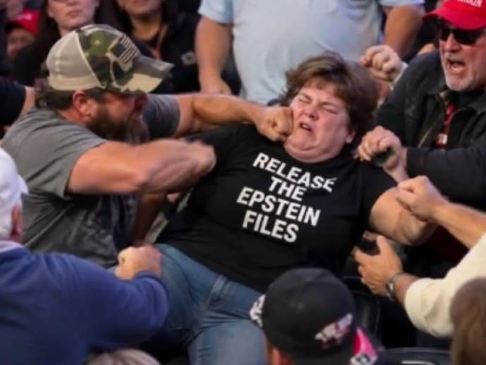 Just when we think there is a bottom, the United States sinks just a bit lower. It’s our brand nowadays.
That’s quite a left cross this thug delivered to this helpless female protestor.
It wasn’t too long ago that beating up women was taboo in America. My 11-year-old, sixth-grade son saw a male classmate of his badly bruise a girl by pushing her hard down to the ground–and proceeded to punch him in the mouth. A fellow father witnessed the scene and told me, “Your son’s fist was in that kid’s teeth within a fraction of a second.”
I had brought him up to avoid violence and achieve peaceful resolutions to conflicts, but I couldn’t fault him here.
What a disgusting bunch of turds we’ve become.
We’re starting to see intimations that stupidity like this is generated and posted by Russian data centers so as to appeal to MAGA idiots and favor the Republicans in the upcoming midterms.
 Every day, we come across articles that summarize Trump’s “accomplishments.”
I thought I’d publish this masterpiece.


Is a Team of Is a Bunch of MAGA Thugs Beating the Snot Out of a Woman a New Low, or Is it What We Now Need to Expect?
