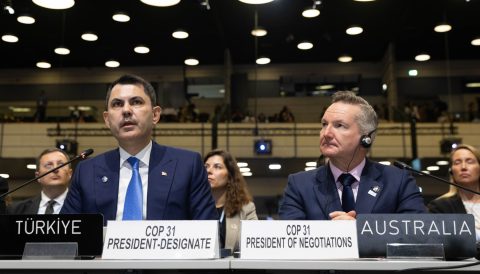
UK chancellor Rachel Reeves has delivered Labour’s first budget since 2009, promising to “fix the foundations” of the economy through increased investment in areas including clean energy.
Announcing the budget in parliament, Reeves became the UK’s first-ever female chancellor to lift the “red box”.
The “historic” budget confirms new “fiscal rules” that Reeves says will enable increased government investment, to support priorities including making the UK a “clean-energy superpower”.
Despite speculation ahead of the budget, Reeves extended a 14-year freeze in fuel-duty that has cost the exchequer a cumulative total of £100bn and left overall UK carbon dioxide (CO2) emissions as much as 7% higher than they would have been.
Elsewhere, the budget hiked taxes on private jets, extended incentives for electric vehicles, confirmed an increase in the rate of windfall tax on oil and gas companies and pledged investment in technologies including “green hydrogen” and carbon capture and storage.
Below, Carbon Brief runs through the key announcements.
- ‘Fixing the foundations’
- Transport and fuel duty
- Electric-vehicle incentives
- Clean-energy investment
- North Sea tax
- Other announcements
‘Fixing the foundations’
Reeves presented Labour’s first autumn budget in 14 years, following its sweep to victory in the general election in July.
Much of the framing in the run-up focused on how the Labour government would go about tackling the “slow growth, stagnant living standards and crumbling public services” they put down to 14 years of Conservative rule.
A few days before the budget, a government release stated that prime minister Keir Starmer would “reject austerity, chaos and decline in favour of economic stability, investment and reform”. The release said the budget would look to “fix the foundations” of the UK.
One key announcement trailed before the budget was a change to the government’s self-imposed “fiscal rules”, which are supposed to ensure that the balance of public revenue, spending and borrowing remains on a stable footing.
This change in the way public debt is measured will allow the government to fund extra investment in infrastructure and public services.
The budget “red book” says that the government’s new “investment rule” is to reduce “public-sector net financial liabilities” as a proportion of the overall size of the UK economy, within three years of each budget forecast. It explains: “This rule keeps debt on a sustainable path while allowing the step change needed in investment.”
In an interview with BBC News in the week before the budget, Reeves had said the change was being done “so that we can grow our economy and bring jobs and growth to Britain”.
The International Monetary Fund (IMF) warned last week that public investment in new technologies and the energy transition is “badly needed”, in order to drive growth in the UK.
Speaking in Washington at the IMF annual meeting earlier in October, Reeves had said she would target investment to drive innovation in the transition to clean energy and upgraded infrastructure as part of the budget.
She reiterated this message in her budget speech, saying that her plans would help in “delivering our [government’s] mission to make Britain a clean energy superpower”.
Transport and fuel duty
Reeves announced a bundle of measures concerning transport, ranging from a tax hike on private jets to the confirmation of improved regional train lines.
One of the chancellor’s most high-profile and controversial moves was maintaining the freeze on fuel duty paid by motorists on petrol and diesel.
Successive Conservative-led governments have cancelled planned inflation-linked fuel duty increases every year since 2010, meaning rates have been slashed in real terms.
In 2022, fuel duty was also cut by 5p per litre in response to the global energy crisis – a temporary measure that was subsequently extended in the spring budget in 2023.
As such, thinktank the Institute for Fiscal Studies (IFS) found that fuel duty was already 37% lower in real terms in 2023 than the rate planned in 2010.
Successive cuts and freezes in fuel duty have increased the UK’s CO2 emissions by as much as 7%, according to Carbon Brief analysis in 2023.
Moreover, the fuel-duty cuts and freezes have cost the Treasury a cumulative total of some £100bn since 2010, according to the official Office for Budget Responsibility (OBR).
Fuel duty is the “only major tax that persistently fell” in recent years, the OBR says. It adds that if fuel duty remains frozen, it would cost the Treasury a further £5bn a year by 2030.
In the lead-up to the autumn statement, speculation had grown that Reeves might end the temporary 5p cut in fuel duty and reinstate inflation-linked increases, which could have seen an overall hike of 8p per litre, from the current rate of 53p
However, in the end, the government decided to once again freeze fuel duty and extend the “temporary” 5p cut “for one year, at a cost of £3bn next year”. It justifies this as a measure to support “hard-working families and businesses”.
Increasing fuel duty is very unpopular and there has been a strong lobbying effort to block it. The Sun, which is the UK’s most widely read newspaper, has sustained a “14-year campaign”, promoted by climate-sceptic motoring lobbyists and applauded by senior Conservatives, to keep fuel duty frozen.
As Carbon Brief analysis shows, the newspaper has significantly ramped up its efforts under the new Labour government – more than doubling the number of editorials urging the government not to end the freeze. The newspaper describes the idea as “unthinkable” and a “masterpiece of self-harm” that would harm “working people”.

Despite the framing by both the government and the Sun, analysis by thinktank the Social Market Foundation shows that the poorest households benefit far less from lower fuel duty than the richest, who tend to drive more and own more vehicles.
Ahead of the budget, Starmer announced that the single bus fare cap in England will be raised to £3. This is an increase from the current limit of £2, introduced under the Conservative government and set to expire in December.
The government says this higher price will allow it to “develop a more sustainable model of government support for the bus sector that is better value for taxpayers and bus passengers”.
However, the choice came under fire from Green MPs and climate NGOs, particularly in light of the fuel-duty freeze. They noted that the cost of low-carbon transport, such as buses, has increased by far more than the cost of driving cars in recent years. It would have cost £300m per year to extend the £2 bus fare cap, according to the New Economics Foundation.
The budget also commits to investing in a handful of new rail lines and upgrades, including the Transpennine Route Upgrade between York and Manchester and East West Rail to connect Oxford, Milton Keynes and Cambridge. There is also money for electrifying some lines.
Notably, the government also confirmed plans to fund the tunnelling of the HS2 line to central London. (The previous Conservative government significantly scaled back the HS2 project and said the final section going into central London would be dependent on private investment.)
The budget also includes adjustments to taxes on flights, with air passenger duty increased to “correct for below-inflation uprating in recent years” – equating to an extra £2 on short-haul flights in economy class. (In 2021, the Conservative government cut air passenger duty in half for domestic flights.)
A more dramatic change was a 50% increase in duty for “larger private jets”, which Reeves said would amount to £450 per passenger. The budget documents note that the government “will consult on extending this rate to all private jets within the air passenger duty regime”.
Finally, the government commits to extending the “advanced fuels fund” for an extra year to support the production of “sustainable aviation fuels”.
Electric-vehicle incentives
The budget contains a number of commitments to support the rollout of electric vehicles, in line with the government’s target of ending the sale of pure petrol and diesel cars by 2030, and extending this target to vans by 2035.
Among these measures are tax incentives to encourage people to purchase electric vehicles.
The rapid growth in UK electric cars sales in recent years has been driven partly by company-car purchases, which have benefited from generous tax breaks for low-carbon models.
The budget confirms that benefit-in-kind (BIK) tax rates for company cars will continue to favour electric cars, increasing by 2% per year out to 2029-20.
However, plug-in hybrid vehicles will no longer benefit, with rates increasing far more “to align more closely with rates for internal combustion engine vehicles”.
Another change in the budget involves increasing the gap between the rate of vehicle excise duty paid in the first year by electric vehicles relative to other cars. (First-year vehicle excise duty payments are based on a new car’s CO2 emissions.)
The first-year rate will remain frozen until 2029-30 for zero-carbon vehicles, while hybrids and internal combustion engine vehicles will see increases. Cars emitting more than 76g of CO2 per km will see their first-year rates doubling from 1 April 2025.
The budget also confirms that the government will extend, for a further year, “green” first-year allowances – which can be deducted from the full cost of profits before tax – for “qualifying expenditure” on zero-emission cars and plants or machinery for electric vehicle charging points.
Other measures in the budget include investing over £200m in 2025-26 to accelerate the rollout of electric vehicles charging points. There is also £120m to support people in purchasing electric vans through the plug-in vehicle grant scheme, and to support the manufacture of wheelchair accessible electric vans.
Looking more broadly at electric vehicle manufacture, the government has also committed £2bn in support for the automotive sector, “including the zero-emissions vehicle manufacturing sector and supply chain”.
Clean-energy investment
Measures in the budget supporting clean energy and net-zero include funding for investment in carbon capture and storage (CCS), nuclear and “green hydrogen” made with renewable electricity.
In addition, the budget documents tout the government’s “national wealth fund” as a route to supporting private-sector investment in clean energy:
“[T]he government will take further measures to catalyse private investment in the economy. This includes creating the national wealth fund to catalyse over £70bn of private investment in the UK’s clean energy and growth industries.”
In her speech, Reeves said the budget confirmed plans to capitalise the national wealth fund, which would “invest in the industries of the future, from gigafactories [for batteries or electric vehicles] to ports to green hydrogen”.
Responding to the budget, Ed Matthew, campaigns director for thinktank E3G, said in a statement:
“After years of flatlining investment, the government must now seize the opportunity of the ‘investment rule’ to make the UK a clean-energy superpower and boost green homes investment further. It is clean technology where our future prosperity lies, boosting productivity, making us competitive and weaning us off expensive and volatile fossil fuels. It’s the economic opportunity of the century.”
Funding announcements include £3.9bn for CCS projects between 2025-2026. These will help “decarbonise industry, support flexible power generation, and capitalise on the UK’s geographic and technical strengths”, the budget notes.
This follows the government pledging up to £21.7bn to support getting the UK’s first CCS projects up and running over the next 25 years, in an announcement at the beginning of October. The nearly £22bn funding is designed to support the development of two undersea carbon storage sites and pipelines, with the capacity to store more than 8.5m tonnes of CO2 per year.
The budget also includes support for the “first round of electrolytic [green] hydrogen production contracts, harnessing renewable energy to decarbonise industry across the length and breadth of the UK”. This will support 11 green hydrogen producers across the country.
Other key technologies to win support in the budget include nuclear, with a £2.7bn settlement announced to continue the development of Sizewell C through 2025-26.
In August, the government announced it would provide up to £.5bn, as part of a new subsidy scheme for the planned new nuclear power plant in Suffolk.
The equity and debt-raise process for Sizewell C is set to move into its final stages and conclude in spring 2025. Following this, a final investment decision will be made.
Separately, the budget announces “significant support” for UK fusion energy research, “to build on the UK’s position as a global leader in sustainable nuclear energy”.
Great British Energy will receive £125m in funding for 2025-26, the budget notes. This follows news in July that the publicly owned energy company would receive an initial capitalisation of £8.3bn of new money over this parliament.
The budget also confirms £163m in funding to continue the “industrial energy transformation fund” from 2025-26 to 2027-28.
The budget states that the government will help accelerate grid connections and build new network infrastructure. The government is working with the new National Energy System Operator (NESO) and energy regulator Ofgem to develop a “robust grid connection” process.
As part of the commitment to “securing the UK’s place as a global leader in clean energy, protecting consumers and driving economic growth” the budget also notes that the government has commissioned advice from NESO on reaching net-zero electricity by 2030. This will feed into the government’s own “clean-power 2030 action plan”.
Other key upcoming documents, noted in the budget and expected over the coming year, include a response to the annual progress report from the government’s advisory Climate Change Committee, an updated “carbon budget delivery plan” setting out how it will meet legally-binding climate goals and a new industrial strategy.
North Sea tax
The budget also confirms an increase in the windfall tax on oil and gas companies. The energy profits levy (EPL) will rise by three percentage points to 38% from 1 November.
Established in May 2022 in response to record profits enjoyed by oil and gas companies during the global energy crisis, the government announced the increase to 38% in July.
The budget confirms that an “investment allowance” of 29% will be abolished, but the rate of the “decarbonisation allowance” will be set at 66%. No additional changes to the tax relief available through the EPL will be made, which has also been extended by a year to 31 March 2030.
Further to this, the budget says the government will publish a consultation in early 2025 on how the taxation of oil and gas profits will respond to price shocks in the future.
Oil and gas company shares rose in response to the budget, according to the Financial Times, which says the changes to the EPL were “less tough than feared”. For example, Harbour Energy’s stock climbed 4.5% to 277p, according to the newspaper.
At the same time as the budget, the government announced a consultation into “scope 3” emissions from offshore oil and gas production, meaning the emissions associated with burning resulting fuels.
This follows a “landmark” Supreme Court ruling earlier this year, which found that Surrey County Council had acted unlawfully by granting planning permission to the Horse Hill oil project without considering the environmental impact of burning the oil it would produce.
The consultation will be part of efforts to develop new guidance for assessing the end-use emissions of oil and gas projects, as well as help “provide stability for the oil and gas industry, support investment, protect jobs and ensure a fair, orderly and prosperous transition”, the budget document says.
Other announcements
The budget includes a number of other announcements relating to climate and energy.
One such measure is £3.4bn in investment towards a “warm homes plan” for heat decarbonisation and household energy efficiency over the next three years.
In its manifesto, Labour committed to £13.2bn of funding for these issues over the course of this parliament and the budget describes the £3.4bn investment as “the first step”.
The government says this money includes £1.8bn to support fuel-poverty schemes. It adds that it will increase funding for the “boiler upgrade scheme” – which supports the rollout of heat pumps in England and Wales – this year and next.
The budget also confirms £5bn over two years to support a “more productive and environmentally sustainable agricultural sector in England” and more than £400m for tree-planting and peatland restoration.
It adds that the government is “facing significant funding pressures” of almost £600m in 2024-25 for flood defences and farm schemes. The budget states that, “while the government is meeting those commitments this year, it is necessary to review these plans from 2025-26 to ensure they are affordable”.
The government also states that the Foreign, Commonwealth and Development Office (FCDO) is forecast to spend more than £2bn on international climate action in 2024-25. (The previous Conservative government had forecast a total international climate finance spend of £2.5-2.8bn in that year.)



The post UK autumn budget 2024: Key climate and energy announcements appeared first on Carbon Brief.

Jacynta Fa’amau is a Pacific campaigner at global grassroots climate movement 350.org and a secretariat member of Pacific Climate Warriors.
The first thing that struck me was the sheer size of Queensland’s Saraji coal mine. Standing at the edge of the enormous pit, my brain scrambled for words as I scanned the earth’s open wound – a whole island could probably fit inside it.
Looking down, I noticed footprints of an emu and a koala, pressed and dried in what was once a puddle – signs of how drought had driven animals in desperate search of water, so dangerously close to the coal trucks and heavy machinery ahead.
Earlier this year, I joined a small group of Pacific Islanders on a journey through the Bowen Basin to learn from First Nations communities battling Australia’s mammoth coal industry. Of the more than 40 coal mines operating in the area, BHP & Mitsubishi Alliance’s Saraji mine is one of the largest. So it came as a painful shock to us when in August, the Australian government approved the mine’s extension just months after our visit.
-
As COP31 co-host, Australia should make its polluters pay for climate damage
With UN climate funds running short on cash, now is the time to start taxing the companies whose emissions are driving harm in the Pacific and other vulnerable parts of the world -
At pre-COP, UN climate chief warns of heat threat to mothers and babies
The spotlight on maternal health came on the first day of the pre-COP31 meeting in Fiji, where Pacific concerns are set to top the agenda as ministers gather for talks


Witnessing coal extraction is devastating. It is bad enough to see what pillaging tonnes of coal can do to a mine’s immediate surroundings: dry creek beds, dwindling wildlife, denuded land. But to know that this coal will be shipped across the ocean, bring air pollution, and eventually lead to the destruction of Pacific islands thousands of miles away is another kind of heartbreak.
Rising ocean waters
I’m an Australian-born Samoan. In 2002, I visited my family home for the first time. My father took me to the rural community where generations of my family were raised. He did not have the words to describe how much has changed since rising ocean waters had taken away almost a third of the beach.
I learned of how we had to relocate my great‑great‑grandparents’ grave to higher ground twice in the last 15 years. Of how my cousins have to paddle out further to sea to catch fish, since warmer waters have destroyed much of the reef. Of how the ocean crashes so close to my uncle’s home that he had to build a new house further away.
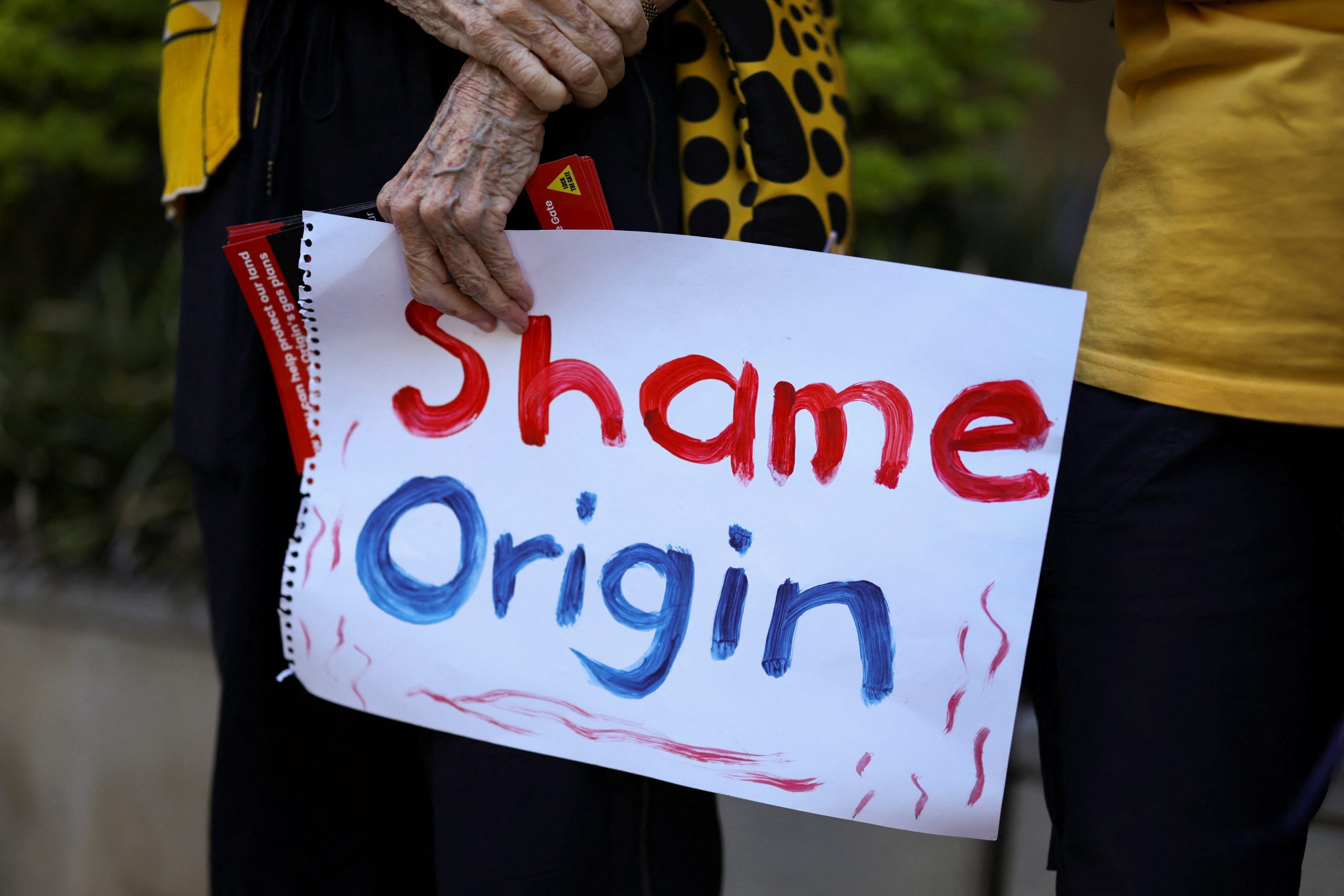
We saw reflections of our own climate destruction in the Pacific when we shared these stories with our First Nations relatives at the edge of the Saraji mine. Murrawah Johnson and Teila Watson, both Birri Gubba and Gangulu women, made clear connections between their struggles and ours. “We don’t get to inherit our land and we don’t get to inherit our traditional roles. We are fighting a war on extinction,” Murrawah said.
Coal extraction devastated their lands and cultures – totems have disappeared, fresh water has become scarce – while the effects of using it have devastated ours. “King tide, cyclones, all the violence that has been enacted on your country and people is because of the violence that has been allowed here, to us and our country,” Teila said.
Wearing the mantle of climate leadership
This week, Australia is assuming the mantle of climate leadership as co-president and head of negotiations of this year’s UN Climate Change Conference, COP31. It will lead on deliberating the summit’s priorities as world leaders and climate negotiators descend on Fiji and Tuvalu for the pre-COP meetings.
Ironically, just days before the pre-COP began, the New South Wales Independent Planning Commission approved the largest-ever coal project the state has seen, set to emit an extra 800 million tonnes of carbon emissions. I joined the Pacific Climate Warriors and other communities in submitting about 4,000 appeals to oppose the project – yet these all fell on deaf ears.
-
Fossil fuel expansion threatens COP31 hosts’ credibility, experts warn
Türkiye and Australia are pushing coal, oil and gas at home with no national timeline for their own fossil fuel phase-out