

Sailing for about an hour in the Amazon river’s delta, a flotilla of dozens of boats carrying hundreds of people raised Indigenous concerns about Brazil’s oil and gas, mining and agricultural expansion in their forests.
In Belém’s Parque da Cidade, climate negotiators gather for the first COP hosted in the Amazon rainforest. Outside the conference halls, Indigenous activists demanded outcomes that address threats from agriculture, fossil fuels and mining in their communities.
The activists will meet at the People’s Summit, a civil society event parallel to COP30, which organisers say is meant to denounce false climate solutions. Boat passengers carried signs reading “agriculture passes, destruction stays” and “we are the climate resistance”.
-
COP30 Bulletin Day 2: Ethiopia picked as COP32 host, while COP31 standoff continues
African nations backed Ethiopia’s bid to host the 2027 summit over Nigeria’s, while Australia and Türkiye remain deadlocked over next year’s host decision -
COP30 Bulletin Day 3: Brazil tries to find a home for tricky issues
Brazil is trying to craft a compromise package on several contentious issues and has dismissed the idea of a roadmap away from fossil fuels


Raimundo Tupinambá, chief of the Pajurá tribe, said that he and his village were there “to demonstrate against the federal government, the state government, and the parliamentarians who are pushing projects that could affect both the environment and us, the indigenous peoples”.
Chief Raoni Metuktire, an Indigenous leader who was recently awarded the highest decoration of Brazilian diplomacy by president Luiz Inácio Lula da Silva for his decades of climate activism, said at the event that these communities shouldn’t be facing the climate impacts they have been experiencing, among them an extreme drought last year that scientists linked to climate change.
“This river where we are could dry up, too,” Raoni said.

Raoni also talked about the recent licenses Lula gave to Petrobras to explore oil off the Amazon coast, saying that projects like that could cause severe problems for the world, “first us, the Indigenous Peoples, but also all of you, all of us will have environmental problems.”
The demonstration happened one day after protesters clashed with security guards as they stormed their way into the COP30 conference venue. When asked about that, Indigenous groups at the flotilla said that they didn’t organise it, but weren’t necessarily against it.
Sailing along the soy corridor
One of the main boats in the flotilla was a vessel named ‘Caravan of the Response,’ a nod to the ‘we are the response’ slogan from Indigenous peoples and had been sailing for a week, having started 3,000 kilometres inland in Sinop, Mato Grosso.
The route is meant to emulate Brazil’s “soy corridor”, a network of roads, railways and waterways designed to move soybeans from inland production areas to ports for export. One of the boats carried a banner reading “agribusiness doesn’t fill your plate”.

The vessel also carried a large banner rejecting the Ferrogrão, a railway of nearly 1,000 kilometres that would become part of the soy corridor and would connect Sinop – Brazil’s soybean capital – to the state of Pará, where Belém is located. The project has been halted since 2021 due to possible environmental impacts. Tupinambá said Ferrogrão is one of his people’s main fights and called its possible construction a “predatory activity.”
If built, the railway would affect at least six indigenous lands, home to approximately 2,600 people, and 17 conservation areas, according to Brazilian media.
Inside the boat, on the first of four floors, activists played music, danced and sold traditional Indigenous food. The top floors were full of hammocks reserved for the people who did the trip from Sinop.
Making the case for rivers
With flags reading “The Arapiuns river talks, we listen”, the group of hundreds of Indigenous activists also sought to raise awareness on the health of rivers in the Amazon region, which experienced severe drought last year.
Arapiuns, a river over 1,300 km from Belém, has a tributary connection to the Tapajós, the fifth biggest of all the rivers that lead to the Amazon River. During the 2024 drought, it dried to its lowest levels.

Jéssica Kumaruara, an Indigenous activist from the region, was on the boat holding a sign that read “the Tapajós River, enchanted dwellings that also sustain us, is asking for help.”
She grew up in the area, and told Climate Home that she and her community will fight to defend their beloved river, “that the government wants to turn into a route for agribusiness”.
“When they kill our river, when they leave it in the forests, they are killing us too. It is a way of killing us and we are here to say that we are not going to stop, we are not going to keep quiet, we are going to fight until the end.”
The post “They are killing us too”: Amazon flotilla raises Indigenous concerns at COP30 appeared first on Climate Home News.
“They are killing us too”: Amazon flotilla raises Indigenous concerns at COP30

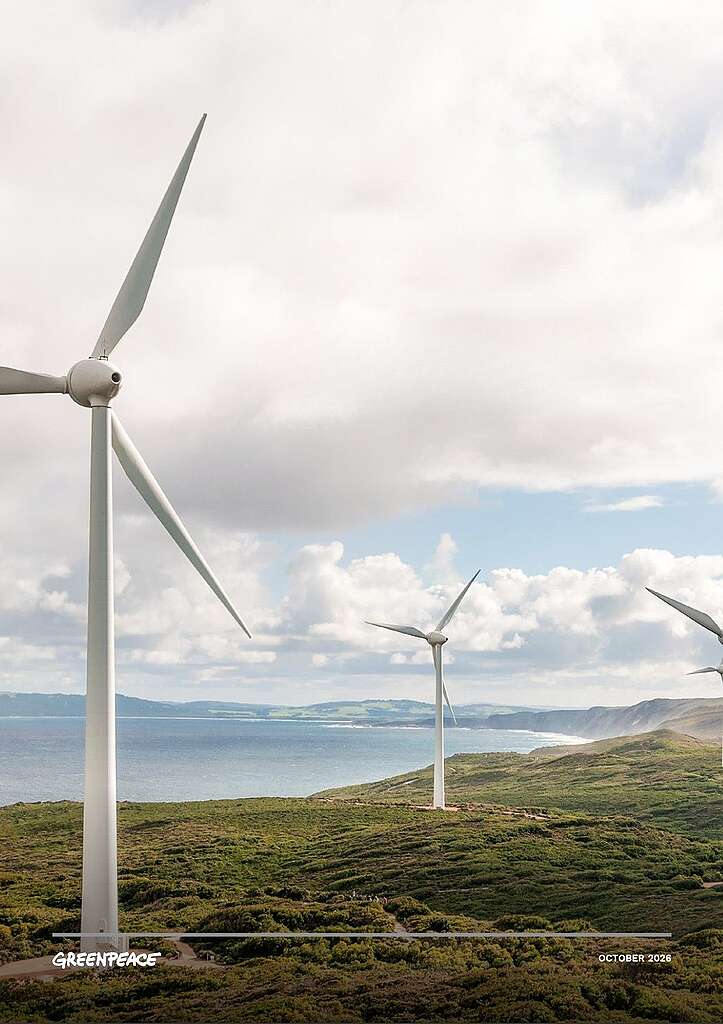
A report from Greenpeace Australia Pacific and Springmount Advisory reveals the untapped green economic opportunity for Western Australia in a declining Asian gas market, which also offers a genuine solution for decarbonisation in Asia.
Is Western Australia clinging to a fading gas industry while a thriving green future passes it by? As major Asian trading partners rapidly pivot away from volatile gas imports toward cheap solar and battery storage, this report exposes a high-stakes choice: risk becoming stranded in an oversupplied fossil fuel market, or harness WA’s unmatched sun and wind to lead the global clean energy transition.

Summary
From Gas to Green: Building Western Australia’s Future State reveals that Western Australia (WA) faces a critical juncture as falling Asian gas demand, geopolitical gas supply volatility and accelerating renewable energy deployment undermine the long-term economic viability of gas exports. By harnessing its world-class wind and solar resources, the report demonstrates that WA can execute an orderly phase-out of gas and pioneer a green commodity export economy that could generate $987 billion in economic value by 2060, create 24,000 ongoing jobs, and drive a 9.6% reduction in global greenhouse gas emissions.
Key Findings
- Gas demand is falling in Asia – WA can no longer rely on gas exports: Gas demand in core Asian markets fell in 2025 and is projected to continue to decline in 2026. Legislated energy plans in Japan, South Korea, and China now prioritise renewables and nuclear over gas.
- Asia is increasing renewables, importing gas just gets in the way: Evidence from markets like Thailand suggests that gas imports are increasingly crowding out cheaper renewable energy investments and battery storage rather than displacing coal, locking in more emissions over time.
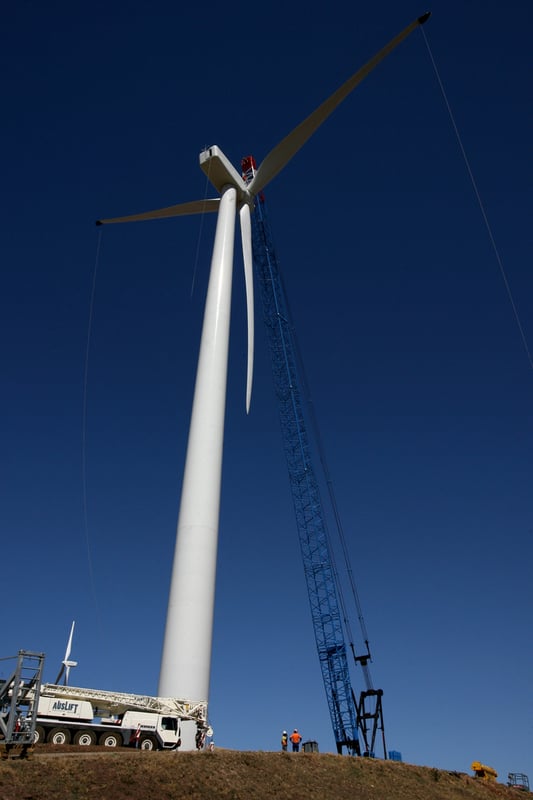
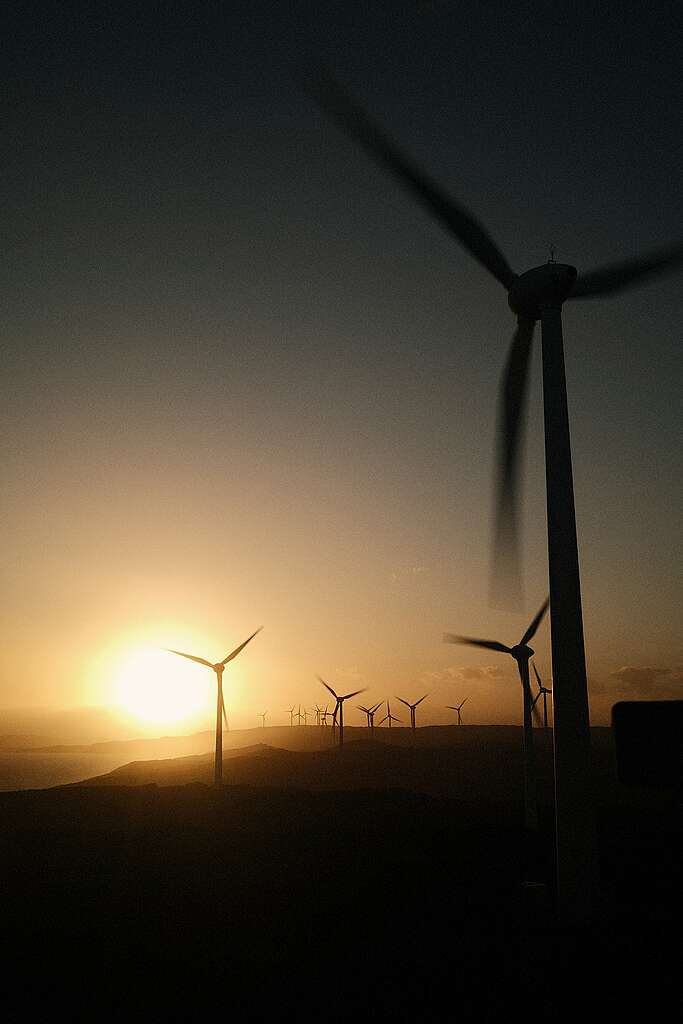
- Green commodities offer a real solution to decarbonise Asia – this is a major win for WA: With world-class renewables, WA can lead Australia’s green commodity exports, which by 2060 could be worth almost a trillion dollars ($987 billion) and support a genuine 9.6% reduction in global emissions.
Recommendations to WA government
Recommendation 1: Plan an orderly gas phase-out aligned with a trading partner pivot plan
Implement a managed, orderly phase-out of gas exports aligned with trading partners’ decarbonisation pathways, rather than waiting for demand to collapse, by:
- Developing and implementing a staged phase-out of gas facilities aligned with feedstock supply expiry or typical end of facility lifespans.
- Committing to no new gas development for gas expansion, including Browse and Kimberley fields.
- Developing new, reciprocal trade relationships with existing gas trade partners, structured to progressively replace gas exports with green commodities – integrated with recommendation 2.
Recommendation 2: Develop an integrated green commodity export strategy, positioning WA as a global green iron manufacturing hub
Establish an integrated green commodity export strategy that immediately prioritises green iron development, positioning WA as a global green iron manufacturing hub, by:
- Committing to green commodity export targets to give industry and investors a clear demand signal.
- Prioritising green iron as the lead sector within the broader green commodity strategy, given WA’s iron ore endowment and first-mover potential.
Recommendation 3: Reject false solutions such as carbon dumping (CCS) and blue hydrogen
Reject carbon dumping (also described as carbon capture and storage, or CCS) and blue hydrogen as viable decarbonisation technologies, and prioritise green hydrogen and proven renewables for clean energy and fuel production by:
- Excluding blue hydrogen projects (and CCS-dependent projects) from all government support programs.
- Requiring existing hydrogen-based production (including ammonia, methanol, synthetic fuels) to have clear, near-term transition timelines to switch to green hydrogen production.

What you can do
Together, we can push for a prosperous green future.
You can help by:
- Sending an email to Environment Minister Murray Watt and Prime Minister Anthony Albanese, calling on them to reject Browse.
- Sharing this story to help more Australians understand what’s at stake.
- Encouraging your friends and family to take action.
REPORT: “From Gas to Green” Building Western Australia’s Future State
Cleaner cooking projects in the UN carbon market will have to set aside a share of their credits to insure against the risk that the trees they save are lost to fire, drought or logging, after the market’s regulator rejected calls to exempt the sector.
The requirement is part of a new rulebook that the Paris Agreement carbon market regulator – the Article 6.4 Supervisory Body – approved last Friday for programmes that aim to cut emissions by distributing new and cleaner cookstoves in regions that still burn wood or charcoal for cooking.
These are the UN mechanism’s first rulebooks for cookstoves, one of the carbon market’s most popular credit types and also one of its most criticised for overstating climate benefits.
They consist of two methodologies: one for programmes that aim to cut greenhouse gas emissions by distributing more efficient cookstoves that burn less wood or charcoal, and a separate methodology for projects shifting households to lower-emissions cookers running on electricity or liquid petroleum gas (LPG).
Mkhuthazi Steleki, the South African chair of the Supervisory Body, said “this decision gives cleaner cooking projects a new pathway under the UN carbon market, with clear rules to ensure that each credit represents a real and credible emission reduction”.
Industry and NGOs lobby to weaken UN carbon credit rules in “coordinated” push
In copycat submissions and a private briefing to government officials, the groups have opposed a proposal to tighten safeguards for emissions offsetsLaunch of Africa Energy Bank delayed again in blow to oil and gas hopes
Repeated delays are raising questions about the bank’s momentum and whether it can mobilise investment to finance Africa’s oil and gas ambitions in an era of energy transition

Exemption push rejected
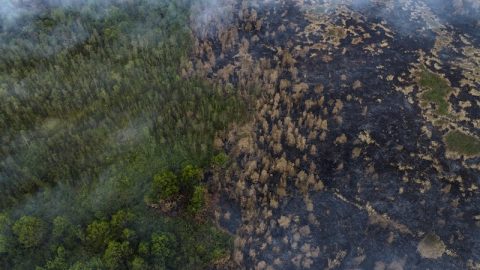
More efficient cookstove projects earn credits based on the amount of carbon they save by preserving trees that would have otherwise been cut down and burned for fuel. But if those trees later burn in a wildfire or are logged, the carbon stored would be released anyway, erasing the climate benefits of the credits.
Several carbon credit developers, conservation NGOs and the UN Environment Programme (UNEP) disputed that cookstove projects face this risk, in what critics described as a “coordinated lobbying campaign”.
They argued that, unlike forest protection schemes, this type of credit represents a “flow” of avoided emissions rather than a “stock” of stored carbon that can be released. They also warned that requiring a buffer would impose disproportionate costs and undermine the financial viability of these activities.
But the UN carbon market regulator was not persuaded by the argument. It decided that projects would have to protect against this reversal risk by handing over a percentage of credits to a so-called “buffer pool” instead of selling them.
‘New paradigm’
The amount of credits to be given up is calculated by applying different methods for natural risks, like wildfires, droughts or hurricanes, and human-caused ones, such as logging or land clearing.
For natural risks, project developers will need to apply local risk values derived from new modelling published by a group of independent scientists.
Campaigners have broadly welcomed the decision. Federica Dossi, an expert at Brussels-based advocacy group Carbon Market Watch, said it sets a new paradigm for calculating reversal risk based on empirical data. “This approach is grounded in science and we hope to see this now being adopted by other carbon crediting mechanisms in the voluntary market,” she added.
Backers claim this method is more rigorous than current practice in the voluntary carbon market, which largely relies on expert guesswork.
Pre-COP draws attention to Pacific’s climate plight and 1.5C goal
Pushback over science
As Climate Home News previously revealed, the same industry and NGO groups that sought an exemption from the “buffer pool”, along with some corporate buyers, criticised the use of a study backed by the UN carbon market’s experts that recommended the new risk assessment approach.
The groups pushed for more flexible rules that would have allowed natural risk values drawn from other sources, including national databases, or from the project developers themselves.
While the Supervisory Body rejected this approach, it gave project developers and countries the option to propose alternative values that would first need to be vetted by the mechanism’s expert panel and then approved by the regulator.
A carbon market expert told Climate Home News that, while it is too early to say how this provision will be used, they expect requests will have to be backed up with solid scientific evidence, lowering the risk of unfounded claims.

Policy discounts questioned
To guard against human-caused risks, projects will need to apply a flat 20% value set by the Supervisory Body, at the bottom of the 20-45% range recommended by its technical experts ahead of last week’s meeting.
That value can be further reduced by up to two-thirds if the host country has an emission-reduction plan covering forests, a long-term climate strategy and a framework for the UN’s REDD+ forest protection scheme.
Injy Johnstone, senior research fellow at the Munich-based Max Planck Institute, said that, while these are important governance measures, their existence does not necessarily demonstrate that the underlying risk of forest carbon loss has been reduced.
“It is important to distinguish between evidence of actual risk reduction and assumptions about the effectiveness of policy commitments,” she added.
<