Connect with us

Published

on

Weather Guard Lightning Tech
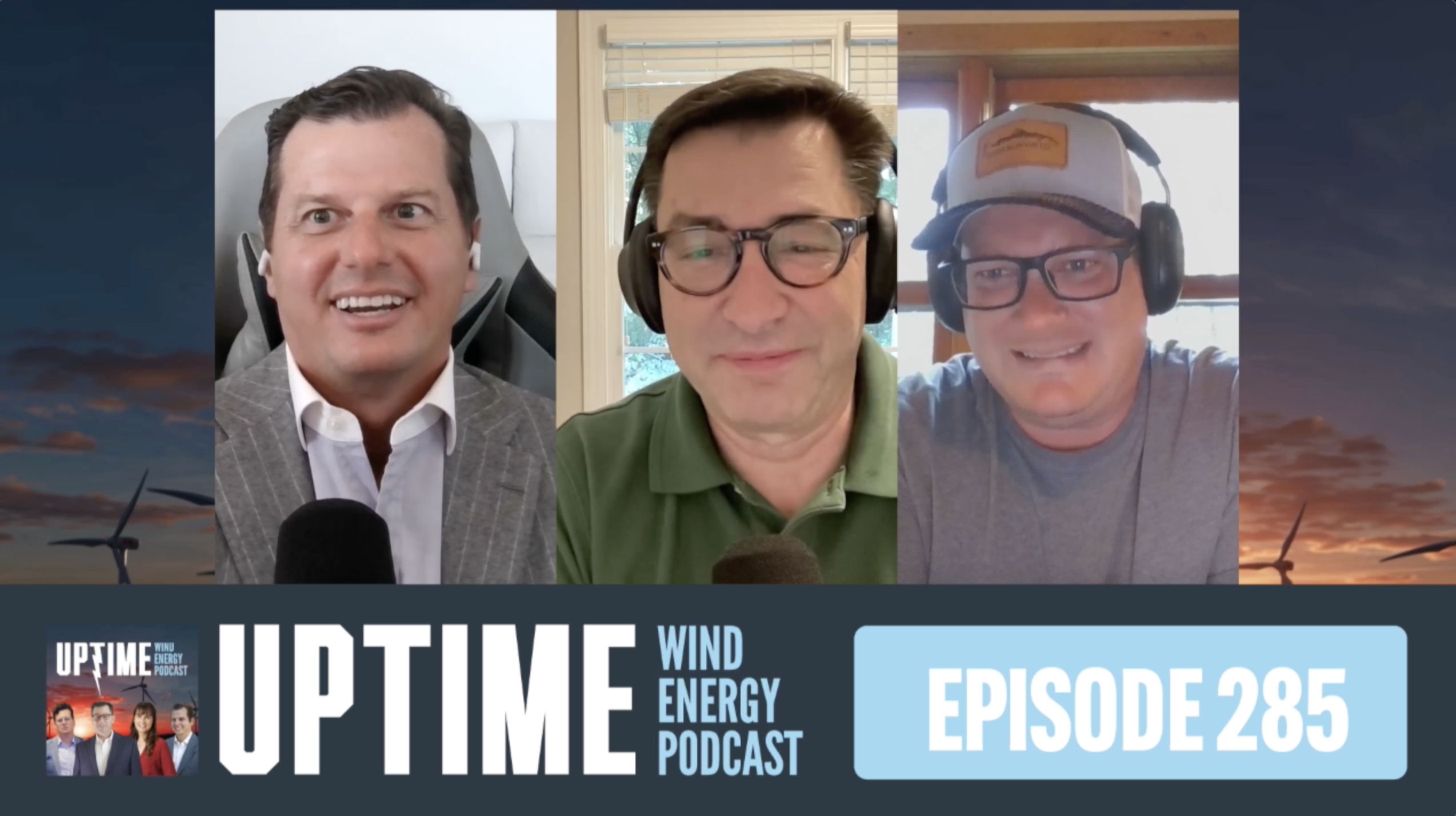
Taiwan Offshore Cable Damage & Japan’s Floating Wind Center

The crew discusses Husum Wind, Arthwind’s blade consulting work featured in PES Wind, and a major cable damage incident at Taiwan’s Greater Changhua offshore wind project. They also cover Japan’s plans for a national floating wind test center, Australia’s offshore wind development struggles, and feature Scotland’s Moray West wind farm as the Wind Farm of the Week.

Sign up now for Uptime Tech News, our weekly email update on all things wind technology. This episode is sponsored by Weather Guard Lightning Tech. Learn more about Weather Guard’s StrikeTape Wind Turbine LPS retrofit. Follow the show on FacebookYouTubeTwitterLinkedin and visit Weather Guard on the web. And subscribe to Rosemary Barnes’ YouTube channel here. Have a question we can answer on the show? Email us!

Speaker: [00:00:00] You are listening to the Uptime Wind Energy Podcast brought to you by build turbines.com. Learn, train, and be a part of the Clean Energy Revolution. Visit build turbines.com today. Now, here’s your hosts. Allen Hall, Joel Saxum, Phil Totaro, and Rosemary Barnes. 

Allen Hall: Welcome to the Uptime Wind Energy Podcast. I’m your host, Allen Hall, and I’m here with Joel Saxum up in the great state of Wisconsin.

Phil Totaro is in California, and Rosemary Barnes is here, but she’s in a vehicle in Australia somewhere. But there has been a tremendous amount of news over the last couple of days, and I think we should talk about some of them. Uh, I guess it’s, it’s a where the group would like to go. This week, guys, you know, we’ve been talking about the administration for the last several weeks and about administration out, uh, the latest is with, uh, the administration in [00:01:00]court about Empire Wind.

Do you want to even talk about that stuff this week or do you wanna move on to some things? A little happier? Let’s do happier. Alan. I think we should, we need some different news. I feel the same way, Joel, you know, uh, when this podcast comes out, everybody’s, everybody’s gonna be in Husam, Germany having a great time, uh, talking wind energy, particularly in Europe.

And it sounds like that event is gonna be bonkers from what I can tell on LinkedIn.

Joel Saxum: Yeah. The, I mean, HU is only second to Hamburg right in, in Germany there. Everybody that I go, they enjoy it. Husam is like the, the. Correct me if I’m wrong, Phil, but I think it was like the first place they had onshore wind in a big way in Germany.

Phil Totaro: Yes. So it’s vestus, um, put up a factory there, uh, and was selling wind turbines to farmers. It’s also where they used to do, the reason that it’s there is they used to do an agriculture. Um, event and then they used to invite some of the wind guys. This is going back to like the, you know, late eighties, early nineties.

[00:02:00] They used to invite the wind guys, or the wind guys used to show up to try and sell turbines at this agriculture event. The amount of people interested in wind got to such an extent that they started doing a separate wind event. Um, and it got. Before they started the separation with the, the Wind Energy Hamburg, um, event, they, uh, that got to a point, I mean, I remember being there in what, 2015 or 2016 when it had to have been.

30,000 people in a field in Huso. You know, I, my best memory of it, I think was when, uh, well it was eon at the time, but, uh, they had a guy running around, passing out hot dogs. And I had a eon hotdog.

Joel Saxum: Phil, I wanted to share with you. This was a Deutsche Wind Technique show, San Antonio a CP. They had margaritas with the Deutsche Wind Technique logo in the margarita, like foam, the foam on top of the margarita once, and they were passing those out at an event.

I thought that was spot on.

Phil Totaro: The hot dogs [00:03:00] are not branded in any way, although that would’ve been a good idea to like, you know, stamp the button or something.

Joel Saxum: What, how do we do that for weather guy to the next event? How we have like lightning bolt popsicles or something? Oh,

Allen Hall: I’m sure that can happen.

Lightning bolt cookies, maybe. Well, cookies. We all love cookies. Who doesn’t love good chocolate chip cookie? You know who told me about Husam first was Lars Benson and at AC 8 83 and he described it as just a. Complete craziness in the middle of a field. You had to go rent a house to stay there. But it was a heck of a lot of fun.

And I thought, well, if Lars is having fun, it must be really fun. ’cause

Phil Totaro: Lars likes to have fun. I used to have to take the train on a daily basis from Hamburg because there was no way you could even get a house or a hotel. It was so busy, uh, in, in that little town. Um. So, yeah, it was, it was quite an experience and they’ve eventually worked out all the logistics.

’cause they used to not even have like, shuttle service from the train station to the event. Um, but there were so many people that demanded it that they started [00:04:00] adding these kind of amenities, uh, which, which was nice.

Joel Saxum: I did wanna share this one. Uh, you mentioned, uh, Lars Benton, Alan, um, Lars and the team over at a CA 83.

Recently Lars stepped, stepped into the executive chair and handed over the. The main keys to the organization to Yannick, so Yannick Benson, the new CEO at a C 83. So a little bit of a management change up there in Canada. That company growing, selling spare parts, doing blade work, doing service work, all kinds of good things.

Allen Hall: Yeah, if you need spare parts, you better be calling Yannick. It’s, it’s spare parts are hard to get at the moment and I know Yannick and Lars have connections and places you can’t get to, so it’s a good place to reach out to AC 8 83. Just in time for a husam. The new PES win magazine is out. This thing is heavy.

It’s full of great articles and I’ve been thumbing through it, uh, recognizing a lot of people that I know in the magazine and that’s awesome. Uh, but Joel pointed out that, uh, Amond Costa Rego [00:05:00] is in it from Earth Wind. And, and Arthur Wind is, we’ve, we talked to Armando a couple of months ago, Joel, down in Nashville.

That seems like an eternity ago.

Joel Saxum: Yeah, I’ll tell you what, uh, Armando night chat quite regularly. We’re on the WhatsApp telling jokes, talking family stuff off and on, and that man is everywhere. Uh, I talked to him last week. He was in Mexico. He was in Chile. He was in Argentina at all the wind events. He’s got wind, uh, power Brazil coming up.

I know he’s doing a big thing with the ARS wind team down there for that. He was at a CP Nashville. He, for OMS, he was at a CP in Phoenix. He’s like every event everywhere. He’s there every, no matter what Europe. South America, it doesn’t matter. Um, but yeah, the article they’re showcasing, of course what Earth Wind does is as a blade consultant, they’re top tier.

They’ve got a large team. They have a lot of experience inside the factories, um, auditing blades as they’re coming off the lines. Internal inspections, external inspections, blade expertise. Uh, they’ve got their [00:06:00] own platform, ARS Next, which is kind of, um, it’s, it’s, it’s solid, right? It’s good. Yeah. It’s good stuff for, uh, validating repairers realtime feedback.

Um, I know they got some little AI engines for chat bots and stuff in there. They’re doing some, some really cool things. Um, so, and if you haven’t, if you’ve met r Armando, you’ve probably also met our good friend Rodolfo, uh, who is, who is a. A strong right hand for Armando and uh, that team down there is, um, they’re doing big things in Brazil.

Allen Hall: Yeah, a lot of great things happening at Earth, wind, and they are worldwide. If you need help with inspections or technology, or blade management or turbine management. Earth Wind is definitely a place to check out, and you also need to check out PES Wind, so if you haven’t downloaded your copy, you can go to PS wind.com and download your copy today.

As Wind Energy Professionals, staying informed is crucial, and let’s face it difficult. That’s why the Uptime podcast recommends PES Wind Magazine. PES [00:07:00] Wind offers a diverse range of in-depth articles and expert insights that dive into the most pressing issues facing our energy future. Whether you’re an industry veteran or new to wind, PES Wind has the high quality content you need.

Don’t miss out. Visit PES wind.com today. You wanna talk about cables? You wanna talk about storage batteries? I think we should do the, the cables and batteries. You pick the order.

Rosemary Barnes: Yeah. I mean, they relate. I’m sure one will flow into the other.

Allen Hall: Well, if more things could not go wrong, forested at the minute, and I know, uh, we’re watching Orid all the time, watching the stock price, watching them get their feet back underneath of them.

Stead has a lot of projects still going on today, and I think everybody forgets about that, that they’re a worldwide company and they’re doing great things all over. Uh, but they had a setback in Taiwan, so an export cable was damaged at the greater Chenwa two B offshore wind project, uh, which is going to push back the completion of that project.

To sometime in [00:08:00] late 2026, it’s about a 300 million Danish kroner hit on the, on the revenue chain, uh, which is about $50 million. It’s not a huge deal, but when I read this article, Joel, the first thing I was, I thought about you saying that on offshore, the biggest risk isn’t the actual turbines, it’s the cable, and there’s a lot of damaged cable as they’re deploying ’em.

What likely happened here in Taiwan?

Joel Saxum: Well, it’s an in, I think the first off, it’s interesting that they’re taking the hit. I, I don’t, I think that’s the, the headline, but that’s gotta be an insurance policy that’s covering this. There’s no way that Ted’s covering $50 million ’cause they, ’cause this should be under built, under construction policy.

So onto the technical side of things. Cables can be damaged in many ways. Um, I mean, you can damage them, loading them onto the ship. You can damage them in offloading of the ship. Failure modes are stretch, stretching, compression, bending if you exceed a certain [00:09:00] radius when you bend it. Um, because remember the export cable is gonna be, I mean, half a meter across at a minimum, right?

They’re, they’re huge. So, um, you even go to the point where. There’s a, there’s a concept called touchdown monitoring. So you’ll have the cable lay vessel, and there’s the stinger that sticks out the back, that the cable comes outta the reel and goes down the stinger. When it goes off the stinger, it cannot exceed a certain radius, and when it gets to the ground, it can’t exceed a certain radius, uh, of curvature.

So there’ll be an ROV, a remote operated vehicle, that camera down there flying along with the vessel to watch that radius to see how it’s doing. And that’s the touchdown monitoring part of it. So they know a lot of times. If they’re laying, if they have an issue. The trouble here is splicing a cable like that when there’s a break or a problem, like it’s damn near impossible.

Now, the Greater UA project is in shallow enough water where you can put divers down. So there’s a possibility of putting a bell, putting an enclosure and splicing something, [00:10:00] but oof, that’s expensive too.

Rosemary Barnes: But is there any suggestion that it was, um, that, was it sabotaged? Was it accidental? Because that’s what my, um, worry is, uh, with this happening in that region.

Even if it, it was just, you know, one of those, um, so somewhat mundane failure modes that you described, it probably is gonna bring to everybody, like front of everybody’s mind, um, that. Yeah, sabotage of a cable is a really, a really good way to be able to take out a whole wind farm. Um, and in that region, at least, like they’re really struggling for renewable energy solutions.

And if they’re not trusting in subsea cables, then, which is already problematic because a lot of the neighbors in that region don’t want to be trusting, um, trusting each other with something as critical as. Electricity supply. Um, but yeah, I think, you know, if they have to rule out subsea cables because they’re perceived security risk, um, or real one, then, you know, then they’re going down to some of the crazier options like Japan’s [00:11:00] looking at where it’s like, we’re gonna import liquid hydrogen, we’re going to coal-fire ammonia in our coal plants.

Uh, you know, all these sorts of things that just get more and more and more expensive than just putting electricity down a, a cable. So, yeah, I, I just wonder if anybody’s talking about, um, about the security aspect of it.

Joel Saxum: It seems that it’s in construction and when you’re under construction, of course there’s gonna be a ton of vessels around there.

So there, I wouldn’t suspect it was actual sabotage. I would think this is just a construction thing and there, and another reason behind that is an offshore construction in general, whether it’s p I’m talking pipe and cable lay and pipe and cable lay accidents, incidents. Losses happen quite regularly, really at a kind of a high rate compared to other things.

So I don’t think it would be a sabotage problem, uh, right now, but who knows in the future as well.

Allen Hall: Well, I just asked chat GPT, because this is the only place I can actually find some information about it. There’s really nothing online talking about what actually caused the damage in chat. [00:12:00] GPT as Rosemary pointed out.

Gotta be careful, but let me just read you what it says right now. Uh, the Chenwa Telecom subsea cable was damaged earlier this year in January, and it looks like a potentially Chinese linked, uh, ship happened to do that damage. So this sounds familiar to some things that have happened over, uh, in near Northern Europe.

Sure. Yeah. Oops.

Rosemary Barnes: Ask chat GPT for its source, because if you couldn’t find anything on the internet. How did it, it’s not like it has friends in the industry that are talking to it, you know? Um, so I, yeah. Is that a, a hallucination that’s, you know, gonna start an international incident?

Allen Hall: Yeah. You think this podcast could start an international incident?

That would be interesting. That I’d want to hear, but, uh, no. It does seem like a, a, a cable was damaged as, uh, earlier this year, and it wouldn’t be the first time that China was involved in cable damage. And it would be normal not to talk about it if it was sabotaged. So it does [00:13:00] seem a little bit odd that, uh, you don’t hear anything about it.

But back to Joel’s point, if it is an insurance claim, the insurance company’s not gonna talk about it. No. Or is not gonna talk about it because it’s under dispute probably. But, um, back to your comments earlier, Joel, about watching all this happen underwater and watching the cable drop. They know what the, the bottom of the sea looks like, where this cable is supposed to go.

Have many, haven’t they removed all the big obstacles for the cable to actually lay down or do they have a route that avoids

Joel Saxum: all that? Yes and no. Um, so I’ve been watching some of the geotechnic on that, uh, in that area, and there are very difficult geotechnic. Um, so if you remember a few, maybe last summer there was a jack up rig that, that fell over.

Over there. Right? Okay, so that’s difficult. Geotechnic, right? So when you’re running a, when you’re running a geotechnical study on a cable layer route, usually it goes like this. You’ll cruise down it with [00:14:00] multi-beam echo cylinders, so you can see the surface basically. So you can read what’s there, rocks do, sand, whatever, and you do a wide sloth.

You have it covered maybe a couple hundred meters wide, the whole route. Then along that route you’ll pick, um, like every kilometer, this will be the spec. Like every kilometer you’re gonna do a core. So you’re gonna do a gravity core or a drilling core to get a core sample of that sediment and be, be able to pull it out and see, okay, what’s actually here?

And then every half a kilometer, you’ll do like a simple VIO core or something like that, a CPT push test. But that leaves pockets right in this, in this area. Like when that, um. Jack up rig went over, they had done a bunch of, around a, around a site, around an actual, where you put a mono pile in. You’re gonna do a lot of surveys, you’re gonna do a bunch of CPTs in that area to kind of create a network of what that subsurface looks like.

But you can hit gas pockets, you can hit soft soil pockets, compaction, liquification, [00:15:00] different things that you didn’t, because you didn’t test every meter. You can hit these things, right? So there is a possibility that you’re laying this cable or, or in this, in this case, it sounds like this thing may have been a anchor drag or something, but there is a possibility that you’re laying this heavy cable and you’re on sand, sand, sand, and what looks like sand, but it’s actually like a liquified sand.

And all of a sudden the cable dives under the surface because that cable’s heavy and a lot of pressure on it. So that can happen without you knowing, and that’s why you’re doing the touchdown monitoring and all those kind of things.

Allen Hall: So is this similar to when you watch LinkedIn and you’re putting in a monopile and it just keeps going?

Joel Saxum: Yeah. That’s the exact same thing. When you’re like, do 2, 2, 2, 2, 2, they get through a hard sauce, plump. That’s, and it’s just gone. Yeah.

Phil Totaro: Insurance is obviously gonna be a part of this. The bigger conversation on insurance, however. Uh, that’s triggered by stuff like this is at the end of the day, the developer puts, you know, in this case Ted, they put a, a modest amount of margin, uh, [00:16:00] into their budget when.

You know, they, they go and ask for capital. When you get some kind of a delay, whether it’s, you know, induced by a government shutdown, or you know, an incident with a cable, whatever the cause is, the, the reality of that is you’re gonna blow through your management reserve in like a week or maybe a month, and you’ve, you, you know, you’ve got very tight margins already.

And you’re setting yourself up for a money losing project if you can’t make sure that you leverage all these technologies. Joel just explained they’ve already started increasing premiums and decreasing terms for. Insurance policies, whereas they might have signed like a three year or five year term on a policy, now they’re only signing a one year term and they’re increasing premiums by at least 20%.

From what I’ve understood from, from folks in the insurance industry. So. Things like this, [00:17:00] again, whatever the cause of, of the cable cut, you know, having those kind of challenges makes it definitively, um, more expensive for all of us because at the end of the day, you know, we as electricity rate payers have to buy this electricity from whatever the power generation source is, and we’re the ones that pay off that project.

And you know, if a developer’s not able to make money on a project, they’re not gonna build a project.

Joel Saxum: So Rosemary, with that, those kind of things in mind, have you heard of any of the site suitability, subsea, subsurface studies going on in the offshore wind projects in Australia?

Rosemary Barnes: Yeah, not so much. All I have heard about is, um, just that the water is very deep.

For the most part. It drops, drops off. Quickly across most of Australia. So that’s why they’re already even looking at some floating offshore wind projects in Australia, which is kind of crazy because we’ve got so [00:18:00] many, like amazing, uh, onshore sites left, including some with, with potential capacity factors in the high forties.

So it’s like, that’s as good as an offshore wind site, but it’s cheap, like an onshore wind site. So yeah, so that’s a bit. A bit crazy. Um, and also just, uh, I’ve been following the progress of the, um, sun cable project, you know, so it’s not offshore wind, but it’s a big cable that they’re planning to put in between, um, Darwin and Singapore, via Indonesia.

And, um, I just, just have been looking Yeah. Keep keeping an, an eye on it over the last, I know like. Five more years, probably nearly 10 years by now. And the length of the cable, um, has grown and grown and grown as they understand more and more, um, accurately what the root is actually gonna be. So obviously they have to go around some obstacles and it’s adding, you know, hundreds of kilometers every time that they have to do something like that.

So, [00:19:00] um, yeah, I don’t think it’s super easy. Um, yeah. But there are plenty of, uh, plenty of offshore. Gas exploration in parts of Australia. So I am sure that those parts at least, are

Phil Totaro: well understood. And Joel, I’ll answer part of your question. They have only started doing. Uh, any geotechnical and subsurface stuff on, uh, star of the South in Victoria.

And I think one other project that it was suppo, well, actually no, they, they were gonna move forward and then they pulled the plug on the Nova Castran project. Um, so there’s one, one project so far that’s getting any underwater work done, uh, at this point. So, uh, the, the challenge frankly, in Australia has been that the developers want to be able to build the projects, but they’re still not really the best regulatory framework in place for this.

The approvals have come way too [00:20:00] slow. Um, they. You know, part of, uh, a lot of the projects that were gonna be built in Western Australia was gonna be for powering hydrogen production, but then they’re competing with, you know, the Asian Power Hub or something that was supposed to be like 70 gigawatts of um, you know, onshore renewables, both wind and solar that we’re gonna also.

Be leveraged for, for hydrogen production. So, you know, the, the, the challenge for the Australian market is that they, as Rosie’s saying, you know, they have a lot of. Onshore renewables, you know, wind, yes. But also solar resources left in the tank. So you know, unless they’re actually seeing a huge spike in demand or they find somebody that’s going to do a lot of this hydrogen offtake and they can justify building these mega projects for, for doing it, I think they’re gonna have a hard time [00:21:00] with getting offshore in Australia, kind of off the.

Off the starting blocks.

Joel Saxum: Yeah. I think Phil, I’d have to agree with you there a little bit because, uh, my reasoning being in the last year and a half, we’ve done, of course, we’ve been talking about Australia with Rosemary for years, but we’ve done actual work down there. We’ve, we’ve dealt with, um, not dealt with, we’ve engaged with some of the locals.

We’ve, we’ve worked with some of the operators. We’ve worked with some of the great people down there that are running wind farms. Uh, they’re the engineers, the asset performance people, the developers, all the above, even OEMs. And you can see some of the struggles that they run into, um, just on land. Um.

With permitting and the, uh, local opposition and some things. And so you can hear the, the opposition to a lot of the wind projects there. And I, I gotta think that the permitting they’re gonna have, regardless of technical issues, the just getting through things through the government are gonna be tough.

To get offshore wind built,

Allen Hall: are you worried [00:22:00] about unexpected blade root failures and the high cost of repairs? Meet eco Pitch by Onyx Insight, the standard in blade root monitoring Onyx iss state-of-the-art sensor tracks blade root movement in real time, delivering continuous data to keep your wind farm running smoothly and efficiently.

With Eco Pitch, you can catch problems early, saving hundreds of thousands of dollars. Field tested on over 3000 blades. It’s proven reliability at your fingertips. Choose Eco Pitch for peace of mind. Contact Onyx Insight today to schedule your demo of Eagle Pitch and experience the future of blade monitoring.

Well as wind progresses in Japan. Offshore is a growing. Concept. Uh, but they’ve had trouble, right? Uh, Mitsubishi pulled out of three projects recently that they had bid on and won. Uh, but Japan is refusing to give up on offshore wind, and they are going to start planning a national floating [00:23:00] wind test center next year, and that is going to help them.

Get floating wind into Japan. So the, the Floating Offshore Wind Technology Resource Association, uh, says that they’re gonna conduct verification tests in Japanese waters because their ocean and weather conditions differ from Europe. Obviously, uh, there’s a lot of knowledge in Europe for floating wind.

Not so much in Japan. Uh, and I guess from my perspective, just reading these articles about Japan taking on this effort, it does make sense because the way the Continental shelf is right there off the coast of Japan, it pretty much gets into deep water very quickly. Floating wind is gonna be a great opportunity, but there are unique challenges in Japan.

Right.

Joel Saxum: Yeah. I, I wanna mirror this one almost in the conversation that we had with the fellows up in, uh, Norway and Denmark there about the Ute Sierra Nord. Right, because we talk to them about, okay, Norway having the capabilities to do this. Do we want to be a net exporter of technology? [00:24:00] Do we wanna bring it, keep it at home, we know how to do stuff offshore, blah blah, blah, blah, blah.

Um, great things up there. This is kind of the same case and put around the world, right? Japan is sitting over there, you know, mostly by itself working on floating wind stuff. So. It’s difficult. I mean, a lot of Japanese companies have tried to get into the offshore merge, you know, the MHI Vestas experiment and some of those other things.

Um, we, we, you know, we did a big strike take project and a bunch of Mitsubishi turbines onshore in the states this year. So like the Japanese technology’s been around the world, but I think that because of the national interest, right, like they won offshore wind, um, they have good offshore wind resource.

We’ve talked with quite a few people over there. Uh, they need. To do something like this. The only other one place that there’s an offshore wind test center, of course we have like high wind Scotland, um, there that did that, did that project. But there is another loading offshore like kind of test center in north, north of France, I think, where they’re doing some, some, some studies and some other things.

But them [00:25:00] building this, because Japan has been a follow on technology-wise, for years, they’ve just been using whatever the western world’s been creating. Um, and some Korean turbines, and we’ve run into some weird ones like that too, right? Some small production units. But I think that this one is, is very smart of them from a national interest standpoint to build this floating offshore technology center because they’re gonna need it.

If they want offshore wind, it’s going to have to be floating in a big way over in.

Phil Totaro: Port Portugal’s also got the wind Float Atlantic. So there, there are, you know, uh, again, a number of, of pilot projects. Japan was actually the pioneer though with this. They had a two megawatt unit, uh, out on a floating platform since I wanna say 2011 or 2012.

Their government needs to get out of their own way. If they really want to move forward with floating offshore in a serious way. The fact that they’re willing to commit some resources to this is good because they’re leveraging expertise as well from, um, you know, commercial [00:26:00] relationships with some of the other, you know, floating research centers around the world, including Norway.

Um, according to this, this press release, uh, announcing this. So, you know, in general that’s a good thing, but. You know, all it takes is somebody saying yes at this point. And you know, there’s, there’s been a lot of people pushing for this for a long time, uh, both in Japan and in the West, who wanna be, you know, in Japan, including turbine OEMs, developers, uh, financiers, you name it.

Uh, the government needs to. You know, get out of its own way and let some of this start, start to flourish.

Joel Saxum: Alright, the Wind Farm of the week. This week we’re taking a, a plane trip across the Atlantic to Moray West, which is an Ocean Winds project. Ocean winds is EDPR and NG. Uh, so on this offshore wind charm is 60 Siemens esis SG 14.

2, 2, 2 direct drive turbines each rated at 14.7 megawatts. Uh, these things have a big [00:27:00] 108 meter power boost blades on them, which are just massive, 108 meters long for each blade. Uh, so the cool thing about this wind farm and they’re doing something a little bit different ’cause we have spoke about a lot of these offshore wind auctions and how the CFDs are working in the UK and, and some of the interest or disinterest in the Danish auctions and German auctions.

You know, support for the actual financing and operators. They did something a little bit different on this one. It’s a hybrid financial structuring model for offtake, which is pretty cool. Um, so unlike most UK offshore wind farms that rely entirely on CFDs, Moray West has 882 megawatts. Uh, it splits it into three buckets, 294 megawatts under a government UK CFD.

573 megawatts are under big tech PPAs with Amazon and Google. And then a and then a little bit of it is, uh, in, in the merchant markets. Um. So that hybrid model had secured them 2 billion pounds in financing. [00:28:00] Uh, so it’s a bit of a different way to do things right when they’re building this up. So they brought a lot of, lot of, uh, support to the local economies there up in, in Scotland, so Port of Nig, uh, the Port of Inver Gordon, uh, the key west there.

So they had some marshaling, uh, areas and pre-assembly areas. Uh. Some local North Sea vessels from cattle for, to help install. Uh, and all of this translated, so the cool hybrid model, um, the financing that was there on, uh, the, all of the support locally had some rapid project delivery. So they were able to first secure the consent to 2019 and they dev, they delivered first power in July of 24 and full power output by 25.

So for an offshore wind project going con from consent. To full power in under six years. Pretty impressive. Um, so this, this project, local economic impact is expected to inject 800 million pounds [00:29:00] into the Scottish economy with over 1500 full-time employee years of construction jobs and 60 plus long-term operational roles based in Bucky.

Uh, so it really demonstrates the offshore wind can support energy transition and regional economic development amid some supply chain and grid infrastructure challenges. So. The Moray West Wind Farm up there in Scotland U are our wind farm of the week.

Allen Hall: Well, that wraps up another episode of the Uptime Wind and Jeep Podcast.

Thanks for joining us. Uh, we appreciate all the feedback and support we receive from the wind industry. If today’s discussion sparked any questions or ideas, we’d love to hear from you. Just reach out to us on LinkedIn and please don’t forget to subscribe so you never miss an episode. For Joel, Rosemary and Phil, I’m Alan Hall and we’ll catch you next week on the Uptime Wind Energy [00:30:00] Podcast.

https://weatherguardwind.com/offshore-cable-japan-floating/

Continue Reading

Renewable Energy

Court Saves Wind Safe Harbor, Norway Pauses Utsira Nord

Published

on

Weather Guard Lightning Tech

Court Saves Wind Safe Harbor, Norway Pauses Utsira Nord

A federal court restores the 5% safe harbor for wind tax credits, Norway’s parliament pauses the 35 billion krone Utsira Nord floating wind program, and the crew digs into Australia’s battery boom and the looming blade technician shortage.

Sign up now for Uptime Tech News, our weekly newsletter on all things wind technology. This episode is sponsored by Weather Guard Lightning Tech. Learn more about Weather Guard’s StrikeTape Wind Turbine LPS retrofit. Follow the show on YouTubeLinkedin and visit Weather Guard on the web. And subscribe to Rosemary’s “Engineering with Rosie” YouTube channel here. Have a question we can answer on the show? Email us!

Uptime324

Matthew Stead: [00:00:00] The Uptime Wind Energy podcast, brought to you by StrikeTape. Protecting thousands of wind turbines from lightning damage worldwide. Visit StrikeTape.com. And now, your hosts

Allen Hall: Welcome to this edition of the Uptime Wind Energy podcast. I’m Allen Hall here with Matthew Stead, Rosemary Barnes, and Yolanda Padron. And our week starts off in the courtroom. And if you’ve been watching the news lately, there’s a pretty substantial IRS case involving large-scale wind and solar having to do with the, uh, production tax credit and, uh, investment tax credit at the same time on the safe harbor, 5% safe harbor rule.

Uh, a federal judge handed the wind industry and solar industry a pretty substantial legal win that could reshape how the [00:01:00] projects qualify for tax credits. So a judge up in, uh, the District of Columbia vacated IRS Notice 2025-42. So if you remember that, uh, from a- about a year or so ago, uh, f- it found that the, that notice was arbitrary and capricious under the Administrative Procedure Act.

The notice, which was issued following a July 2025 executive order, had eliminated the 5% safe harbor for wind projects, uh, a provision developers have relied on since about 2013 to establish construction start dates without breaking ground. The court found the IRS failed to justify removing it, ignored industry comments, which I had read, and I agree with that, and gave no reason for treating wind differently f- than other clean energy technologies.

So That his executive order came down and said, “Hey, we don’t like wind. [00:02:00] IRS, write a rule and make it hard for wind to get installed in the United States.” And so they dutifully did it, but a court is throwing it out. This has some pretty significant implications because if you hadn’t broken ground before this ruling, I think the– what was happening was be- if you hadn’t broken ground by July 4th, your project wouldn’t qualify for some tax credits.

But now, if you have 5% safe harbor, you still are in the game, at least for now. Now, Wanda, that’s gonna make a big difference to asset managers and developers, won’t it?

Yolanda Padron: Yeah, it’s really exciting. I think it opens up the, the playing field for, for some of these projects that might be a little bit behind schedule.

Um, of course, a lot of teams had to change their plans and their pipeline when, um, you know, the big, beautiful bill passed and, I mean, it’s– of course, it adds a little bit of additional volatility, right, to, to wind and, and solar in the US, but it’s exciting to see at least things for, [00:03:00] for those of us that are in the wind and solar side, the, it’s a little, little bit of, of hope there.

Allen Hall: And Matthew, uh, even in terms of opening up o-o-operations and, uh, getting contracts signed, this should make a big difference in sort of opening the floodgates a little bit. Although there is a short timeframe. We’re, we’re recording on, what, what is today? June 10th. So you have, in theory, less than 30 days before the July 4th deadline, but hopefully this stays.

You think there’s a chance this just gets completely, uh, wiped out, the executive order and the IRS notice and- It’s back to what we remember for the, for the last, ooh, 12, 13 years?

Matthew Stead: Uh, yeah. I’m, I’m, I’m hopeful, and I, I agree with Yolanda. I think you, you said it really well. Um, I think this is a, a glimmer of hope in, um, a sometimes gloomy, um, environment.

So I think that’s great. In terms of going back to where it was, um, I mean, I guess my observation has been that, [00:04:00] you know, things in the US were a bit, um, distorted. You know, distorted through the, the PTC, um, and the whole repowering thing after 10 years is quite a distortion. So I think, um, you’re not necessarily going back to the good old days, um, might be the way, what will happen.

Allen Hall: I think there is a lot of people actively trying to dig holes at the moment, and I, I’m sure they’re gonna continue to do that. Yolanda, do you th- you think anybody’s gonna stop and kinda say, “Oh, we have the 5% rule. We’re, we’re good”? Do you think, or you think they’re gonna still go ahead and really start construction and then just keep things continually moving on site?

Yolanda Padron: I don’t think they, they can really stop, right? Because you, you don’t know if, if anything strange happens. A lot of people didn’t think the, a lot of the provisions in the big beautiful bill were gonna, were gonna see the light of day, and they did. Um, but it does, I really hope it brings at least a little bit of breathing room for some people.

I know it’s, it must be… I mean, I have some friends in development, and they’re, they’re q- a little [00:05:00] bit stressed right now just with everything going on. Um, so, so I really hope for them at least they, you know, if, if they’re a little bit behind schedule, then it, it’ll be, it’ll still be fine.

Allen Hall: Delamination and bondline failures in blades are difficult problems to detect early.

These hidden issues can cost you millions in repairs and lost energy production. CIC-NDT are specialists to detect these critical flaws before they become expensive burdens. Their nondestructive test technology penetrates deep into blade materials to find voids and cracks traditional inspections completely miss.

CIC-NDT maps every critical defect, delivers actionable reports, and provides support to get your blades back in service. So visit cicndt.com because catching blade problems early will save you millions[00:06:00]

Norway’s Storting has voted to pause the 35 billion Norwegian krone support program for floating offshore wind at Utsira Nord. The Conservative Party secured a parliamentary majority for the external quality assurance review, a socioeconomic analysis, and a technology development assessment, all before the Storting will authorize any commitments.

Equinor and Vårgrønn, along with EDF and Deepwind Offshore, each hold allocated 500-megawatt areas and were preparing to compete for that subsidy. Equinor says the project will continue for now. I think everybody is saying that at the moment. But, uh, Equinor cannot rule out consequences as framework uncertainty compounds in the already challenging nature of floating offshore wind development.

So Utsira Nord is a massive project. So it’s, it’s about three and a half billion US dollars [00:07:00] to go do this. We had Mads Furuseth and Anders Naslund about a year or so ago, maybe a little bit longer, talking about the project and how big it was and how important it was that Norway did this for floating offshore wind.

But with this, uh, recent change in the parliament of Norway, it does seem like they’re slowly going to try to kill it by putting in a number of, uh, reviews, which is how bureaucracies tend to kill things. Is put it under six, seven, eight reviews, different committees. They all take time to get together.

They have to put out a report. It could be two, three years from now. At that point, the world has completely changed, and everybody’s moved on. Does that seem like the outcome here at the moment?

Matthew Stead: Yes.

Allen Hall: In my mind, there’s really two big areas for floating offshore, which UK, right? That there, there’s some massive projects there, Green Volt being one of them, and then there was Sue & Nord.

So between the two, I feel like the, the UK one was going to [00:08:00] happen. The question whether the world was gonna move towards floating offshore wind was gonna happen up in Norway. If Norway decided to do it and could get it developed, and it has the capability to do it because, because they have that skill set, uh, right there in Norway.

If they could do it in Norway, everybody in the world would learn from it and figure out how to do it. Does this really set back floating offshore wind globally?

Matthew Stead: Yeah. I mean, going back to what I said before, and I, I’ll defer to Rosie on this as well, but, um, when I was at, at Blades Europe, um, one of the, one of my long-term contacts, um, y- was in floating wind, um, and had, um, left the industry.

He basically said i- in his view that the offshore wind industry was slowly, um, in decline or slowly dying. Um, so I’m just wondering if this is just evolution of viability of offshore wind.

Rosemary Barnes: Is offshore wind in decline? I think if you look globally, it’s, it’s not in decline. I, I haven’t looked in, in depth at the figures just based on what, you know, [00:09:00] headlines I’ve seen and podcasts I’ve heard, but I think that globally it’s still on the rise.

It’s just that- It’s only in Europe that things are really moving with speed, right? Like, people were expecting heaps of growth in the US and now no- nobody expects that. Floating offshore wind, it’s… I th- I still think it’s too early to say. There are plenty of countries that don’t have any good energy options besides, um, floating offshore wind, like Japan.

What their energy transition looks like is gonna depend a lot on their culture and what people think, ’cause, like, if you go through, like, the engineering solutions that Japan could have, the ones that make the most sense from an engineering point of view are not popular at all, are not politically viable.

Like, Japan could easily have a subsea cable connecting it with, um, with China, for example, or Korea, but I don’t think anybody, anybody thinks that that will ever happen because, you know, politically it’s, it’s very far from being possible. What else could they have? Geothermal. They’ve got heaps of [00:10:00]geothermal resources, like really good traditional geothermal resources, but my understanding is that it’s super unpopular because their onsen, um, community doesn’t want it.

Uh, my understanding is that they’re worried that if you put geothermal, um, if you exploit geothermal resources, then the onsens will not be hot anymore, and again, my limited research understanding is that it’s not true. It’s different resources. The two aren’t connected in any way. Um, and yeah, there’s actually a community geothermal, um, facility near Fukushima.

I’m trying really hard to get over there, but I’m, I’ve got a roadblock at the moment because, uh, n- no one there speaks English, so I need to find somebody to, to come with me and, you know, I’ll have one, one day to try and get there on the fast train and back to Tokyo in, in a single day. So it’s, it’s a bit of a stretch, but I’m gonna try.

But anyway, so yeah, what have we… We’ve ruled out, like, subsea cables, ruled out geothermal. Floating wind is good.

Allen Hall: Well, speaking of Fukushima, [00:11:00] there’s been a more recent push in Japan to start up some of the nuclear facilities. So after the tsunami, was that 2012, 2014 when that happened? It was a while ago.

Uh, when the tsunami happened and h- had that, uh, nuclear accident, they, they s- shut down all the nuclear facilities in Japan, but it does seem like they’re trying to restart some of them And, and maybe it’s just the demand for energy and, and they’re trying to weigh that off with offshore wind or floating offshore wind.

At what point, you know, which one do you choose? It has to be driven by cost and availability.

Rosemary Barnes: Yeah. And so Fukushima, I just looked it up, it was 2011. Um, and yeah, so I mean, I think it is very fair that they had a reaction to that and they wanted to put the handbrake on nuclear at that time, or they did more than put the handbrake on, they did like a handbrake turn.

Allen Hall: They shut it down.

Rosemary Barnes: So, and it, you know, it’s gradually ramping up. I think that their target for nuclear now is to, to regain, um, 20% of their electricity from [00:12:00] nuclear by 2040, something like that. It was 30% prior to that incident. Um, so that will be part of it, but it’s not, um, it’s not all of it. And then even if you think of, uh, okay, so forget climate change, just, you know, we want, Japan just wants energy and they don’t care about climate change, you know, ’cause that, that, that could be true.

What are their ch- choices for that? They import a whole bunch of… They, they import nearly all their energy. Everything that’s not nuclear basically is, is imported. Um, coal, but a lot of LNG, and, you know, that is not exactly an appealing prospect at the moment either. It’s not secure. Prices are very volatile.

We’ve had, like, two fossil fuel shocks in the last, what, like four years or something like that, and how many more, how many more are we g- are we going to have? You know, like energy security is important, totally separate from climate change issues. So I don’t think we need to rely on Japan, like, you know, [00:13:00] steadfastly staying the course because their, their existing o- opportunities are not, are not great for fossil fuels either.

Allen Hall: I don’t know what country’s gonna stay the course right now, really. Maybe the UK?

Rosemary Barnes: Oh, I think it’s- Countries that have other reasons for going to renewables are the ones that are gonna stay the, stay the course. Um, and there are plenty of examples of countries where it just, it is by far the easiest, cheapest, fastest option to get more electricity.

Um, you know, like all of Africa, for example, is, is facing that as a, uh, a better development path than trying to build big, um, fossil fuel power plants. But even that, you know, like in India, they’re making a huge transition, Pakistan, not to mention Australia, where now batteries are having more of an impact on electricity prices than gas is.

So our electricity prices now finally are dropping, um, this year for the first time because of how many batteries have come on and are now, you [00:14:00]know… Like they’ve just flattened. The evening price peak used to be on average about, like, I think $400 or something dollars a megawatt hour, and now it’s like 100.

In one year we had that, we had that change, yeah, just from the amount of batteries that have come on in the last year or two.

Allen Hall: Why does that make such a big difference in the price of electricity, the battery aspect?

Rosemary Barnes: Because, so the way that Australia… Australia’s electricity market is pretty similar to Texas, so if you understand that, then you can probably understand Australia’s.

But, you know, at any five-minute interval, people, like, they know how much demand there’s going to be, and then people are bidding in how much they would supply electricity for in that five minutes, in real time as well. It’s not like day ahead or anything like that in Australia. The, like, last one they need is what everybody gets paid.

So, like, solar power is gonna bid in at, like, you know, practically zero, um, or maybe negative prices actually if they’ve got power purchase agreements in place. And then, you know, wind a little bit more, and then coal, uh, you know, a, a bit [00:15:00] more than that, and then gas, the open cycle gas turbines, the peakers, they’re very expensive.

They’re bidding in at 400, $400 a megawatt hour. If there’s enough batteries that that gas doesn’t need to bid in, then all of a sudden we don’t have the gas price that everybody has to pay. We have the battery price that everyone has to pay, and that is very, very cheap and will become cheaper as there’s more of them in the, in the system.

So it’s like a threshold event. You, you know, um, even if you’re using only a tiny bit of gas, if you need any gas at all, even like, you know, one megawatt of gas, everybody gets paid the gas price. If you just get a little bit more battery in and you don’t need it anymore, bam, the price just falls. So that’s what we…

We’ve passed that threshold now.

Allen Hall: Isn’t that where the UK is trying to get, is to get past that threshold where renewables are that last addition to the grid and kick off peaker plants and some expensive other- fuel sources. That’s I, I [00:16:00] think where everybody’s gone because they have the same system where the, the last one in is what sets the price for everybody.

Rosemary Barnes: Yeah. The UK’s a little bit different because one, they’re connected to Europe, and two, they’ve got nuclear, so they do have that kind of base load.

Allen Hall: Let’s go down the rabbit hole just for a second. So if the peaker plants don’t come on, that means that the battery electricity supplying the grid is pretty low in price.

It seems like they are losing money on their investment in the battery That they were hoping the price would be higher. Because if the peaker plants are still going on, that would be a $400 price and they’re gonna come in at, like, 350, so that would make sense. It, it helps pay off the battery investment.

But if they’re dropping the price down from 400 to 100, it would seem like the battery investment may not be a, a wise decision.

Rosemary Barnes: For sure they’re making less money, but it was– they were making crazy profits for the first little, the first few, few years of, you know, grid-scale batteries. And even [00:17:00] home batteries, people were making a l- a lot of money off that, and it was crazy.

Like, I’m on some, um, some Reddit subreddits about, uh, you know, people with home batteries and-

Allen Hall: Slash battery?

Rosemary Barnes: Matt probably is too. Matt’s a Beta G enthusiast, so I’m sure that he is just as excited as me. But anyway, so on one of these subreddits, you know, people used to talk about, “Oh, I made 100 bucks last night,” um, or, or whatever, you know, just a household.

And now all the posts are complaining about there’s been no price spikes all year. You know, I thought that I was gonna make heaps of money off my battery, but people are really change- changing how they think of it. And now it’s like… And l- like I want– used to want to do this. I don’t have solar panels yet ’cause we need a new roof, and I’ve been waiting a few years to, one, live in a house that I own, and then two, get a freaking new roof.

Um, and I thought I’m gonna just, like, cover it in solar panels, get a huge battery, and I’m gonna be an energy trader in my free time and make heaps of money, and now that is [00:18:00] not the strategy anymore. The strategy is to just reduce your bills to the m- the minimum that you can. Um, that’s basically, that’s basically it.

So you are right that some of this arbitrage is, um, the opportunity’s over, and that it will be less, um, exciting for, uh, opportunity for people to put more, more batteries in.

Matthew Stead: Just to add to that, through the middle of the day quite often there’s, uh, negative pricing. So if you’ve got a battery, you’re being paid to charge through the middle of the day.

So that actually takes away some of the pain from having a lower, a lower price, um, during the peak.

Rosemary Barnes: But the thing about negative prices is that you need coal power plants for them to be… Like, the only reason we have such pervasive negative prices is not because solar plants have PPAs that are, you know, make it worthwhile for them to generate even when the price is slightly negative.

The real thing is that coal power plants don’t want to turn down below, I don’t know, yeah, like 20, 30% during the middle of the day. They have to be on if they want to make money in the evening, and that means that they bid in at, like, [00:19:00] negative 50, um, so that people– so that they can stay running. And that’s where the bulk of our negative prices come from.

So

As coal power plants close, those negative prices will go away. Um, and when they close, we should get some better evening price spikes again. So, you know, like nothing ever stays the same for long, which is why it is such a fascinating hobby to have, being interested in the electricity market, because it’s never the same from one year to another.

You’ll never understand it, ’cause it’s never, it never stays the same long enough to really get your head around it.

Allen Hall: You need other hobbies. You really do.

Matthew Stead: A friend of mine works in trading, and, uh, he said, “As long as there’s volatility, there will be progress.” So much like what Rosie was saying is the more volatile it is, the more opportunity there is for people to come in, um, and change it.

Allen Hall: I just don’t know how the battery thing plays out once that threshold is reached. When you have more batteries on the system and you knock down the price that [00:20:00] much, I think battery sales, industrial batteries really slow down because they’re all looking for that quick ROI And they’re not gonna get it.

Rosemary Barnes: You have to wait for all of the coal to close before you would find out what’s the right amount of batteries to have in the, in the grid.

Allen Hall: Yeah, yeah, yeah. That, I totally agree there, yeah.

Yolanda Padron: You’d still get, like in extreme weather events and stuff, you’d still get a big price spike, right, for all these batteries.

Allen Hall: Back to Matt’s point, more volatility.

Rosemary Barnes: If you want the market to respond, you need to give enough incentive to invest in assets so you’ll have enough when it’s needed. And because it’s really infrequent, then it has to be a super high price to, um, bring on enough investment. And will this system… The system has worked absolutely, you know, pretty well in Aus- Australia at least.

Will it continue into the future with more variable prices and renewables? I, I don’t know, and the government is starting to do some things like, uh, you know, like a lot of [00:21:00] electricity markets have, um, not just energy markets but also capacity markets where you will pay a battery or a gas plant something to be on standby basically, um, so that if there is, um, if there’s a shortfall then they, then they have to respond.

So in Western Australia they have that, but across the east of Australia th- they currently do not, do not have that. It’s energy only.

Allen Hall: Really? How do you not have capacity payments?

Rosemary Barnes: The majority of their profits are made in just a few hours a year when there are those price spikes, so that’s, that’s h- part of their business case.

Allen Hall: I mean, there, there is arbitrage happening on the electricity grid. That’s not the best place to be arbitraging things because you will have players that won’t provide electricity just to drive up the price.

Rosemary Barnes: Uh, and it happens in Australia too, but, um, you know, because batteries are such a distributed resource, it, it will become harder and harder to do that when, you know, the, um, the ownership of these batteries is, you know, households as well as, um, yeah, as well as [00:22:00] big companies.

Matthew Stead: So offshore wind, I was talking to an OEM a, a little while ago and, uh, talking about blade repairs for offshore wind, you know, floating, floating wind. Um, so specifically floating wind. The OEM was extremely concerned about floating wind, um, because it makes it very, very, very hard to change blades. So the story was that if you’ve got an offshore floating platform, you’re basically gonna have to tow the wind turbine back to port to change a, a blade.

Rosemary Barnes: They see that as a, as a pro, not a con though. Yeah. That, that’s because it’s very hard to… Like, it’s not only floating offshore wind where it’s very hard to remove a, a blade out at sea, like fixed bottom offshore wind, that’s incredibly expensive to remove a blade. So floating is like, well, you can just tow it back to shore and then you can do it all in the port.

I, I, you’re looking skeptical, Matt, and I’m also skeptical about how it actually plays out. I know that, um, what was it? The, [00:23:00] the one- An EOL project off the coast of Scotland. I can’t remember what it’s called now. Like what, the first big one, the big wind farm, a floating offshore wind farm

Allen Hall: HiWind Scotland

Rosemary Barnes: They had a, a problem.

I don’t know if it was a serial issue or also, like it’s the first big wind farm, and there might have been like some operating condition they weren’t aware of that caused some problems. They had to tow back everything to port, and they stayed there for months and months. So like maybe, maybe close to a year or over a year, I’m not sure.

It was a really long time. And so, um, yeah. But then, you know, like what’s the alternative? If that had happened out at sea, it would’ve been more expensive. If, it still would’ve been shut down, not doing anything, and you would’ve had like helicopters out there every single day bringing teams and, um, you know, huge vessels with cranes and yeah.

So like it’s, maintenance at sea is never good.

Allen Hall: But the whole point of the HiWind project was to get some of these problems figured out, and one of them was just towing it back to port and [00:24:00] doing major repairs or component exchanges make sense. I think it’s a, it’s a lesson well learned, and we’ve moved on.

I guess the question is, does offshore, floating offshore in particular, have much of a future if Norway’s not willing to do it?

Matthew Stead: I think it’s a good comparison with, um, data centers in space.

Rosemary Barnes: You know where else they’re planning to put data centers? Not just space and offshore, also like, um, underwater ones, like on the deep ocean floor, um, on the moon somewhat.

Like there’s an actual company that is apparently developing a, a data center on the moon

Allen Hall: As wind energy professionals, staying informed is crucial, and let’s face it, difficult. That’s why the Uptime podcast recommends PES Wind magazine. PES Wind offers a diverse range of in-depth articles and expert insights that dive into the most pressing issues facing our energy future.

Whether you’re an industry veteran or new to wind, PES Wind has the high-quality content you need. Don’t [00:25:00] miss out. Visit peswind.com today. Well, in this quarter’s PES Wind magazine, there are a number of great articles, and if you haven’t downloaded your copy, you should do that at peswind.com. There’s a good article from Global Blade Services USA, and it’s talking about the technician problem and how it’s not gonna, it solve itself, obviously.

But Global Blade Service is putting some numbers to it. And Rosemary, this is really directed at you. Blades represent roughly 20% of the total, total turbine capital cost and are the leading driver of unplanned downtime.

Rosemary Barnes: Yeah, 40% of O&M.

Allen Hall: Right, and 75% of all blade repairs are already handled outside OEM warranty.

That number seems really high, but maybe after the warranty expires?

Rosemary Barnes: Do you say 30% of, of repairs are repaired under warranty? That’s, uh, unexpectedly high from my point of view. [00:26:00] But, you know, how would I know? No one’s getting in touch with me if, you know, they’ve got a problem with their blades and it just got fixed under warranty.

Then they’re not paying a consultant to come sort it out. I only, I’m, I’m only there when the warranty is nearly up or it’s already over.

Allen Hall: So they, they’re saying that the, the ratio’s even gonna grow more towards out of warranty repairs. But the problem is having technicians. And the deeper problem is developing all those technicians in time as that need grows.

Uh, reaching full structural repair competency takes a rope access technician eight to 10 years. A basket technician is five to seven, and a factory technician is four to five years, meaning the workforce, uh, the industry needs for the next decade has to start training now. I, I think we’re seeing this in full force.

I- the issue is keeping good people in the industry as it fluctuates up and [00:27:00] down all the time and is very seasonal. Because there are really good rope technicians out there who know what they are doing, and it does take a, a minimum of three years to be competent. And then to be that lead person, it takes four or five solid.

And to be, uh, the, the relied-upon person, especially for some of the more complicated repairs, it’s gonna be six, seven, eight years before you’re there. It’s just an exposure thing. Are we in a technician crisis?

Rosemary Barnes: Crisis is maybe a little bit inflammatory, but, uh, we’re in a technician challenge

Matthew Stead: But it’s a pretty, it’s a pretty basic topic, Allen, isn’t it?

Like, um, you know, there’s more and more wind turbines, there have to be more and more technicians. It takes time to train. So, you know, it’s, it’s just, it’s pretty much basic maths and, um, you know, it’s like te- you know, tradies to build houses. Um, you know, unless you’ve got the tradies, you can’t build houses in a cheap way.

Yolanda Padron: Part of the issue is that, you know, say there’s [00:28:00] 10 technicians that are available in the area, right? Then you … maybe they work under two different companies, and then one company goes bankrupt, so then they all work with the same company. Another company pops up, or someone gets kicked off site from the OEM side, and then a month later they’re back with the third party.

And then it’s just really difficult to keep track of kind of who’s still there and who’s not, because some people have the certifications and maybe they’re not really, really great at what they do, or other people have a lot of training and a lot of experience, and it’s just difficult to track exactly, you know, where they are now.

I know that the, the strategy here oftentimes is you’ll find one person that you like and you kind of follow him around, or follow them around whatever company they’re, they’re with at the moment, and then just use that company.

Matthew Stead: The other point I was going to make is that there’s also the seasonality, isn’t there?

So you know, if you’ve got a great, a great technician, when it’s cold, they can’t earn cash from [00:29:00] repairing blades.

Rosemary Barnes: Aren’t they hired as, like, seasonal workers in America and they just don’t get paid for part of the year? That’s not how it’s done here. I mean, I guess we don’t have the climate where you have to, like, totally shut down, so they’re not, like, sitting around getting paid for nothing.

But, like, that’s a really unim- unappealing feature of the of the, um, field, isn’t it? If you’re deciding what you wanna, what kinda job you wanna do, you want one where you can get paid for 12 months out of the year, not just, I don’t know, like eight or whatever it is.

Matthew Stead: I know there’s been a lot of discussion between, like, Australian US repair companies of, like, shipping technicians down here during the Northern Hemisphere winter and vice versa, and it gives, you know, chance of exploring the world.

But, you know, if you’ve got kids and family, you’re not gonna necessarily wanna do that either.

Rosemary Barnes: It’s such a tiring job, though. I don’t… Like, there’s, um, I think it’s fine if people do it for, like, a hard 10 years and then, um, yeah, move on to… Because you obviously learn a lot as a technician, so y- you know, like, there’s a lot of office jobs that you would be really good at [00:30:00] because you had that physical experience.

But yeah, like, I, I do think that there’s heaps of young people that are traveling the world being wind turbine technicians.

Yolanda Padron: At least in Texas, I know a lot of rural areas where they don’t necessarily have a lot of opportunities to get higher education, and so going to be a technician is a good route for them to then go into a larger part of the industry, um, to, to kinda get a head start there.

Um, and they get a lot of really valuable skills, and oftentimes, like you said, Rosie, they’ll, they’ll get picked up by, um, by the owners or the OEMs or someone, um, because of their experience there. But it, but it is quite a bit of, of hard work and, and physical, physical labor. I climbed one tower and I was sore for two weeks, so really, really not my cup of tea.

Rosemary Barnes: I’m always, like, so excited to, to be climbing towers ’cause I only do it, like, you know, sometimes no times in a year, sometimes twice a year. Um, yeah, so, like, I’m really excited to go climb, and it’s really cool the first day, and then the second day it’s like, “Oh, this harness is [00:31:00] so heavy. Am I really putting this on again?

Oh my God.” Yeah, so it’s, uh, it’s ob- obviously you get used to it if you, um, if you do climb a lot. The last, uh, last site that I was at, a lot of the technicians were just climbing the ladders so that they wouldn’t have to, you know, go to the gym afterwards. So there’s a lift there, but they use the ladder because then they get their cardio for the day.

So, you know, they’ve obviously got some surplus energy.

Allen Hall: I think it is kind of a myth outside the US, uh, uh, seasonal workers, uh, at least in Europe, I haven’t seen a lot of seasonal workers. It doesn’t mean they don’t exist, of course. But in the United States, there’s a lot of seasonal workers from construction and all kinds of other industries.

People figure it out And it, it’s a lot more common than I think y- being an engineer you think it is, but there are a lot of seasonal workers. So being a, a wind technician is not a bad job.

Rosemary Barnes: I guess they’re just getting [00:32:00] paid extra for the time that they’re working and they just know they’re used to budgeting to cover the few months off.

Allen Hall: They have a winter job. They’ll, they have employment. They already have it lined up where when it gets cold outside, they have someplace else to go. Back into construction for a few months. They’re maybe driving a truck or doing other things that, that bring in income. They have it pretty well figured out.

When– At least the technicians I’ve talked to seem to have a, a plan about it, and they’re not sitting by the television for six months. That’s not what’s happening. It, that there’s a lot of employment opportunities here in the States, and so they, they’re pretty nimble. So if you haven’t read this article or a number of our other great articles in PES Wind, you should go to peswind.com right now and download a copy today.

That wraps up another episode of the Uptime Wind Energy podcast. If today’s discussion sparked any questions or ideas, we’d love to hear from you. Reach out to us on LinkedIn, and don’t forget to subscribe so you never miss an episode. [00:33:00] For Yolanda, Rosemary, and Matthew, I’m Allen Hall, and we’ll see you here next week on the Uptime Wind Energy podcast.

Court Saves Wind Safe Harbor, Norway Pauses Utsira Nord

Continue Reading

Renewable Energy

Why Is Trump Still Here?

Published

on

I challenge anyone to watch this short video and explain how Trump still has enough standing with the American people to remain president.

This is just so embarrassing.

Rich Americans aren’t happy that their country is a laughingstock around the world, but their fortunes are multiplying, so what’s the big deal?  How does personal integrity come into play when there is so much money at stake?

The MAGA crowd, i.e., uneducated white people, believe Trump when he says that he has brought back respect for the United States.

Why Is Trump Still Here?

Continue Reading

Renewable Energy

Celebrating America

Published

on

At left is the ultraconservative crap that Fox News feeds its viewers.

In fact, the theme of U.S. 250th birthday party would be liberty and justice for all Americans, not just rich white people.

Celebrating America

Continue Reading

Trending

Copyright © 2022 BreakingClimateChange.com