Connect with us

Published

on

I’ve been writing about sustainable fashion for over a decade — and furniture for about half as long. And I will tell you: finding sustainable, non-toxic sofas is one of the toughest categories to curate across the entire home, apparel, and textiles space.

While wood furniture — like tables or shelving — is fairly straightforward from a materials point of view, sofas include many materials to create the frame, cushions, and upholstery. And companies aren’t required to disclose every component.

So there is a lot of greenwashing happening in the furniture space. Let’s get into it.

What Makes a Sustainable and/or Non-Toxic Sofa?

Unsurprisingly, the same toxic chemicals that are unhealthy for us are just as terrible for the environment. After all we are part of — and interconnected with — the rest of the planet and natural world. Here’s what to look out for when shopping for a non-toxic sofa or sustainable couch:

Non-toxic sofas will be free of flame retardant treatments.

Flame retardants are toxic chemicals — once required by law — that were and continue to be used to treat polyurethane foam in sofas and other furniture. Now, many companies are shifting away from using flame retardants as awareness of their harmful effects grows. Toxic-Free Future has more information on toxic flame retardants.)

Sustainable sofas are made with responsibly-sourced and safely treated wood.

Wood is a renewable material, but it’s still important to ensure that the wood was harvested from responsibly-managed forests and is not contributing to deforestation. Deforestation is is a major contributor to climate change and biodiversity loss.

While not perfect, the Forest Stewardship Council (FSC) certification is the most widely recognized certification for sustainable forestry management. You may also see “Sustainable Forestry Initiative” (SFI) as a certification on wood, but leading environmental organizations like the Sierra Club conclude FSC has significantly stronger environmental standards than SFI.

What about plywood?

Pressed wood, such as plywood, is typically made with glue that contains formaldehyde, a chemical that has been linked to cancer risk in studies and listed as a known or probable carcinogen by multiple health groups.

Solid wood furniture is not always financially accessible, though (or realistic if you’re on the move often — it can be heavy!) so look for plywoods with no added formaldehyde if you go that route. You will never find zero formaldehyde wood — even if a company claims it. That’s because wood contains trace amounts of formaldehyde. To be clear: the naturally occurring levels are nowhere near the added levels, but it’s just something to be aware of.

Finally, look for low- or zero-VOC (VOC stands for volatile organic compounds) finishes on the wood. These might include synthetic finishes with zero emissions or natural finishes like linseed oil or beeswax.

Eco-friendly couches have upholstery made with organic, recycled, and natural fabrics.

Many companies make their sofas with harsh chemical-laden fabrics such as chrome-tanned leather and polyester. Watch out for “vegan leather” as this almost always means it’s made with plastic leather, or pleather. Polyvinyl chloride (PVC) is particularly toxic, plus it won’t last as long or be as repairable as leather.

When possible look for organic cotton, linen, or hemp fabric that is not treated with toxic chemicals. The top of the line label to look out for is GOTS (Global Organic Textile Standard) certification.

These fabrics are not widely available for sofas though, so you might also consider sofas made with recycled synthetic materials. Not ideal, but we can only purchase from what is available and what is within our budget and do the best we can.

But one term to watch out for? Blend.

There are companies calling their sofas “Performance Linen” or “Linen Blend” — and when you dig deeper or inquire about the material composition it’ll be 95% polyester and just 5% linen. (I wish I was exaggerating.)

I get that natural fibers on an entire sofa are expensive, and that couches need to be durable, but saying “linen blend” when there’s a marginal fraction of actual linen fibers feels beyond misleading to consumers. So I want to make sure you all are aware of this and can be smarter shoppers!

Non-toxic couches haveh natural and/or non-toxic foam.

Most foams are petroleum-based (poly-foam), which is as unsustainable as it sounds. You can look instead for natural fillers such as organic cotton, responsibly-sourced wool, and GOLS-certified organic latex where possible. If not feasible, look for the CertiPUR-US® seal on synthetic foam, a certification that tests for a host of toxic chemicals like formaldehyde, toxic flame retardants, heavy metals, among many others.

“Sustainable” and “eco friendly” mean nothing.

Be aware that vague terms like “sustainable”, “natural” or “eco friendly” with no further details don’t mean anything. These terms aren’t regulated and any brand can say it — I often see brands use one marginally lower impact material and then call the entire product “sustainable.”

What About Secondhand Sofas?

Investing in sustainably-made furniture can be quite expensive, but shopping used is a great way to find eco-friendly sofas and other furnishings for far less.

A sofa on the secondhand market is most likely not “non-toxic”. But since the most off-gassing happens when furniture is new, your exposure to many of these chemicals will be reduced compared to what it would have been if you bought that same piece of furniture new. That said, you’ll want to check if the sofa is coming from a smoke-free home. And pet-free, if you have allergies.

What are some places to find sustainable sofas secondhand?

Checking out your local furniture resale shops, consignment stores, and any nearby estate sales or garage sales is a great place to start. I found my sofa on Facebook Marketplace and have found many other furniture pieces on OfferUp and estate sales. (EstateSales.net is my go-to for finding sales near me.)

And if you’re in the US you’ve likely seen people leave their unwanted furniture out on their curb. This is called “stooping” and yup, it’s totally free. Of course you’ll want to do a thorough inspection of the sofa and you may have to be prepared to do some reupholstering since you never know exactly why someone left the sofa out. The condition might be less than desirable, but it’s free, so you may be willing to invest in some repair costs.

For more curated secondhand and vintage sofa options, check out:

Eco-Friendly and Non-Toxic Sofa Brands

If you’re in the market to purchase a new eco-friendly sofa, check out these sustainable and/or non toxic sofa companies.

To be clear: the brands in this guide aren’t necessarily perfect, especially if they’re on the more affordable side. But they are the top of the pack of the dozens of brands I researched for this guide. As I said: finding sustainable and non-toxic sofas is one of the toughest challenges I’ve had with my guides.

Since each brand uses a different set of materials and has slightly different standards, priorities, and values I’ve included those details next to each brand. Though I encourage you to also do your own research to find which brand would be best for you. Especially because some sofas were chosen for their sustainability credentials, some for their non-toxic credentials, and some for both.

Here’s the thing though: I will tell you when there are caveats or where a a brand might be falling short. That doesn’t mean you shouldn’t buy from them if you love their sofa, but I think it’s best if we’re honest about those limitations and discuss the nuances and range of sustainability rather than overpromising with broad claims and little to back it up.

This is something I’ve found to be lacking in virtually every sustainable product roundup and review across the internet and it’s frustrated me as a reader. So we’re changing that.

Note that this article includes affiliate links. As always, we only feature brands that meet high standards for sustainability that we love — and that we think you’ll love too!

Best Sustainable Sofa: Savvy Rest

Materials: Natural Talalay Latex, GOTS-Certified Organic Cotton or Hemp, Organic Wool Batting, Jute Webbing, Natural Coir, Zero-VOC Finishes, Maple Hardwood

Savvy Rest makes their sustainable organic sofa with the crème de la crème of natural and certified organic non-toxic materials. And each sofa is hand-crafted by skilled woodworkers in Virginia using Verified Sustainable Appalachian Hardwood.

The company also has a legal status as a Benefit Corporation and an employee-owned company.

Price Range: $3,999 – $6,148 (Use code CONSCIOUSSTYLE20 for 20% off)
Shipping: Free White Glove delivery in continental U.S. Contact for quotes outside 48 contiguous states.

Best Non-Toxic Sofas: Medley

Materials: FSC-Certified Wood, OEKO-TEX® STANDARD 100 Certified Fabric, CertiPUR-US® or Organic Latex Foam, VOC-Free Glue, Jute

Medley is another company walking the walk on sustainability. But it ranks at the top specifically for a non-toxic sofa option, rather than the top sustainable one, because they offer natural options — but also certified non-toxic synthetic options for a less expensive sofa.

For example, Medley’s sofas come with GOLS certified organic natural latex or CertiPUR-US® certified synthetic foam. And all of their fabrics are OEKO-TEX STANDARD 100 or GREENGUARD Gold certified, but you can select between 100% cotton, 100% linen or for a less expensive option: 100% polyester. Each sofa is made in the US.

Price Range: $2,295 – $4,595 (check out Medley’s “Re-Lounge” collection for discounted options)
Shipping: International; Contact Medley for a quote for shipping outside of the US
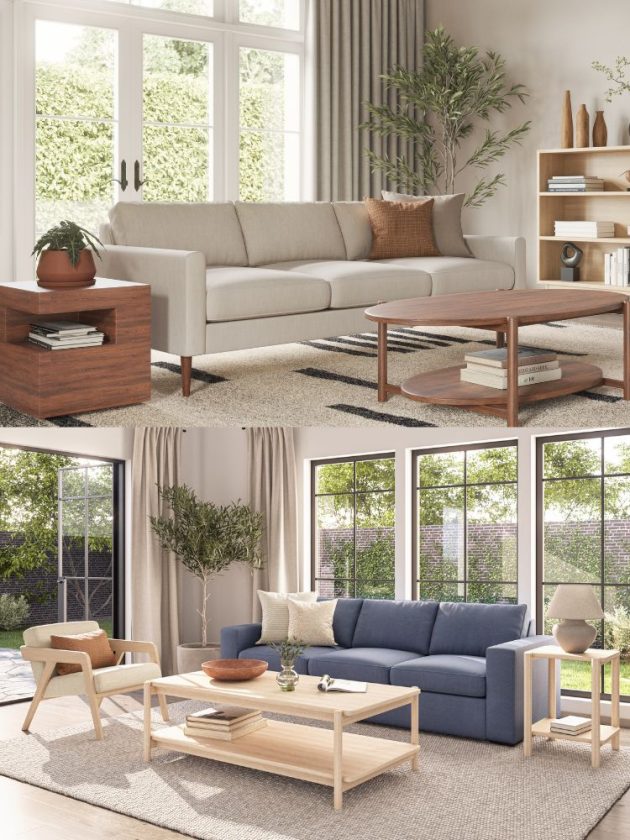
Beige sustainable sofa and blue eco-friendly sofa from Medley

Best for Sleeper Sofas: Sabai

Materials: FSC-Certified Wood, CertiPUR-US® Certified Foam, Organic Cotton + Hemp Fabric Option, Recycled Polyester, or Cactus Leather

Beyond using more responsible and recycled materials, this B-Corp certified BIPOC-owned furniture brand has programs to extend the life of their couches with their Repair Don’t Replace program and Revive resale program. Worth noting: the default option for the sofas is usually their upcycled poly, so if you want a natural option, be sure to select “Hemp Blend” which is a 55% organic hemp, 45% cotton blend.

Their Sleeper Sofa is a highlight — Apartment Therapy ranks Sabai’s Eclipse sofa as the “Best Sleeper Sofa” for its streamlined design and fuss-free set up.

Price Range: $1,745 – $6,295
Shipping: Ships within the U.S. (shipping is carbon offset and packaging is 100% recycled)
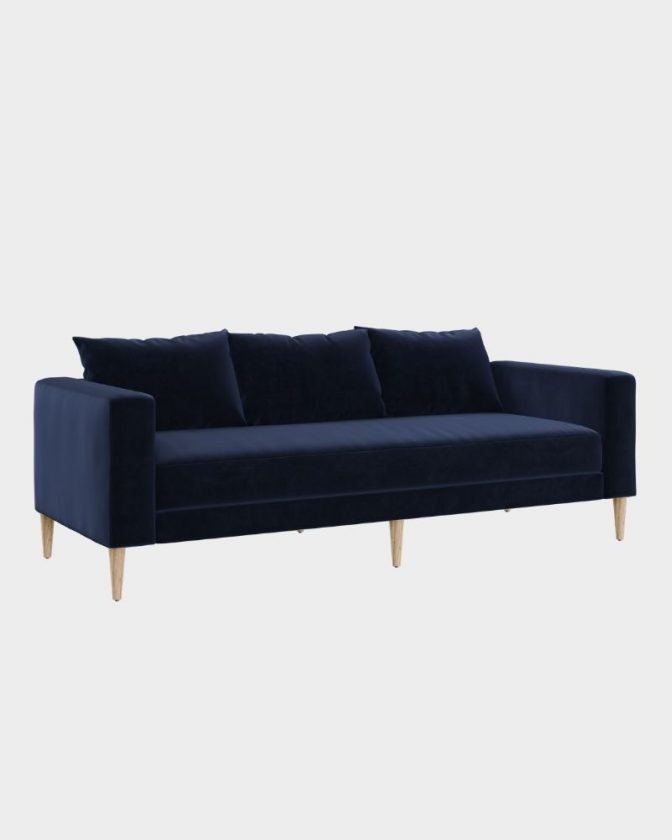
Navy blue sustainable couch from Sabai

Best Organic Sofa: Cisco Home

Materials: FSC-Certified Wood, Organic Latex, Natural Jute/Hemp/Cotton/Wool Fabric

A leader in the eco-friendly furniture space, Cisco Home has been handcrafting organic sofas for decades and was a founding member of the Sustainable Furniture Council.

Something I want to call out though: you’ll need to select “Make it Organic” on the product page for your sofa (or sectional) to be made with their more sustainable materials like FSC-certified wood, organic latex, and other natural materials like jute, hemp, organic cotton, and wool.

Price Range: $3,850 – $14,379
Shipping: Ships within contiguous U.S.; white glove delivery available with fee
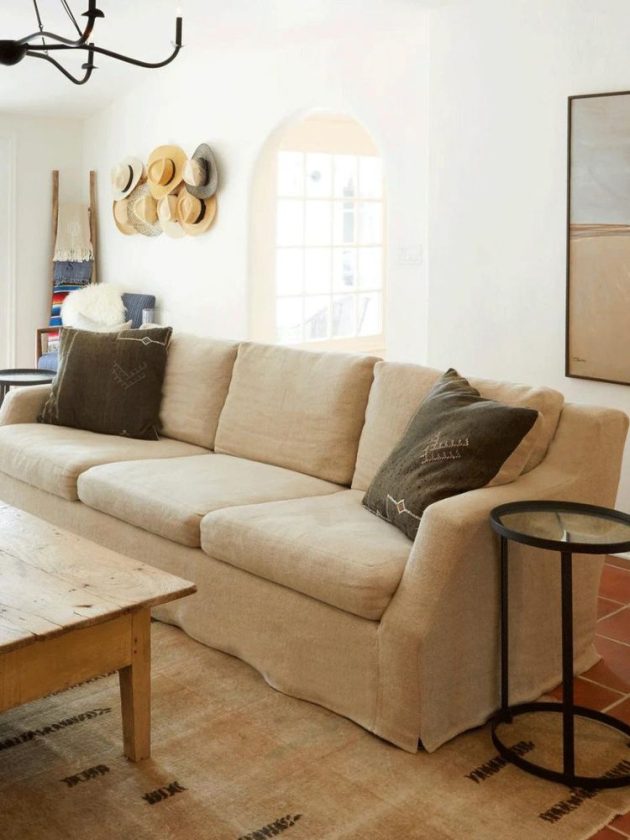
Beige organic sofa in living room

Best for Futons: The Futon Shop

Materials: Kiln-Dried Wood Frame, GOLS-Certified Organic Latex (optional upgrade), GOTS-Certified Organic Wool (optional upgrade)

The Futon Shop has an impressive set of organic sofas and non-toxic sectionals made from natural safe materials with the option to upgrade to organic materials like GOLS-certified organic latex and GOTS-certified organic wool.

Their sustainable couches and non-toxic sofa beds, all made in San Francisco, have frames made from responsibly-sourced kiln-dried wood and are available in fabrics like hemp and organic cotton.

Price Range: $1,525 – $5,500
Shipping: Ships within the continental U.S.
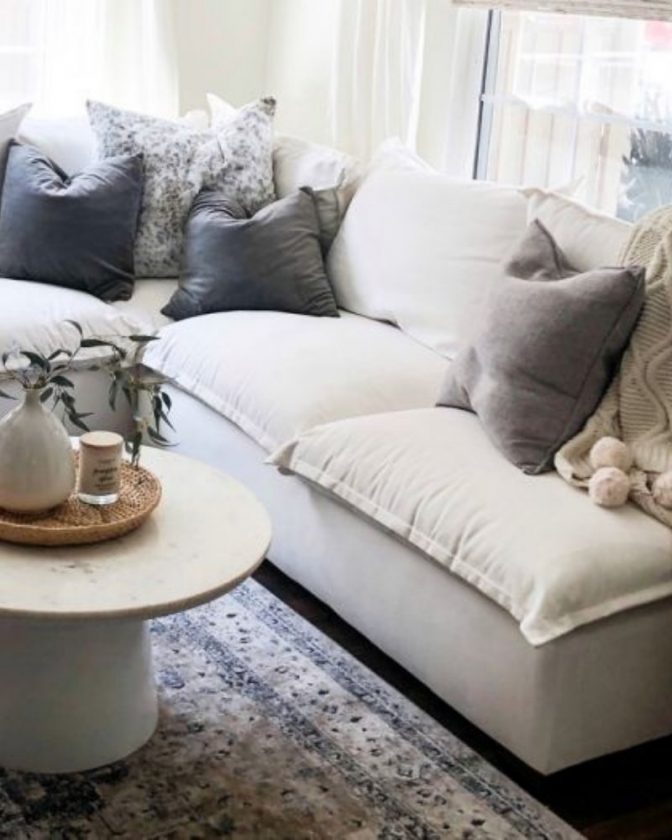
Natural organic sofa from The Futon Shop

Are There Affordable Sustainable Non-Toxic Sofas?

You may have just gone through that list and thought: umm none of those are even remotely in my budget Elizabeth! And I feel you. That’s why I bought my own couch secondhand.

I do think if someone is going to spend $2,000+ on a couch, it should be a sustainable, non-toxic one — because they exist and there are beautiful options. So why not? But if you are not going to invest that much, here’s how you can still find a slightly more affordable and more eco-friendly option.

More Affordable Sustainable Sofas:

Secondhand is your friend. I’ve already listed plenty of options for finding secondhand furniture, but did you also know you can find open box sofas at many major retailers? This is an especially good option if you’re willing to pay more than typical secondhand prices for the convenience.

Wayfair’s Open Box section has returned sofas up to 40% off new. I also happen to live near the first-ever “Wayfair Outlet” that sells returned items. My husband and I have purchased several pieces there that have all been in good condition. (Though not everything at the outlet is.)

Ikea as an “As Is” selection of returned or gently used products. They do not ship these products, so you’ll have to check what’s available at the store near you. We bought a TV stand as well as outdoor furniture through Ikea’s As Is. Ikea also sells discontinued products that are in as-new condition.

West Elm Open Box Outlet Deals are similar to Wayfair offer discounts in that they offer up to 40% on returned items. Given West Elm’s furniture virtually never goes on sale, this can be a great opportunity to get a better price on the company’s pieces.

We purchased a genuine leather mid-century modern style recliner from West Elm’s Open Box section that was $500 off the original. The damage was very minor so we were happy with this purchase. Plus leather is very repairable — unlike “vegan leather” or pleather.

Medley Re-Lounge is my favorite option from this list because it’s one of the sustainable non-toxic sofa brands featured here! You can access their sofas for 25-40% off new prices. Plus since Medley is typically made-to-order furniture where you might need to wait for months, another benefit is that these returned sofas ship in just 1-2 weeks.

Most of the furniture on any of those sites won’t be in perfect condition — unless it’s simply a discontinued product — but you’re likely saving several hundreds if not over a thousand dollars. So for me it’d be a tradeoff I’m willing to make. The furniture will wear slightly in a few months anyway.

More Affordable Non-Toxic Sofas:

If your priority is non-toxic, and not sustainability, your options may expand to include cheaper fabrics like polyester that have been tested and certified for low toxicity. I would look for OEKO-TEX® STANDARD 100 certified fabrics. And it’ll probably have to be synthetic foam (again the certification for that is CertiPUR-US®).

Pottery Barn has a GREENGUARD Gold selection with options under $1,300. Their “Performance Linen” is likely a blend of primarily polyester, but again — for a more affordable low-tox option you are likely looking at a polyester that has been tested against some of the most toxic chemicals.

West Elm also has a GREENGUARD Certified selection with some sofas under $1,000 and many under $2,000. (Again, I’d check out their Open Box section for discounts.)

Crate & Barrel and Joybird also have GREENGUARD Gold certified sofas, but they are more expensive than Pottery Barn and West Elm.

IKEA is certainly not perfect, but they have some low-tox options. The company phased out PFAS in their textiles in 2016 and has been actively working towards lowering the formaldehyde emission levels from pressed wood products. Their Stockholm 2025 couch has solid wood legs and natural fabric upholstery (cotton and linen). The backrest and armrest are coir and natural latex though the seat cushion just says “latex foam” so we’ll assume that’s synthetic. The back and armrest cushions are recycled polyester.

Burrow is a company I used to include on the main list, but every time I went on their site, I saw less information about sustainability. They do use CertiPUR-US® certified cushions and do not intentionally add any PFAS to their products, but I noticed their claims around responsibly-sourced wood are gone. Nor do they have any further certifications about the fabrics such as OEKO-TEX® STANDARD 100. So its an option, but it would be low on my list.

More Guides for Your Sustainable Living Room

Ethical Home Decor Brands to Curate a Beautiful, Conscious Space

Furnish Your Home Sustainably with these Eco Furniture Brands

The Most Gorgeous Fair Trade Artisanal Rugs

The post 5 Actually Sustainable and Non-Toxic Sofas for Restful Relaxation (2026) appeared first on Conscious Life & Style.

5 Actually Sustainable and Non-Toxic Sofas for Restful Relaxation (2026)

Continue Reading

Green Living

8 Best Linen Clothing Brands With Easy Breezy, Beautiful Pieces

Published

on

When the temperatures go up, all I want to reach for is natural fibers — specifically, my linen clothing. There’s nothing quite as breathable or breezy as linen. So in this guide I break down what to know about this quintessential summer fiber, and share my top selections for linen clothing brands. They’re all small to mid-sized brands, mostly women-led!

Some Background on Linen

Where does linen come from?

Linen fiber is extracted from the stalks of flax plants. This plant is also known for providing us with nutritious flaxseeds and linseed oil — talk about an overachiever!

In fact, linen is one of the oldest fibers known to man, dating back to the prehistoric era. Archaeologists and paleobiologists have discovered flax fibers during excavations that were twisted, indicating they were used to make ropes or strings among many proposed applications that must have been a great advantage to the hunter-gatherer society. In fact, linen wrappings were even used for mummification in ancient Egypt.

Linen fabric is then created by obtaining its fibers from the inner bark (or stalks) of the flax plant.

How is the linen cloth made?

Before the fibers are spun into the breezy linen you know and love, its fibers are loosened and separated from the rest of the stalk through a process known as “retting”. At that point, the fibers are still straw-like and coarse in texture.

To soften it, the fibers are broken up into small, short bits, while the actual fiber is left unharmed, and then “scutched”, where the straw is scraped off the fiber. After which they are then pulled through “hackles”, that comb the straw out of the fiber to finally prepare flax for spinning into linen fabric.

And linen clothing is, of course, garments comprised of linen fiber in its entirety or blended with other fibers. For this guide, I tried to select brands that only used 100% linen or at the minimum blended linen with other natural fibers like cotton.

The Benefits of Linen Clothing

Why wear linen? Known for being ideal during the summers, clothing made from linen will allow heat to escape from the body while absorbing moisture and drying relatively quickly. While linen may have a notorious reputation for wrinkling rather quickly, when blended with other fibers, the creases aren’t as discernible as they would be with pure linens.

While linen may be notorious for its high energy consumption owing to its need to be ironed more, linen clothing’s pros easily outweigh its cons.

Flax plants can be grown in the harshest of climate conditions that require minimum water. What’s more impressive is the plant’s ability to absorb carbon. The European Confederation of Flax and Hemp (CELC) states that one hectare of flax absorbs 3.7 tons of CO2 every year.

Is Linen More Sustainable Than Cotton?

While there are benefits and drawbacks to every fiber when it comes to environmental sustainability, there are a few points where linen stands out when compared to cotton.

First, we know that durability is a key aspect of sustainability, because it means our clothes will last, enabling us to keep our clothes longer and buy new clothing less frequently.

So how long does linen clothing last in comparison to cotton? Linen clothing is up to 12 times stronger than cotton, helping increase its longevity and taking away the need to be replaced so often.

Another question might be about flax’s water usage. While the irrigation needs of the crop are dependent on the region’s climate (just as with cotton), 450–750 mm of water per season is sufficient for flaxseed. In fact, some studies even indicate that flax could be regarded as a drought-tolerant crop.

How to Care for Linen Clothing

When it comes to caring for linen clothing, linen can be washed on a gentle machine cycle with a mild detergent. (Check out these low waste low-impact detergent options.)

In case you’re curious whether linen stretches or shrinks, then there isn’t much to worry about. Linen is mostly pre-shrunk during the manufacturing stages but pure linens may show about 4% shrinkage.

And when it comes to stretch, linens aren’t known to stretch out over time but can show some level of elasticity when blended with other fibers.

Finally, it’s no secret that linen clothing tends to wrinkle easily! You may choose to embrace the natural characteristics of linen and wear your linen clothing as is, or if you want a crisper look, you may either want to look for a linen blended fabric, or be prepared to steam and/or iron your garments relatively frequently.

Note: This guide includes partners and/or affiliates. As always, brands must meet high standards for sustainability and ethics — and I only share brands that I believe in.

How to Find Sustainable Linen Clothing

So of course, I’m a big advocate for “secondhand first” when it comes to all fashion, including linen clothing. While your local thrift store might not be filled with 100% linen clothes, online secondhand shops can be a great resource. For luxury and premium brands, Vestiaire Collective and The RealReal. For more affordable options, my favorite pick is ThredUp because you can filter by natural fibers only. To be clear: the listings aren’t always accurate, so I still double check the descriptions of any product that shows up with that filter, but it does save some time to start there.

When looking for new linen clothing, I always prioritize small to mid-size women-led businesses. And I check the product details to see if they use 100% linen or if they’re deceptively saying “linen blend” and then it’s actually 50% polyester!

And while not perfect you can also look for certifications. These are the ones most relevant to linen clothing and linen fashion brands.

OEKO-TEX Standard 100 certifies that the finished textile product has been tested for harmful substances (heavy metals, formaldehyde, pesticide residue). This is a chemical-safety certification, not a guarantee of fair labor or environmental practices. So it tells you the linen has been tested for potentially toxic chemicals, but it doesn’t tell you who made it or how. Note that some brands just say “OEKO-TEX certified” — that virtually always refers to OEKO-TEX Standard 100, the most common certification from OEKO-TEX.

GOTS (Global Organic Textile Standard) certifies that a textile contains a minimum percentage of certified organic fiber and meets environmental and social criteria through processing. It’s the standard for verifying a fabric is genuinely “organic,” not just marketed that way.

B Corp certifies the company as a whole against social and environmental performance standards (labor, governance, environmental impact). This is a business-level cert, not a product-level one, so it doesn’t speak to any single garment’s materials.

Fair Trade Certified verifies that the specific factory/facility producing the item meets standards for labor conditions, wages, and worker safety, and that a Community Development Premium is paid to workers. It’s a labor and production-facility certification. It doesn’t certify the fabric’s environmental footprint or chemical content (that’s what OEKO-TEX covers), so a garment can carry both certifications and they’re speaking to different things.

Where to Find Eco-Friendly Linen Clothing

I scoured through dozens of brands to find my top picks for brands with sustainably-crafted linen clothing for women (some have men’s clothing too). I’ve included their conscious qualities, what they’re best for, and any caveats so you can make the best decision for yourself. Keep in mind while shopping that 100% linen garments won’t have any stretch — so if you run between sizes, I’d default to sizing up. But of course, check the size chart and reviews for each brand!

1. Linen Handmade Studio

Best for: tailored, elevated linen clothing

A lot of linen clothing can feel quite casual. And while Linen Handmade studio does have relaxed-fit options, what differentiates the brand in my opinion is their tailored options. I often hear from conscious readers that they want to wear natural fibers to work, but they can’t find something nice enough. Enter in: Linen Handmade Studio’s tailored pieces.

The brand has linen blazers and jackets, linen vests, and linen pants elevated enough for work or an evening out. (They even have bridesmaid dresses.) I’ve been wearing their Evelyn Longline Linen Vest in red clay on repeat and gotten so many compliments on it.

Price Range: $68 – $305
Size Range: US 2-18 (runs slightly small, I’d size up!)
Based in: Lithuania | Ships: Internationally; free U.S. shipping on orders $300+

Navy linen long tailored vest from Linen Handmade Studio

2. MATE

Best for: casual GOTS-certified organic linen clothing

Prioritizing natural non-toxic materials, MATE has a collection of effortless linen shorts, button-downs, and pants made from GOTS-certified organic linen and colored with low-impact dyes.

That means that the color options at MATE are a bit more limited than you might see at other brands. They carry white, black, and “dune” — a soft beige.

I have their organic linen button-down in white and it’s been a reliable staple for me the past two years that’s held up beautifully.

Price Range: $88 – $178
Size Range: XS – XL
Based in: U.S. | Ships: Internationally

White organic linen button-down shirt from MATE

3. Linen Fox

Best for: romantic pastoral clothing in trend-forward colors and prints

Linen Fox is a Lithuanian small independent fashion brand — their team of 16 people make all of their linen clothing — including womenswear, menswear, and kids clothes.

The brand’s garments are made from OEKO-TEX Standard 100 certified linen fabric. The label follows fair trade principles to production and reduces fabric waste by selling their fabric scraps as samples, and crafting accessories like scrunchies. They also ship in 98% plastic-free packaging.

Price Range: $74 – $187
Size Range: XS – XL (several products fit oversized; check each description!)
Based in: Lithuania | Ships: Internationally

Butter yellow linen dress from Linen Fox

4. Magic Linen

Best for: linen separates plus matching home linens

From classic linen shirts to linen aprons and linen pajamas, Magic Linen is your destination for finding summer-ready sustainable linen clothing for men or women.

The small business’ linen clothing is made with European flax linen certified by OEKO-TEX Standard 100.

The Etsy shop also has plenty of linen home goods — I have linen curtains and bedsheets from Magic Linen and the quality of the fabric has been fantastic, with the sheets holding up well even after years of washing.

Price Range: $93 – $298
Size Range: XS – XXL
Based in: Lithuania | Ships: Internationally

Blue linen button-down dress from Magic Linen

5. Beaumont Organic

Best for: European-made linen clothing with full factory transparency

Looking for breathable garments perfect for your summer getaway to the English countryside or sea? Look no further than Beaumont Organic.

Beaumont Organic is a UK slow fashion brand with garments made from natural fabrics, like flax linen clothing! The brand publishes a directory of the factories they source from — 97% of production takes place in Northern Portugal.

They also have a repair program and are launching a resale program (currently available within the UK only).

Price Range: $211 – $300
Size Range: XS – L
Based in: UK | Ships: Internationally

Dark orange linen vest and linen skirt from Beaumont Organic

6. LoveAndConfuse

Best for: feminine style linen clothing

The linen clothing from this lovely small Lithuanian brand on Etsy are truly swoon-worthy!

From wrap dresses to ruffled midi’s to high-waisted linen shorts and linen crop tops, their collection of linen fashion will have you dreaming of a slow travel escape to somewhere warm and sunny.

Price Range: $116 – $225
Size Range: XS – XL
Based in: Lithuania | Ships: Internationally

Blue linen blouse from LoveAndConfuse

7. Neu Nomads

Best for: classic linen garments and resortwear

With a mission to create simple, sustainable luxury, Neu Nomads offers quality classics made from earth-minded materials, including 100% OEKO-TEX Standard 100-certified linen.

You’ll find linen trousers, effortless shirts, resort-ready kaftans, and tailored linen blazers in classic colors like white, black, olive, and bright coral.

Price Range: $159 – $359
Size Range: XXS – XXL
Based in: U.S. | Ships: Internationally

Black linen blazer and linen trousers from Neu Nomads

8. EILEEN FISHER

Best for: classic linen clothing with circularity programs

Slow fashion brand EILEEN FISHER has elegant, minimalistic garments made from eco-minded fabrics including organic linen. Several of the pieces are made in Fair Trade Certified factories.

This is the largest company on the list, but still considered a medium-sized enterprise — and, of course, this namesake label is woman-founded.

EILEEN FISHER’s organic linen clothing is timeless and made with quality, as part of their circularity efforts. In addition to ensuring their pieces last, the brand also has a resale program called Renew and a “third life” program that repurposes unwearable garments into unique artwork and other goods.

Price Range: $98 – $268
Size Range: XXS – XL
Based in: U.S. | Ships: Within U.S.

Blue organic linen tank from EILEEN FISHER

Your Questions, Answered:

What about Quince’s linen clothing?

While Quince offers more affordable linen clothing, in my experience their linen clothing is ok quality, but does not compare with the quality of some of the other brands on this list. Also, I personally want to prioritize women-led small businesses for my guides, not venture-backed billion-dollar companies.

Should I look for organic linen clothing?

While organic linen is wonderful, it is quite rare. Only two brands on this list use certified organic linen. Note that OEKO-TEX Standard 100 linen is not “organic” linen, but rather linen clothing that has been tested against common harmful substances. The most common certification for organic fiber clothing is Global Organic Textile Standard, or GOTS.

Is there any linen clothing that’s work-appropriate?

This one depends on your work place’s dress code, but there are a few options on this list with linen blazers, trousers, and other more tailored pieces like Linen Handmade Studio and Neu Nomads.

More Sustainable Clothing Guides:

The Best Organic Cotton Fashion Brands

What is Zero Waste Fashion?

Actually Fashionable Hemp Clothing Brands

The post 8 Best Linen Clothing Brands With Easy Breezy, Beautiful Pieces appeared first on Conscious Life & Style.

9 Best Linen Clothing Brands With Easy Breezy, Beautiful Pieces

Continue Reading

Green Living

9 Best Linen Clothing Brands With Easy Breezy, Beautiful Pieces

Published

on

Breezy, light, and breathable, we take a deep dive into how one of the best summer fabrics fares when it comes to sustainability while discovering these brands that are doing right by linen.

Some Background on Linen

Where does linen come from?

Linen fiber is extracted from the stalks of flax plants. This plant is also known for providing us with nutritious flaxseeds and linseed oil — talk about an overachiever! 

In fact, linen is one of the oldest fibers known to man, dating back to the prehistoric era. Archaeologists and paleobiologists have discovered flax fibers during excavations that were twisted, indicating they were used to make ropes or strings among many proposed applications that must have been a great advantage to the hunter-gatherer society. In fact, linen wrappings were even used for mummification in ancient Egypt. 

Linen fabric is then created by obtaining its fibers from the inner bark (or stalks) of the flax plant. 

How is the linen cloth made?

Before the fibers are spun into the breezy linen you know and love, its fibers are loosened and separated from the rest of the stalk through a process known as “retting”. At that point, the fibers are still straw-like and coarse in texture. 

To soften it, the fibers are broken up into small, short bits, while the actual fiber is left unharmed, and then “scutched”,  where the straw is scraped off the fiber. After which they are then pulled through “hackles”, that comb the straw out of the fiber to finally prepare flax for spinning into linen fabric.

And linen clothing is, of course, garments comprised of linen fiber in its entirety or blended with other fibers. For this guide, I tried to select brands that only used 100% linen or at the minimum blended linen with other natural fibers like cotton.

The Benefits of Linen Clothing

Why wear linen? Known for being ideal during the summers, clothing made from linen will allow heat to escape from the body while absorbing moisture and drying relatively quickly. While linen may have a notorious reputation for wrinkling rather quickly, when blended with other fibers, the creases aren’t as discernible as they would be with pure linens.

While linen may be notorious for its high energy consumption owing to its need to be ironed more, linen clothing’s pros easily outweigh its cons.

Flax plants can be grown in the harshest of climate conditions that require minimum water. What’s more impressive is the plant’s ability to absorb carbon. The European Confederation of Flax and Hemp (CELC) states that one hectare of flax absorbs 3.7 tons of CO2 every year.

Is Linen More Sustainable Than Cotton?

While there are benefits and drawbacks to every fiber when it comes to environmental sustainability, there are a few points where linen stands out when compared to cotton.

First, we know that durability is a key aspect of sustainability, because it means our clothes will last, enabling us to keep our clothes longer and buy new clothing less frequently.

So how long does linen clothing last in comparison to cotton? Linen clothing is up to 12 times stronger than cotton, helping increase its longevity and taking away the need to be replaced so often.

Another question might be about flax’s water usage. While the irrigation needs of the crop are dependent on the region’s climate (just as with cotton), 450–750 mm of water per season is sufficient for flaxseed. In fact, some studies even indicate that flax could be regarded as a drought-tolerant crop.

How to Care for Linen Clothing

When it comes to caring for linen clothing, linen can be washed on a gentle machine cycle with a mild detergent. (Check out these low waste low-impact detergent options.)

In case you’re curious whether linen stretches or shrinks, then there isn’t much to worry about. Linen is mostly pre-shrunk during the manufacturing stages but pure linens may show about 4% shrinkage.

And when it comes to stretch, linens aren’t known to stretch out over time but can show some level of elasticity when blended with other fibers.

Finally, it’s no secret that linen clothing tends to wrinkle easily! You may choose to embrace the natural characteristics of linen and wear your linen clothing as is, or if you want a crisper look, you may either want to look for a linen blended fabric, or be prepared to steam and/or iron your garments relatively frequently.

Note: This guide includes partners and/or affiliates. As always, brands must meet high standards for sustainability and ethics — and I only share brands that I believe in.

How to Find Sustainable Linen Clothing

So of course, I’m a big advocate for “secondhand first” when it comes to all fashion, including linen clothing. While your local thrift store might not be filled with 100% linen clothes, online secondhand shops can be a great resource. For luxury and premium brands, Vestiaire Collective and The RealReal. For more affordable options, my favorite pick is ThredUp because you can filter by natural fibers only. To be clear: the listings aren’t always accurate, so I still double check the descriptions of any product that shows up with that filter, but it does save some time to start there.

When looking for new linen clothing, I always prioritize small to mid-size women-led businesses. And I check the product details to see if they use 100% linen or if they’re deceptively saying “linen blend” and then it’s actually 50% polyester!

And while not perfect you can also look for certifications. These are the ones most relevant to linen clothing and linen fashion brands.

OEKO-TEX Standard 100 certifies that the finished textile product has been tested for harmful substances (heavy metals, formaldehyde, pesticide residue). This is a chemical-safety certification, not a guarantee of fair labor or environmental practices. So it tells you the linen has been tested for potentially toxic chemicals, but it doesn’t tell you who made it or how. Note that some brands just say “OEKO-TEX certified” — that virtually always refers to OEKO-TEX Standard 100, the most common certification from OEKO-TEX.

B Corp certifies the company as a whole against social and environmental performance standards (labor, governance, environmental impact). This is a business-level cert, not a product-level one, so it doesn’t speak to any single garment’s materials.

Fair Trade Certified verifies that the specific factory/facility producing the item meets standards for labor conditions, wages, and worker safety, and that a Community Development Premium is paid to workers. It’s a labor and production-facility certification. It doesn’t certify the fabric’s environmental footprint or chemical content (that’s what OEKO-TEX covers), so a garment can carry both certifications and they’re speaking to different things.

Where to Find Eco-Friendly Linen Clothing

I scoured through dozens of brands to find my top picks for brands with sustainably-crafted linen clothing for women (some have men’s clothing too). I’ve included their conscious qualities, what they’re best for, and any caveats so you can make the best decision for yourself. Keep in mind while shopping that 100% linen garments won’t have any stretch — so if you run between sizes, I’d default to sizing up. But of course, check the size chart and reviews for each brand!

1. Linen Handmade Studio

Best for: tailored, elevated linen clothing

A lot of linen clothing can feel quite casual. And while Linen Handmade studio does have relaxed-fit options, what differentiates the brand in my opinion is their tailored options. I often hear from conscious readers that they want to wear natural fibers to work, but they can’t find something nice enough. Enter in: Linen Handmade Studio’s tailored pieces.

The brand has linen blazers and jackets, linen vests, and linen pants elevated enough for work or an evening out. (They even have bridesmaid dresses.) I’ve been wearing their Evelyn Longline Linen Vest in red clay on repeat and gotten so many compliments on it.

Price Range: $68 – $305

Size Range: US 2-18 (runs slightly small, I’d size up!)

Based in: Lithuania | Ships: Internationally; free U.S. shipping on orders $300+

Navy linen long tailored vest from Linen Handmade Studio

2. MATE

Best for: casual GOTS-certified organic linen clothing

Prioritizing natural non-toxic materials, MATE has a collection of effortless linen shorts, button-downs, and pants made from GOTS-certified organic linen and colored with low-impact dyes.

That means that the color options at MATE are a bit more limited than you might see at other brands. They carry white, black, and “dune” — a soft beige.

I have their organic linen button-down in white and it’s been a reliable staple for me the past two years that’s held up beautifully.

Price Range: $88 – $178
Size Range: XS – XL
Based in: U.S. | Ships: Internationally

White organic linen button-down shirt from MATE

3. Linen Fox

Best for: romantic pastoral clothing in trend-forward colors and prints

Linen Fox is a Lithuanian small independent fashion brand — their team of 16 people make all of their linen clothing — including womenswear, menswear, and kids clothes.

The brand’s garments are made from OEKO-TEX Standard 100 certified linen fabric. The label follows fair trade principles to production and reduces fabric waste by selling their fabric scraps as samples, and crafting accessories like scrunchies. They also ship in 98% plastic-free packaging.

Price Range: $74 – $187

Size Range: XS – XL (several products fit oversized; check each description!)

Based in: Lithuania | Ships: Internationally

Butter yellow linen dress from Linen Fox

4. OhSevenDays

Best for: deadstock linen with custom sizing available

OhSevenDays was founded by Megan Mummery after seeing the vast supply of surplus fabrics (i.e. deadstock) in Istanbul, Turkey.

While originally sourcing their deadstock fabric from middleman sellers, OhSevenDays now sources their surplus fabrics (including linen) directly from OEKO-TEX fabric mills for better transparency.

Price Range: $$

Size Range: XS-XL + custom sizing options

Based in: Turkey | Ships: Internationally

model wearing ruffled blue linen dress from OhSevenDays

5. Magic Linen

Best for: linen separates plus matching home linens

From classic linen shirts to linen aprons and linen pajamas, Magic Linen is your destination for finding summer-ready sustainable linen clothing for men or women.

The small business’ linen clothing is made with European flax that means the pre-certification guidelines of OEKO-TEX Standard 100.

The Etsy shop also has plenty of linen home goods — I have linen curtains and bedsheets from Magic Linen and the quality of the fabric has been fantastic, with the sheets holding up well even after years of washing.

Price Range: $-$$

Size Range: XS – XXL

Based in: Lithuania | Ships: Internationally

Check Out Magic Linen

man wearing white linen top from linen clothing brand Magic Linen

6. Beaumont Organic

Best for: UK-made linen with full factory transparency

Looking for breathable garments perfect for your summer getaway to the English countryside or sea? Look no further than Beaumont Organic.

Beaumont Organic is a UK slow fashion brand with garments made from natural fabrics, like flax linen clothing! The brand publishes a directory of the factories they source from — 97% of production takes place in Northern Portugal.

They also have a repair program and are launching a resale program (currently available within the UK only).

Price Range: ££ – £££

Size Range: XS – L

Based in: UK | Ships: Internationally; covers EU customs & fees

Explore Beaumont Organic

orange linen top from UK linen clothing brand Beaumont Organic

7. LoveAndConfuse

Best for: ultra feminine style linen clothing

The linen clothing from this lovely small Lithuanian brand on Etsy are truly swoon-worthy!

From wrap dresses to ruffled midi’s to high-waisted linen shorts and linen crop tops, their collection of linen fashion will have you dreaming of a slow travel escape to somewhere warm and sunny.

Price Range: $ – $$

Size Range: XS – XL

Based in: Lithuania | Ships: Internationally

Check Out LoveAndConfuse

model wearing blue linen dress from linen clothing brand Love and Confuse

8. Neu Nomads

Best for: affordable linen garments

With a mission to create simple, sustainable luxury at affordable prices, Neu Nomads offers quality classics made from earth-minded materials, including organic linen.

You’ll find linen trousers, effortless shirts, chic blouses, summer dresses, and even linen blazers in a range of colors among Neu Nomad’s consciously crafted selection.

Price Range: $ – $$

Size Range: XS – XL

Based in: U.S. | Ships: Internationally

Check Out Neu Nomads

woman wearing mustard yellow linen trousers and linen top - sustainable linen clothing brands

9. EILEEN FISHER

Best for: investment-piece linen with a circularity program

Slow fashion label EILEEN FISHER has elegant, minimalistic garments made from eco-minded fabrics including organic linen.

EILEEN FISHER’s organic linen clothing is timeless and made with quality, as part of their circularity efforts. In addition to ensuring their pieces last, the brand also has a resale program called Renew and a “third life” program called Waste No More that repurposes unwearable garments into unique items.

Price Range: $$$

Size Range: XXS – XL

Based in: U.S. | Ships: Within U.S.

Check Out Eileen Fisher

White organic linen clothing from Eileen Fisher

Your Questions, Answered:

What about Quince’s linen clothing?

While Quince offers more affordable linen clothing, in my experience their linen clothing is ok quality, but does not compare with the quality of some of the other brands on this list. Also, I personally want to prioritize women-led small businesses for my guides, not venture-backed billion-dollar companies.

Should I look for organic linen clothing?

While organic linen is wonderful, it is quite rare. Only two brands on this list use certified organic linen. Note that OEKO-TEX Standard 100 linen is not “organic” linen, but rather linen clothing that has been tested against common harmful substances. The most common certification for organic fiber clothing is Global Organic Textile Standard, or GOTS.

More Sustainable Clothing Guides:

The Best Organic Cotton Fashion Brands

What is Zero Waste Fashion?

Actually Fashionable Hemp Clothing Brands

The post 9 Best Linen Clothing Brands With Easy Breezy, Beautiful Pieces appeared first on Conscious Life & Style.

9 Best Linen Clothing Brands With Easy Breezy, Beautiful Pieces

Continue Reading

Green Living

Earth911 Inspiration: The Beauty of the Natural World

Published

on

Today’s Earth911 inspiration is from Pulitzer-prize-winning journalist and science writer, Natalie Angier: “The beauty of the natural world lies in the details.”

Earth911 inspirations. Post them and share your desire to help people think of the planet first, every day. Click the poster to get a larger image.

Natalie Angier: "The beauty of the natural world lies in the details."

The post Earth911 Inspiration: The Beauty of the Natural World appeared first on Earth911.

https://earth911.com/inspire/earth911-inspiration-the-beauty-of-the-natural-world/

Continue Reading

Trending

Copyright © 2022 BreakingClimateChange.com