

Weather Guard Lightning Tech
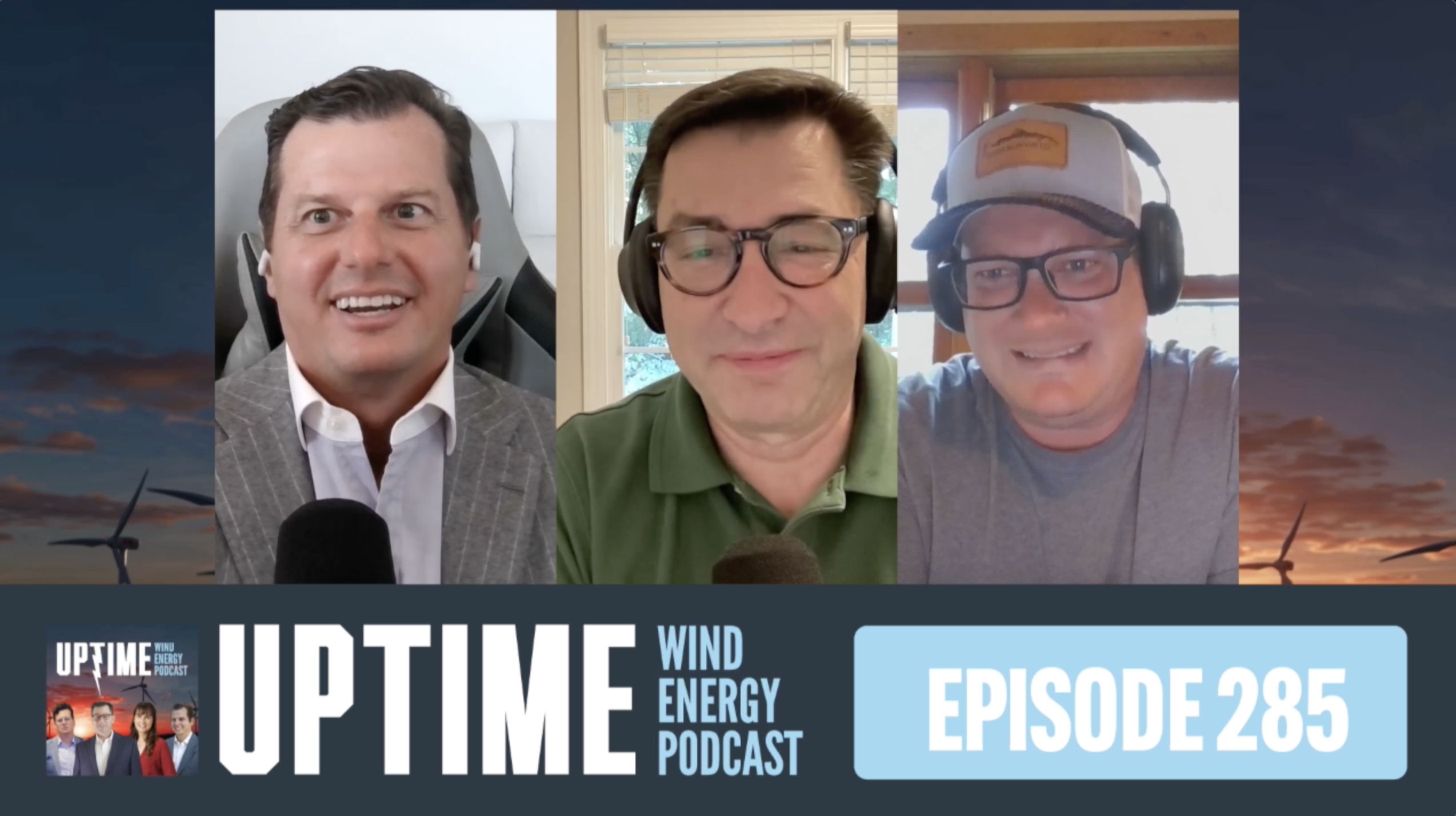
Taiwan Offshore Cable Damage & Japan’s Floating Wind Center
The crew discusses Husum Wind, Arthwind’s blade consulting work featured in PES Wind, and a major cable damage incident at Taiwan’s Greater Changhua offshore wind project. They also cover Japan’s plans for a national floating wind test center, Australia’s offshore wind development struggles, and feature Scotland’s Moray West wind farm as the Wind Farm of the Week.
Sign up now for Uptime Tech News, our weekly email update on all things wind technology. This episode is sponsored by Weather Guard Lightning Tech. Learn more about Weather Guard’s StrikeTape Wind Turbine LPS retrofit. Follow the show on Facebook, YouTube, Twitter, Linkedin and visit Weather Guard on the web. And subscribe to Rosemary Barnes’ YouTube channel here. Have a question we can answer on the show? Email us!
Speaker: [00:00:00] You are listening to the Uptime Wind Energy Podcast brought to you by build turbines.com. Learn, train, and be a part of the Clean Energy Revolution. Visit build turbines.com today. Now, here’s your hosts. Allen Hall, Joel Saxum, Phil Totaro, and Rosemary Barnes.
Allen Hall: Welcome to the Uptime Wind Energy Podcast. I’m your host, Allen Hall, and I’m here with Joel Saxum up in the great state of Wisconsin.
Phil Totaro is in California, and Rosemary Barnes is here, but she’s in a vehicle in Australia somewhere. But there has been a tremendous amount of news over the last couple of days, and I think we should talk about some of them. Uh, I guess it’s, it’s a where the group would like to go. This week, guys, you know, we’ve been talking about the administration for the last several weeks and about administration out, uh, the latest is with, uh, the administration in [00:01:00]court about Empire Wind.
Do you want to even talk about that stuff this week or do you wanna move on to some things? A little happier? Let’s do happier. Alan. I think we should, we need some different news. I feel the same way, Joel, you know, uh, when this podcast comes out, everybody’s, everybody’s gonna be in Husam, Germany having a great time, uh, talking wind energy, particularly in Europe.
And it sounds like that event is gonna be bonkers from what I can tell on LinkedIn.
Joel Saxum: Yeah. The, I mean, HU is only second to Hamburg right in, in Germany there. Everybody that I go, they enjoy it. Husam is like the, the. Correct me if I’m wrong, Phil, but I think it was like the first place they had onshore wind in a big way in Germany.
Phil Totaro: Yes. So it’s vestus, um, put up a factory there, uh, and was selling wind turbines to farmers. It’s also where they used to do, the reason that it’s there is they used to do an agriculture. Um, event and then they used to invite some of the wind guys. This is going back to like the, you know, late eighties, early nineties.
[00:02:00] They used to invite the wind guys, or the wind guys used to show up to try and sell turbines at this agriculture event. The amount of people interested in wind got to such an extent that they started doing a separate wind event. Um, and it got. Before they started the separation with the, the Wind Energy Hamburg, um, event, they, uh, that got to a point, I mean, I remember being there in what, 2015 or 2016 when it had to have been.
30,000 people in a field in Huso. You know, I, my best memory of it, I think was when, uh, well it was eon at the time, but, uh, they had a guy running around, passing out hot dogs. And I had a eon hotdog.
Joel Saxum: Phil, I wanted to share with you. This was a Deutsche Wind Technique show, San Antonio a CP. They had margaritas with the Deutsche Wind Technique logo in the margarita, like foam, the foam on top of the margarita once, and they were passing those out at an event.
I thought that was spot on.
Phil Totaro: The hot dogs [00:03:00] are not branded in any way, although that would’ve been a good idea to like, you know, stamp the button or something.
Joel Saxum: What, how do we do that for weather guy to the next event? How we have like lightning bolt popsicles or something? Oh,
Allen Hall: I’m sure that can happen.
Lightning bolt cookies, maybe. Well, cookies. We all love cookies. Who doesn’t love good chocolate chip cookie? You know who told me about Husam first was Lars Benson and at AC 8 83 and he described it as just a. Complete craziness in the middle of a field. You had to go rent a house to stay there. But it was a heck of a lot of fun.
And I thought, well, if Lars is having fun, it must be really fun. ’cause
Phil Totaro: Lars likes to have fun. I used to have to take the train on a daily basis from Hamburg because there was no way you could even get a house or a hotel. It was so busy, uh, in, in that little town. Um. So, yeah, it was, it was quite an experience and they’ve eventually worked out all the logistics.
’cause they used to not even have like, shuttle service from the train station to the event. Um, but there were so many people that demanded it that they started [00:04:00] adding these kind of amenities, uh, which, which was nice.
Joel Saxum: I did wanna share this one. Uh, you mentioned, uh, Lars Benton, Alan, um, Lars and the team over at a CA 83.
Recently Lars stepped, stepped into the executive chair and handed over the. The main keys to the organization to Yannick, so Yannick Benson, the new CEO at a C 83. So a little bit of a management change up there in Canada. That company growing, selling spare parts, doing blade work, doing service work, all kinds of good things.
Allen Hall: Yeah, if you need spare parts, you better be calling Yannick. It’s, it’s spare parts are hard to get at the moment and I know Yannick and Lars have connections and places you can’t get to, so it’s a good place to reach out to AC 8 83. Just in time for a husam. The new PES win magazine is out. This thing is heavy.
It’s full of great articles and I’ve been thumbing through it, uh, recognizing a lot of people that I know in the magazine and that’s awesome. Uh, but Joel pointed out that, uh, Amond Costa Rego [00:05:00] is in it from Earth Wind. And, and Arthur Wind is, we’ve, we talked to Armando a couple of months ago, Joel, down in Nashville.
That seems like an eternity ago.
Joel Saxum: Yeah, I’ll tell you what, uh, Armando night chat quite regularly. We’re on the WhatsApp telling jokes, talking family stuff off and on, and that man is everywhere. Uh, I talked to him last week. He was in Mexico. He was in Chile. He was in Argentina at all the wind events. He’s got wind, uh, power Brazil coming up.
I know he’s doing a big thing with the ARS wind team down there for that. He was at a CP Nashville. He, for OMS, he was at a CP in Phoenix. He’s like every event everywhere. He’s there every, no matter what Europe. South America, it doesn’t matter. Um, but yeah, the article they’re showcasing, of course what Earth Wind does is as a blade consultant, they’re top tier.
They’ve got a large team. They have a lot of experience inside the factories, um, auditing blades as they’re coming off the lines. Internal inspections, external inspections, blade expertise. Uh, they’ve got their [00:06:00] own platform, ARS Next, which is kind of, um, it’s, it’s, it’s solid, right? It’s good. Yeah. It’s good stuff for, uh, validating repairers realtime feedback.
Um, I know they got some little AI engines for chat bots and stuff in there. They’re doing some, some really cool things. Um, so, and if you haven’t, if you’ve met r Armando, you’ve probably also met our good friend Rodolfo, uh, who is, who is a. A strong right hand for Armando and uh, that team down there is, um, they’re doing big things in Brazil.
Allen Hall: Yeah, a lot of great things happening at Earth, wind, and they are worldwide. If you need help with inspections or technology, or blade management or turbine management. Earth Wind is definitely a place to check out, and you also need to check out PES Wind, so if you haven’t downloaded your copy, you can go to PS wind.com and download your copy today.
As Wind Energy Professionals, staying informed is crucial, and let’s face it difficult. That’s why the Uptime podcast recommends PES Wind Magazine. PES [00:07:00] Wind offers a diverse range of in-depth articles and expert insights that dive into the most pressing issues facing our energy future. Whether you’re an industry veteran or new to wind, PES Wind has the high quality content you need.
Don’t miss out. Visit PES wind.com today. You wanna talk about cables? You wanna talk about storage batteries? I think we should do the, the cables and batteries. You pick the order.
Rosemary Barnes: Yeah. I mean, they relate. I’m sure one will flow into the other.
Allen Hall: Well, if more things could not go wrong, forested at the minute, and I know, uh, we’re watching Orid all the time, watching the stock price, watching them get their feet back underneath of them.
Stead has a lot of projects still going on today, and I think everybody forgets about that, that they’re a worldwide company and they’re doing great things all over. Uh, but they had a setback in Taiwan, so an export cable was damaged at the greater Chenwa two B offshore wind project, uh, which is going to push back the completion of that project.
To sometime in [00:08:00] late 2026, it’s about a 300 million Danish kroner hit on the, on the revenue chain, uh, which is about $50 million. It’s not a huge deal, but when I read this article, Joel, the first thing I was, I thought about you saying that on offshore, the biggest risk isn’t the actual turbines, it’s the cable, and there’s a lot of damaged cable as they’re deploying ’em.
What likely happened here in Taiwan?
Joel Saxum: Well, it’s an in, I think the first off, it’s interesting that they’re taking the hit. I, I don’t, I think that’s the, the headline, but that’s gotta be an insurance policy that’s covering this. There’s no way that Ted’s covering $50 million ’cause they, ’cause this should be under built, under construction policy.
So onto the technical side of things. Cables can be damaged in many ways. Um, I mean, you can damage them, loading them onto the ship. You can damage them in offloading of the ship. Failure modes are stretch, stretching, compression, bending if you exceed a certain [00:09:00] radius when you bend it. Um, because remember the export cable is gonna be, I mean, half a meter across at a minimum, right?
They’re, they’re huge. So, um, you even go to the point where. There’s a, there’s a concept called touchdown monitoring. So you’ll have the cable lay vessel, and there’s the stinger that sticks out the back, that the cable comes outta the reel and goes down the stinger. When it goes off the stinger, it cannot exceed a certain radius, and when it gets to the ground, it can’t exceed a certain radius, uh, of curvature.
So there’ll be an ROV, a remote operated vehicle, that camera down there flying along with the vessel to watch that radius to see how it’s doing. And that’s the touchdown monitoring part of it. So they know a lot of times. If they’re laying, if they have an issue. The trouble here is splicing a cable like that when there’s a break or a problem, like it’s damn near impossible.
Now, the Greater UA project is in shallow enough water where you can put divers down. So there’s a possibility of putting a bell, putting an enclosure and splicing something, [00:10:00] but oof, that’s expensive too.
Rosemary Barnes: But is there any suggestion that it was, um, that, was it sabotaged? Was it accidental? Because that’s what my, um, worry is, uh, with this happening in that region.
Even if it, it was just, you know, one of those, um, so somewhat mundane failure modes that you described, it probably is gonna bring to everybody, like front of everybody’s mind, um, that. Yeah, sabotage of a cable is a really, a really good way to be able to take out a whole wind farm. Um, and in that region, at least, like they’re really struggling for renewable energy solutions.
And if they’re not trusting in subsea cables, then, which is already problematic because a lot of the neighbors in that region don’t want to be trusting, um, trusting each other with something as critical as. Electricity supply. Um, but yeah, I think, you know, if they have to rule out subsea cables because they’re perceived security risk, um, or real one, then, you know, then they’re going down to some of the crazier options like Japan’s [00:11:00] looking at where it’s like, we’re gonna import liquid hydrogen, we’re going to coal-fire ammonia in our coal plants.
Uh, you know, all these sorts of things that just get more and more and more expensive than just putting electricity down a, a cable. So, yeah, I, I just wonder if anybody’s talking about, um, about the security aspect of it.
Joel Saxum: It seems that it’s in construction and when you’re under construction, of course there’s gonna be a ton of vessels around there.
So there, I wouldn’t suspect it was actual sabotage. I would think this is just a construction thing and there, and another reason behind that is an offshore construction in general, whether it’s p I’m talking pipe and cable lay and pipe and cable lay accidents, incidents. Losses happen quite regularly, really at a kind of a high rate compared to other things.
So I don’t think it would be a sabotage problem, uh, right now, but who knows in the future as well.
Allen Hall: Well, I just asked chat GPT, because this is the only place I can actually find some information about it. There’s really nothing online talking about what actually caused the damage in chat. [00:12:00] GPT as Rosemary pointed out.
Gotta be careful, but let me just read you what it says right now. Uh, the Chenwa Telecom subsea cable was damaged earlier this year in January, and it looks like a potentially Chinese linked, uh, ship happened to do that damage. So this sounds familiar to some things that have happened over, uh, in near Northern Europe.
Sure. Yeah. Oops.
Rosemary Barnes: Ask chat GPT for its source, because if you couldn’t find anything on the internet. How did it, it’s not like it has friends in the industry that are talking to it, you know? Um, so I, yeah. Is that a, a hallucination that’s, you know, gonna start an international incident?
Allen Hall: Yeah. You think this podcast could start an international incident?
That would be interesting. That I’d want to hear, but, uh, no. It does seem like a, a, a cable was damaged as, uh, earlier this year, and it wouldn’t be the first time that China was involved in cable damage. And it would be normal not to talk about it if it was sabotaged. So it does [00:13:00] seem a little bit odd that, uh, you don’t hear anything about it.
But back to Joel’s point, if it is an insurance claim, the insurance company’s not gonna talk about it. No. Or is not gonna talk about it because it’s under dispute probably. But, um, back to your comments earlier, Joel, about watching all this happen underwater and watching the cable drop. They know what the, the bottom of the sea looks like, where this cable is supposed to go.
Have many, haven’t they removed all the big obstacles for the cable to actually lay down or do they have a route that avoids
Joel Saxum: all that? Yes and no. Um, so I’ve been watching some of the geotechnic on that, uh, in that area, and there are very difficult geotechnic. Um, so if you remember a few, maybe last summer there was a jack up rig that, that fell over.
Over there. Right? Okay, so that’s difficult. Geotechnic, right? So when you’re running a, when you’re running a geotechnical study on a cable layer route, usually it goes like this. You’ll cruise down it with [00:14:00] multi-beam echo cylinders, so you can see the surface basically. So you can read what’s there, rocks do, sand, whatever, and you do a wide sloth.
You have it covered maybe a couple hundred meters wide, the whole route. Then along that route you’ll pick, um, like every kilometer, this will be the spec. Like every kilometer you’re gonna do a core. So you’re gonna do a gravity core or a drilling core to get a core sample of that sediment and be, be able to pull it out and see, okay, what’s actually here?
And then every half a kilometer, you’ll do like a simple VIO core or something like that, a CPT push test. But that leaves pockets right in this, in this area. Like when that, um. Jack up rig went over, they had done a bunch of, around a, around a site, around an actual, where you put a mono pile in. You’re gonna do a lot of surveys, you’re gonna do a bunch of CPTs in that area to kind of create a network of what that subsurface looks like.
But you can hit gas pockets, you can hit soft soil pockets, compaction, liquification, [00:15:00] different things that you didn’t, because you didn’t test every meter. You can hit these things, right? So there is a possibility that you’re laying this cable or, or in this, in this case, it sounds like this thing may have been a anchor drag or something, but there is a possibility that you’re laying this heavy cable and you’re on sand, sand, sand, and what looks like sand, but it’s actually like a liquified sand.
And all of a sudden the cable dives under the surface because that cable’s heavy and a lot of pressure on it. So that can happen without you knowing, and that’s why you’re doing the touchdown monitoring and all those kind of things.
Allen Hall: So is this similar to when you watch LinkedIn and you’re putting in a monopile and it just keeps going?
Joel Saxum: Yeah. That’s the exact same thing. When you’re like, do 2, 2, 2, 2, 2, they get through a hard sauce, plump. That’s, and it’s just gone. Yeah.
Phil Totaro: Insurance is obviously gonna be a part of this. The bigger conversation on insurance, however. Uh, that’s triggered by stuff like this is at the end of the day, the developer puts, you know, in this case Ted, they put a, a modest amount of margin, uh, [00:16:00] into their budget when.
You know, they, they go and ask for capital. When you get some kind of a delay, whether it’s, you know, induced by a government shutdown, or you know, an incident with a cable, whatever the cause is, the, the reality of that is you’re gonna blow through your management reserve in like a week or maybe a month, and you’ve, you, you know, you’ve got very tight margins already.
And you’re setting yourself up for a money losing project if you can’t make sure that you leverage all these technologies. Joel just explained they’ve already started increasing premiums and decreasing terms for. Insurance policies, whereas they might have signed like a three year or five year term on a policy, now they’re only signing a one year term and they’re increasing premiums by at least 20%.
From what I’ve understood from, from folks in the insurance industry. So. Things like this, [00:17:00] again, whatever the cause of, of the cable cut, you know, having those kind of challenges makes it definitively, um, more expensive for all of us because at the end of the day, you know, we as electricity rate payers have to buy this electricity from whatever the power generation source is, and we’re the ones that pay off that project.
And you know, if a developer’s not able to make money on a project, they’re not gonna build a project.
Joel Saxum: So Rosemary, with that, those kind of things in mind, have you heard of any of the site suitability, subsea, subsurface studies going on in the offshore wind projects in Australia?
Rosemary Barnes: Yeah, not so much. All I have heard about is, um, just that the water is very deep.
For the most part. It drops, drops off. Quickly across most of Australia. So that’s why they’re already even looking at some floating offshore wind projects in Australia, which is kind of crazy because we’ve got so [00:18:00] many, like amazing, uh, onshore sites left, including some with, with potential capacity factors in the high forties.
So it’s like, that’s as good as an offshore wind site, but it’s cheap, like an onshore wind site. So yeah, so that’s a bit. A bit crazy. Um, and also just, uh, I’ve been following the progress of the, um, sun cable project, you know, so it’s not offshore wind, but it’s a big cable that they’re planning to put in between, um, Darwin and Singapore, via Indonesia.
And, um, I just, just have been looking Yeah. Keep keeping an, an eye on it over the last, I know like. Five more years, probably nearly 10 years by now. And the length of the cable, um, has grown and grown and grown as they understand more and more, um, accurately what the root is actually gonna be. So obviously they have to go around some obstacles and it’s adding, you know, hundreds of kilometers every time that they have to do something like that.
So, [00:19:00] um, yeah, I don’t think it’s super easy. Um, yeah. But there are plenty of, uh, plenty of offshore. Gas exploration in parts of Australia. So I am sure that those parts at least, are
Phil Totaro: well understood. And Joel, I’ll answer part of your question. They have only started doing. Uh, any geotechnical and subsurface stuff on, uh, star of the South in Victoria.
And I think one other project that it was suppo, well, actually no, they, they were gonna move forward and then they pulled the plug on the Nova Castran project. Um, so there’s one, one project so far that’s getting any underwater work done, uh, at this point. So, uh, the, the challenge frankly, in Australia has been that the developers want to be able to build the projects, but they’re still not really the best regulatory framework in place for this.
The approvals have come way too [00:20:00] slow. Um, they. You know, part of, uh, a lot of the projects that were gonna be built in Western Australia was gonna be for powering hydrogen production, but then they’re competing with, you know, the Asian Power Hub or something that was supposed to be like 70 gigawatts of um, you know, onshore renewables, both wind and solar that we’re gonna also.
Be leveraged for, for hydrogen production. So, you know, the, the, the challenge for the Australian market is that they, as Rosie’s saying, you know, they have a lot of. Onshore renewables, you know, wind, yes. But also solar resources left in the tank. So you know, unless they’re actually seeing a huge spike in demand or they find somebody that’s going to do a lot of this hydrogen offtake and they can justify building these mega projects for, for doing it, I think they’re gonna have a hard time [00:21:00] with getting offshore in Australia, kind of off the.
Off the starting blocks.
Joel Saxum: Yeah. I think Phil, I’d have to agree with you there a little bit because, uh, my reasoning being in the last year and a half, we’ve done, of course, we’ve been talking about Australia with Rosemary for years, but we’ve done actual work down there. We’ve, we’ve dealt with, um, not dealt with, we’ve engaged with some of the locals.
We’ve, we’ve worked with some of the operators. We’ve worked with some of the great people down there that are running wind farms. Uh, they’re the engineers, the asset performance people, the developers, all the above, even OEMs. And you can see some of the struggles that they run into, um, just on land. Um.
With permitting and the, uh, local opposition and some things. And so you can hear the, the opposition to a lot of the wind projects there. And I, I gotta think that the permitting they’re gonna have, regardless of technical issues, the just getting through things through the government are gonna be tough.
To get offshore wind built,
Allen Hall: are you worried [00:22:00] about unexpected blade root failures and the high cost of repairs? Meet eco Pitch by Onyx Insight, the standard in blade root monitoring Onyx iss state-of-the-art sensor tracks blade root movement in real time, delivering continuous data to keep your wind farm running smoothly and efficiently.
With Eco Pitch, you can catch problems early, saving hundreds of thousands of dollars. Field tested on over 3000 blades. It’s proven reliability at your fingertips. Choose Eco Pitch for peace of mind. Contact Onyx Insight today to schedule your demo of Eagle Pitch and experience the future of blade monitoring.
Well as wind progresses in Japan. Offshore is a growing. Concept. Uh, but they’ve had trouble, right? Uh, Mitsubishi pulled out of three projects recently that they had bid on and won. Uh, but Japan is refusing to give up on offshore wind, and they are going to start planning a national floating [00:23:00] wind test center next year, and that is going to help them.
Get floating wind into Japan. So the, the Floating Offshore Wind Technology Resource Association, uh, says that they’re gonna conduct verification tests in Japanese waters because their ocean and weather conditions differ from Europe. Obviously, uh, there’s a lot of knowledge in Europe for floating wind.
Not so much in Japan. Uh, and I guess from my perspective, just reading these articles about Japan taking on this effort, it does make sense because the way the Continental shelf is right there off the coast of Japan, it pretty much gets into deep water very quickly. Floating wind is gonna be a great opportunity, but there are unique challenges in Japan.
Right.
Joel Saxum: Yeah. I, I wanna mirror this one almost in the conversation that we had with the fellows up in, uh, Norway and Denmark there about the Ute Sierra Nord. Right, because we talk to them about, okay, Norway having the capabilities to do this. Do we want to be a net exporter of technology? [00:24:00] Do we wanna bring it, keep it at home, we know how to do stuff offshore, blah blah, blah, blah, blah.
Um, great things up there. This is kind of the same case and put around the world, right? Japan is sitting over there, you know, mostly by itself working on floating wind stuff. So. It’s difficult. I mean, a lot of Japanese companies have tried to get into the offshore merge, you know, the MHI Vestas experiment and some of those other things.
Um, we, we, you know, we did a big strike take project and a bunch of Mitsubishi turbines onshore in the states this year. So like the Japanese technology’s been around the world, but I think that because of the national interest, right, like they won offshore wind, um, they have good offshore wind resource.
We’ve talked with quite a few people over there. Uh, they need. To do something like this. The only other one place that there’s an offshore wind test center, of course we have like high wind Scotland, um, there that did that, did that project. But there is another loading offshore like kind of test center in north, north of France, I think, where they’re doing some, some, some studies and some other things.
But them [00:25:00] building this, because Japan has been a follow on technology-wise, for years, they’ve just been using whatever the western world’s been creating. Um, and some Korean turbines, and we’ve run into some weird ones like that too, right? Some small production units. But I think that this one is, is very smart of them from a national interest standpoint to build this floating offshore technology center because they’re gonna need it.
If they want offshore wind, it’s going to have to be floating in a big way over in.
Phil Totaro: Port Portugal’s also got the wind Float Atlantic. So there, there are, you know, uh, again, a number of, of pilot projects. Japan was actually the pioneer though with this. They had a two megawatt unit, uh, out on a floating platform since I wanna say 2011 or 2012.
Their government needs to get out of their own way. If they really want to move forward with floating offshore in a serious way. The fact that they’re willing to commit some resources to this is good because they’re leveraging expertise as well from, um, you know, commercial [00:26:00] relationships with some of the other, you know, floating research centers around the world, including Norway.
Um, according to this, this press release, uh, announcing this. So, you know, in general that’s a good thing, but. You know, all it takes is somebody saying yes at this point. And you know, there’s, there’s been a lot of people pushing for this for a long time, uh, both in Japan and in the West, who wanna be, you know, in Japan, including turbine OEMs, developers, uh, financiers, you name it.
Uh, the government needs to. You know, get out of its own way and let some of this start, start to flourish.
Joel Saxum: Alright, the Wind Farm of the week. This week we’re taking a, a plane trip across the Atlantic to Moray West, which is an Ocean Winds project. Ocean winds is EDPR and NG. Uh, so on this offshore wind charm is 60 Siemens esis SG 14.
2, 2, 2 direct drive turbines each rated at 14.7 megawatts. Uh, these things have a big [00:27:00] 108 meter power boost blades on them, which are just massive, 108 meters long for each blade. Uh, so the cool thing about this wind farm and they’re doing something a little bit different ’cause we have spoke about a lot of these offshore wind auctions and how the CFDs are working in the UK and, and some of the interest or disinterest in the Danish auctions and German auctions.
You know, support for the actual financing and operators. They did something a little bit different on this one. It’s a hybrid financial structuring model for offtake, which is pretty cool. Um, so unlike most UK offshore wind farms that rely entirely on CFDs, Moray West has 882 megawatts. Uh, it splits it into three buckets, 294 megawatts under a government UK CFD.
573 megawatts are under big tech PPAs with Amazon and Google. And then a and then a little bit of it is, uh, in, in the merchant markets. Um. So that hybrid model had secured them 2 billion pounds in financing. [00:28:00] Uh, so it’s a bit of a different way to do things right when they’re building this up. So they brought a lot of, lot of, uh, support to the local economies there up in, in Scotland, so Port of Nig, uh, the Port of Inver Gordon, uh, the key west there.
So they had some marshaling, uh, areas and pre-assembly areas. Uh. Some local North Sea vessels from cattle for, to help install. Uh, and all of this translated, so the cool hybrid model, um, the financing that was there on, uh, the, all of the support locally had some rapid project delivery. So they were able to first secure the consent to 2019 and they dev, they delivered first power in July of 24 and full power output by 25.
So for an offshore wind project going con from consent. To full power in under six years. Pretty impressive. Um, so this, this project, local economic impact is expected to inject 800 million pounds [00:29:00] into the Scottish economy with over 1500 full-time employee years of construction jobs and 60 plus long-term operational roles based in Bucky.
Uh, so it really demonstrates the offshore wind can support energy transition and regional economic development amid some supply chain and grid infrastructure challenges. So. The Moray West Wind Farm up there in Scotland U are our wind farm of the week.
Allen Hall: Well, that wraps up another episode of the Uptime Wind and Jeep Podcast.
Thanks for joining us. Uh, we appreciate all the feedback and support we receive from the wind industry. If today’s discussion sparked any questions or ideas, we’d love to hear from you. Just reach out to us on LinkedIn and please don’t forget to subscribe so you never miss an episode. For Joel, Rosemary and Phil, I’m Alan Hall and we’ll catch you next week on the Uptime Wind Energy [00:30:00] Podcast.
https://weatherguardwind.com/offshore-cable-japan-floating/

 For those who struggle with elementary school arithmetic, Trump won the election (50%+ approval) out of more than 150 million votes cast, and now his approval rating is in the low 30s.
That’s ~30 million voters who regret their choices, out of the common American.
Add in the Tucker Carlsons of the world.
Absolutely.
It must be done, because our country is home to some hateful morons who want to see honest, hardworking, taxpaying people with brown skin deported, and their families torn apart.
It wasn’t the American way until recently, but it sure is now.
 As shown at left, the United States is loaded with people who twist the facts to their liking.

After a Slow Start on Climate, Zohran Mamdani Faces Scrutiny Over Parks Budget and Environmental Promises
Who Loses in the Trump Administration’s $1 Billion ‘Deal’ to Abandon Offshore Wind?
Minneapolis Activists Launch Hunger Strike to Protest Polluting Trash Incinerator
-
Climate Change8 months ago
Guest post: Why China is still building new coal – and when it might stop
-
Greenhouse Gases8 months ago
Guest post: Why China is still building new coal – and when it might stop
-

 Greenhouse Gases2 years ago
嘉宾来稿:满足中国增长的用电需求 光伏加储能“比新建煤电更实惠”
-
Climate Change2 years ago
Bill Discounting Climate Change in Florida’s Energy Policy Awaits DeSantis’ Approval
-

 Climate Change2 years ago
嘉宾来稿:满足中国增长的用电需求 光伏加储能“比新建煤电更实惠”
-
Climate Change Videos2 years ago
The toxic gas flares fuelling Nigeria’s climate change – BBC News
-

 Renewable Energy6 months ago
Sending Progressive Philanthropist George Soros to Prison?
-

 Carbon Footprint2 years ago
US SEC’s Climate Disclosure Rules Spur Renewed Interest in Carbon Credits