


Introduction Sustainability in New York City
New York City has various sustainability initiatives, including green building codes, expanded public transportation, and efforts to reduce carbon emissions.
Community gardens and renewable energy projects also contribute to NYC’s commitment to environmental sustainability.
In recent years, NYC has made significant strides in enhancing its resilience to climate change. The city’s comprehensive sustainability plan, “OneNYC,” outlines ambitious goals such as achieving zero waste to landfills, improving air quality, and creating a more sustainable and equitable city. Additionally, initiatives like the “Cool Neighborhoods” program focus on addressing urban heat island effects, promoting green roofs, and increasing the number of trees to enhance overall urban resilience.
New York City’s sustainability efforts extend beyond infrastructure and urban planning. The local government actively engages with businesses and communities to promote sustainable practices, and numerous eco-conscious events and programs encourage residents to participate in reducing their ecological footprint.
By fostering a culture of environmental responsibility, NYC is positioning itself as a global leader in sustainable urban development.

OneNYC
“OneNYC” is New York City’s comprehensive sustainability plan, introduced by Mayor Bill de Blasio. Unveiled in 2015, this initiative outlines a vision for the city’s future, emphasizing environmental sustainability, social equity, and economic growth. The plan encompasses ambitious goals to be achieved by 2030, focusing on areas such as reducing greenhouse gas emissions, enhancing resilience to climate change, and addressing issues related to affordable housing, public health, and job creation.
Under “OneNYC,” specific targets include achieving zero waste to landfills, creating a more equitable distribution of green spaces, and improving public transportation. The plan reflects the city’s commitment to fostering a sustainable and resilient urban environment while addressing the challenges posed by climate change and social disparities. “OneNYC” serves as a blueprint for guiding policies and initiatives that aim to make New York City a more sustainable and inclusive metropolis.

Sustainability in New York City: Regulation and Insensitive
New York City enforces sustainability through regulations and incentives that promote environmentally conscious practices. Building codes, like the NYC Energy Conservation Code, set standards for energy efficiency, encouraging green construction. Local Law 97, which imposes carbon emission limits on large buildings, exemplifies regulatory efforts to curb environmental impact.
Incentives, such as tax breaks and grants for sustainable initiatives, motivate businesses and individuals to adopt eco-friendly practices. These combined regulatory and incentive measures play a crucial role in fostering a culture of sustainability across various sectors in the city, driving positive environmental outcomes.

Sustainability in New York City: Green Building Codes
New York City has implemented robust green building codes to promote sustainability in construction and infrastructure. The NYC Energy Conservation Code sets standards for energy efficiency in buildings, emphasizing insulation, lighting, and HVAC systems. The city encourages green roof installations and mandates energy-efficient lighting and appliances in new constructions, contributing to reduced energy consumption and lower environmental impact.
Furthermore, initiatives like Local Law 97 aim to limit carbon emissions from large buildings, fostering a transition toward cleaner energy sources. These codes not only align with NYC’s sustainability goals but also position the city as a leader in environmentally conscious urban development.

Sustainability in New York City: Public Transportation
New York City is committed to enhancing sustainability through its public transportation initiatives. The Metropolitan Transportation Authority (MTA) operates an extensive and well-connected transit system, including buses and subways, encouraging residents to opt for eco-friendly modes of transportation. Investments in expanding and modernizing public transit infrastructure aim to reduce reliance on personal vehicles, mitigating traffic congestion and lowering carbon emissions.
Efforts like the Vision Zero initiative prioritize pedestrian safety and aim to create more walkable neighborhoods, aligning with sustainability goals. As the city continues to invest in improving public transportation, it not only addresses environmental concerns but also promotes accessibility and efficiency, contributing to a more sustainable urban lifestyle.

NYC Energy Conservation Code
The NYC Energy Conservation Code is a set of regulations designed to enhance energy efficiency in buildings throughout New York City. It establishes standards for construction and renovation projects, focusing on various aspects such as insulation, lighting, and mechanical systems. The code aims to reduce energy consumption, lower greenhouse gas emissions, and promote sustainable building practices.
By implementing the NYC Energy Conservation Code, the city seeks to align with broader environmental goals, improve the overall efficiency of its building stock, and contribute to a more sustainable and resilient urban environment. Compliance with these codes is crucial for developers, architects, and construction professionals to ensure that new and renovated structures adhere to energy-efficient standards, ultimately reducing the environmental impact of the built environment in the city.

Renewable energy implementation in New York City
New York City has been actively working towards the integration of renewable energy sources to reduce its carbon footprint. Initiatives such as “NYC Clean Energy 2025” aim to transition the city to 100% clean electricity by 2025. The plan involves increasing the use of renewable energy, such as wind and solar power, in the city’s energy mix.
Offshore wind projects, like the South Fork Wind Farm, represent a significant step in harnessing wind energy to meet the city’s power needs. Moreover, solar installations on rooftops and the promotion of community solar programs contribute to decentralized renewable energy generation.
Legislation and policies, including the Climate Mobilization Act, set ambitious targets for renewable energy adoption and carbon emissions reduction. By fostering a sustainable energy landscape, New York City is actively striving to become a more environmentally friendly and resilient urban center.

Sustainability in New York City: Climate Mobilization Act
The Climate Mobilization Act is a landmark piece of legislation in New York City aimed at addressing climate change and enhancing sustainability. Passed in 2019, this act is a part of the city’s broader efforts to reduce greenhouse gas emissions and increase resilience to the impacts of climate change. A key component of the Climate Mobilization Act is Local Law 97, which sets stringent carbon emission limits for large buildings, one of the major sources of emissions in the city.
The legislation encourages the retrofitting of existing buildings to meet energy efficiency standards and promotes the use of renewable energy sources. By implementing the Climate Mobilization Act, New York City demonstrates a commitment to achieving its climate goals, including the ambitious target of reducing carbon emissions by 80% by 2050. This multifaceted approach underscores the city’s determination to play a leading role in global efforts to combat climate change.

NYC Clean Energy 2025
There wasn’t specific information available on a program named “NYC Clean Energy 2025.” However, it’s plausible that developments or new initiatives have emerged since then. Please check the latest sources for the most
If “NYC Clean Energy 2025” is a recent or emerging initiative, it could be part of the city’s broader efforts to transition to cleaner energy sources and achieve ambitious renewable energy goals. Such initiatives typically involve increasing the share of renewable energy in the city’s energy mix, promoting energy efficiency, and implementing policies to address climate change and air quality.

Conclusion Sustainability in New York City
In conclusion, sustainability in New York City is a multifaceted and dynamic effort, driven by a combination of regulations, incentives, and innovative initiatives.
From stringent building codes and the Climate Mobilization Act to the promotion of renewable energy sources and comprehensive plans like “OneNYC,” the city is actively working to reduce its environmental impact and build a more resilient future.
The integration of green building practices, advancements in public transportation, and a commitment to addressing climate change collectively showcase New York City’s dedication to fostering a sustainable and equitable urban environment. As the city continues to evolve and implement new measures, it stands as a noteworthy example of urban sustainability on a global scale.
https://www.exaputra.com/2023/12/sustainability-in-new-york-city.html



Weather Guard Lightning Tech
What Operators Want to Hear at WOMA 2027
Two days of operator meetings in Melbourne shape the WOMA 2027 agenda, from performance upgrades and cable faults to foundations and bolts.
The Uptime Wind Energy Podcast is brought to you by Weather Guard Lightning Tech, creators of the StrikeTape Ultra LPS retrofit. Subscribe to Uptime’s Substack newsletter. And check out Rosemary’s “Engineering with Rosie” Youtube channel. Have a question we can answer on the show? Email us!
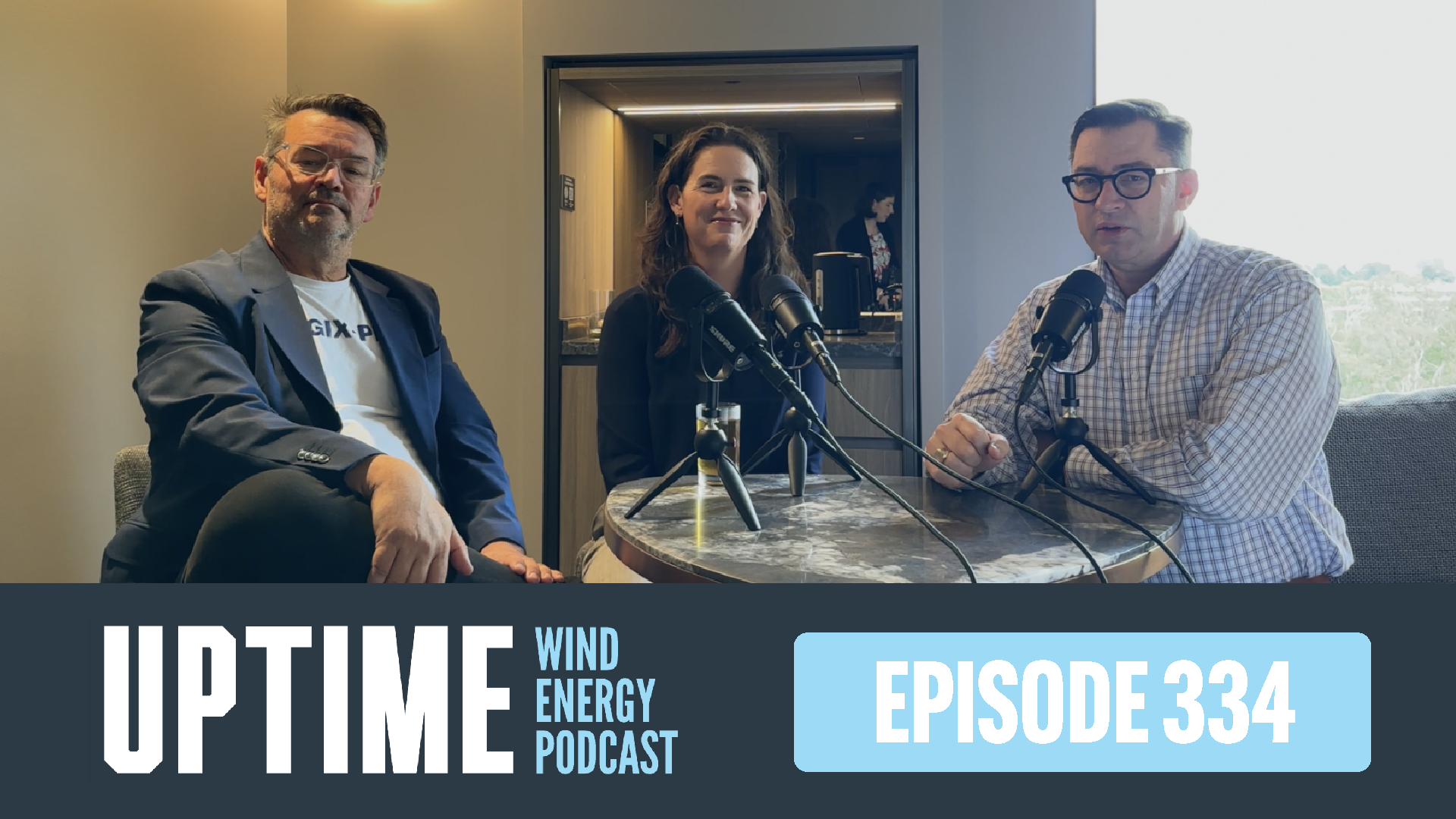
Allen Hall: Welcome to the Uptime Wind Energy podcast. I’m your host, Allen Hall. I’m here with Matthew Stead and Rosemary Barnes. And Rosemary, where are we?
Rosemary Barnes: We’re in Melbourne, and we have been visiting future attendees and sponsors and people interested in, in the event to see what topics that we should be talking about.
What are the hot topics of the moment?
Allen Hall: Which is a very interesting two days, Matthew, in that, uh, we h- did meet with a number of operators based in Australia, but, uh, they’re also very worldly. They have talked to companies all over about operations and, and maintenance, and there are some really eye-opening topics- Mm
that will be- Mm … at WOMA 2027 this year.
Matthew Stead: Yeah. The thing that was interesting for me was [00:01:00]that actually the topics have changed each year. So, um, they’re evolving and the industry’s continuing to, to do better, and so that, that was really interesting. Performance upgrades was probably one of the big areas of, of new interest, I think.
I think we heard with the pressure on pricing, uh, the market and so forth, you know, that, that 1% or 2% now is becoming more important. Um, so I think, uh, upgrades will definitely feature quite a lot. Um, balance of plant was also a big topic. Um, you just can’t ig- ignore the, um, transmission, you can’t ignore the transformers, you can’t ignore, uh, condensers and all these sorts of things, so yeah.
Rosemary Barnes: Cables.
Matthew Stead: Cables.
Rosemary Barnes: Terminations. Terminations of cables. Specifically raised several times.
Allen Hall: Yep. Yeah. It’s all about being more efficient, uh, getting more production, and then with the PPA prices, uh, that are changing-
Matthew Stead: Mm …
Allen Hall: rapidly, uh, everybody is paying more attention to the bottom line.
Matthew Stead: Mm, mm.
Allen Hall: Absolutely. There, there’s less cash running around, uh, chasing new development.
It’s [00:02:00] more of a focus on making sure your, at least your existing assets are performing as, as well as they can be- Mm … which then opens up the, uh, Pandora’s box of opportunity. Mm. Because there are 1%’s all around a wind turbine. More specifically, uh, all the drive train issues, the blade issues, the generator issues, and even going into the substation.
Mm. I, I was really shocked on BOP e- the, the one topic that came up, uh, yesterday and today was buried cables. Mm. Like-
Matthew Stead: Faults …
Allen Hall: faults.
Rosemary Barnes: Yeah. Junctions. Finding- Yeah … finding faults and what to do about them. Yeah. Yeah. But I think in addition to just wanting more revenue, I think people have, are getting more sophisticated about what actually matters and then the finances.
You know, everyone’s focused so much on availability, and now people- Mm … are like, okay, yeah, like once you’re at a certain level of availability, gets harder and harder to get more. And actually, you know, not all availability is equal. Is good. It, it [00:03:00] depends. Yeah. Yeah, like you wanna, um, you wanna focus on how much you’re generating at the times when electricity prices are high specifically, which usually means during lower wind speed periods.
Yeah. Which is actually good because that matches really well with what is actually possible. It’s, it’s hard to get more power out of the turbine if it’s at, you know, its rated power, then you’re not g- More efficiency is not gonna get you any more, um, power output, whereas lower in the power curve- Mm … um, when wind speeds are lower, there’s less electricity in the grid and so prices are higher.
And so- Mm … yeah, I mean, that’s, that’s why people are really asking to know more about what efficiency upgrades are possible, better ways to operate, scheduled maintenance, um, all those sorts of things. Mm. So that will be really interesting.
Matthew Stead: Raising the bar on sophistication. Um, but also life extension
Allen Hall: Yes, a lot of discussion about life extension
Rosemary Barnes: Yeah, end of life and life extension End of life Yeah, um-
Matthew Stead: Foundations, structures Which is
Allen Hall: tied to PPA.
Mm. A lot of that [00:04:00] discussion I, at least I looked at it as, uh, if I had a PPA and I can continue with that PPA with an existing turbine, I want to do that. Mm,
Matthew Stead: mm,
Allen Hall: mm. But how do I do that and how do I know that that existing turbine can last another five years? It seemed to go in five-year blocks, like can we get to another five years and then another and then, then another.
Wow.
Rosemary Barnes: Yeah. Once you get to 20, 20, 25 years, I think people like, uh, they, you know- It’s getting a little- Their original agreement might have been for 20, then they kind of just assume that there will be another five, and then after that they’re- Yeah … kind of reassessing cyclically and yeah, I know that people make plans for, you know, what components are replaceable, what would they have to get in, and I think that sometimes, uh, people doing those plans aren’t as familiar with the, you know, actual technical issues that are being faced.
Like, is a blade a replaceable component? It may be early on in the life it sort of is, not easily, but you know, like a 25-year-old wind turbine, you know, good luck trying to order 10 new blades because you’ve got a, you know, an issue that’s-
Allen Hall: Oh, well you, you need to read the news. Did you [00:05:00] see the news today about, uh, the, the wooden wind turbine blades as a replacement for aged blades?
That, that’s happening- … in real time, Rosa.
Rosemary Barnes: Okay. I know they- Yeah. Yep, yep. Okay. Okay. So that, that’s, that’s good. Making carbon new blade. E- even so, I don’t think that they’re- Okay. … gonna be, like, super-duper cheap, so you’re still gonna wanna be, um, doing a trade-off between y- you know, like, what kind of repairs.
You might be able to change the way you’re operating to reduce loads. Um, you might be able to monitor to make sure that your blades are safe. You know, if you know that there’s an issue, um, you just wanna get some advanced warning before blades start falling off your, your tower. Mm. You know, and then you can push it further.
Yeah. Whereas if you’ve got no information, then you have to be conservative and shut it down. Yeah. So yeah, I think there’s a whole lot that can be g- can be done there in that area.
Matthew Stead: There was a point that came up today, which I think was close to your heart, on, you know, if you’re going to be going for 1% or 2% or 0.5% AEP improvement, how do you actually measure that and how do you set up a proper experiment?
So-
Rosemary Barnes: Yeah …
Matthew Stead: I, I, I love that topic. [00:06:00]
Rosemary Barnes: Yeah. No, it’s one that I, um, yeah, I deal with m- my clients I, I’m often… It’s one of the things that Pablo really loves to do, is to organize trials of that nature of new technologies and see if they work. But, um, yeah, asset managers are usually very, uh, focused on fast results.
You know, they’ve got a, a big problem and they want a solution now, so they wanna just roll out the new technology over an entire wind farm. But if you do that, then it’s almost impossible. Unless you get, like, a huge benefit, like, uh, 10% gains or, you know, like reduce your failures by 50% or more, it’s really hard to actually- Mm
pick that out if you just replace everything. Mm. Whereas if you do a really, really good, um, trial plan- Systematic. Yeah … and you match pairs very well so that you have, you know, a control for each turbine and there’s- so many variables in a wind farm. It’s not, it’s not as easy as just, like, randomly choosing 50% to do and not do.
Mm. Mm. Mm. Like, you have to, you know, put some work into the trial design, and then, you know, like, do your statistical calculations ahead of time to know how long it’s gonna take you to get s- statistical [00:07:00]significance. So then you don’t just have a gut feeling about- Yep … how something went. You’ve actually got numbers, and then you can take those numbers to, you know, other wind farms that you’ve got- Yeah
and, and know what’s going on much better.
Matthew Stead: Worst study is an inconclusive study.
Rosemary Barnes: Yeah. Yeah, that’s true. Definitely.
Allen Hall: Well, that comes back to the data analysis- Mm … which a lot of operators mentioned, and how much data there is and what to do with it, and it did seem like a couple of operators have chosen some AI tools, varying degrees, all the way down from Microsoft Copilot to something much more complicated.
Uh, but I think there’s, uh, getting that d- to the last 1, 2, 3%, you’re going to need those tools- Absolutely … because what do you choose? Do you choose a blade? Do you choose a gearbox? Do you choose a generator? Do you go to the substation to get that percentage point or two Without having some really powerful tools- Mm.
you may be wasting your time [00:08:00] and money.
Matthew Stead: Mm.
Allen Hall: Which is a, a, a very interesting, uh, aspect to wind energy because it’s such an industrial business that, uh, we haven’t used heavy computational tools, uh, un- until really now.
Matthew Stead: Mm.
Allen Hall: And maybe Australia’s at the forefront because of the PPA and negative pricing is that that will, uh, actually lead an industry.
Because I haven’t seen a lot of that being used globally. Mm. So this is the first time an operator- Mm … that I’ve talked to has said, “We’re using it.”
Matthew Stead: Yeah. It’s quite a different discussion, um, I think, you know, this year compared to previous years in that I think in the past it was getting to know what’s possible, but now it’s like real case studies are coming through.
And a few of the people had some really good examples that we can talk about at the conference as to how they’ve actually been helped and how they did this and what the outcome was. I think, yeah, that would be really great content on that.
Rosemary Barnes: Yeah. I think it’s gonna be a good mix of people who have used third party tools and have experience with it, people that are doing it in-house and can share- Mm
some of the kinds of results- Mm … that, that you can get just from analyzing your own- Mm … [00:09:00] SCADA data. Um, people talking about how they get the data that they want. Mm. ‘Cause it’s not always so easy. You would think that, you know, you own a wind turbine, you have a right to have all of the data that comes through it, but it’s not.
Um, even if you do technically have a right, it’s, uh, it, it’s harder to actually get it than you might think. Mm. So yeah, sharing all, all those kinds of things. But I think also, like just as important as talking about the successes is talking about the, the gaps that– people still feel lots of gaps. Like, okay, we’ve got all the data, we’re collecting it.
We know that there’s so much potential here- Mm … but we don’t really- Mm … know what we can do, or it’s hard for us to, you know- Mm … make headway in this particular pain point. And that is really useful for companies that are developing tools to know what are the, the problems. Mm. Because then they can e- you know, they’re well placed to fix them.
Allen Hall: Mm. Which leads to the discussion we had with the operators and, uh, some of the suppliers for WOMA 2027. There’s a lot of interest. And as we’re sitting in the conference rooms, I’m thinking, we may not have enough room to [00:10:00] seat everybody. Uh, the WOMA 2027 website is up and running, and you can register now.
So just go to woma2027.com and get started there. At the same point, we’ve had a lot of contact with, uh, pretty much everybody that wants to sponsor the event, and there’s only a limited number of ways to sponsor. So if you’re interested in doing that, you, you need to go to woma2027.com and look at those, uh, part- particular packages and see what- Mm
fits your, your business. Uh- Going back to some of the, the comments we were just discussing downstairs about what we heard at 2026, like, which is only a couple of months ago, right? It’s back in February this year. Uh, there’s, they’re still discussing what happened at WOMA 2026- Mm. Which was very fascinating- Mm
because I think Rosemary, you and I have been to conferences that I have not thought an iota … about what happened at those conferences. Just nothing interesting does occur. There’s no new, new information, there’s [00:11:00] no new science, there’s no new operator approaches.
Rosemary Barnes: Mm.
Allen Hall: But we’re gonna see a number of those- Yeah.
Mm … come next March.
Rosemary Barnes: Yeah. Well, I think it’s partly because I don’t know what other conference organizers do, but, you know, we’ve had a exhausting few days here. You’ve come all the way from America, obviously, and, and Claire as well, also come over, our producer. Um, so, y- you know, like, we’re working really hard to make sure that the topics…
Like, it’s not an accident that the topics are ones that people are talking about later, because we come here to make sure that we get the right topics. And it’s not just these meetings as well. People get in touch, and- Mm … anybody watching, listening, who has, you know, something that they wanna talk about, then definitely, you know, send us a message, and yeah, we’re working on the agenda.
We’ll, we’ll have a draft agenda in the next couple of weeks based on what we’ve learned here, but then we’ve got the hard job of it’s not just that you have a really interesting topic, you need to have a really great speaker- Yeah … or several really great speakers, usually covering several different aspects of the problem.
You know, maybe it’s, uh, yeah, an asset [00:12:00] owner, an OEM, and some, some technology provider, you know, all together giving different, um, yeah, perspectives. That’s, I think, what makes a really great session. Mm. So yeah, we need the ideas for the sessions, and we also need the ideas for great speakers.
Matthew Stead: Yeah.
Rosemary Barnes: Right.
Matthew Stead: Yeah. I think we’ve, we’ve already matched a few of those dots, so- Yeah … I, we’ve heard people asking for certain topics they wanna hear about, and then we’ve heard other operators saying, “Well, this is what we could talk about.” So I think we’ve already-
Rosemary Barnes: Yeah, yeah … got some great
Matthew Stead: progress.
Rosemary Barnes: It was, it was interesting ’cause we, we built up a list of, you know-
Matthew Stead: Yeah
Rosemary Barnes: frequently raised topics, and then you’d say it to the next person that you went to- Mm … and they’re like, “Oh, that’s not a problem for us because we’ve done X, Y, Z.” And you’re like, “Okay. Well, excellent. You can, you can present the solutions that we know that other people- Yeah. Yes … are, are looking for.” Yeah.
So it has been… Yeah. Yeah. I mean, it’s definitely worthwhile coming, as, as tiring as it is. Yeah. Um, definitely worthwhile, and we’ll get a much better agenda for the- Yeah … for the effort.
Matthew Stead: And I think, I mean, it has been tiring. Um, but what, what made it for me was one of the operators said that [00:13:00] this is the only conference they will go to So I think, I think we’re doing the right thing.
Rosemary Barnes: Yeah. Yeah. I, I think so. I understand too, like, you know, all of us, we kind of are forced to go to events because that’s where our, our clients and customers are, and so you need to see them. And yeah, like I’ve even gone to the extent of some events where I don’t particularly like the event, but I know everyone’s going.
Mm. I just go and sit near the event for a couple of days and meet people at a cafe. So yeah, like we can’t get away from it. But if you’re an asset manager or, um, yeah, somebody in that kind of type of work, like you’ve got better things to do than listen to sales pitches aggressively thrown at you that aren’t relevant- Yeah
to what you’re doing. So, um, yeah. Like I, I definitely love to hear that kind of feedback- Yeah … and wanna make sure that we get it every, every year. Like that’s- It’s, it’s
Matthew Stead: encouraging.
Rosemary Barnes: Yeah … yeah, that’s, that’s the point of the conference, so.
Matthew Stead: Yeah.
Rosemary Barnes: Yeah.
Matthew Stead: The other big topic was we would really love more OEM involvement.
Um-
Rosemary Barnes: Yeah. Everybody wants more- … a lot of the operators- … OEM involvement- Yeah … all of the asset owners.
Matthew Stead: Yeah.
Rosemary Barnes: Like we want to [00:14:00] hear from OEMs more, have them there. Um, so yeah, we’re, we’ll be trying to To get those sorted
Allen Hall: Well, WOMA is a global conference, although it’s Australia-based and there’s a, a number of Australian operators.
There are Danish, Americans, uh, plenty of Europeans. Uh, we’re gonna see some from Southeast Asia, I think, this year. Mm-hmm. And, and Japan hopefully will come. Uh, because it’s a, it’s a global conference, there’s global knowledge- Mm … and wind is such a big industry. You may not have the solution in the United States, it may be sitting in Australia, and we need to exchange those ideas.
Mm. And that, that’s the point. So w- we are continuing to look for those world experts as we have received all the inputs of these are all the topics we wanna go hear about. Great. Now it’s on us three to go find some of those world experts and, and try to get them to Melbourne. Yeah. And I, I think that’s a great opportunity.
So if we do call you and ask you to participate in WOMA [00:15:00] 2027, please take it seriously because- Mm … you will be bombarded with great questions- Mm … and contacts and information. Uh, it’s an event you won’t wanna miss. Yeah. And- But I would- … there’s opportunity there.
Rosemary Barnes: Yeah. I’d say we’re, we’re prioritizing OEMs, um, to, to get more participation, ideally to speak, but at least to be there.
And we have heard from multiple asset owners in Australia that they want, they, they want to know what are some of the upgrades that they can do- Yeah … that you’re offering. They wanna know what’s coming next in terms of technology. They wanna know what are some of the non-Western options. So, you know, like it would be great to get some Chinese wind turbine, um, manufacturers as well.
Like, they want all this information. They don’t want a slick sales brochure pitch that doesn’t give them any technical information. So we’re hopeful that we’ll be able to get, you know, some technical people to speak on, yeah, what are the upgrades you offer and how does it work- Mm-hmm … and show us a case study that demonstrates the improvements.
Um, ’cause that [00:16:00] sometimes is really hard to get out of- Mm … out of OEMs. You know, that, “We’ve got this thing, it’s so amazing, you should get it.” Okay, well, what’s the business case for it? “Oh, well, we don’t have any numbers. Just trust us.”
Matthew Stead: Yeah.
Rosemary Barnes: Um, it’s so common to get a pitch like that. So yeah, any, any OEM that has any- anything like that, either for the next generation of wind turbines or for upgrading the current fleet, yeah, if you’re willing to bring the data, then people, they are desperate to hear this information.
Allen Hall: Mm.
Matthew Stead: Yeah. That came up so many times.
Rosemary Barnes: Mm.
Allen Hall: So what were the other, uh, topics that we’re… I’m just not thinking off the top of my head. I know foundations came up quite a bit- Foundations, yeah … which was an odd one, I think, because we haven’t seen that a lot in Australia. Yeah. But this year, foundations, foundations, foundations.
Basically, the health of foundations. Yeah.
Matthew Stead: Yeah. I think really there was a lifting of the maturity. Um, I think the topics were sort of showing that, you know, Maslow’s hierarchy and moving into the more of optimization rather than making do, and I think life extension around the foundations was a, a really good example of that.
Allen Hall: And bolts.
Matthew Stead: Bolts? Yeah, bolts.
Allen Hall: [00:17:00] Everybody said bolts. Bolts.
Matthew Stead: Bolts.
Allen Hall: You think the world’s simplest device, we’ve been making bolts for nearly 1,000 years or at least a couple hundred. But it does- And, you know- … come up quite often … cable, cable
Matthew Stead: terminations, again, some really
Rosemary Barnes: basic- Yeah, that, really specific ones that were raised multiple times.
Yeah. Um, yeah, which, which is great- Yeah … ’cause it gives us a good direction to go. But I do love how it changes so much every year- Yeah … ’cause it makes me feel like, okay, yeah, like we’re actually, you know, it’s worthwhile, um, putting on another event. Mm. Um, not just recording one event and then just, you know, like replaying that every year or something.
Re-educating.
Allen Hall: Yeah. Well, I, I think there’s a learning exercise that has happened over the past two years where people now are knowledgeable about those things we talked about- Mm … two years ago. Uh, was it, was it even two years ago? It was a year and a half ago when we first started this, so we’re, we’re not that deep into it.
Although our third conference will be next March, uh, you just see more energy, more industry knowledge in some of the references that I heard, uh, in terms of other companies and the approaches they’re taking clearly came from WOMA.
Matthew Stead: Yeah.
Rosemary Barnes: Mm.
Matthew Stead: Yeah,
Allen Hall: yeah. Which is, which is [00:18:00] fascinating. Yeah. That’s
Rosemary Barnes: good. I mean, we want- It, it is
Allen Hall: sticking
Rosemary Barnes: we want tech conferences to get better, right? That was the- No … the reason why we, uh, we started this conference was ’cause we didn’t think that it was sufficient, what we had available. So, you know, it’s not a bad thing if other conferences, um, get better. Yeah. Yeah. We should also mention that blades were, were raised a fair bit.
We talked so much about blades in the previous years, and we will be talking about blades a lot again, including we’ve got a master class on the Friday. Uh, it’s… Yeah, we’ll go back to some of the basics about how the composite materials work and how a blade is designed and certified and manufactured, and, um- Lightning.
Y- yeah, yeah, a little, a little bit about lightning. Um, I don’t wanna cover it too much because we did the master class on lightning- Right … last year. Mm. Um, yeah. And yeah, some of the common damage methods anyway. And of course- Mm … yeah, lightning is probably the most- … common, or I guess leading edge erosion is the most, and then lightning would be the most expensive.
Um, yeah, so we’ll be, we’ll be covering all that and just try and raise the knowledge level a little bit, um, for [00:19:00] everybody to… It’s a very complicated kind of, uh, yeah, component.
Matthew Stead: Yeah.
Rosemary Barnes: Yeah.
Matthew Stead: And workshops. So each year we’ve run sort of workshops or roundtables or whatever, so we’re still thinking about the format for them, but, um, thinking about how we’ll reintroduce them again this year.
You know, specific topics, specific questions, specific answers.
Rosemary Barnes: Mm.
Allen Hall: And the three of us will be in Hamburg in a couple of weeks at Wind Energy Hamburg, so if you see us and you’re interested in coming to Australia, that’s the place to grab us and- Yep … and shake us and say, “I wanna go to Australia. How do I do it?”
Rosemary Barnes: Mm.
Allen Hall: Uh, yeah. Yeah.
Rosemary Barnes: Especially if you’ve got a, a t- technology that addresses some of those specific issues that we’ve mentioned- Mm … then, um, yeah, just know ahead of time that Australia needs, needs more information and more, um, solutions available to them. So, yeah. And
Matthew Stead: that reminds me, we had a really discussion a- around safety and, you know, reasonable and [00:20:00] practicable, and discussion around all the lessons learned about how…
or what is best practice on a site, what is best practice about how to manage risks and-
Rosemary Barnes: Mm.
Matthew Stead: Yeah. Yeah. I know you, you, you enjoyed that one.
Rosemary Barnes: Yeah, yeah, definitely. And we’re not talking about, like, safety the- Ear muffs or hats. The, um, rou- Yeah, the routine safety that if you- The goggles, yeah … yeah, trip over and graze your knee, then you need to let the site supervisor know.
You, you know, it’s not that stuff, ’cause sites have that under control. That’s a given, yeah. Or at least the ability to get that under control. We’re talking about the bigger- Yeah … bigger things, you know. Like, uh, is there a issue that is causing blades to fall off turbines every now and then? Is there an issue that, uh, can lead to, you know, a fire?
I, I think everyone, like- Yeah … a big fear of everybody’s. There’s never been, um, in Australia at least, there’s never been a wind turbine fire that has caused a bush fire, but it is a possibility, and it would be so bad for the industry. So, you know, it’s those things- Mm … that could be just terrible, preventing those before they happen.
Mm. So that’s the kind of safety that we’re gonna mainly focus on. Mm. Although, you know, we’re not gonna [00:21:00] turn down questions on, um, some of the smaller stuff as well.
Matthew Stead: Yeah.
Rosemary Barnes: Mm.
Matthew Stead: And we even thought about getting some lawyers-
Rosemary Barnes: Yeah …
Matthew Stead: you missed out on this discussion, Rosie. Okay.
Rosemary Barnes: Yeah.
Matthew Stead: So
Rosemary Barnes: Yeah. Lawyers, this is news to me.
Well, I mean, are we talking contracts or, um-
Matthew Stead: No, no … no … it’s really operations. I mean- Right … the environmental, um, issues- Oh yeah … the operational issues. Mm. You know, there’s, there’s a few things in there that the lawyers can add.
Rosemary Barnes: Yeah. I mean- … I’ve, I constantly find myself having to interpret, you know, legal, um, legal text and also anticipate, you know, it’s one thing about what’s the right engineering, but then there is also the legal interpretation of it- Yeah
uh, as well, you know, in terms of contract law, but then also in, in terms of safety. Yeah. Um, yeah. Was this certification done correctly? You know- Yeah … that’s got some legal aspect to it. So yeah, that- Yeah … makes sense to me. Insurance is another one where I would say- Yeah, actually that came up … you know, like some, some people might think that that doesn’t sound interesting, but yeah, in- insurance is the other-
Matthew Stead: Mm
Rosemary Barnes: aspect that you [00:22:00] just can’t, um, you can’t get away from it. Like, you can’t just think that you’re, you’re doing your engineering without bothering about Mm … yeah, like finance and law and, um, and insurance. Those are things that- Mm … you spend a lot of time thinking about.
Matthew Stead: Yeah. Mm. And I guess we would also love to hear, you know, about potential speakers, but we’d also love to hear any other topics that people are attending and want to know about as well.
Rosemary Barnes: Mm-hmm.
Allen Hall: Absolutely. And if you haven’t registered for WOMA 2027, which will be March 3rd through 5th at the Pullman in East Melbourne, right? East Melbourne, yeah. They just redefined it. It’s Pullman in East Melbourne. Uh, go ahead and go to woma2027.com and register now. Uh, Matthew and Rosemary, it’s great to see you in person again, and we’ll see you in a couple of weeks, uh, hopefully in, in Germany.
Rosemary Barnes: Mm.
Allen Hall: Very [00:23:00] exciting.
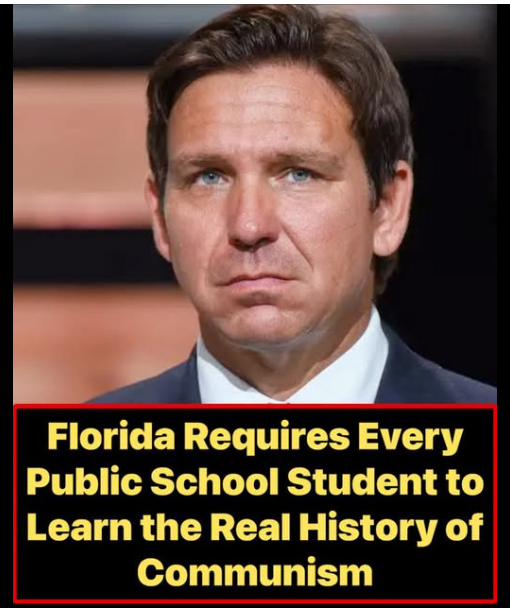 The substance of the meme here is correct; Florida public schools require comprehensive K-12 instruction on the history and dangers of communism, following a series of legislative moves and curriculum standards. The updated “History of Communism” curriculum is rolling out for the 2026–2027 school year, mandating that students learn about the “brutal realities” and (the catastrophic) global impact of communist regimes.
When I was a schoolboy in the 1960s and early 1970s, we came to learn that all efforts to establish a viable communist nation had failed, but our teachers were not shackled as to what they could teach and how they could teach it. As a result, we came to a variety of helpful viewpoints, and these are what I offered my own kids as they were growing up, e.g.,
- “Men are not angels,” as my sixth-grade social studies teacher explained. Those who do not need to work in order to survive can simply goof off.
- Yet idleness is averse to most people’s psychological needs to be an active and productive person, and member of society.
- Power corrupts, and absolutely power corrupts absolutely. Democracy prevents the accumulation of a pathological amount of power on the part of any one leader. (This was assumed to be true until Donald Trump’s second term.)
- If Lenin (a butcher) hadn’t had Trotsky (a compassionate intellectual) assassinated, the entirety of the USSR would have turned out completely differently.
- If the U.S. hadn’t, through its embargoes, made it impossible for Cuba to offer its people a decent quality of life, their revolution may have succeeded and brought forth a new way of thinking.
- There are examples of smaller scale societies in which the ideals of communism work out very nicely, e.g., the Israeli kibbutz.
- We read and discussed at length a book called “Social Ideals and Ideal Societies” in which these concepts were analyzed fairly and in great depth.
Now, will the typical American schoolchild turn out better if he’s cut off from thinking critically about all this and forced to accept the mantra that “communism = evil?” The typical Florida Republican would say the answer is an obvious yes, but most intelligent people would dispute that.
Producing educated people who can think for themselves is an idea quite opposed to the ongoing control of a population.
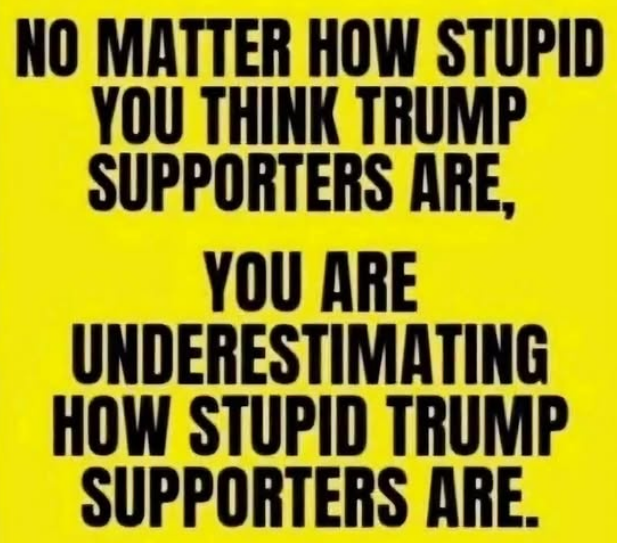 To the author of the meme here, I say: It’s safe to say that most folks in Trump’s MAGA base are stupid, though one needs more than a low IQ to fit into this segment.
In particular, we mustn’t omit mean-spiritedness. People who are kind, compassionate, decent and tolerant of others are grossly unqualified to be rank-and-file Trumpers.



-
Climate Change1 year ago
Guest post: Why China is still building new coal – and when it might stop
-
Greenhouse Gases1 year ago
Guest post: Why China is still building new coal – and when it might stop
-

 Greenhouse Gases2 years ago
嘉宾来稿:满足中国增长的用电需求 光伏加储能“比新建煤电更实惠”
-

 Climate Change2 years ago
嘉宾来稿:满足中国增长的用电需求 光伏加储能“比新建煤电更实惠”
-
Climate Change2 years ago
Bill Discounting Climate Change in Florida’s Energy Policy Awaits DeSantis’ Approval
-

 Renewable Energy10 months ago
Sending Progressive Philanthropist George Soros to Prison?
-
Greenhouse Gases1 year ago
嘉宾来稿:探究火山喷发如何影响气候预测
-

 Carbon Footprint2 years ago
US SEC’s Climate Disclosure Rules Spur Renewed Interest in Carbon Credits