

Weather Guard Lightning Tech

SunZia Switches On, Ørsted Weighs Chinese Turbines
Allen covers SunZia coming online as America’s largest wind farm, Ørsted’s stance on Chinese turbines, a record floating platform leaving China, Canada’s first offshore wind bidders, and a centuries-old North Sea shipwreck.
Sign up now for Uptime Tech News, our weekly newsletter on all things wind technology. This episode is sponsored by Weather Guard Lightning Tech. Learn more about Weather Guard’s StrikeTape Wind Turbine LPS retrofit. Follow the show on YouTube, Linkedin and visit Weather Guard on the web. And subscribe to Rosemary’s “Engineering with Rosie” YouTube channel here. Have a question we can answer on the show? Email us!
Good Monday everyone.
America just switched on the biggest wind farm it has ever built. Out in New Mexico … a vast field of spinning turbines called SunZia. Enough power for more than a million homes across the Southwest. It is a landmark. It may be the last landmark for some time. After this year … forecasters expect annual onshore wind additions to fall … all the way to twenty thirty. The tax credits that powered the boom … expire this year. Add tariffs … supply troubles … local opposition … and a federal permitting freeze. One developer put it plainly. Capital investments … frozen. Solar is cheaper now. Batteries are faster. And the wind industry did not see the breadth of the campaign against it. So the biggest American wind farm ever … arrives just as the road ahead narrows.
Now … cross the Atlantic to Denmark. Ørsted … the offshore giant half-owned by the Danish state … is being asked a hard question. Will it buy Chinese wind turbines? Its chief executive will not say no. Right now … he says … it is not expected. But they are keeping an eye on it. Analysts call that a wake-up call. Because the Chinese builders offer lower cost … faster delivery … and bigger rotors. And if a European champion turns east for turbines … that is a signal Europe is losing its edge. Not everyone is buying it. Britain has banned Chinese turbines from its offshore projects. The competitiveness fight … is just beginning.
Now set to sail from southern China. The world’s largest tension-leg floating wind platform. Sixteen megawatts. More than three hundred meters tall … and nearly eight thousand tons. It left port headed for the deep sea. And its power will run straight to an offshore oil field … clean wind … feeding fossil-fuel production. China connected more than three-quarters of the world’s new offshore wind last year. As the shallow sites fill up … the industry moves into deeper water. And the deep water … is where floating wind grows up.
Across the Pacific … a brand-new frontier is opening. Canada cleared the first bidders for its very first offshore wind farms. Off the coast of Nova Scotia … seven qualified players … from nine countries. The province dreams big. A megaproject called Wind West … forty gigawatts … far more than the region could ever use itself. The first phase alone … an estimated sixty billion dollars. Enough surplus power to supply a quarter of all Canada’s demand. The formal call for bids comes later this year.
And finally … a story that comes up from the seabed. While surveying the site of a future wind farm in the North Sea … Ørsted found something far older than any turbine. Three lead ingots … resting beside the bones of a wooden shipwreck. Late sixteen-hundreds … maybe early seventeen-hundreds. A Dutch vessel … likely bound for home … lost on the run from England to the Netherlands. Seventy kilograms each … mined, it seems, in the very English hills they will now return to.
And that’s the state of the wind industry for the 28th of June 2026. Join us for the Uptime Wind Energy podcast tomorrow.

Weather Guard Lightning Tech
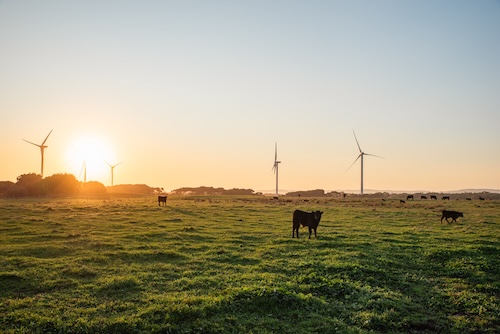
As Europe Shuns Chinese Turbines and Components, Who Will Fill the Gap?
While most of Europe has spent most of this year itemizing reasons it cannot, should not, and will not use Chinese wind turbines or components, accusations and arm-twisting tactics have garnered most of the attention.
But we invite you to consider a future – maybe just five, or ten years from now?- in which those same countries and companies are eagerly awaiting orders from wind turbine manufacturing facilities in… India.
What?!
You know that the country has a lot of installed wind.
You may think – and many in the industry would agree – that India’s blade manufacturers are a few revs behind blade-makers elsewhere in the world. But the country is newly committed to manufacturing and it’s busy installing more – provided that it’s made in India, with Indian technology, by Indian workers.
Of course, similar domestic-focused policy currents are running through European countries – where wind OEMs are almost inarguably a decade ahead of Indian manufacturers. But there’s an important reason why we say, “watch India” in wind turbine manufacturing.
It’s because you might learn something.
If you follow The Uptime Wind Energy Podcast, you probably heard this discussion a few weeks ago. It wasn’t the headline story – we try to highlight as many major news items and trends that we can, and follow up as credible information becomes available. India’s quiet moves to strengthen its own renewable energy industries didn’t grab the headlines. But it comprised a good bit of our panelists’ discussion.
With India’s expanding manufacturing capacity, and Suzlon’s strategic offerings for the European market (Blue Sky), there are reasons for European developers to take a closer look at Indian manufacturers.
If Europe continues to squelch deals with Chinese manufacturers due to data security issues, India is a relatively obvious candidate to fill the void, for several reasons:
- The country has depth and breadth in R&D: India (Suzlon, specifically) has a track record of involvement and relationships across the continent, as it operates research and development centers in Germany, the Netherlands, and Denmark.
- Indian service providers have reach: Inox and Adoni Wind operate multiple wind turbine manufacturing plants and wind farms throughout several Indian states, and Apraava Energy has been commissioning wind projects, working with multiple OEMs, for more than 16 years.
- The country’s energy sector has size: Tata Power is estimated to be worth about US$16 billion and employs 22,000 people.
And major manufacturers from other countries have had a strong presence in the country for years:
- GE Vernova has turbine blade and nacelle manufacturing operations and multiple tech/R&D centers in India;
- Vestas has a R&D technology center in Chennai; and
- China’s SANY Wind has had assembly facilities in India since 2017, and in 2024, it signed a licensing agreement with JSW allowing SANY to manufacture blades and generators for JSW – enabling JSW Neo Energy to produce wind turbine generators and major components in-country.
So while there is hard data suggesting that India is already a global hub for wind turbines, sometimes the real strength comes from soft skills. Like sharing information.
We’ve noticed that Indian manufactures aren’t stingy with information. They share what they learn in the field and on the shop floor, so that the whole industry can move faster to solve problems. That bodes well for the industry overall, and particularly well for companies who figure out how to solve problems that some manufacturers aren’t even ready to admit to having.
We’ll be watching India with a great deal of interest in the coming months. Subscribe to The Uptime Wind Energy Podcast and follow along with us.
We’re not financial analysts. We’re engineers who watch the wind industry very closely. This is what we’ve noticed, and we thought it was worth sharing.
Where do you think you’ll be looking for solutions, components, and service providers in the next few years or the next decade? Tell us what you think. We’d love to hear from you.
As Europe Shuns Chinese Turbines and Components, Who Will Fill the Gap?
 To the author of the meme here:
“Either” refers to two choices; “any” refers to three or more.
More importantly, it’s amazing how shamelessly the ultra-right wing exaggerates. The left side of the Democratic party would like to see the United States look like social democracies in places like Scandinavia. Having government programs that benefit the common person, e.g., Social Security, public schools, emergency relief, libraries, environmental responsibility, etc., does not equate to Stalinism.
 Some of my old prep school chums from the Class of 1973 convene via Zoom approximately every six weeks for a 90-minute discussion of current events, science, and anything else that sounds interesting.
Our professions range from medicine, law, finance, and business management. All from highly ranked colleges. Over 50% hold doctorate degrees.
Here’s something I find fascinating about the group: it includes one right-wing conservative. I don’t mean a Reaganite; I mean a Trump supporter. This guy is incapable of any thought that doesn’t come directly from Nexsmax.
It’s almost eerie how closely he toes the line of the far-right. Yesterday he echoed the Newsmax talking point and told the group that all Muslims holding public office are “very dangerous” and should be removed.
Now, the rest of us are sitting there, dumbfounded at this idea, unwilling waste our breath on this racist and utterly preposterous concept.
All this raises the question: How are our political viewpoints formed? How much of this is genetics? Epigenetics? Early childhood experiences? How do take a boy from among the best environments and turn him into someone who struggles to understand the most basic principles on which our country was founded?
https://www.2greenenergy.com/2026/11/09/principles-country-was-founded/



-
Climate Change1 year ago
Guest post: Why China is still building new coal – and when it might stop
-
Greenhouse Gases1 year ago
Guest post: Why China is still building new coal – and when it might stop
-

 Greenhouse Gases2 years ago
嘉宾来稿:满足中国增长的用电需求 光伏加储能“比新建煤电更实惠”
-

 Climate Change2 years ago
嘉宾来稿:满足中国增长的用电需求 光伏加储能“比新建煤电更实惠”
-

 Renewable Energy1 year ago
Sending Progressive Philanthropist George Soros to Prison?
-
Greenhouse Gases1 year ago
嘉宾来稿:探究火山喷发如何影响气候预测
-

 Climate Change2 years ago
Analysis: China’s CO2 falls 1% in Q2 2024 in first quarterly drop since Covid-19
-

 Climate Change1 year ago
嘉宾来稿:探究火山喷发如何影响气候预测