

Bret Tollgaard, president of Sunrez, explores how UV-cured resins are transforming wind turbine blade repair by dramatically reducing cure times from hours to minutes. Sunrez’s technology enables repairs in extreme temperatures and high humidity, extending maintenance seasons and increasing turbine uptime. Drawing from decades of experience across aerospace and marine applications, Tollgaard demonstrates how pre-impregnated UV materials are helping operators and repair teams save thousands of dollars per repair while getting turbines back online faster.
Fill out our Uptime listener survey and enter to win an Uptime mug! Register for Wind Energy O&M Australia! https://www.windaustralia.com
Sign up now for Uptime Tech News, our weekly email update on all things wind technology. This episode is sponsored by Weather Guard Lightning Tech. Learn more about Weather Guard’s StrikeTape Wind Turbine LPS retrofit. Follow the show on Facebook, YouTube, Twitter, Linkedin and visit Weather Guard on the web. And subscribe to Rosemary Barnes’ YouTube channel here. Have a question we can answer on the show? Email us!
Pardalote Consulting – https://www.pardaloteconsulting.com
Weather Guard Lightning Tech – www.weatherguardwind.com
Intelstor – https://www.intelstor.com
Joel Saxum: Welcome to Uptime Spotlight, shining light on wind energy’s brightest innovators. This is the progress powering tomorrow.
Allen Hall: Welcome to the Uptime Wind Energy Podcast Spotlight. I’m your host, Allen Hall, along with my co host, Joel Saxum. Today, we’re joined by Bret Tollgaard, president and CEO of Sunrez Corporation, a pioneering force in UV curing technology. Under Bret’s leadership, Sunrez has emerged as an industry leader.
Welcome in developing advanced UV cured resins and composites particularly for wind turbine blade repair. Based in El Cajon, California, Sunrez brings nearly four decades of expertise in UV curing technology. Today, we will explore how their cutting edge solutions are addressing some of the most pressing challenges in wind turbine maintenance.
Bret, welcome to the Uptime Wind Energy Podcast Spotlight. Thanks for having me, Allen. Appreciate it. We know there’s a lot of challenges in the repair business at the moment on using standard materials resin systems out on blades. Particularly as it gets colder in the springtime and the fall where seasons get cut short and you still have blades to repair.
Everybody always has blades to repair. So you hear about this large rush to get blades stabilized to get to the next spring. That’s a big problem for the industry right now. How much of that do you see of people just saying, I don’t know what to do, I can’t get my blades fixed before the season. It’s where SunRez comes in with UV cured materials, right?
Bret Tollgaard: Yeah, absolutely. Really one of the biggest values that we add for our customers is time. And we save time in a tremendous amount of ways. One, the time for the repair window is greatly increased because we don’t really require any heat to cure and kick off our UV curing resin. You can cure at much colder temperatures and much hotter temperatures without any impact from the ambient air.
Temperature or humidity. So you can hear materials a lot deeper into the season, so you’re no longer constrained by how cold it is outside. It’s really then, at that point, what kind of worker wants to get out, up on top of that wind tower.
Joel Saxum: I think a big thing there too, Brad, is, we’re talking about UV cured resins being able to extend seasons, but what it can do within a season, right?
So when you’re talking like a major repair that you got grinding layer, grinding layer, and all of a sudden you’re three weeks into this thing. A three week repair, if you’re able to, boom, cure fast, boom, cure fast, move to the next step, that might shorten that thing down to a week? So is that possible?
Is that much time savings?
Bret Tollgaard: Absolutely. So one of the big things that UVCure resins do is they use the light photons from either the sunshine or one of our handheld LED lamps to cure our, kick off our resin. And so what we can do is we can cure up to a quarter inch thick laminate in under five minutes.
And depending on the light intensity that you have and the surface area that you’re trying to cure you can really fast track your repairs. And so we provide pre impregnated sheets of fiber to the wind market. So you don’t have to worry about mixing any resin up tower, getting the right amount on there, vacuum bagging, heat blanket, et cetera.
We provide pre impregnated sheets that have the optimum amount of resin for mechanical properties and adhesion to the wind turbine blade. And so what that allows customers to do is to actually peel, stick, and cure a laminate piece. To go ahead and repair that surface really quickly.
Allen Hall: And I think there’s really two marketplaces I’ve seen your materials used out in the field.
One is just major structural repairs that it just gets so cumbersome to do. The UV cured makes sense. The other one is I have a blade that I has some substantial crack in it. And this is interesting cause I ran across this in Oklahoma of all places. Blade with a huge crack in it. And they had temporarily patched it to hold it together using your material just for sense of speed.
Let’s just stabilize it and move on and fix other blades and the farm will come back to this, which is really hard to do with existing resin systems.
Bret Tollgaard: Our prepregs in general are used in kind of three primary areas. Corrosion resistance, not quite as applicable to the wind market, but cosmetic and structural repairs.
And so they lend themselves really well to doing large, thick laminates. But also for smaller cosmetic things or even zippering certain cracks. So something that you might have seen where they have staged pre pregs to do some crack propagation mitigation. They’re using a variety of instances and really the technicians can get up and down tower just so quickly.
And so that’s where one of the big advantages of UV cure materials comes into place is how quickly they can get repairs done
Joel Saxum: from a commercial standpoint, Bret. There’s a lot of advantages here. So if I’m an ISP a blade repair company, I want to come to my clients and say, Hey, we’ve got a way to do this faster.
This bid, maybe a chance for an ISP to get in front in the bidding process or through an RFP. And now if I’m an operator, I’m thinking the same thing. Hey, this is going to be, it could have been a three week repair. Now a one week repair, or especially places like I’m in Canada and our blade repair season is only 12 weeks long.
And I’d like to extend it to 20 weeks or 24 weeks or something. There’s so many advantages to this. Where are you seeing the most draw? Is it the operators themselves? Is it ISPs? Is it the OEMs? Where’s this coming from?
Bret Tollgaard: So it’s a little bit of everything. So historically on the wind market, we actually partnered up with GE and LM five, six years ago, and they were the ones who really brought this material into the wind market.
They saw the value in it. And at that point in time, we actually had a styrenated resin system. So had VOCs, it was a flammable material. It was a vinyl ester based system, but they still saw the merit and being able to complete jobs extremely quick. And it wasn’t that different from some of the, epoxy issues that there were then that there were in the past since then we’ve sold a little over 50, 000 patches.
Sold tens of thousands of square meters of material into the wind market alone. And now we’ve brought out a new material actually in 2024, it’s our 7355 vinyl ester resin system. And so it’s non styrenated, no VOC, no haps, all single component. And now we’ve introduced that into the entire wind market.
And one of the things that will really help ISPs gain the confidence in the material is having some of the other OEMs come through, validate it, certify the material, and really check it off saying this works well with our epoxy or polyester blades. And so that’s been our big focus for 2024 is gaining a little bit more exposure.
Introducing people to the material. But then we also have a track record of both, cosmetic and structural repairs in this market.
Allen Hall: And I think that’s key. And your experience outside of WIND is also valuable. I know you’ve been helping a number of different applications, ship based at times, aerospace is another market you’re in.
Those are really helpful in the WIND market also, because it gives you more just world experience, world knowledge that you’re bringing to the table when you come back to help the WIND industry.
Bret Tollgaard: Yeah, absolutely. So Sunrez was actually founded in 1986. It’s focused almost exclusively on UVCure resins, putties, and prepregs.
And so on the decades of R& D that we’ve done applications installs, new builds, et cetera we’ve gained a tremendous amount of knowledge and experience on how to really best service a customer’s specific repair requirements. For the wind market, it’s not that different from, let’s say marine, for instance, where you’re, going to be repairing composite components.
So we know how to make them stick. We know how to get the right structural properties. And being able to deliver that to, in a form factor that technicians up tower can actually use is a big challenge, but something that we’ve really worked on. And think we’ve come up with a pretty good package.
Allen Hall: How does the UV resin systems work? What is the magic in there? Because you, I’ve seen them over time, especially in aerospace, and now I’m seeing your material in a lot of places. What’s the chemistry? What, what’s actually happening when it says a UV resin?
Bret Tollgaard: Oh, that’s a great question, Allen.
So traditional resins, let’s say for an epoxy, for instance, you have a part A and a part B, you mix them together, and then you have a certain amount of time before they start to gel and then ultimately harden. And oftentimes to really get full mechanical and thermal properties, you have to elevate the temperature and cure it in an oven, post cure it with a heat blanket, or even an autoclave.
UV cure is completely different with respect to the way things actually cross link. And this is coming from a mechanical engineer, not a chemist, but simply put UV curing resins have something called photo initiator in them. Photo initiators are activated a tremendous amount of different rays ways and wavelengths.
There are hundreds of different photo initiators. And so you will blend a specific resin and concentration of photo initiator or photo initiators, depending on what you’re going to be curing with. But ultimately what happens is the light photons actually kick off make the photo initiators react then with the resin and or the monomers around them to crosslink and get a solidified part.
And so you don’t have any heat doing any of the work to make the resin molecules activate. It’s literally all the light photons hitting those photo initiators and going. And so what that means is you really need to pair the photo initiator with the light source. For instance, we’ve been doing stuff in the past where we sold to surfboard repair customers who were used in a broad spectrum sunlight that works relatively well, but you now have a broad spectrum of initiators to activate.
There are different ones that are good at surface curing, some that are better at depth of curing, and the light intensity, the dwell time that’s going to be on that, all of that really makes a really big difference with respect to the type of laminate that you can UV cure.
Allen Hall: Okay, so that explains a lot, because when you actually see UV cured resin systems kick off, They look hot.
Like there, there’s still a chemical reaction that’s happening there, but the photo initiators are essentially blocking that chemical reaction until they get exposed to, to, to the specific frequency of light, and then they step out of the way and the reaction happens. That is really unique because I, one of the things especially on winter blades is that generally you’re outside, so there’s gen to be sunlight.
Do you recommend just using the sunlight to cure the resin systems, or is it better to have a specific frequency light and to really get on top of it to make sure it cures out?
Bret Tollgaard: For the wind market in general, and the type of quality that we’re all really striving for, it’s absolutely recommended to be curing with a specific device.
Whether it’s one of our handheld lamps, which is something like one of these little guys. We’re teaming up with a group to do LED blankets as well, or sheets that you can just wrap around it and it’s all there’s thousands of LED lamp LEDs on there, excuse me and so there’s a variety of different curing methods that can be done, but to guarantee that depth of cure and your adhesion to that repair surface that’s really recommended because the sun at different times of the year, But softer for amount of light, depending on the Northern Southern hemisphere is the blade in the shade, or is it tilted?
And so you really can’t control as sufficiently as you can with, an actual curing device.
Joel Saxum: Bret, when I talk to any technician that’s used this stuff in the field, or even blade repair people that like, Hey, have you used this yet? Here’s how it works. All of every one of them, either their eyes get big and they explain how awesome this, a UV cured resin was, or their eyes get big and they go, what?
What is that? And that’s amazing to me that not that many people have heard about it. The one thing I wanted to share with you is I did get that was part of the feedback from some people that have used UV resins in general. And I don’t know if they were Sun Res or what else is out there, but they were saying, to get clarification on how we use the lights.
And what light source to use and because they’re like, early days, like I tried the one person said that to me one time, I tried UV cured resins on a boat one time, and they were like, one, I was trying to set it up. I took a sheet off and the thing cured and I had to grind it out and fix it. But you guys have gone to extra steps to make sure that this thing is easy to use in the field and you’re making that process combination of working with GE and work with other operators and stuff.
What are some of the special steps that you guys do to ensure the quality in the field and ease of installation?
Bret Tollgaard: One of the things that we do is we have an extensive lab here at Sunrez. We do mechanical testing. We’ve got a, 100 kilonewton instron for mechanical tests and coupon sampling. We have a DSC here, which is very valuable to us.
The DSC will measure the degree of cure, and then also some of the thermal properties that the TG most importantly, and so what we’ve done in the past and what we continue to do every time we’ve come out with a revised formula or different fabrics, for instance, that different customers might want to use E glass, S glass, et cetera.
We will cure. in field conditions. And then you can measure the mechanical properties of that part. Then also we can throw it in the DSC to really make sure that we’re getting the full mechanical and thermal benefits of a UV curing system. So for instance, most of the time our customers, we recommend curing with our lamp from 14 inches away.
When you do that, you can cure a 20 layer UD1000 prepreg in under 10 minutes. That’s almost a half inch thick.
Joel Saxum: That’s a day long usually.
Bret Tollgaard: That’s just it. And so there is a footprint though, that led light emits enough light intensity to cure 20 layers. As you start to go farther out and farther out, there’s less light because that led light on the top loses some of that intensity and that focus, right?
And so every LED creates a signature footprint. And then we’ve done all the testing internally to say, okay, from 14 inch distance, you’re going to be able to cure, I’ll say a nice round number two square feet, or if you go to 16 inch, you can hear three square feet, et cetera. And so we can give you the footprint that it’ll cure at the depth of cure that you can expect.
And then we can do some of the adhesion properties of that as well. And so we’ve built a catalog with our LED equipment to really make sure it’s as easy for the operators to use. And for some of the cosmetic repairs, it’s two layers of biax, or you throw some combi in there. The sun will cure that in under five minutes.
And so one of our LED lamps will certainly be and if you do have a cosmetic repair, you can put that light farther away because now you have a larger footprint, less light intensity, but you don’t need all that intensity to only cure a couple layers of material. And so we try to build this structure and this guideline for customers to follow.
To make it as easy to use as possible.
Joel Saxum: So Bret, we’ve talked a lot about the limitations of the traditional or classic resins, the time, the workability, these kinds of things that can be a pain. And one of the big items there is humidity, right? So temperature is one thing it has to cure at a certain temperature, but there’s also humidity and when you’re working in like I’m in Austin, right?
Not too far from here. There’s a lot of wind farms right along the coast in Texas. And those wind farms have huge limitations because of humidity. How does the UV cured products work within that?
Bret Tollgaard: Our stuff’s been known to cure underwater. Impact on curing with humidity is not that large of a deal for the material itself.
Now, on the humidity side of things, what you really need to look after is what your substrate you’re bonding to. If you’ve got standing water on there, you’re going to be bonding to that standing water. And so you do need to make sure that you have a nice clean surface. So that to actually be able to bond to, but yeah, the humidity itself won’t impact the cross linking and the curing of our materials.
Allen Hall: And what are the costs of UV cure material compared to the non UV brethren? Is it about the same or is less expensive, more expensive?
Bret Tollgaard: It’s going to be a slightly more expensive for them, the square foot of material that they’re actually going to be purchasing based on just pure fabric and resin alone.
Once again, a lot of our stuff comes pre impregnated. We do sell liquid resins, whether it’s infusion, really low viscosity, hand laminating resin, but for the wind market, we found the pre pregs to really add the most value to the customers. And so yeah, cost per square foot is going to go up a little bit.
But when you’re peering in five minutes versus six hours and there’s no mixing to do and the technician really has to just trim out the proper size part, peel off the backing film, roll it out with a hand roller, and then peel off the UV blocky film that’s on top. They add, or they save. Hours and hours per repair.
Joel Saxum: Yeah. At the most repair materials are 10 percent of a repair. It’s all, most of the costs in repairing blades, it’s all in just labor. It’s labor. It’s time. The materials is usually pretty small. So a slight increase in cost of materials will well over make up for itself in the grand scheme of things.
Bret Tollgaard: The ROI is incredibly short when using UV cured prepregs.
Allen Hall: So what forms does the UV cured prepregs come in? Come in. I’ve seen these little patch kits that you can buy online. It’s your material. It’s in a four line package. Is that how it generally comes or is it on rolls or how do you expect this to show up on site?
For the
Bret Tollgaard: wind market in particular, having a smaller style prepreg that’s easier for one or two people to handle has shown the greatest advantage. And traditionally we’ll sell them in flat sheets that are 300 millimetres wide and about 750 millimetres long. And so those flat sheets are easy for people to go, to stack, to build, and it’s easy enough to overlap as well.
But we’ve also had some more people ask us for continuous length rolls. And so now we’ve actually been building some 10 metre long versions that are still 300 millimetres wide. And so we’re starting to get those into the field to see what feedback and stuff we have from a broader range of customers to see if that continuous length will then serve more of advantage for a trailing edge repair or something along those lines where they don’t necessarily need or have the desire to continue to stack and overlap pre breaks.
Joel Saxum: Bret, LEP product.
Bret Tollgaard: We’re certainly looking in that direction. We have a couple of things in the works that we think is going to be really big for 2025 on the LEP side of things.
Allen Hall: So how’s it gone in the field? I obviously I’ve seen some of your materials up close out in the field, but you must be having a lot of success.
If you’ve done 50, 000 of these kits, that’s a lot of kits. How is it going out there?
Bret Tollgaard: So far so good. The feedback that we get from the customers is usually pretty positive. We are certainly open to understanding packaging things and that sort of stuff to make it easier for the customers to use in the field.
But by and large, we’ve had very positive feedback. We’ve had customers install in negative 20 degree Fahrenheit weather that was supposed to be a temporary winter repair to get them through to the summer, but it’s been going now for 3 straight years without needing to be replaced. Customers like that.
And then the other side of the thing is we’ve had customers in Puerto Rico, where some weather and storms were coming through, but they were to get up and down tower. Fixed that blade, get it spinning, and didn’t have to sit there for four days waiting for the rain to actually pass them by. And so we get a lot of positive feedback from that standpoint, where it’s just the time savings to be able to get up and down tower as effectively as possible.
And so people are pretty grateful for that kind of repair opportunity.
Allen Hall: What is generally that time savings for your materials versus the standard prepreg materials?
Bret Tollgaard: Yeah. So time savings alone on, I’ve found smaller repairs, anywhere from two to six layers thick are several hours in the four to five hours per repair, because there’s no heat blanket required.
Which are anywhere from 3 to 6 plus hours, from what I’ve heard. And then also it comes pre impregnated. So everyone, all they really have to do is trim the prepregs to the appropriate size for that laminate schedule. And then the way that our prepregs come is they’re formed with a backing film, our pre impregnated fiberglass sheet.
We have a clear film over the top of that and then we have an orange UV blocking film that’s just lightly spray adhesive to that clear film. And so what that will allow customers to do is peel off the black backing film, stick it to your repair surface, take a standard three or six inch bubble buster roller to roll out any air that might have been in between the prepreg and the substrate.
If you’re building up more layers, you generally, they’re going to be slightly larger and slightly larger than the one underneath it. And so you can always have UV protection with that transparent orange UV blocking film over the top. You can build up your layers by removing the films in between. And then when you’re all said and done you peel off that orange UV blocking film.
You can leave the clear one on so you get a nice, hard, tack free surface. And you expose it, the sunlight will once again start to kick it off, but you use that LED lamp to really get in there and make sure you get the proper depth of cure. But in under five, generally under five minutes, we’ll tell people you’re eight to 10 minutes long.
For a little bit of a safety factor but you’re done curing in under 10 minutes, whereas you don’t have any extra components like a vacuum bag, a vacuum itself to pull, a heat blanket to tape and just, then wait for hours on end for that to actually go and hope that the blade is in the massive heat sink.
Tons of advantages in having a pre impregnated sheet coupled with a sub 10 minute cure.
Allen Hall: Joel, if you’re saving four or five hours per repair, how much money are you saving
Joel Saxum: Four or five hours per repair. If you’re talking just technician time. So let’s just take it as a concept of you got two technicians on ropes.
Each one of those technicians is going to be between 95 and 120 an hour. So we’re talking, so say we make some easy numbers. We’ll say 200 bucks an hour for that rope team. And that’s a cheap rope team. That’s not that’s a not, yeah. So you’re talking for five hours, thousand dollars. And that’s if everything goes perfectly, because now when you extend time, you also extend volatility and you also extend circumstances that you may not want, right?
So that’s a minimum right there. Bam. Thousand bucks. And we haven’t talked about a thousand dollars there, but let’s talk about the uptime for that turbine, because what we hear all the time, Allen from the field, uptime is the most important thing. Uptime is the most important thing. We need these turbines spinning.
So if, we’re saying, this is how much money you’re going to save on technicians. You’re also going to get five more hours of production out of that turbine.
Allen Hall: Yeah, I think about that. Someone just handed you a thousand dollars. For changing to a better material. Would you take it? Yes, all day.
I would do that all summer long that because it makes Infinite sense to do it. Yeah, I’d be glad please Bret Send me more because that’s the way that this works is as Joel pointed out You’re cutting the downtime of the turbine being off, but also you’re getting those technicians moving on to something else It’s just a huge money savings.
That’s why GE Vernova and so many others are switching to these Sun Res UV systems it’s Quite amazing. Bret, you’ve done so much already. You guys have been in business a long time. You’re based in the United States. You’re out in California. You have a long storied history.
What’s coming in 2025? What should we be watching for?
Bret Tollgaard: For the wind market in particular, the LAP side of things is definitely one of the hot button products that we’ve been working on and plan to roll out. We have a couple of different solutions. One there a pre preg solution, but then also a A more putty based option for people.
We do have a couple other kind of cool UV cure products that we are working on in the wind market that we’ll release in due time. But we’ll keep that in the back pocket for now. But really it’s just even more market penetration. We sell UV curing resins anywhere from bathtub to surfboard repair technicians.
We have some Amish folk who use it to make saddles for horses. We sell to the defense industry Marine, industrial sectors. So really we’ve been a small company for a rather long time. But we’re expecting some pretty significant growth in the next year, plus as we get some deeper market penetrations, a variety of these things where really we’re just starting to displace Other composite resin systems, mostly epoxy.
We have some filament winding customers actually who had a six to 12 hour post cure in an oven that we got down to 90 seconds. And so when you see that kind of time savings you’re opening up more mandrills, your production lines increase, you can automate the heck out of a lot of different things.
And yeah we’re ready for some more disruption.
Joel Saxum: Bret, you’ve been around the industry for a while. Multiple industries, say the industry, we’re in wind, right? You’ve been across all kinds of composites industry. What’s the craziest repair that you guys have used Sunrez UV cured repairs on?
Bret Tollgaard: Sunrez really started manufacturing prepregs during Operation Desert Storm, Desert Shield, eighties and early nineties. We had a lot of material going to the Middle East and originally it was used for doing spot repairs. On a variety of different things, but it ended up being used as a lot of armor repair.
But two really interesting repairs was an IED explosion at the bottom of a Humvee. It’s, it’s damaged, there’s holes, it needs to be filled so it can actually go and be used again. The guys in the field went up, installed our repairs underneath it, but they’re out in the middle of the desert and there’s no LED light.
So what do they do? They use the sunshine and they get a mirror and they bounce the sun off the mirror to cure to the underside of a Humvee. And so that reinstated the strength.
Joel Saxum: That’s super cool.
Bret Tollgaard: Exactly. And so that was one of the really unique things. And the other one that I heard was our materials were literally used on the leading edge of the A 10, the Warthog to help to help reinstate its ability to fly.
And so when you’re over and you’re in harm’s way. They have these BDRs, Battle Damage Repair Kits. And to really make sure that you can get back home and you reinstate the ability for the airfoil to work properly, you cover all those bullet holes, and you at least now have a plane to get back to back home.
Joel Saxum: That to me sounds like a leading edge repair. That really would work.
Allen Hall: It works on an airplane. I’m sure we can make it work on a wind blade. Bret, this is amazing. And Sunrez is doing amazing things at the minute. And we appreciate you having on the podcast. How do people get a hold of Sunrez? Now they’ve heard all this great about all the great advancements in the materials they can have for wind turbine blades.
How do they get a hold of Sunrez?
Bret Tollgaard: Easiest place to go is the website, www. Sunrez. com. S U N R E Z. We’re generating it, we’re starting a YouTube channel so we can actually make some more how to videos and ease of use things. We are same thing on LinkedIn and Instagram where we’re starting it all.
Yeah, the website’s great. Contact us through there. Phone number’s on there as well. And that would be the best way to reach us.
Allen Hall: Brad, thank you so much for being on the podcast. Great material. We’ll see it again in 2025. Thanks so much for being on. I appreciate the time. Thank you.
https://weatherguardwind.com/sunrez-blade-repair/

 I have bad news for the young (32 years junior to her husband) ex-press secretary shown here (bad pic btw):
You’ve run out of people who a) are stupid enough to believe any of this, and b) even if they did believe it, many would not vote to keep Republicans in office after having enabled Trump to rape our nation.
As bad as our economy is, Democrats will make it worse?
Again, even the idiots are losing their patience with this garbage.
 Truck drivers are spending large amounts of their own money to drive into traffic-ridden Washington D.C., flying American flags, the banner that has been usurped by the MAGA right, to protest Trump’s nonsensical war in Iran that has pushed diesel prices through the roof.
Hmmm. I’m suspicious.
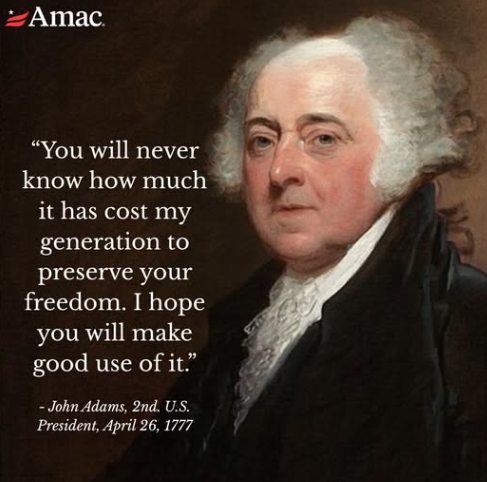 At left we see yet one more reminder of the disaster taking place in the United States.
Our Founding Fathers made huge sacrifices for us, and we’ve seen fit to elect an insane dictator to run roughshod over our beloved Constitution.
We hear that democracies do not descend into authoritarian regimes overnight. That’s true, but what’s happened here has been quite rapid indeed.



-
Climate Change1 year ago
Guest post: Why China is still building new coal – and when it might stop
-

 Greenhouse Gases2 years ago
嘉宾来稿:满足中国增长的用电需求 光伏加储能“比新建煤电更实惠”
-
Greenhouse Gases1 year ago
Guest post: Why China is still building new coal – and when it might stop
-

 Climate Change2 years ago
嘉宾来稿:满足中国增长的用电需求 光伏加储能“比新建煤电更实惠”
-

 Renewable Energy11 months ago
Sending Progressive Philanthropist George Soros to Prison?
-
Climate Change2 years ago
Bill Discounting Climate Change in Florida’s Energy Policy Awaits DeSantis’ Approval
-
Greenhouse Gases1 year ago
嘉宾来稿:探究火山喷发如何影响气候预测
-

 Climate Change2 years ago
Analysis: China’s CO2 falls 1% in Q2 2024 in first quarterly drop since Covid-19