


SUN’s Georgetown, SC renewable energy workforce training graduating class. Photo provided by SUN.
Charleston, SC-based Solar United National (SUN) believes that a clean energy future can only be achieved by acknowledging the past. SUN empowers local communities to shape their own energy futures through workforce development training and community solar projects.
SUN is a renewable energy developer that works with community partners, local governments, and workforce development boards to offer clean energy training and apprenticeship opportunities tailored to the needs of the communities they serve. The curriculum covers workforce readiness, OSHA safety certification, energy auditing and weatherization, and solar, storage, and electric vehicle (EV) installation. The goal is for students to graduate with a valuable credential that opens pathways to safe, stable employment in the clean energy sector. After the program, SUN and its partners provide job placement assistance and career guidance to help graduates transition into the workforce.
Working in a region with historical hurdles
When founders Brad Leon, Drew Harris and Grant Scheffer started SUN, they knew historical context was the most crucial consideration.
“We know we live in one of the cultural centers of slavery in America. We live in these communities; we exist in these communities. When we sat down to discuss what we wanted this business to look like, we came up with this plan of going to communities, hearing about and caring about their history,” Grant Scheffer said.
Recognizing the historical context within which they are working, SUN wanted to eliminate as many barriers to attending the training as possible, so they paid their students to attend. In addition to offering stipends, SUN partners with nonprofits to provide meals, transportation, and childcare support.
Listening to the community is a huge part of SUN’s work. Their model begins with deep engagement: hearing from residents, partnering with local nonprofits, and working with institutions such as schools and churches to build capacity for solar projects.
“We don’t come in with a predetermined plan; we come in and listen to what they want.” Grant Scheffer, Founding Partner, Solar United National
“We learned how hard it is in the Southeast to do this kind of work — utility controls, state laws, and the price of electricity versus what solar can provide,” Scheffer recalled.
Despite these hurdles, SUN’s dedication to collaboration and innovation allowed the program to evolve. It moved beyond initial funding to embrace a multifaceted approach, including grant writing and technical assistance for other organizations.
Using federal funding to support a holistic approach
SUN’s journey began with a focus on leveraging federal funding to ignite local clean energy projects. Early support came from two HeroX prizes, awarded in 2023 as part of the Community Power Accelerator program under the Infrastructure Investment and Jobs Act (IIJA), also known as the Bipartisan Infrastructure Law (BIL). These prizes laid the foundation for SUN’s work, particularly in energizing rural communities and addressing challenges unique to the Southeastern United States.
SUN’s workforce training program came about as an answer to communities asking for help with career development.
“More than anything else, that’s when they said, ‘We need help with jobs,’” Scheffer said. “We took that to heart, and that’s when we started to design our program around how to build that workforce.”
In addition to equipping participants with technical skills, the program incorporates an energy justice curriculum led by Reverend Boseman from The Imani Group. This curriculum challenges students to examine the historical context of their role in the workforce and empowers them to receive training in solar development.
This holistic approach prepares participants for clean energy careers and addresses the systemic issues that have historically limited access to such opportunities.
“Our mission was to amplify the history of the community through the projects,” Scheffer said.
Georgetown, SC’s Minority Incubator Solar and Disaster Resiliency Hub

Photo provided by SUN.
SUN graduated 14 students in Georgetown, SC, in June 2024, where the organization partnered with the Gullah Geechee Chamber Foundation and local nonprofit 7 Dimensions Outreach to establish the Minority Incubator Solar and Disaster Resiliency Hub, known as “MIP.” This initiative, spearheaded by 7 Dimensions founder Ebony Hughes, provided training and workforce development opportunities for minority communities in the region.
Hughes, who grew up in rural Georgetown County and overcame significant challenges as a young mother, recognized a gap in workforce training and sought to create opportunities for others facing similar barriers. She transformed an unused portion of her insurance agency’s building into an incubator space, providing a launchpad for local businesses and job training programs.
Federal grants funded SUN’s paid training program, which equipped participants with solar installation skills, construction of electric vehicle charging stations, and OSHA certification. The program involved installing a solar canopy and two EV charging stations designed to offset the building’s energy use and provide electric vehicle charging to customers.
Bringing federal funds as far down into communities as possible
At the heart of SUN’s mission is a desire to bring federal funds as far down into communities as possible. This groundwork ensures that community members take ownership of the projects that emerge.
“Over time, this has evolved to recognize that it is a health argument regarding clean energy and a wealth argument regarding the ownership of the projects staying in the community.” Grant Scheffer, Founding Partner, Solar United National
This philosophy ensures that solar projects’ economic and environmental benefits are retained locally, creating long-term prosperity. The hope is that by building this capacity, people will continue to do more clean energy work in their communities.
“Otherwise, whatever money you throw at them has nowhere to go, and it just sits at the administrative level,” Scheffer said.
Sustaining funding and staying rooted while branching out
From its roots in South Carolina, SUN is scaling its model to reach communities nationwide. As SUN expands, it remains committed to fostering local ownership of clean energy assets.
“The hope is that the ‘National’ part of our name really becomes real for us,” Scheffer said. “We want to engage with communities across the country and show them that the model for South Carolina really is working for us.”
To expand access to clean energy careers further, SUN is developing workforce training programs across South Carolina’s 12 SC Works Centers and plans to build additional sites nationwide. Each center will reflect the unique heritage of its surrounding community while serving as a resiliency hub, providing essential services during disasters. With multiple committed centers already in development, SUN is steadily advancing toward its goal of making workforce training widely accessible, ensuring that the transition to clean energy is equitable and inclusive.
SUN recently became a South Carolina Department of Employment and Workforce Eligible Training Provider, enabling it to receive state and federal funding for its workforce training programs. In addition to training in solar and EV charging infrastructure installation, SUN will also offer an apprenticeship program in energy auditing.
While initial funding through programs like BIL has been instrumental, sustaining and replicating their model in diverse communities will require ongoing innovation and partnerships. Scheffer remains optimistic, highlighting the organization’s ability to adapt and grow.
For SUN, the mission is clear: amplify the voices and histories of the communities it serves while building a cleaner, more equitable energy future. Solar United National is proving that transformative change begins at the community level by bridging the gap between federal resources and local needs.
The post Solar United National Empowers Historically Disadvantaged Communities to See a Bright, Clean Energy Future appeared first on SACE | Southern Alliance for Clean Energy.

At left see we what it’s like when a formerly great country is being led be a moron.
Will “they better stop now!” lay this issue, the precursor to World War III, to rest?
A World Superpower Pays Heavy Costs to Be Led by a Spoiled Child
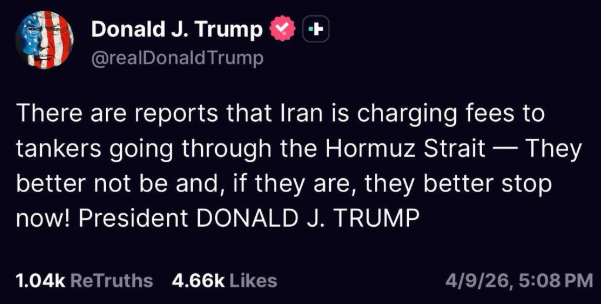 At left see we what it’s like when a formerly great country is being led be a moron.
Will “they better stop now!” lay this issue, the precursor to World War III, to rest?
https://www.2greenenergy.com/2026/04/10/there-are-costs-for-a-world-superpower-to-be-led-by-a-spoiled-child/
 In their ad, the folks offering “The Most Complete Periodic Table Ever” claim that, if your kid is struggling with chemistry, she can improve with this product, which is essentially tons of useless information.
Who discovered molybdenum? In what year? What is its market value?
We are a society in which our facility with science is now in free-fall. If you think that blunting whatever may remain of your child’s natural curiosity with crap like this a good idea, here’s where to shop.


Britain’s Most Iconic Fish Nears Breaking Point
AI Data Centers Power Crisis: Massive Energy Demand Threatens Emissions Targets and Latest Delays Signal Market Shift

DeBriefed 10 April 2026: Worst energy crisis ‘ever’ | India withdraws COP33 bid | Drag artists and climate change
-
Climate Change8 months ago
Guest post: Why China is still building new coal – and when it might stop
-
Greenhouse Gases8 months ago
Guest post: Why China is still building new coal – and when it might stop
-

 Greenhouse Gases2 years ago
嘉宾来稿:满足中国增长的用电需求 光伏加储能“比新建煤电更实惠”
-
Climate Change2 years ago
Bill Discounting Climate Change in Florida’s Energy Policy Awaits DeSantis’ Approval
-

 Climate Change2 years ago
嘉宾来稿:满足中国增长的用电需求 光伏加储能“比新建煤电更实惠”
-
Climate Change Videos2 years ago
The toxic gas flares fuelling Nigeria’s climate change – BBC News
-

 Renewable Energy6 months ago
Sending Progressive Philanthropist George Soros to Prison?
-

 Carbon Footprint2 years ago
US SEC’s Climate Disclosure Rules Spur Renewed Interest in Carbon Credits