

Singapore has announced that it will buy about US$76.4 million worth of carbon credits from international projects in Ghana, Peru, and Paraguay. The move reflects the country’s growing role in the global carbon market and its strategy to meet national climate targets. The credits will come from nature-based projects such as forest conservation and reforestation, which reduce or capture greenhouse gas emissions.
The government stated:
“These projects aim to reduce carbon emissions from deforestation, increase carbon sequestration of soil organic carbon stock in grasslands through sustainable management practices, and remove carbon emissions through the reforestation of degraded pastureland.”
Buying Carbon, Growing Climate Impact
The carbon credits will be bought through agreements signed under Article 6 of the Paris Agreement. This article allows countries to trade emission reductions across borders.
Investing in projects abroad helps Singapore reach its climate goals. It also supports other nations in funding sustainable development.
The total contract amounts to S$104 million (US$76.4 million), or about 2.175 million tonnes worth of credits. These credits will come from projects that protect rainforests, restore damaged land, and capture carbon in nature. Each credit represents one metric ton of carbon dioxide reduced or removed from the atmosphere.
Officials have emphasized that all credits must meet strict quality standards. Projects need to show that emission reductions are real, measurable, and verified by independent groups. They must also show benefits for local communities and biodiversity.
Why Singapore Is Buying Carbon Credits
Singapore is a small, urban country, ranked as the world’s 57th-biggest emitter by Global Carbon Atlas. It has little space for renewable energy or big nature projects. The nation is investing in solar power, efficiency measures, and new technologies. However, it still can’t meet its climate targets on its own.
Carbon credits allow Singapore to close this gap. By supporting projects overseas, the country can compensate for emissions it cannot cut at home. Officials have stressed that credits are not a substitute for domestic action. Instead, they are a way to complement local measures and move faster toward climate goals.
Singapore has pledged to cut emissions to 60 million tons of CO₂ equivalent by 2030, down from about 52 million tons in 2021, and to reach net zero by 2050. Buying high-quality credits is part of that plan.

The Role of Nature-Based Projects
The credits Singapore will buy focus on nature-based solutions. These include protecting forests, restoring ecosystems, and preventing land degradation. Such projects are critical because they deliver both climate and social benefits.
Forests, for example, absorb carbon dioxide while also providing habitat for wildlife and resources for local communities. Reforestation creates jobs, improves soil health, and supports water cycles. Protecting land in Ghana, Peru, and Paraguay keeps these benefits going. It also helps avoid emissions from deforestation.
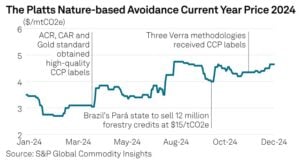
Analysts say nature-based credits are among the most popular in the voluntary carbon market (VCM). In 2024, they made up over 40% of global credits traded. They often sold for higher prices than energy-related credits.
Singapore’s Hub Ambition in Carbon Markets
The global carbon market is growing quickly. The VCM was valued at about US$2 billion in 2024 and could reach US$50 billion by 2030 if demand keeps rising.
Compliance markets, such as the European Union’s Emissions Trading System, are even larger. Singapore’s early participation positions it to benefit from this growth and to shape global standards.
Singapore has positioned itself as a regional hub for carbon trading and finance. In recent years, the country launched the Climate Impact X (CIX) exchange, a platform for trading high-quality credits. It also signed bilateral carbon credit agreements with countries such as Papua New Guinea, Bhutan, and Morocco.
Partnerships Stretching Across Continents
Singapore’s US$76.4 million purchase from Ghana, Peru, and Paraguay is part of a broader plan. This strategy aims to create a strong network of carbon credit partnerships under Article 6 of the Paris Agreement. These deals focus on getting high-quality credits. They also aim to boost climate cooperation and keep environmental integrity.
A key milestone was the Implementation Agreement with Ghana in May 2024. This agreement sets the rules for generating and transferring credits. It also required that 2% of credits be canceled at issuance and 5% of proceeds be directed toward Ghana’s climate adaptation.
In August 2025, Singapore signed its first transfer agreement with Thailand, its first such deal in Southeast Asia. This opens the way for Thai mitigation projects to supply credits for Singapore’s climate targets.
In September, a request-for-proposal boosted activity from four projects in Ghana, Peru, and Paraguay. They have support from GenZero, AJA Climate Solutions, Boomitra, and Mercuria Asia Resources.
Beyond these deals, Singapore is working with Bhutan, Chile, Vietnam, Papua New Guinea, and Rwanda on new agreements. These partnerships strengthen Singapore as a carbon market hub. They also direct funding into global climate action.
Through this growing network, Singapore is positioning itself as a trusted player in global carbon markets. It also supports partner nations in attracting funding for climate and conservation projects.

Benefits for Host Nations and Their Communities
For Ghana, Peru, and Paraguay, the deal brings funding for sustainable development. Forest protection projects often struggle with limited resources. Selling credits helps these countries pay for activities like patrols against illegal logging. They can also fund community programs and build infrastructure to support conservation.
Carbon finance also creates jobs in rural areas. Planting trees, restoring land, and managing conservation areas all require local workers. Communities can gain from revenue-sharing programs. These programs can help schools, health care, and water access.
By linking their projects to Singapore’s market, these countries gain more visibility and credibility. This can attract further investment from other governments or private companies seeking high-quality credits.
Global Signals From a Small Island Nation
The deal shows how international carbon markets are starting to scale. Under the Paris Agreement, countries can trade credits to meet national targets. This allows funds to move from rich countries with few natural resources to those with big forests and ecosystems.
Experts say such cooperation is essential. Meeting global climate goals will require both deep domestic emission cuts and large-scale protection of natural ecosystems. Carbon markets provide a way to finance the latter.
Singapore’s move could inspire other small but wealthy nations to follow. If successful, the model may become a blueprint for how developed economies can support climate action in developing regions while also meeting their own goals.
The purchase also boosts Singapore’s role as a carbon market hub and highlights the rising importance of international carbon finance. Credit quality and long-term effects remain a challenge. However, strict standards help this deal show that global partnerships can boost climate action and support sustainable development.
The post Singapore to Buy $76.4M Worth of Nature-Based Carbon Credits appeared first on Carbon Credits.

EU carbon credit claims changed on 27 September 2026, the day the Directive (EU) 2024/825 began to apply across the European Union. The change is narrow. It changes how a company can talk about the credits it buys. A product can no longer be called neutral on the strength of compensation alone; however, every specific, evidenced statement about what a company measured, reduced, and funded stays fully available.

The post Promoting Improved Cooking Practices in Nigeria appeared first on Terrapass.



-
Climate Change1 year ago
Guest post: Why China is still building new coal – and when it might stop
-

 Greenhouse Gases2 years ago
嘉宾来稿:满足中国增长的用电需求 光伏加储能“比新建煤电更实惠”
-
Greenhouse Gases1 year ago
Guest post: Why China is still building new coal – and when it might stop
-

 Climate Change2 years ago
嘉宾来稿:满足中国增长的用电需求 光伏加储能“比新建煤电更实惠”
-

 Renewable Energy12 months ago
Sending Progressive Philanthropist George Soros to Prison?
-
Climate Change2 years ago
Bill Discounting Climate Change in Florida’s Energy Policy Awaits DeSantis’ Approval
-
Greenhouse Gases1 year ago
嘉宾来稿:探究火山喷发如何影响气候预测
-

 Climate Change2 years ago
Analysis: China’s CO2 falls 1% in Q2 2024 in first quarterly drop since Covid-19