

Weather Guard Lightning Tech

Siemens Gamesa Financial Troubles, Chinese Turbine Concerns
Allen, Phil, and Joel dissect Siemens Gamesa’s latest financial woes, including their shocking 54 MW onshore wind order intake. The trio debates the company’s bold claim of competing with Chinese manufacturers on quality, not price. Plus, they explore the ripple effects of Chinese wind turbines potentially entering European markets, from Italy to Germany.
Register for the AMI Wind Turbine Blades Event!
Sign up now for Uptime Tech News, our weekly email update on all things wind technology. This episode is sponsored by Weather Guard Lightning Tech. Learn more about Weather Guard’s StrikeTape Wind Turbine LPS retrofit. Follow the show on Facebook, YouTube, Twitter, Linkedin and visit Weather Guard on the web. And subscribe to Rosemary Barnes’ YouTube channel here. Have a question we can answer on the show? Email us!
Pardalote Consulting – https://www.pardaloteconsulting.com
Weather Guard Lightning Tech – www.weatherguardwind.com
Intelstor – https://www.intelstor.com
Allen Hall: Joel, I will be at the AMI Wind Turbine Blades conference in Boston in the beginning of October, holding a panel or hosting a panel, I’ll moderate a panel. On blade operation and maintenance upstream quality problems and operators challenges, which sounds like what we just saw on our drive through Kansas and Oklahoma a lot of operators with a lot of challenges on the quality of products that they’re purchasing.
Joel Saxum: Yeah, I think that panel couldn’t come at a more timely. I guess that’s not a very good way to say that. However, yeah, when we hear from people is the, we’re getting blades, the blades are a year old, two years old, three years old. We’ve got a leading edge erosion. We’ve got cracks. We got this going on.
We’re fighting warranty claims. We’ve got blade repair contractors out here. We got this, we got that. So we’re going to get up on state, or you’re going to get up on stage and we’re going to have some people from a couple of IPPs. So there’s going to be some some of the engineers that are dealing with this firsthand.
And you’re also going to have someone from Nordics on stage with you. So someone from an OEM. Going to have some varied opinions and some good information. But you’re going to get different viewpoints and different details from all sides of the supply chain there to be able to hopefully solve some of these problems.
Allen Hall: Yeah, Matt Sagala from Moraes from Nordex and Pragna Martin from Engie, if you don’t know Pragna. That would be a really good panel. I’m gonna learn a ton there, I’m sure. And I am, just want to make sure everybody knows, if you’re interested in attending that event, and there’s several other sessions about supply chain and blades and, all kinds of materials involved in blades.
This is your conference. So you need to Google the AMI plastics wind turbine blades conference in Boston and Boston in October will be beautiful. The weather would be perfect. So it’s a good time to get out of the office and get a short flight over to Boston and have a good time learning about.
Supply chain and blades and all that’s involved on making and supporting the wind industry.
I’m Allen Hall and I’ll be joined by the rest of the Uptime hosts after these news headlines. In the UK, Siemens Gamesa wind turbine workers in Hull have secured a significant pay deal. Around 300 employees who construct the 108 meter long wind turbine blades by hand have accepted a two year agreement worth 8.4%
the deal includes a 4.5% increase for 2024 and 3.9% for 2025 with 93% of workers voting in favor. The settlement demonstrates strong support for the agreement among the workforce. U. S. Treasury Secretary Janet Yellen has called for a substantial increase in climate financing, stating that the global transition to a low carbon economy requires three trillion U. S. dollars in new capital annually through 2050. This figure far exceeds current financing levels but represent what Yellen describes as, quote, the single greatest economic opportunity of the 21st century, unquote. She emphasized the need for increased private sector investment and highlighted the role of multilateral development banks in catalyzing climate focused projects.
Ørsted is pioneering the use of heavy lift cargo drones for maintenance work at the Borsele 1 and 2 offshore wind farm in the Netherlands. This world first operational campaign involves 70 kilogram drones capable of transporting up to 100 kilograms of cargo from vessels to wind turbines. The drones can complete tasks in minutes that typically take hours, significantly reducing operational time.
This innovative approach is expected to cut costs, enhance safety for personnel, and lower carbon emissions by reducing the need for multiple ship journeys. In the United States, construction of the first U. S. offshore wind turbine installation vessel Charybdis is nearing completion. Now 89 percent complete the vessel owned by Dominion Energy is expected to be delivered in late 2024 or early 2025.
However, the project has faced cost increases. The latest estimate reaching 715 million. As a Jones Act compliant vessel, it will offer great operational flexibility compared to foreign built alternatives for offshore wind development in American waters. Fugro has completed a comprehensive four year survey operation for Atlantic Shores Offshore Wind in New Jersey and New York.
The company’s innovative approach boosted efficiency by 30 percent, playing a crucial role in the recent federal approval of Atlantic Shores Southbound. which will provide 2, 800 megawatts of clean energy to New Jersey. We will also introduce Virgeo, a cloud based platform for data management, marking the industry’s first digital deliverables to federal regulators.
And finally, the UK government has significantly increased the budget for this year’s Renewable Energy Auction to 1. 5 billion. Up 500 million pounds from last year, Energy Secretary Ed Miliband announced that most of the funding will support offshore wind power development, aligning with Labor’s goal of quadrupling offshore wind capacity by 2030.
While the renewables industry has welcomed the move, experts caution that additional measures may be needed to ensure timely project delivery. That’s this week’s top news stories. After the break, I’ll be joined by my co host, CEO and founder of Intel Store. Phil Totaro, and the Chief Commercial Officer of Weather Guard, Joel Saxon.
As wind energy professionals, staying informed is crucial, and let’s face it, difficult. That’s why the Uptime Podcast recommends PES Wind magazine. PES Wind offers a diverse range of in depth articles and expert insights that dive into the most pressing issues facing our energy future. Whether you’re an industry veteran or new to Wind, PES Wind has the high quality content you need.
Don’t miss out. Visit PS wind.com today. Phil, the Q3 report from Siemens g Mesa came out this week and their, obviously that’s combined with the Siemens Energy reports for all their divisions, but the Siemens Cab Meso is the one that we’re concerned about on this podcast. Really fascinating data because it’s broken up into offshore, onshore, and the service business.
In Q3, now remember that everything’s shifted a little bit for their quarterly year. So they start October 1st is the beginning of their fiscal year, so we’re in Q3 with Siemens Energy. The order intake for onshore wind turbines in Q3, Q3 was 54 megawatts. On the offshore side, they had 0 megawatts of order intake.
On offshore, the service business looks to be fairly consistent. It hasn’t changed too much. They have about 80 gigawatts of a fleet managed by them. And that seems to be pretty consistent, but with the 4X and 5X platforms having design issues and they essentially stopped selling. 4x and 5x until probably just now they’re going to start is what it sounds like it has, they have had a dramatic downtick in order intake a year ago in Q3 of 2023.
I’ll give you the example here. They had 717 megawatts of orders for onshore compared to now 54. So it’s less than 10 percent of what they had eight. A year ago, when Siemens made this move to stop the 4X and 5X and that dried up all sales, is this something that it’s recoverable? From a Siemens Gamesa standpoint, or is it just that Siemens Energy, the larger corporation, has the financial resources to carry them over until they become productive again?
What’s the move here?
Philip Totaro: Allen, this is a real tough question because, at the end of the day, with a product that’s been taken off the shelf for a year, And then put back on, this isn’t consumer products where, maybe they can sell it again, just maybe even rebranded, repackage it and sell it again.
This is a piece of industrial equipment that people need to be able to trust. And that’s really the challenge for them is how do they really go about gaining the trust of project developers who I mean they’re going to start what I think is going to happen if they’re going to make sales on this 4x, 5x platform without redesigning it.
Although with the new fixed blade and all that, we’re assuming, although again, they haven’t been very transparent about what actually happened and what they’ve done to fix it. But hopefully that comes out when they start selling it again. But in the meantime the reality of it is if they’re going to sell.
I think they, instead of being up with GE and Vestas in kind of a tier one, they’re now down in terms of kind of finance ability of their product at the same level of maybe Nordex and some other companies out there. I don’t think they’re a tier one with their sales anymore. And I think they’re going to get financially discounted in Western, particularly in Western markets.
Joel Saxum: For sure. Phil, and I think a difference here in the market and I take the market in general, but taking a year off with this platform and that was rolling before that. So they hadn’t had that many, as many sales before that. But now since then, we’re talking in the four X five X range. The competitors that are offering machines that also have those same, not exact outputs, but family of outputs, right?
In that four X, five X range, that spec, they’re more, they’ve had more of an operating history. They’re pressuring us of the Nordics in the Vesta’s and the, like the GE has the new 6. 1 coming out. Or, in 5. 8, so there’s more platforms for a, in a. A developer to choose from that are starting to have a track record in that SPAC range.
Whereas when the 4X and 5X was being sold, like the 45s and stuff there wasn’t that much out there available in the market to purchase. So not only are they fighting, like you said, like it’s not, these aren’t, pencils or calculators where if they took a year off in the market, but it’s not a big deal, and someone just goes back and starts, buying back when they’re on the shelf.
This is a very visible, very, I wouldn’t say transparent isn’t the rule, the word I’m looking for, but if it’s very visible, very piece of, if you’re in the wind industry, you know about it, the problems, what’s been going on. Everybody knows these things. To gain that trust back, whether it’s just from the person sitting behind the desk making a decision, I’d like to go with this platform.
Or do I have an option of, a vest’s V one 50 or an n nor XN 1 49 or N 1 63 or a V 1 62 or whatever. You have the options of not only that decision, but then you gotta turn and make that decision with. The financiers and the insurers, I’m sure the insurers are sitting there going, for the first few years of this thing, getting back put in place, we’re going to raise the premiums or we’re going to raise the deductibles on it.
Cause we just don’t know what it’s going to look like. And that rolls right back to the financiers, because like I always say, people think banks run the world, bank anything, unless you can insure it. So insurance companies are the ones that run the world. So it’s going to be, it’s going to be an uphill battle to get these things back in developers hands, unless they put them out there at a discount, I think.
Allen Hall: So is the brand wounded at the minute? And what I really want to point to is offshore. And at least in the United States, Siemens Gamesa has a good reputation for offshore wind turbines. That’s what you hear from operators that and they’re the leader at the minute on U. S. offshore, but they have recorded zero order intake for the last two quarters for offshore turbines.
Is that because the market is going to explode in Q and basically next quarter that there’s just a hold off in the orders to Siemens Gamesa, or is it something deeper? That’s happening like interest rates or something of that sort, because it looks like the brand has been wounded.
Joel Saxum: But I think that the onshore and offshore platforms are so different that I wouldn’t say that the entire, like I would almost from a, from that standpoint the market feel of that brand, I would separate them.
And I wouldn’t say. That brand has been hurt so much as the onshore brand has been hurt. The offshore brand, that platform is so different. It’s such a different mechanism. The only thing that you’re thinking of there in my mind is this brand solvent enough to support me for the lifetime of this product now?
And what would, what you spoke about when we first started this conversation is Siemens Energy, the parent company. They’ve got enough cash in the back pocket where it’s this is like GE pre split last year where they’ve got enough money even in the Q3 results for Siemens energy, their gas services orders doubled year over year.
They’re making money on the Siemens energy side as a whole. So that part of the thing. The parent, the umbrella can hold it up. I don’t know how long. I’m not sure. I’m not sitting in the, I’m not a fly on the wall in a boardroom over there, but I think that the offshore problem isn’t necessarily a Siemens enter Siemens Kamesa problem that the order to intake is down.
I think that’s just say, the US market. We all were, we’re super excited about what’s going to happen in offshore wind. However. With projects being canceled and things being moved around and these other things, there’s just not as much appetite to buy things right now in the U. S. market, at least.
Philip Totaro: And keep in mind, too the offshore blades are made with a different type of manufacturing process than the 4 and 5 megawatt onshore platform. So because of that, they haven’t been subject to the same kind of reliability issues that have been faced with the onshore platform. They also, I think part of the issue is not necessarily a Siemens specific issue.
I think certain projects where they were earmarked as the turbine vendor of choice, some of those projects got slowed down. You’ve seen, Things happening in Taiwan with their recent auctions as well, where Sted was shut out of the market. STED was, typically gonna source either a Siemens or a Vestas turbine for most of their projects.
So that’s a challenge as well. And there are markets like South Korea that are still, trying to sort things out and would lead to a lot of orders for Siemens in their offshore business, but they just haven’t taken off yet. And so that’s, it’s I think it’s a short term challenge with their offshore sales.
I don’t think it’s going to impact them long term, but it obviously impacts their cash flow, and right now, with the exception of the revenue contribution being made by Siemens Gemesas, Services division to the overall Siemens energy portfolio. They’re not contributing very much otherwise, so thankfully they have that those services contracts.
But the other challenge to that is they’ve been getting squeezed on margin there as well, because they’ve had a lot of repairs to undertake, not just on the four and five megawatt platform, but any other platforms they have. They’re also managing a lot of the CENVION assets that was part of the legacy deal when they acquired that.
So they also have other multi brand service contracts in place where they’re managing, some Vestas sites and some GE sites around the world. So they’ve got a healthy portfolio in the services business, but because the margins are getting squeezed in the, even in the services business they’ve got that’s gonna start having a longer term impact.
They’ve gotta get back to selling. The question is, are people gonna buy this 4 platform? Do they trust it enough? Or does it mean that Siemens Energy has to plunk down the money for them to come up with Repackaged or rebranded product it seems like even today There’s some news that came out that one of the projects in Norway that got shut down Is going to restart the Odal Vind Management company in conjunction with Cloudberry is going to restart their project here and there’s quoting has having said significant efforts have been made, including the replacement of several blades on the remaining turbines and comprehensive repairs.
After having taken down, two turbines, or having blades broke on and separated on two different turbines at that project site previously. Again, the fact that they’re able to get back to business with the operation of some of these things is good. The fact that they’re going to be able to get back to selling is good, in theory, if they can actually close deals.
I’m not confident that they can with this onshore turbine. So the offshore business and the services business are going to have to continue supporting both Siemens, energy moving forward.
Joel Saxum: Phil, I’m going to add another wrinkle in there to you. So this is not just a Siemens thing. This is a Siemens, a GE, a Vestas and all the above OEM things.
Allen and I just spent a week in the field. So if you are listening to this as an engineer that deals day to day with contracts with OEMs or a site supervisor or a technician out in the field, you’re going to, this is going to resonate with you. The majority of these people that are operating in the field are pissed off at the OEMs in their service contracts.
When we looked at GE Vernova the other week, their results and services was up. And now we’re looking at Siemens. Services is doing well. I do not believe that wave is going to continue forever. There’s going to be a time when that wave of services from OEMs comes crashing to shore. People are going to be using them because it’s the only real good options.
But, as independent power producers in these wind farms come out of warranty, or they’re not signing as long of FSAs, or they’re gonna try to get out of FSAs, or in the grand scheme of things, the OEMs might have to cut back on some of the FSAs because of the unprofitability of them. You’re going to start to see, in my opinion, you’re going to start to see quality ISPs start to rise up.
The big ones that are there are going to start to gather more talent, more knowledge, more information, and they’re going to get better and better, and you’re going to start to see them put the squeeze on market share that the OEMs have at the service level. So I think that these services Percentages is services things that are like, oh, they’re carrying their, they’re carrying the quarter because the services are doing good.
I don’t think that’s going to last another couple of years. I’m thinking like, by 2026, you’re going to see a market start to move in an opposite direction of that because everybody’s pissed off at them enough at the level of service or at the. Basically, and this is from my side, we’re in my seat talking with people in the field, in the back offices, all the way to the insurance adjusters and everybody else involved in the industry.
They’re pissed off at the OEMs because of the egregious prices that are getting shoved down their throats.
Allen Hall: After the break, I want to discuss what the CEO of Siemens was discussing, which is the quality of their product compared to the offerings. Of Chinese manufacturers. Mark your calendars for AMI’s Winter and Blades Conference happening October 2nd and 3rd in historic Boston, Massachusetts.
This two day event, which is similar to the well established edition in Europe, will bring together the whole blade value chain to examine market outlook, innovations in blade materials, design, manufacturing, testing, and lifecycle management with a special focus on the North America market. Get insights from experts from Vestas, Along with scientists and engineers from the National Renewable Energy Laboratory and the Oak Ridge National Laboratory.
Plan your trip to Boston this fall by visiting the link in the show notes or just google 2024 Blades Boston.
So some more recent developments over in Europe regarding Chinese manufacturers and in a significant development German utility ENBW is considering the use of Chinese wind turbines for future projects, and ENBW’s chief financial officer cited the limited number of Western suppliers and the potential economic benefit as reasons for this consideration.
And while ENBW currently relies on European and U. S. manufacturers engaging in the development With Chinese manufacturers could be a possibility in the future and although it’s not an immediate concern Obviously Europe is very protective of the renewable industry they have developed over time and they’re Mostly concerned about a couple of companies, Goldwin, Minyang, and then Wendy entering into European markets.
And this has led to Siemens making comments about competing with Chinese manufacturers that want to enter into Europe. Europe bill that it sounds like the approach Siemens is going to take is to just deliver higher quality products, more consistent products and compete on a quality of product, not necessarily on a cost basis.
That’s a unique strategy. I’m not sure that’s a winning strategy. Is that something that you would recommend?
Philip Totaro: Oh, Allen, you are so polite. You’re so very polite with that. I will be less polite and say that is the most preposterous thing that I’ve heard probably in a little while. Because, you’re coming off, for Siemens, you’re coming off, and keep in mind, these were comments made to a journalist after their Siemens Energies.
Quarterly call that we just talked about. These were comments made by the CEO of Siemens energy at a point in time when, they’re just coming off this, product quality issue where they had to shelve their, the sales of their four and five megawatt onshore platform for a year.
Because of, lack of integrity with, their manufacturing quality processes. So trying to, we also just talked about the fact that they’re probably, if they’re going to come back into the market, they’re going to probably have to sell their product at a discount. I think that’s actually putting them in the realm of, competing with the Chinese companies who are also sell trying to sell their Chinese manufactured goods in Western markets at a discount.
I don’t see how, even though it’s a brand like Siemens, They’re going to be able to charge a price premium for supposedly premium quality, especially when nobody’s going to trust them. Considering the recent circumstances, at least for a little while. Maybe in a year or two people will move on from this situation as long as nothing else happens at Siemens.
And that’s, I don’t want to cast dispersions, but it’s that’s a big if, because everybody has problems. I’m not trying to say anything specific about Siemens Gamesa, but everybody has problems with their products all the time. And you can’t predict when something like this is going to happen, particularly if you are still trying to get the discipline in place with your manufacturing facilities and your manufacturing staff.
To make sure that, product quality is actually a high focus for you. So you only get to command a price premium when you actually have a premium product. I can’t say that I think Siemens has a premium product. The flip side of this is, ENBW now joins a list of Luxcara. Toto group in Italy Iberdrola has made comments about, looking at Chinese turbines, as well as some of the Scandinavian utility companies that are all basically like trying to use the fact that the Chinese supply could be an alternative source for them.
They’re leveraging that as negotiating leverage against the Western OEMs to try and get Vestas and, Siemens and Nordex and Enercon and. Everybody else to lower their price basically because they are on the lookout, developers and utility companies that source wind turbines, they’re looking out for themselves.
They’re looking out for their margin. They want to be able to buy low and produce at an expensive PPA and give them more margins Brit. And so that’s, it’s obvious why they’re doing it, but up until now, they’ve only been using this threat of sourcing from China as negotiating leverage. We’re starting to see some deals get signed that aren’t just for Eastern Europe anymore, so here’s where it starts getting interesting.
Joel Saxum: So when you talk about that, you talk about the premium product for a premium price. Does that ring a bell for you of any OEM in the market right now? Because if you ask me, I’m thinking I am looking right at Enercon. And Enercon has a hard time expanding their footprint because of the price of their product.
Now, we’ve also been told by technicians that getting into an Enercon turbine is like climbing up into a Mercedes. It’s fantastic. The layouts are great. Everything is built very well. However, it comes at a premium price. They do really well in Germany. There’s a couple of them in Canada. There’s not one of them in the United States.
So they’re having a hard time doing that.
Philip Totaro: There’s not, Joel, the other reason there’s not one of them in the United States is because they ran into some patent issues back in the day. But here’s the interesting bit. When the patents that they ran into the problems with expired, they looked at a market entry strategy for the U.
S. and they couldn’t do it because of exactly what you’re describing. The PPAs in the U. S. are too low. For them to be able to sell a premium product at a premium price in this market.
Joel Saxum: So now we have the situation that like, we saw this breaking news article yesterday. Ming Yang enters a deal with Renexia and the Italian government to set up shop in Italy.
Renexia is looking at building an offshore wind farm. In the Mediterranean, it’s planning it right now. It’s probably quite a ways off, but they’re looking at 2026 Ming Yang. Possibly they signed an MOU to build a factory, to build these turbines in Italy for that first farm in the Mediterranean.
That’s, and then it was like Phil, you said earlier, Lux Carra signed a D or MOU with Bing Yang to, to build turbines up for them, for the up, up in the Baltic Sea. So this, it’s whether or not Siemens investors or the EU or whoever doesn’t want this to happen. Now you’ve got the Italian government.
Signing, helping to sign MOUs with Chinese companies to bring manufacturing in. So the tides are shifting whether or not you want to or not at the end of the day, the dollar, or in this case, the Euro speaks louder than what they feel they want for OEMs in Europe.
Allen Hall: The EU has been restrictive to other industries and to other countries many years. How many Russian airliners has the EU purchased? Even Chinese airline products they’re making aircraft in China at the minute. Not many, if any. And the reason has been is protectionists trying to protect Airbus and I guess rightly so because they’ve spent so much money developing Airbus and standing up Airbus to make it the quality product that it is today.
But it wouldn’t go, it wouldn’t be out of bounds for the EU. To put restrictions about energy and who they’re buying components from in their energy grid. And even if Italy and Germany decided on their own to to have discussions and maybe even just start installing or maybe like we’re talking about in Italy, build a manufacturing facility in Italy.
I don’t see the EU allowing that. Long term, there may be a couple of inroads made, but the long term does not look good there.
Philip Totaro: How good does it look for Siemens to come over to the United States and set up a factory in Hutchinson, Kansas? How good does it look for Vestas to come and set up factories in Colorado?
It’s a foreign owned company, taking advantage of U. S. tax breaks, and but conversely, they’re creating jobs. So is this really about, companies, because look, this is the, and this is the thing, and I’m playing a little devil’s advocate here, but the China, the fact that a Chinese parent company wants to come into Europe and create factories and create jobs, they’re not taking advantage of the market in the way that the EU Competition Commission is investigating them for right now.
What they’re being investigated for is trying to bring cheaply made Chinese goods from China into Europe, and undercutting the European OEMs. But if a Chinese owned or any other foreign owned parent company wants to set up a factory in the EU, create jobs, create a tax base, and source materials locally, which they’re probably going to have to do, it’s not they’re, because there’s no special rules.
If the Chinese come and set up factories in Italy, or Germany, or the UK for that matter, They can’t just buy Chinese steel at a discount price. They’ve gotta buy Chinese steel if they’re gonna do that at the same price the rest of us pay. Or somebody pays over in Europe. So the point is that this is a, just a bit of a different animal in terms of them committing cash to setting up a factory in Europe, which by the way, I don’t know why anybody would be against that in Europe if, there’s a finite amount of money that Mingyang has to spend.
If they’re spending it on a factory in Europe, it means they’re not spending it on more factories in China. How is that not a good thing for the EU competition commission?
Allen Hall: Because China’s not built like Europe. China is a tightly controlled, regulated economy where its military and its economic base are intimately tied together.
I. E., Chinese drones are just, Detected and picked up and quarantined in Italy on the way to Libya.
Joel Saxum: Yeah. The protectionist thing is not to be, everybody knows this, but the protectionist idea behind either the United States or Western other Western countries in Europe trying to hold the Chinese at bay is not because they’re scared about wind turbines.
It’s because they don’t want the money going right back to the Chinese government, and what that looks like for change in the world.
Allen Hall: And the military advancement, right? I think there’s concern about Taiwan and a number of other areas Tibet also, and what do you do about that?
Philip Totaro: And look, we had this debate on the show a couple weeks ago, and I don’t disagree with any of this, and the reason that I’m playing devil’s advocate about all this is exactly the point.
If you don’t want to see this happen, if you don’t, if you’re against China coming into Europe or coming to the U. S. and creating opportunity, even though it would create tax base and jobs and everything for the domestic populace, if you’re worried about the money going back to China, then get off your butts and start spending more than 35 million euros supporting Hyzia.
Start spending money on ensuring that, European companies don’t shift their factory and production capacity from Europe over to India, over to China, or over to the U. S. Alright? Get off your butts and do something about it.
Allen Hall: They need to. The problem is they’ve got other perplexing issues that are taking up the majority of their time.
It’s, it, you’re, it’s almost like walking and chewing gum, right? It feels like that at times when in the United States, hey we’re right in the middle of it right now. If anything were to happen that was significant in world politics, I’m not sure the United States could respond to it in a timely manner.
Just between now and essentially January 1st of next year. We’re pretty much in shutdown mode. The new Congress comes in January 1st, right? So that, that is a huge problem, but you have seen this is where Janet Yellen comes in, right? That Janet Yellen is saying that. The the developed economies need to be spending about three trillion U.
S. dollars a year on renewable goals in order to get to their 2050 allotment of what’s renewable and what’s not. Three trillion U. S. dollars is a lot of money. And we’re nowhere near that right now. So I think they see this problem as being larger than what they could possibly complete in a short amount of time.
So there’s a lot of hand waving at the minute and people that are trying to develop renewable projects are trying to advance them, not having a lot of opportunities to advance them and are now looking for other options. Here we go with China, which is where we stand today. If you went to the U.
S. federal government today. And say, could you help me put in a hundred megawatts, a gigawatt of renewable energy in a wind farm? The answer would be no. It would be no. And that’s shame. But that’s where we sit today. Am I way off base here guys?
Joel Saxum: But it really comes down to priorities. Yeah. You’re on.
And this is Allen. This is a you and I conversation, but this goes back to our anger around the priorities of money’s being spent to the DOE and stuff that doesn’t actually forward these goals. Yeah.
Allen Hall: Yeah. There’s so much money being spent. If you just, I just got another email this morning about the Department of Transportation spending six hundred billion dollars.
No, couldn’t be six hundred billion, six hundred million dollars on taxiways at airports. I’m sure well needed, but you have to prioritize. And we don’t seem to be able to prioritize. We just seem like we’re shoveling money into wherever we want to be elected and to, and that’s a shame. So there’s, Phil, would you not see something happening here in the next couple of months in the EU where it’s going to become legislation?
Philip Totaro: Almost assuredly, there’s going to be legislation by the output of the Competitions Commission’s investigation into The flow of Chinese funds, presumably through the Belt and Road Initiative and other things that they’ve been trying to do, if it’s going to specifically impact the EU. So projects that, Chinese companies with Chinese turbines are, that are trying to be developed in Spain.
Belgium, France, other places those projects are probably going to get slowed down if not stopped because they are likely to take a pretty strict protectionist stance on that. Now, if the Chinese want to, provide Chinese turbine supply to a project that has Western financiers, they can do that, presumably, with these, what I would imagine are the proposed range of regulations that would be in place.
But the reason that doesn’t happen right now is because there’s still a prejudice on the part of the Western financiers to think that the Chinese turbines are not as reliable, etc. As Western technology, which plays back into the comments made by the Siemens CEO, the Siemens energy CEO, after the earnings call about how they can theoretically sell on a price premium.
Again, that taking that kind of aside for a second, that those specific comments the reality for the Chinese is even though there were specific reasons why, it wasn’t just because they were making cheap Chinese knockoff turbines in the past. Maybe that was the case 20 years ago, but today what goes on in China is they don’t get these OEM long term service contracts or full wrap agreements to maintain their own assets.
Their assets are being maintained by people that have no clue what they’re doing, and so their availability is garbage, their reliability is garbage. And then that reflects poorly on the OEMs when they try to go into a Western market because it’s not the same playing field that they’re on. So financiers inevitably discount Western, or I’m sorry, Western financiers discount Chinese OEMs in a Western market, in a way that they don’t do that to Western OEMs.
Now, that’s one aspect of this. So I expect the competition authority to implement some kind of restrictions there. Here’s the real question. Is Ming Yang actually going to be blocked from setting up this Italian factory? Are they going to be blocked from setting up the proposed factory in Scotland?
They also want to install a factory in Germany. Not necessarily for that Luxcara project because it’s too small, but they’re hoping that Luxcara project gets them more deals. With some of the, the recent tenders that they’ve got in Germany and elsewhere in Europe. They want to supply in France.
They want to supply for offshore in Spain. They want to supply offshore in the Netherlands. And the UK, for that matter, as well as the Scandinavian countries when those projects all get going. Heh, you’re either gonna take their money, and help them foster jobs, even though the money might be going back to a Chinese parent company and the Chinese government, and the Chinese military.
And that’s a choice that everybody needs to make. The EU and the European Parliament needs to make that decision. The U. S. needs to make that decision as well. Are we gonna allow people to come in And set up shop, and have the benefits, people, to be blunt, that’s why I brought this up before.
People already complain, just about Siemens and Vestas, the fact that they’re not U. S. based companies. People complain about how the money goes back to Europe. The money going back to China is probably going to look at the optics of that, if you’re upset about the optics of Siemens and Vestas. The optics of the money going back to China is going to look even worse.
Is that likely to happen? Probably not. So
Joel Saxum: Matt, imagine the farmers in the Midwest getting together, their local bar barking about these turbines that are down, but now imagine that they’re Chinese made.
Philip Totaro: And Joel, not for nothing, but we’ve got a number of projects in the U S where you’ve had either not just Chinese, but maybe other Asian companies that have, tried to get their foot into the wind turbine manufacturing business.
Didn’t really understand what they were doing, pulled the plug on it, and now there’s at least three projects that I know of with either, Chinese or other, Korean made turbines, or German Korean turbines. In, in Texas, all of them in Texas, unfortunately, that should be connected to Southwest Power Pool right now that aren’t the plug got pulled on some of these projects and, there’s an opportunity to repower them which is great and we’re actually investigating that between us ourselves at the moment but the reality of it is, you know, that you’re exactly right, like the reason that people get on board with wind is because if they’re getting the lease payments from, the project developer and the project owner, they’re a lot more pliable, they’re a lot more amenable to, the acceptance of wind in the market.
But if you’re going to have somebody come in a slapdash manner and try and stand up a project with technology that not everybody’s familiar with in the market, how’s that going to look to, exactly like you’re saying the Midwestern landowner that would have to say yes to, to having this thing on their property, because the problem right now with these other projects that I’m mentioning Is the leaseholders are looking for, demolition bonds or other kind of, money to be put up by the project developers that are going to re engineer or repower the project sites they want a bond put in place.
To cover the cost of decommissioning the project so they’re not stuck with derelict turbines on their land.
Allen Hall: That’s going to do it for this week’s uptime wind energy podcast.
Thanks for listening. Please give us a five star rating on your podcast platform and subscribe in the show notes below to uptime tech news. And you can also subscribe to Uptime Tech News on Substack now. And check out Rosemary’s YouTube channel, Engineering with Rosie. And we’ll see you here next week on the Uptime Wind Energy Podcast.
https://weatherguardwind.com/siemens-gamesa-financial-chinese-turbines/

 Sadly, a significant number of U.S. voters believe what House Speaker Mike Johnson says here, i.e., that “God isn’t finished with America yet,” and that “We need people (from the Republican party) of character and integrity,” as if there are any.
But what is that number, roughly?
After living through the first 18 month of Trump’s second term, with all the lies, the incompetence, and the corruption, this number has dwindled to a point that the Republicans are bracing themselves for the worst.
Republicans Manipulate American’s Ignorance — and it Doesn’t Take Too Much Skill
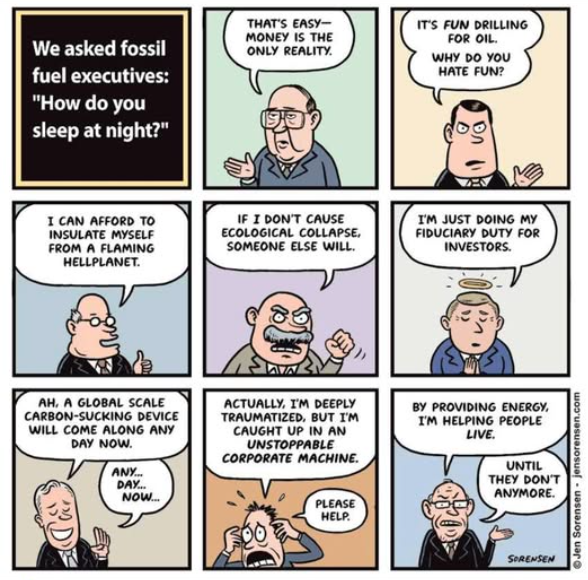
 I’m sure some of these excuses are extremely common in the minds of those making huge profits by destroying our planet.



-
Climate Change1 year ago
Guest post: Why China is still building new coal – and when it might stop
-
Greenhouse Gases1 year ago
Guest post: Why China is still building new coal – and when it might stop
-

 Greenhouse Gases2 years ago
嘉宾来稿:满足中国增长的用电需求 光伏加储能“比新建煤电更实惠”
-

 Climate Change2 years ago
嘉宾来稿:满足中国增长的用电需求 光伏加储能“比新建煤电更实惠”
-
Climate Change2 years ago
Bill Discounting Climate Change in Florida’s Energy Policy Awaits DeSantis’ Approval
-

 Renewable Energy10 months ago
Sending Progressive Philanthropist George Soros to Prison?
-
Greenhouse Gases1 year ago
嘉宾来稿:探究火山喷发如何影响气候预测
-

 Carbon Footprint2 years ago
US SEC’s Climate Disclosure Rules Spur Renewed Interest in Carbon Credits