

Snugly tucked in between the unpredictable currents of the Menai Strait and the jagged mountain ridges of Snowdonia lies the city of Bangor. Not so much a city, but rather a small town, Bangor is home to about 10,000 citizens and another 8,000 students who bring the town to life during lecture terms. Towering over the town is Bangor University with its Victorian era Main Arts building and tiny canteen that offers a nutritious £2 meal for everyone who is willing to climb the hill during lunch time. Founded in 1884 Bangor University is a research-intensive institution and this year’s setting of our experiment on artificial light at night (ALAN) and its effect on macroalgae.
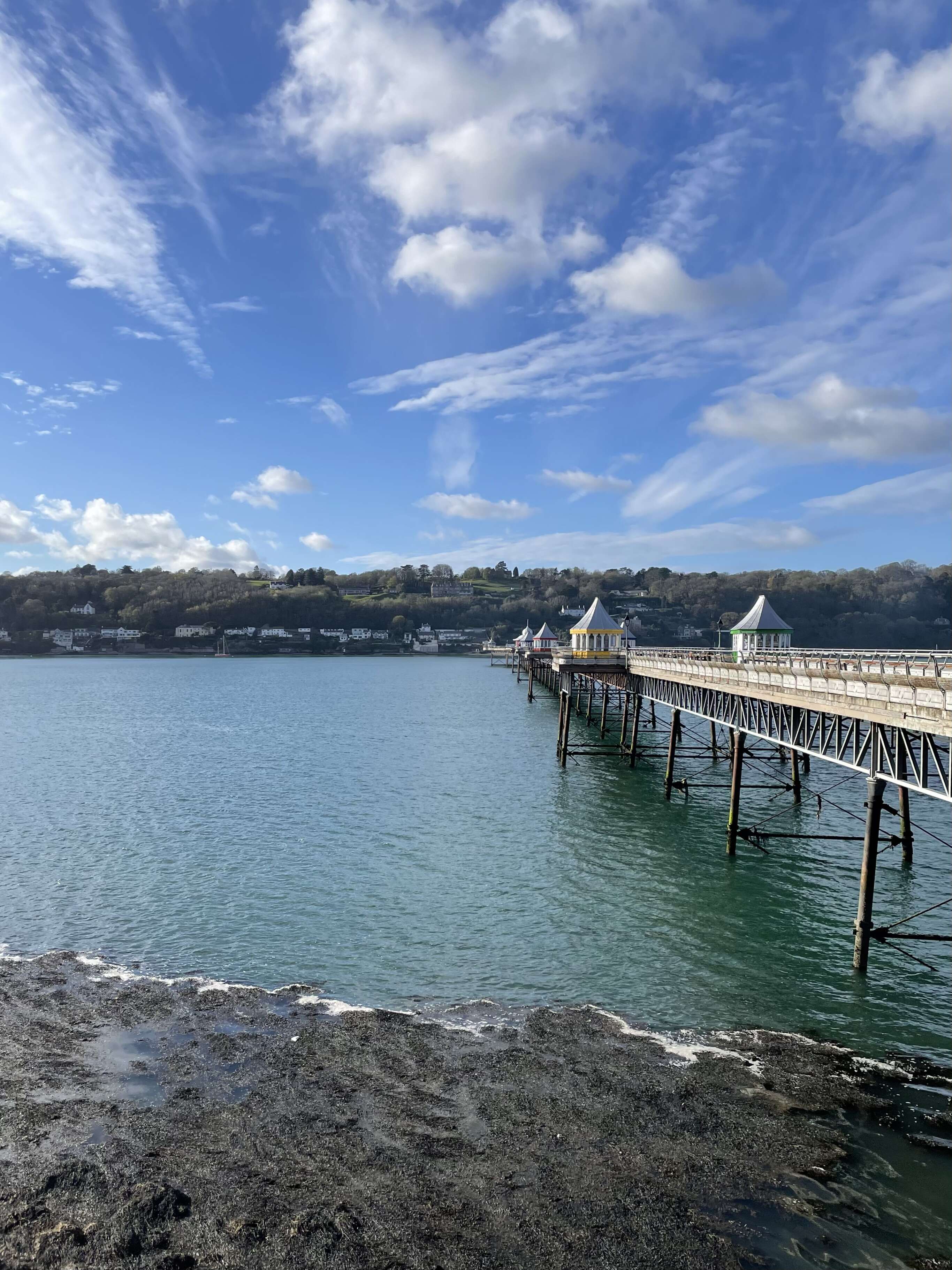
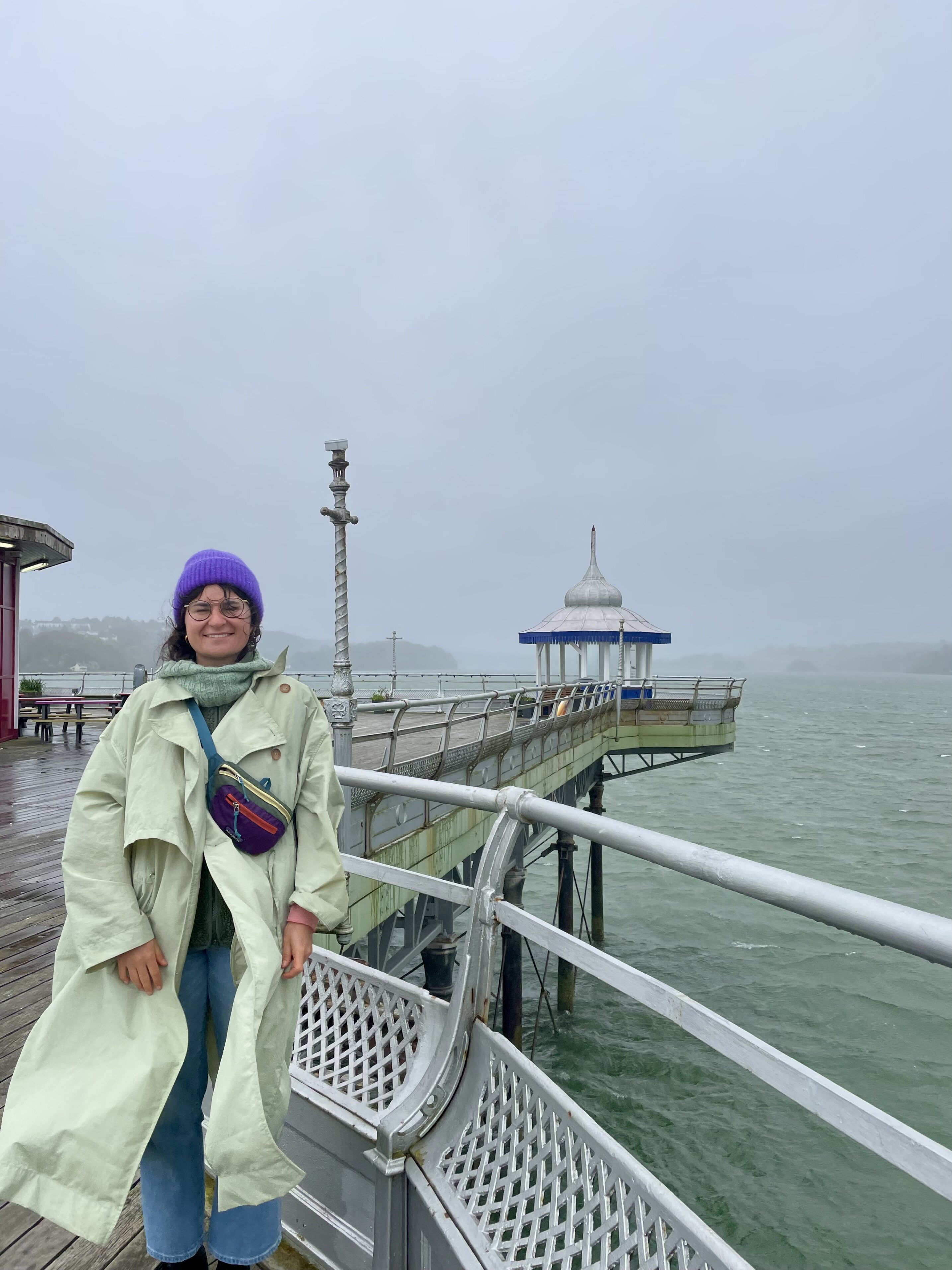
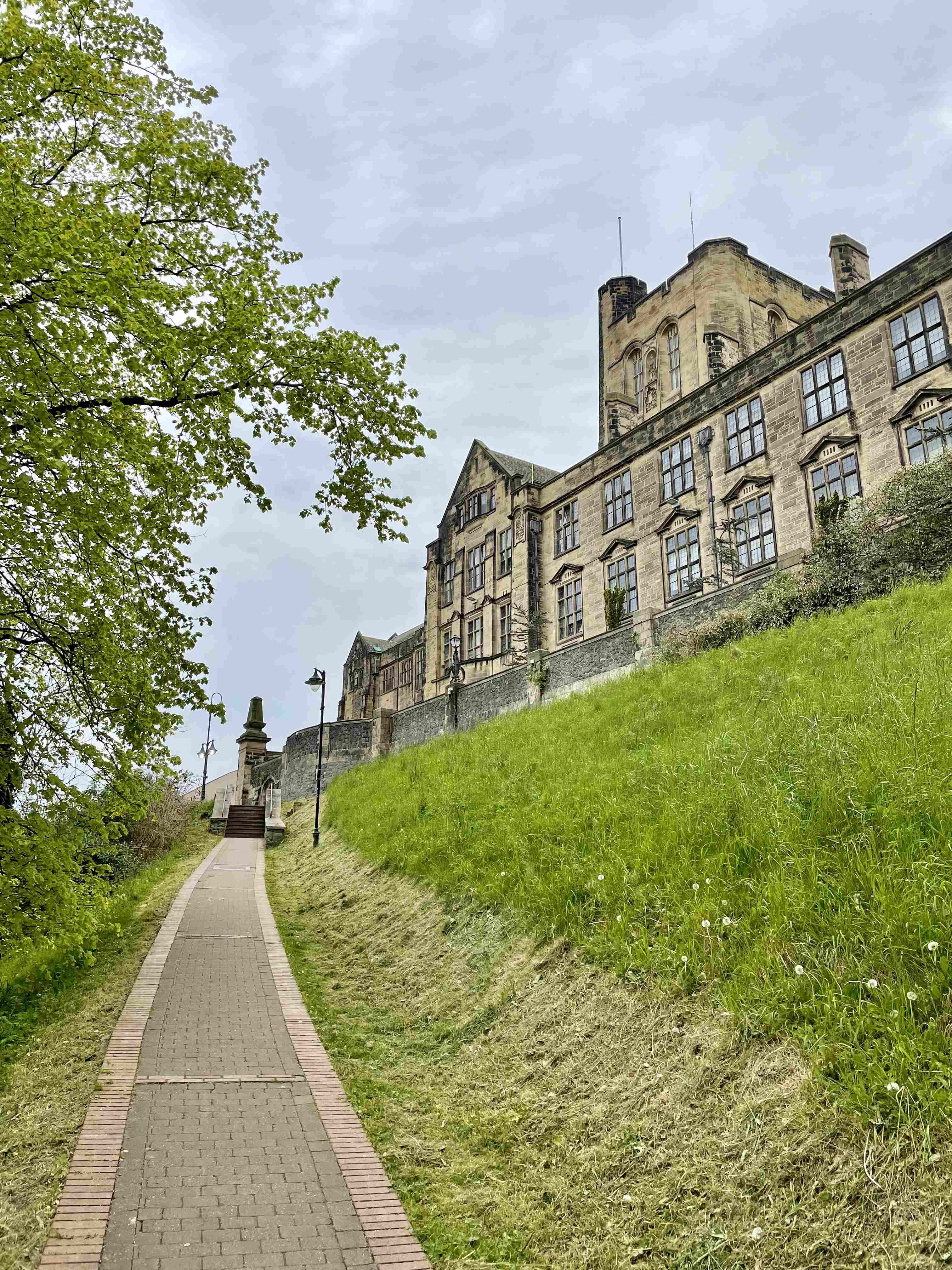
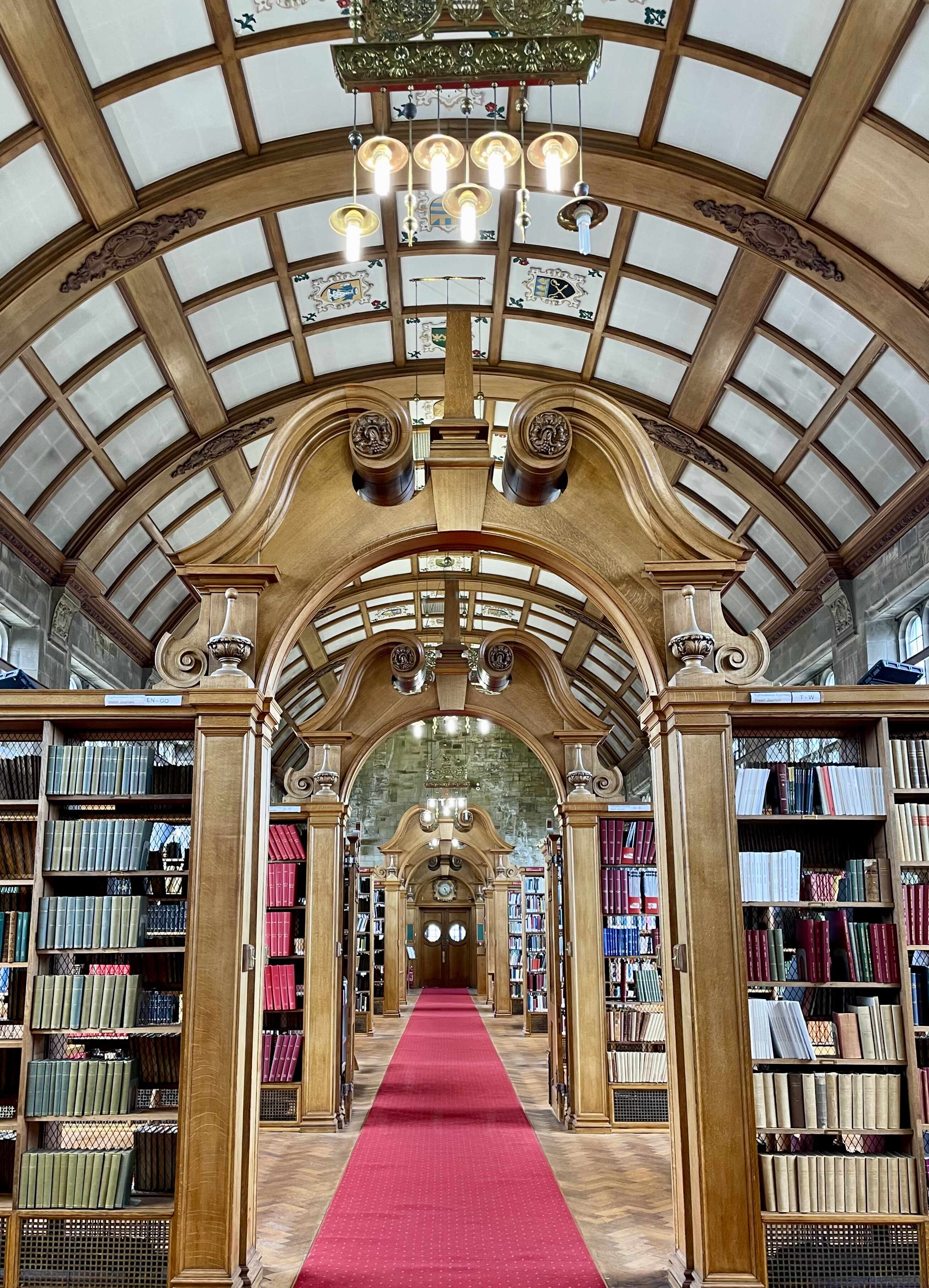
Excessive artificial light at night from urban settlements, especially in highly populated coastal areas, can scatter over long distances and illuminate even otherwise pristine coastal and marine habitats. The effects light pollution can have on these ecosystems are only little understood. So far conclusions are mostly drawn from observations and studies from terrestrial ecosystems, in which artificial light at night was found to have adverse effects on organism’s behaviour, life cycles, activity patterns as well as on biodiversity and ecosystem functions. In both the marine and terrestrial context, the focus has so far been mainly on animals, but not on plants or algae, especially not on macroalgae.
Therefore, the 2024 GAME project aims to take a closer look at a possible impact artificial light at night might have on macroalgae, in particular on their defence capacity against grazers. Besides investigating the effects of artificial light at night, we included two different mitigation measures in our experimental design. To tackle light pollution and the adverse effects it might have on macroalgae, we will test, if a reduction of the lighting times during the night and/or using a different light spectrum will make a difference.
North Wales is not only an excellent location for researching macroalgae. It also offers a variety of beaches that are still largely untouched by ALAN and are ideal for us to collect test organisms. Ideally, our algae should not yet be polluted with ALAN, so that we have a higher chance of finding an effect during our experiments.
After a little driving test to get a feel for driving on the left-hand side of the road and manoeuvring the one too many round-abouts with so far unknown rules of indicating according to the exit location, we were given access to the university pick-up truck to head out for sample collection on Anglesey Island with its many pristine bays which are rich in marine biodiversity.
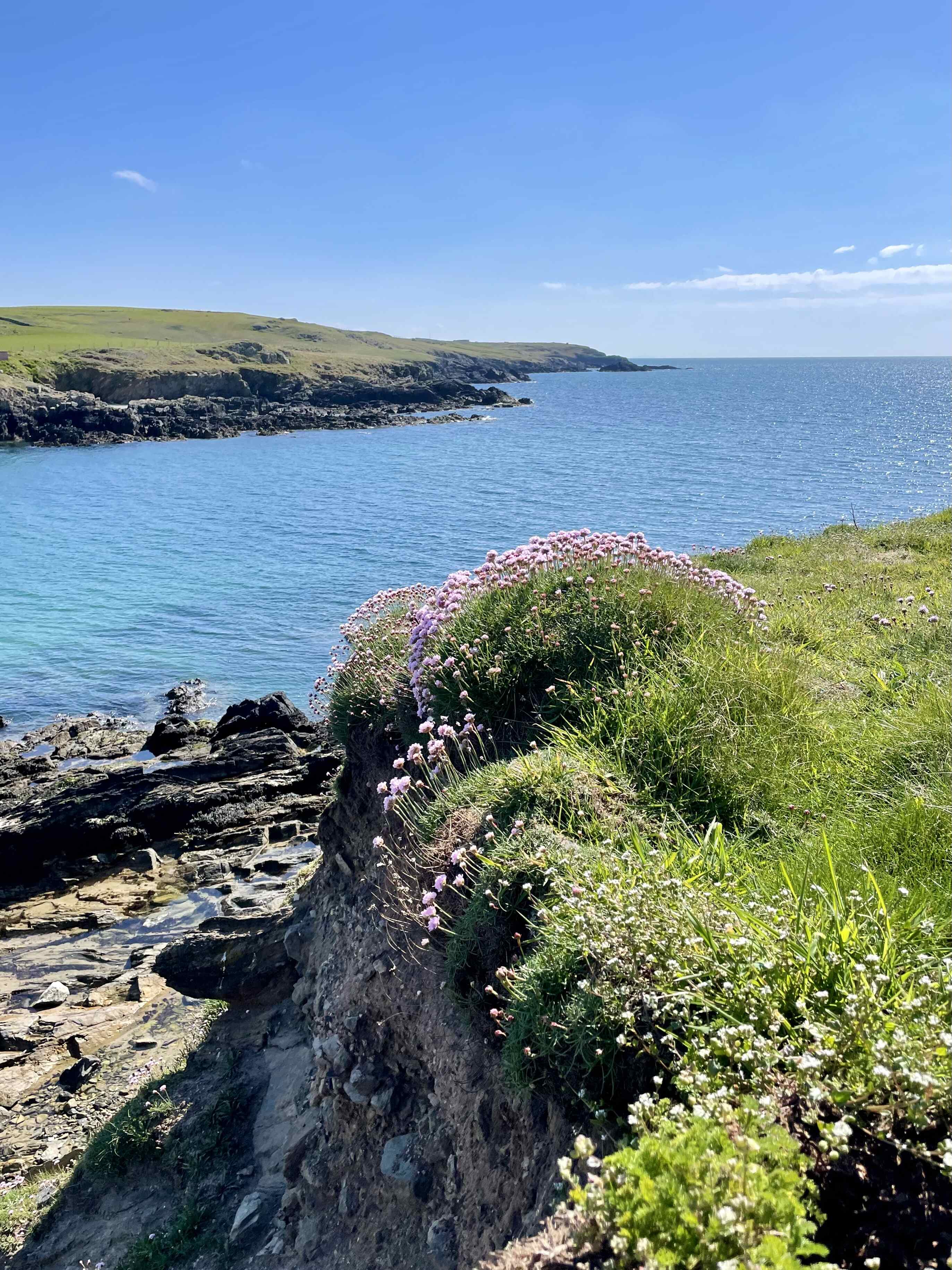
In the cold clear waters around North Wales seaweeds grow in abundance which gave us plenty of choice. We will conduct our experiments with several species of brown macroalgae from the Fucoid family that can be found in the intertidal zone. To induce a defence reaction in the algae, we rely on the support of a marine gastropod mollusc also known as the common periwinkle (Littorina Littorea) which – as its name suggests – is very common on the Welsh shores.
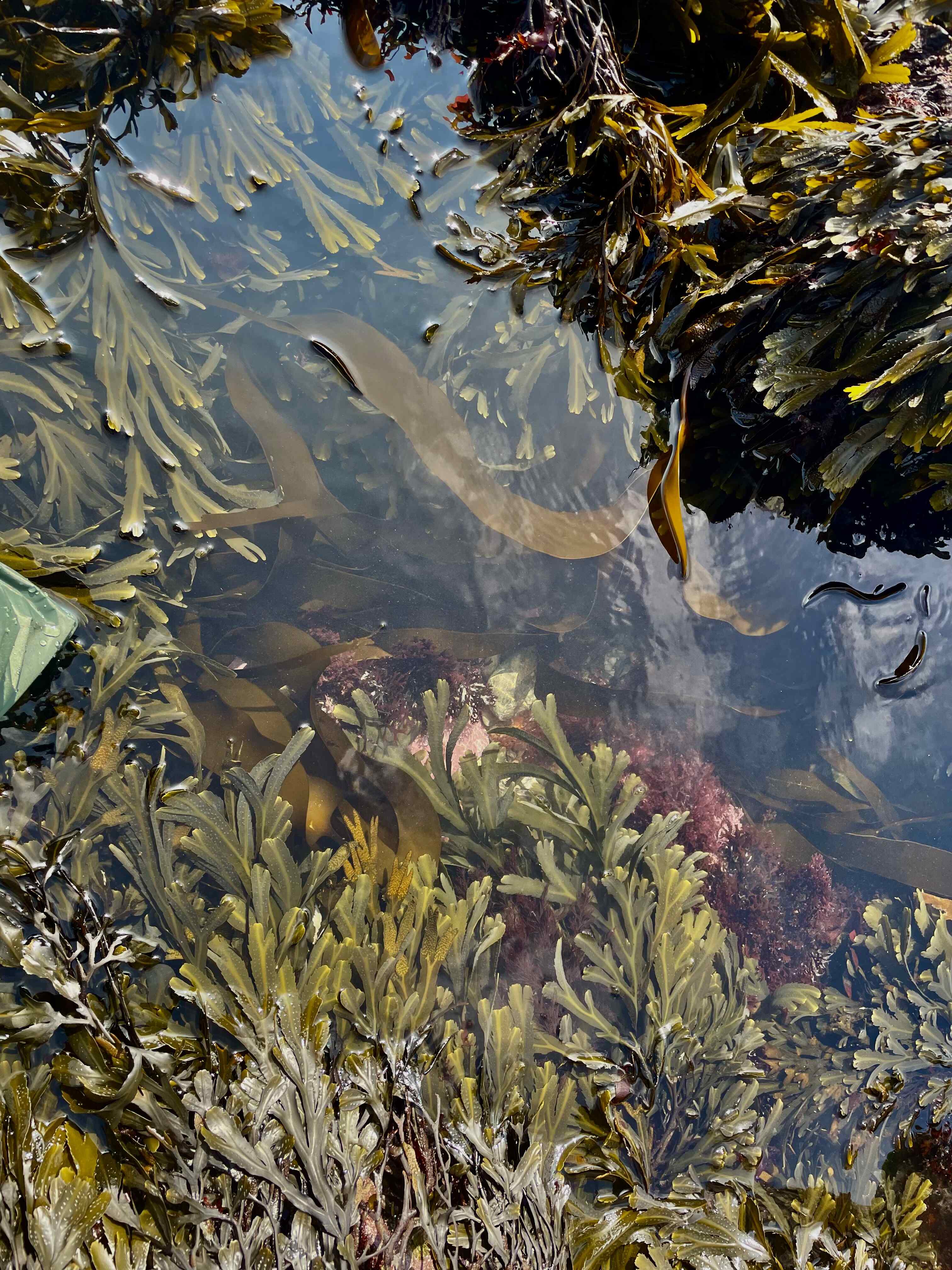
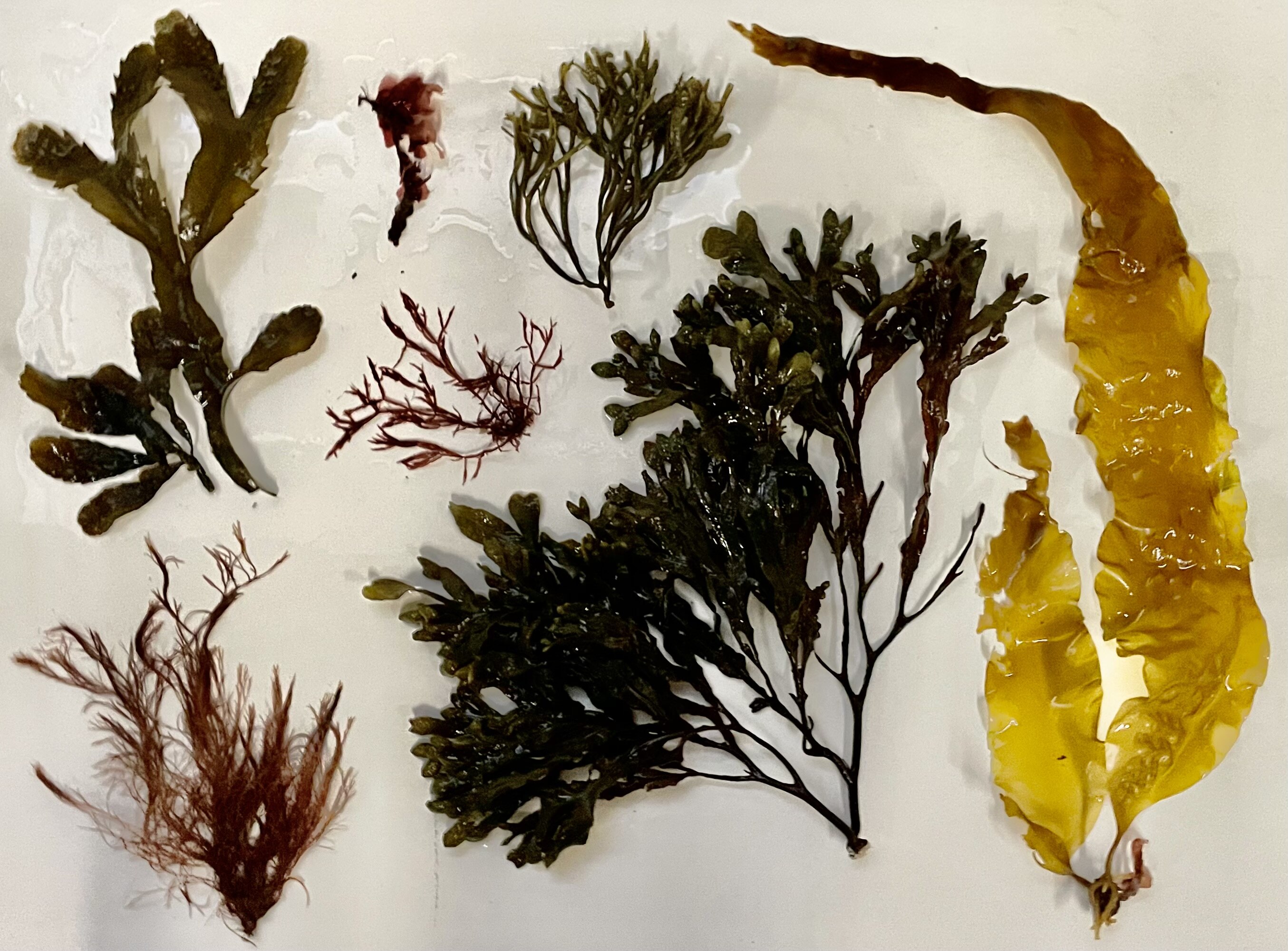
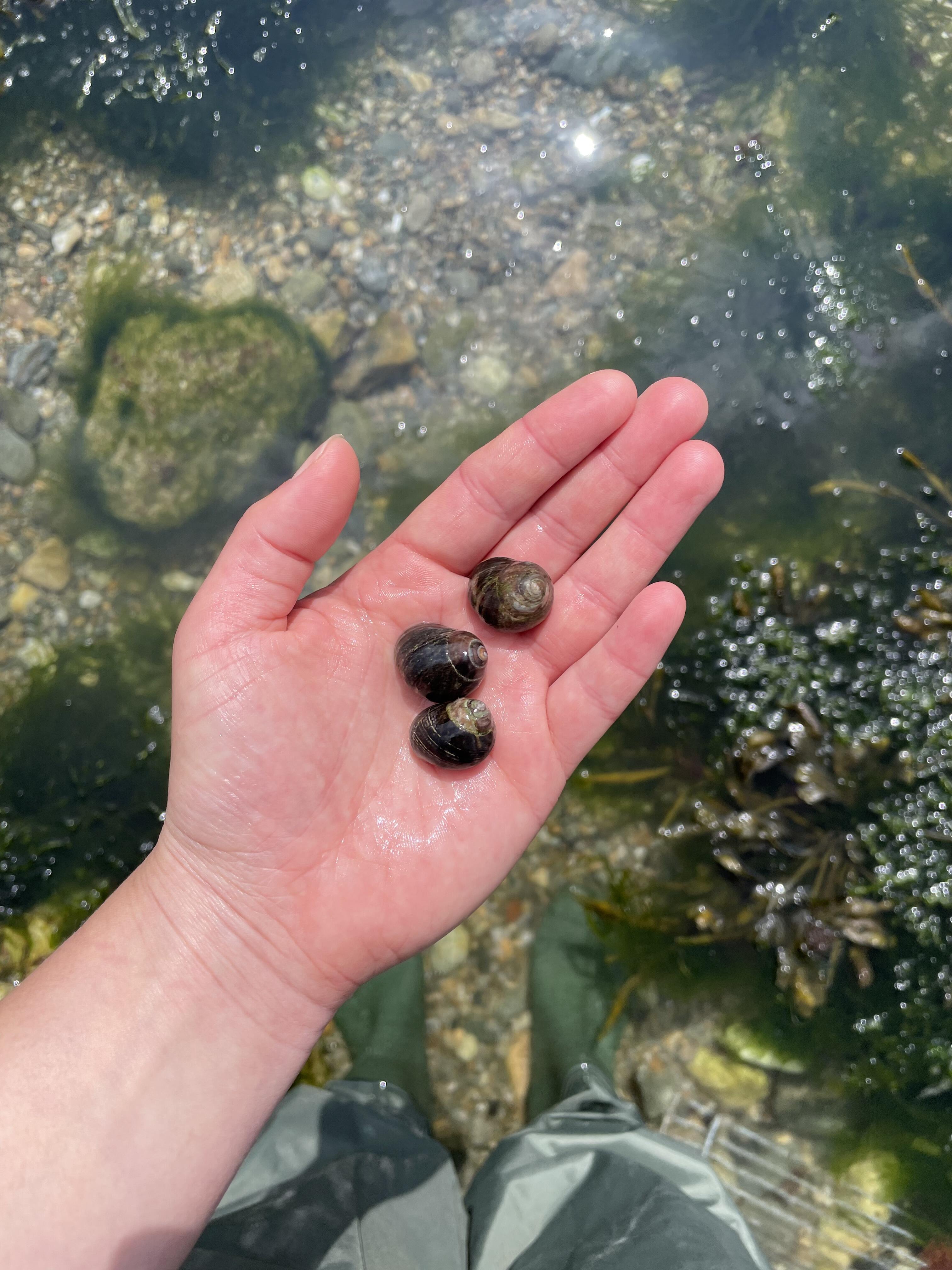
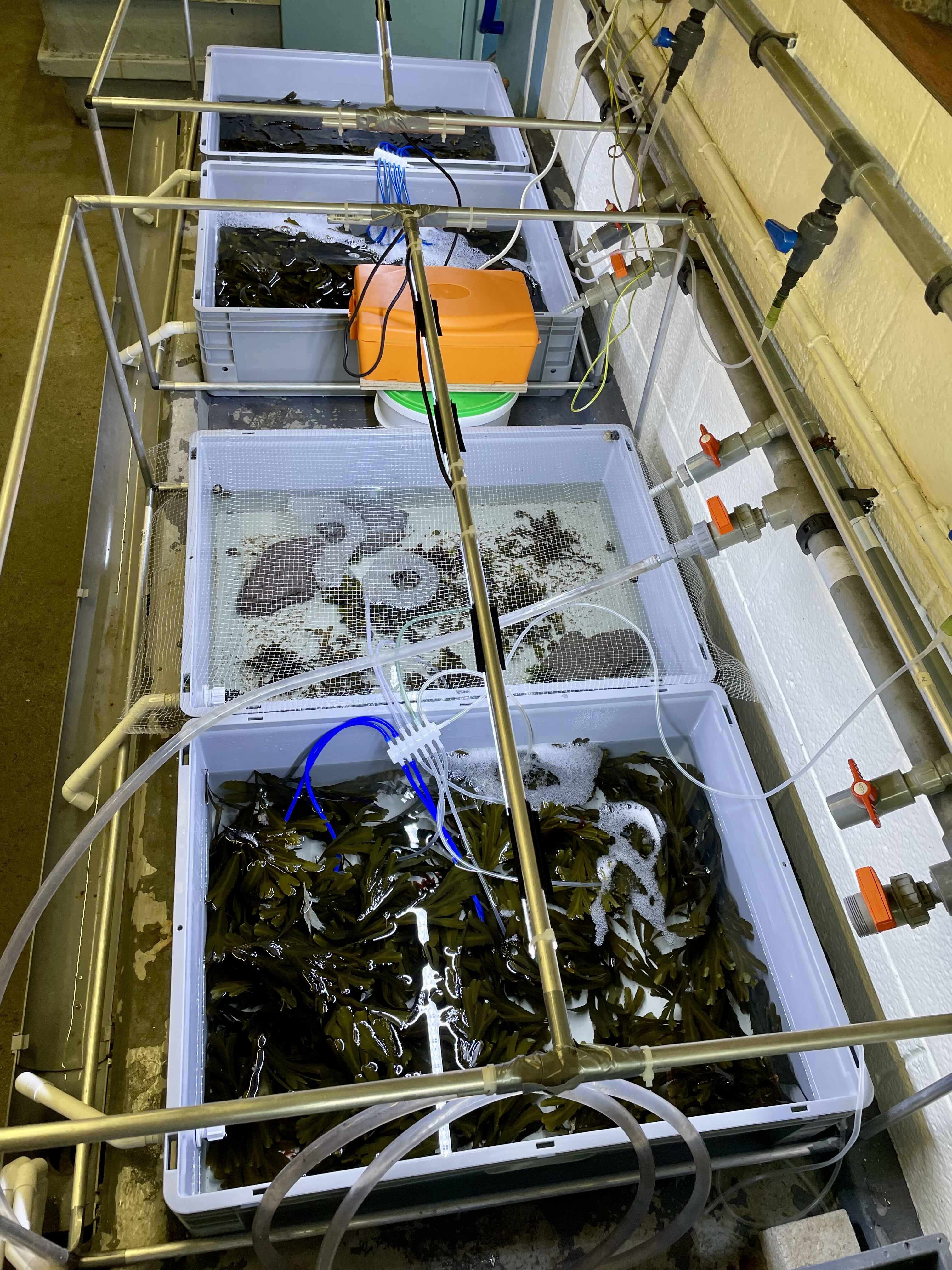
In the past two months, we have been busy with planning, meeting, discussing and consulting with our supervisor Dr. Svenja Tidau, an expert in the field of artificial light at night, from the School of Environmental and Natural Sciences, and Dr. Stuart Jenkins, who is an experienced ecologist who knows his grazers, from the School of Ocean Sciences. With their support and thanks to their supply of several pieces of very useful equipment, we could decide on suitable macroalgae species and grazers, conduct our pilot studies, and design our experimental setup. For the latter, we were given the option to choose from different rooms in the Brambell Aquarium and eventually decided to set up our replicate tanks inside large, self-made dark chambers in the main aquarium room.
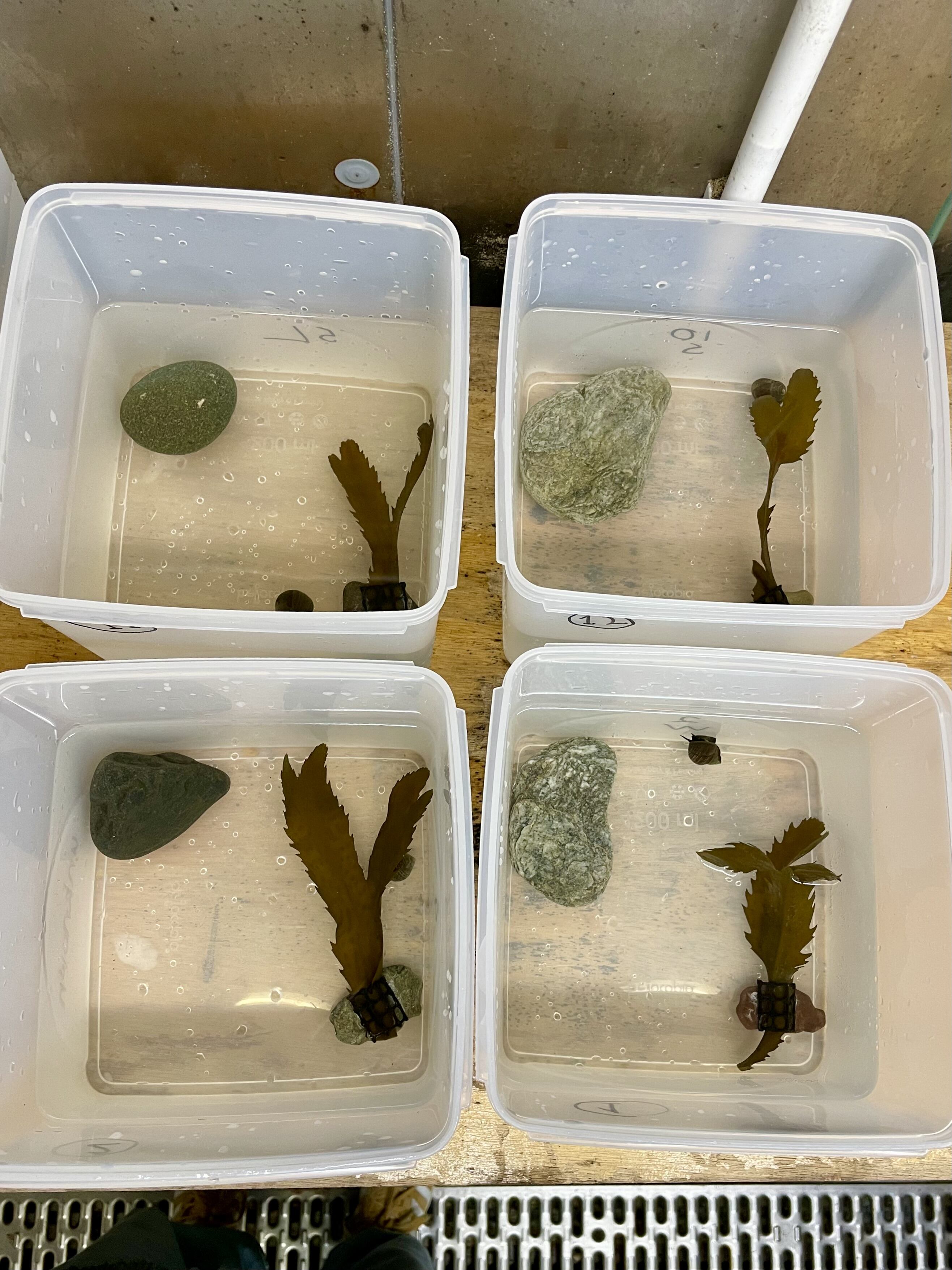
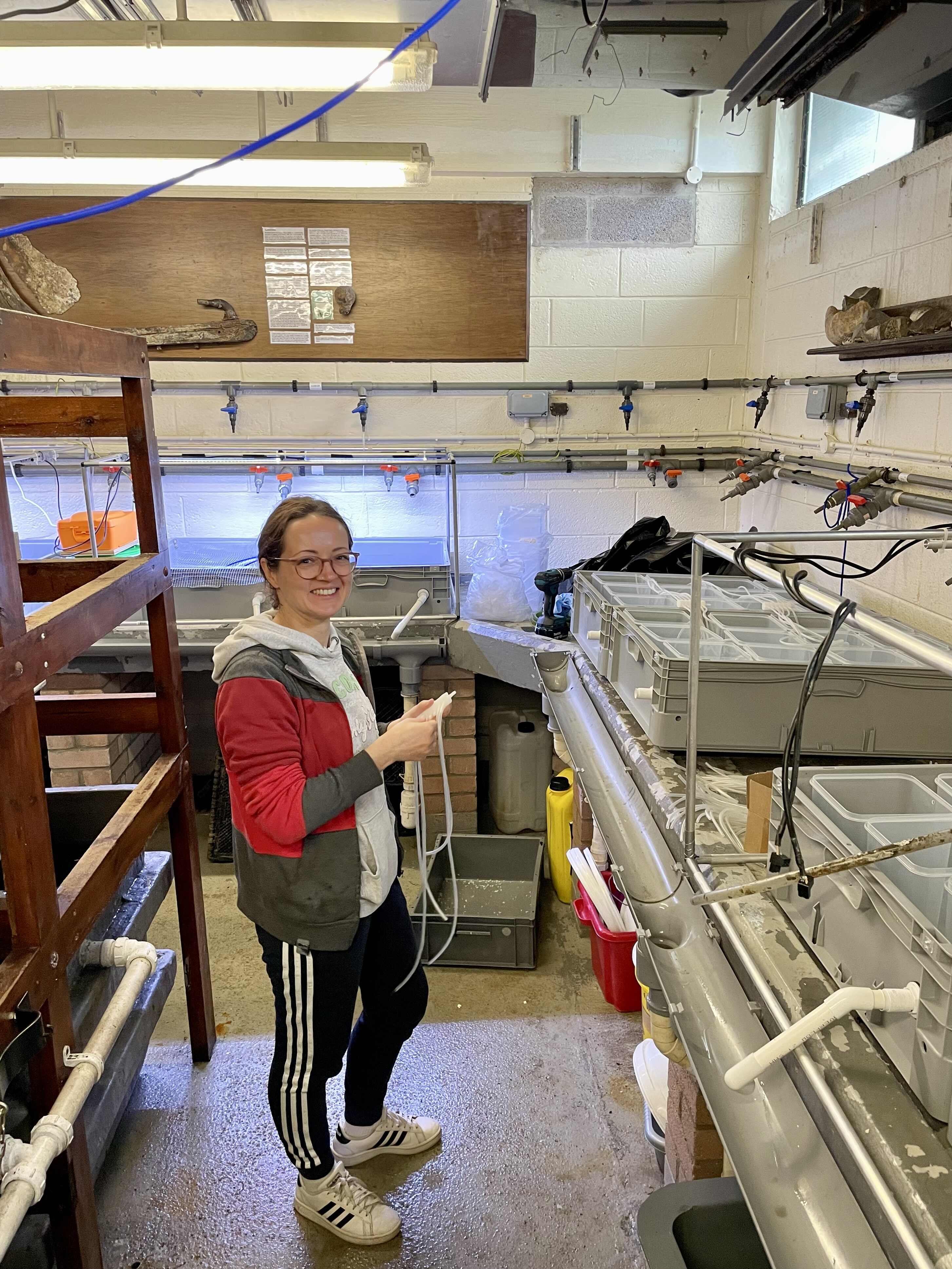
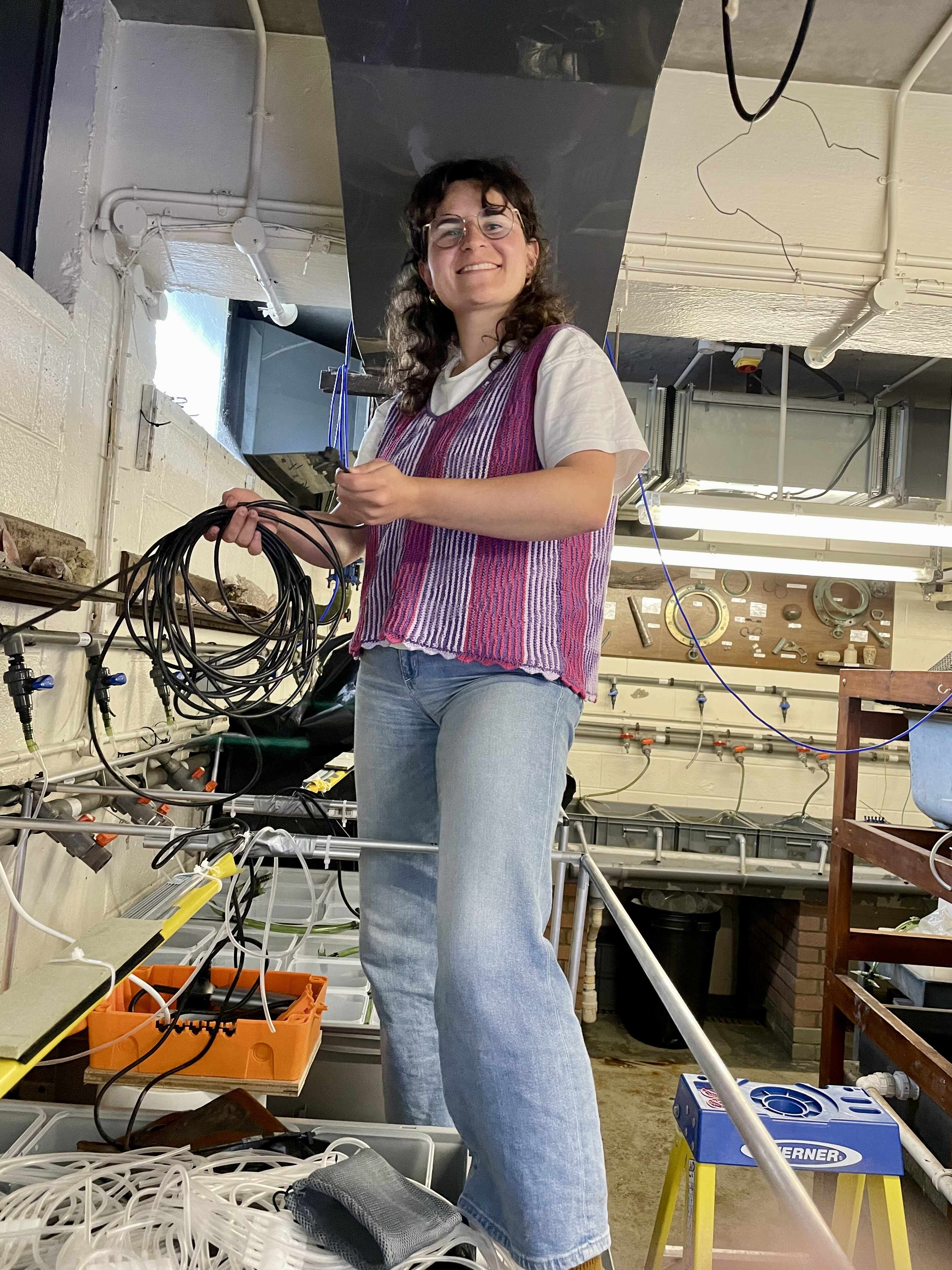
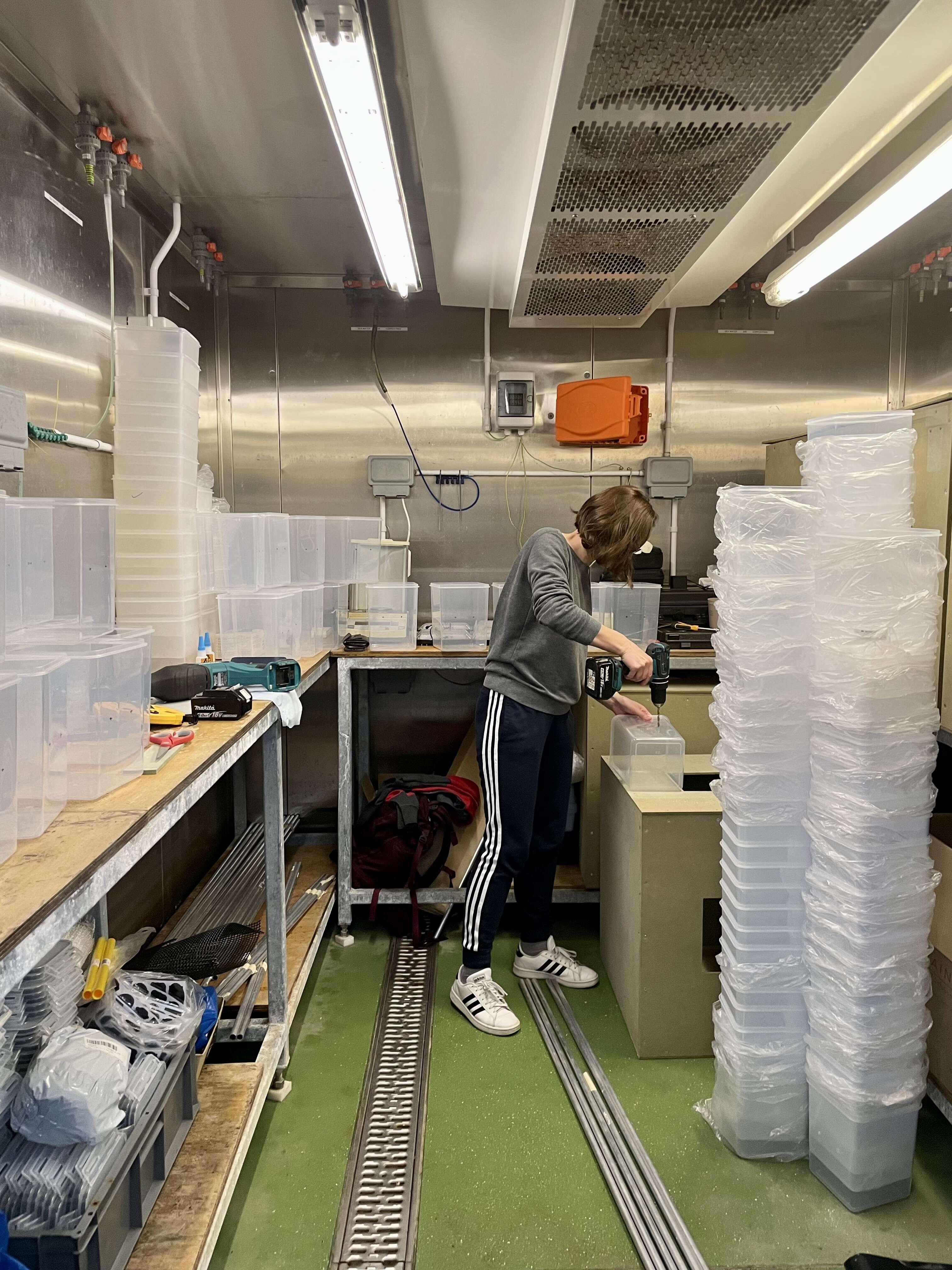
After a series of equipment hunting, DIY and online market shopping sprees, and with the indispensable assistance and advice of Mike Hayle, lab technician of the Aquarium, we managed to realise many of our creative ideas. After drilling 480 holes in 120 tanks, clipping 10 meters of hose in 310 pieces, putting them together with 70 connectors, sawing and inserting 120 plastic pipettes as water outlet, attaching 120 air stones to roughly 15 meters of air supply tubes, cutting about 47 m2 of black-out curtain, sawing 40 meters of pipes and putting them together with 50 connectors, cutting 5 transparent nets and attaching them with 20 little hooks to keep the grazers where they belong, attaching 5 rescue blankets as reflector sheets to disperse the light in the chambers more evenly, cutting 60 little pieces of mash and glueing it to 60 little stones to use as a mount for our algae, safely and water-proof placing and connecting 8 LEDS, we could finally set up.
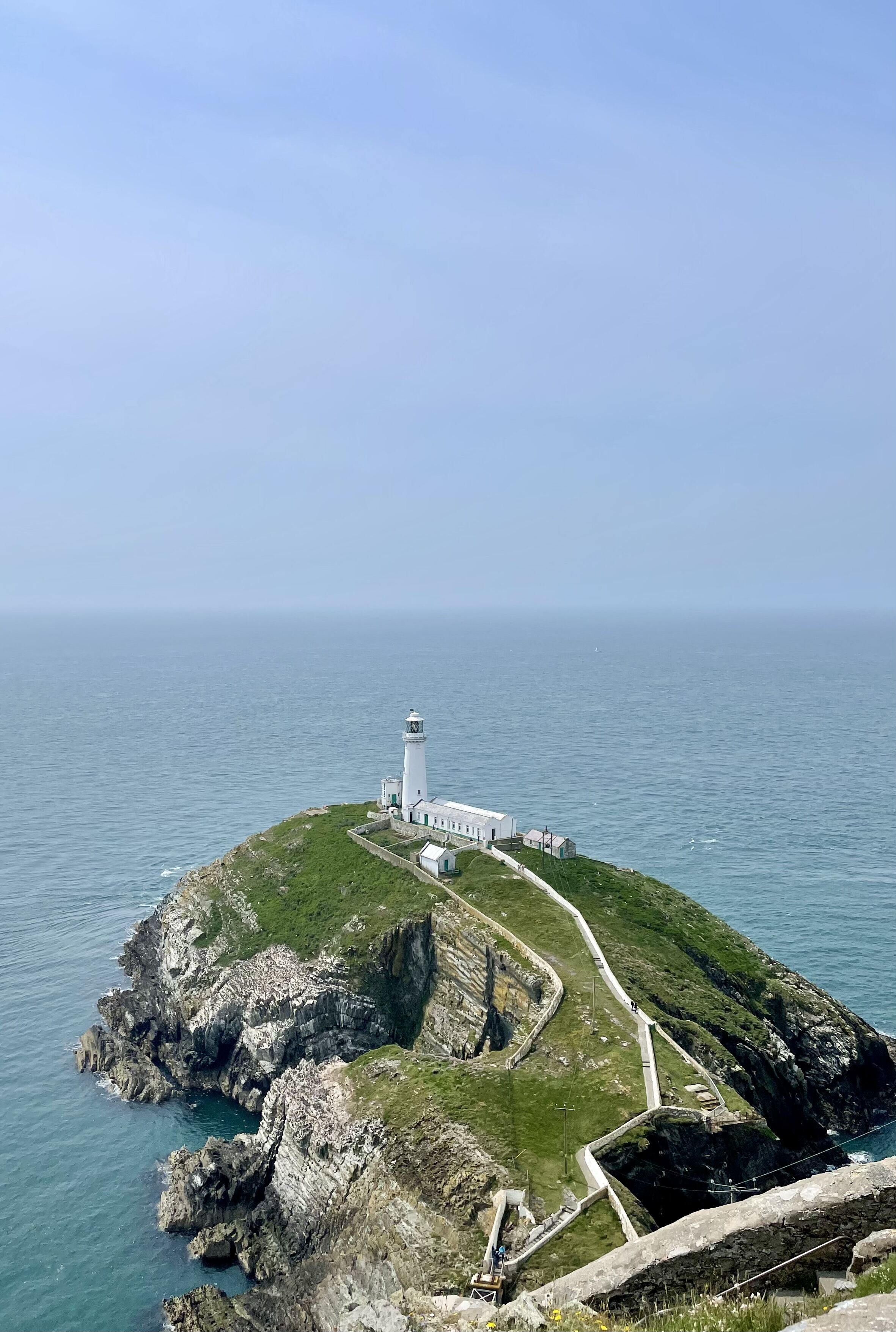
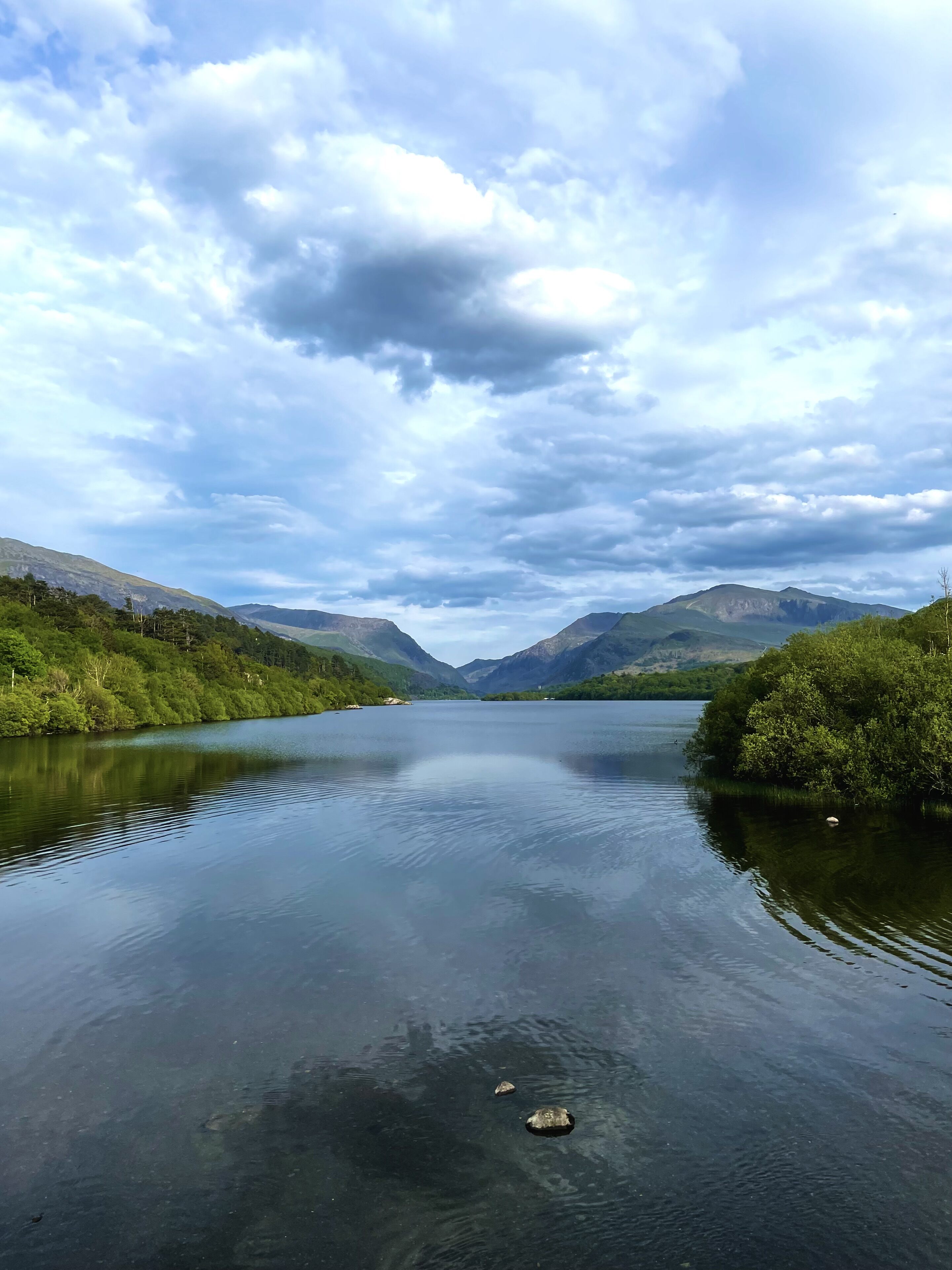
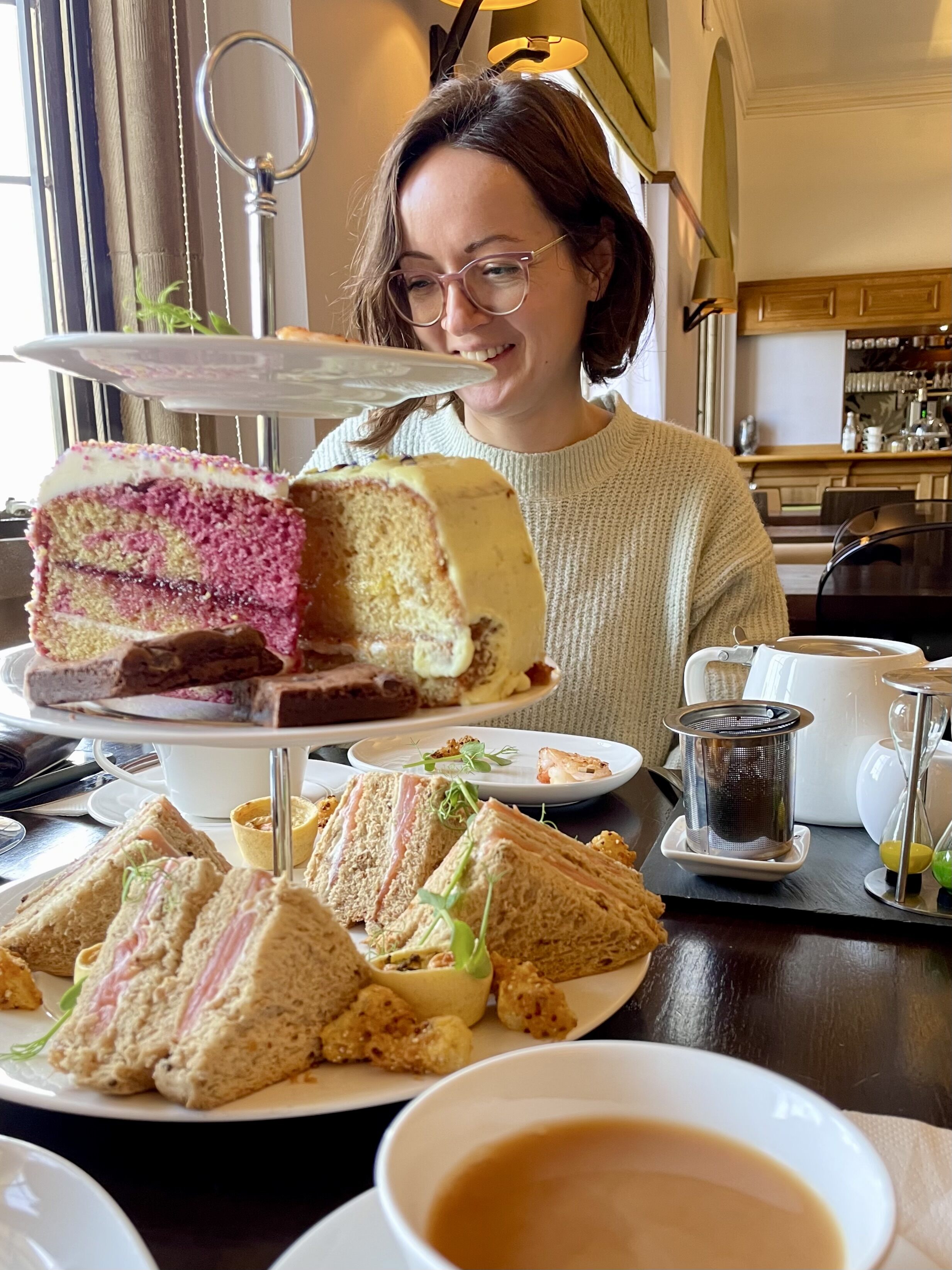
When we’re not travelling on behalf of GAME, you’ll find us somewhere on the coast spotting seabirds and hopefully someday dolphins or basking sharks, at one of North Wales beautiful lakes, hiking in Snowdonia or enjoying a traditional British afternoon tea.
We love it here and are looking forward to staying a little longer!
Now as the stock tanks have been set up, the organisms are well acclimated, and we are good and ready: it is time to experiment!
Croesi bysedd! Fingers crossed for a good start!
Camille & Barbara

Our ocean is an incredibly vast and mysterious place. And there is no place where that is more evident than the deepest ocean area in the world: the legendary Mariana Trench. Located east of the Philippines, the Mariana Trench lies in the Mariana Archipelago in the western portion of the North Pacific. The greater area of the Mariana Trench Marine National Monument is made up of more than 95,000 square miles of ocean. Beneath these waters lie incredibly complex aggregations of submerged islands and volcanoes … and of course, an astoundingly massive trench.
Dive in with us to have your biggest questions answered about the famed Mariana Trench.
How deep is the Mariana Trench?
The deepest part of the Mariana Trench, known as Challenger Deep, is almost 36,000 feet below the ocean’s surface. For context, Mount Everest is about 29,000 feet above sea level, so the Mariana Trench is about 7,000 feet deeper than Mount Everest is tall. For one more comparison, the RMS Titanic lies at a depth of about 12,500 feet below sea level. The Challenger Deep is in waters nearly three times deeper than this ship’s final resting place.
Due to its enormous size, the Mariana Trench has at times been affectionately nicknamed the Grand Canyon of the ocean. This is certainly a picturesque image, but don’t let the mammoth size of this U.S. national terrestrial park fool you into thinking the Mariana Trench matches its size. The trench’s footprint is estimated to be 120 times larger than the Grand Canyon’s, and to reach the bottom of Challenger Deep, you’d need to descend through almost six Grand Canyons stacked on top of each other before you’d reach the seafloor.
Oh … and did we mention it’s five times wider than it is deep? It’s about 43 miles wide!
What is Challenger Deep, and how long would it take to reach it?
Challenger Deep is the deepest point of the Mariana Trench. Fewer than 30 people have ever journeyed to this area. The trek below the surface is long, dark and time-consuming, and it’s not an expedition considered lightly by scientists and explorers.
The first people to descend into the depths of this area in 1960 were oceanographers Jacques Piccard and Don Walsh, and it took them close to five hours to reach Challenger Deep. Since then, more advanced submersibles have been created, but it still takes two to four hours for modern vessels to reach such depths. For example, explorer and filmmaker James Cameron reached the seafloor in a little more than 2.5 hours in the first documented solo submarine dive to the area, and it took oceanographer Dr. Dawn Wright about four hours in 2022. It is crucial that these submersibles descend slowly and steadily beneath the surface, as the immense water pressure compounds with every mile a submersible descends. Speaking of pressure …
Get Ocean Updates in Your Inbox
Sign up with your email and never miss an update.
What is the water pressure at the bottom of the Mariana Trench?
If you thought the depth of the Mariana Trench was its only jaw-dropping feature, think again. Water pressure is one of the most important factors affecting deep-sea life. In the ocean, pressure increases by one atmosphere for every 33 feet (10 meters) of depth. One atmosphere (a unit of measurement for pressure equivalent to average air pressure at sea level) is equal to about 14.7 pounds per square inch (PSI), which is the approximate standard atmospheric pressure at sea level. If you were to convert atmospheric pressure into weight, one atmosphere is about the weight of a bowling ball. Stay with me, friends.
If a vessel were to dive 2,000 feet below the surface, the pressure would equal that of 60 bowling balls stacked atop every square inch of that submersible. But 60 bowling balls is simply nothing compared to the pressure in the Mariana Trench. The atmospheric pressure at the depths of Challenger Deep is equal to about 16,000 PSI. That pressure is about the same as the weight of an entire full-grown elephant on every square inch of a submersible!
Need a more extreme comparison? If a human were to be placed at the bottom of the Mariana Trench, the pressure would be equal to that of 50 jumbo jets piled on top of a person!
Do any animals live in the Mariana Trench?
The depths of the Mariana Trench come with immense pressure and extreme darkness, but somehow, life finds a way to survive. Organisms that live at an extreme depth, like that of Challenger Deep, have to be highly adapted to low temperatures (typically just above freezing), high pressure and virtually no light at all.
Species found in the depths of the Mariana Trench might look vastly different from animals from other ocean depths because their anatomy has been refined to thrive in harsh conditions. At such great depths, these animals typically depend on chemosynthesis (using nutrient-rich waters being pumped out of hydrothermal vents) or descending detritus (dead matter that has fallen from higher parts of the ocean) for food, such as whale falls. Just a handful of these animals include species of octopuses and squids, sea cucumbers, amphipods, sea jellies, shrimp, sea worms and some wild-looking fish!
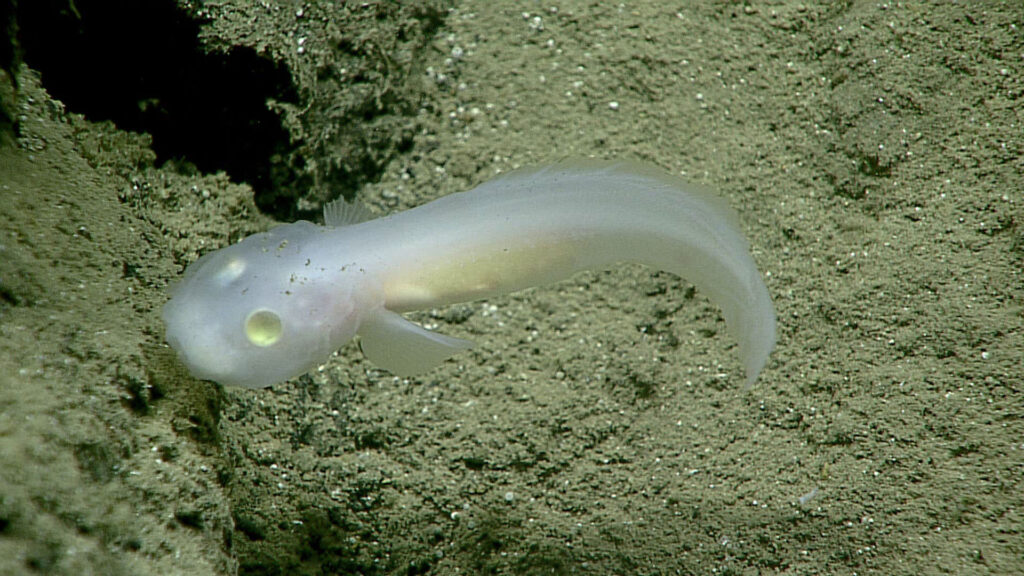
In 2025, more than 7,000 new species were discovered in the Mariana Trench, including the hadal snailfish (Pseudoliparis swirei). This is the deepest-dwelling fish currently known to science. Now, the fish has been dubbed “the Mariana snailfish.”
How was the Mariana Trench formed?
The process by which the Mariana Trench was created is a geologically fascinating one known as subduction. On the Earth’s surface, there are thin plates that cover the planet’s mantle, which is made of molten rock. If two of these plates collide, one pushes down into the Earth’s mantle while the other is pushed over the bottom plate. When this happens, a trench is formed from the drag of the bottom plate. This process can sometimes create incredibly strong earthquakes. The plates that forged the Mariana Trench’s creation are estimated to be up to approximately 180 million years old.
This trench was unknown to scientists until 1875. It was then that a team of explorers on the HMS Challenger measured the depth of the sea by simply lowering a weighted rope into the water. They were baffled when they measured that first portion of the seafloor to be five miles below the surface. And so was born the origin of some of the most daring deep-sea explorations known to mankind to date.
Is the Mariana Trench protected?
The Mariana Trench is in waters off Guam and the Mariana Islands. The region is protected from some human activities under its status as a marine monument. The creation of the Mariana Trench Marine National Monument signified that international, national and local leaders all recognize the importance of protecting this area.
However, just because the region is protected does not mean it’s not vulnerable to modern threats to ocean health. Plastic bags have been spotted in the Mariana Trench during several expeditions, highlighting the far-reaching impact of the marine debris problem. No corner of our ocean is safe from the ever-present threat of plastic pollution. The reality of a changing climate makes the future well-being of wondrous places like the Mariana Trench uncertain. What’s more: More than 70% of the global ocean has yet to be mapped. And what we don’t yet know about, we cannot wisely work to protect.
It’s up to us to work together to defend our ocean, from the sandy shores of our favorite beaches to the deepest, darkest parts of the sea. Together, we can work to protect our ocean as a whole, which ultimately helps protect treasured places like Challenger Deep.
Find out how you can join Ocean Conservancy’s wave of momentum to secure a healthy ocean and a thriving planet, forever and for everyone!
The post The Mysteries of the Mariana Trench appeared first on Ocean Conservancy.
Intro
At the western tip of Luzon, which is the biggest island of the Philippines, lies the small coastal town of Bolinao. Tourists seldom find their way here as it takes around seven hours to get here by bus from Manila. Still, you can spot foreigners walking around every now and then, but they really stand out among the Filipinos. A reason for their presence is often that they study or work at the Bolinao Marine Laboratory (BML), which belongs to the University of the Philippines (UP). It is one of the seven research institutions participating in the GAME project 2026. Every year, GAME brings together Master’s students from all over the world to experience different cultures and conduct globally replicated experiments in marine ecology.
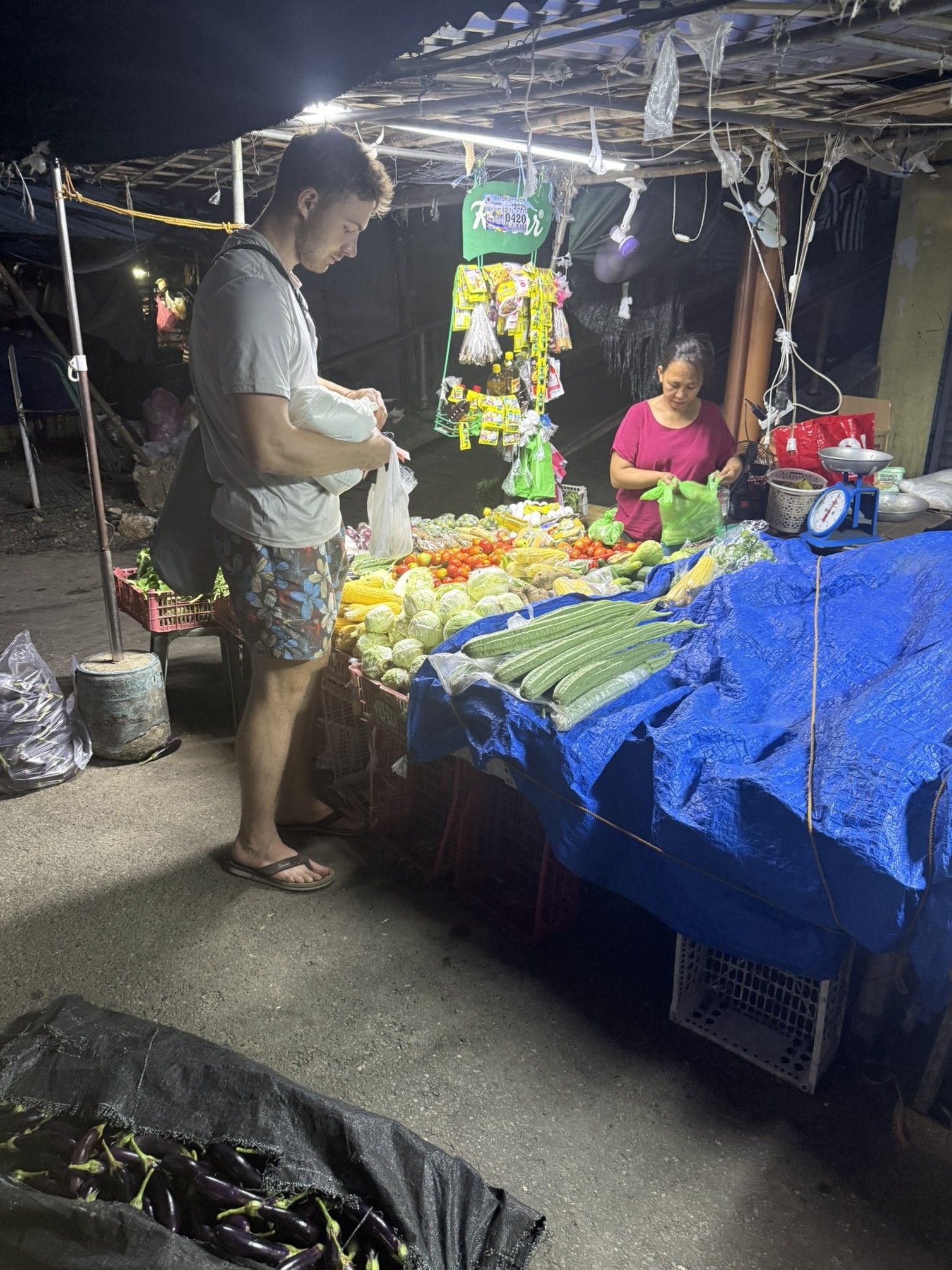
This year’s Team Philippines consists of Jona, a Filipino master student of Marine Biology at the University of the Philippines, and Konstantin, a German student who is enrolled in the Master programme „Ecology and Evolution“ at Freiburg University. As part of GAME 2026, we are currently staying at BML for 6 months to run experiments about the influence of underwater soundscapes on the colonization of marine hardbottoms.
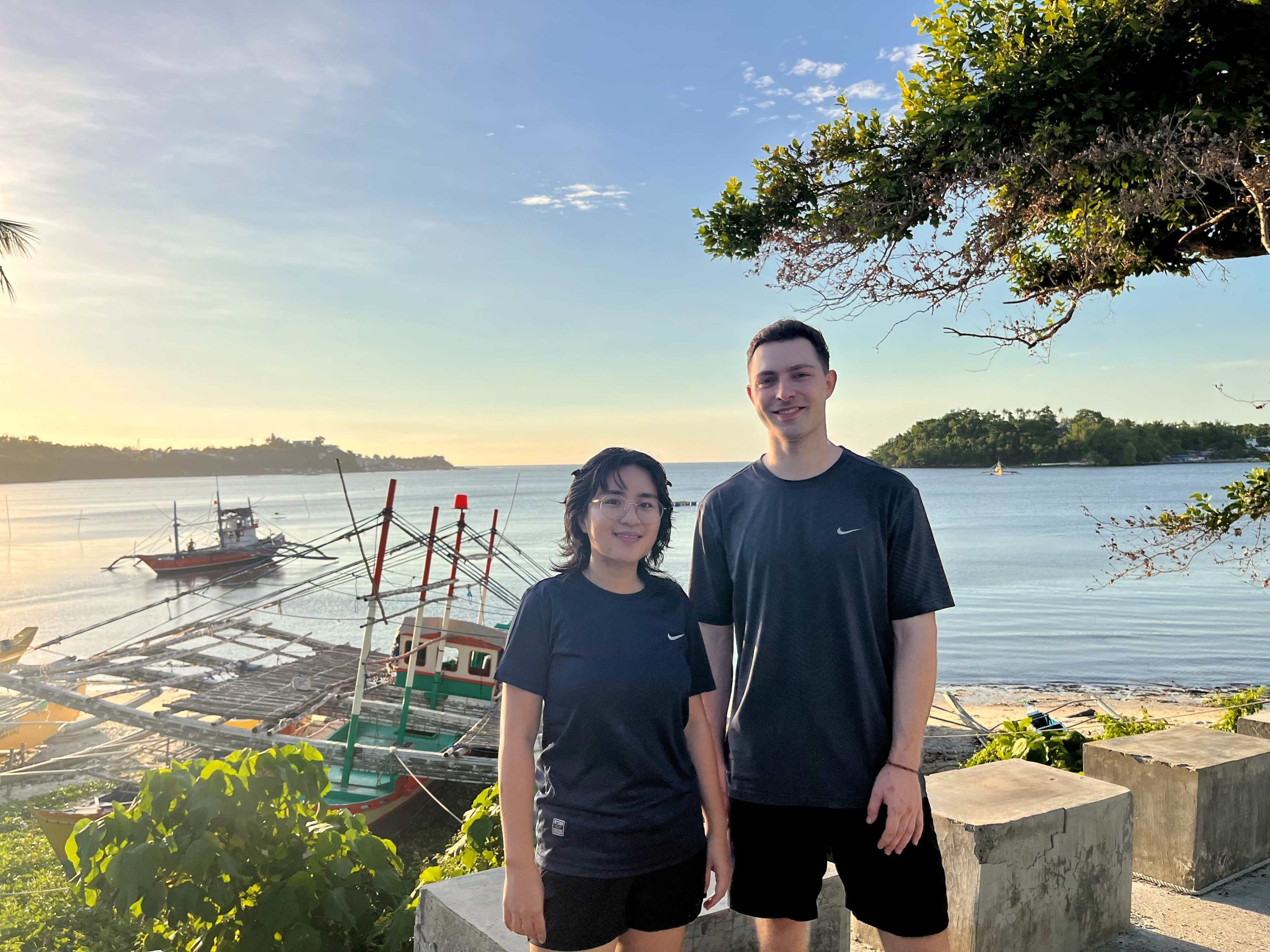
Where are we?
At the BML, we live in a dormitory together with many other students and scientists mostly from the Philippines and a few international interns. At almost any time of the day there is someone in the kitchen to hang out with, eat together, or simply have a chat. It is ea