


Credit:rui_noronha
On Thursday, March 28, 2024, the South Carolina House of Representatives approved H.5118, the “South Carolina Energy Security Act.” This highly costly and risky piece of legislation would expand fossil-fueled electric power generation and slow the development of renewable energy. House Speaker Murrell Smith sponsored the bill, and Upstate Representative Jay West (R-Belton) led the charge to pass it. Despite concerns raised regarding potential cost overruns, rate increases, and climate change, a dominant majority in the House repeatedly voted down proposed consumer and environmental protection amendments to the bill.
The legislation supports two electric utility companies that serve coastal and Midlands customers (Dominion Energy and Santee Cooper) in their efforts to build a major new fossil gas power plant to be built on the Edisto River that would require new interstate pipelines to bring the fossil gas in from out of state and over 100 miles of upgraded electric power lines. The legislation also similarly encourages Duke Energy, which serves the Upstate and Pee Dee regions of the state, to build new gas-fired power plants.
Additionally, H.5118 would enlist two state government agencies to help develop gas pipelines, and would instruct environmental protection agencies to speed through environmental review. Dominion and Santee Cooper say the power plant is urgently needed to meet the growing electric demand due to economic growth, but the plant would not come online for at least seven years.
What’s more, electric customers would pay for the power plant and pipeline—estimated to be in the billions of dollars—on their electric bills for decades to come.
Passage of the bill marks a major pivot away from the spirit of utility regulatory reform that has held sway in South Carolina following the abandonment of the $9 billion V.C. Sumner nuclear power project in 2017, which cost billions of dollars and led to large rate increases with zero power produced. Surprisingly, given this recent history, H.5118 would again open the door to customers paying for similar risky plans.
Who is For and Against?
The American Petroleum Institute testified in favor of the bill. Numerous environmental and consumer advocates testified against it.
Environmental advocates pointed out that the bill would increase Dominion Energy’s dependence on fossil gas from its current 40% of energy produced to almost 60%. In addition to the direct environmental damage caused by the resulting increased air emissions and water withdrawals for the power plants, environmental witnesses testified that the increased fossil gas dependence would create a huge cost risk for Dominion’s customers. Fossil gas is among the most economically volatile commodities in the world. Not to mention the fact that the U.S. Environmental Protection Agency is expected to issue new rules within weeks that would effectively limit operations of the new power plant without expensive upgrades, making it even more economically unviable.
Consumer advocates also decried H.5118 as a legislative effort to put a thumb on the scales of future regulatory proceedings that would be needed to approve the costly power plants. They also criticized the proposal to move the state Office of Consumer Advocate to the Office of Regulatory Staff, which would give the state’s consumer advocate a duty to support the financial integrity of utility companies. These changes would make it difficult for electric utilities to be held accountable.
The List of Problems Continues…
While the legislation would make it easier for utilities to push through risky fossil fuel investments, it would make it harder for independent solar companies to develop projects in the state. Independent power producers are a competitor to monopoly electric utilities; since solar is a lower-cost resource than most new fossil fuels, independent developers of solar can be a threat to the utility’s plans to shore up profits for their shareholders.
So how does the bill make it harder for independent solar developers? It would shorten the time period for contracts that finance renewable energy facilities from 10 years to 5 years and increase the cost to permit new solar farms.
The next step for the legislation will be consideration in the SC Senate, where Senator Tom Davis (R-Beaufort), in particular, has indicated interest in amending the House bill to improve consumer and environmental protection. We are monitoring the progress of this legislation and potential amendments, so stay tuned for more updates.
Email Your Legislators to Stop H. 5118
The post SC House Passes Legislation Favoring Fossil Fuel Expansion Over Renewable Electricity appeared first on SACE | Southern Alliance for Clean Energy.
SC House Passes Legislation Favoring Fossil Fuel Expansion Over Renewable Electricity

 Does this guy have a solid point?
Is war a bad thing? What about rape and torture?
Do they point to weaknesses that must be strengthened?
Is Bullying a Bad Thing? Not if We Want a Society of Brutality
 Maybe the protestors are less concerned about length of time in office, and more with criminal authoritarianism.
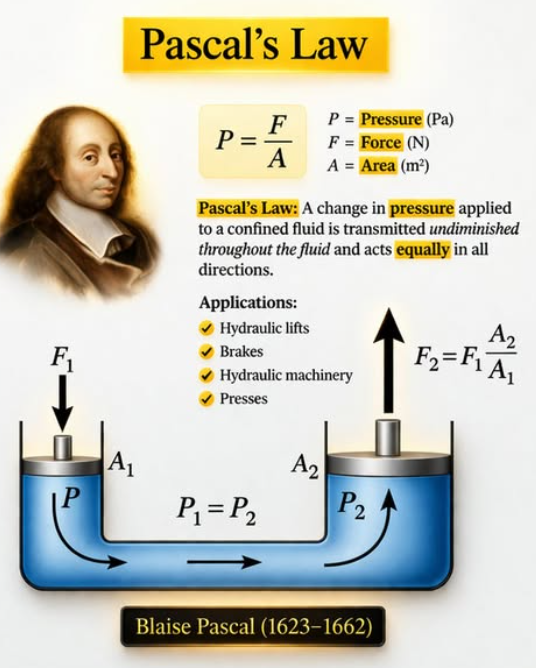 I have such respect for Pascal that I considered naming our son after him. (My wife wasn’t having it. Maybe if we lived in France?)
Pascal made important contributions to both math and physics but he’s perhaps best known for his philosophic “wager,” that it makes sense to believe in God, since if He exists, you’ll be very glad you did, and if He doesn’t, you haven’t lost anything. I counter that this is not how we accept or reject religious tenets.



-
Greenhouse Gases8 months ago
Guest post: Why China is still building new coal – and when it might stop
-
Climate Change8 months ago
Guest post: Why China is still building new coal – and when it might stop
-

 Greenhouse Gases2 years ago
嘉宾来稿:满足中国增长的用电需求 光伏加储能“比新建煤电更实惠”
-
Climate Change2 years ago
Bill Discounting Climate Change in Florida’s Energy Policy Awaits DeSantis’ Approval
-

 Climate Change2 years ago
嘉宾来稿:满足中国增长的用电需求 光伏加储能“比新建煤电更实惠”
-
Climate Change Videos2 years ago
The toxic gas flares fuelling Nigeria’s climate change – BBC News
-

 Carbon Footprint2 years ago
US SEC’s Climate Disclosure Rules Spur Renewed Interest in Carbon Credits
-

 Renewable Energy5 months ago
Sending Progressive Philanthropist George Soros to Prison?