

Weather Guard Lightning Tech

Sales vs. Engineering: Tension in Wind Turbine Development
In this episode, Allen, Joel, Phil, and Rosemary discuss new German legislation to streamline wind permitting, the economics of floating offshore wind in France, and Iberdrola’s increased investments in offshore wind. They also delve into how the U.S. Production Tax Credit has impacted wind farm maintenance practices and explore the industry-wide challenges that arose when sales teams overpromised on turbine capabilities, creating tension with the engineering realities.
Sign up now for Uptime Tech News, our weekly email update on all things wind technology. This episode is sponsored by Weather Guard Lightning Tech. Learn more about Weather Guard’s StrikeTape Wind Turbine LPS retrofit. Follow the show on Facebook, YouTube, Twitter, Linkedin and visit Weather Guard on the web. And subscribe to Rosemary Barnes’ YouTube channel here. Have a question we can answer on the show? Email us!
Pardalote Consulting – https://www.pardaloteconsulting.com
Weather Guard Lightning Tech – www.weatherguardwind.com
Intelstor – https://www.intelstor.com
Allen Hall: Down in Kyle, Texas…
Joel Saxum: That’s by me!
Allen Hall: It’s near Joel. That’s why I’m bringing it up. They were trying to break a world record for the largest gathering of people with one name and despite having 706 Kyles they missed The bar because the crown is held by a town in Bosnia. They had 2, 300 people named Ivan together in 2017, but it seems a lot easier to do quite honestly.
Having a lot of people named Kyle and Kyle, Texas, that’s got to be relatively hard, Joel, because there’s not, we know Kyle Weatherman, right? So we have a Kyle. We know, I know a couple of other Kyles, but I don’t think I could get 2, 300 Kyles in a two town in Texas.
Joel Saxum: I think we could do this one. We go to Punxsutawney, Pennsylvania.
And see how many fills we can get.
Allen Hall: Oooooh.
Joel Saxum: It has to be on the groundhog day.
Allen Hall: Phil, has that been tried?
Philip Totaro: I, to my knowledge, it has not been tried. I have never heard of this. I’m befuddled by these what constitutes a Guinness World Record now? Shouldn’t we be striving for things that are, like, advancing society, rather than, hey, can we get 8, 000 people with the same name in a fricking single town.
I don’t know. What are we doing? What are we doing?
Allen Hall: I’m not with Phil. This is fun. We should do more of this. See, here’s the problem with this whole thing in Kyle, Texas is that they chose the 416th ranked name. You got to pick something in the top 10.
Well, Joel, the German government has agreed to speed up authorizations for wind turbines and industrial plants. The new law aims to enable faster construction through digitalization, And reducing bureaucratic hurdles. Plants affected include wind turbines, metal mills, foundries, waste disposal, and hydrogen production facilities.
And I think Rosemary would be against the hydrogen production facility, but the change is expected to be finalized in the coming weeks and. Renewable energy plants will get special priority for faster approval under the coalition agreement. So that has been one of the big holdups in Germany in terms of wind deployment.
They don’t have the space to put up a thousand turbines, right? So you’re getting turbines spread around the country a good bit. And every little province town has had restrictions, right? And they’ve been trying to remove those restrictions. Piece by piece. This is a big move for Germany, I think, Joel.
Joel Saxum: Yeah. If you look at the way it’s this, these things are rolling out in developments worldwide, right? So the ACP and the developers and people have been complaining about permit restrictions and let’s get this thing streamlined, let’s get this, able to put more Megawatts in the ground for renewable energy production.
Everybody on the U S has been screaming about that. They’ve been screaming about it at wind. Europe has been doing it for a few years, right? All the way up to now, the OEM saying Hey, like government, stop stepping on our own feet here. Let’s streamline some of these processes. I know we, Allen, you and I have complained about it in, in private, where we heard the U S was it last year, they said that they, Put 80, 000 new IRS agents.
And we’re like, can we just have 10, 000 of them to streamline some projects for us in the renewable energy space? And this is right in the face of the European union and even like in the UK. A lot of hair on the back of people’s necks being raised about the possibility of some Chinese competition coming in if Germany is able to do this and some of the other EU countries start to follow suit about easy, not necessarily easing restrictions, but just streamlining the processes to get these things built.
It’s going to be better for the whole entire renewable energy transition because we’re going to be able to get things in the ground. We’re going to be able to get it quicker instead of being held up. I know I saw something. A few years ago where they were talking about like an onshore wind farm. I think it might have been Germany taking seven years or nine years from, like plan to actually having a tower in the ground.
That’s ridiculous.
Philip Totaro: This is obviously good news if they’re actually going to follow through this time and speed things up. There have been a lot of permitting changes that have been promised over the years. The good news is this seems to have been done in conjunction with the European Commission.
To not just fix the issue in Germany and the red tape there but, Italy’s had severe problems you’ve even run into, issues throughout some of the other countries in Europe. The reality of it is that any time you remove red tape, it’s usually a good thing.
And it’s something that we’ve been calling for as an industry For a long time.
Joel Saxum: Yeah. It’s like the pendulum swinging, right? When things first started, you were one way, and now we’re coming back and finding an equilibrium that makes sense for having things done properly, but also getting them done.
Allen Hall: Over in France, they had a big announcement for offshore wind. Bewa and Alicio Consortium won the French floating wind auction with a price of 86 euros per megawatt hour, which is a decent price. It’s actually much lower than what’s happening in the states at the minute. The word of capacity was 270 megawatts with 10 participants bidding.
It is a huge milestone fill for Europe on the floating wind side. Now, there’s going to be more, right? There’s a lot more in the pipeline for France?
Philip Totaro: Yes, this is also the cheapest power offtake agreement that anyone’s ever struck globally for floating offshore. So in spite of the fact that it’s, I think it’s what, 86, 45 Euro per megawatt hour, that’s About 94 U. S. dollars. That, that’s competitive, very competitive. And the funny thing is, we’ve We’ve studied this at Intel Store, and we’ve come to the conclusion that at scale you, you actually see floating offshore being cheaper than fixed bottom in a lot of cases. And, the reality is that we have to get to, sufficient scale with floating offshore wind so that we don’t have to see these fits and starts with that kind of segment of the industry anymore.
So this is exciting. Again, as you mentioned, it’s only 270 megawatts, so it’s a baby step. It’s a good first step to start getting more. France definitely wants to do more of these. They’ve got something like, 500 gigawatts worth of offshore wind resource, I believe, so 500, 600 gigawatts.
The more they can start exploiting that in both the Atlantic and the Med that’s gonna be great.
Allen Hall: Are they gonna be Vestas or GE turbines?
Philip Totaro: Eh let’s put it this way. Some of these pilot projects in France have already had some Vestas, some Siemens Gamesa, they were, there were a few projects that were actually supposed to use GE Haliad turbines the original Haliad the, 6 megawatt platform and they switched.
Because of availability and other things. It’s probably, all, I think all three of them are contenders. I definitely don’t see the Chinese actually getting involved in any of these kinds of tenders, at least not. To a serious degree, the it’s interesting because they’re there and they’re supposedly offering turbines and undercutting the market and all this insidious stuff.
But in reality, it’s really just the independent power producers in Europe trying to use the Chinese as negotiating leverage to get a better price out of, the likes of Festus that’s probably, Those three Western companies are probably going to be where the turbines are coming from.
Allen Hall: Does the 94 a megawatt hour drive other countries to push the prices down for offshore electricity?
Philip Totaro: Not necessarily because what’s going on in France at the moment is they’ve got, um, there’s pretty high prices onshore for regardless of fuel type or power generation source. So the fact that they can do a cheap offshore project where, you know they’re going to use the power close to the load centers with these, with these sites that, that they were in Eliseo of one in this tender that’s likely to end up resulting in some economies of scale being achieved in France.
You could probably also, if Spain ever decides to get their act together with their floating offshore wind market or their offshore wind market in general they’d probably have some pretty cheap prices in Spain as well. But it’s not necessarily something where the entire rest of the world is going to say, Oh, that’s the price floor or the ceiling or whatever.
And we’ve got to, come in underneath it. I think that’s, we’re still a ways off yet on achieving meaningful scale with a utility scale, floating offshore installations around the world to say that everybody’s going to be down at that that kind of a price level.
Allen Hall: What say you, Rosemary?
Are the French going to be delivering cheap electricity via a high voltage DC transmission line from offshore wind turbines?
Rosemary Barnes: Yes I think it’s good for France to get a few more clean energy options, bit of diversification. Sounds good to me.
Allen Hall: Floating wind will be HVDC. I think everybody just decided that as a,
Rosemary Barnes: No, it is exciting seeing what’s happening with with floating offshore wind.
The potential is there for it to become cheaper than fixed bottom. And there’s a lot of countries around the world that would really love to have cheap floating offshore wind. It will make a big difference to the amount of energy that they need to import, countries like Japan or Taiwan lots of places that could really benefit from it.
Joel Saxum: I think it’s just good to see that someone’s throwing a 270 megawatt wind farm out there, right? Because up until now, we haven’t had very many large deployments. I think the Highwind Scotland was six, seven turbines at six megawatts a piece, Phil, if I’m correct? Forty two megawatts or something? So this one’s gonna be like, seven times the size, or six times the size of the largest one out there to date.
So we’re making strides, right? We’re seeing big things start to happen.
Rosemary Barnes: It’s starting to get serious. It’s been very much the prototype pilot phase. So far people have been proceeding cautiously. I think, you don’t want to throw in a whole, gigawatt size wind farm full of experimental technology because.
Especially for something like offshore, and especially for floating offshore where, a big problem maintenance means dragging a whole wind farm back into a port, potentially, if you discover a big problem. It’s made sense to be cautious, and it looks like now people are feeling confident enough about the technology to move ahead with bigger projects, so we’re definitely about to enter the next phase of floating offshore wind, I’d say.
Allen Hall: The announcement by Iberdrola that they plan to increase the value of its offshore wind assets by 17 billion euros, does this fit in line with what’s happening in France, Phil?
Philip Totaro: That specifically was something they announced in conjunction with investments in Japan, South Korea, and Australia that they’re looking at.
In fact, they just won a 375 megawatt offshore wind project in Japan with Japan Renewable Energy and Tohoku Electric Power. So they You know are girding themselves and also, talking about investments with projects in the U. S. and. Germany and, other markets where they’re, actively pursuing developments.
Clearly, they would also, again, as I mentioned before, if Spain never decides to, pursue their offshore wind market and at all, obviously, Iberdrola is going to be there along with Capital Energy and Aciona.
Joel Saxum: So here’s a almost a brief overview. Issue that I have with this one. I’m reading this report and it says fifth offshore wind will take 50 percent of its planned 15.
5 billion euro investment in renewables through 2026. These numbers don’t make sense to me. 15 and a half billion dollars in the next 18 months. How are you going to deploy that? Isn’t this the same issue that we just talked about last week with this, with what one of the Canadian pension funds saying like we get 7 billion and we want to put it out, but.
Yeah, CDPQ, we got seven and a half billion bucks, but we don’t know what to do with it. No, we don’t know where to put it. There’s not, we can’t deploy it fast enough. How is Ebert’s really going to put 16 billion euros out in the world in 18 months? That’s not possible, is it?
Philip Totaro: Funding, funding the project in Japan will take, a chunk megawatts.
Joel Saxum: Okay, give it a billion bucks.
Philip Totaro: Yeah, but the rest of it is, I believe, intended and earmarked for projects that they’re expecting to happen sooner rather than later. Unfortunately, as I just mentioned, they’re targeting markets like South Korea and Australia. Australia’s not ready to pull the trigger on anything yet.
And South Korea can’t get out of their own way on their own permitting issues unlike the red tape we just talked about being cleaned up in Germany. It’s a good question. It is a legitimate question where are they going to actually deploy that. But those are the markets that they’ve talked about unless there’s some kind of miraculous thing that happens in Germany where either they start acquiring assets or they’re going to start pulling the trigger on FID with some of the capacity that they’ve already procured.
Joel Saxum: Yeah, I could see it being earmarked by the end of 2026 oh, this money is allocated to this project, but there’s no way they’re going to spend it by then. That’s crazy to think about. You can give some to me.
Allen Hall: Have you watched the department of energy in the U S lately, Joel? They seem to be deploying a lot of cash and billion dollar chunks.
Joel Saxum: Deploying and burning cash are two separate things. It’s all semantics, Joel, all semantics. It’s all going somewhere. I guess it’s probably going to Australia actually. So have you been following this Orsted pushed for Australia to when they do offshore deals, is to hedge against inflation that they’ve, they’re learning from the U. S. experience clearly and Australia is going to be a leader in offshore wind. Why wouldn’t it be? But they’re going to try to build in some inflationary offsets. I know Rosemary’s been down there in Australia, hopefully, from what I understand, telling all the future operators of wind turbines down there that they better hedge their bets on inflation and build it into the contract.
Isn’t that right, Rosemary? You’ve been, you’ve been the Pied Piper of Australia?
Rosemary Barnes: Yeah, assuming that lots of Australians that have, Decision making ability or listening to the podcast, then they definitely would have heard me talking about how, I’ve always found it crazy that you’d write a contract whose success depended on a factor that you had no control over and, inflation is a big one there.
It’s yeah, you promise to deliver for a price, but you can’t guarantee what price you’re going to have to pay for it. The equipment that you need to fulfill your contract. So yes, it makes sense for everyone everywhere to include inflation as part of the deal. Yeah, the same way as you wouldn’t, guarantee that the wind’s going to blow or that, the sun’s going to shine or, anything about the any other factor that’s out of your control.
Allen Hall: Is the Victoria government listening to all this input at the moment, or is it still?
Rosemary Barnes: thinking about it from what I’ve seen with the way that they’re setting things up. I do feel like people are watching carefully what’s happened around, around the world and mistakes that have been made and that they making sure that we don’t make those same mistakes.
It doesn’t mean we’re not going to make others. Of course, I’m sure it’s not, it’s never going to run out, flawlessly and smoothly the first time that you build an offshore wind project in a totally new market. But yeah, I am pretty happy with the way that things are being set up and being organized so far.
So I would say they, they must be listening and paying attention. I can’t guarantee they’re listening to this podcast, they probably are there. It’s a good, it’s a good source of information about wind energy around the world. So why wouldn’t they?
Allen Hall: According to our ratings in australia, I think that they are.
Philip Totaro: And just keep in mind too, they haven’t set final rules yet for the procurement process for offshore wind in Australia yet. So in any state. Hopefully they do take this what Orsted’s suggesting here into consideration because as we’ve talked about before on the show, inflation’s inevitably going to happen and one direction or the other, and somebody’s going to feel like they want to renegotiate later.
Allen Hall: Phil, when we were over in Minneapolis for American Clean Power 2024, a lot of the news on the floor was from Brazil and our friends from Brazil stopped by the booth. It was good to see everybody. But one of the bigger mentions was that AERIS is going to become more involved in servicing wind turbines in the United States.
And they’ve had an office for a couple of years in the United States and, but they haven’t been, one of those top tier, top of mind companies. But it looks like they’re going to try to spool up just because of the number of wind turbines that are being placed in the United States and the lack of full service agreements that are being signed in the United States.
It seems as there’s an opportunity for a knowledgeable Brazilian. particularly blade company to use that expertise in the United States in light of, and this is my understanding, I haven’t done a ton of research into this, is that the Brazilian wind market is at an impasse. So a company like Aeris is going to broaden their reach.
Isn’t that the basic understanding with you, Phil?
Philip Totaro: Yes, and this is based on, statements they’ve made publicly that they want to be able to target markets like the United States and Western Europe. Now, what’s interesting is that other than the OEMs, as a pure play kind of blade manufacturer and you’ve seen this with Inga Team in Spain where they actually have spooled up a whole services division that they actually recently just sold off to Rez.
But. As a major component supplier, Aeris is in a unique position where, they’ve deployed some of these blades that are operating now in the U. S. And if they’re getting lightning damage, if they’re getting leading edge erosion or structural damage, what have you they’re in the best kind of position to be able to go in and say, all right here’s what some of the issues are or were.
And we’re in a kind of a unique position to be able to fix it. What’s fascinating about this play is whether or not they’re going to come in as a pure play ISP and compete with the likes of basically every other ISP that’s out there. Or are they looking for partnerships with existing ISPs, particularly anybody that’s a long term service contract in place.
We’re seeing much more transactional services being used in the U. S. market. The opportunity for them is potentially pretty big. Whether they partner with somebody. That would be the primary operations and maintenance provider. And then they’re a blade specialist or potentially under, some type of transactional services where, even companies like NextEra would potentially leverage them because some of their blades are deployed in GE turbines at NextEra project sites.
So it the doors are potentially open for them if they they have the right strategy and they pursue it.
Joel Saxum: Phil, from a strategic standpoint, you can’t miss, right? If you’re coming into the United States right now and you have highly trained from a technical standpoint in blade repair people, and they already have all their GWO certs or whatever.
So you’re just bringing a bulk of them in, or you can provide them on demand. You’re going to hit home runs, right? Let rather you partner with ISP, say they went to someone, that. That independent that does FSAs or something like that to come in and build up theirs or a big company like a I don’t know Like an IEA or something like that has a massive construction team wants a blade department.
Boom there’s your bolt on blade department or a Mortenson or a Blattner or something like that Here’s a bolt on blade department for you with a bunch of highly trained people at everybody needs technicians Now you even hear people that are finally getting blade techs. They’re like, oh we finally got a couple But they’re, they just don’t know what they’re doing in the field.
So we’re running into the cost of poor quality issues. Things are slow. You’re training people on the fly. So if you can bring in people that have, the technical capabilities ready to roll you’re off and running. Cause you’re already ahead of the competition.
Allen Hall: So the lack of full service agreements is a new trend in the United States Phil?
Because it seems like Vestas was signing, signing what’s the terminology? AO something, 5, 000?
Philip Totaro: Active output management 4, 000 and 5, 000. So they’re, the 4, 000 basically covers like a few of the components. 5, 000 is your kind of what GE calls like a full wrap contract. So all of the components under a long term warranty, et cetera, et cetera.
Allen Hall: So the AOM 5000 is not being readily used in the United States. Right now. It was like a year ago, though.
Philip Totaro: The reason for that seems to be, it seems to be these owner operators, first of all, aren’t getting the quality of service they expected under that type of agreement. Number one.
So they’re a little more reticent to sign it. But the second thing is every single O. E. M. That keeps reporting their quarterly earnings, etcetera. They have Mhm. Explained that the huge losses they’re taking on these full wrap contracts because of the, particularly the amount of blade damage. That’s being seen, whether it’s Vestas has a substantial amount of lightning damage because of the carbon in their blades or, GE with some of the issues they’ve got with some of the TPI made blades, for instance there, there’s just an inordinate amount of it wouldn’t bubble up to the point of a warranty claim, but or like an insurance claim, but it would come up to the level of a warranty claim under the OEM for them to have to To provide service.
And the more of those claims they get, the more it eats away at their margin and their revenue. It’s basically the OEMs got into the insurance business and realized, hey, guess what? We shouldn’t be in the insurance business because it’s not our specialty.
Allen Hall: That’s a good, that’s a question that I had was Who pulled the plug first?
Was it the OEMs or was it the operators? Because Joel and I were in Amsterdam last year. And I remember, I think it was Amsterdam or was it up in Canada, Joel and Calgary, where we were talking about full service agreements and I’m sitting in the audience next to an operator like, Don’t do full service agreements.
Don’t do it. Don’t do it. And I thought, wow, that’s new. That was in Amsterdam. Okay, there you go. It was in Amsterdam. And I thought to myself that’s weird because everybody has been signing full service agreements. And now I have this operator next to me saying no.
Joel Saxum: That was right after we had heard about that someone signing a 30 year FSA up in Finland or something.
Allen Hall: Yes.
Joel Saxum: I was like, what? 30 years?
Philip Totaro: You’re nuts. Let’s also break that down a little because what’s happening with that is you’ve got the experienced owner operators that might otherwise have the capability, particularly after the full service agreement would expire, to maintain their own assets. They may be the ones that are preferring to, opt out.
Of those type of, or at least shorten the duration of those type of, full warranty agreements to as short as they can get it, maybe back down to, three years, five years, what have you. But there are also, Vestas just announced a deal today for a repowering project in Austria where they signed a 25 year AOM 5000 contract, which again is their full wrap agreement.
And the reason is that. The company there doesn’t have the requisite experience, they’re reliant on the OEM. And in, in cases like that, maybe the operating conditions in Austria are a little different where they don’t think that they’re going to have the same kinds of issues that they’ve seen in a market like the U S where they’ve picked up an inordinate amount of blade or other damage.
Joel Saxum: Do you think someone at Vestas is like, we’re learning some lessons. Okay. I’m going to go to. Over into London, jump into the insurance markets. I’m gonna go to Bishopsgate and I’m gonna go start buying up some bar tabs for people and I’m gonna get someone to cover this stuff. From a risk standpoint, maybe they’re getting reinsurance for themselves on the backend.
Allen Hall: Whoa. You phil, is that happening?
Philip Totaro: Don’t actually have visibility to that. I would be surprised if they weren’t, but I would also be surprised. In the past, a lot of these companies would just balance sheet, backstop a lot of the liability claims that they had, unless they were required to carry a specific type of insurance, how can you do that?
Joel Saxum: 25 years out? But that’s exactly, Joel, that’s the point. How can you do that with a 25 or 30 year full service contract?
Yeah, you’re signing the agreement to the day of end of life. Telling me that thing’s going to work perfectly until the day of end of life? That’s nuts. It just, that doesn’t make any sense.
Philip Totaro: But it just in the U. S. though, it’s less of an issue because we’ve got this PTC driven repowering after 10 years. We all know already, and it’s been, confirmed many times over through kind of ad hoc discussions that You know, these independent power producers are just running turbines into the ground.
Just to get the maximum power out of them in the first 10 years of operation, then after 10 years, they’re all gonna repower and take the extra production tax credit they can get if they’ve got a PPA that, that’s too cheap.
Joel Saxum: I got two questions for you, Phil. Okay, so two questions for you, Phil. The first one is, this is a theoretical question.
When we did the last IRA bill, do you think that a bargaining chip from both sides of the aisle could have been maybe, how about going to a a 15 year, then PTC? Or a 20 year than PTC. So we actually get the more life out of these turbines out in the field, because you would want to think that as the mid, you want to think this, of course, we all know it’s not actually true.
You want to think that the quality of the machines is going to get better as time goes on. So when it. PTC first came out in what 1994 or something, right? 1991. They were talking 10 years, okay, because they didn’t really know the extended life. But it’s been 10 years, 10 years, 10 years, and it’s still 10 year, 10 year, 10 years.
And you would think that we would be like, Alright guys, you’ve been giving this, We’ve been throwing away a lot of good stuff after 10 years. How about we extend that out to 15? That’s a theoretical question. Would that work for economics?
Philip Totaro: Basically the implication of it, because they’re not going to spend any more like total cash.
So it would mean that instead of, right now we’re at like 26 and 80 cents or whatever the indexation from last year was right now you would basically reduce that down to, let’s say like 15. And have 15 for the 15 year duration. 15 a megawatt hour for 15 years instead of, 26 plus for 10 years.
So that’s the implication of it. I don’t think that any of the stakeholders are going to be on board with that. Even though it’s a longer duration, it’s a lower level.
Joel Saxum: Yeah, but you could run the same 26. 2 cents or whatever it is all the way for all 15 years because you’re getting it anyways. Windfarm A says, I’m gonna, I built it in 2014, they just redid it and they’re getting 26 cents again.
Philip Totaro: Yeah, if they’re repowering, yes, I see your point they’re actually getting 20 years out of, production tax credit, or longer, if they repower it a third time, theoretically. I don’t know that would be possible, but that, that’s the thing. It’s, you’re not wrong, but the, I guess they haven’t considered how, the only way to really solve the quality issue would PTC less lucrative and, or increase PPA prices.
But again, that would need to be done artificially, and then you’ve got a situation where the government’s involving themselves in the market. Nobody likes that either. So the problem with the quality thing though is that you can run the turbines into the ground for 10 years, then repower them.
You could try to do something where it’s a 15 year term, but you’re still gonna end up having, you’ll maybe over design a turbine that’s gonna be even more expensive than what it is, so you can get a 15 year life out of it, and then repower it again. It’s just the PTC, the way it’s structured has made turbines disposable.
And I’ve said this before, like we’re not wind farming anymore. We’re PTC farming. And as long as. We’re going to have a PTC at all, the, both the supply chain companies and the power producers are going to figure out a way to maximize the commercial value of that. And if that means that quality suffers, they don’t care.
Joel Saxum: If you shut PTC off at the end of this, s Say a swipe of a pen shuts it off. There is going to be a massive percentage of wind farms in the United States that stop maintaining themselves. That just go eh, can’t afford to do it. Run them to failure. That will happen.
Philip Totaro: And that’s the reality is, had they, we are the only country in the world that has this kind of a structure where You know we’re this aggressive with operations and we’re this aggressive with repowering.
They’ve done repowering in Germany, for example, to, to a pretty healthy degree. But it’s usually replacing something that was like a 250, a bunch of 250 kilowatt turbines with a big Enercon four or five megawatt thing. And it’s The reason you’re doing that is to take advantage of something that is bigger, operates more efficiently, can take advantage of medium voltage power delivery and all that sort of thing.
And there’s all kinds of ancillary benefits to all that. So it’s a technology refresh as opposed to what we do in the U. S., which is entirely. driven enterprise. It’s not even about it’s just how can we get electrons produced? It’s not even about the technology. But Rosemary, when
Allen Hall: they designed wind turbines, Whether they are operating in Austria or Australia or the United States, they’re designed for a 20 year lifespan, right?
Rosemary Barnes: Yes and no. There’s definitely nothing that’s designed for less than 20 year lifespan, and it will often be, it’s more common, I think, when you say 25, years these days. But they will do site specific loads. If you’ve got enough of a market that warrants a new version of a turbine or I mainly know the blades.
I’ve seen, examples where they want to put it somewhere with slightly, I don’t know, harsher conditions, and then they will rerun the loads and add in some reinforcement. That’s the way it normally happens. But the process would allow for them to also make a slightly cheaper blade if they wanted to reduce the lifetime of the standard blade that they’re selling elsewhere.
They could take a few layers of glass out and reduce the lifetime, save a bit of weight, but I think it would be a pretty small. A pretty small cough saving for the effort. And I certainly never saw a project like that. Like I saw plenty of blades get upgraded for more harsh environments.
But I never saw them say, this is going to America. So just don’t worry about the lifetime. Just,
Allen Hall: Come on, they’re just Americans.
Are you sure? It’s a sworn testimony.
You never participated in a scheme to defraud Americans with blades? Is that what you’re saying, Rosemary?
Rosemary Barnes: But they run them differently, right? They run them to last 10 years instead of running them to last 30 years. That’s the real difference.
Allen Hall: Rosemary, how do you take a 20 wait, how do you take a 20 year blade in Austria and then bring it to America and drive it into the ground and eat?
How do you do that? How does that happen?
Rosemary Barnes: You just, push a little bit past the, every blade has a cut out wind speed.
Allen Hall: Yeah, but that’s all programmed by the operator, the OEM. The operators don’t get into that. They’re not in the control systems. They’re not dialing in new control curves.
Are they?
Joel Saxum: Depends what the controller is.
Philip Totaro: It depends if they have access.
Rosemary Barnes: Is it the blades that are wearing out anyway at eight years? Blades are just falling apart? That’s not, that’s
Joel Saxum: It’s usually the gearbox.
Allen Hall: Gearbox, bearings, it’s usually the two.
Rosemary Barnes: Yeah, so if you just, cut back a bit on, cut back a bit on maintenance and be a little bit less cautious in some of your other operating decisions.
And yeah, it’s hard to see how a blade would wear out in eight years without seriously, yeah, increasing the cutout wind speed, which is unlikely that you’re able to do without. I don’t know, without getting into the control system.
Joel Saxum: We’ve seen mis sighted, like what we feel is mis sighted, this is a weird term, mis sighted turbines, where like you’re looking and you’re like, why is this wind farm, why are the main bearings going bad on this wind farm all the time?
And then you figure it out, you’re like, oh the, this is a IEC 2B standard turbine. It shouldn’t be in high turbulence areas, or it shouldn’t be in a, Average 10 meters per second winds like this is a miss sighted turbine and that’s why it’s burning up and that happens in the states.
Philip Totaro: But joel, that’s also because the turbines before Vestas invented this concept of variable power rating on the same product platform with the v105 the v112, 117, etc That product family that was the first time anybody had really done that You Prior to that, the industry developed what I’ve referred to in the past as point solutions, which is you had something that was explicitly designed for an IEC class 1A, 1B, 2A, 2B, or 3, an application, or maybe a class S if you had some kind of special circumstances or whatever.
But that’s what you had, and you had to cite the best available turbine That you’ve got in the product portfolio for a given project site. We didn’t have the kind of flexibility we do now where, you know, the whole point with Vestas developing this capability was you’ve designed in loads or you’ve designed material into a turbine that can handle loads in between the range of 3.
3 all the way up to 3. 6 or even 3. 8 when they started upgrading some of these. And so they’ve made it a point to be able to offer more flexibility, whereas, if you have a site where you’re only going to operate at 3. 3, you have more margin because the turbine was designed for a 3. 6 megawatt power rating.
So there’s more mechanical margin in the components and it gives you the opportunity to operate above the manufacturer specifications.
Joel Saxum: So that’s part of it. Speaking of class S, this is, I gotta drop this one on you real quick. Allen and I were having one of our lengthy conversations the other day, and we were looking in some wind farms, and looking at some technology, and this, the GE 103 rotor came up.
And what we believe is that they got 50. 2 blades on them, like LM designed 50. 2, 50. 2 blades. I found a turbine that is a 103 meter rotor, class S, specialty, user defined, with a 3. 2 megawatt turbine on it, or generator on it. And that can’t be, right? Rosemary, that has to be a typo. That was deployed. A GE? GE 3.
2 103.
Philip Totaro: They’ve done that in Ireland. Ireland and the UK they have those. What kind of wins are those? It was based on the 2. 75 platform. Upgrade from the 2. 5 megawatt platform that they scaled up to 3, 3. 2. But yeah, they’ve done that in Ireland and the UK.
Joel Saxum: That was crazy!
Because, we’re used to, like, when we’re looking in the U. S., in the central part of the U. S., when we’re looking at these G. E. machines, 2. 5, 2. 82. Those are 127 meter rotors. And I found one that was 103 and it was a turbine. It’s crazy. So there’s a lot of different. We’ve talked about this before, a lot of different models out there.
Allen Hall: Isn’t this what Vic Abate was talking about in regards to simplifying the portfolio so you had less variations and the designers like Rosemary could design a blade such that it had a 20 year lifespan and actually met it. Isn’t that part of the problem is that we had all these variations all over the place and some of them work, some of them didn’t, and everybody’s finding out now they need to standardize that.
Philip Totaro: Yes, that’s part of it because G. E. was at a point where they were designing like 1. 5s with, 70 meter up to 82 and a half. And it’s as long as you had a standard, IEC class site, then you were fine. But what started happening is they got a lot of customer feedback that we don’t quite have, you don’t have a turban for me, GE that fits my unique site characteristics.
Can you build me a variant of this product family that accommodates my needs? And GE, instead of saying, no, they said, yes. And at the end of the day that’s what it boils down to is they were like, it got to a point where GE was advertising the fact that, hey, if you need a site specific turbine design, we can design something for you in nine months and field it in nine months, as long as it’s like a derivative of something we’ve already built.
And so that was just a shift in, in business strategy.
Allen Hall: Yeah. But there’s your problem. Cause then it puts Rosemary in this really weird predicament where they got to design Blades with various short test spans that have to live 20 years and it’s all new all the time, right? Isn’t that the cycle that they got into?
So from the GE perspective today, in order to stop that cycle, they just pull people away from the business. They just. Isn’t that what happened? We have to start the mentality, alright, everybody that wanted to do that, you no longer work here. That’s what it feels like has happened.
Philip Totaro: Yeah.
It’s a change in mentality as far as we’re not going to do that kind of site specific design anymore. And while it means we may lose a few customers, It also means we’re going to streamline other things like supply chain and everything else. That’s frankly more important because when we streamline supply chain at scale, that’s going to save us more money than the revenue we would have generated from doing a one off turbine for a special customer.
Allen Hall: But engineers love the little variations.
Rosemary Barnes: No, that’s so boring. That’s so boring. I can tell you, all these layoffs. Danish blade designers. It wasn’t because they were all in there demanding to make the exact same blade again, but with one more layer of glass in it or one more, one less layer of glass in it, which is all that happens.
If you’re going to make a variation.
Allen Hall: No, they wanted to make a two piece blade and they wanted to move it on two trucks.
Rosemary Barnes: Yeah, but that’s not what you’re talking about. You’re talking about tiny tweaks. They’re never making a new blade geometry for a site specific condition.
Allen Hall: No, but they didn’t have a history from the previous blade.
Maybe, let’s see this, I don’t want to clear this up because I’m trying to understand this, Rosemary. They had, say, two years on this basic blade design that they just created. And then they were making variations based on this design that hadn’t been out very long, and so they have a generational issue where now they’re like three generations down from a blade that had a couple of years of service life, they realize oops.
Rosemary Barnes: It’s not really like that because it’s more you had decades of a blade and making variations on it. Every year it would be like one or two meters longer. That stretch it out, that add more layers of glass where it was needed, that, and then, this, then you run the loads and you find out that, oh, actually, this location, you have slightly less safety than what you need.
Allen Hall: So when do you learn if it has a 20 year lifespan or not? At what point did you figure that one out? Cause it seems like that’s what Vestas and GE are doing at the moment.
Philip Totaro: It never has a 20 year design.
Rosemary Barnes: No, you’re misunderstanding the kinds of changes that lead to failures and the kinds that, that don’t.
So they basically made the same blade over and over again for decades with tiny tweaks. Tweaks, up until about the 20 teens some, somewhere, early 20 teens. It started to be. We can’t just tweak this anymore. To go up to a 75 meter blade, you can’t just tweak the same design that you started at 20 meters.
What we need now is we need to add in new materials. We need to add in. different kinds of structures. Yeah, you’ve got carbon fiber, you may be changing a resin or something, adding pultrusions, you’re adding a third shear web, maybe some trailing edge reinforcement.
Like it’s things like that. Those are the ones that are causing the problems and where you need years to see the effect, the full effect of what you’ve done. And yeah, all of these like little variations on the platform, it’s not really an engineering risk. The other than that, you tie up a bunch of your engineers working on these tiny boring changes that no one wants to work on projects like that.
Not really. Like it’s super boring. It’s just like recipe book engineering. It’s not, Like it’s not interesting. Like there are maybe engineers that could have been spending their time on better testing carbon fiber or something, it would have had an effect like that.
Allen Hall: Why does it have to be exciting? Rosemary?
Rosemary Barnes: Not every engineer needs to be excited, but if you’re working for a technology development company, like there’s a lot of people in there who want to work on that new, cool. Technology that’s never been done before.
Allen Hall: Sometimes boring is the best thing he could do for a wind turbine.
That’s what we’re talking about, right? If GE got off of track into 2012 or whenever it was, why was that? And did anybody recognize it at the time? I think the answer was maybe, but it turned out it was it went, it did go sideways because that’s how they’re in the predicament they’re in right now, and they don’t want to relive that, right?
So they’re going to take that. away from the company. They’re gonna take all the toys away and say, it’s going to be boring and you’re going to like it because otherwise we’re going to lose money.
Rosemary Barnes: I totally agree that it was not a good business strategy to be making a small number of a slightly different blade over and over again.
Because you just don’t have as much time to recoup the, because there still is engineering effort to do that. And you have less units to to recoup that over. But the team that you need to fire is the sales team. You need less, less enthusiastic sales people who will do whatever it takes to close a deal, including promising a slightly tweaked design.
And every engineer would agree with you. No engineer thinks it’s cool and. The sales team goes and sells a design that you don’t actually make. And like I was on the receiving end of that, they would promise things that not only did we not make, but were not physically possible, and then, you have problems.
Philip Totaro: So that happened at every OEM. Where the sales team came back and said, all right we just sold a turbine that we don’t actually have, but how fast can you build that?
Rosemary Barnes: Yeah, and that’s the problem is that everyone was doing it, which meant that everyone had to do it. So if you’re, if you had in your company, you said sales, salespeople.
You’re not going to do that anymore. Then they would just not be making sales because the customer could go someone that would do exactly what they told them. And so that’s why I think it was like an industry problem.
Philip Totaro: It was, but that’s what led Vestas to this fundamental design change that said, we’re not going to sell point solutions anymore, like wind turbines that are site specific designed, we’re going to, we’re going to develop turbines that have more flexibility to them so that we can accommodate site specific.
Requests within the envelope that it’s been designed for. And again, where you’ve over designed a turban with more material, more structural rigidity, et cetera, to be able to handle a higher loads envelope than where you’re operating it, that gives you more operational margin to be able to do things that, you wouldn’t otherwise and that can actually extend the life of the asset.
So they were the ones that pioneered that you saw many companies follow. That kind of a design philosophy, Goldwyn’s done it to an extent GE’s done it and, Nordex and Siemens Gamesa followed suit with their onshore portfolios, but that’s what instigated it was they wanted to get away from these salespeople just selling turbines that didn’t exist to, all right let’s give you a bigger envelope of something that you can sell that has the physical ability to be able to accommodate You know this type of application for whatever the customer wants.
Allen Hall: So I, I drug everybody down this path because I wanted to get to this point. Eventually someone’s going to sale. The sales group was driving this, what in leader in the leadership, what happened in the leadership where they let it go on and what eventually caused them to cut the sales group off like at Vestas, what happened there?
Philip Totaro: For Vestas, it was probably the three megawatt platform main bearing Issues. They had to swap out almost every single main bearing they ever installed. So that, that, that’ll hit you in the pocketbook.
Joel Saxum: Why it got loose is simply people going for land grabs. People wanting to there’s a global competition here.
We want to sell as many as we can. I always, I go back to wind turbines, like I go back to the big three. You got the big three in wind turbines that at least get installed in the U. S. Vestas. G. Siemens Gamesa, the big three, Dodge, Ford, Chevy, right? The truck wars and wind turbine wars are very much alike.
Where in between 2000 and 2000, basically 16, all of those manufacturers of those trucks were introducing new motors and new transmissions and stuff Like sometimes you have a model like, okay, if you go back down to the half ton truck, Chevy has been putting the same engine block in trucks since 1999 for their base 5.
3 liter motor. Okay. That’s. iterations of this little small changes and that is still a bulletproof motor. Now if you go back to the diesel wars where you had these three quarter ton one ton trucks where there’s oh we can outpull you we got more horsepower we got more torque there was a period where ford put three different motors as their flagship diesel motor in four years.
That’s ridiculous. And they had problems. And that’s what the same, it’s the same thing. It’s this land grab of this new market where everybody wants to get it. We’re good. We’re the best. We’re the biggest. So they’re like, do whatever you can to sell these turbines. And then you end up with issues like this.
And now you’ve got to rescind it.
Allen Hall: But is that a function of having a leadership that comes from sales? Cause that’s what it seems like when the leadership comes from sales, you get what happened in GE. When the leadership comes from engineering, you get the stability. Everything is based on stock price.
Philip Totaro: Which, the sales guys are going to be much more in tune with. But I’ll let me throw a curveball into this whole thing. This actually comes back to transmission. Because, here’s what happens when you have a finite amount of transmission available. You’re going to find the best sites That are, IEC class 1 or 2, and then 3 eventually.
And you’re going to build out those sites that are in close proximity to transmission. When you start running out of those sites, and you don’t build new transmission fast enough, you start getting into these crazy IEC class S. Situations where you have to have a specialized turbine to be able to deploy in that kind of a, for that kind of a solution.
So what we need is more transmission. Then you can start more transmission equals workhorse turbines, because then you start building transmission to the places where you’ve got consistent turbulence intensity, IEC class one sites, class two sites, class three sites. And you don’t have to start doing all these specialist turbines one off.
Site specific turbines that, that, aren’t going to be necessary if you build your transmission the right way. So Phil just summarized this saying it’s the government’s fault. Exactly. It’s never GE leadership’s fault.
Rosemary Barnes: I don’t think you can say, because it’s, it’s been a global problem. It’s not like it’s a US specific problem.
Philip Totaro: But transmission build outs a global problem too. That’s why I’m saying it.
Rosemary Barnes: I agree. I agree to a certain extent, but I do think that the industry as a whole got, got silly about like making a sale at any cost and not worrying about the amount of engineering that had to happen that I working in the industry, I felt a real disconnect between senior management and the realities of engineering.
Like in sales or business, it does feel like you can fake it till you make it and just force things through. Engineers work with the laws of physics and yeah, economics. And
Joel Saxum: I think I just got slapped. I think so. Yeah. I got insulted working with the laws of physics, not like these sales guys.
Rosemary Barnes: I personally was in many meetings where senior management said, we’re like, you’re having an argument, an engineer is telling you this thing is not going to happen. And senior management just says, make it happen. We’ve sold it. And I’m sure that conversation was had, thousand times, ten thousand times in every single company
Yeah I think that to me that’s one of the big tensions that led to a whole suite of problems that we’ve had.
Allen Hall: This has been one of the best panel discussions that I’ve heard in the last two years about WINT. Honestly. Because they, when you watch these panel discussions, they talk about all this ephemeral stuff and how good it feels and what about this author and what I read in the New York Times.
The reality is that none of that plays out there. It plays out when people like Rosemary are sitting in the front lines designing turbines and Phil watching the interconnect market and going, Hey, this is going to be chaos. And this is what it results in. So unless there’s leadership there to say, like Vestas did.
We need to broaden the box of the turbine, what it can do, so we have less variability in the turbines. Which was a smart move. We’re gonna be back in this hole again. This is a great discussion.
Joel Saxum: Who better to tell you how to fix problems in the future than the guy from Clipper?
Allen Hall: Zing! Man,
I thought Rosemary hammered us.
Philip Totaro: Wow!
Joel, we’re not friends anymore, I think. Jesus Christ.
Allen Hall: You’re not invited to the Clipper reunion there, Joel. Yeah, no kidding. That’s going to do it for this week’s Uptime Wind Energy Podcast. Thanks for listening and please take a moment and give us a five star rating on your podcast platform and be sure to subscribe in the show notes below to Uptime Tech News, our weekly newsletter, as well as Rosemary’s YouTube channel, Engineering with Rosie.
And we’ll see you here next week on the Uptime Wind Energy Podcast.
https://weatherguardwind.com/sales-engineering-tension-wind-development/

 For those who struggle with elementary school arithmetic, Trump won the election (50%+ approval) out of more than 150 million votes cast, and now his approval rating is in the low 30s.
That’s ~30 million voters who regret their choices, out of the common American.
Add in the Tucker Carlsons of the world.
Absolutely.
It must be done, because our country is home to some hateful morons who want to see honest, hardworking, taxpaying people with brown skin deported, and their families torn apart.
It wasn’t the American way until recently, but it sure is now.
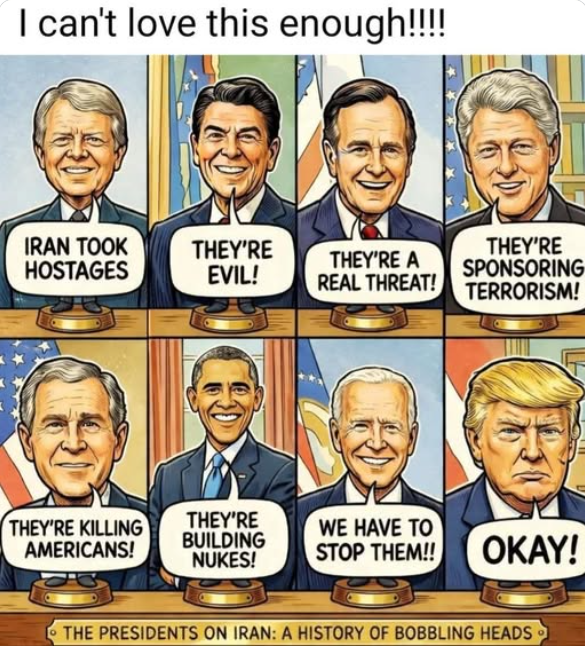 As shown at left, the United States is loaded with people who twist the facts to their liking.



-
Climate Change8 months ago
Guest post: Why China is still building new coal – and when it might stop
-
Greenhouse Gases8 months ago
Guest post: Why China is still building new coal – and when it might stop
-

 Greenhouse Gases2 years ago
嘉宾来稿:满足中国增长的用电需求 光伏加储能“比新建煤电更实惠”
-
Climate Change2 years ago
Bill Discounting Climate Change in Florida’s Energy Policy Awaits DeSantis’ Approval
-

 Climate Change2 years ago
嘉宾来稿:满足中国增长的用电需求 光伏加储能“比新建煤电更实惠”
-
Climate Change Videos2 years ago
The toxic gas flares fuelling Nigeria’s climate change – BBC News
-

 Renewable Energy6 months ago
Sending Progressive Philanthropist George Soros to Prison?
-

 Carbon Footprint2 years ago
US SEC’s Climate Disclosure Rules Spur Renewed Interest in Carbon Credits