Connect with us

Published

on

President Ford signing the Energy Reorganization Act, which created the Nuclear Regulatory Commission.

Forgetting History While Ignoring Cost and Safety

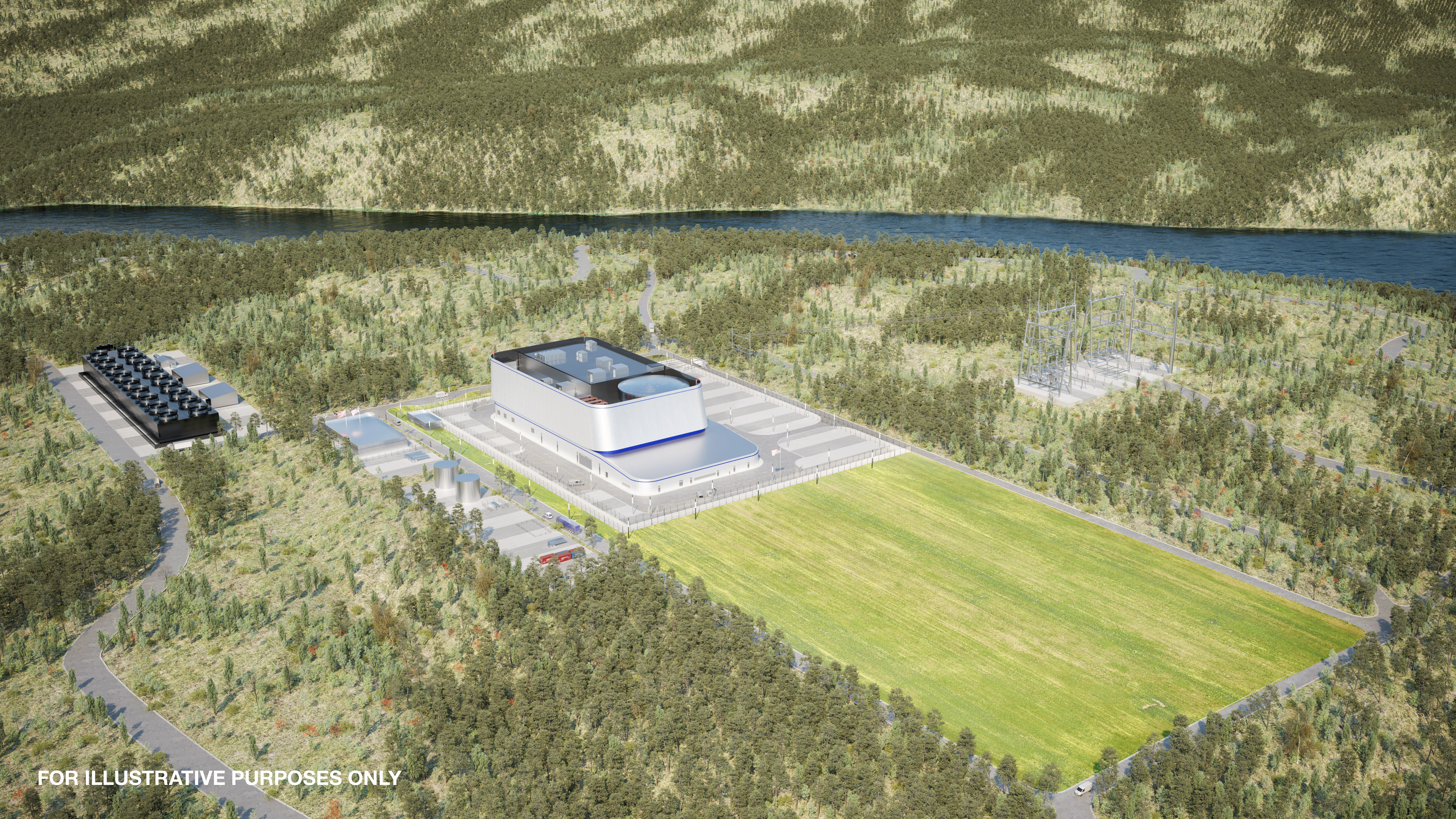
This past week we saw a flurry of rushed decisions around nuclear power, first with TVA submitting a construction permit for their GE-Hitachi BWRX-300 Small Modular Reactor design near Oak Ridge, Tennessee followed late Friday afternoon, May 23, 2025 with four Trump Executive Orders apparently attempting to restructure the regulatory framework of nuclear power oversight and accelerating deployment of more unproven nuclear power designs. We have known that TVA was exploring the SMR technology, but had understood it was not cost-effective and that a decision to move forward had not been made; this action would indicate otherwise.

The Executive Orders raise more questions than they answer, but appear to push the Nuclear Regulatory Commission (NRC) to short-circuit their safety and review process and even allow the Department of Energy (DOE) and Department of Defense (DOD) to rush forward with nuclear power plants outside of the regulatory process. Congress separated the Atomic Energy Commission (AEC) in 1974 with the Energy Reorganization Act, signed into law by President Ford, which created the Nuclear Regulatory Commission (NRC) to handle nuclear safety regulation. The Department of Energy (DOE) was created later in 1977 through the Department of Energy Organization Act, which took over the AEC’s nuclear weapons and energy development functions along with energy programs from other agencies.

The separation was designed to address conflicts of interest that had developed within the AEC, which had been both promoting nuclear technology and regulating its safety since 1946. The 1974 reorganization split these functions, giving the NRC independent regulatory authority over civilian nuclear power while transferring the promotional and weapons-related activities to what would become the DOE.

Executive Order Concerns

According to Peter Behr’s Politico Energy Wire story, former nuclear regulators and industry experts are raising serious alarms about Trump’s executive orders potentially undermining decades of independent nuclear safety oversight. Former NRC chairs Allison Macfarlane and Stephen Burns warn that political interference in the historically independent Nuclear Regulatory Commission will “crater” essential public confidence in nuclear power and damage public trust. The orders mandate staff reductions at the NRC while simultaneously requiring the agency to complete a “wholesale revision” of safety regulations within months, leading Senator Ed Markey to warn that “it will be impossible for NRC to maintain a commitment to safety and oversight with staffing levels slashed and expertise gone.”

Technical Challenges Remain Complex

The advanced reactor technologies that Trump is counting on for his nuclear “renaissance” present unprecedented safety review challenges that cannot be rushed without significant risk. According to a 2023 National Academies study, most advanced reactors use unfamiliar cooling systems like liquid sodium, helium gas, or molten salt instead of traditional water cooling, requiring extensive testing and safety analysis. Former NRC Chair Richard Meserve emphasized that “there is no way to cut corners on ensuring that these new features are carefully analyzed,” while industry veteran Amir Afzali noted that sodium-cooled reactors face “significant fire risk, as sodium ignites explosively on contact with air,” requiring rigorous testing and monitoring that increases costs.

Will We Ever Learn

Critics point to recent nuclear project failures as evidence that regulatory shortcuts won’t solve the industry’s fundamental cost problems. The Georgia Power Vogtle expansion, which used NRC-approved reactor designs, still ended up costing $35 billion and running seven years late — problems that stemmed from construction and financing issues rather than regulatory delays. As Afzali observed, “the NRC can’t be blamed for the issues Vogtle faced,” and history across industries shows that “weakening oversight and blurring the lines between promotion and regulation” leads to “serious consequences.” The orders risk repeating past mistakes by prioritizing speed over safety in an industry where public trust and technical precision are paramount. Proponents of nuclear power have concerns that the Executive Orders may be illegal and increase uncertainty and delays.

Small Modular Reactors: Big Promises, Bigger Price Tags

TVA Dreaming

TVA has been dreaming about having an SMR for years. Submitting a request for an Early Site Permit at the Clinch River Nuclear Site in 2016 and receiving the permit in 2019. Recruiting partners and submitting an application for $800 million in taxpayer funds to be a “first mover” in SMR technology.

This dream has been hyped by many Tennessee politicians and the Oak Ridge community who have never met a nuclear project they did not like. As with many dreams they can take a turn for the worse when not grounded in reality. The missing reality in this dream, as with so many nuclear proponents’ dreams, is price and schedule. TVA’s C-suite executives dreams can easily become Tennessee Valley ratepayers’ worst nightmare when fuzzy math and hype prevail over facts and prudence. Below are the facts that beg for more prudence. 
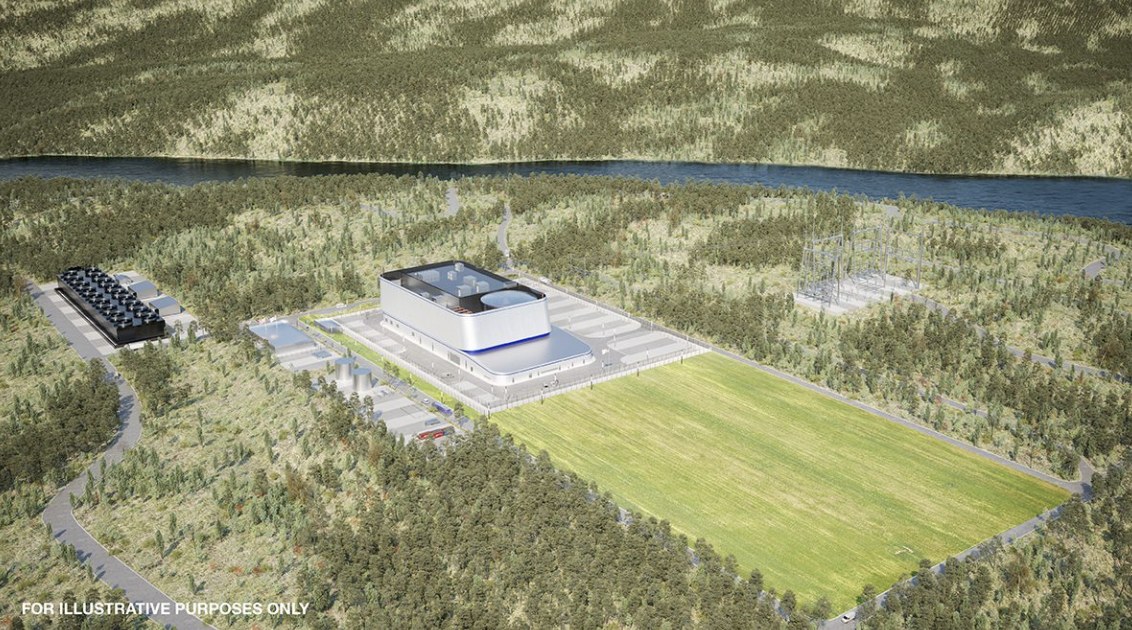
A Small Modular Reactor along the Clinch River. Source: TVA

BWRX-300 and other SMRs pose significant financial risks to ratepayers

In the race to decarbonize our electricity system, small modular reactors (SMRs) have been touted as the nuclear industry’s silver bullet – smaller, faster to build, and more affordable than their larger predecessors. Among the leading designs is GE Hitachi’s BWRX-300, which has attracted interest from utilities across North America. But recent expert testimony before the Colorado Public Utilities Commission by energy analyst David Schlissel raises serious questions about whether these reactors can deliver on their promises or will instead burden ratepayers with massive costs.

The rising price tag of the BWRX-300

While GE Hitachi has kept many of the BWRX-300’s financial details under wraps, what we do know is concerning. According to Schlissel’s testimony, TVA’s recent filings reveal an estimated overnight cost for the BWRX-300 of $17,949 per kilowatt in 2024 dollars. This figure only covers the base construction costs – it doesn’t include financing costs or inflation during the years of construction.

When all costs are factored in, the final price per kilowatt will be substantially higher. For comparison, that base cost is already nearly twice as high as what GE Hitachi initially suggested the reactor might cost.

“The estimated all-in cost of the project must be much higher than shown,” Schlissel testified, noting that overnight costs exclude escalation and financing costs that typically add substantial amounts to nuclear projects.

The pattern of ballooning costs

The BWRX-300 isn’t unique in facing cost increases. Every SMR design on the market has seen dramatic cost escalation before a single reactor has been built in the United States:

  • NuScale’s SMR project saw costs nearly triple from $6,833/kW in 2015 to $20,130/kW by 2023 before being canceled
  • X-Energy’s reactor cost estimates jumped 72% in just three years (2021-2024)
  • TerraPower’s Natrium reactor, initially touted as potentially costing $11,594/kW, is now estimated at $28,986/kW according to recent admissions by Bill Gates, the company’s founder

“It is extremely likely that any future SMRs or large reactors will cost far more and take far longer to build than the nuclear industry and its supporters now claim,” Schlissel concluded. “That has been the long history of nuclear power in the United States, and I see no evidence that leads me to believe it will change anytime in the foreseeable future.”

The international experience is no better

Supporters of the BWRX-300 and other SMR designs often suggest we should ignore the U.S. nuclear industry’s troubled history of cost overruns. But the international experience with SMRs tells the same story:

  • China’s Shidao Bay SMR cost tripled from its original estimate
  • Russia’s floating SMRs saw costs quadruple
  • Argentina’s CAREM 25 SMR has had cost increases of over 600% and is still under construction

Just as troubling, these projects all faced years-long schedule delays. China’s SMR took 11 years instead of 4 to complete, while Russia’s took 13 years instead of 3. Argentina’s is still under construction after 10 years, with at least 3 more years to go.

For the BWRX-300, which has yet to begin construction anywhere, these patterns suggest ratepayers should be extremely skeptical of current cost and schedule projections.

Factory fabrication: An empty promise?

A central claim made about the BWRX-300 and other SMRs is that they will be less expensive because modules will be manufactured in factories and assembled on site. However, as Schlissel points out, none of the SMR vendors marketing designs in the U.S. currently have factories where their reactor modules are being built.

“One of the key claims by supporters of SMRs is that the reactors will be less expensive to build because key reactor modules will be manufactured in factories and assembled on site. Yet, to my knowledge, no SMR vendor has yet opened a single factory,” Schlissel testified.

This same promise was made for the AP1000 reactors built at Georgia’s Plant Vogtle, which were supposed to utilize modular construction techniques to reduce costs and construction time. Instead, the project experienced a 157% cost overrun and a 6 to 7 year schedule delay – hardly a promising precedent for the BWRX-300.

No evidence of a learning curve

GE Hitachi and other SMR vendors claim that building multiple copies of the same design will lead to cost declines over time. But Schlissel’s analysis found no evidence of such a “positive learning curve” in nuclear construction:

“Even the French nuclear program, which relied on a high degree of standardization in the design of its 58 reactors built between 1974 and 1990, failed to achieve a positive learning curve. Instead, costs continued to increase over time despite the program’s design standardization.”

His analysis of construction schedules for recent reactor designs shows no meaningful reduction in construction time for subsequent builds of the same design.

Still too expensive, even with subsidies

Even with the Inflation Reduction Act’s generous 50% Investment Tax Credit for new nuclear plants built in communities that have had now-retired fossil plants, Schlissel’s analysis found that the cost of electricity from SMRs like the BWRX-300 would still be far higher than renewable alternatives.

Using NREL’s Annual Technical Baseline data, Schlissel demonstrated that SMR power would cost $115-251/MWh in 2035, compared to much lower costs for wind, solar PV, and storage. It’s worth noting that while tax credits reduce costs to ratepayers, they simply shift the burden to taxpayers – who are the very same people.

Too slow to address climate change

The climate crisis demands rapid action. Yet even by optimistic projections, the first BWRX-300 won’t be operational until the 2030s. Given the patterns of delay seen in every nuclear project to date, the timeline could easily stretch into the 2040s.

Meanwhile, renewable energy and storage systems can be deployed in months or a few years, making them far more effective tools for near-term carbon reduction.

The flexibility factor

Perhaps most concerning for ratepayers is that investing in expensive nuclear projects like the BWRX-300 locks utilities into very long-term financial commitments when future electricity demand is uncertain. If the dramatic increases in demand currently forecast don’t materialize, or if they materialize differently than expected, ratepayers could be stuck paying for expensive overcapacity.

As Schlissel notes: “A renewable energy park would give the Company valuable flexibility in its resource planning… New resources could be added in a relatively shorter number of years if demand grows at a higher rate than now expected. This flexibility is vital in today’s dynamic energy transition.”

Conclusion: A risky bet for ratepayers

The BWRX-300 and other SMRs represent a massive financial gamble for utilities and their ratepayers. While the technology sounds promising, the evidence suggests these reactors will follow the same pattern of massive cost overruns and delays that have plagued nuclear projects for decades.

Before committing billions of ratepayer dollars to these unproven technologies, utilities and regulators should carefully consider the overwhelming evidence that SMRs like the BWRX-300 are unlikely to deliver on their promises of affordable, timely carbon-free power.

As expert David Schlissel recommends, a more prudent approach would be to invest in proven renewable energy and battery storage technologies that can be deployed quickly, scaled flexibly, and have consistently demonstrated falling costs over time.

This blog post is based on expert testimony by David A. Schlissel before the Colorado Public Utilities Commission in April 2025, as part of Proceeding No. 24A-0442E concerning Public Service Company of Colorado’s application for approval of its 2024 Just Transition Solicitation.

The post Rush to Build New Nuclear Power: TVA and Administration Ignore Cost and Safety appeared first on SACE | Southern Alliance for Clean Energy.

Rush to Build New Nuclear Power: TVA and Administration Ignore Cost and Safety

Continue Reading

Renewable Energy

Sunrez Prepreg Cuts Blade Repairs to Minutes

Published

on

Weather Guard Lightning Tech

Sunrez Prepreg Cuts Blade Repairs to Minutes

Bret Tollgaard from Sunrez joins to discuss UV-curing prepreg that cuts blade repair time by up to 90% and has recently recieved OEM approval.

Sign up now for Uptime Tech News, our weekly newsletter on all things wind technology. This episode is sponsored by Weather Guard Lightning Tech. Learn more about Weather Guard’s StrikeTape Wind Turbine LPS retrofit. Follow the show on YouTubeLinkedin and visit Weather Guard on the web. And subscribe to Rosemary’s “Engineering with Rosie” YouTube channel here. Have a question we can answer on the show? Email us!

Allen Hall: Brett, welcome back to the program. 

Bret Tollgaard: Thanks for having me again.

Allen Hall: So a lot’s happening at sunrise at the moment. Uh, there’s, uh, activity with sunrise materials on a lot of blades this year.

Over the last couple of years actually, ISPs, operators, OEMs, are realizing that UV curing is a huge advantage.

Bret Tollgaard: Turns out there’s a lot of value added, uh, to the entire process when utilizing UV cure, uh, pre-req.

Allen Hall: So the, the pre pres are, have been available for a couple of years. The qualification though was always the concern.

Has the OEM qualified this material? Are they gonna give you the blessing? Does this show up in the manual? If I call the OEM, are they gonna say they have talked to you guys? A lot of those hurdles have been cleared at this point.

Bret Tollgaard: Yeah, great question. And we are happy to announce that we have finally been approved by a large OEM for use on the epoxy blade for now all general kind of repairs.

We have several more OEMs that have already passed their phase one mechanical testing, and we’re iterating through now [00:01:00] their, uh, secondary and tertiary kind of tests. And so we do expect to be fully qualified by several OEMs before the end of the year, which should make the ISPs integration and utilization of our materials much, much easier.

Allen Hall: So the, the, the problem you’re solving is repairs in the field for the most part, or sometimes in the factory. Mm-hmm. But a lot of times in the field that those repairs. It happened quite a bit. They’re the same repair, the same area, the same kind of thing over and over and over again. And wetting out fabric on site takes time.

Particularly if you’re using standard materials, you have to bag it. You have to apply heat in some cases to get it to kick, and then you have to wait several hours for it to cure. So in the repair cycle time, most of your time is waiting.

Bret Tollgaard: It sure is. Uh, and on top of all that, we all know that there aren’t enough technicians in this industry to even do all the repairs, uh, that would like to be done.

Yeah. And so to really kind of streamline all of that, [00:02:00] uh, we’ve rolled out a couple of new things and we’ve had a lot more interest in some pre consolidated preki patches for customers. Uh, if a particular blade model has an issue that is a standardized kind of repair. We’re actually now building custom prepregs, or we will build the appropriate width length, stack it, consolidate it, uh, wrap it between our films.

So then all the customer has to do when they get on site is, uh, you know, do do the appropriate surface prep. Scarfing, apply a little bit of our UV surface primer to the backside of that patch. But now they can go up tower, single peel, stick, roll out, and then they’re cured.

Allen Hall: And that’s a. How many hours of saving is that?

It’s gotta be like six, 12 hours of saving, of, of

Bret Tollgaard: labor. It’s upwards of 80 to 90% of the labor that’s gonna actually need to be done to apply that. Otherwise, and then same thing too. We’ve had a couple instances where we took a several day repair down to one, to two to three hours. And these are multi-meter long repairs that were fast tracked because we pre consolidated preki [00:03:00] everything.

Some were in flat sheet forms, some were much longer on rolls, where you’re actually then rolling out with a team. Um, and so we’ve been able to demonstrate several times, uh, over the last 12 months, uh, the, the value that a UV cure preprint.

Allen Hall: Well, sure, because that, that would make sense. The issue about wetting out fabric in the field you just done in the back of a trailer or something, somewhere like that.

Usually it is, it’s that you’re never really sure that you got the fabric wetted out. The experienced technicians always feel like, have done it enough that they get very consistent results. But as you mentioned, getting technicians is hard and, and there’s so many repairs to do. So you’re doing those wetting out composite things takes practice and skill.

Just buying it, preki it, where you have control over it. And you guys sell to the military all the time. So that, and you’re, are you ass 91 qualified yet? You’re in the midst of that?

Bret Tollgaard: So we, I mean, a, we just got ISO certified, uh, at the end of last year in December. So our [00:04:00] QMS system and everything like that’s up to date, that’s huge.

Another big qualification for the OEMs that want to see, you know, true quality and output.

Allen Hall: That’s it. I, if I’m gonna buy a preki patch, so, uh, uh, that would make sense to me, knowing that. There’s a lot of rigor as a quality system. So when I get out the the site and I open that package, I know what’s inside of it every single time.

Bret Tollgaard: Well, and that’s just it. And like we got qualified based on the materials that we can provide and the testing that’s being done in real world situations when you’re wetting out by hand and you’re vacuum backing and you’re trying to cure. It is a little bit of an art form when you’re doing that. It is, and you might think you have a great laminate, you got void content, or you haven’t properly went out that glass ’cause humidity or the way the glass was stored or it was exposed.

The sizing and the resin don’t really bite. Well. You might think you have a great repair, but you might be prematurely failing as well after X cycles and fatigue. Uh, simply because it’s not as easy to, to truly do. Right? And so having the [00:05:00] pre-wet, uh, pre impregnated glass really goes a long way for the quality, uh, and the consistency from repair to repair.

Allen Hall: Well, even just the length of the season to do repairs is a huge issue. I, I know I’ve had some discussions this week about opening the season up a little bit, and some of the ISPs have said, Hey, we we’re pretty much working year round at this point. We’re, we’ll go to California. We’ll go to Southern Texas.

We’ll work those situations. ’cause the weather’s decent, but with the sunrise material, the temperature doesn’t matter.

Bret Tollgaard: Correct. And I was actually just speaking to someone maybe half hour ago who came by and was talking about repairs that they had to do in Vermont, uh, in December. They could only do two layers of an epoxy repair at a time because of the amount of the temperature.

Allen Hall: Yeah.

Bret Tollgaard: Whereas you could go through, apply a six or an eight layer pre-reg cure it in 20 minutes. Uh, you know, throughout that entire length that he had and you would’ve been done. That’s, and so it took several days to do a single repair that could have been done in sub one hour with our material.

Allen Hall: I know where those wind turbines are.

[00:06:00] They weren’t very far from, we used to live, so I understand that temperature, once you hit about November up in Vermont, it’s over for a lot of, uh, standard epoxy materials and cures, it is just not warm enough.

Bret Tollgaard: Yeah, we, we’ve literally had repairs done with our materials at negative 20 Fahrenheit. That were supposed to be temporary repairs.

They were installed four or five years ago. Uh, and they’re still active, perfectly done patches that haven’t needed to be replaced yet. So,

Allen Hall: so, because the magic ingredient is you’re adding UV to a, a chemistry where the UV kicks it off. Correct. Basically, so you’re, it’s not activated until it’s hit with uv.

You hit it with uv that starts a chemical process, but it doesn’t rely on external heat. To cure

Bret Tollgaard: exactly. It, it is a true single component system, whether it’s in the liquid pre preg, the thickened, uh, the thickened putties that we sell, or even the hand lamination and effusion resin. It’s doped with a, a variety of different food initiators and packages based on the type of light that’s [00:07:00] being, uh, used to, to cure it.

But it will truly stay dormant until it’s exposed to UV light. And so we’ve been able to formulate systems over the last 40 years of our company’s history that provide an incredibly long shelf life. Don’t prematurely gel, don’t prematurely, uh, you know, erode in the packaging, all those

Allen Hall: things.

Bret Tollgaard: Exactly.

Like we’ve been at this for a really long time. We’ve been able to do literally decades of r and d to develop out systems. Uh, and that’s why we’ve been able to come to this market with some materials that truly just haven’t been able to be seen, uh, delivered and installed and cured the way that we can do it.

Allen Hall: Well, I think that’s a huge thing, the, the shelf life.

Bret Tollgaard: Mm-hmm.

Allen Hall: You talk to a lot of. Operators, ISPs that buy materials that do have an expiration date or they gotta keep in a freezer and all those little handling things.

Bret Tollgaard: Yep.

Allen Hall: Sunrise gets rid of all of that. And because how many times have you heard of an is SP saying, oh, we had a throwaway material at the end of the season because it expired.

Bret Tollgaard: Oh, tremendously

Allen Hall: amount of, hundred of thousands of dollars of material, [00:08:00]

Bret Tollgaard: and I would probably even argue, say, millions of dollars over the course of the year gets, gets thrown out simply because of the expiration date. Um, we are so confident in our materials. Uh, and the distributors and stuff that we use, we can also recertify material now, most of the time it’s gonna get consumed within 12 months Sure.

Going into this kind of industry.

Allen Hall: Yeah.

Bret Tollgaard: Um, but there have been several times where we’ve actually had some of that material sent back to us. We’ll test and analyze it, make sure it’s curing the way it is, give it another six months shelf, uh, service life.

Allen Hall: Sure.

Bret Tollgaard: Um, and so you’re good to go on that front

Allen Hall: too.

Yeah. So if you make the spend to, to move to sun, you have time to use it.

Bret Tollgaard: Yes.

Allen Hall: So if it snows early or whatever’s going on at that site where you can’t get access anymore, you just wait till the spring comes and you’re still good with the same material. You don’t have to re-buy it.

Bret Tollgaard: Exactly. And with no special storage requirements, like you mentioned, no frozen oven or frozen freezer, excuse me, uh, or certain temperature windows that has to be stored in, uh, it allows the operators and the technicians, you know, a lot more latitude of how things actually get

Allen Hall: done.

And, and so if. When we [00:09:00] think about UV materials, the, the questions always pop up, like, how thick of a laminate can you do and still illuminate with the UV light? And make sure you curate I I, because you’re showing some samples here. These are,

Bret Tollgaard: yeah.

Allen Hall: Quarter inch or more,

Bret Tollgaard: correct. So

Allen Hall: thick samples. How did you cure these?

Bret Tollgaard: So that was cured with the lamp that we’ve got right here, which are standard issued light, sold a couple hundred into this space already. Um, that’s 10 layers of a thousand GSM unidirectional fiber. Whoa. This other one is, uh, 10 layers of, of a biox. 800 fiber.

Allen Hall: Okay.

Bret Tollgaard: Uh, those were cured in six minutes. So you can Six

Allen Hall: minutes.

Bret Tollgaard: Six minutes.

Allen Hall: What would it take to do this in a standard epoxy form?

Bret Tollgaard: Oh, hours,

Allen Hall: eight hours maybe?

Bret Tollgaard: Yeah. About for, for the, for the post cure required to get the TGS that they need in the wind space, right? Absolutely. And so yeah, we can do that in true minutes. And it’s pre impregnated. You simply cut it to shape and you’re ready to rock.

Allen Hall: And it looks great when you’re done, mean the, the surface finish is really good. I know sometimes with the epoxies, particularly if they get ’em wetted out, it doesn’t. It [00:10:00] doesn’t have that kind of like finished look to it.

Bret Tollgaard: Exactly. And the way that we provide, uh, for our standard, uh, you know, pre pprs are in between films and so if you cure with that film, you get a nice, clean, glossy surface tack free.

But as more and more people go to the pre consolidation method down tower, so even if they buy our standard prereg sheets or rolls, they’re preki down tower, you can also then just apply a pre, uh, a peel ply to that top film. Oh, sure. So if you wet out a peel ply and then you build your laminate over the top.

Put the primer and the black film over when they actually get that up on tower, they can then just remove that fuel ply and go straight to Sandy or uh, uh, painting and they’re ready to rock.

Allen Hall: Wow. Okay. That’s, that’s impressive. If you think about the thousands and thousands of hours you’ll save in a season.

Where you could be fixing another blade, but you’re just waiting for the res, the cure,

Bret Tollgaard: and that’s just it. When you’re saving the amount of labor and the amount of time, and it’s not just one technician, it’s their entire team that is saving that time. Sure. And can move on to the next [00:11:00] repair and the next process.

Allen Hall: So one of the questions I get asked all the time, like, okay, great, this UV material sounds like space, age stuff. It must cost a fortune. And the answer is no. It doesn’t cost a fortune. It’s very price competitive.

Bret Tollgaard: It, it really is. And it might be slightly more expensive cost per square foot versus you doing it with glass and resin, but you’re paying for that labor to wait for that thing to cure.

And so you’re still saving 20, 30, 40 plus percent per repair. When you can do it as quickly as we can do it.

Allen Hall: So for ISPs that are out doing blade repairs, you’re actually making more money.

Bret Tollgaard: You are making more money, you are saving more money. That same group and band of technicians you have are doing more repairs in a faster amount of time.

So as you are charging per repair, per blade, per turbine, whatever that might be, uh, you’re walking away with more money and you can still pass that on to the owner operators, uh, by getting their turbines up and spinning and making them more money.

Allen Hall: Right. And that’s what happens now. You see in today’s world, companies ISPs that are proposing [00:12:00] using UV materials versus standard resin systems, the standard residence systems are losing because how much extra time they’re, they’re paying for the technicians to be on site.

Bret Tollgaard: Correct.

Allen Hall: So the, the industry has to move if you wanna be. Competitive at all. As an ISP, you’re gonna have to move to UV materials. You better be calling suns

Bret Tollgaard: very quickly. Well, especially as this last winter has come through, the windows that you have before, bad weather comes in on any given day, ebbs and flows and changes.

But when you can get up, finish a repair, get it spinning, you might finish that work 2, 3, 4 later, uh, days later. But that turbine’s now been spinning for several days, generating money. Uh, and then you can come back up and paint and do whatever kind of cosmetic work over the top of that patch is required.

Allen Hall: So what are the extra tools I need to use Sunz in the kits. Do I need a light?

Bret Tollgaard: Not a whole lot. You’re gonna need yourself a light. Okay. You’re gonna need yourself a standard three to six inch, uh, bubble buster roller to actually compact and consolidate. Sure. Uh, that’s really all you need. There’s no vacuum lights.

And you sell the lights. We do, we, [00:13:00] we sell the lights. Um, our distributors also sell the lights, fiberglass and comp one. Uh, so they’re sourced and available, uh, okay. Domestically, but we sell worldwide too. And so, uh, we can handle you wherever you are in the world that you wanna start using uv, uh, materials.

And yeah, we have some standardized, uh, glass, but at the same time, we can pre-reg up to a 50 inch wide roll. Okay, so then it really becomes the limiting factor of how wide, how heavy, uh, of a lamette does a, a technician in the field want to handle?

Allen Hall: Yeah, sure. Okay. In terms of safety, with UV light, you’re gonna be wearing UV glasses,

Bret Tollgaard: some standard safety glasses that are tinted for UV protection.

So they’ll

Allen Hall: look yellow,

Bret Tollgaard: they’ll look a little yellow. They’ve got the shaded gray ones. Sunglasses, honestly do the same.

Allen Hall: Yeah.

Bret Tollgaard: But with a traditional PPE, the technicians would be wearing a tower anyways. Safety glasses, a pair of gloves. You’re good to go. If you’re doing confined space, work on the inside of a, a, a blade, uh, the biggest value now to this generation of material that are getting qualified.

No VOC non [00:14:00] flammable, uh, no haps. And so it’s a much safer material to actually use in those confined spaces as well as

Allen Hall: well ship

Bret Tollgaard: as well as ship it ships unregulated and so you can ship it. Next day air, which a lot of these customers always end. They do. I know that.

Allen Hall: Yeah.

Bret Tollgaard: Um, so next day air, uh, you know, there’s no extra hazmat or dangerous goods shipping for there.

Uh, and same thing with storage conditions. You don’t need a, a flammable cabinet to actually store the material in.

Allen Hall: Yeah.

Bret Tollgaard: Um, so it really opens you up for a lot more opportunities.

Allen Hall: I just solves all kinds of problems.

Bret Tollgaard: It, it really does. And that’s the big value that, you know, the UV materials can provide.

Allen Hall: So. I see the putty material and it comes in these little tubes, squeeze tubes. What are these putties used for?

Bret Tollgaard: So right now, the, the existing putty is really just the same exact thickened, uh, resin that’s in the pre-print.

Allen Hall: Okay.

Bret Tollgaard: And it’s worked well. It’s, it’s nice we’re kind of filling some cracks and some faring, some edges and stuff if things need to be feathered in.

But we’ve [00:15:00] been working on this year that we’ll be rolling out very, very soon is a new structural putty. Okay. So we’ll actually have milled fibers in there and components that will make it a much more robust system. And so we’ve been getting more inquiries of, particularly for leading edge rehabilitation.

Where Cat three, cat four, even cat five kind of damage, you need to start filling and profiling before any kind of over laminates can really be done properly. And so we’re working on, uh, rolling that out here very, very soon. Um, and so that will, I think, solve a couple of needs, um, for the wind market. Uh, and then in addition to some new products that we’re rolling out, uh, is gonna be the LEP system that we’re been working on.

Uh, the rain erosion testing showed some pretty good results. But we’re buying some new equipment to make a truly void free, air free system that we’re gonna it, uh, probably submit end of April, beginning of May for the next round, that we expect to have some very, very good, uh, duration and weather ability with,

Allen Hall: because it’s all about speed,

Bret Tollgaard: it’s durability.

Allen Hall: All about e

Bret Tollgaard: Exactly. And ease of use by someone in the [00:16:00] field. Yeah. Or OEMs on, you know, in the manufacturing plant. Um, there has yet, in my opinion, to be a true winner in the LEP space. That is just the right answer. And so by applying our materials with the really high abrasion resistance that we expect this to have and be as simple to do as it really appeal, stick and cure, um, we think it’s gonna be a bit of a game changer in this industry.

Allen Hall: Well, all the sunrise materials, once they’re cured, are sandal

Bret Tollgaard: correct.

Allen Hall: And I think that’s one of the things about some of the other systems, I always worry about them like, alright, they can do the work today, but tomorrow I have to come back and touch it again. Do I have a problem? Well, and the sun rests stuff is at least my playing around with it has been really easy to use.

It’s, it’s. Uh, things that I had seen maybe 20 years ago in the aerospace market that have they thought about using the material not only [00:17:00] in the factory, but outside the factory. How easy is it to adapt to, how easy to, to paint, to all those little nuances that come up? When you’re out working in the field and trying to do some very difficult work, uh, the sunroom material is ready to go, easy to use and checks all the boxes, all those little nuances, like it’s cold outside, it’s wet outside.

Uh, it’s, it’s hot outside, right? It’s all those things that, that stop ISPs or OEMs from being super efficient. All those parameters start to get washed away. That’s the game changer and the price point is right. How do. People get a hold of you and learn about the sun rose material. Maybe they, you can buy through fiberglass or through composite one.

Mm-hmm. That’s an easy way to do, just get to play with some samples. But when they want to get into some quantity work, they got a lot of blade repair. They know what they’re doing this summer or out in the fall or this winter come wintertime. How do they get [00:18:00] started? What do they do?

Bret Tollgaard: Well, one of the first things to do is they can reach us through our website.

Um, we’re developing a larger and larger library now for how to videos and install procedures, um, generating SOPs that are, you know, semi, uh, industry specific. But at the same time too, it’s a relatively blanket peel and stick patch, whether it’s a wind turbine blade, a corroded tank, or a pressure pipe. Um, and so yeah, www.suns.com Okay, is gonna be a great way to do it.

Uh, we’re actively building more videos to put on, uh, our YouTube channel as well. Um, and so that’s kind of gonna be the best way to reach out, uh, for us. One of the big things that we’re also pushing for, for 26 is to truly get people, uh, in this, in industry, specifically trained and comfortable using the products.

At the end of the day, it’s a composite, it’s a pre impregnated sheet. It’s not difficult, but there are some tips and tricks that really make the, the use case. Uh, the install process a lot easier.

Allen Hall: Sure.

Bret Tollgaard: Uh, and so just making sure that people are, are caught up on the latest and greatest on the training techniques will [00:19:00] go a long way too.

Allen Hall: Yeah. It’s only as good as the technician that applies it

Bret Tollgaard: e Exactly.

Allen Hall: Yeah. That’s great. Uh, it’s great all the things you guys are doing, you’re really changing the industry. In a positive way, making repairs faster, uh, more efficient, getting those turbines running. It’s always sad when you see turbines down with something that I know you guys could fix with sun.

Uh, but it does happen, so I, I need the ISPs to reach out and start calling Sun and getting in place because the OEMs are blessing your material. ISPs that are using it are winning contracts. It’s time to make the phone call to Sun Rez. Go to the website, check out all the details there. If you wanna play with your material, get ahold of fiberglass or composite one just.

Order it overnight. It’ll come overnight and you can play with it. And, and once you, once you realize what that material is, you’ll want to call Brett and get started.

Bret Tollgaard: A hundred percent appreciate the time.

Allen Hall: Yeah. Thanks Brett, for being on the podcast. I, I love talking to you guys because you have such cool material.

Bret Tollgaard: Yeah, no, we’re looking, uh, forward to continuing to innovate, uh, really make this, uh, material [00:20:00] splash in this industry.

Sunrez Prepreg Cuts Blade Repairs to Minutes

Continue Reading

Renewable Energy

Infringing on the Rights of Others

Published

on

I agree with what Ricky Gervais says here; I would only add that there are dozens of ways religion impinges on others.

In my view, the most common is that it impedes our implementing science in things like climate change mitigation.  If you believe, as is explicit in the Book of Genesis, that “only God can destroy the Earth,” you have a good excuse to ignore the entirety of climate science.

Infringing on the Rights of Others

Continue Reading

Renewable Energy

Could You Be Paid to Sew Disinformation into Our Society?

Published

on

99% of this totally incorrect.

But hey, who cares, right? There’s a huge market for disinformation, and I’m sure you were handsomely paid.

Could You Be Paid to Sow Disinformation into Our Society?

Continue Reading

Trending

Copyright © 2022 BreakingClimateChange.com