

Weather Guard Lightning Tech

Revolutionizing Wind Farm Data Management: Thread’s UNITI Platform
CEO Josh Riedy explains how Thread’s UNITI software platform enables intuitive data management and analysis for drone inspections at wind farms, creating integrated “electronic medical records” for turbines. Visit their website: https://thread.one/
Sign up now for Uptime Tech News, our weekly email update on all things wind technology. This episode is sponsored by Weather Guard Lightning Tech. Learn more about Weather Guard’s StrikeTape Wind Turbine LPS retrofit. Follow the show on Facebook, YouTube, Twitter, Linkedin and visit Weather Guard on the web. And subscribe to Rosemary Barnes’ YouTube channel here. Have a question we can answer on the show? Email us!
Pardalote Consulting – https://www.pardaloteconsulting.com
Weather Guard Lightning Tech – www.weatherguardwind.com
Intelstor – https://www.intelstor.com
Allen Hall: Welcome to the special edition of the Uptime Wind Energy Podcast. I’m your host, Allen Hall, along with my co host, Joel Saxum. If you’ve been paying attention to the drone inspection business, you may have noticed some significant changes in the last couple of years. The amount of data being acquired is astounding where the industry once lacked sufficient data.
Now we’re overflowing with it and new ideas and businesses are trying to solve the data overload problem and bring more of a uniform approach to inspections. Be that wind turbines, transmission lines, substations. Our guest today is Josh Riedy CEO and founder of Thread, and Thread is based in North Dakota in the central part of the United States.
Thread has developed some really interesting products and is really simplifying the way that we handle data. Josh, welcome to the program.
Josh Riedy: Thank you, Allen. Glad to be here.
Allen Hall: So we have a massive problem that the industry is going through at the moment where we want to acquire more data and that’s what Thread does in their platform.
And let’s talk about that in a moment here, but I want to understand the scope of the problem because we, Joel and I have been around talking to operators lately. And here’s one of the things they tell us, and it happened this morning, actually, on a zoom call they want to acquire more data.
They want to acquire the wind farm, the turbine, the blade, but also the transmission line, all the substation. They want to gather drone images of all of it. And the problem they were having was what to do with all the data that actually happened today.
Joel Saxum: Yeah. How do we manage it all?
Allen Hall: Yeah. And this revolve back to our conversation about what Thread is doing to answer that call.
So maybe you can describe what you’re doing to answer the call of we have a lot of data.
Josh Riedy: Allen and Joel. Thanks for having me again. And you touch on the heart of the problem. There is too much data and not just too much data. It’s sensitive information. It is not meant to be in the public sphere, and that is a huge consideration.
So the goal of Thread and our passion since 2018 has been to take that information and make it relevant to the customer, to the stakeholder that needs that information. And that’s not simple, because no large organization is just one modality. There are many different groupings within a given organization that have different needs.
And to get that right has been a pursuit for some time, but I do believe we are on the right track and we’re able to show the world that.
Allen Hall: I have really seen a shift Josh in what the engineers are asking for it was for the longest time Let’s take some images of blades and then they’re like wow I got this I can got some images of blades with drones This is fantastic Why am I not doing everything around this wind turbine and that means looking at the tower looking at the cell going down to the base of plant, right?
So the BOP and then those large operators are like, Hey we own everything out to the substation here, folks. We need to be inspecting that too. So that ended up in the that’s been a last two year problem. In the last two years, like, holy moly, we’ve, the engineers have just gone crazy on the amount of data.
Right. And I’m sure they’re banging on your door saying, Hey, if you’re here and you’re guys are doing inspections. Can you do the transmission line? Can you do the substation? I assume you’re hearing that from almost every operator at this point.
Josh Riedy: Absolutely, and even more than that, we’ve been able to experience that firsthand.
We have had the development arc with our co development partner in the industry, Xcel Energy, and if I could turn back the hands of time, And record the first conversation to the most recent conversation with Russ and their engineering team, you see a profound transformation that they’re beginning to get mastery over the process and their needs.
And with that comes very specific requests for what the software should do and what you’re really building is a cadence. You know, it’s not just one time, let’s get a picture and it stays there for a year or two years or five. It is, there are ongoing needs that are dynamic. And so how do you build that rapport back and forth to sites and site managers and technicians that may be hundreds and thousands of miles away?
That workspace is every bit as important as the record that data is generating.
Joel Saxum: You’ve got the UNITI platform, right? And that is taken and you’re able to take in. Any kind of data you want. So it can start from, you can be, we, you know, we’re focusing here on the course, drone inspections of wind turbine blades.
Great. But we can also take an images, LIDAR data, anything of the sort you, so you’re, you have this. Database and we could for, you know, operators and we could call it almost a specific like geo database. So you’ve got all kinds of metadata, imagery, all this inspection is living thing that can be refreshed, can be updated when you want to.
But you’re also creating the solutions and this I think was where Thread started. You guys have done a little bit of a pivot. You also have solutions in the field that are kind of changing the way inspections are done because classically. In the drone inspection world, as autonomous drones started and they became a thing, it was like, all right, cool, we got to contract these this company XYZ that has this drone, they’re going to come in, they’re going to do our inspections, but what you guys have changed the market to is basically drones as a service as well, so not only can you have the platform, that’s what we’re focusing on, that’s where we’re going in the future.
But you can help operators collect data more efficiently and more cost effectively as well.
Josh Riedy: Absolutely. And what you’re seeing is a paradigm change in the industry that, that coincides with where the pivot from fossils into renewables is going as a whole. Capitalization, self enablement, building.
The feedback loops at scale require enabling those very frontline workers to do the work. And it’s not just flying. You know, when you think of inspections, we think of taking a photo or operating a drone. What happens after that is really where the rubber meets the road. And Being able to automate that entire workflow so that it is a cadence where an engineer issues at order that goes or work order that goes onto site and a technician picks that up and acts upon it and that information is delivered back to the engineer to make an informed decision.
And that becomes part of a record. That is an entire cycle that, that frankly speaking, it took us four years to get right. But I’m proud to say that you can find that at scale across the U S and it is. Absolutely. Not just the future, it’s the present.
Joel Saxum: So you’re empowering that field to back office. A transfer of information because you know, even more progressively in the virtual world that we live in, you may talk to like you guys, Xcel Energy is your, you know, your development partner has been since the beginning, but your engineers at Xcel Energy are spread all over North America, right?
They don’t all work in one office anymore, so they can’t make decisions here and there. It’s not, it’s nodular, right? So there may be someone that’s dealing on a wind farm in Minnesota, but they may sit in Chicago or they may sit in, I Houston, wherever they are, but they can go like, Hey, I’ve been looking at this.
I’d like to see this. And you guys are providing the infield workers with the drone to, or the, with the, some of the power to go do that.
Josh Riedy: And that’s tremendously enabling when there is a cause to go take a deeper look. I often compare what we do to the healthcare industry. As ironic as that may seem, you may think a utility and healthcare have very little to do with one another.
But if you imagine what healthcare would be today without being able to log into a system and see your blood work, see your x ray, see your MRI, see your physician’s notes, see the pharmaceutical record that you have. Physicians could not treat or diagnose you. Well, hospital administer administrators could not manage the organization well and yet utility, while in many ways altogether different, has extraordinarily similar needs that parallel electronic medical or health records.
And so that is the very approach that Thread is taken for utilities, not unlike a company not to be named in Wisconsin that did so with healthcare nearly 20 years ago.
Joel Saxum: So, so with that being said, give us some examples of the data that you guys are integrating. Like, what is it, what is a holistic view of a, say, a wind farm project look like?
What kind of data are you bringing in?
Josh Riedy: Yeah, you know, if you think about a wind farm, at the onset, you mentioned all the pieces, you know, that there’s not just a series of blade images anymore. Whether it be the nacelle, whether it be the tower, whether it be the hub, whether there be the blades, whether it be the transmission or distribution lines that are on site.
Every single one of those into or assets need to be entered into a system so that you can holistically manage that site and what it is really creating a record of the site itself. We know sites are bought and sold. What if those sites had a record that could accompany the physical record and move forward to another customer or be used as a basis for warranty or insurance or financing?
The work that we do, the information that we gather has a tremendous number of uses and the cause or the way that information is being generated is the same. It’s focusing on those men and women that are on site that do a hell of a job maintaining those assets and giving them a place to put that information other than a notebook or in their own minds.
Allen Hall: So just so everybody knows. The UNITI system, you can actually check it out online at Thread.one, O N E, and UNITI is spelled UNITI. So you can just Google that and it’ll show up. So, this has been a concept in the working for a while. And you guys have been really pouring a lot of time and effort into getting this platform right.
And maybe you can describe some of the back office things we haven’t seen because This is a tremendous piece of software.
Josh Riedy: Oh, I appreciate you asking that. If you imagine the amount of nuance one piece I’ll take that’s often overlooked, working to get connectivity to remote sites, and not just any connectivity, but making those sites part of a secure corporate network.
You know, just in the news today, you hear that the cyber or the Chinese threats to cyber security for infrastructure, I can tell you that those threats are very real, but they are able to be mitigated, right? And so getting network on the site, especially these remote sites, having devices that are operating on robots that are certified into you.
Okay. A customer’s network. You know, that’s almost unheard of. But the devices that are on top of drones are actually secure devices that are corporate devices, just like a corporate laptop. That work doesn’t happen overnight. That work does not happen without a partner that is of the industry. And so we may be a startup in North Dakota.
But I like to believe we are of the industry because that’s who we’ve relied on to get this right.
Joel Saxum: You know, I, so I’m down here in Houston here for the last few months. And I love my network down here. Love the people I’m around. Go into these, you know, clean energy underground and take some lunches at the ION and the Greentown labs and all this fantastic thing here.
But one of the things that those VCs and private equity firms are starting to focus on is having that launch partner. Right. There’s people down in those facilities that are specifically dedicated to, to, cause there’s so many startups out there. This is great. We love to see the startup industry, but there’s a lot of people creating solutions for problems that are fringe problems or don’t quite exist.
And they don’t have the guidance to get it just right. But you guys have been working with Accel Energy for years on crafting exactly what a utility scale grid, grid tied operator needs. Within their organization. Can you tell us a little bit about that relationship?
Josh Riedy: Yeah. Happy to Joel and you’ve got it right.
My commentary would be is there is so much noise in that industry. So many people I’ve met in utilities and energy are numb to the promises that have been made. And what I see time and again is if you’re an outsider, if you haven’t paid your dues, what may seem logical to you does not work within the organization because you forget again about the workforce.
I think so many people look past a workforce and shame on them because those people show up every day and get the job done. So for us, it is incorporating that workforce whether that be a technician, whether that be alignment, whether it be a drone operator, an engineer, so on and so forth. Because in our product, each of those individual groups have had their fingers into it.
So where we started was being able to get a workflow correct that could go on the site and literally anyone could use it with minutes of training. If you heard, I haven’t said technology once in all of that. It’s about people. It’s about process. It’s about scalability. The technology is frankly the last part.
When you can diagnose the problem that is preventing scale, then you can apply the technology and in the end, it’s all about the data because the one piece that I can mention that again, we feel is overlooked is tying the back end system such as an Esri, such as an SEP, such as a small world To the front end data collection so that the entire workflow doesn’t yield a nicely organized set of images.
It yields information that is directly tied to the assets and the records you already have. I give the analogy back to electronic medical records. If I, If you came to me and I was your physician and you thought you broke your right ankle, I would order an x ray. From a technician that has the ability to understand exactly how to get the right shot of the bone that I believe is broken.
And they don’t x ray your entire body. They x ray exactly the part of the body I’m asking them to and they return that back to me that I can diagnose and turn to someone else to perhaps cast your leg. All of that has language around it. All of it is within the context of healthcare. Utilities are the same.
In that context. Is their life. It is their well being and it means everything to the technology and building of solutions. And I like to think our competitive moat isn’t solved by hundreds of millions of dollars. It’s solved by bringing people into the organizations, meeting the people and getting the solution right.
And then what we do that is extraordinarily unique as we prove it at scale before we ever go outside. Our products are proven they work. And it’s a wonderful relationship that I cannot be more thankful for having built that in 2018 and advancing it to today.
Joel Saxum: So, so let’s talk about this thing. We’ll go back to the medical records side of things.
I like that analogy. What is this? What is you, we have data that now we have the data collection portion. We have the data input portion. We have. The model of the database with all the data in it. Now, offline, we talked about you have some in house AI models that you can train for certain things and do certain kinds of analysis where you’re helping the engineers on the engineer side.
You also can take AI models or ML models from them. Input it. So there’s a different workflows and different data analysis where it can be operator agnostic. Can you share a little bit about that?
Josh Riedy: Yeah, absolutely. And again I’ll talk about it in terms of healthcare, because I think that makes it realistic because we’ve all been to the position.
We’ve all, you know, had our bad luck. So to speak, I bet you, you couldn’t tell me the company that built the MRI machine or the x ray machine. Perhaps you can, and you’re more perceptive than me, but you know what? It really didn’t matter. You needed to get the job done, right? And so you had to have whatever the tooling is.
And I think about that, whether it be a drone or whether it be a sensor or whether it be a robot or manned aviation, there’s a tool for the job. So if you think about. The tool for the job getting the information that’s needed, that is an ecosystem and the Thread portion of that ecosystem is very straightforward.
We take that information, we give it context, we do that in an automated fashion and we put that information into the hands of decision makers and in doing so we create a record for that asset. You know, we talk about patients and electronic medical records. People need to understand that I don’t care if you have a thousand transmission structures or wind turbines.
Each one of them is individual in their needs over time. Each one of them deserves a record. You can’t simply treat them all as one. And if we think about it that way, you can better manage small problems before they become large problems and before they become outages.
Allen Hall: So that then empowers, not just the engineer right now, we’re empowering the whole crew that’s involved in managing, operating, delivering power, right?
So now we’re bringing everybody together. Finally it’s taken a long time to get to this point. So the approach I think is spot on in terms of. Hey, let’s help the industry. Let’s give them the tools, let them manage the data. And then let’s be able to let a larger operator typically plug in their pieces of software to look at the data, analyze the data.
But the continuity, which is what Thread is delivering is the magic, right? Is that we are tying all those things together that are now disjointed.
Josh Riedy: Yes. And we’re taking the hands out of the pie, so to speak. If that work isn’t done at scale. You will never have enough people to make this efficient. Right?
Like we should be adding value, not subtracting value and adding additional cost. Exactly. And we should be selling this in a way that utilities consume everything else. I am all for professional services and third parties, but if we cannot add the component that is self enablement, it’s not going to work.
You know, it has to be another tool in the toolbox. It has to be another system that works and makes jobs safer, makes businesses more profitable, and frankly, better informs decision making. If we can’t do all of the above, we’ve failed in our endeavor.
Joel Saxum: Yeah. So you’re, You’re the goal of the Thread platforms.
So the solutions in UNITI and everything is to integrate. Into the workflow process where everybody can add things in it. It works for everybody, but you’re not creating a hindrance. You’re creating value add per se.
Josh Riedy: Yes. Every company that we work with should have a common denominator and we want that to be Thread.
The people may change, the tools may change, the sensors, so on and so forth, but the continuity of where that flows into and how it’s made to be a record is very much what we strive to do. And not just for one vertical, not just for wind or for solar or for transmission distribution. To manage effectively, you need all of that information together.
And the ability to have the flexibility or the flexibility it takes to make that come together is a key aspect. And we respect that and we want a thriving ecosystem. I want every drone company to be successful, every sensor company, so on and so forth. We believe we have the key to make this relevant to utilities and to make it a great business decision.
If we get there, everyone benefits because it is a new space that you can sell into.
Allen Hall: Absolutely. Now, one of the things, Josh, that I think that everybody worries about in the drone data space is there’s been a lot of really small companies with very little backing coming to the space and they’re there and operators have put some data in there, then poof, they’re gone.
You guys have set up a slightly different model. You have a very visible investor base with resources to, to make this go at scale, which needs to happen quickly. So do you want to describe who’s backing you at the moment?
Josh Riedy: Yeah. You know, we’ve had wonderful support first, beginning with the state of North Dakota.
I will tell you this in 2024, if you want to start a business, call governor Doug Burgum, call commerce commissioner, Josh Teigen, and show up in North Dakota. It is a great place to be. So there’s my plug to state government that we’re very thankful for. But a lot of that work, if people don’t know, the governor of North Dakota built Microsoft’s largest acquisition at one point in time.
And there’s a substantial Microsoft presence in Fargo, North Dakota. And kudos to him because he Understood what it took to get it done in his generation. And he’s supporting the next generation to be able to get it done. So from that North Dakota has been able to attract other investors in the most visible of the investors that Thread has is none other than Mr.
Wonderful himself from ABC shark tank Kevin O’Leary. And I have the honor of introducing him at. Of at all functions, the Chamber of Commerce annual dinner last week and had the opportunity to watch a hockey game with him. He is a fervent hockey fan, and he’s a Canadian, so he has been great for us.
But really, if you go back to the investment, I think one thing that differentiates us is we have real paying customers with real revenue in the utility industry, and we also have a business model that makes money, and so that passed to being profitable. And having real revenue from real customers makes investment that much easier.
And so relative to our contemporaries, we have not raised the substantial amounts of money, nor are we as far along in that journey, but I really like our positioning because what we had to do is swim upstream and that’s what we did and we changed the rules. And I think the world’s going to see how much it benefits the industry by working from a different approach, a different perspective, if you will.
Allen Hall: Yeah, absolutely. Now, I, now that we’ve talked about this, I’m sure all the engineers and technicians are all sitting there at their computer trying to figure out how to get a hold of Thread. So how do you get a hold of Thread? Where do you go to find out more about UNITI and to find out more about Thread?
Josh Riedy: Absolutely. The internet is a wonderful place. You can either search for UNITI or type in Thread, thread.one. Not to be mistaken with Threads, but Thread. one and look us up, reach out to us. We are a very small group, but we are very hands on and we love this industry. We’re passionate about serving it.
And I very much appreciate the opportunity to speak about Thread with you gentlemen today.
Allen Hall: Yeah. And if you want to go on LinkedIn, you can check out Thread on LinkedIn. Just type in Thread. It’ll pop right up and there’s plenty of information there on LinkedIn and on the website. The website’s fantastic, by the way, Josh, it’s an amazing resource.
So. Congratulations. This is very exciting. I’m really interested to see where this goes because I think you’re actually finally someone here with Thread is connecting all the dots together and it’s going to change the industry. So it’s great to have you on the podcast.
Revolutionizing Wind Farm Data Management: Thread’s UNITI Platform

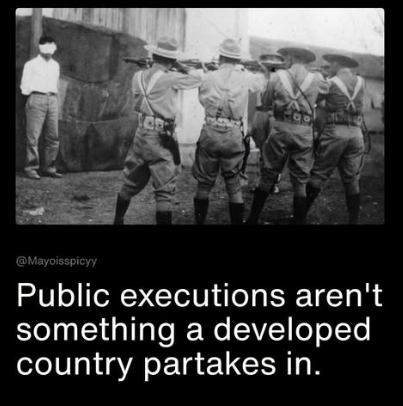 The United States seems set on propelling itself backwards.
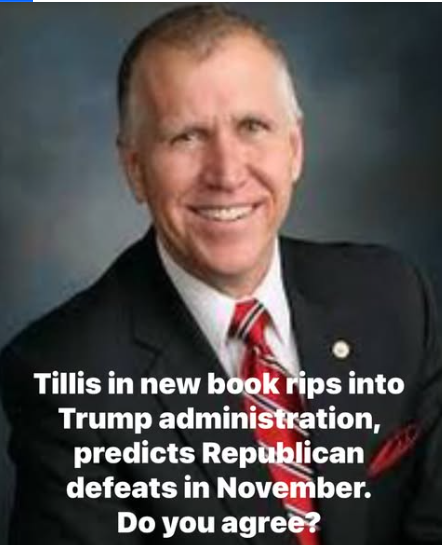 Maybe, as they say, “Hell has a special place reserved in it” for people like Thom Tillis, Republican Senator from North Carolina, who enabled Trump to rape and destroy the United States.
That was until it became clear to Tillis that he could jump ship, write a scathing book about the president, get all over mainstream news promoting it, and go on to enjoy another chapter of political success.
That we Americans are so stupid that we accept this blatant hypocrisy and criminality is sad proof that we’re not the people we were 20 years ago. Maybe what many people are saying are correct: we deserved what we got.
Here’s a short video from Elle Cordova that reminds us that science is something of a rarity in human history.
The great tyrants of history have done their best to cause the people they ruled to reject science, simply to ensure the masses are ignorant, terrified, superstitious, and thus easily controlled.
The current political administration is particularly engrossed in the rejection of science. I wonder why.



-
Climate Change1 year ago
Guest post: Why China is still building new coal – and when it might stop
-

 Greenhouse Gases2 years ago
嘉宾来稿:满足中国增长的用电需求 光伏加储能“比新建煤电更实惠”
-
Greenhouse Gases1 year ago
Guest post: Why China is still building new coal – and when it might stop
-

 Climate Change2 years ago
嘉宾来稿:满足中国增长的用电需求 光伏加储能“比新建煤电更实惠”
-

 Renewable Energy12 months ago
Sending Progressive Philanthropist George Soros to Prison?
-
Climate Change