Feeding the 8.2 billion people who inhabit the planet depends on healthy soils.
Yet, soil health has been declining over the years, with more than one-third of the world’s agricultural land now described by scientists as “degraded”.
Furthermore, the world’s soils have lost 133bn tonnes of carbon since the advent of agriculture around 12,000 years ago, with crop production and cattle grazing responsible in equal part.
As a result, since the early 1980s, some farmers have been implementing a range of practices aimed at improving soil fertility, soil structure and soil health to address this degradation.
Soil health is increasingly on the international agenda, with commitments made by various countries within the Global Biodiversity Framework, plus a declaration at COP28.
Yet, there is still a lack of knowledge about the state of soils, especially in developing countries.
Below, Carbon Brief explains the state of soil health across the world’s farmlands, the factors that lead to soil degradation and the potential solutions to regenerate agricultural soils.
- What is soil health?
- Why are agricultural soils being degraded?
- Why is soil health important for food security and climate mitigation?
- How can CO2 removal techniques improve soil carbon?
- How can agricultural soil be regenerated?
- What international policies promote soil health?
What is soil health?
Agricultural soil is composed of four layers, known as soil horizons. These layers contain varying quantities of minerals, organic matter, living organisms, air and water.
The upper layers of soil are rich in organic matter and soil organisms. This is where crops and plants thrive and where their roots can be found.
Below the topsoil is the subsoil, which is more stable and accumulates minerals such as clay due to the action of rain, which washes down these materials from the topsoil to deeper layers of the soil.
The subsoil often contains the roots of larger trees. The deeper layers include the substrate and bedrock, which consist of sediments and rocks and contain no organic matter or biological activity.
Soil organic matter consists of the remains of plants, animals and microbes. It supports the soil’s ability to capture water and prompts the growth of soil microorganisms, such as bacteria and fungi, says Dr Helena Cotler Ávalos, an agronomic engineer at the Geospatial Information Science Research Center in Mexico.
Some of these organisms can help roots find nutrients, even over long distances, while others transform nutrients into forms that plants can use. Cotler Ávalos tells Carbon Brief:
“Life in the soil always starts by introducing organic matter.”
Soil is typically classified into three types – clay, silt and sand – based on the size and density of the soil’s constituent parts, as well as the mineral composition of the soil. Porous, loamy soils – a combination of clay, silt and sand – are considered the most fertile type of soil. The mineral composition also influences the properties of the soil, such as colour.
Healthy soils contain three macronutrients – nitrogen, phosphorus and potassium – alongside a range of micronutrients. They also contain phytochemicals, which have antioxidant and anti-inflammatory properties and are important for human health.
Below is a graphic showing the elements that constitute healthy soils, including non-mineral elements such as hydrogen, carbon and oxygen (shown in green), according to the Nature Education Knowledge Project.

The concept of “soil health” recognises the role of soil not only in the production of biomass or food, but also in global ecosystems and human health. The Intergovernmental Technical Panel on Soils – a group of experts that provides scientific and technical advice on soil issues to the Global Soil Partnership at the UN Food and Agriculture Organization (FAO) – defines it as the “ability of the soil to sustain the productivity, diversity and environmental services of terrestrial ecosystems”.
Soils can sequester carbon when plants convert CO2 into organic compounds through photosynthesis, or when organic matter, such as dead plants or microorganisms, accumulate in the soil. Soils also provide other ecosystem services, such as improving air and water quality and contributing to biodiversity conservation.
Why are agricultural soils being degraded?
The term “soil degradation” means a decline in soil health, which reduces its ability to provide ecosystem services.
Currently, about 35% of the world’s agricultural land – approximately 1.66bn hectares – is degraded, according to the FAO.
Introduced during the Industrial Revolution, modern-era industrialised agriculture has spread to dominate food production in the US, Europe, China, Russia and beyond.
Modern modes of industrial agriculture employ farming practices that can be harmful to the soil. Examples include monocropping, where a single crop is grown repeatedly, over-tilling, where the soil is ploughed excessively, and the use of heavy machinery, pesticides and synthetic fertilisers.
Agricultural soils are also degraded by overgrazing, deforestation, contamination and erosion.
The diagram below depicts the different types of soil degradation: physical, chemical, biological and desertification.
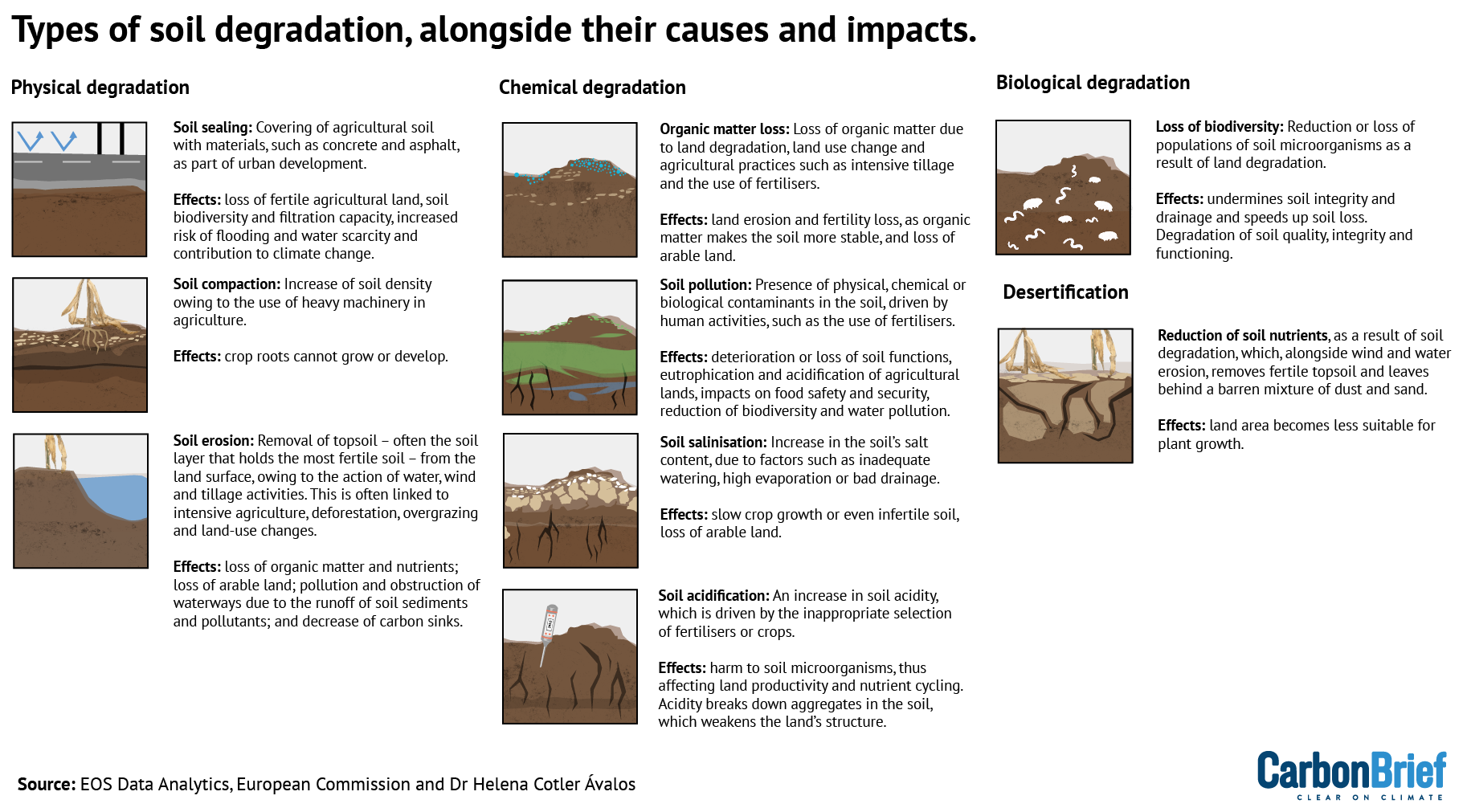
Types of soil degradation, alongside their causes and impacts. Source: EOS Data Analytics, European Commission and Dr Helena Cotler Ávalos. Credit: Kerry Cleaver for Carbon Brief.
Industrial agriculture is responsible for 22% of global greenhouse gas emissions and also contributes to water pollution and biodiversity loss.
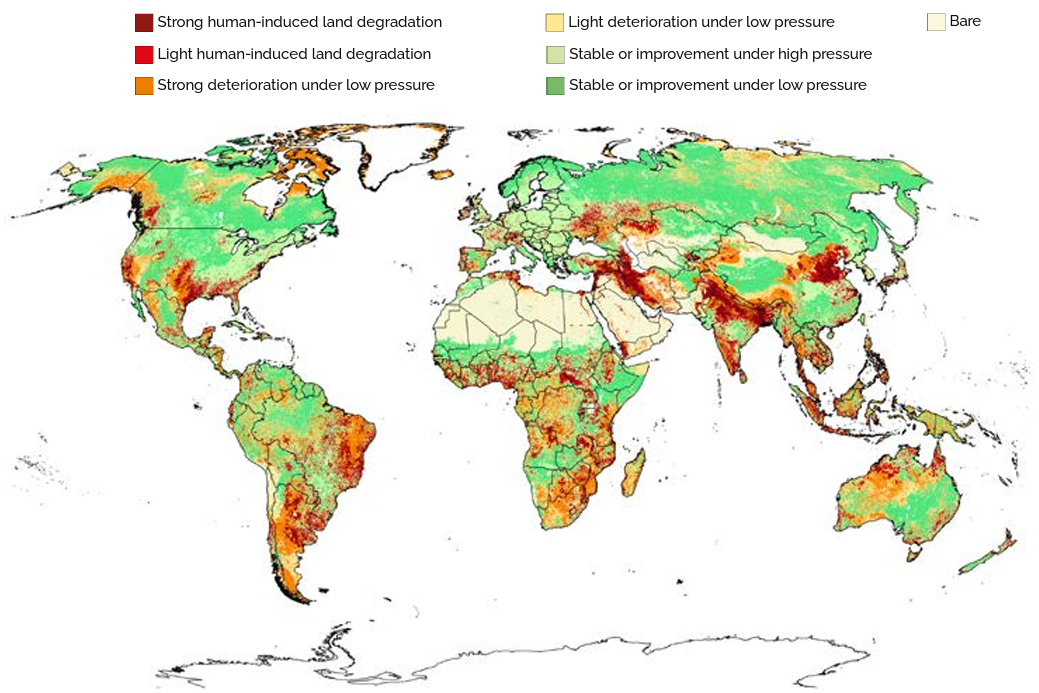
The map below, from the FAO, shows the state of land degradation around the world, from “strong” (dark red) to “stable or improv[ing]” (bright green).
It shows that the most degraded agricultural lands are in the southern US, eastern Brazil and Argentina, the Middle East, northern India and China.
Soil degradation became widespread following the Green Revolution in the 1940s, says Cotler Ávalos. During the Green Revolution, many countries replaced their traditional, diversified farming systems with monocultures. The Green Revolution also promoted the use of synthetic fertilisers and pesticides.
These changes led to a “dramatic increase” in yields, but also resulted in disrupting the interactions between microorganisms in the soil.
Cotler Ávalos tells Carbon Brief:
“It is the microorganisms that give life to soils. They require organic matter, which has been replaced by [synthetic] fertilisers.”
Today, there is a widespread lack of data on the condition of soils in developing countries.
For example, in sub-Saharan Africa, there are few studies measuring the rate and extent of soil degradation due to insufficient, reliable data. In Latin America, data on soil carbon dynamics are scarce.
Conversely, the EU released a report in 2024 about the state of its soils, spanning various indicators of degradation, including pollution, compaction and biodiversity change. The report estimates that 61% of agricultural soils in the EU are “degraded”, as measured by changes in organic carbon content, soil biodiversity and erosion levels.
The UK also has its own agricultural land classification maps, which classifies the condition of agricultural soils into categories ranging from “excellent” to “very poor”. This year, a report found that 40% of UK agricultural soils are degraded due to intensive agriculture.
Cotler Ávalos tells Carbon Brief:
“No country in the global south has data on how much of its soil is contaminated by agrochemicals, how much is compacted by the use of intensive machinery, how much has lost fertility due to the failure to incorporate organic matter.
“What is not studied, what is not known, seems to be unimportant. The problem of soil erosion is a social and political problem, not a technical one.”
Improved soil data, indicators and maps can help guide the sustainable management and regeneration of agricultural soils, experts tell Carbon Brief.
Why is soil health important for food security and climate mitigation?
As around 95% of the food the world consumes is produced, directly or indirectly, on soil, its health is crucial to global food security.
Food production needs to satisfy the demand of the global population, which is currently 8.2 billion and is expected to surpass 9 billion by 2037.
A 2023 review study pointed out that the total area of global arable land is estimated at 30m square kilometres, or 24% of the total land surface. Approximately half of that area is currently cultivated.
Studies have estimated that soil degradation has reduced food production by between 13% and 23%.
The 2023 review study also projected that land degradation could cut global food production by 12% in the next 25 years, increasing food prices by 30%.
Another recent study found that, between 2000 and 2016, healthy soils were associated with higher yields of rainfed corn in the US, even under drought conditions.
Research shows that soil health plays an important role in nutrition.
For example, a 2022 study found that a deficiency in plant nutrients in rice paddy soils in India is correlated with malnutrition. The country faces a growing amount of degraded land – currently spanning 29% of the total geographical area – and more than 15% of children are reported to suffer from deficiencies in vitamins A, B12 and D, along with folate and zinc, according to the study.
Soil health is also crucial for mitigating climate change.
Global agricultural lands store around 47bn tonnes of carbon, with trees contributing 75% of this total, according to a 2022 study.
Agricultural soils could sequester up to 4% of global greenhouse gas emissions annually and make a “significant contribution to reaching the Paris Agreement’s emissions reduction objectives”, according to a report from the Organisation for Economic Co-operation and Development (OECD).
Some farming practices can reduce greenhouse gas emissions and improve soil carbon sequestration, such as improving cropland and grazing land management, restoring degraded lands and cultivating perennial crops or “cover crops” that help reduce erosion.
However, some scientists have warned that the amount of carbon that can be captured in global soils – and how long that carbon remains locked away – has been overestimated.
For example, an article published in Science in 2023 argued that one of the widely used models for simulating the flow of carbon and nitrogen in soils, known as DayCent, has “plenty of shortcomings”. It says:
“It doesn’t explicitly represent how soils actually work, with billions of microbes feasting on plant carbon and respiring much of it back to the atmosphere – while converting some of it to mineralised forms that can stick around for centuries.
“Instead, the model estimates soil carbon gains and losses based on parameters tuned using published experimental results.”
That, along with uncertainties associated with small-scale estimations, makes the model unable to accurately predict increases or decreases of soil carbon over time and, thus, a positive or negative impact on the climate, the outlet said.
How can CO2 removal techniques improve soil carbon?
Soils can also play a role in mitigating climate change through the use of CO2 removal techniques, such as biochar and enhanced rock weathering.
Biochar is a carbon-rich material derived from the burning of organic matter, such as wood or crop residues, in an oxygen-free environment – a process known as pyrolysis.
Biochar can be added to soils to enhance soil health and agricultural productivity.
Due to its porous nature, biochar holds nutrients in the soil, improving soil fertility, water retention, microbial activity and soil structure.
The long-term application of biochar can bring a range of benefits, such as improving yields, reducing methane emissions and increasing soil organic carbon, according to recent research that analysed 438 studies from global croplands.
However, the study added that many factors – including soil properties, climate and management practices – influence the magnitude of these effects.

Dr Dinesh Panday, a soil scientist at the agricultural research not-for-profit Rodale Institute and an expert in biochar, tells Carbon Brief that biochar typically is applied when soils have low carbon or organic matter content.
He adds that this technique is currently being used mostly in growing high-value crops, such as tomatoes, lettuce and peppers. For staple crops, including rice, wheat and maize, the use of biochar is only at a research stage, he adds.
Enhanced rock weathering is a process where silicate rocks are crushed and added to soils. The rocks then react with CO2 in the atmosphere and produce carbonate minerals, storing carbon from the atmosphere in the soil.
In the US, enhanced weathering could potentially sequester between 0.16-0.30bn tonnes of CO2 per year by 2050, according to a 2025 study.
Panday says that both biochar and enhanced weathering are mostly practised in developed countries at the moment and both have their own benefits and impacts. One of the disadvantages of biochar, he says, is its high cost, as producing it requires dedicated pyrolysis devices and the use of fossil gas. One negative effect of enhanced rock weathering is that it may alter nutrient cycling processes in the soil.
A 2023 comment piece by researchers from the University of Science and Technology of China raised some criticisms of biochar application, including the resulting emissions of methane and nitrous oxide, the enrichment of organic contaminants and heavy metals, and the dispersion of small particulate matter that can be harmful to human health.
Scientists still question how much carbon-removal techniques, such as enhanced rock weathering, can store in agricultural soils and for how long.
How can agricultural soil be regenerated?
Many types of farming practices can help conserve soil health and fertility.
These practices include minimising external inputs, such as fertilisers and pesticides, reducing tillage, rotating crops, using mixed cropping-livestock farming systems, applying manure or compost and planting perennial crops.
Low- or no-till practices involve stopping the large-scale turning over of soils. Instead, farmers using these systems plant seeds through direct drilling techniques, which helps maintain soil biodiversity. A 2021 review study found that in the south-eastern US, reducing tillage enhanced soil health by improving soil organic carbon, nitrogen and inorganic nutrients.
Mixed farming systems, which integrate the cultivation of crops with livestock, have also been found to be beneficial to soil health.
A 2022 study compared a conventional maize-soya bean rotation and a diverse four-year cropping system of maize, soya bean, oat and alfalfa in the mid-western US. It found that, compared to the conventional farm, the diversified system had a 62% increase in soil microbial biomass and a 157% increase in soil carbon.
One of the aims of soil regeneration is to make agricultural soil as much like a natural soil as possible, says Dr Jim Harris, professor of environmental technology at the Cranfield Environment Centre in the UK.
Harris, who is an expert in soil and ecological restoration, says that regenerating soils involves restoring the ecological processes that were once replaced by chemical inputs, while maintaining the soil’s ability to grow crops.
For example, he says, using regenerative agricultural approaches, such as rotational grazing, can help increase soil organic matter and fungi populations.
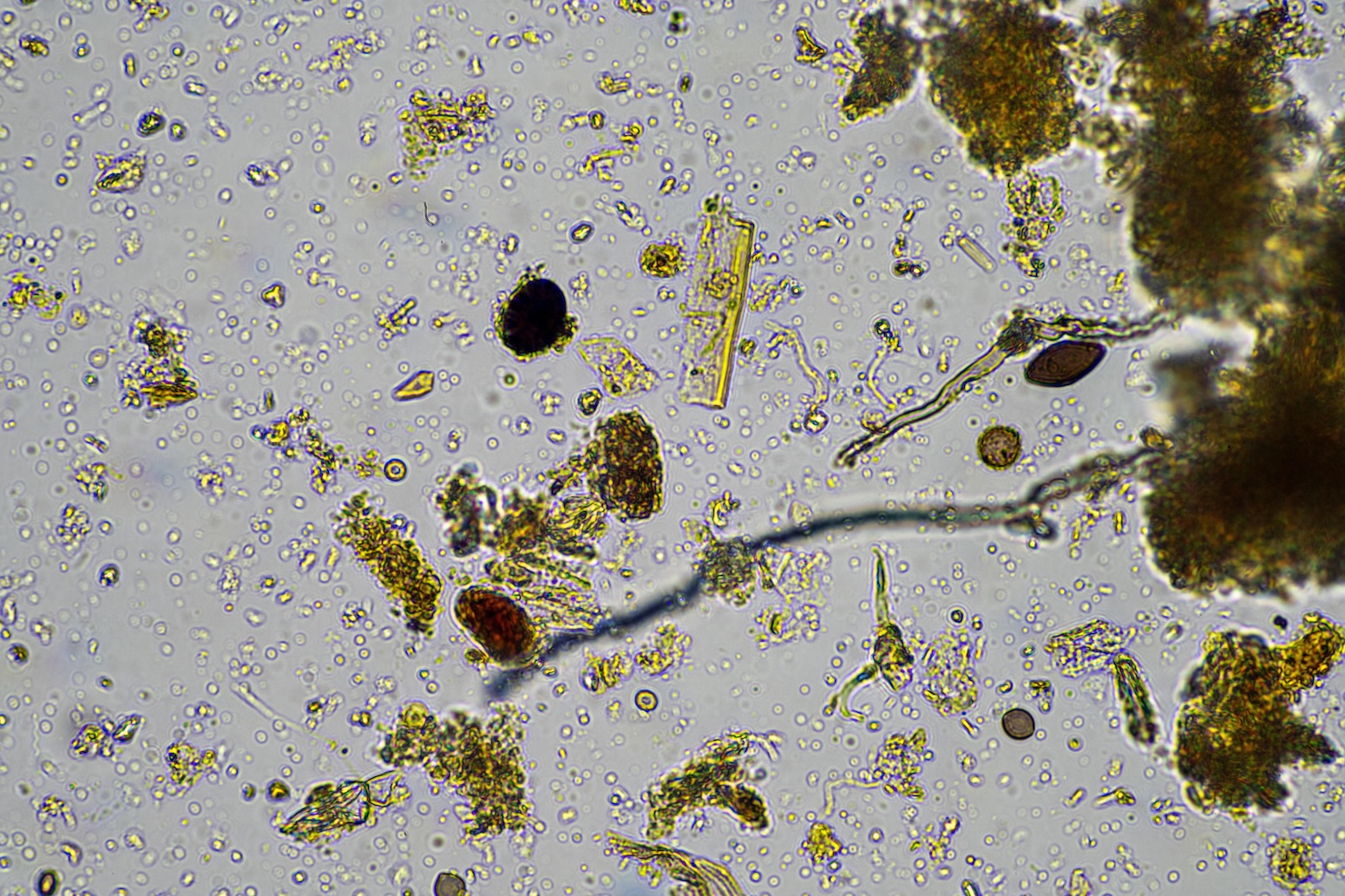
Which soil regeneration actions will be most successful will depend on the soil type, the natural climatic zone in which a farm is located, the rainfall and temperature regimes and which crops are being cultivated, he adds.
To measure the results of soil regeneration, farmers need to establish a baseline by determining the initial condition of the soil, then assess indicators of soil health. These indicators range from physical indicators, such as root depth, to biological indicators, such as earthworm abundance and microbial biomass.
In Sweden, researchers analysed these indicators in 11 farms that applied regenerative practices either recently or over the past 30 years. They found that the farms with no tillage, integration of livestock and organic matter permanent cover had higher levels of vegetation density and root abundance. Such practices had positive impacts on soil health, according to the researchers.
Switching from conventional to regenerative agriculture may take a farmer five to 10 years, Harris says. This is because finding the variants of a crop that are most resistant to, say, drought and pests could take a “long time”, but, ultimately, farms will have “more stable yields”, he says.
Harris tells Carbon Brief:
“Where governments can really help [is] in providing farmers with funds that allow them to make that transition over a longer period of time.”
Research has found that transitioning towards regenerative agriculture has economic benefits for farmers.
For example, farmers in the northern US who used regenerative agriculture for maize cropping had “29% lower grain production, but 78% higher profits over traditional corn production systems”, according to a 2018 study. (The profit from regenerative farms is due to low seed and fertiliser consumption and higher income generated by grains and other products produced in regenerative corn fields, compared to farms that only grow corn conventionally.)
A 2022 review study found that regenerative farming practices applied in 10 temperate countries over a 15-year period increased soil organic carbon without reducing yields during that time.
Meanwhile, a 2024 study analysing 20 crop systems in North America found that maize and soya bean yields increased as the crop system diversified and rotated. For example, maize income rose by $200 per hectare in sites where rotation included annual crops, such as wheat and barley. Under the same conditions, soya bean income increased by $128 per hectare, the study found.
The study pointed out that crop rotation – one of the characteristics of regenerative agriculture – contributes to higher yields, thanks to the variety of crops with different traits that allow them to cope with different stressors, such as drought or pests.
However, other research has questioned whether regenerative soil practices can have benefits for both climate mitigation and crop production.
A 2025 study modelled greenhouse gas emissions and yields in crops through to the end of the century. It found that grass cover crops with no tillage reduced 32.6bn tonnes of CO2-equivalent emissions by 2050, but reduced crop yields by 4.8bn tonnes. The lowest production losses were associated with “modest” mitigation benefits, with just 4.4bn tonnes of CO2e emissions reduced, the study added.
The authors explained that the mitigation potential of cover crops and no tillage was lower than previous studies that overlooked certain factors, such as soil nitrous oxide, future climate change and yields. Moreover, they warned, carbon removal using regenerative farming methods risks the release of emissions back into the atmosphere, if soil management returns to unsustainable practices.
Several of the world’s largest agricultural companies, including General Mills, Cargill, Unilever, Mars and Mondelez, have committed to regenerative agriculture goals. Nestlé, for example, has said that it is implementing regenerative agriculture practices in its supply chain that have had “promising initial results”. It adds that “farmers, in many cases, stand to see an increase in crop yields and profits”. As a result, the firm says it is committed to sourcing 50% of its ingredients from farms implementing regenerative agriculture by 2030.
However, Trellis, a sustainability-focused organisation, cautioned that “these results should be taken somewhat sceptical[ly]”, as there is no set definition on what regenerative agriculture is and measurement of the results is “lacking”.
In some places, the regeneration or recovery of agricultural soils is still practised alongside farmers’ traditional knowledge.
Ricardo Romero is an agronomist and the managing director of the cooperative Las Cañadas – Cloud Forest, lying 1300m above sea level in Mexico’s Veracruz mountains. There, cloud forests sit between tropical rainforest and pine forests, in what Romero considers “a very small ecosystem globally”, optimal for coffee plantations.
His cooperative is located on land previously used for industrial cattle farming. Today, the land is used for agroecological production of coffee, agroforestry and reforestation. The workers in the cooperative are mostly peasants who take on production and use techniques to improve soil fertility that they have learned by doing.
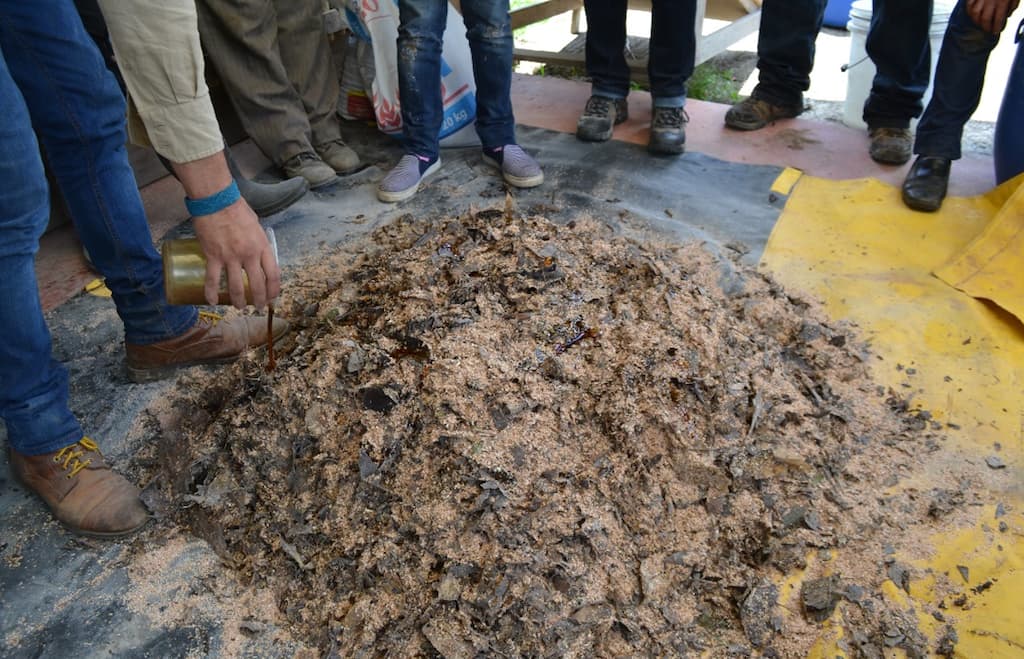
Romero says the soils in his cooperative have improved and crop yields have been maintained thanks to the compost they produce. He tells Carbon Brief:
“We are still in the learning stage. We sort of aspire to achieve what cultures such as the Chinese, Koreans and Japanese did. They returned all their waste to the fields and their agriculture lasted 4,000 years without chemical or organic fertilisers”.
What international policies promote soil health?
Soil health and soil regeneration feature in four of the targets under the UN Sustainable Development Goals (SDGs).
(There are 169 targets under the SDGs that contain measurable indicators for assessing progress towards each of the 17 goals.)
For example, target 15.3 calls on countries to “restore degraded land and soil” and “strive to achieve a land-degradation neutral world”.
Soil health is increasingly being recognised in international negotiations under the UN Framework Convention on Climate Change (UNFCCC), UN Convention on Biological Diversity (UN CBD) and the UN Convention to Combat Desertification (UNCCD), says Katie McCoshan, senior partnerships and international engagement manager for the Food and Land Use Coalition (FOLU).
Each of these conventions has established its own work groups, declarations and frameworks around soil health in recent years.
Ideally, says McCoshan, action on soils should be integrated across the three different conventions, as well as in conversations around food and nutrition.
However, work across the three conventions remains siloed.
Currently, agriculture is formally addressed under the UNFCCC via the Sharm el-Sheikh joint work on implementation of climate action on agriculture and food security, a four-year work plan agreed at COP27 in 2022. This work group is meant to provide countries with technical support and facilitate collaboration and research.
The COP27 decision that created the Sharm el-Sheikh agriculture programme “recognised that soil and nutrient management practices and the optimal use of nutrients…lie at the core of climate-resilient, sustainable food production systems and can contribute to global food security”.
At COP28 in Dubai, the presidency announced the Emirates Declaration on Sustainable Agriculture, Resilient Food Systems and Climate Action. The 160 countries that signed the declaration committed to integrating agriculture and food systems into their nationally determined contributions, national adaptation plans and national biodiversity strategies and action plans (NBSAPs). The declaration also aims to enhance soil health, conserve and restore land.
Harris says the Emirates Declaration is a “great first step”, but adds that it will “take time to develop the precise on-the-ground mechanisms” to implement such policies in all countries, as “they are moving at different speeds”.
Within the UNFCCC process, soil has also featured in non-binding initiatives such as the 4 per 1000, adopted at COP21 in Paris. The initiative aims to increase the amount of carbon sequestered in the top 30-40cm of global agricultural soils by 0.4%, or four parts per thousand, per year.
The UNCCD COP16, which took place in 2024 in Saudi Arabia, delivered a decision to “encourage” countries to avoid, reduce and reverse soil degradation of agricultural lands and improve soil health.
Although COP16 did not deliver a legally binding framework to combat drought, it resulted in the creation of the Riyadh Global Drought Resilience Partnership, a global initiative integrated by countries, international organisations and other countries to allocate $12bn towards initiatives to restore degraded land and enhance resilience against drought.
The COP also resulted in the Riyadh Action Agenda, which aspires to conserve and restore 1.5bn hectares of degraded land globally by 2030.
Although soil health appears under both conventions, it is not included as formally in the UNFCCC as in the UNCCD – as in the latter there is a direct mandate for countries to address soil health and land restoration, McCoshan tells Carbon Brief.
Under the UNCCD, countries have to establish land degradation neutrality (LDN) targets by 2030. To date, more than 100 countries have set these targets.
Under the biodiversity convention, COP15 held in Montreal in 2022 delivered the Kunming-Montreal Global Biodiversity Framework (GBF), a set of goals and targets aiming to “halt and reverse” biodiversity loss by 2030. Under the framework, targets 10 and 11 reference sustainable management of agriculture through agroecological practices, and the conservation and restoration of soil health, respectively.
A recent study suggests that restoring 50% of global degraded croplands could avoid the emission of more than 20bn tonnes of CO2 equivalent by 2050, which would be comparable to five times the annual emissions from the land-use sector. It would also bring biodiversity benefits and contribute to target 10 of the GBF and to UNCCD COP16 recommendations, the study added.
McCoshan tells Carbon Brief:
“[All] the pledges are important and they hold countries accountable, but that alone isn’t what we need. We’ve got to get the financing right and co-create solutions with farmers, Indigenous people, youth, businesses and civil society as well.”
The post Q&A: The role of soil health in food security and tackling climate change appeared first on Carbon Brief.
Q&A: The role of soil health in food security and tackling climate change
Climate Change
“Sustainable fuels” pose high risks to Lula’s promised roadmap away from fossil fuels
President Lula opened COP30 with his boldest call yet for climate action and a clean-energy future. In his address, the Brazilian President declared that the world must “accelerate the energy transition” and “get rid of fossil fuels.” What drew the loudest applause from climate and energy experts in Belém, however, were his calls for COP30 to deliver tangible roadmaps to “overcome dependence on fossil fuels,” “reverse deforestation,” and secure equitable climate finance in a “fair and planned manner.”
Yet the day after, Lula’s promotion of so-called “sustainable fuels” cast a shadow of concern. A Roadmap away from oil, gas and coal will only succeed if negotiators and the Brazilian presidency resist the dangerous distractions of biofuels and other false solutions and stay focused on the transition from fossil fuels to renewable energy.
The rationale for a roadmap
The case for a global roadmap could not be clearer. The latest round of national climate targets falls dramatically short of the Paris Agreement’s ambition. If the race to decarbonisation at the pace required to limit warming to 1.5°C were a 42-kilometre marathon, by 2035 we should have already covered half the distance. Instead, current pledges take us barely two kilometres forward.
As Nationally Determined Contributions (NDCs) miss the mark, they must become the floor, not the ceiling, of global ambition. A roadmap – if not hijacked as a Trojan horse for false solutions like “sustainable fuels” – could help accelerate the phase out of fossil fuels, the source of nearly three quarters of global emissions. Clearly, a roadmap on its own will not solve these challenges, but it can be a critical step further.
What a roadmap could entail and what’s the process for it?
A full roadmap may not be finalized at COP30, but the mandate to begin accelerating the transition away from fossil fuels could well emerge in Belém – whether through a declaration, the UAE Dialogue, a new agenda item, or an omnibus decision.
To give such an outcome real weight, it should be formally anchored under the CMA and Paris Agreement, not left as an optional declaration. This would transform it into a stronger, coordinated Mutirão, a collective effort embedded within a broader ministerial dialogue on the transition away from fossil fuels.
Such a process should explore transition scenarios and produce global pathways aligned with International Energy Agency (IEA) and Intergovernmental Panel on Climate Change (IPCC) benchmarks, providing structured guidance ahead of the next Global Stocktake, with milestones for 2035 and 2040 and links to long term strategies.
It could also involve developing country-tailored roadmaps that identify enabling conditions, barriers, cooperation mechanisms, and international support needs, consistent with national capacities and equity. Such a process should include a political segment, bringing together ministers and high-level representatives to assess progress and report to COP31 with concrete recommendations for adoption.
Lula’s ‘Sustainable Fuels’ Mirage
On the second day of the Leaders Summit, President Lula, leader of the world’s second-largest biofuels producer, after the United States again spoke of a roadmap to ‘end dependency on fossil fuels’. But this time, he tried to slip in a twist: positioning “sustainable fuels” as a third pillar of the energy transition, alongside renewables and efficiency, and even launching a pledge to quadruple their production. It’s hard not to suspect that Brazil envisions the roadmap as a vehicle to advance its biofuels agenda.
That would be a serious mistake. Ironically, this proposal came alongside Lula’s call for a roadmap to halt deforestation. Yet, biofuels remain a leading driver of forest loss. If both roadmaps emerge from COP30, they must be interlinked to ensure one doesn’t undermine the other. Emission savings from biofuels are wildly overstated; some studies even find they emit more than the fossil fuels they replace. And let’s be honest: it’s impossible to imagine a world that quadruples “sustainable fuels” without devastating consequences for food security.
The pledge to quadruple so-called “sustainable fuels” rests on more shaky ground than one might realize: It conveniently draws from a recent IEA study “prepared in support of Brazil’s COP30 Presidency”. But this study refers to the IEA scenario of an “accelerated case”, which assumes existing policies are implemented, not that these policies align with net-zero pathways or the goals of the Paris Agreement. In fact, this pledge risks slowing down electrification across multiple sectors, contradicting what the IEA itself identifies as essential for a credible net-zero pathway.
Not another COP-out: We must rewrite the rules of the UN climate talks
If COP30 succeeds in establishing a roadmap – and it should – as part of the broader response to the global climate ambition gap, it must not be hijacked by Brazil’s biofuels agenda. Other countries should push back – or at the very least, insist on strong safeguards.
The lack of support speaks for itself: beyond Brazil, only 18 others have backed the pledge, hardly a groundswell compared to the 133 nations that endorsed the tripling renewables target at COP28. What’s more, countries such as Japan and Italy appear to be backing this pledge not to advance decarbonization, but to justify extending the life of combustion-engine vehicles and even coal plants through co-firing under the guise of biofuels.
Brazil’s biofuels push is not a breakthrough. It’s a dangerous distraction. A roadmap for a fast, fair and funded energy transition is urgently needed but it must be science-aligned, electrification-focused, and firmly aimed at phasing out fossil fuels, not replacing one problem with another.
The post “Sustainable fuels” pose high risks to Lula’s promised roadmap away from fossil fuels appeared first on Climate Home News.
“Sustainable fuels” pose high risks to Lula’s promised roadmap away from fossil fuels
Climate Change
Bad COP to good COP: Blocking fossil-fueled disinformation in Belém and beyond
Kate Cell is senior climate campaign manager at the Union of Concerned Scientists (UCS) and a Climate Action Against Disinformation steering committee member and Kathy Mulvey is corporate accountability campaign director at UCS
For years, fossil fuel lobbyists have swarmed the international climate summits outnumbering most national delegations and drowning out the voices of climate-vulnerable nations. Their mission is clear: derail progress, spread disinformation, and dodge accountability for fueling the climate crisis.
This overwhelming influence raises urgent questions – how do we prevent industry obstruction of science-based policy, and what would a climate summit look like if fossil fuel interests were finally shut out?
Climate policy must be guided by science, evidence, and justice – not fossil fuel industry influence. Yet the industry relies on disinformation to undermine science and delay action. This tactic is neither new nor surprising: for decades, fossil fuel companies have funded climate denial, obstructed progress, and profited from confusion.
At the Union of Concerned Scientists, our team’s latest report documents the ongoing role of Big Oil corporations as key drivers and beneficiaries of climate disinformation.
Tools now exist to confront this threat. The Climate Action Against Disinformation coalition seeks to classify climate disinformation as a serious risk under laws regulating search engines and social media. Meanwhile, advocates pursue litigation against fossil fuel companies for “greenwashing,” exposing misleading ads that conceal their role in driving the crisis and holding them accountable.
An international commitment to information integrity (accurate, consistent and reliable information) at COP30 can help remove barriers to strong national climate solutions.
This week, a coalition of civil society groups, local leaders, businesses, and individuals is urging participants to “UNEQUIVOCALLY RECOGNIZE that upholding information integrity on climate change is a prerequisite for effective climate action, democratic principles, public health, and human rights.”
Acknowledging both the importance of information integrity and the dangers of disinformation is vital to advancing robust, verifiable measures that curb greenwashing and manipulative content undermining climate progress.
Limiting the influence of fossil fuel companies
CEOs and lobbyists from BP, Chevron, ExxonMobil, Shell, and others should not shape climate goals or clean energy plans; the fossil fuel industry has an irreconcilable conflict of interest with policies to curb climate change and advance renewable energy.
Yet, year after year, their representatives flood international negotiations, undermining progress and protecting profits while obstructing the urgent transition away from fossil fuels toward a sustainable, science-based future.
2023 marked the first COP where delegates were required to disclose affiliations with fossil fuel companies. These disclosures exposed the thousands of lobbyists granted access to negotiations. New research from the Kick Big Polluters Out coalition found that over the last four years, 5,350 oil, gas, and coal lobbyists were given access to COPs. At last year’s summit in Azerbaijan alone, 1,773 fossil fuel lobbyists registered—70% more than the combined 1,033 delegates from the ten mostclimate vulnerable nations.
This staggering imbalance reveals how polluters dominate climate talks and weaken policy. Amid this lobbying blitz, nations’ fossil fuel production plans are set to double what’s compatible with a 1.5°C pathway by 2030. Major fossil fuel corporations continue to prioritise profits over people and planet. Research shows the 250 largest oil and gas companies invest almost nothing in clean energy compared to their vast fossil fuel extraction, disregarding climate goals; and their role in deepening the crisis.
COP30 PR firm found to be “uniquely reliant” on fossil fuel clients
Requiring delegates to disclose affiliations and funding is a vital step in exposing fossil fuel influence. Yet with the 1.5°C target slipping away, disclosure alone is insufficient. World leaders must advance to disqualification, barring fossil fuel companies from shaping COP negotiations. Future COP hosts must also refuse to retain PR firms tied to fossil fuel companies. This blatant conflict of interest shields industry culpability, distorts public understanding of the demand for climate action, and undermines trust in global climate negotiations.
A summit free from such conflicts of interest would empower nations most affected by extreme heat, rising seas, and other escalating climate impacts, ensuring their voices are not drowned out by lobbyists and spin doctors for the very industry primarily driving destructive, deadly climate change.
Advancing accountability at COP30
The challenge extends beyond the fossil fuel industry. Big Tech’s richest leaders are actively fueling climate denial, deception, and delay when they amplify lies to increase ad revenue—just like fossil fuel corporations and their trade groups. COP30 must confront this corruption head-on: advancing bold policies to hasten a just transition away from fossil fuels, protect a truthful information ecosystem, and hold corporate actors accountable for the lies they spread and the deadly damage they inflict on our planet.
By resisting disinformation and other fossil fuel industry influence at COP30, world leaders can propel a people-centered transition toward a clean energy future grounded in rights, fairness, equity, and solidarity. A summit safeguarded against conflicts of interest would finally prioritize those most affected by the climate crisis, ensuring that science, justice, and integrity—not corporate deception—guide the path forward.
The post Bad COP to good COP: Blocking fossil-fueled disinformation in Belém and beyond appeared first on Climate Home News.
https://www.climatechangenews.com/2025/11/12/bad-cop-to-good-cop-blocking-fossil-fueled-disinformation-in-belem-and-beyond/
Climate Change
IEA: Fossil-fuel use will peak before 2030 – unless ‘stated policies’ are abandoned
The world’s fossil-fuel use is still on track to peak before 2030, despite a surge in political support for coal, oil and gas, according to data from the International Energy Agency (IEA).
The IEA’s latest World Energy Outlook 2025, published during the opening days of the COP30 climate summit in Brazil, shows coal at or close to a peak, with oil set to follow around 2030 and gas by 2035, based on the stated policy intentions of the world’s governments.
Under the same assumptions, the IEA says that clean-energy use will surge, as nuclear power rises 39% by 2035, solar by 344% and wind by 178%.
Still, the outlook has some notable shifts since last year, with coal use revised up by around 6% in the near term, oil seeing a shallower post-peak decline and gas plateauing at higher levels.
This means that the IEA expects global warming to reach 2.5C this century if “stated policies” are implemented as planned, up marginally from 2.4C in last year’s outlook.
In addition, after pressure from the Trump administration in the US, the IEA has resurrected its “current policies scenario”, which – effectively – assumes that governments around the world abandon their stated intentions and only policies already set in legislation are continued.
If this were to happen, the IEA warns, global warming would reach 2.9C by 2100, as oil and gas demand would continue to rise and the decline in coal use would proceed at a slower rate.
This year’s outlook also includes a pathway that limits warming to 1.5C in 2100, but says that this would only be possible after a period of “overshoot”, where temperature rise peaks at 1.65C.
The IEA will publish its “announced pledges scenario” at a later date, to illustrate the impact of new national climate pledges being implemented on time and in full.
(See Carbon Brief’s coverage of previous IEA world energy outlooks from 2024, 2023, 2022, 2021, 2020, 2019, 2018, 2017, 2016 and 2015.)
World energy outlook
The IEA’s annual World Energy Outlook (WEO) is published every autumn. It is regarded as one of the most influential annual contributions to the understanding of energy and emissions trends.
The outlook explores a range of scenarios, representing different possible futures for the global energy system. These are developed using the IEA’s “global energy and climate model”.
The latest report stresses that “none of [these scenarios] should be regarded as a forecast”.
However, this year’s outlook marks a major shift in emphasis between the scenarios – and it reintroduces a pathway where oil and gas demand continues to rise for many decades.
This pathway is named the “current policies scenario” (CPS), which assumes that governments abandon their planned policies, leaving only those that are already set in legislation.
If the world followed this path, then global temperatures would reach 2.9C above pre-industrial levels by 2100 and would be “set to keep rising from there”, the IEA says.
The CPS was part of the annual outlook until 2020, when the IEA said that it was “difficult to imagine” such a pathway “prevailing in today’s circumstances”.
It has been resurrected following heavy pressure from the US, which is a major funder of the IEA that accounts for 14% of the agency’s budget.
For example, in July Politico reported “a ratcheted-up US pressure campaign” and “months of public frustrations with the IEA from top Trump administration officials”. It noted:
“Some Republicans say the IEA has discouraged investment in fossil fuels by publishing analyses that show near-term peaks in global demand for oil and gas.”
The CPS is the first scenario to be discussed in detail in the report, appearing in chapter three. The CPS similarly appears first in Annex A, the data tables for the report.
The second scenario is the “stated policies scenario” (STEPS), featured in chapter four of this year’s outlook. Here, the outlook also includes policies that governments say they intend to bring forward and that the IEA judges as likely to be implemented in practice.
In this world, global warming would reach 2.5C by 2100 – up marginally from the 2.4C expected in the 2024 edition of the outlook.
Beyond the STEPS and the CPS, the outlook includes two further scenarios.
One is the “net-zero emissions by 2050” (NZE) scenario, which illustrates how the world’s energy system would need to change in order to limit warming in 2100 to 1.5C.
The NZE was first floated in the 2020 edition of the report and was then formally featured in 2021.
The report notes that, unlike in previous editions, this scenario would see warming peak at more than 1.6C above pre-industrial temperatures, before returning to 1.5C by the end of the century.
This means it would include a high level of temporary “overshoot” of the 1.5C target. The IEA explains that this results from the “reality of persistently high emissions in recent years”. It adds:
“In addition to very rapid progress with the transformation of the energy sector, bringing the temperature rise back down below 1.5C by 2100 also requires widespread deployment of CO2 removal technologies that are currently unproven at large scale.”
Finally, the outlook includes a new scenario where everyone in the world is able to gain access to electricity by 2035 and to clean cooking by 2040, named “ACCESS”.
While the STEPS appears second in the running order of the report, it is mentioned slightly more frequently than the CPS, as shown in the figure below. The CPS is a close second, however, whereas the IEA’s 1.5C pathway (NZE) receives a declining level of attention.

US critics of the IEA have presented its stated policies scenario as “disconnected from reality”, in contrast to what they describe as the “likely scenario” of “business as usual”.
Yet the current policies scenario is far from a “business-as-usual” pathway. The IEA says this explicitly in an article published ahead of the outlook:
“The CPS might seem like a ‘business-as-usual’ scenario, but this terminology can be misleading in an energy system where new technologies are already being deployed at scale, underpinned by robust economics and mature, existing policy frameworks. In these areas, ‘business as usual’ would imply continuing the current process of change and, in some cases, accelerating it.”
In order to create the current policies scenario, where oil and gas use continues to surge into the future, the IEA therefore has to make more pessimistic assumptions about barriers to the uptake of new technologies and about the willingness of governments to row back on their plans. It says:
“The CPS…builds on a narrow reading of today’s policy settings…assuming no change, even where governments have indicated their intention to do so.”
This is not a scenario of “business as usual”. Instead, it is a scenario where countries around the world follow US president Donald Trump in dismantling their plans to shift away from fossil fuels.
More specifically, the current policies scenario assumes that countries around the world renege on their policy commitments and fail to honour their climate pledges.
For example, it assumes that Japan and South Korea fail to implement their latest national electricity plans, that China fails to continue its power-market reforms and abandons its provincial targets for clean power, that EU countries fail to meet their coal phase-out pledges and that US states such as California fail to extend their clean-energy targets.
Similarly, it assumes that Brazil, Turkey and India fail to implement their greenhouse gas emissions trading schemes (ETS) as planned and that China fails to expand its ETS to other industries.
The scenario also assumes that the EU, China, India, Australia, Japan and many others fail to extend or continue strengthening regulations on the energy efficiency of buildings and appliances, as well as those relating to the fuel-economy standards for new vehicles.
In contrast to the portrayal of the stated policies scenario as blindly assuming that all pledges will be met, the IEA notes that it does not give a free pass to aspirational targets. It says:
“[T]argets are not automatically assumed to be met; the prospects and timing for their realisation are subject to an assessment of relevant market, infrastructure and financial constraints…[L]ike the CPS, the STEPS does not assume that aspirational goals, such as those included in the Paris Agreement, are achieved.”
Only in the “announced pledges scenario” (APS) does the IEA assume that countries meet all of their climate pledges on time and full – regardless of how credible they are.
The APS does not appear in this year’s report, presumably because many countries missed the deadlines to publish new climate pledges ahead of COP30.
The IEA says it will publish its APS, assessing the impact of the new pledges, “once there is a more complete picture of these commitments”.
Fossil-fuel peak
In recent years, there has been a significant shift in the IEA’s outlook for fossil fuels under the stated policies scenario, which it has described as “a mirror to the plans of today’s policymakers”.
In 2020, the agency said that prevailing policy conditions pointed towards a “structural” decline in global coal demand, but that it was too soon to declare a peak in oil or gas demand.
By 2021, it said global fossil-fuel use could peak as soon as 2025, but only if all countries got on track to meet their climate goals. Under stated policies, it expected fossil-fuel use to hit a plateau from the late 2020s onwards, declining only marginally by 2050.
There was a dramatic change in 2022, when it said that Russia’s invasion of Ukraine and the resulting global energy crisis had “turbo-charged” the shift away from fossil fuels.
As a result, it said at the time that it expected a peak in demand for each of the fossil fuels. Coal “within a few years”, oil “in the mid-2030s” and gas ”by the end of the decade”.
This outlook sharpened further in 2023 and, by 2024, it was saying that each of the fossil fuels would see a peak in global demand before 2030.
This year’s report notes that “some formal country-level [climate] commitments have waned”, pointing to the withdrawal of the US from the Paris Agreement.
The report says the “new direction” in the US is among “major new policies” in 48 countries. The other changes it lists include Brazil’s “energy transition acceleration programme”, Japan’s new plan for 2040 and the EU’s recently adopted 2040 climate target.
Overall, the IEA data still points to peaks in demand for coal, oil and gas under the stated policies scenario, as shown in the figure below.
Alongside this there is a surge in clean technologies, with renewables overtaking oil to become the world’s largest source of energy – not just electricity – by the early 2040s.

In this year’s outlook under stated policies, the IEA sees global coal demand as already being at – or very close to – a definitive peak, as the chart above shows.
Coal then enters a structural decline, where demand for the fuel is displaced by cheaper alternatives, particularly renewable sources of electricity.
The IEA reiterates that the cost of solar, wind and batteries has respectively fallen by 90%, 70% and 90% since 2010, with further declines of 10-40% expected by 2035.
(The report notes that household energy spending would be lower under the more ambitious NZE scenario than under stated policies, despite the need for greater investment.)
However, this year’s outlook has coal use in 2030 coming in some 6% higher than expected last year, although it ultimately declines to similar levels by 2050.
For oil, the agency’s data still points to a peak in demand this decade, as electric vehicles (EVs) and more efficient combustion engines erode the need for the fuel in road transport.
While this sees oil demand in 2030 reaching similar levels to what the IEA expected last year, the post-peak decline is slightly less marked in the latest outlook, ending some 5% higher in 2050.
The biggest shift compared with last year is for gas, where the IEA suggests that global demand will keep rising until 2035, rather than peaking by 2030.
Still, the outlook has gas demand in 2030 being only 7% higher than expected last year. It notes:
“Long-term natural gas demand growth is kept lower than in recent decades by the expanding deployment of renewables, efficiency gains and electrification of end-uses.”
In terms of clean energy, the outlook sees nuclear power output growing to 39% above 2024 levels by 2035 and doubling by 2050. Solar grows nearly four-fold by 2035 and nearly nine-fold by 2050, while wind power nearly triples and quadruples over the same periods.
Notably, the IEA sees strong growth of clean-energy technologies, even in the current policies scenario. Here, renewables would still become the world’s largest energy source before 2050.
This is despite the severe headwinds assumed in this scenario, including EVs never increasing from their current low share of sales in India or the US.
The CPS would see oil and gas use continuing to rise, with demand for oil reaching 11% above current levels by 2050 and gas climbing 31%, even as renewables nearly triple.
This means that coal use would still decline, falling to a fifth below current levels by 2050.
Finally, while the IEA considers the prospect of global coal demand continuing to rise rather than falling as expected, it gives this idea short shrift. It explains:
“A growth story for coal over the coming decades cannot entirely be ruled out but it would fly in the face of two crucial structural trends witnessed in recent years: the rise of renewable sources of power generation, and the shift in China away from an especially coal-intensive model of growth and infrastructure development. As such, sustained growth for coal demand appears highly unlikely.”
The post IEA: Fossil-fuel use will peak before 2030 – unless ‘stated policies’ are abandoned appeared first on Carbon Brief.
IEA: Fossil-fuel use will peak before 2030 – unless ‘stated policies’ are abandoned
-
Climate Change3 months ago
Guest post: Why China is still building new coal – and when it might stop
-
Climate Change2 years ago
Spanish-language misinformation on renewable energy spreads online, report shows
-
Greenhouse Gases3 months ago
Guest post: Why China is still building new coal – and when it might stop
-
Climate Change Videos2 years ago
The toxic gas flares fuelling Nigeria’s climate change – BBC News
-
Greenhouse Gases1 year ago嘉宾来稿:满足中国增长的用电需求 光伏加储能“比新建煤电更实惠”
-
Climate Change1 year ago嘉宾来稿:满足中国增长的用电需求 光伏加储能“比新建煤电更实惠”
-
Carbon Footprint2 years agoUS SEC’s Climate Disclosure Rules Spur Renewed Interest in Carbon Credits
-
Renewable Energy4 months ago
US Grid Strain, Possible Allete Sale