

Saudi Arabia, Russia and Iran are among countries opposed to discussing options for agreeing on global norms to protect people and the planet from the impacts of mining, processing and recycling minerals needed for the clean energy transition, documents seen by Climate Home News show.
Environment officials gathered in Nairobi, Kenya, ahead of the UN Environment Assembly (UNEA) next week are discussing a resolution by Colombia and Oman that aims to make mineral supply chains more transparent and sustainable at a time when growing demand is spurring resource-rich countries to court investment and boost production.
They have proposed the creation of an expert group to identify a range of binding and non-binding international instruments “for coordinated global action on the environmentally sound management of minerals and metals” from mining to recycling. The group would also look at how to handle mining waste and provide guidelines on recovering minerals from tailings responsibly.
Those instruments could range from a global minerals treaty to a non-binding declaration or set of standards on best practice. The resolution is co-sponsored by Armenia, Ecuador and Zambia.
Colombia has previously called for an international minerals treaty to define rules and standards that would make mineral value chains more transparent and accountable.
China, US on the sidelines for now
But Iran, Russia and Saudi Arabia, which is emerging as a major player in mineral supply chains, oppose launching a process that could lead to an international agreement on the issue, according to several sources and documents shared with Climate Home News.
Countries will vote on the proposal next week, during the seventh session of UNEA, the world’s top decision-making body for environmental matters.
China, which dominates the processing of 19 of 20 minerals deemed critical for the global economy, has so far stayed quiet about the proposal, but analysts said Beijing was unlikely to support any supranational initiative to govern mineral supply chains.
China’s priority is “to remain sovereign throughout the process of how these minerals are produced and traded” and to promote cooperation “on its own terms”, said Christian-Géraud Neema, an expert on Chinese engagement in Africa’s transition minerals sector and the Africa editor of the China-Global South Project.
-
South Africa’s platinum mine dumps get a second look as clean energy lifts demand
Mining firms say extracting minerals from tailings is a sustainable way to boost global supplies, but local communities want to see benefits this time around -
Self-taught mechanics give second life to Jordan’s glut of spent EV batteries
As EV sales boom in Jordan, a lack of formal infrastructure for dealing with end-of-life batteries is leading to some innovative solutions


The US, which has been trying to counter China’s critical minerals clout, is not attending UNEA, while the EU – another major global market – is understood to broadly support the proposal.
A spokesperson for the US State Department said: “Our team in Nairobi is focused on the US-Kenya relationship and delivering results for the American people, rather than litigating endless woke climate change theater.” The European Commission did not immediately respond to a request for comment.
Several other countries have raised objections. Chile, a top producer of copper and lithium, wants to narrow the focus of the resolution to voluntary cooperation on illegal mining.
In Africa, most countries back the Colombia-Oman proposal, but Uganda and Egypt oppose it, said Nsama Chikwanka, director of Publish What You Pay Zambia, an NGO focused on resource sovereignty.
“Race to the bottom”
Campaigners say countries should unite at UNEA to pave the way for talks on the issue, with some saying binding rules should be the eventual target.
“The investments that are coming to countries like Zambia are from multinational enterprises and national laws are inadequate to ensure that robust standards are applied. So we need something that is internationally binding,” Chikwanka said.
This comes after opposition from China and Russia thwarted a push by mineral-rich developing countries as well as the UK, the European Union and Australia to reflect the environmental and social risks associated with mining-related activities in the outcome of COP30.
“What we are seeing at the moment is a huge race to the bottom of environmental standards at the same time as the impacts of mining are already immense,” said Johanna Sydow, a resource policy expert who heads the international environmental policy division of Germany’s Heinrich-Böll Foundation.
“It is the chance now to create a long-lasting space for governments to work together on this issue,” she told Climate Home News.

The race to extract minerals like lithium, nickel, copper, cobalt and rare earths needed to manufacture batteries, solar panels, wind turbines and other advanced digital and military technologies has led to growing cases of human rights violations, social conflict and environmental harms around the world.
In Indonesia, nickel mining is fuelling deforestation, in Zambia, copper mining has led to catastrophic leaks of mining waste and in Latin America, Indigenous Peoples say the rush to extract lithium for batteries is trampling their rights.
In 2024 alone, the Business and Human Rights Resource Centre recorded 156 allegations of human rights abuses linked to the mining of energy transition minerals.
Counter-proposals favour non-binding measures
Opposed to global discussions about possible binding tools to govern mineral supply chains, Saudi Arabia and Iran have instead suggested the creation of a technical platform that could review the impacts of mineral extraction in developing countries, explore options for support to address them, and advance voluntary cooperation on environmentally-sound practices.
Digging beyond oil: Saudi Arabia bids to become a hub for energy transition minerals
Saudi Arabia is already cooperating with mineral-rich nations on its own terms by investing billions of dollars in transition minerals abroad in a bid to become a global mineral processing hub that could become a counterweight to China’s dominance.
China, meanwhile, threw its weight behind a G20 agreement on a voluntary and non-binding Critical Minerals Framework intended to ensure that mineral resources “become a driver of prosperity and sustainable development”.
At the G20 leaders’ summit in South Africa last month, which was snubbed by the US, China also launched an economic and trade initiative on minerals, aiming to secure access to minerals in exchange for cooperation on technology, capacity-building and financing.
-
Trade breaks into agenda of UN climate talks – but will it have teeth?
Governments have agreed to hold a set of dialogues on overlapping climate and trade policies and how they can enable development -
Tanzania pushed African nations to oppose fossil fuel transition at COP30
While chairing the African group at the summit, the gas-dependent nation advised the continent’s ministers to block language on transitioning away from fossil fuels -
For blighted Niger Delta communities, oil spill clean-ups are another broken promise
Many local people are disappointed by efforts to repair the devastation left by foreign oil firms even as the Nigerian government plans to restart drilling


At least 19 countries, including Cambodia, Nigeria, Myanmar and Zimbabwe, alongside the UN Industrial Development Organisation, have reportedly joined the initiative.
For Neema, of the China-Global South Project, this is an explicit attempt to counter resource diplomacy by the US, which is offering developing countries security and military support in exchange for minerals.
“Producing countries in the Global South are more likely to be attracted by this approach because they know that the likelihood of Chinese companies and banks showing up is quite high,” he said.
The post Proposal for global minerals deal meets opposition as China looks away appeared first on Climate Home News.
Proposal for global minerals deal meets opposition as China looks away

COP31’s flagship initiative to accelerate the electrification of the world’s economy has been criticised for failing to include a commitment to produce the power from clean energy.
Governments that sign the voluntary pledge at this year’s UN climate summit will commit to increasing electricity’s share of total energy consumption to 35% globally by 2035 in line “with pathways consistent with keeping 1.5C alive”, the text unveiled by the Turkish presidency on Tuesday says.
While the document says that the electrification goal is “complementary to efforts to expand renewable energy and improve energy efficiency”, governments are not explicitly asked to commit to producing the extra power with clean sources and driving down greenhouse gas emissions.
The text instead says the “use of clean electricity” will vary according to national circumstances. Fossil fuels are not mentioned by name, although the pledge cites the COP28 Global Stocktake decision, which called for “transitioning away from fossil fuels” in energy systems.
-
Climate change and energy transition rise up national security agenda
Leaders highlighted the national security risks posed by global warming and fossil fuel dependency at New York Climate Week -
Fossil fuel expansion threatens COP31 hosts’ credibility, experts warn
Türkiye and Australia are pushing coal, oil and gas at home with no national timeline for their own fossil fuel phase-out
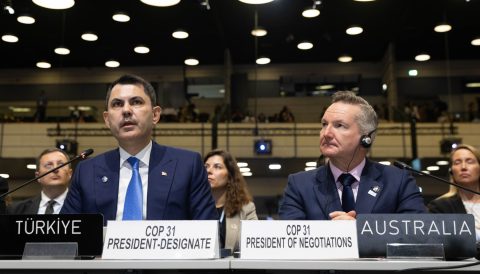
COP31 president Murat Kurum said earlier this month that the push to make electrification more “widespread” – through measures like the rollout of electric vehicles and heat pumps – will “automatically” lead to a reduction in the use of fossil fuels.
But many campaigners disagree, criticising the proposed pledge for failing to give an explicit signal on the fossil fuel transition.
Lack of clarity on energy sources
“Let’s not let electrification become the Trojan horse of our times, used to hide new fossil fuel consumption rather than promote renewable energy,” Claire Smith from civil society umbrella group Beyond Fossil Fuels said in reaction to the pledge’s publication.
She added that the commitment will only help address the climate crisis if electrification is powered by a flexible energy system where solar and wind are complemented by enhanced grids and storage.
The pledge’s text says that the electricity goal should be supported by “diverse and sustainable energy sources”, but it stops short of explaining what these sources are.
Alden Meyer, an international climate policy expert and senior associate at think-tank E3G, said the details of the pledge matter to how effective it will be in helping bring planet-heating emissions down.
“It has to be clean, and we haven’t got enough clarity on a guarantee that it will be a decarbonisation move,” he told Climate Home News.
China’s industrial engine starts to break its fossil fuel habit
According to an annual electricity review from energy think-tank Ember, in 2025 renewables edged ahead of coal power for the first time in 100 years. Continued growth in solar and wind pushed the share of renewables above a third of global electricity generation to just under 34%, compared with coal at 33%, it said.
Janet Milongo, energy Transition lead at CAN International, said success cannot be measured simply by how much of the world’s final energy consumption becomes electric.
“We must ask what generates that electricity, who has access to it, who owns the infrastructure, and whether it is helping communities transition away from fossil fuels,” she added.
Electrification alone can’t meet climate goals
Analysis published by the IEA on Tuesday, alongside the pledge, found that it would already be cost-effective to raise electricity’s share of global energy use from 23% today to around 33% with existing technologies, putting the COP31 goal “within striking distance”. Based on current policies, however, the share reaches only about 30% by 2035.
Hitting the 35% target would cut fossil fuel importers’ import bills by around $400 billion a year by 2035, the IEA said. At the higher prices caused by the conflict in the Middle East, that saving rises to more than $500 billion.
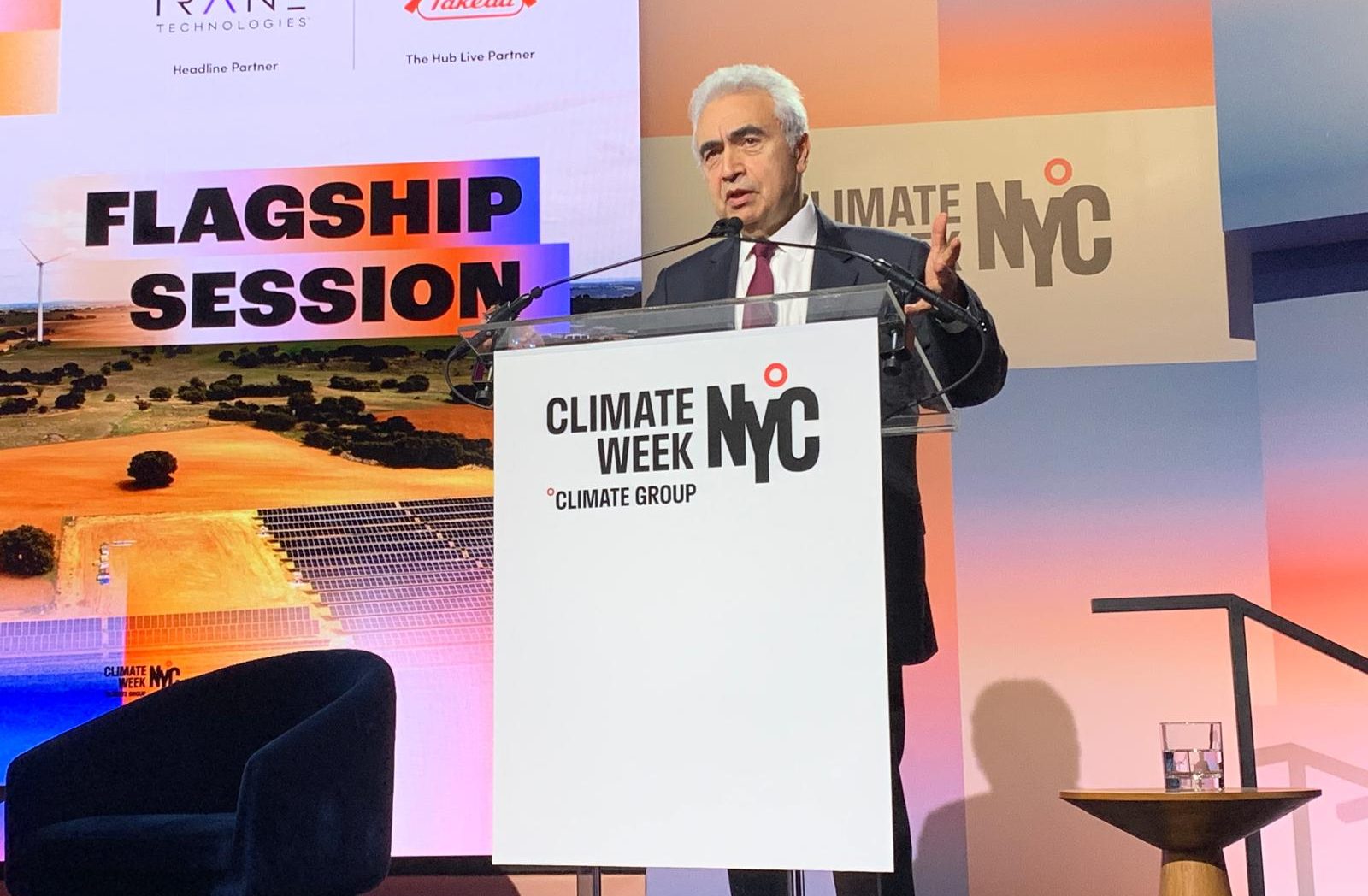
Speaking at New York Climate Week on Tuesday, IEA executive director Fatih Birol said the agency’s figures show that in 2026, about 80% of all new power plants built will run on renewables, with a few percentage points coming from nuclear power and the rest from fossils fuels. “So therefore, electrification itself will lead reduction of the [greenhouse gas] emissions,” he added.
However, the IEA warned in its new report that electrification “by itself is not enough” to meet the world’s climate targets. It noted that, if “low-emission” sources of power continue to simply grow in line with current policy scenarios, that would be only just enough to cover the extra demand from electrification, driving a modest decline in emissions.
Matt Webb, associate director of global clean power diplomacy at E3G, said the pledge is a “welcome signal of leadership” and can help COP31 be a “critical moment” for countries to double down on the energy commitments made at COP28.
But to secure the full benefits of electrification, he added, it is essential that we “urgently clean up” by speeding up the rollout of renewables and developing credible national plans to transition away from fossil fuels.
The post COP31 electrification pledge leaves out clean power commitment appeared first on Climate Home News.
COP31 electrification pledge leaves out clean power commitment
People around the world have donated almost $90 million to a government-led campaign to help Nepal recover from its recent devastating Himalayan flood, according to a Nepali climate negotiator, even as the UN chief slammed the tiny amount of money in a new fund to deal with such disasters.
Individuals and companies from Nepal and abroad have chipped in from $5 to “many millions” of dollars to the Prime Minister’s Disaster Relief Fund, Manjeet Dhakal, an advisor to the poorest countries at UN climate talks, told an event on Monday focused on early warning systems.
The prompt and substantial response from the public contrasts with the slower, more limited support that is potentially on offer from the UN’s new Fund for Responding to Loss and Damage (FRLD), set up by governments to compensate developing countries for climate disasters.
Comment: Human security relies on adapting to the world’s new climate reality
Over three weeks have passed since Nepal’s finance and environment ministers asked the FRLD board to take an urgent decision to allocate funding to help Nepal protect people and restore essential services in the wake of the disaster, which caused around 1,450 deaths and left more than 5,000 people missing.
“Time is of the essence,” the ministers wrote in an appeal to the FRLD on August 31, which was swiftly followed by a letter from a group of developing-country board members urging the FRLD board’s co-chairs to organise an extraordinary meeting to come up with a response.
Loss and damage fund hesitates
Yet, despite informal online meetings, the co-chairs have yet to convene a meeting with the power to allocate funds. The board’s next scheduled meeting begins on December 15.
Dhakal said on Monday that the request has “received some positive response, but still there is some discussion ongoing about how to respond to that”.
“If they can’t respond in a timely manner, then is [the fund] fit for purpose in terms of disasters that the world would be facing in the coming years? The scale and intensity of these disasters is increasing,” he said.
With just $820 million pledged to it by rich countries and not all of that yet delivered, the FRLD has earmarked just $350 million to spend in its initial phase and without further contributions could run out of money next year.
Because of these limited funds, and a huge number of requests for funding totalling nearly $3 billion, the FRLD has said it will only give out a maximum of $20 million to each project for now. It has yet to approve funding for any projects.
Dhakal recently told The Nation magazine that this amount was just a “symbolic gesture”. Nepal’s government has estimated the costs of recovery and reconstruction at $4.8 billion, with homes, roads, bridges, hospitals and hydropower stations in the affected area needing to be repaired and rebuilt.
“Ridiculously small” funding
In a speech to the UN General Assembly on Tuesday, the body’s outgoing Secretary-General António Guterres criticised the “ridiculously small” level of funds made available by wealthy governments to the FRLD. Developed countries should “make the loss and damage fund work at scale”, he said.

The Portuguese diplomat told world leaders that when he travelled to Nepal three years ago, he had “sounded the alarm on accelerating glacier melt, warning that the rooftops of the world are caving in”.
“Some dismissed it all as overstating dangers, but as tragic events have shown, impacts are arriving sooner, hitting harder, and spreading further than many anticipated,” he said.
A recent study by scientists with the World Weather Attribution group found that climate change contributed to the rock-ice avalanche which sparked a huge flash flood along a river valley on the Nepal-Tibet border.
Speaking at a separate event in New York on Monday, leading climate scientist Johan Rockström highlighted those findings on the role of global warming in the Himalayan disaster.
“This will be potentially the first poster-child case of a loss and damage invoice, because here we have a proven case of a catastrophe which would not have occurred if it hadn’t been for human-caused climate change,” he said.
The post As loss and damage fund stalls, Nepal crowdfunds flood relief appeared first on Climate Home News.
As loss and damage fund stalls, Nepal crowdfunds flood relief
Climate Change
Explainer: How sea level rise poses an ‘existential threat’ to humans, heritage and nature
For millions of people around the world, rising sea levels are already reshaping economies, livelihoods and cultures.
The world’s oceans are currently rising at a faster rate than at any time in at least the past three millennia, with human influence the “dominant cause” of sea level rise since at least 1970.
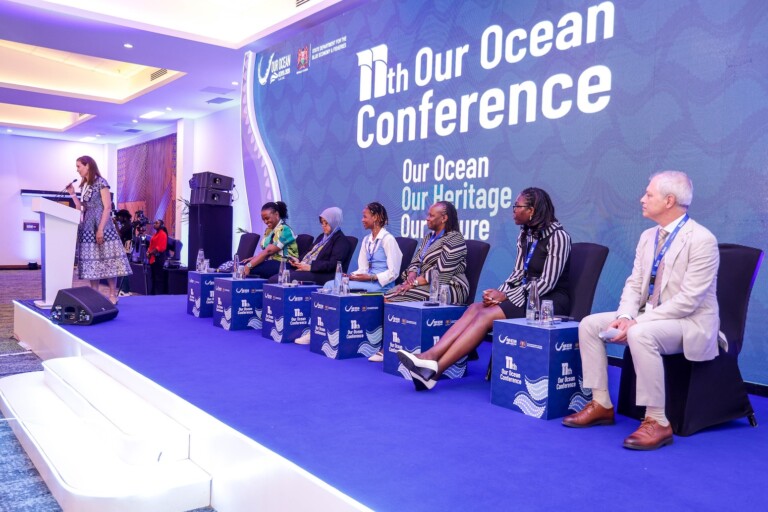
At the UN general assembly in New York this week, world leaders are set to adopt a high-level declaration on the “existential threats” posed by sea level rise.
The declaration notes: “Sea level rise is not a distant scenario, but a real and lived experience for many.”
On average, global sea levels rose by 20 centimetres (cm) between 1901 and 2018.
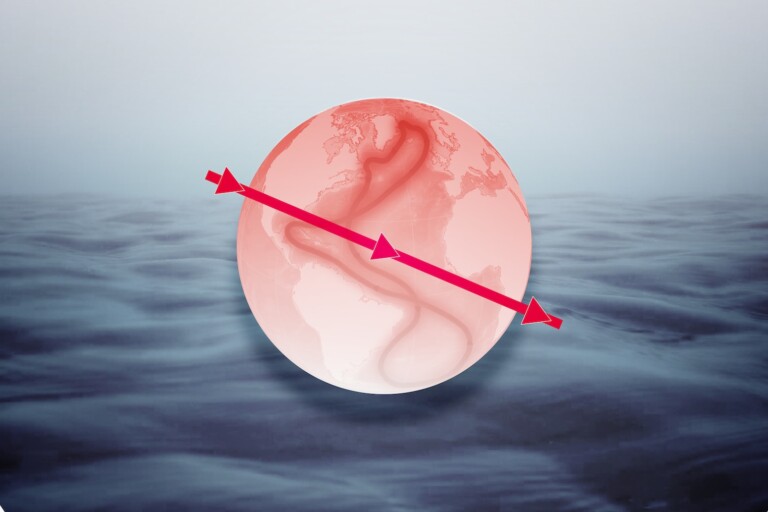
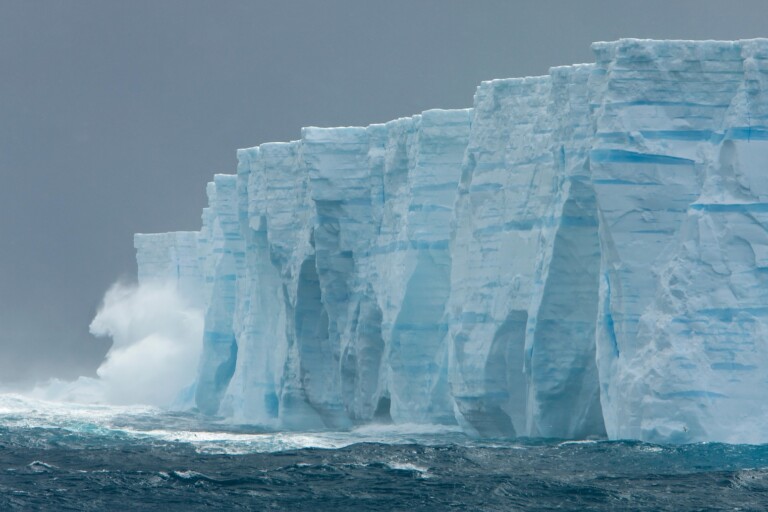
This is due to both the melting of glaciers and ice sheets and the expansion of seawater as it warms, as well as changes in land-water storage.
The rate of the rise has accelerated in recent years, with ocean levels rising 10.6cm since 1993.
Sea level rise can vary locally due to seismic and volcanic activity, groundwater extraction and changes to the Earth’s surface resulting from ice melt.
Under a moderate-emissions scenario, scientists predict that global average sea level will rise an additional 56cm by 2100, relative to a 1995-2014 baseline.
Here, Carbon Brief unpacks some of the key ways that sea level rise threatens both societies and ecosystems.
Cities and coastal communities
Around 770 million people – 10% of the world’s population – are at “acute risk” of negative impacts from sea level rise, according to a report from the UN secretary general released last month.
(The report defines locations at acute risk as those that are less than five metres above the high-tide line.)
The people at risk include the residents of several of the world’s largest cities, including Mumbai and Kolkata in India and Shenzhen and Guangzhou in China. It also encompasses the entire populations of many island nations. (See: Small island developing states.)
There are two ways to consider sea level rise.
Global-average sea level rise is the amount the ocean surface has moved upwards, on average, relative to a baseline.
Relative, or local, sea level rise, is how much the ocean has risen in a given place. This can vary from the global average due to a number of factors, including land motion and ocean circulation, as well as changes to the Earth’s surface, rotation and gravitational pull due to the melting of the ice sheets.
Higher sea levels bring with them myriad dangers for coastal communities: they can increase persistent flooding and inundation, strengthen dangerous storm surges and erode beaches and cliffs. Sea level rise also causes the water table of coastal land to rise, which exacerbates flood risk.
The frequency of 100-year “extreme sea level events” has already increased 12-fold since 1900. These are events where high tides, storm surges and relative sea level rise combine to produce exceptionally high sea levels. Under a moderate-emissions scenario, these events are likely to occur at least annually – and, potentially, even more frequently – in many places by the end of the century.
In addition to damage to homes and other buildings, critical infrastructure – such as water systems and wastewater management projects – is increasingly vulnerable to flooding as a result of sea level rise. Flooding can cut communities off from essential services, such as hospitals and markets, with low-income and other marginalised groups disproportionately affected.
Inland encroachment of seawater leads to the saltwater intrusion and threatens agriculture in low-lying coastal areas.
Vertical land motion can also amplify the risk of rising seas. This includes a shifting of the land in response to seismic or volcanic activity or to land sinking, known as subsidence. The changes in local sea level due to these types of vertical motion can equal or surpass the contributions of climate-driven sea level rise.
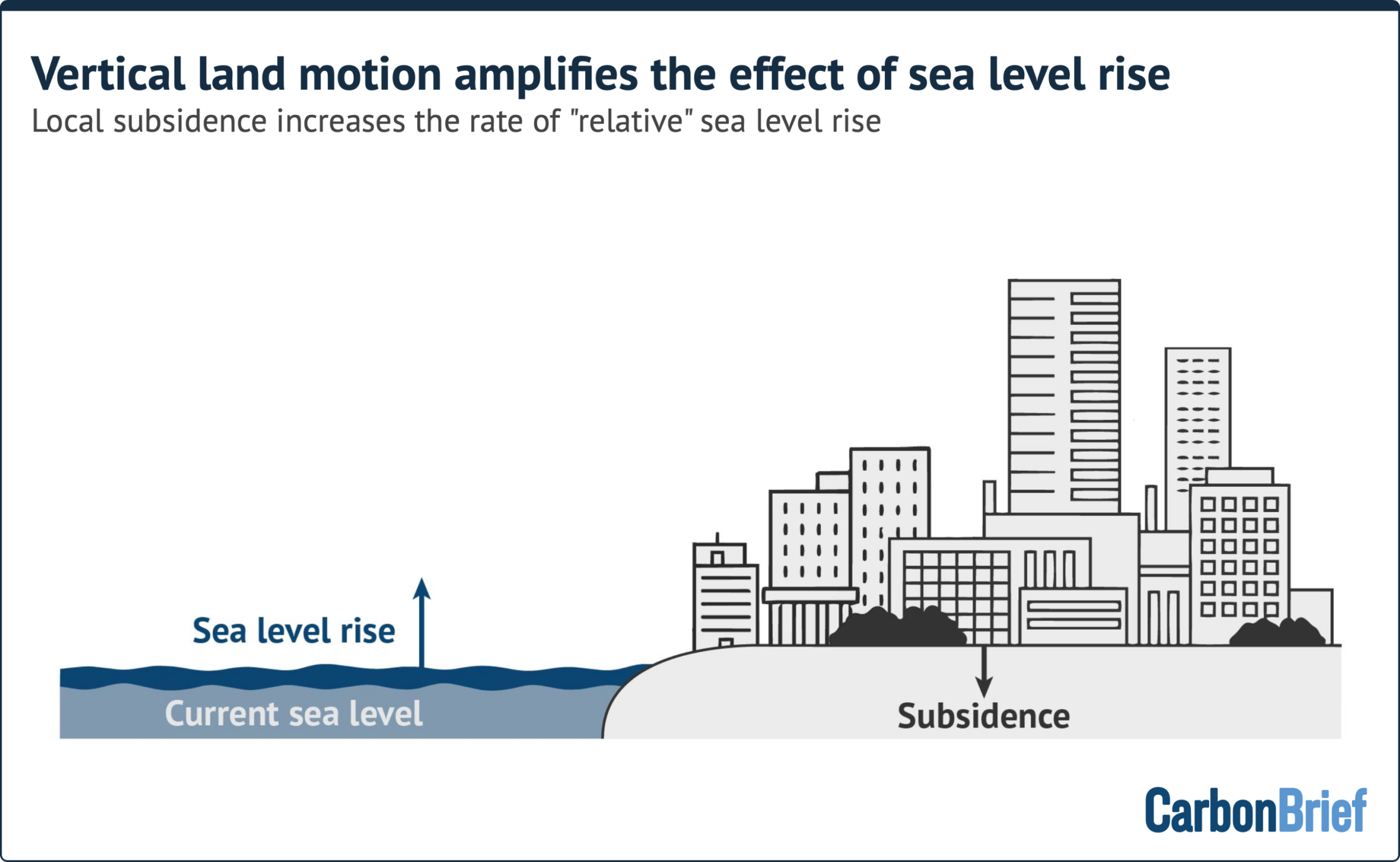
Many of the coastal cities experiencing the largest changes in their relative sea level are located in east and south-east Asia. One notable example is Jakarta, Indonesia, which has been sinking by up to 15cm per year over the past decade, due largely to the overextraction of groundwater, which leads to the collapse of underground aquifers.
But even as the risks from sea level rise increase, population growth in coastal areas continues to outstrip that of inland areas. Between 2000 and 2018, the global population grew by slightly more than 23%. The population living within 5km of a coast increased by 28% over that same time.
The associated development of coastal areas means that, even without future sea level rise, global losses from flooding in the world’s largest 136 coastal cities could reach up to $52bn per year by 2050 – up from $6bn in 2005.
In response to the growing threats posed by sea level rise, communities around the world have implemented a number of adaptive actions.
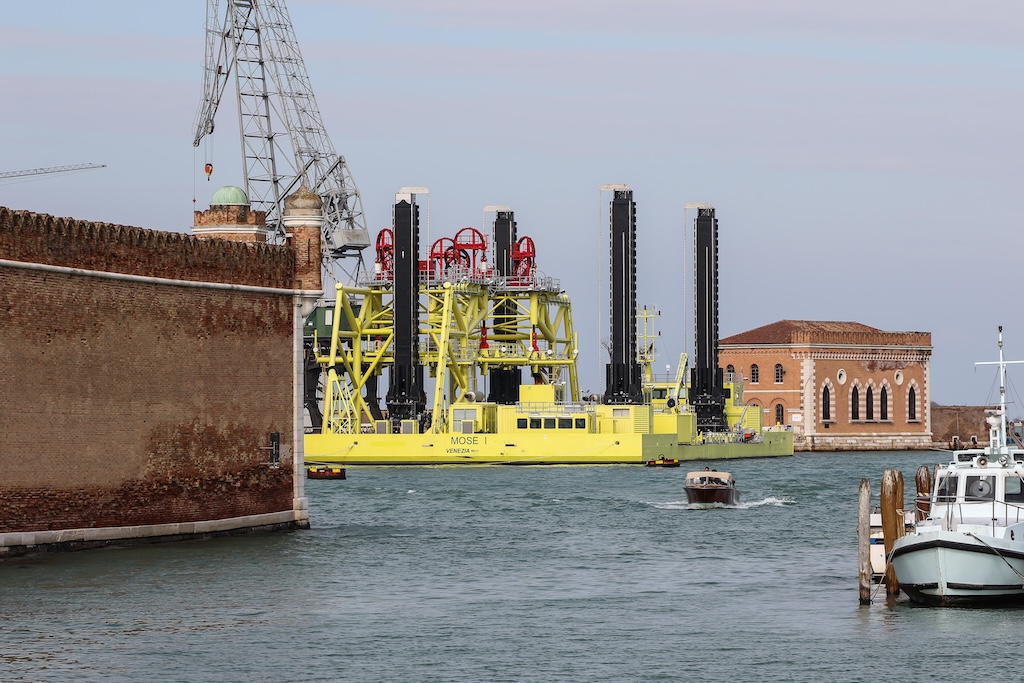
In 2003, the Italian city of Venice began a years-long project to construct three floodgates that could be raised during high tide events to protect the city’s lagoon from the encroachment of the Adriatic Sea. The system was engaged for the first time in October 2020 and then another 48 times in the following two years.
Other communities have opted for less technologically intensive adaptations, including constructing seawalls, restoring mangrove forests and marshes, disincentivising development in high-risk areas and relocating residents, buildings and infrastructure to higher ground or inland areas.
However, existing adaptations may not be sufficient to protect communities. Under a low-emissions scenario, these protections may be breached 10 times as frequently over the next 30 years as they currently are.
Biodiversity and coastal ecosystems
The world’s coastal ecosystems are rapidly being destroyed due to both development and sea level rise.
This combination of pressures is called “coastal squeeze”, where ecosystems that may have otherwise shifted inland in response to sea level rise find their paths blocked by human-made structures.
Coastal squeeze has contributed to the widespread loss of the world’s wetlands.
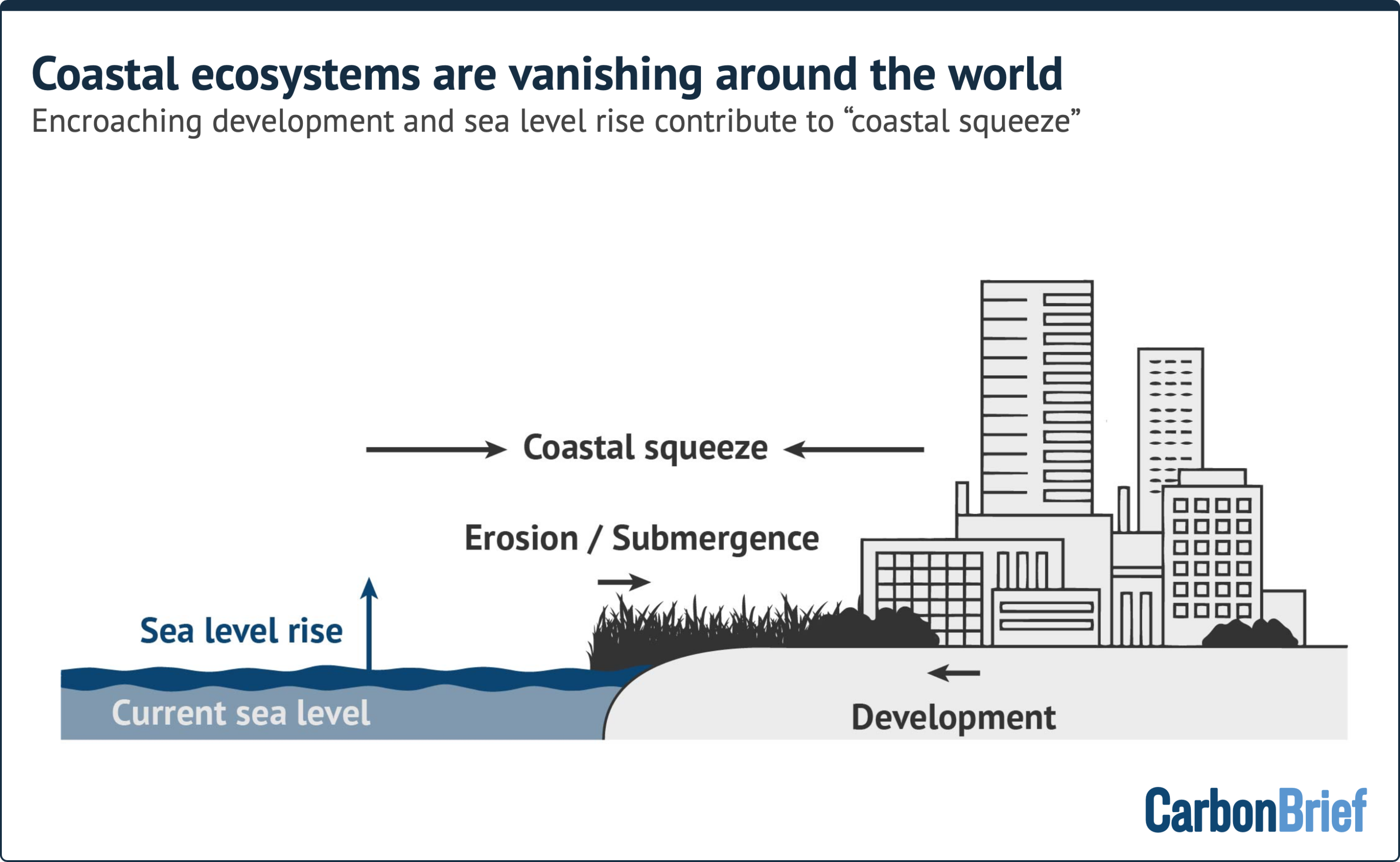
Globally, nearly 28m hectares of coastal wetlands – including estuaries, tidal flats, mangroves and seagrass – have disappeared since 1970, according to the 2025 “global wetland outlook” report. This is an area equivalent to roughly the size of Ecuador.
Although the report names conversion to agriculture as the largest driver of wetland loss, it notes:
“Climate change is increasingly exacerbating the impact of other drivers on wetlands and human wellbeing through changes in the frequency and intensity of extreme weather events, associated fires, floods and droughts and through sea level rise.”
In the continental US, just 16% of coastal wetlands are migrating inland at rates that exceed local sea level rise. Nearly three-quarters of sites are moving at rates that do not outpace sea level rise, while 11% are submerging.
Low-lying islands are particularly threatened by sea level rise, due to their large amounts of coastline relative to their land areas. At the same time, islands are often “hotspots” of biodiversity, with many home to species found nowhere else in the world. More than 20% of the Earth’s known plant species are found only on islands.
A 2013 study modelled the impact of different amounts of sea level rise on 10 island biodiversity hotspots, comprising nearly 4,450 individual islands. It found that in a future with one metre of sea level rise, around 6% of the island habitat area would be completely submerged, while more than 11% of the hotspot islands would see their land area reduced by at least half. This could put dozens of species at risk of extinction, the study said.
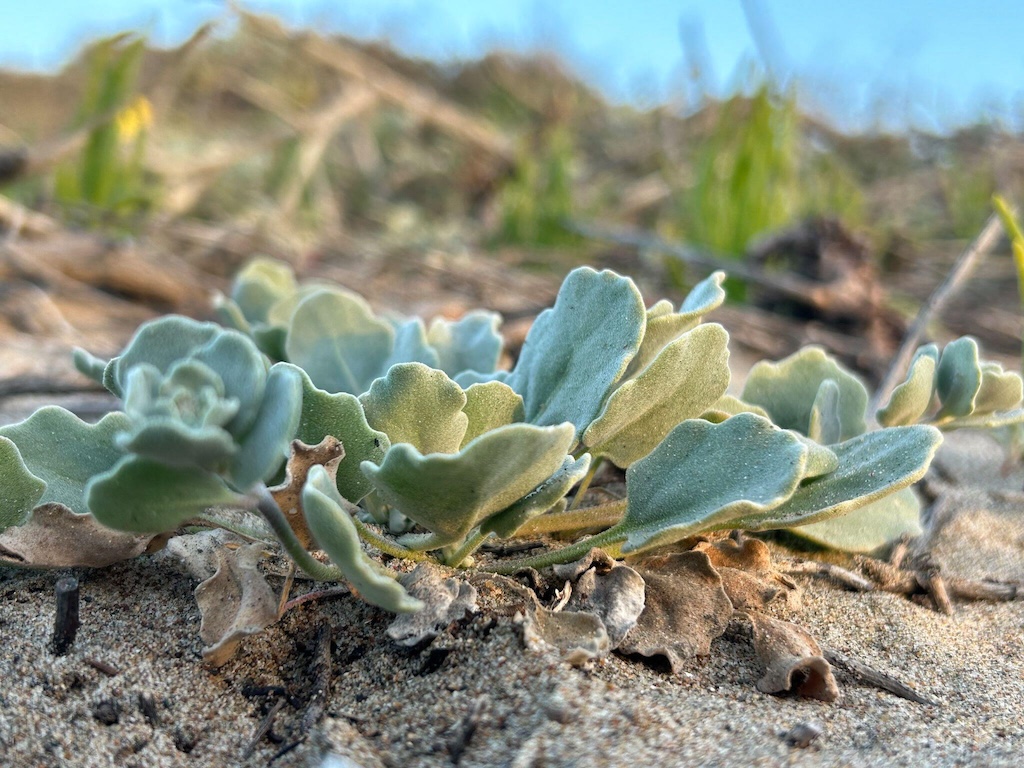
In 2024, researchers documented the first known extirpation, or local extinction, of a plant species in the US due to sea level rise. Hurricanes and storm surges – amplified by sea level rise – began to kill off the only US population of the Key Largo cactus in the 2010s.
The remaining cacti suffered from soil erosion and saltwater intrusion and the final remaining specimens were removed in 2021 in an effort to cultivate them in greenhouses. (Other Caribbean islands, including Cuba, do still have surviving populations of the cactus.)
As native flora and fauna are diminished or even eliminated by rising sea levels, coastal ecosystems may become vulnerable to colonisation by invasive alien species, further harming biodiversity.
And as coastal communities are forced to relocate due to sea level rise, there are knock-on effects for biodiversity as they develop on new lands. These secondary biodiversity impacts are likely to be particularly prevalent in south-east Asia, due to the large number of people living in low-lying areas who may be forced to migrate due to sea level rise.
Small island developing states
Sea level rise poses an “acute and disproportionate” threat to small island developing states, says the recent UN report. It adds:
“Even under moderate scenarios, rising seas will render many low-lying coastal zones and small island developing states increasingly uninhabitable without extraordinary adaptation.”
Climate change is already resulting in loss and damage to small island nations, which are particularly vulnerable to both climate change in general and sea level rise specifically.
This vulnerability is in large part due to the geography of these countries. Several small island Pacific states are made up of atolls – ring-shaped coral or sandy islands that encircle lagoons. These often have average elevations of 1-2 metres above sea level and maximum elevations of 3-5 metres above sea level.
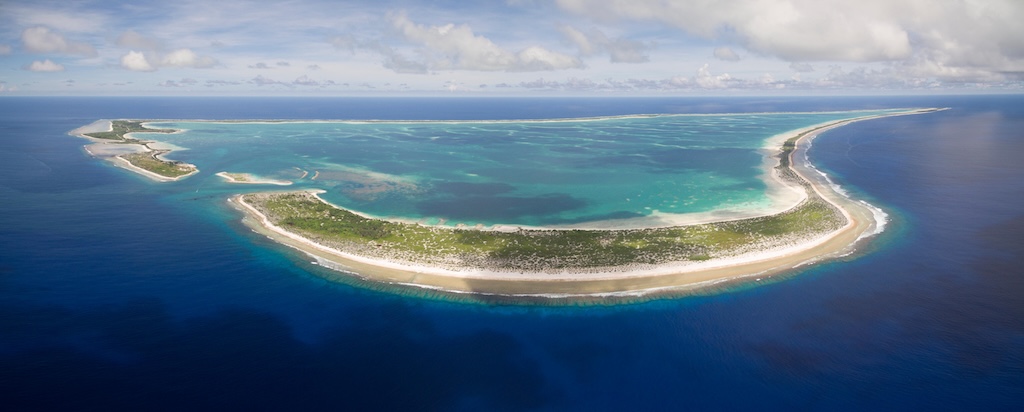
Some modelling evidence has shown that reef islands can grow vertically in response to sea level rise, as waves washing over the islands transport sediment from the ocean onto the surface. However, the strength of such waves would likely make these islands unsuitable for building on.
Other research has shown that Pacific islands respond in many different ways to rising sea levels, with “complex” outcomes, both positive and negative.
In addition, most of the small-island nations in the Pacific Ocean are located in a region where relative sea level rise from the melting of the Antarctic ice sheet is projected to be 11-33% higher than the global average rise in 2100 – regardless of emissions scenario.
The effects of this higher-than-average sea level rise is already evident.
In 1999, Kiribati lost two small, uninhabited islands to the rising seas. Several uninhabited islands in the Solomon Islands had vanished by 2014, while a further six islands had been severely eroded by the ocean, necessitating the relocation of some communities.
In addition, most small island developing states are located in parts of the ocean that are often hit by tropical cyclones. Sea level rise can enhance storm surge, leading to greater destruction during such storms.
However, small island developing states are also vulnerable “because they lack the means to address the impacts on their own”, reads the UN report.
According to the UN, these countries will require up to $6bn annually by 2035 in order to adapt to climate change. However, they received just $1.2bn in public adaptation finance in 2022-23.
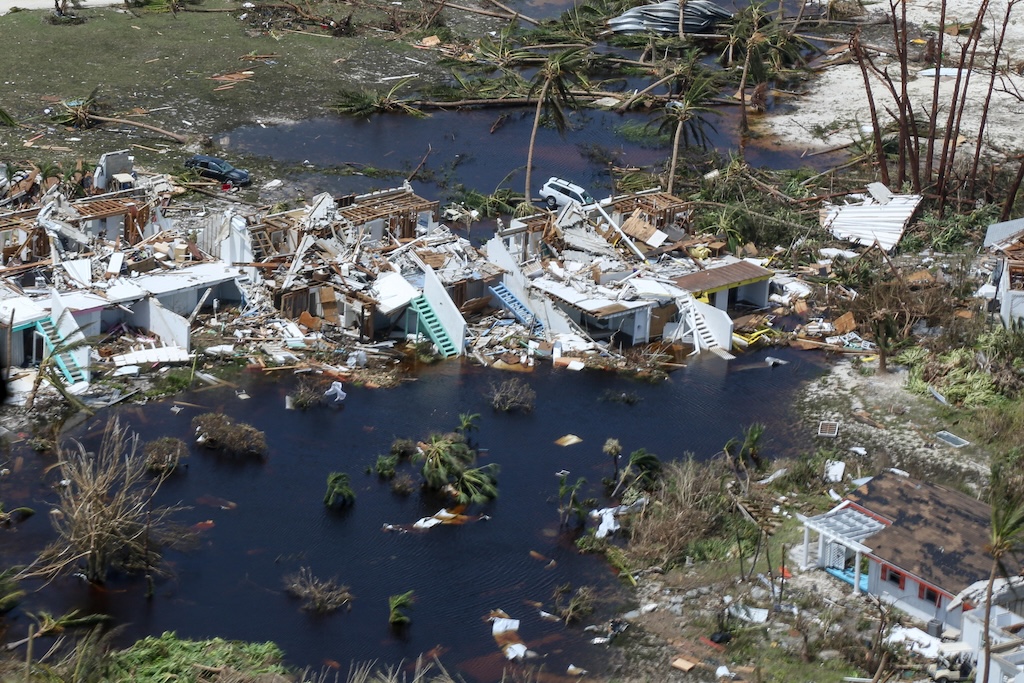
Currently, small island developing states experience “expected” annual climate damages of $1.64bn due to coastal flooding, equivalent to 0.13% of their cumulative GDP. But, even if warming were limited to 1.5C above pre-industrial temperatures, these annual damages are projected to grow to $24bn.
In the international policy arena, questions have arisen over what should happen to island nations’ maritime boundaries as their land is enveloped by the sea. This is because maritime holdings, such as exclusive economic zones, are determined based on a country’s land borders.
However, a 2025 report by the UN International Law Commission considered the legal implications of sea level rise. It concluded that international law allows for countries’ borders to stay the same, “notwithstanding changes to the coastline as a result of climate change-related sea level rise”. It also noted:
“There is a need to develop legal and practical solutions to better protect persons affected by sea level rise, including those who remain in situ and those who are internally or externally displaced by it.”
Other small islands also face similar issues in their exposure to threats posed by sea level rise.
Coral reefs
Coral reefs are among the ecosystems that are most vulnerable to climate change.
They are also being visibly affected already – almost entirely due to ocean warming. Even though these ecosystems are completely submerged to begin with, they are also impacted by sea level rise.
As the ocean rises, the water over shallow ecosystems deepens.
The effects of this are twofold. Deeper water reduces the temperatures experienced by reefs. This can act as a buffer against marine heatwaves and global ocean warming.
At the same time, the increased depth reduces the amount of light that can reach the coral communities, which can impact their survival.
In addition, sea level rise-assisted erosion will add more sediment to the near-shore waters. These particles can settle on corals, impeding their ability to feed and reproduce, as well as interfering with photosynthesis by the zooxanthellae algae that live symbiotically with corals. Together, this leads to slower coral growth and increased stress on reefs.
So far, reefs in some parts of the world have been able to “keep pace” with sea level rise, growing vertically at accelerated rates and therefore maintaining suitable levels of light availability.
However, modelling has shown that few reefs have the capacity to continue to maintain their distance from the surface under a moderate-emissions scenario.
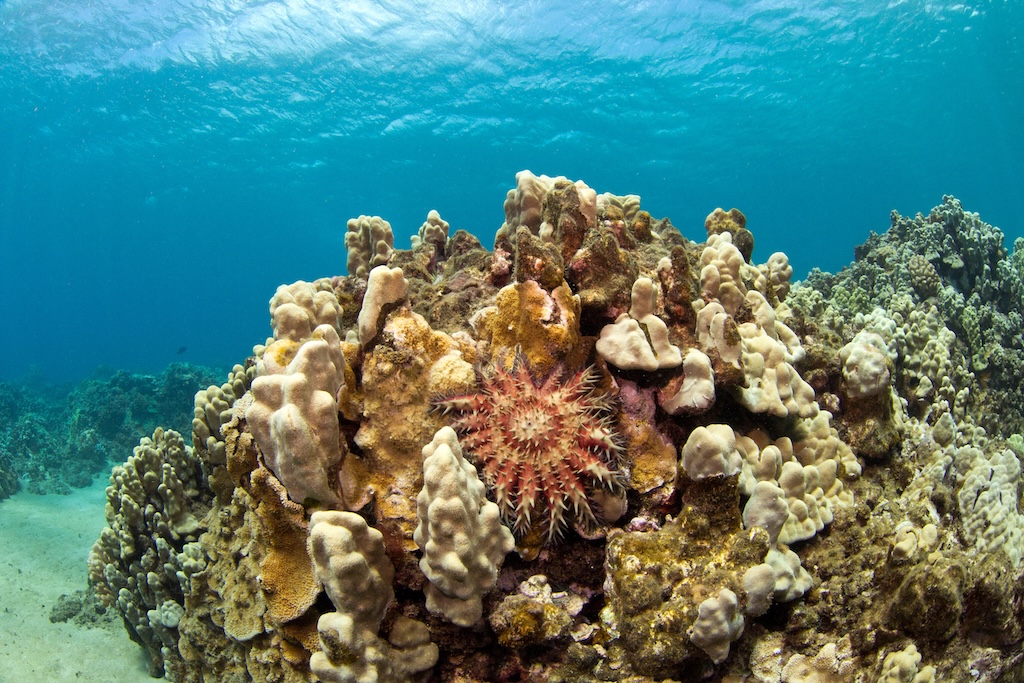
As coral reefs degrade, the seafloor below them can wear away. This erosion is contributing to greater apparent levels of sea level rise on coral reefs in the Caribbean, as well as the US states of Florida and Hawaii.
Sea level rise may also have the ability to spur reef growth in shallow environments previously thought to be uninhabitable for corals. In Sanya Bay in the northern South China Sea, sea level rise since the mid-1980s has allowed for the recolonisation of a reef that had been dormant for more than five millennia.
But the opportunities for such recolonisation are far outstripped by the loss of coral elsewhere. Since 1980, the world has lost nearly 10% of its coral cover due to climate change-induced ocean warming. The UN declaration reads:
“Every fraction of a degree of global warming increases the risks to coral reefs.”
Heritage sites
Throughout human history, many societies developed along rivers and coastlines, due to the abundance of food and ease of transportation. However, their proximity to the sea means that many of these sites are now at risk of being damaged or destroyed by sea level rise.
Cultural heritage includes “physical sites, living heritage, traditional lands, burial grounds, underwater cultural heritage, archaeological and sacred sites and culturally significant coastal landscapes”, according to the UN sea level rise report.
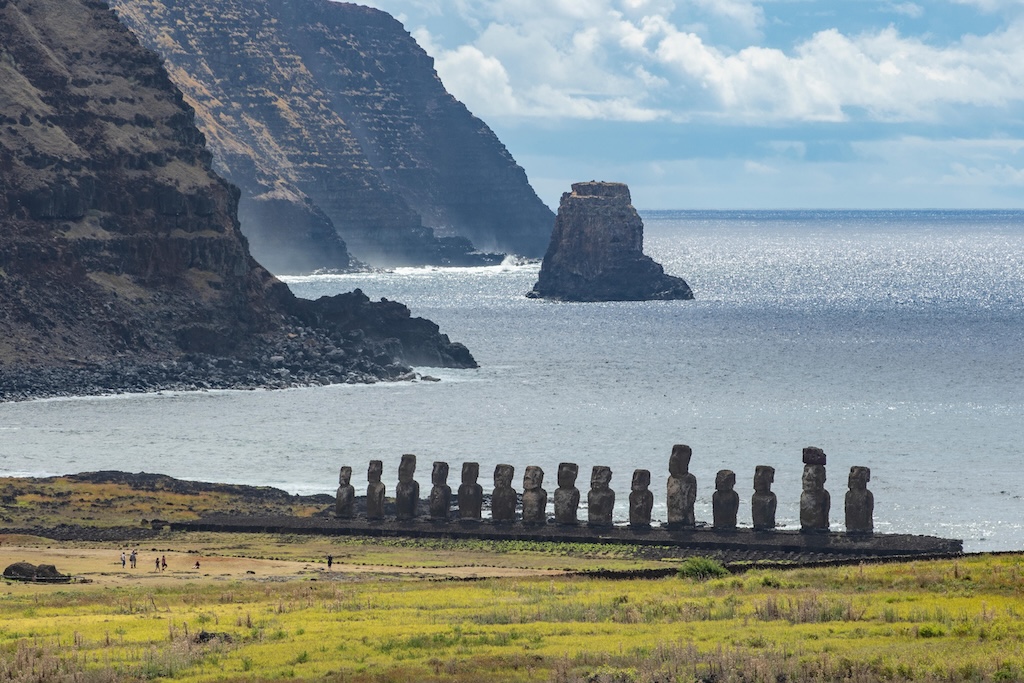
Several studies have mapped the cultural and natural heritage sites that are most at risk from flooding and erosion due to sea level rise.
There are 49 Unesco world heritage sites located at low elevations along the coast of the Mediterranean Sea. Nearly every one of these is already at risk from erosion or severe flooding events – 42 face issues with erosion, while 37 are at risk from a 100-year flood event. Both of these risks will increase over the remainder of the century as sea levels continue to rise.
The locations at risk include the archaeological sites of the ancient cities of Carthage in present-day Tunisia and Ephesus in Turkey, the ruins of Pompeii and Herculaneum in Italy and the medieval Cathedral of St James in Šibenik, Croatia.
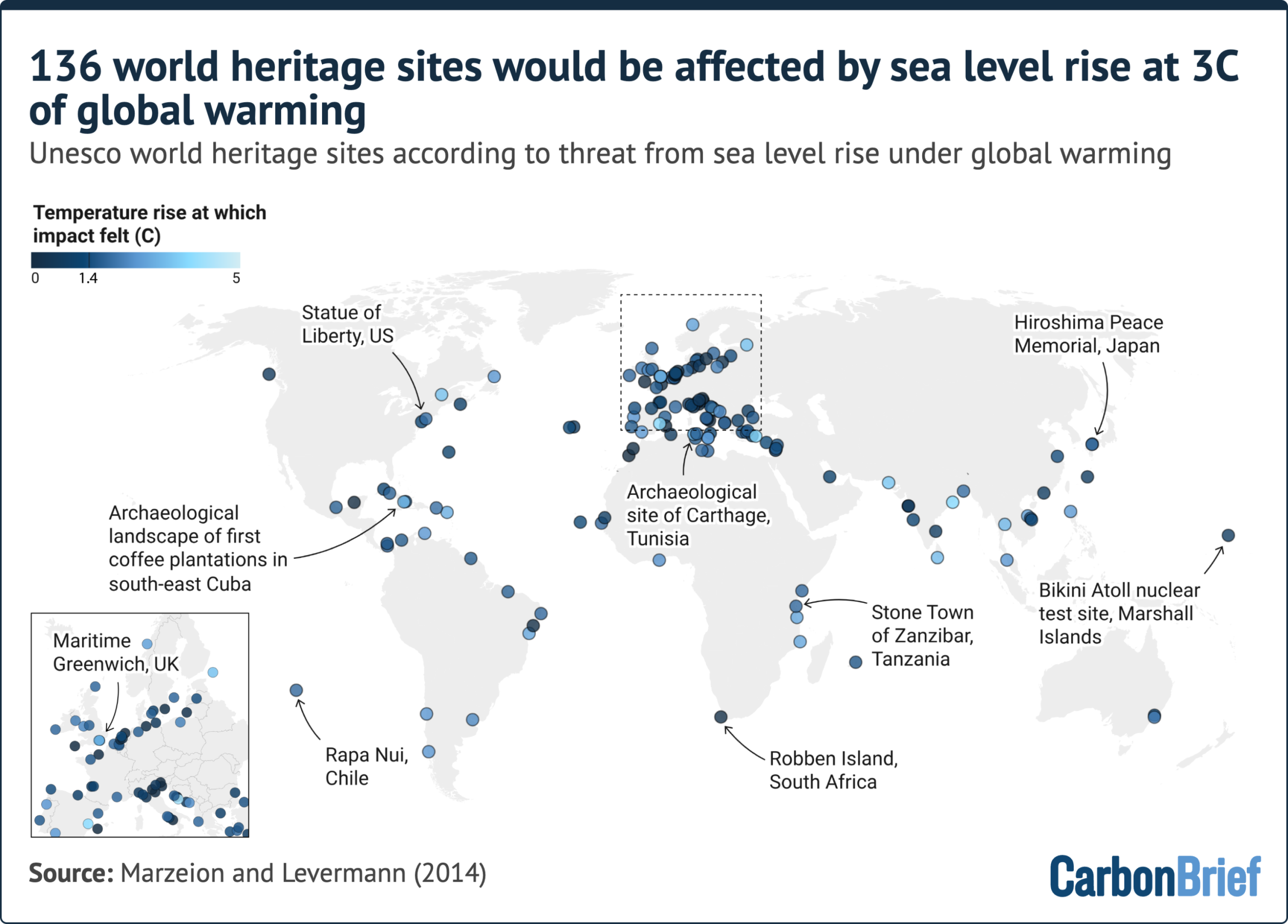
The sea level rise associated with warming of 3C above pre-industrial temperatures would impact nearly one-fifth of all Unesco cultural world heritage sites. The sites at risk include Japan’s Hiroshima Peace Memorial, South Africa’s Robben Island, Chile’s Rapa Nui and the Sydney Opera House. Many of these become vulnerable at lower levels of global warming.
In Africa, 56 out of 284 cultural and natural heritage sites already face threats from flooding or erosion due to sea level rise. This number is expected to nearly triple – to 191 threatened sites – by 2050 under a moderate-emissions scenario. However, mitigating emissions could reduce the number of very-highly exposed sites – those with at least 75% of their area vulnerable – by one-quarter.
Globally, there are 386 Unesco heritage sites along the coast that are, at most, 20 metres above sea level and are therefore potentially affected by coastal erosion and flood hazards.
These threatened sites include 289 cultural heritage sites and 91 natural heritage sites, as well as six “mixed” sites that are recognised for both their cultural and natural significance.
The UN declaration calls for action to mitigate damage to significant sites, saying:
“Protection, preservation and documentation of cultural heritage is a priority.”

The post Explainer: How sea level rise poses an ‘existential threat’ to humans, heritage and nature appeared first on Carbon Brief.
Explainer: How sea level rise poses an ‘existential threat’ to humans, heritage and nature



-

 Greenhouse Gases2 years ago
嘉宾来稿:满足中国增长的用电需求 光伏加储能“比新建煤电更实惠”
-
Climate Change1 year ago
Guest post: Why China is still building new coal – and when it might stop
-
Greenhouse Gases1 year ago
Guest post: Why China is still building new coal – and when it might stop
-

 Climate Change2 years ago
嘉宾来稿:满足中国增长的用电需求 光伏加储能“比新建煤电更实惠”
-

 Renewable Energy11 months ago
Sending Progressive Philanthropist George Soros to Prison?
-
Climate Change2 years ago
Bill Discounting Climate Change in Florida’s Energy Policy Awaits DeSantis’ Approval
-
Greenhouse Gases1 year ago
嘉宾来稿:探究火山喷发如何影响气候预测
-

 Carbon Footprint2 years ago
US SEC’s Climate Disclosure Rules Spur Renewed Interest in Carbon Credits