


Sustainable Transportation
City of Roses: Portland’s Sustainable Transportation
Portland, known as the “City of ,” has established itself as a beacon of sustainable transportation in the United States.
With a strong commitment to environmental stewardship and livable communities, Portland has implemented innovative strategies to promote green mobility options.
By prioritizing public transit, fostering cycling culture, embracing electric vehicles, and implementing progressive policies, the city has become a model for sustainable , inspiring cities across the nation.
Portland sustainable transportation
1. Robust Public Transit:
Portland’s public transit system, managed by TriMet, is the backbone of the city’s sustainable transportation network. TriMet operates an extensive network of buses, MAX light rail, and streetcars, providing reliable and convenient options for commuters.
The city’s commitment to frequent service, efficient transfers, and fare integration encourages residents to choose public transit over private cars, reducing congestion and greenhouse gas emissions.
2. Cycling Infrastructure and Culture:
Portland is renowned for its cycling infrastructure and vibrant cycling culture. The city has invested in an extensive network of bike lanes, protected cycle tracks, and bike-friendly intersections, making cycling a safe and preferred mode of transportation.
Additionally, Portland actively promotes cycling through community events, educational programs, and bike-sharing initiatives, fostering a strong cycling culture and reducing reliance on cars for short trips.
3. Electric Mobility Revolution:
Portland has embraced the electric mobility revolution by promoting the adoption of electric vehicles (EVs) and supporting the development of charging infrastructure. The city offers incentives for EV purchases, such as tax credits and rebates, and has implemented a network of public charging stations throughout the city.
By transitioning to electric vehicles, Portland is reducing carbon emissions and improving air quality, contributing to a greener and healthier city.
4. Sustainable Urban Planning:
Portland’s sustainable transportation efforts are deeply intertwined with its urban planning strategies. The city prioritizes compact and mixed-use developments, creating walkable neighborhoods where residents have easy access to amenities and services.
Moreover, Portland incorporates transit-oriented development principles, ensuring that public transit hubs are surrounded by dense, pedestrian-friendly developments. This approach reduces the need for car travel and encourages active transportation.
5. Progressive Policies:
Portland has implemented progressive policies to promote sustainable transportation choices. The city has introduced parking management strategies that prioritize efficient use of parking spaces and discourage excessive car ownership.
Additionally, Portland has implemented programs to support car-sharing services, enabling residents to access shared vehicles instead of owning private cars. These policies help reduce congestion, improve air quality, and create a more sustainable transportation ecosystem.

Robust Public Transit in Portland
Portland, Oregon, was known for its commitment to developing a robust public transit system. It’s important to note that the status of any city’s public transit system may have evolved since then, so it’s a good idea to check more recent sources for the latest information.
1. TriMet: TriMet is the primary public transportation agency serving the Portland metropolitan area. It operates an extensive network of buses, light rail, and commuter rail services. TriMet’s MAX Light Rail system is one of the most significant components of Portland’s public transit, connecting different neighborhoods and suburbs to downtown Portland.
2. MAX Light Rail: MAX consists of several lines, including the Blue Line, Red Line, Green Line, and Orange Line. These lines serve different parts of the city and provide efficient transportation options for commuters, residents, and visitors.
3. Portland Streetcar: The Portland Streetcar is a modern streetcar system that complements TriMet’s MAX Light Rail and bus services. It operates two lines: the NS Line and the A/B Loop, providing additional transportation options in the city’s central areas.
4. Bus Network: TriMet’s bus network covers a wide area, reaching neighborhoods and areas not directly served by light rail. The bus system includes frequent service routes, express buses, and neighborhood routes to ensure comprehensive coverage.
5. Transit-Oriented Development: Portland has actively pursued transit-oriented development (TOD), designing urban spaces and development projects to encourage the use of public transit and reduce reliance on private vehicles. Many neighborhoods are planned around public transit hubs, making it easier for residents to access public transportation.
6. Bicycle Integration: Portland is also known for its bicycle-friendly infrastructure, making it easier for commuters to combine cycling with public transit. Bike racks are often available on buses and light rail, allowing riders to seamlessly switch between different modes of transportation.
7. Fares and Payment: TriMet has implemented various fare payment options, including contactless payment systems like Hop Fastpass, making it more convenient for passengers to pay for their rides.
Portland’s commitment to public transit has been praised as a model for other cities aiming to create sustainable and efficient transportation systems.
The city’s efforts align with its broader goal of reducing traffic congestion, promoting sustainability, and enhancing overall accessibility for its residents and visitors. For the most current information on Portland’s public transit, I recommend checking official websites and local news sources.
Conclusion Portland’s Sustainable Transportation
Portland’s dedication to sustainable transportation has positioned it as a national leader in green mobility.
Through its robust public transit system, extensive cycling infrastructure, embrace of electric vehicles, sustainable urban planning, and progressive policies, the city has transformed its transportation system into one that prioritizes environmental sustainability and enhances the quality of life for its residents.
As cities across the United States grapple with the challenges of urbanization and climate change, Portland’s success story serves as an inspiration, showcasing that sustainable transportation is not only possible but also essential for creating greener, healthier, and more livable cities.
https://www.exaputra.com/2023/07/portlands-sustainable-transportation.html

There are so many tragic aspects to life in today’s United States that it’s hard to name them all.
For my money, one of the saddest elements to the American zeitgeist is its glorification of ignorance.
Up until recently, if you wanted to know what science believes about anthropology, climate change, or particle physics, you asked a scientist in the relevant discipline, who not only has a college degree, but normally a ton of education on top of that.
Now, you ask a congressional Republican, preferably, an evangelical Christian.
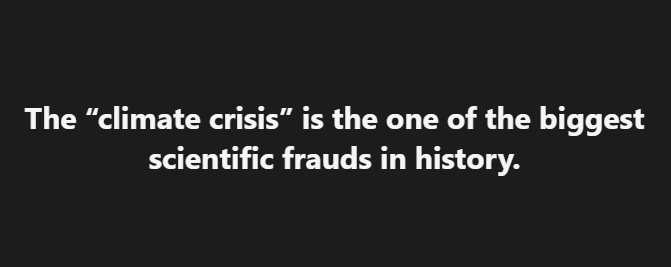 To the author of the meme here (if it’s an actual human being, vs. a Russian bot): to the best of my knowledge, the only actual major “scientific fraud” in world history was “Piltdown Man.” In 1912, a pseudo-anthropologist attempted to fool the scientific community into believing he had discovered the “missing link” between apes and humans.
Now, are there examples of instances when the science of the day turned out to be incorrect?
Of course, and new instances of this surface every day.
Think of how little when scientists believed 200 years ago is still intact today. Perhaps most obviously, Newtonian mechanics has fallen to relativity and quantum physics, but there are hundreds of other paradigm shifts in health and medicine, psychology, cellular biology, chemistry, and particle physics.
Contrary to what conspiracy theorists want you to believe, science is not a set of facts; it’s a methodology whereby we come to learn more about ourselves and the world around us.
Are there other methods by which we “learn?” Sure. Some uneducated guy goes on YouTube and becomes convinced that our consumption of fossil fuels is not causing the temperature of the Earth’s atmosphere and oceans to rise. I would argue that this conduct is inferior to the scientific method.
Renewable Energy
Trump’s Only Real Talents: Attracting Attention and Controlling Morally Weak People
 Trump is not an idiot. His IQ may not be too high, but he’s smart enough to know how to conduct himself in his lifelong quest to amass more wealth and power at the expense of everyone else on Earth.
Trump’s Only Real Talents: Attracting Attention and Controlling Morally Weak People



-
Climate Change1 year ago
Guest post: Why China is still building new coal – and when it might stop
-

 Greenhouse Gases2 years ago
嘉宾来稿:满足中国增长的用电需求 光伏加储能“比新建煤电更实惠”
-
Greenhouse Gases1 year ago
Guest post: Why China is still building new coal – and when it might stop
-

 Climate Change2 years ago
嘉宾来稿:满足中国增长的用电需求 光伏加储能“比新建煤电更实惠”
-

 Renewable Energy1 year ago
Sending Progressive Philanthropist George Soros to Prison?
-
Greenhouse Gases1 year ago
嘉宾来稿:探究火山喷发如何影响气候预测
-

 Climate Change2 years ago
Analysis: China’s CO2 falls 1% in Q2 2024 in first quarterly drop since Covid-19
-

 Climate Change1 year ago
嘉宾来稿:探究火山喷发如何影响气候预测