

In this episode, we explore Meta’s shift to natural gas for AI data centers, analyze a major Mingyang offshore turbine blade failure, and discuss Shell’s head of renewables moving to Ørsted’. Fill out our Uptime listener survey and enter to win an Uptime mug!
Experience Active Training Team’s Thrive USA event in Houston January 24th! Email florence@activetrainingteam.co.uk to register!
Register for Wind Energy O&M Australia! https://www.windaustralia.com
Sign up now for Uptime Tech News, our weekly email update on all things wind technology. This episode is sponsored by Weather Guard Lightning Tech. Learn more about Weather Guard’s StrikeTape Wind Turbine LPS retrofit. Follow the show on Facebook, YouTube, Twitter, Linkedin and visit Weather Guard on the web. And subscribe to Rosemary Barnes’ YouTube channel here. Have a question we can answer on the show? Email us!
Pardalote Consulting – https://www.pardaloteconsulting.com
Weather Guard Lightning Tech – www.weatherguardwind.com
Intelstor – https://www.intelstor.com
Allen Hall: If you want to know why turbine blades are disappearing from social media and why Shell’s Renewables Chief is jumping to worsted and why META is betting big on natural gas, stick around. Plus, we’ve got a special announcement, a chance to win an exclusive Uptime Podcast mug that even I don’t have yet.
You’re listening to the Uptime Wind Energy Podcast brought to you by BuildTurbines. com. Learn, train, and be a part of the clean energy revolution. Visit BuildTurbines. com today. Now here’s your hosts, Allen Hall, Joel Saxum, Phil Totaro, and Rosemary Barnes.
Allen Hall: We’ve got something new for uptime listeners.
We’re running a quick listener survey to learn more about what you love about the show and how we can make it even better. And there is an exciting part to this. Everyone who completes and leaves an email address will be entered to win an exclusive Uptime podcast mug. Now, I do not have one of these podcast mugs, so whoever wins this, hopefully I get a second hand one or something.
Somebody can throw me a mug. But the survey will take about five minutes of your time, and your feedback is really needed to help shape the future episodes of the show. And whether you’re a long time listener or have just joined us recently, we’d We want to hear from you. So I need you to go to uptimewindenergy.
com or just check the show notes to participate in the survey. So we’d appreciate if you would do that. And we have a couple other things happening. One of which is Wind Energy O& M Australia film where everybody’s going to be on February 11th and 12th in Melbourne. And we have a number of sponsors that we can announce this week.
Joel Saxum: So sponsorships and the people joining us at the show will be from Tilt Renewables, Worley, Aerones and RigCom. We’ve got a bunch of other people signed up too. To date, we’ve got quite a few operators, some ISPs, some cool technology companies, and other people’s that are going to be in attendance along with some speakers.
And we’re going to start releasing. Some agenda points and some of the speakers and panelists and roundtables. So the goal of, one of the goals of the conference is to drive engagement with the crowd because we want everybody to leave there with insights that they can take back and actually do something to their wind farms.
We want to help. We want to help make it more profitable. We want to help make operational decisions and drive some success at the field level. So that’s the goal of the show. And we hope you’ll join us.
Allen Hall: Yeah. The conference is going to tackle crucial topics that directly impact operations, leading edge erosion, lightening protection, CMS, insurance, life extension strategy.
So this is your chance to connect with industry leaders and gain. Some practical experience and insights that you can implement immediately. So you need to secure your spot by visiting windaustralia. com. And down in Houston, Joel, we have Active Training Team. They’re going to be giving a demonstration of their Thrive USA product, which is a safety training seminar, a live interactive.
It’s the most impactful training seminar for safety I have ever been at. You want to Talk about what is all involved in the Thrive USA, Joel.
Joel Saxum: Yeah, it’s a step change in training. It’s experiential. I know that’s a weird word, but Alan and I and Claire, our producer, went through this training in Boston a few months ago.
And we’re sitting in the crowd and we’re at tables with people from all kinds of different companies and levels of the company so that everybody’s intermixed. And then all of a sudden, They’re going through a little bit of a presentation and a few actors, real actors, like Screen Actors Guild, card carrying people come through the door and they’re fighting and yelling at each other and going through the scenario.
And then all stop. There’s someone that maintains the, that would be flow of the event. And they say, okay, what do you think about this? And you’re getting engaged and you’re thinking. And just talking about this right now, it reminded me of what happened while we were there. And I have goosebumps on my arms that are popping up because they’re it’s.
It hit me when we were there internally. I’ve never been through a training where I left in thinking like, wow, that was impactful. I am actually thinking about this. I’d like to action some of these things in my day to day life. We did breakout sessions. We talked through things. It was fantastic. So if you have the opportunity we would love to see you in Houston.
It’s going to be January 24th. Down by the medical center. And if you want some details on it, of course, you can get a hold of us at the show any either Alan or I can point you in the right spot. Joel.saxum@wglightning.com or feel free to reach out to Florence at the active training team. She’s guiding the whole process, so florence@activetrainingteam.co.uk can be your contact there, and we hope to see you in January there in Houston.
Allen Hall: Yeah, we’ll see you in Houston and the website for Active Training Team in the U. S. is ActiveTrainingTeam. us, so check that out.
Unlock your wind farm’s best performance at Wind Energy O& M Australia, February 11th to 12th in sunny Melbourne. Join industry leaders as they share practical solutions for maintenance, OEM relations, and asset management.
Discover strategies to cut costs. Keep your assets running smoothly and drive long term success in today’s competitive market. Register today and explore sponsorships at www. windaustralia. com.
Allen Hall: In the latest PES Wind Magazine, it’s Q4 of 2024. You can go online and read it yourself at peswind. com. Interesting article from DSHIP carriers, and DSHIP has designed a new carrier of blades. And it’s really interesting because it’s a new approach on how to move blades around offshore. And Joel, being our offshore expert, you want to explain these fun things about the D500 ship?
Joel Saxum: Yeah, I think that what we need to understand first is that we’ve been doing offshore wind for a long time. And we’re ready for a step change. We’re ready to see things turn over into new innovative techniques that are going to make things better. So when you talk shipping with anything, it’s always about efficiency, fuel burn, how can we get things on offshore better and The the DSHP team has taken all of this into consideration and making a purpose built vessel just for transport, transporting wind turbine parts.
And when you say that offshore, usually that doesn’t happen. A vessel is usually multi purpose because you want to make sure that you have a contract where someone can rent it out and have it on the lease for a long time and use it for multiple kinds of different things and transporting this or transporting that.
But what they’ve done here is made a vessel that’s super efficient, that’s specifically designed and built for optimum use for transporting wind turbine parts. So the hull has been optimized. The way you load things has been optimized. The way you unload things has been optimized even all the way down to how the crew gets around the vessel and what their walk times are in between areas of the vessel that they need to do their jobs.
That’s crazy impressive. The other things that they’ve done is make sure that this thing is future proofed. And future proof means the next generation of fuels, whether we get to the point where we’re using ammonia or hydrogen or some other kind of power the propulsion units in this vessel can be swapped over to what that next generation looks like.
The D Ship team in their new D 500 vessels, this is what they’re calling this, they have taken some really innovative steps to making offshore wind in their part of the supply chain, More efficient and more cost effective.
Allen Hall: Yeah, it’s a really interesting ship design. It’s going to be built in China. But if you want to read more about this ship and all the things that DShip is up to, go to PESWind.
com, download your issue, and read it for yourself. Good stuff in there. As wind energy professionals, staying informed is crucial, and let’s face it, difficult. That’s why the Uptime Podcast recommends PES Wind magazine. PES Wind offers a diverse range of in depth articles and expert insights that dive into the most pressing issues facing our energy future.
Whether you’re an industry
veteran or new to wind, PES Wind has the high quality content you need. Don’t miss out. Visit peswind. com today.
Allen Hall: In a significant shift in data center power strategies, Major technology companies, energy companies are turning to, of all things, natural gas to bridge the power for these growing, power hungry artificial intelligence infrastructures, these data centers.
And Meta is probably the key one at the minute. And they are planning a site in Louisiana that is going to be using natural gas as being provided through Intergy. And they need about two and a half years. gigawatts of electricity over a 15 year period. And Entergy is going to be fast tracked in the construction of three facilities to support this 10 billion data center project.
Now, Joel, first off, and Rosemary, why are we building data centers in Louisiana? What’s driving that? And why natural gas instead of a renewable?
Joel Saxum: It’s historically easy to get large capital projects done in that state because of the way the governments are set up and the way the parishes control things.
It’s pretty easy to get the wheels greased and get a large capital project moving. So that’s one thing in Louisiana. Other thing in Louisiana is energy is fairly cheap. The weather’s decent, like you don’t have to fight a lot of weird things. But if I was to say why gas, I think that’s a different Conversation.
For one, in Louisiana, renewable energy generation is not super prevalent, right? They don’t have wind farms. Solar farms can be built there. Yes. However, in a data center that is going to be a need a 1. 5 gigawatt facility. That means it’s so big. It’s a 10 billion project. That means it’s so big that you can’t afford to have intermittent power.
And, as we are on the show here, we love renewables and we want wind and solar and battery storage and all these great things to happen. At some levels, natural gas, in this case, just makes more sense. Thanks. Because you need that continuous power, you’re going to have continuous power demand.
This thing is going to be built behind the grid. I imagine they’ll still connect it to the grid so they can do some power triaging if they need to. But it will be built, for the most part, behind the grid. So you don’t have as much government oversight, you don’t have as much looking in on it. And in that level, if you just want to have this one data center sitting there by itself, chugging and doing its thing, a 100 percent like kind of steady load power supply is more effective than it is to have inter the intermittency of renewables.
I don’t know. Rosemary, what’s your opinion on that?
Rosemary Barnes: I’ve got a list actually that I’m keeping track of planning a video on AI, maybe a couple, but I’m keeping track of all the announcements about data center and big tech companies and their power purchase agreements or investments that they’re making in energy.
And everything is on there. There’s nuclear, there’s geothermal, a big announcement from Google just a couple of weeks ago about wind and solar being their preference for future plans. Data centers, they’re in a huge period of growth. It’s not necessarily really certain how much energy they’re going to need, but they know that they don’t want to be short because, if you miss out or you don’t have enough capacity, that’s a big loss for them.
Whereas if you. Sign a, or, start looking into a project now, not even signing anything, then it’s not actually that much lost if you realize that you don’t need it. So I think that you can’t use like the number of announcements gives us this idea that this is like the biggest user of energy in the world.
And it is so far from that. We’re not going to see this amount of activity in the next few years. I’m sure it will be a lot. Yeah, but that’s my thought. And I just think it’s, they want energy of any kind, pretty much, preferably clean. And if it can’t be clean, then, like they, they need it, whatever they can get.
Allen Hall: Meta is trying to do a carbon offset while meanwhile ExxonMobil, which is diving into this power generation business is specifically going to use natural gas, Plants with carbon capture to try to remove 90 percent of the emissions. Meta’s not doing that. Meta’s saying, we’ll put in some more solar and wind farms to offset what we’re doing in Louisiana.
Why is the big Oil and gas company doing carbon capture and Meta is not.
Joel Saxum: ExxonMobil knows how to do it too, right? Carbon capture is very much about understanding, underspeak, understanding subsurface geophysics and understanding where you can store this stuff and how you can do it, how you drill for this, how you build a facility that can inject deep underground.
ExxonMobil knows how to do that in spades as well, right? The other side of the thing where ExxonMobil is their headquarters in Houston and around Houston. This is a weird geophysical thing, but you have one of the highest concentrations of salt domes. In the world, in a lot along the Gulf coast and along the Louisiana deltas and stuff.
That’s why there’s a lot of oil and gas in there. One of the reasons, but those are picture perfect for carbon sequestration to capture. And there’s a lot of other things down there, other kinds of formations, subsurface that make Louisiana and Texas prime for all of this carbon sequestration work.
And at the end of the day, ExxonMobil knows how to do it. Meta doesn’t have a clue unless they grab some kind of subcontractor.
Phil Totaro: Yeah, but they would, they would do that anyway, because it’s not their core competency. So they would necessarily partner with somebody and be the capital provider to it, but they could do that with anybody.
I will go back to, there is more than a billion dollars. That the U. S. Department of Energy has allocated towards, carbon capture and sequestration projects just this year alone. As, as far as grant money and other incentives for companies to, to do that sort of thing. If the government’s throwing free money at them to just even try out that technology, they’re gonna do it.
I think at the end of
Joel Saxum: the day, you have to look at what the, what it looks like for ESG stamps, ESG plans, marketing, and PR from some of these companies as well. Nobody cares about ESG anymore. But you still have, they still, there’s still written items on quarterly statements that say this and that, and we’re going to do this.
And we’re going to do that. So maybe sometime along the line, Meta has said, we’re going to do more renewable generation. Whereas Exxon Mobil being an oil and gas company says, we’re going to do it this way.
Allen Hall: Let’s stick in oil and gas for a minute. We’ll Shell’s head of renewables for America, Amanda Dash, will be taking the helm of Orsted’s U.
S. operations starting mid January. That’s a big move. And this transition happens at a pivotal moment for both companies because Shell is trying to get out of renewables and Orsted is trying to survive in it. But picking Amanda Dash for that C suite position is interesting because you’ve got someone who knows a lot about oil and gas and a lot about offshore.
And then renewable. So
Phil Totaro: those people tend to be hard to find, Phil. And somebody who’s got potentially better connections with people in government. Which I think was, yeah, potentially one of Orsted’s challenges coming over here and trying to develop projects in New York, New Jersey offshore. While they still have an onshore wind and solar portfolio as well, it’s relatively small compared to what they’re doing with they’re offshore pipelines, so that’s gonna dominate and somebody with background from Shell will hopefully help them take another step.
At one point,
Allen Hall: Orsted had a larger market cap than Shell, which is now hard to believe. For five minutes. For a little while, yeah, they did, but that actually happened. The world flipped over, right? The polls reversed something. But the, now you’re taking, but you’re, now you’re taking that sort of key person out of Shell.
and plug them in into Orsted. Orsted has a lot of projects going on in the U. S. right now. Obviously there’s a little bit on the offshore, which are problematic, but they also have a ton of onshore projects going on that they’re trying to navigate, which I, which may be their biggest revenue source.
Joel Saxum: Yeah, I know Orsted’s got quite a few onshore wind farms and they’re building some new ones as we speak, but one of the other things I want to touch on was the knowledge that may come with. Ms. Dash coming from Shell. Shell did a lot of exploration in the Gulf as far as offshore wind, and they’ve put a lot of money into R& D and some kind of technology development and ideas and information gathering in the background.
She’s coming over there also with some probably new information for the Orsted management team.
Allen Hall: Yeah, I totally agree upon that. It’s a new perspective for sure. It’s a very American perspective in an oil and gas perspective. And now’s the time, right? This is going to be fascinating.
The board meetings will be interesting, I think, because you really have a defined oil and gas person with a lot of knowledge plugged into this sort of Danish infrastructure.
Joel Saxum: I did say something that may be controversial, but this is from someone coming from an oil and gas background. Yeah, But no matter where it is in the world, oil and gas people tend to know how to get stuff done.
Whether that’s through relationships, or through capital engagement, or whatever. You can see that same story playing out over and over and over. No matter where you are in the world. I think that grabbing someone that’s been a part of one of those organizations is a good move.
Lightning is an act of God, but lightning damage is not. Actually, it’s very predictable and very preventable. Strike Tape is a lightning protection system upgrade for wind turbines made by WeatherGuard. It dramatically improves the effectiveness of the factory LPS, so you can stop worrying about lightning damage.
Visit weatherguardwind. com to learn more, read a case study, and schedule a call today.
Allen Hall: If you’ve watched social media for that brief moment in time, you saw a Mingyang wind turbine. The Mingyang SE 18. X 20 megawatt turbine have a blade failure. Actually had two blade failures, according to reports. Now this is a big deal cause it has multiple levels to it.
First was the video that showed these blades toppling down and landing on the ground. And then they got quiet for about 24 hours and I couldn’t find any of those videos anymore or photos. It seemed to be a scrub from the internet. But then Ming Yang came back on LinkedIn social media and said that there was an incident of extreme abnormal conditions.
And while the turban had previously survived September’s super typhoon Yagi without issues something happened where it overloaded the blade structure. Now Rosemary is first to point out on LinkedIn to say how could it have been over the threshold of its strength capabilities? How did that happen?
Why didn’t you know that? Why wasn’t it tested? What really happened? I think that’s the question everybody has, is what really happened with that? Turban, was it truly some sort of unique air loading on it? Was it stopped? Was it rotor locked? They had a wind gust? What brought this set of blades down?
Rosemary, do you have any guess on that? Because the information we get out of China is really limited right now.
Rosemary Barnes: Yeah, it’s really interesting as well. I’m trying to pull up the post cause there’s some really interesting comments in there from people mostly with Western sounding names, but maybe working for some sort of Chinese company or yeah, something their work.
It’s obviously related to China somehow. So the Ming Yang post, I don’t have it with me now. And I will say, I haven’t found any posts that have been deleted or anything. I can still find plenty of examples of the images up there. So
Phil Totaro: On LinkedIn, but not on the web, greater. The source, some of the Chinese sources were removed, but we cataloged it.
So we, we still have it.
Rosemary Barnes: But yeah, the Ming Yang Post was saying, this is a prototype and it faced abnormal conditions, extreme abnormal conditions, I think it said. And so my response was did you make a mistake with your site your site assessment that you were surprised by the conditions?
Because obviously, wind turbines have to exist in the real world, and they also have to exist in places where you didn’t necessarily have the greatest data. There are ways of, extrapolating from, maybe one year’s worth of met data to get like a representative example of what it should experience in its lifetime.
And Ming Yang didn’t reply to me, but lots of other people did telling me that yeah, that the, cause I said, yeah, did you overestimate underestimate the loads that were the blade was going to see? And people said, no, they didn’t say that the loads were exceeded. They said that the conditions were abnormal.
And I thought obviously if you’ve got a mechanical failure, then At some point, there’s been a load that has exceeded a strength. That’s why things break, but I do take the point that it could have been that, like the control system was wrong or responded to August incorrectly or something, but it’s still a mistake.
A lot of people who I don’t think understand how Technology development process works and especially not the wind industry, but people saying, this is a prototype. That’s what’s supposed to happen to prototypes. And I say, absolutely not. You do obviously it’s a prototype because you haven’t ironed out absolutely every single kink in it.
But, like for a major failure, like the blade, you could see in the video, the blade just snapped. It snapped I don’t know, quite close to the root, not at the root, but quite close to the root. And it just broke off and fell away. That is something that for sure should have been ironed out well before the point that turbine.
It’s incredibly dangerous.
Phil Totaro: How dangerous is it though to end up Testing blades to where you have two on a single turban, and they have two turbans there, by the way, so they are still learning something, but they’ve failed two blades on a single turban that could have struck the tower. You can cause the whole thing to come down.
So that’s an incredibly dangerous way to,
Rosemary Barnes: For sure, the tower is damaged now. There’s no way that the rest of it, you’re not just going to wipe two new blades up there and carry on your merry way. And in fact, if the other one is still turning, I don’t think that’s very smart unless they have done a much better root cause analysis than what they have publicized.
And this is not uniquely Chinese, that no one ever tells you the real progress of their root cause analysis until they have really got it dialed in. They know exactly what caused it and they have actions in place to fix it. But that’s the time that Companies tend to want to start talking about it.
Joel Saxum: I think at the end of the day, we’ve seen disinformation come from that end of the world. They didn’t engineer this thing correctly and it failed. They made a mistake. Move on. That’s what that’s the reality. In my opinion, it’s a huge blade. It’s like a, how long is this blade? 143 meter blade.
That’s ridiculous. That 143 meters. That’s a football field and a half or a pitch and a half. Like at some point in time, we’re going to get to the point where materials science is outliving what the reality of what we’re trying to build. And that’s what happened here. In my opinion, this thing failed. And now they’re trying to cover up that it failed.
Dealing with damaged blades. Don’t let slow repairs keep your turbines down. Blade Platforms get you back up and running fast. Blade Platforms truck mounted platforms reach up to 100 meters, allowing for quick setup, improved safety, and efficient repairs. Book soon to secure your spot and experience a difference in blade access, speed, and efficiency.
Visit bladeplatforms. com and get started today.
Allen Hall: Monster. com has published a comprehensive guide on office holiday party etiquette. Offering practical advice for navigating these professional social events. Now, they recommend, and you can chime in here, everybody, arriving 15 to 30 minutes after the party starts, being sociably late, and plan to stay for at least an hour, and follow the dress code.
This is the one that I think gets everybody in at least situations hyped around. Whether it’s ugly sweaters or formal business attire. Try to stick to that general area and use the opportunity to network with colleagues and other people that you don’t necessarily get to see all year. This is just a fun thing to do, and avoid the politics, religion, and workplace complaints.
Now, workplace complaints always seem to pop up. No matter where you are, but the one thing I think has changed over time, and hopefully it continues on this pathway, is the PDAs, the sexist drinking, and the inappropriate dancing. Not that long ago, everybody wow yeah, some really awkward situations would pop up at holiday parties that you wouldn’t see the rest of the year.
And it had consequences. Any recommendations as you go to holiday parties from the group here?
Joel Saxum: I think there’s an important one here that says, get permission before posting any photos or videos on social media. I would switch that one to just don’t. Just don’t do it. The other thing I want to say is because I’ve been I’ve worked for a couple international companies, as everybody on this panel has, The, how things are handled in different countries and different places are very different.
This is a monster. com list of probably what you should do in the United States. A Danish Christmas party is much different than a United States Christmas party. So I think that understanding where you are and the people around you being a little bit of aware and having some introspect on the situation is very important.
Allen Hall: Rosemary, you didn’t go to any LM holiday parties?
Rosemary Barnes: I did. I miss them so much. Danish Christmas party is the best. It’s nearly the best thing about living in Denmark. It might be the best thing. They’re so good.
Joel Saxum: You have to sign an NDA when you walk in. Yeah. They take your phone away from you?
Rosemary Barnes: They should, they didn’t, but they should.
And actually, when you moved to Denmark or at least back when I did, they had a program where they give you language classes and also it’s a bit of a cultural education. And one of the things I remember learning at that class was that be careful of the office Christmas party. There’s usually a peak in divorces shortly after.
It’s because of people cheating on their spouses with their colleagues. I never saw that, so I think that might be an urban myth, but yeah, they do get a bit wild.
Phil Totaro: Alternatively, you, since most people, start a new job in January, you can do whatever you want at the old Christmas party, if you’re leaving the company, like You can tell everybody what you think, exactly what you think before you leave. Yeah, do a Costanza. I’m gonna tell all you people what I think about you.
Allen Hall: Yeah, the one I didn’t like was when people started fighting. That just got to be ridiculous. Not here, not now, but he’s trying to have a nice time.
Take it out to the parking lot. What kind of Christmas
Joel Saxum: parties did you go to? New Jersey. Yeah, that makes sense. This week’s Wind Farm of the Week is the Crocker Wind Farm up in South Dakota that is owned by National Grid Renewables. This wind energy project was built by Wonset Construction using GE 2.
7116 wind turbines. It’s a 200 megawatt project. It has virtual power purchase agreements with Walmart and Cargill. Cargill being really important up in the Upper Midwest because they’re a seed company. They do a lot of stuff with the agricultural side of things. Thanks. But one thing really interesting about this wind farm is when they set it up, of course, there’s the 83 million in direct economic impact and there’s 36 million in new tax revenue and 175 construction and operation jobs.
We see those stats for a lot of wind farms, but what they did here was they put together a community fund it’s a charitable fund. So if you’re in that community, you can apply to get these funds. Every year it reloads. And it’s 40, 000 available every year for the next 20 years from when this wind farm was started.
Adding up to about 800, 000 in charitable funding. So if you want to, put new paint down on the football field in the town, you can apply for a little bit of funding. If you want to do something else for the schools or the four H Club or just the community center or something of that sort.
Groups get together and they can pull from this pool of money that is provided by National Grid Renewables as a part of this wind farm. So I think that’s really cool ’cause it’s direct giving back it’s dollars and cents and people can get on board with it. So kudos to national good Renewables for setting up that $800,000 charitable fund at the Crocker Wind Farm.
All of the men and women that are operating that wind farm this week, you are the Uptime Wind Energy podcast wind farm of the week.
Allen Hall: That’s going to do it for this week’s Uptime Wind Energy podcast, and thanks for listening. Please give us a five star rating on your podcast platform and subscribe in the show notes to our Substack Uptime Tech News, our weekly newsletter, and check out Rosie’s YouTube channel, Engineering with Rosie, and we’ll see you here next week on the Uptime Wind Energy podcast.
https://weatherguardwind.com/new-orsted-us-head-mingyang/

 For those who struggle with elementary school arithmetic, Trump won the election (50%+ approval) out of more than 150 million votes cast, and now his approval rating is in the low 30s.
That’s ~30 million voters who regret their choices, out of the common American.
Add in the Tucker Carlsons of the world.
Absolutely.
It must be done, because our country is home to some hateful morons who want to see honest, hardworking, taxpaying people with brown skin deported, and their families torn apart.
It wasn’t the American way until recently, but it sure is now.
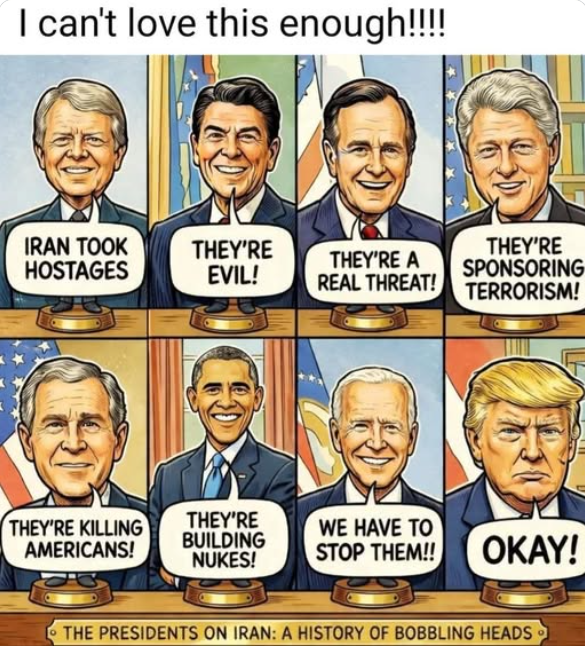 As shown at left, the United States is loaded with people who twist the facts to their liking.



-
Climate Change8 months ago
Guest post: Why China is still building new coal – and when it might stop
-
Greenhouse Gases8 months ago
Guest post: Why China is still building new coal – and when it might stop
-

 Greenhouse Gases2 years ago
嘉宾来稿:满足中国增长的用电需求 光伏加储能“比新建煤电更实惠”
-
Climate Change2 years ago
Bill Discounting Climate Change in Florida’s Energy Policy Awaits DeSantis’ Approval
-

 Climate Change2 years ago
嘉宾来稿:满足中国增长的用电需求 光伏加储能“比新建煤电更实惠”
-
Climate Change Videos2 years ago
The toxic gas flares fuelling Nigeria’s climate change – BBC News
-

 Renewable Energy6 months ago
Sending Progressive Philanthropist George Soros to Prison?
-

 Carbon Footprint2 years ago
US SEC’s Climate Disclosure Rules Spur Renewed Interest in Carbon Credits