

We asked Daniela Kunkel-Linares, our former Senior Youth Coordinator and Libby, our former Youth Environmental Activists! (YEA!) member and Youth Team Intern to reflect on their time in the program and their relationship as they move on to new adventures. They took the opportunity to write letters to each other. The following reflects the power of co-mentorship models in youth work.
I really cannot believe it has been three years since I first logged onto my first YEA meeting. Three years that can be measured in hours on zoom meetings and in the sunny room, or in Alma receipts, or in big giggles and big cries. Three years that have been filled with Youth Climate Justice Summits, wins and disappointments with the Climate Justice Education Bill, a trip to New Orleans, and a lot of learning. So many things come to mind when I think about YEA and what it has meant to me, but I think the thing that has stood out the most to me has been the relationships I have built.
When I started at Climate Generation, Jason and Sarah (former youth staff and mentors/friends to me) introduced me to the idea of co-mentorship. I had never heard about it before but the more I learned, the more I realized it was a model of youth work that I had been practicing.
It is a youth work model that believes that youth and adults can practice relationships of mutuality and reciprocity that counters the dominant narrative that adults have things to teach children and children have things to learn from adults. It allows us to lean into the belief that we all have something to learn from each other, no matter our age.
Co-mentorship and all relationship work is some of the most transformative parts of movement work. White supremacy culture demands shallow and transactive relationships. Mentorship and deep relationships are the antidote to white supremacy and is essential to successful movement work.
As Aurora Levins Morales writes in her GOATED essay The Politic of Childhood, “the oppression of children is the wheel that keeps all other oppressions turning. Without it, misery would have to be imposed afresh on each new generation instead of being passed down like a hereditary illness.”
To combat white supremacy culture we MUST treat our young people differently. We have to encourage, model, and embody relationships that are trusting, mutual, reciprocal, loving, understanding, and filled with gratitude.
Practicing co-mentorship has created some of the most meaningful relationships I have with young people. My relationship with Libby being one of them. Libby and I have gotten to know each other over the last three years. Libby was a youth participant in the YEA program and has been interning with CG this past year. As we both transition to new opportunities we took some time to reflect on what this experience together has meant to us.

Libby’s Letter
Dearest daniela,
Where even to begin! I can’t even picture what my life would be like if I didn’t meet you. The serendipity of our lives intersecting when they did leaves me in awe. Being able to grow alongside you for the past three years has been a great joy in my life that will be forever a part of how I interact with the world every day. When I first met you I was a junior in high school without any idea of what my life would be, just starting to learn what a community could be through YEA! You had just graduated from college and moved out of Redmond. Now I am going to be a sophomore in college moving into Redmond with a lot more of a grasp on who I am but also the endless journey that it is to figure that out; while you are also moving on to the next step in your life, as we both step away from a place that has been so important to us both. There will never be a day that I see Alma, or Redmond, or a yellow bike, or Nolte, or the writing center, or a garden without thinking of you. I have learned so much about how to live a meaningful and rich life just by existing alongside you. You inspire me so much with your care and ability to connect.
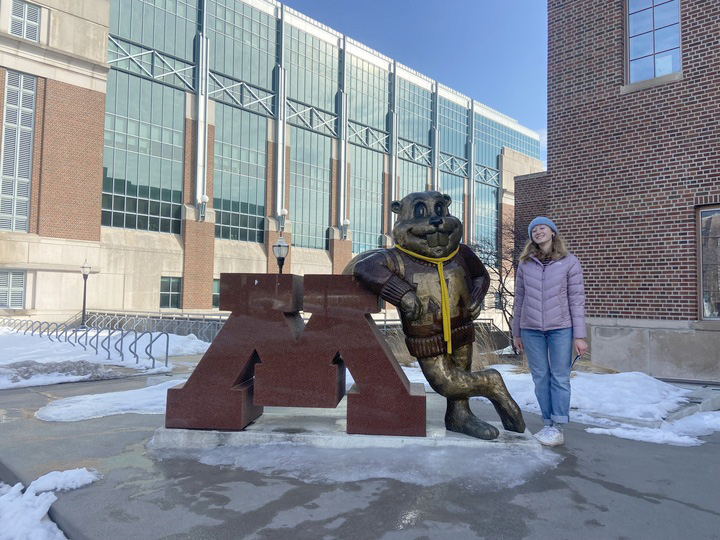
I remember when I was first talking in front of the legislature at the capital. I was so scared. I knew that I could look over and see your kind face smiling back at me, and that gave me the courage to do something so scary. You also were the first person to walk me through campus when I was deciding I would be going to the University of Minnesota. I had never imagined that would be the school I was going to but walking around with you and hearing you talk fondly of your time made me feel okay about it. Without your support I would never have been able to accept that part of college with such open arms.
Also, it is truly amazing how we have been able to be at such different places and yet find so much common ground and be there for each other. Everything feels so full circle and so meant to be. Every Wednesday when I saw you sitting in one of the booths it felt like a weight was lifted. Needless to say I looked forward to it every week. I felt so honored to be able to have that time with you. I truly believe that this past year taught me so much about connection and how important it is to me. It was all the little moments that show how insightful you are and of how you helped me grow as a person. Together we were able to truly reflect and grow and work on becoming better organizers and more forgiving people. The vulnerability we shared while interrogating whiteness, taught me that tough conversations can be the most important ones, and people are imperfect, and it is okay to be imperfect. I deeply connected with doing the next best thing and learned to allow perfectionism to fall at the wayside and to lean into what is truly important to me.
I think it is most telling that all the people in my life know about daniela. My gratitude goes beyond anything that I could write down in a letter. You truly have been the older sister I never had, and I will always hold that love with me. I am wishing you all the best in your next adventure. I am so proud of you and so excited for you! And I will miss you endlessly.
All my love,
Libby
Daniela’s Letter
Libby!
Can you believe that it’s been three years! I can’t! Time has moved both so fast and so slow over these years. So much has changed and also stayed the same. It’s funny to think about how things in life feel cyclical. When we met I was just finishing up at the U, living on University ave, and obsessed with Alma. And now, here you are! About to start year two at the U, living on University ave, and obsessed with Alma. I am so proud of you and all the ways I have watched you move into deeper alignment with yourself, your values, and your community over the last three years.
I so vividly remember meeting you IRL for the first time at the youth strike. It was pouring rain, I was nervous to meet you all, and the staff at the capital were giving us such a hard time about the sound. The day was hectic and exciting and I remember you being so immediately open to trusting me to support you. I feel so grateful for that moment because it helped me lean into my new role.
I also remember the conflict that happened that day with another organizer. I remember there were a couple YEA meetings you missed and wondering if everything was okay. When we connected about that experience, I was so honored to have gotten to hear your insightful reflection. You talked so much about ego in a way that reminded me of the deeply personal work that being in community asks of us. It was so clear to me that you were wanting to do that work, and that is something so incredible about you. You know so intuitively what it takes to be in community and you are so open, so adaptive to feedback, and so caring to yourself in how you do that work.
I am so grateful for all the things that we have gotten to do together! Several Youth Climate Justice Summits, a lot of time on Zoom and in the sunny room, going to New Orleans, and of course so much Alma time! I am so grateful that my time at YEA has been consistently filled with time and experiences, and learnings with you. We have both grown so much, it’s been so meaningful to reflect together on that. I think it is so incredible how much we have been able to connect with each other.
We have explored co-mentorship through our time as a youth participant and a youth mentor, and as co-workers, and now as we transition to a non-work friendship! We have found ourselves, at each iteration, grounded in a relationship of reciprocity, gratitude, and mutuality. The transition from you being in the program to being alumni was definitely one that I was unsure about. I was unsure how we would shift to different boundaries, different needs, and different experiences.

And it has been so incredible. This year, being able to talk so vulnerably about whiteness, organizing, and solidarity together. I know we were only able to talk about those things so openly because of the scaffolding we had built over the previous two years. I learned so much from you about meeting people we love in our lives with curiosity and encouragement. I am constantly reminded by you that it is okay to wear my heart on my sleeve. I have learned so much from you about building real trust with each other. There were so many moments of honesty and care that were such reminders to me that trust is built over time. It is made of many moments of showing up consistently, sharing joy, and learning about each other’s lives. I am so grateful to you for that reminder.
Libby, I am so excited for us both as we move to new things, and I can’t believe it’s the end of both of our times in YEA. I will miss you and YEA so much. I knew going into youth work that the thing that was most meaningful to me was the relationships I would get to build with young people. I am so grateful for this friendship. I can’t wait for the next time we find ourselves at Alma again! Thank you for everything!
<3 daniela
The post Letters to my co-mentor: reflections on building meaningful relationships in a scary world appeared first on Climate Generation.
Letters to my co-mentor: reflections on building meaningful relationships in a scary world

The industry group pays politicians to convince voters that natural gas is the “most affordable and reliable energy source.”
PHILADELPHIA—Sitting on a dais at the private Fitler Club for what was billed as a discussion about “the Path to a Clean Energy Future,” former Philadelphia Mayor Michael Nutter played to his audience.
Lawmakers failed to bring back formal public hearings in electric rate cases and constrained state environmental regulators. But citizen opposition helped kill a move to end PSC elections.
MONTGOMERY, Ala.—Despite setbacks and some significant legislative defeats, Alabama environmentalists’ biggest takeaway from the 2026 legislative session is that growing citizen opposition to weak regulation and high energy prices has put real pressure on elected officials and begun to change the political landscape, slowly but surely.
As the Alabama Legislature Adjourns, Environmentalists See a Silver Lining
Climate Change
After a Slow Start on Climate, Zohran Mamdani Faces Scrutiny Over Parks Budget and Environmental Promises
Climate-conscious New Yorkers hope the mayor hasn’t forgotten them.
During his New York City mayoral campaign, Zohran Mamdani courted votes from environmentalists. He promised to expand green spaces in public schools and equip them with renewable energy, to meet the demands of the city’s building electrification laws and to increase investments in city parks.


-
Climate Change8 months ago
Guest post: Why China is still building new coal – and when it might stop
-
Greenhouse Gases8 months ago
Guest post: Why China is still building new coal – and when it might stop
-

 Greenhouse Gases2 years ago
嘉宾来稿:满足中国增长的用电需求 光伏加储能“比新建煤电更实惠”
-
Climate Change2 years ago
Bill Discounting Climate Change in Florida’s Energy Policy Awaits DeSantis’ Approval
-

 Climate Change2 years ago
嘉宾来稿:满足中国增长的用电需求 光伏加储能“比新建煤电更实惠”
-
Climate Change Videos2 years ago
The toxic gas flares fuelling Nigeria’s climate change – BBC News
-

 Renewable Energy6 months ago
Sending Progressive Philanthropist George Soros to Prison?
-

 Carbon Footprint2 years ago
US SEC’s Climate Disclosure Rules Spur Renewed Interest in Carbon Credits