
Renewable Energy
German Bird Study Finds 99% Avoid Turbines, SunZia Progress
Weather Guard Lightning Tech

German Bird Study Finds 99% Avoid Turbines, SunZia Progress
Allen, Joel, Rosemary, and Yolanda discuss a German study finding 99.8% of birds avoid wind turbines, challenging long-standing collision risk models. They also cover Pattern Energy’s SunZia project nearing completion as the Western Hemisphere’s largest renewable project, lightning monitoring strategies for large-scale wind farms, and offshore flange alignment technology.
Register for Wind Energy O&M Australia 2026!
Learn more about CICNDT
Download the latest issue of PES Wind Magazine
Sign up now for Uptime Tech News, our weekly email update on all things wind technology. This episode is sponsored by Weather Guard Lightning Tech. Learn more about Weather Guard’s StrikeTape Wind Turbine LPS retrofit. Follow the show on Facebook, YouTube, Twitter, Linkedin and visit Weather Guard on the web. And subscribe to Rosemary Barnes’ YouTube channel here. Have a question we can answer on the show? Email us!
You are listening to the Uptime Wind Energy Podcast brought to you by build turbines.com. Learn, train, and be a part of the Clean Energy Revolution. Visit build turbines.com today. Now, here’s your host. Alan Hall, Joel Saxon, Phil Totaro, and Rosemary Barnes.
Allen Hall: Welcome to the Uptime Wind Energy Podcast. I’m your host Alan Hall in the queen city of Charlotte, North Carolina, where a cold front is just blown through, but we’re not nearly as cold as Joel was up in Wisconsin, Joel, you had a bunch of snow, which is really the first big storm of the season.
Joel Saxum: Yeah, the crazy thing here was the Wind Energy Podcast. So since that storm I, we, we got up in northern Wisconsin, 18 inches of snow, and then we drove down on last Saturday after US Thanksgiving through Iowa, there’s another 18 inches of snow in Des Moines. I talked to a more than one operator that had icing and snow issues at their wind farms all through the northern Midwest of these states.
So from [00:01:00] North Dakota. All the way down to Nebraska, Northern Missouri, over into Indiana. There was a ton of turbines that were iced up and or snowed in from that storm,
Allen Hall: and Rosemary was in warm Australia with other icing knowledge or de-icing knowledge while the US has been suffering.
Rosemary Barnes: But you know, on the first day of summer here, a couple of days ago, it was minus one here overnight.
So. Um, yeah, it’s, uh, unseasonable and then tomorrow it’ll be 35.
Allen Hall: The smartest one of us all has been Yolanda, down in Austin, Texas, where it doesn’t get cold.
Yolanda Padron: Never. It’s so nice. It’s raining today and that’s about it. Traffic’s going crazy.
Joel Saxum: Rain is welcome for us, isn’t it though, Yolanda?
Yolanda Padron: It’s sweet. It doesn’t happen very often, but when it does.
Very rainy for like 24 hours.
Allen Hall: We’ve been saving a story for a couple of weeks until Rosemary is back and it has to do with birds and a year long study over [00:02:00] in Germany. And as we know, one of the most persistent arguments against wind energy has been the risk to birds and permitting and operation shutdowns have been the norm, uh, based on models and predicted collision risks.
Well. A new study comes, has just come out that says, what if the models are all wrong? And the new German study suggests that they may be wrong. The Federal Association of Offshore Wind Energy, known by its German acronym, BWO Commission Research to examine. Actual collision risk at a coastal wind farm in Northern Germany.
The study was conducted by Biocon Consult, a German research and consulting firm, and funded by eight major offshore wind operators, including Sted, Vattenfall, RWE, and E, roa, and. Rosemary using some of the newer technology. They were able to track bird movements with radar [00:03:00] and AI and stereo vision cameras to, to watch birds move through and around, uh, some of these wind farms.
And it analyzed more than 4 million bird movements and over 18 months, and they searched for collision victims and what they found was pretty striking more than 99.8% of both day migrating and night migrating birds. Avoided the turbines entirely. The study found no correlation between migration intensity and collision rates.
And BD and BWO says The combination of radar and AI based cameras represents a methodological breakthrough. Uh, that can keep turbines moving even when birds are in transit. This is pretty shocking news, honestly, Rosemary, I, I haven’t seen a lot of long-term studies about bird movements where they really had a lot of technology involved to, besides binoculars, to, to look at bird movement.
The [00:04:00] 99.8% of the migrating birds are going around The turbines. No, the turbines are there. That’s. Really new information.
Rosemary Barnes: I think. I mean, if you never heard anything about wind turbines and birds, I don’t think you’d be shocked like that. Birds mostly fly around obstacles. That’s probably an intuitive, intuitive answer.
Because we’ve had it shoved down our throat for decades now. Wind turbines are huge bird killers. It’s kind of like, it’s been repeated so often that it kind of like sinks in and becomes instinctive, even though, yeah, I do think that, um, it’s. Not that, that shocking that an animal with eyes avoids a big obstacle when it’s flying.
Um, but it is really good that somebody has actually done more than just trying to look for bird deaths. You know, they’ve actually gone out, seen what can we find, and then reported that they found mostly nothing. We already knew the real risks for birds, like hundreds or thousands, even millions of times [00:05:00] more, um, deadly to birds are things like.
Cats. Cars, buildings, even power lines kill more birds than, um, wind turbines do. In fact, like when you look at, um, the studies that look at wind, um, bird deaths from wind turbines, most of those are from people driving, like workers driving to site and hitting a bird with their cars. Um, you know, that’s attributed to wind energy.
Not a surprise maybe for people that have been following very closely, but good to see the report. Nonetheless.
Joel Saxum: I think it’s a win for like the global wind industry, to be honest with you, because like you said, there’s, there’s no, um, like real studies of this with, that’s backed up by metric data with, like I said, like the use stereo cameras.
Radar based AI detection and, and some of those things, like if you talk with some ornithologists for the big OEMs and stuff, they’ve been dabbling in those things. Like I dabbled in a project without a DTU, uh, a while back and it, but it wasn’t large scale done like this. A [00:06:00] particular win this study in the United States is there’s been this battle in the United States about what birds and what, you know, raptors or these things are controlled or should have, um, controls over them by the governments for wind installations.
The big one right now is US Fish and Wildlife Service, uh, controls raptors, right? So that’s your eagle’s, owls, hawks, those kind of things. So they’ll map out the nests and you can only go in certain areas, uh, or build in certain areas depending on when their mating seasons are. And they put mild buffers on some of them.
It’s pretty crazy. Um, but the one rule in the United States, it’s been kind of floated out there, like, we’re gonna throw this in your face, wind industry. Is the Federal Migratory Bird Act, which is also how they regulate all like the, the hunting seasons. So it’s not, it’s the reason that the migratory birds are controlled by the federal government as opposed to state governments is because they cross state lines.
And if we can [00:07:00] prove now via this study that wind farms are not affecting these migratory bird patterns or causing deaths, then it keeps the feds out of our, you know, out of the permitting process for. For birds,
Rosemary Barnes: but I’m not sure this is really gonna change that much in terms of the environmental approvals that you need to do because it’s a, you know, a general, a general thing with a general, um, statistical population doesn’t look at a specific wind farm with a specific bird and you’re still need to go.
You’re still going to have to need to look at that every time you’re planning an actual wind farm. That’s it’s fair.
Yolanda Padron: And it’s funny sometimes how people choose what they care or don’t care about. I know living in a high rise, birds will hit the window like a few a month. And obviously they will pass away from impact and the building’s not going anywhere.
Just like a turbine’s not going anywhere. And I’ve never had anybody complain to [00:08:00] me about living and condoning high rises because of how they kill the birds. And I’ve had people complain to me about wind turbines killing the birds. It’s like, well, they’re just there.
Joel Saxum: If we’re, if we’re talking about energy production, the, if everybody remembers the deep water horizon oil spill 2010 in the Gulf of Mexico.
That oil spill killed between 801.2 million birds. Just that one.
Speaker 6: Australia’s wind farms are growing fast, but are your operations keeping up? Join us February 17th and 18th at Melbourne’s Poolman on the park for Wind energy o and M Australia 2026, where you’ll connect with the experts solving real problems in maintenance asset management.
And OEM relations. Walk away with practical strategies to cut costs and boost uptime that you can use the moment you’re back on site. Register now at W om a 2020 six.com. Wind Energy o and m Australia [00:09:00] is created by wind professionals for wind professionals because this industry needs solutions, not speeches
Allen Hall: well in the high desert of Central New Mexico, near a lot of what were ghost towns that were abandoned during the Great Depression.
If there is a flurry of activity pattern, energy sunzi, a project is near completion after 20 years of planning and permitting. When. It’s supposed to be finished in 2026. It’ll be the largest renewable energy project in the Western hemisphere. More than 900 turbines spread across multiple counties. A 550 mile transmission line stretching to Arizona and then onward to California, and $11 billion bet that’s being made on American wind.
Now, Joel, it’s a kind of a combination of two OEMs there, Vestus and ge. The pace of building has been really rapid over the last six, eight months from what I can [00:10:00] tell.
Joel Saxum: Yeah. We have talked to multiple ISPs, EPC contractors. Um, of course we know some of the engineers involved in building a thing on the pattern side.
Right. But this sheer size of this thing, right, it’s, it is three and a half gigawatts, right? You’re talking 900 turbines and, and so big that one OEM really couldn’t, I mean, it’s a, it’s a risk hedge, right? But couldn’t fulfill the order. So you have massive ge tur set of turbines out there. Massive set of vestas turbines out there.
And I think one thing that’s not to be missed on this project as well is that transmission line, that high voltage transmission line that’s feeding this thing. Because that’s what we need, right? That was when we built, started building up big time in Texas, the cre, the crest lines that were built to bring all of that wind energy to the major cities in Texas.
That was a huge part of it. And we have seen over the last six months, we have seen loans canceled, uh, permits being pulled and like troubles being in hurdles, being thrown up in the face of a lot of these transmission lines that are planned. [00:11:00] These big ones in the states. And that’s what we need for energy security in the future, is these big transmission lines to go.
So we can get some of this generation to, uh, to the market, get electrons flowing into homes and into industry. But this thing here, man, um, I know we’ve been talking about Sunz, the Sunz project, uh, and all the people involved in it, in the wind industry for a, what, two, three years now? Oh, at least. Yeah.
It’s been in planning and development stage for much longer than that. But the. The, the big bet. I like it. Um, bringing a lot of, um, bringing a lot of economic opportunity to New Mexico, right? A place that, uh, if you’ve driven across New Mexico lately, it needs it in a dire way. Uh, and this is how wind energy can bring a lot of, uh, economic boom to places that, uh, hadn’t had it in the past.
Allen Hall: And this being the largest project to date, there’s a, I think a couple more than a pipeline that could be larger if they get moving on them. We see another project like this five years [00:12:00] from now, or we think we’re gonna scale down and stay in the gigawatt range just because of the scale and the things that Sunzi went through.
Joel Saxum: We have the choke chair, Sierra Madre project up in Wyoming that’s been chugging the Anschutz Corporation’s been pushing that thing for a long time. That’s, that’s along the same size of this unit. Um, and it’s the same thing. It’s, it’s kind of hinged on, I mean, there’s permitting issues, but it’s hinged on a transmission line being built.
I think that one’s like 700. 50 miles of transmission. That’s supposed to be, it’s like Wyoming all the way down to Las Vegas. That project is sitting out there. Um, it’s hard to build something of that size in, like say the wind corridor, the Texas, Oklahoma, uh, you know, all the way up to the Dakotas, just simply because of the massive amount of landowners and public agencies involved in those things.
It’s a bit easier when you get out West New Mexico. Um, I could see something like this happening possibly in Nevada. At some point in time to feed that California [00:13:00] side of things, right? But they’re doing massive solar farms out there. Same kind of concept. Um, I, I think that, um, I would love to see something like this happen, but to invest that kind of capital, you’ve got to have some kind of ITC credits going for you.
Um, otherwise, I mean, $11 billion is, that’s a lot of money
Allen Hall: since Zia will have PTC. Which is a huge driver about the economics for the entire project.
Joel Saxum: Yeah. But you’re also seeing at the same time, just because of the volatility of what’s happening in the states wind wise, uh, there was a big article out today of someone who got wind that EDF may be selling its entire
Allen Hall: US onshore renewable operation or US renewable operation.
That was Wood Mac that. Put that out. And I’m still not sure that’s a hundred percent reliable, but they have been 50% for sale for a while. Everybody, I think everybody knew that.
Joel Saxum: Yeah. I don’t know if it’s a hundred percent reliable as well. I would agree with you there. However, there’s, it’s the [00:14:00] same thought process of European company pulling outta the United States.
That’s where a lot of the renewable energy capital is, or it has been fed to a lot of that capital comes from Canada and other places too. Right. But that’s where it’s been fed through. Um, but you’re starting to see some, some. Uh, purchasing some acquisitions, a little bit of selling and buying here and there.
I don’t, I don’t think that there’s, uh, massive ones on the horizon. That’s just my opinion though.
Allen Hall: Well, won’t the massive ones be offshore if we ever get back to it?
Joel Saxum: Yeah, you would think so, right? But I, that’s gonna take a, uh, an administration change. I mean the, the, all that stuff you’d see out in California, like when we were originally seeing the leases come out and we were like, oh, great.
More offshore opportunity. Ah, but it’s California, so it’ll be kind of tough. It probably won’t be till 20 32, 20, something like that. I don’t think we’ll see possibly California offshore wind until 2040 if we’re lucky.
Allen Hall: Joel, what were the two wind turbines selected for Sunz? They were both new models, right?
One from Renova and then the other one from [00:15:00] Vestas,
Joel Saxum: so the Vestas was 242 V, 1 63, 4 0.5 megawatts machines, and the, and the GE Renova. Just so we get, make sure I get clarity on this. 674 of its three. They were 3.6, but they’re 3.61 50 fours.
Allen Hall: Okay. So both turbine types are relatively new. New to the manufacturer.
CZ has two new turbines styles on the site.
Joel Saxum: Yeah, we were told that when they were originally like getting delivered, that they didn’t have type certificates yet. That’s how new they were.
Allen Hall: So Yolanda. As Sania starts to turn on, what are things that they need to be aware of blade wise,
Yolanda Padron: besides the lightning and the dust in New Mexico?
It’s probably gonna tip them. I don’t know exactly what they’re counting with as far as leading edge protection goes.
Allen Hall: Pattern usually doesn’t, uh, have a full service agreement. Joel, do you remember if that was an FSA? I don’t think so.
Joel Saxum: I would say [00:16:00] because those are Vestas turbines on the one that, yes, Vestas really doesn’t sell a turbine without it.
Knowing internally how big patterns engineering group are, I don’t know if they can completely take on the operations of a thousand more turbine, 900 more turbines overnight. Right? So I think that there is gonna be some OE EMM involvement in these things, uh, simply to be at that scale as well. I don’t know of anywhere else with a 1 54 install a GE 1 54.
So the things that I wouldn’t looking out is the. It’s the brand new type stuff, right? Like do internal inspections when they’re on the ground. You don’t know what kind of condition these things are in, what, you know, what is the, you haven’t, nobody’s seen them. Like you’re the first ones to get to get your hands on these things.
Yolanda Padron: Yeah, I think they’re definitely gonna have to go with some sort of consulting or something externally as far as what exactly they’re dealing with. I know, Rosemary, you’ve touched on it a lot, right about. [00:17:00] How the changing the blade types and changing the turbines every x amount of years is really not conducive to, to being able to repeat the same results.
And if you’re having that for hundreds of turbines at a new site that you’ve already had so much time and money invested in creating, it’ll, it’s, it’s a big undertaking.
Rosemary Barnes: It’s really interesting because. When you have such a large wind farm be, I’m assuming one of the first wind farms may be the first to get this new turbine types, then if there’s a serial defect, it’s gonna be very obvious.
’cause with smaller wind farms, one of the problems is that, uh, the numbers are too small to definitively say whether something is, um, serial or just random bad luck. Um, but when you get. So how many wind turbines is it?
Joel Saxum: Almost a thousand total. It’s [00:18:00] 674 GE turbines and 242 Vesta turbines.
Rosemary Barnes: You can do statistics on that kind of a population and this area.
I mean, there’s lightning there, right? Like this is not an area where you’re not gonna see lightning. You know, in know the first couple of years, like there, there will be. Hundreds of turbines damaged by lightning in the, the first couple of years I would suggest, um, or, you know, maybe not. Maybe the LPS are so, so great that that doesn’t happen.
But, you know, the typical standard of LPS would mean that, you know, even if you only see, say we see 10 strikes per turbine to year and you get a 2% damage rate, that is, you know, lots of, lots of individual instances of blade damage, even if everything works as it should according to certification. And if it doesn’t, if you see a 10% damage rate or something from those strikes, then you are going to know that, you know, the, um, LPS is not performing the way that the standard says that it should.
It’s not like that’s a slam dunk for, um, [00:19:00] proving that the design was not sufficient or the certification wasn’t correct. It’s always really, really tricky. My recommendation would be to make sure that you are monitoring the lightning strikes, so you know exactly which turbine is struck and when, and then go inspect them and see the damage.
Ideally, you’re also gonna be measuring some of the characteristics of the lightning as well. But you do that from day one. Then if there is a problem, then you’re at least gonna have enough information within the, um, you know, the serial defect liability period to be able to do something about it.
Joel Saxum: Let me ask you a question on that, on just the, that lightning monitoring piece then.
So this is something that’s just, it’s of course we do this all the time, but this is boiling up in the thing. How do you, how do you monitor for lightning on 916 turbines? Probably spread, spread across. 200 square miles.
Rosemary Barnes: Well, there’s, there’s heaps of different ways that you can do it. Um, so I mean, you can do remote, remote lightning detection, which is [00:20:00] not good enough.
Then there are a range of different technologies that you can install in the, um, turbines. Um, the most simple and longest standing solution was a lightning cart, which is installed on the down conductor at the blade route. That will just tell you the amplitude of the biggest strike that that turbine has ever seen when it’s red.
I have literally never seen a case where the lightning card definitively or even provided useful evidence one way or another when there’s a, a dispute about lightning. So then you move on to solutions that, uh, um. Measuring they use, uh, Alan, you’re the electrical engineer, but they, they use the, the principle that when there’s a large current flowing, then it also induces a magnetic field.
And then you can use that to make a, a, a change and read characteristics about it. So you can tell, um, well first of all, that that turbine was definitely struck. So there are simple systems that can do that quite cheaply. The OGs ping [00:21:00] sensor, does that really cost effectively? Um, and then OG Ping. Phoenix Contact and Polytech all have a different product.
Um, all have their own products that can tell you the charge, the duration, the um, polarity or the, yeah, the, the, if it’s a positive or a negative strike, um, yeah, rise time, things like that. Um, about the strike, that’s probably, probably, you don’t. Need to go to that extent. Um, I would say just knowing definitively which turbine was struck and when is gonna give you what you need to be able to establish what kind of a problem or if you have a problem and what kind of a problem it is.
Joel Saxum: I think that like an important one there too is like, uh, so I know that Vest is in a lot of their FSA contracts will say if it’s struck by lightning, we have 48 or 72 hours to inspect it. Right. And when you’re talking something of this scale, 916 turbines out there, like if there’s a lightning storm, like [00:22:00]we’ve been watching, we watch a lot of lightning storms come through, uh, certain wind farms that we’re working with.
And you see 20, 30, 40 turbines get struck. Now if a storm comes through the middle of this wind farm, you’re gonna have 200 turbines get struck. How in the hell do you go out without ha Like you need to have something that can narrow you down to exactly the turbines that we’re struck. That being said that next morning or over the next two days, you need to deploy like 10 people in trucks to drive around and go look at these things.
That’s gonna be a massive problem. Pattern has about 3000 turbines, I think in their portfolio, and they, so they’re, they’re familiar with lightning issues and how things happen, but something at this scale when it’s just like so peaky, right? ’cause a storm isn’t through every night, so you don’t have that need to go and inspect things.
But when you do. That is gonna be a massive undertaking. ’cause you gotta get people out there to literally like, at a minimum, binocular these things to make sure there isn’t any damage on ’em. And it’s gonna be, there’s gonna be storms where hundreds of turbines get hit.
Rosemary Barnes: Yeah, well [00:23:00] those three companies, those three products that I mentioned are aiming to get around that.
I mean, it will depend how contracts are worded. I know in Australia it is not the norm to check for lightning ever. So if the contract says someone has to, you know, use human eyeballs to verify lightning damage or not, then. That’s, you know, that’s what has to happen. But all of these technologies do aim to offer a way that you wouldn’t have to inspect every single one.
So Polytech is using, um, different lightning characteristics and then they’ve got an algorithm which they say will learn, um, which types of strike cause damage that could. Potentially progress to catastrophic damage. Um, and then the other one that is interesting is the eLog Ping solution because they’ve also got the, um, damage monitoring.
That’s their original aim of their product, was that if there’s a damage on the blade tip, say it’s been punctured by lightning, it, it actually makes a noise. Like it makes a whistle and they listen out for that. So if you combine the [00:24:00]lightning detection and the, um, like blade. Tip structure monitoring from Ping, then you can get a good idea of which ones are damaged.
Like if it’s damaged badly enough to fail, it is almost certainly gonna be making a noise that the ping can, um, detect
Allen Hall: as wind energy professionals. Staying informed is crucial, and let’s face it, d. That’s why the Uptime podcast recommends PES Wind Magazine. PES Wind offers a diverse range of in-depth articles and expert insights that dive into the most pressing issues facing our energy future.
Whether you’re an industry veteran or new to wind, PES Wind has the high quality content you need. Don’t miss out. Visit PE ps win.com today and this quarter’s PES WIN Magazine. There’s a lot of great articles, and as we roll into December. You’ll have time to sit down and read them. You can download a free copy@pswin.com.
And there’s a, a really interesting article about [00:25:00] offshore, and there’s a number of articles about offshore this quarter. Well, two Dutch companies developed a solution to really one of the industry’s most persistent headaches. And when it’s flange alignment. So when you’re trying to connect the transition piece to the mono paddle out in the water, it’s not really easy to do.
Uh. So PES interviewed, uh, Ontech and Dutch heavy lift consultants to explain their flange alignment system known as FAS. And it started when a turbine installation needed a safer, faster way to try to align these two pieces. So if you can think about the amount of steel we’re talking about, these are really massive pieces you’re trying to line and put bolts in, not easy to do out in the ocean.
Uh, so what this new device can do is it can align the flanges in a couple of minutes. It can reshape deformed, flanges and Joel, as you know, everything offshore can get dinged warped. That’s pretty easy to do, so you don’t want that when you have a, a heavily loaded, bolted joint, like those flanges to be [00:26:00] perfectly, uh, smooth to one another and, and tight.
So these two companies, Amek and Dutch heavy Lifting consultants have come up with some pretty cool technology to speed up. Installations of wind turbines.
Joel Saxum: Yeah, I would say anybody who’s interested in wind, offshore wind, any of that sort, and you have a little bit of an engineering mind or an engineering, uh, quirk in your mind.
As, as I think we said earlier in the episode today, engineering nerds. Um, I would encourage you to go and look at some heavy lift operations offshore, whether it is offshore wind, offshore oil and gas, offshore construction of any time or any type even pipe lay operations and stuff. Just to take, just to take in the, the sheer scale.
At how, uh, at how these things are being done and how difficult that would be to manage. Think about the just tons and tons of steel and, uh, trying to put these pieces together and these different things. And then remember that these vessels are thousands of dollars, sometimes a minute for how specialized they are.
Right? So a lot of money gets put into [00:27:00] how the, like when we’re putting monopiles in that these transit transition pieces get put on. A lot of money has been spent on. The ver like technology to get, make sure they’re super, super tight tolerances on the verticality of those when they’re driving the actual piles in.
And then you’re doing that offshore in a nasty environment, sometimes from a jack up vessel, sometimes not from a jack vessel, sometimes from a mor or like a, you know, a pseudo mor vessel on, uh. Dynamic positioning systems, and then you’re swinging these big things with cranes and all this stuff, like, it’s just a crazy amount of engineering eng engineering and operational knowledge that goes into making this stuff happen.
And if you make one little mistake, all of a sudden that piece can be useless. Right? Like I’ve been a part of, of heavy offshore lifting for oil and gas where they’ve. It’s built a piece on shore, got it out to the vessel, went to go put it off sub sea in 2000 meters of water, lowered it all the way down there and it didn’t fit like you just burned [00:28:00] hundreds and hundreds and thousands of millions of dollars in time.
So this kind of technology that Anima Tech is putting out in Dutch Heavy Lift consultants. This is the key to making sure that these offshore operations go well. So kudos to these guys for solve for seeing a problem and solving a problem with a real solution. Uh, instead of just kind of like dreaming things up, making something happen here.
I’d like to see it.
Allen Hall: Check out that article and many more in this quarter’s. PES Wind Magazine downloaded free copy@pswind.com. Well, Yolanda, as we know, everybody’s out with Sky Specs, uh, doing blade inspections, and so many turbines have issues this year. A lot of hail damage, a lot of lightning damage and some serial defects from what I can tell.
Uh, we’re, we’re getting to that crazy season where we’re trying to get ready for next year and prioritize. This is the time to call C-I-C-N-D-T and actually take a deep hard look at some of this damage, particularly at the blade root area. We’ve seen a lot more of that where, [00:29:00] uh, there’s been failures of some blades at the root where the bolt connection is.
So you’re gonna have to get some NDT done. Boy, oh boy, you better get C-I-C-N-D-T booked up or get them on the phone because they’re getting really busy.
Yolanda Padron: Yeah, you definitely need to schedule something. Make sure that you know at least where you stand, right? Be because imagine going into try to fix something and just have a hammer and then close your eyes and then see what you can fix.
That way, like sometimes it feels like when you’re in operations, if you don’t have the proper. The proper inspections done, which sometimes there’s, there’s not enough budget for, or appetite or knowledge, um, in some of these projects to have early on. You come in and just, you, you see the end result of failure modes and you might see something that’s really, really expensive to fix now.
Or you might think of, oh, this problem happened at X, Y, Z. [00:30:00] Site, so it’ll probably happen here. That’s not necessarily the case. So getting someone like NDT to be able to come in and actually tell you this is what’s going on in your site, and these are the potential failure modes that you’re going to see based on what you’re getting and this is what will probably happen, or this is what is happening over time in your site, is a lot more indicative to be able to solve those problems faster and way.
More way, in a way less expensive manner than if you were to go in and just try to fix everything reactively. You know, if you have half a bond line missing. Then later you, your blade breaks. It’s like, well, I mean, you, you could, you could have seen it, you could have prevented it. You could have saved that blade and saved yourself millions and millions of dollars and, and so much more money in downtime.
Joel Saxum: Yeah. The first time I ran into Jeremy Hess and the C-A-C-N-D team was actually on an insurance project where it was Yolanda, like you said, like [00:31:00] they let it go. The, the operator and the OEM let it go way too long, and all of a sudden they had a, like wind farm wide shutdown costing them millions in production.
Uh, to find these, these issues that, uh, could have been found in a different manner when you talk to the team over there. Um, why we like to recommend them from the podcast is Jeremy has an answer for everything. He’s been around the world. He’s worked in multiple industries, aerospace, race, cars, sailboats, you name it.
Um, he’s been a client to almost everybody, you know, in the wind industry, all the OEMs, right? So he knows the, the issues. He has the right tool sets. To dive into them. You, you may not know, not, you don’t need to be an NDT expert to be able to have a conversation because he will coach you through, okay, here you have this problem.
Alright, this is how we would look at it. This is how we would solve it. Here’s how you would monitor for it, and then this is how you would, you know, possibly fix it. Or this is what the, the solution looks like. Um, because I think that’s one of the [00:32:00] hurdles to the industry with NDT projects is people just don’t.
Know what’s available, what’s out there, what they can see, what they, you know, the issues that they might be able to uncover, like you said, Yolanda. So, um, we encourage, um, anybody that says, Hey, do you know anybody in NDT? Yeah, it’s Jeremy Hanks and the C-I-C-N-D-T team. Call ’em up. They’ve got the solutions, they’ll help you out.
Allen Hall: That wraps up another episode of the Uptime Wind Energy Podcast. If today’s discussion sparked any questions or ideas, we’d love to hear from you. Just reach out to us on LinkedIn and don’t forget to subscribe so you never miss an episode. And if you found value in today’s conversation, please leave us a review.
It really helps other wind energy professionals discover the show and we’ll catch you next week on the Uptime Wind Energy [00:33:00] Podcast.
Renewable Energy
Letting the Market Decide
Almost all respondents on social media were enthusiastic about banning the garb at left.
Two points:
1) I’m thrilled to live in a country that protects its people’s freedom of expression. As an older American, I’m not crazy about massive tattoos, face-piercings, and young guys walking around with their pants worn down around their knees, but I’m a real fan of the United States Constitution.
The author of the meme might want to take a peek. It’s a good read.
2) What actually works on a societal basis, and what no one can regulate, is public acceptance or rejection. You’re free to wear extreme forms of the hijab, or claim that the Holocaust was a hoax, or believe that the Earth is flat, or tell your neighbors that the 2020 presidential election was rigged, that you, with no training in science, think climate change is a hoax, or that vaccines are often lethal.
However, you’ll pay a stiff price in terms of acceptance into refined society. Want to get a high-level job or join a country club dressed like that? Do you think that spouting off the gibberish of uneducated MAGA slobs in the workplace will advance your career?
Good luck.
Renewable Energy
How Many Stand Behind Donald Trump?
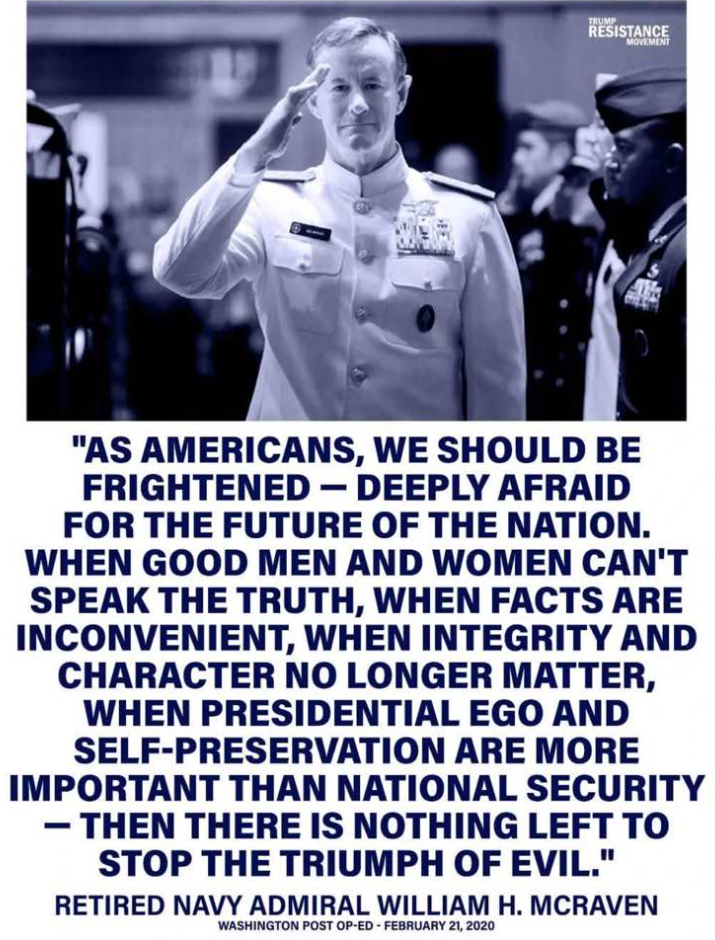
Easy. It’s 36% in the United States, and somewhere around 15% in the rest of the developed world. It’s slim, and it’s disintegrating fast.
The world isn’t in great shape right now, but most human beings are good people, and they abhor the crimes and the constant barrage of crimes. It’s really no more complicated than that.
-
Climate Change4 months ago
Guest post: Why China is still building new coal – and when it might stop
-
Greenhouse Gases4 months ago
Guest post: Why China is still building new coal – and when it might stop
-
Climate Change2 years ago
Spanish-language misinformation on renewable energy spreads online, report shows
-
Greenhouse Gases2 years ago嘉宾来稿:满足中国增长的用电需求 光伏加储能“比新建煤电更实惠”
-
Climate Change Videos2 years ago
The toxic gas flares fuelling Nigeria’s climate change – BBC News
-
Climate Change2 years ago嘉宾来稿:满足中国增长的用电需求 光伏加储能“比新建煤电更实惠”
-
Carbon Footprint2 years agoUS SEC’s Climate Disclosure Rules Spur Renewed Interest in Carbon Credits
-

Climate Change2 years ago
Why airlines are perfect targets for anti-greenwashing legal action