

Whatever oil and gas companies would have you believe, fossil gas has no useful role to play in the energy transition. In fact it’s dirty, expensive, and unnecessary
Renewables are not only better for the climate, they are cheaper and create more jobs. Pursuing the concept of a ‘gas-led recovery’ would deliver economic as well as environmental ruin.
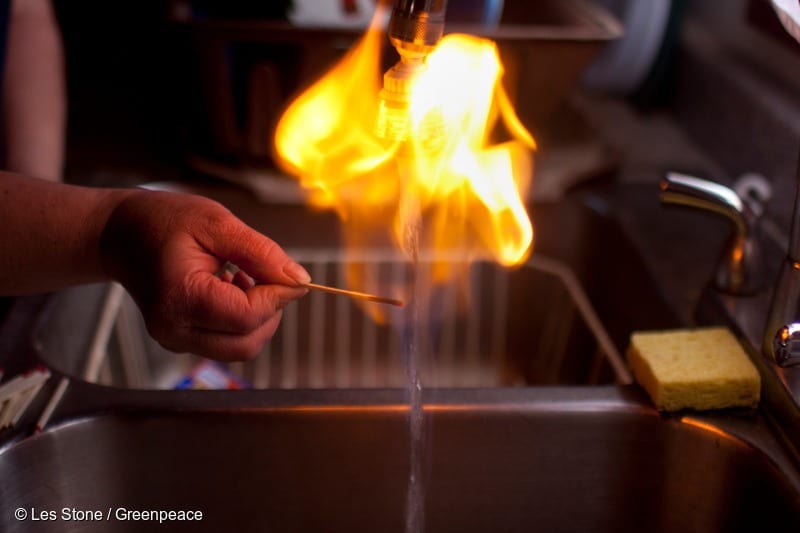
6 reasons gas is bad for the climate and the economy
- Burning known global oil and gas reserves, even without coal, would make limiting temperature rise to 1.5°C impossible: Burning existing proven and probable gas reserves alone would lead to 173 gigatonnes of greenhouse gas emissions, nearly half of the remaining post-2015 carbon budget for remaining below 1.5°C with 50% probability. In fact to meet the IPCC’s most realistic pathway to 1.5°C would require a reduction of not less than 39% in fossil gas consumption between 2018 and 2030.
- Gas may be as polluting as coal: Taking into account the greenhouse gas emissions associated with extracting, producing, and transporting gas to consumers, scientists are now concluding that across the entire lifecycle gas may be as polluting as coal, if not more: Not only is the process of liquefying and transporting gas energy intensive but the amount of methane, a greenhouse gas 86 times more potent than CO2 in the short term, routinely leaking from gas infrastructure has been severely underestimated.
- Investors are already overexposed to gas: Investing in new gas projects now will either lead to assets becoming stranded as global efforts to curb emissions gain momentum or they will cause climate action to fail, thereby contributing to the increased costs of climate damage. As of 2019 almost $5 trillion USD of investments have already been committed to new oil and gas fields that are incompatible with limiting warming to 1.5°C.
- Renewables are cheaper than gas: Since 2016, gas has been driving up energy prices for Australian households and businesses. According to the CSIRO, Lazard, and Bloomberg’s levelized cost of energy analyses, solar and wind have been the cheapest power generation technologies for new capacities in most major economies for some time and are now even competitive with installed coal.
- Fossil gas is not needed for grid reliability: Storage solutions and demand response technology are becoming competitive with gas peaker plants for balancing electricity grids. AEMO’s most recent draft Integrated System Plan shows no need for significant gas expansion in any scenario. And according to Wood MacKenzie batteries could soon replace all gas peakers. Electrifying transport and buildings is expected to further help meet grid reliability expectations.
- New fossil gas infrastructure would lock in emission increases for decades. Global gas production plans already in train are set to exceed the global carbon budget for 1.5°C by 70%. Approximately half of the existing fossil gas fleet was built after 2000. New fossil gas plants and infrastructure being built are either likely to operate and emit greenhouse gases for decades, shattering the earth’s carbon budget, or become stranded assets.


Climate Change
A Hunger Strike Ends, but an ‘Unreasonable’ Woman’s Battle Against Corporate Polluters Marches On
Four decades into her crusade against Texas petrochemical plants, a retired shrimper remains determined to fight Dow, the largest chemical company in America.
The Resistance, Part 1: With an army of lawyers, an activist legend squares off against polluting industries along the Texas coast she calls home.
A Hunger Strike Ends, but an ‘Unreasonable’ Woman’s Battle Against Corporate Polluters Marches On
Climate Change
Cancer Rates Are Higher Near Large Livestock Feeding Operations in 3 States, a New Study Finds
Researchers comparing maps of CAFOs with county-level disease data from California, Texas and Iowa found increased rates of all types of cancer, but said more research is needed to determine the cause.
People in three states living near large livestock feeding operations experience higher rates of cancer, a new analysis found.
Cancer Rates Are Higher Near Large Livestock Feeding Operations in 3 States, a New Study Finds
An interview with author Ed Yong.
Watch as Ed Yong, Pulitzer-winning science journalist and author of An Immense World, speaks with ICN executive editor Vernon Loeb about the extraordinary sensory worlds of animals, and the concept of the Umwelt, or the parts of an animal’s surroundings that it can uniquely perceive, sense and experience.


-
Climate Change8 months ago
Guest post: Why China is still building new coal – and when it might stop
-
Greenhouse Gases8 months ago
Guest post: Why China is still building new coal – and when it might stop
-

 Greenhouse Gases2 years ago
嘉宾来稿:满足中国增长的用电需求 光伏加储能“比新建煤电更实惠”
-
Climate Change2 years ago
Bill Discounting Climate Change in Florida’s Energy Policy Awaits DeSantis’ Approval
-

 Climate Change2 years ago
嘉宾来稿:满足中国增长的用电需求 光伏加储能“比新建煤电更实惠”
-
Climate Change Videos2 years ago
The toxic gas flares fuelling Nigeria’s climate change – BBC News
-

 Renewable Energy6 months ago
Sending Progressive Philanthropist George Soros to Prison?
-

 Carbon Footprint2 years ago
US SEC’s Climate Disclosure Rules Spur Renewed Interest in Carbon Credits