


France is weighing a bold proposal to use surplus nuclear energy in Bitcoin mining, turning unused power into millions in revenue. The five-year pilot is backed by the far-right Rassemblement National (RN) party. It would use EDF (Électricité de France)’s excess electricity during low-demand hours, with heat reuse systems warming homes and greenhouses.
If approved, it could make France the first EU nation to weave crypto mining into its official energy strategy.
From Waste to Wealth: The Surplus Power Plan
France’s far-right party, RN, is backing a bold plan that could repurpose surplus nuclear electricity to power Bitcoin mining. MP Aurélien Lopez-Liguori introduced an initiative for a five-year pilot program. It aims to use excess energy from EDF-run nuclear plants for crypto mining.
The pilot allows Bitcoin mining to run only when nuclear energy is more than needed, like at night. This way, it uses power that would otherwise be wasted. Developers say one gigawatt of extra nuclear power could make $100–150 million in BTC revenue each year.
The plan also includes heat reuse systems that will capture waste heat from mining rigs. The heat can then warm homes, greenhouses, or industrial facilities. This model is already in use across Scandinavia.
Why Nuclear? France’s Energy Context
France, the EU’s top nuclear energy producer, gets over 70% of its electricity from nuclear plants. This amounts to 338,000 GWh each year. However, during low-demand periods, power supply often surpasses consumption.
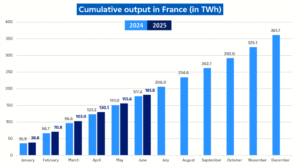
France occasionally sells extra power at negative prices. Sometimes, it even pays for nearby countries to take this power, leading to losses of hundreds of millions. Bitcoin mining offers a way to monetize this surplus and ease grid stress.
Mining rigs can quickly adjust their load, providing a flexible buffer that stabilizes grid operations. This strategy supports wider energy transition goals. It helps manage inflexible nuclear output more effectively.
Political 180: From Crypto Ban to Bitcoin Boost
This move marks a dramatic shift in RN’s stance on crypto. In 2016, Marine Le Pen condemned cryptocurrencies as elitist tools and pledged to ban them. By 2022, she softened her position to support regulation. In 2025, she supports Bitcoin mining as a smart economic tool. This shows a wider trend of political practicality.
However, not all RN lawmakers agree. Jean-Philippe Tanguy, the party’s finance chief, argues that Bitcoin undermines centralized monetary control.
Meanwhile, the left and green parties oppose the plan due to its environmental impact, pointing to Bitcoin’s intensive energy use. Approval will require navigating internal party splits and environmental scrutiny.
Potential Benefits and Concerns
Supporters of the proposal see several clear advantages. First, surplus nuclear power can generate revenue. Estimates show it could bring in $100–150 million each year for every 1 GW of excess output.
Second, bitcoin mining facilities can be a flexible load for the grid. They absorb extra electricity when demand is low. Then, they can power down fast when demand rises. This helps stabilize the system.
Third, the heat generated by mining rigs could be captured and reused to warm buildings or support greenhouse agriculture. This improves overall energy efficiency.
However, critics raise valid concerns:
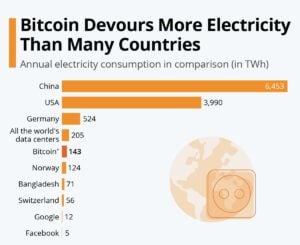
- Environmental impact: Despite cleaner power, increased Bitcoin mining still uses heavy energy. The chart above shows that Bitcoin alone utilizes more power than most countries.
- Regulatory challenges: The proposal needs strong legal and policy backing—June’s similar amendment failed on procedural grounds.
- Public perception: Tying climate-smart infrastructure to crypto may provoke resistance.
INTERESTING READ: The Energy Debate: How Bitcoin Mining, Blockchain, and Cryptocurrency Shape Our Carbon Future
Global Trends: Nuclear Meets Bitcoin Mining
This move in France aligns with growing interest worldwide in matching crypto mining with low-carbon energy. Here are some major facts to know:
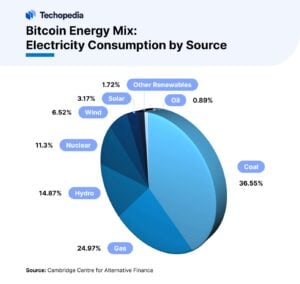
- Clean Energy Uptake: More than 52% of global Bitcoin mining now runs on sustainable energy. Of this, about 11% comes from nuclear sources.
- Fuel Mix Shifts: Coal and gas once dominated Bitcoin’s electricity supply. But the share of nuclear has roughly doubled from 4% in 2021 to over 11%.
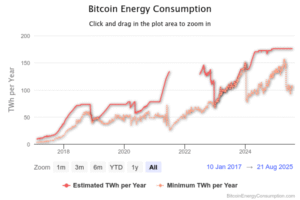
- Energy Use Scale: Bitcoin mining is energy-intensive—estimated at 176–180 terawatt-hours (TWh) annually, on par with national consumption by countries like Poland or Egypt.
- Hashrate Surge: The Bitcoin network’s computing power, or hashrate, continues to rise. As of May 2025, it exceeded 831 exahashes per second (EH/s), a 77% jump from its 2024 low.
- Adaptation to Costs: With mining profitability squeezed, miners seek cheap, stable energy like nuclear to stay competitive.
Analysts at ScottMadden argued that Bitcoin mining paired with nuclear energy offers a compelling value proposition—a clean energy use case that could diversify utility income. The business case has only grown stronger as Bitcoin prices rose from about $9,275 in 2020 to over $47,000 by 2021.
France isn’t alone in exploring this pairing. Studies suggest that Bitcoin mining might use extra power wisely. This could cut waste and help the grid stay flexible. For example, South Korean researchers found surplus electricity could be a new revenue stream for the power utility while stabilizing the grid.
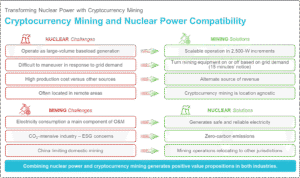
Moreover, academic models propose a zero-emissions energy system. This system combines nuclear power with crypto-mining. In this setup, mining serves as a flexible load that helps balance demand. Also, many devices around the world already rely on constant nuclear power.
The Road Ahead: Regulation, Revenue, and Resistance
If the pilot moves forward, EDF and lawmakers would need to finalize guidelines, site mining hubs near existing infrastructure, and ensure regulatory oversight. A six-month feasibility review by the French Council of State is planned, followed by expansion if the pilot succeeds.
When that happens, France could become the first EU nation to legally integrate Bitcoin mining into its energy roadmap. It could turn an economic burden—unused power—into a revenue stream while mitigating grid stress. This would spark debate across Europe—might other nuclear-rich countries follow suit?
From a crypto standpoint, the move elevates mining from underground activity to a strategic industrial asset, redefining its role in the energy economy.
However, the plan still faces political, environmental, and technical hurdles. Yet, as the proposal gains traction, it may shape how nations view the intersection of crypto, energy policymaking, and sustainability.
The post France Eyes Bitcoin Mining Powered by Surplus Nuclear Energy appeared first on Carbon Credits.

EU carbon credit claims changed on 27 September 2026, the day the Directive (EU) 2024/825 began to apply across the European Union. The change is narrow. It changes how a company can talk about the credits it buys. A product can no longer be called neutral on the strength of compensation alone; however, every specific, evidenced statement about what a company measured, reduced, and funded stays fully available.

The post Promoting Improved Cooking Practices in Nigeria appeared first on Terrapass.


-
Climate Change1 year ago
Guest post: Why China is still building new coal – and when it might stop
-

 Greenhouse Gases2 years ago
嘉宾来稿:满足中国增长的用电需求 光伏加储能“比新建煤电更实惠”
-
Greenhouse Gases1 year ago
Guest post: Why China is still building new coal – and when it might stop
-

 Climate Change2 years ago
嘉宾来稿:满足中国增长的用电需求 光伏加储能“比新建煤电更实惠”
-

 Renewable Energy12 months ago
Sending Progressive Philanthropist George Soros to Prison?
-
Climate Change2 years ago
Bill Discounting Climate Change in Florida’s Energy Policy Awaits DeSantis’ Approval
-
Greenhouse Gases1 year ago
嘉宾来稿:探究火山喷发如何影响气候预测
-

 Climate Change2 years ago
Analysis: China’s CO2 falls 1% in Q2 2024 in first quarterly drop since Covid-19