

Daniel Duma is a research fellow and Miquel Muñoz Cabré is a senior scientist at the Stockholm Environment Institute (SEI).
Large-scale renewable energy is an unlikely success story in sub-Saharan Africa.
As our new work shows, between 2013 and 2023, the installed capacity in wind and solar photovoltaic (PV) energy in the region increased by a factor of 16. And that excludes South Africa, which has installed capacity in wind and solar PV energy of approximately 9,000 MW – higher than all the rest of the sub-Saharan region combined.
This is a remarkable feat. From almost zero in 2010, to around 200 MW in 2013 and then 3,500 MW in 2023, with additional capacity under construction in 2025, utility-scale projects are being developed, financed, built and connected to the grid in nearly all sub-Saharan African countries. This has happened despite major challenges, including conflict, political turmoil, the COVID-19 pandemic, ballooning inflation and public debt.
Total variable renewable energy in sub-Saharan Africa in MW (excluding South Africa)
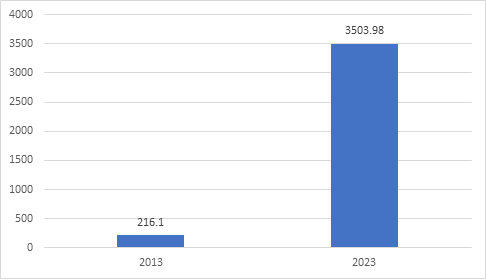
Efforts thus far have not accomplished enough, with too many people and economies still lacking access to electricity. But this does not make the achievements any less significant, especially when we consider how difficult it is to finance even one moderately sized project in countries where the energy system as a whole is not financially viable for investments. The fact that progress continues despite this monumental barrier is impressive.
What are the secrets that underpin this accomplishment?
Investment despite struggling utilities
The achievements at the utility scale are the result of sustained efforts of various actors in dealing with risks. This work entails offering investors an acceptable level of comfort that they will recover their investment with a decent return on the capital they commit. With most countries in the region affected by high levels of sovereign debt, depreciating currencies, and the poor financial health of public utilities (the buyers of energy from such projects), this is no simple task.
Investors, private or quasi-private (multilateral development banks and development finance institutions) deploy capital into project structures that depend on revenues from utilities that are known to face difficulties in meeting their payment obligations. While many such utilities are undergoing corporate turnaround processes, it will take time for them to improve their financial status. In the meantime, despite these fundamental challenges, projects continued to be developed, financed and built.
Trial and error has been making these achievements possible. Among them: using viable businesses as anchors for additional investments; adopting leasing models; employing a wide variety of risk-mitigation and transfer instruments; and creating programs that offer guarantees and insurance options with different features and implications.
Fossil fuel nations to see value of their economies shrink under new UN-agreed measure
All this trial and error generated significant results: In Malawi, the Salima and Golomoti solar PV plus storage projects added approximately 20% (80 MW) to the country’s total installed capacity at the time. In Mozambique, a country recovering from civil war, the challenging Mocuba PV project created a demonstration effect and led to subsequent progress, including an EU-backed competitive selection program for additional capacity.
In Cameroon, a new solar plus storage leasing model expanded capacity by 30 MW and replaced the use of diesel generators. In Kenya, the Turkana wind project is the largest private investment in the country’s history. In Senegal, Uganda and Zambia, large PV projects were procured through competitive selection, and they have achieved record low prices. In Ghana, Burkina Faso, Togo, and Namibia large solar PV plants have also recently been commissioned.
All these cost-competitive, utility-scale projects add to the available capacity of these countries’ grids. They are powering cities and businesses and contributing to economic growth – without generating additional greenhouse gas emissions.
Small-scale power systems
It is true that the continent has yet to attract the “billions to trillions”, the flood of private financial investment that public financial investment hoped to unleash. We see that, at a rough installed cost of $1 per watt, the progress since 2013 across sub-Saharan Africa would amount to an investment of around $350 million a year, a figure that would be insignificant in any of the climate finance costing exercises.
But these exercises tend to forget the scale of power systems in sub-Saharan Africa. For illustration, in 2023, the power consumption in the region, excluding South Africa, was around 250 TWh (terrawatt hours) for a population of more than 1 billion people. That is roughly equal to the power consumption of Sweden and Norway, with a combined population of around 15 million people.
Electricity demand surges, expanding renewables and fossil fuels in 2024
The pursuit of progress requires thinking about contexts and scales. Small power systems cannot absorb enormous levels of investment overnight. It takes time to integrate hundreds of additional megawatts in capacity, and to pay back the high upfront investments that are needed.
This is a time to persevere – not to back off. This remarkable progress can continue only if trial and error and innovation continue. Local and international companies and governments must carry on working together to learn more and do better.
This comment piece is based on work with the Finance for Sustainable Development Program and a new SEI policy brief, “Insights for development interventions in the clean energy sector, with a focus on sub-Saharan Africa”.
The post Finance for renewable energy in sub-Saharan Africa is defying the odds appeared first on Climate Home News.
Finance for renewable energy in sub-Saharan Africa is defying the odds

The industry group pays politicians to convince voters that natural gas is the “most affordable and reliable energy source.”
PHILADELPHIA—Sitting on a dais at the private Fitler Club for what was billed as a discussion about “the Path to a Clean Energy Future,” former Philadelphia Mayor Michael Nutter played to his audience.
Lawmakers failed to bring back formal public hearings in electric rate cases and constrained state environmental regulators. But citizen opposition helped kill a move to end PSC elections.
MONTGOMERY, Ala.—Despite setbacks and some significant legislative defeats, Alabama environmentalists’ biggest takeaway from the 2026 legislative session is that growing citizen opposition to weak regulation and high energy prices has put real pressure on elected officials and begun to change the political landscape, slowly but surely.
As the Alabama Legislature Adjourns, Environmentalists See a Silver Lining
Climate Change
After a Slow Start on Climate, Zohran Mamdani Faces Scrutiny Over Parks Budget and Environmental Promises
Climate-conscious New Yorkers hope the mayor hasn’t forgotten them.
During his New York City mayoral campaign, Zohran Mamdani courted votes from environmentalists. He promised to expand green spaces in public schools and equip them with renewable energy, to meet the demands of the city’s building electrification laws and to increase investments in city parks.


-
Climate Change8 months ago
Guest post: Why China is still building new coal – and when it might stop
-
Greenhouse Gases8 months ago
Guest post: Why China is still building new coal – and when it might stop
-

 Greenhouse Gases2 years ago
嘉宾来稿:满足中国增长的用电需求 光伏加储能“比新建煤电更实惠”
-
Climate Change2 years ago
Bill Discounting Climate Change in Florida’s Energy Policy Awaits DeSantis’ Approval
-

 Climate Change2 years ago
嘉宾来稿:满足中国增长的用电需求 光伏加储能“比新建煤电更实惠”
-
Climate Change Videos2 years ago
The toxic gas flares fuelling Nigeria’s climate change – BBC News
-

 Renewable Energy6 months ago
Sending Progressive Philanthropist George Soros to Prison?
-

 Carbon Footprint2 years ago
US SEC’s Climate Disclosure Rules Spur Renewed Interest in Carbon Credits