

For tech entrepreneur Elon Musk, the answer to the rocketing energy needs of artificial intelligence (AI) data centres is to launch them into space, where they could tap limitless energy from the sun. But until that happens, the places on Earth where these number-crunching mega-hubs are located face big spikes in electricity demand to run them.
In the US, this has sparked fears of higher energy prices for consumers. To allay those concerns, President Donald Trump will reportedly convene big tech firms this week to sign a pledge to provide or pay for the extra energy supplies they will need as their AI data centres expand.
According to the International Energy Agency (IEA), data centres accounted for 1.5% of electricity demand worldwide in 2024 – a share set to rise to about 3% by 2030. Overall, data centre demand is expected to more than double to about 945 terawatt-hours (TWh) by then, which is slightly above the electricity consumption of Japan today.
AI data centres, where AI models are trained and deployed, put far more strain on power supplies than traditional data centres, which each use between 10 and 25 megawatts (MW). In comparison, demand from a “hyperscale” AI centre can exceed 100 MW at any given time, which if running at full capacity could consume as much electricity in a year as 100,000 households.
Data-centre electricity consumption in household electricity consumption equivalents (million households), 2024

We look at where this power might come from and whether, as some warn, AI is going to blow the world’s efforts to transition away from fossil fuels out of the water.
Why does AI need so much electricity?
AI data centres differ in how they use electric power. In a conventional data centre, data requests from businesses, individuals and other users come in a randomised way, translating into a steady load level on the servers, with relatively little fluctuation in demand.
But in an AI data centre, processors need to go through training or learning periods, using so-called “graphical processing units”. These are synchronised, being started up and switched off at the same time. This translates into “power bursts”, which last just a few seconds, but happen very frequently and concurrently, according to Gerhard Salge, chief technology officer at Hitachi Energy.
“That is a different challenge than just providing the power and the energy for the conventional data centres,” he told journalists at the International Renewable Energy Agency assembly in Abu Dhabi earlier this year.
Here, officials and business executives discussed how to meet those demand peaks, noting they cannot be dealt with just by installing huge batteries as those would wear out quickly.
Martin Pibworth, chief executive of SSE, a Scotland-based energy firm, said AI-led demand will put pressure on the power system, but “the problem we all have is no one really knows the pace and trajectory of that demand lift”. In the UK, the government’s Clean Power Plan will be needed to make sure electricity operators can meet demand from AI and other data centres as more come online, he added.
-
UN adopts first-ever resolution on AI and environment, but omits lifecycle
The UN Environment Assembly in Nairobi gavelled the resolution on artificial intelligence and environment, but removed mentions to AI’s water and power use -
Power-hungry AI data centres seen driving demand for fossil fuels
Big Tech’s data centres are expected to use twice as much electricity by the end of the decade – mainly due to the global AI boom, the International Energy Agency says -
AI and satellite data help researchers map world’s transition minerals rush
Filling “mind-boggling” gaps in mining data will make it easier to track the environmental impact of surging global appetite for critical minerals, experts say


In the US, meanwhile, the Trump administration is eager to ensure that communities that are home to data centres, as well as the wider public, do not turn against the industry due to its perceived unfairly high use of energy and water.
Ahead of a meeting scheduled on March 4, where US tech titans are due to sign a pledge on powering their own data centres, White House spokesperson Taylor Rogers told CNBC: “Under this bold initiative, these massive companies will build, bring, or buy their own power supply for new AI data centres, ensuring that Americans’ electricity bills will not increase as demand grows.”
Will electricity for data centres and AI come from clean or dirty sources of energy?
The answer to this question is key to how countries tackle climate change, as it will affect their energy mix, how electricity is produced and distributed, and therefore the trajectory of their greenhouse gas emissions. Decisions made by governments and businesses will shape how the AI industry powers the technology on which it relies.
Under pro-fossil fuel Trump, the US has walked away from policy support for clean energy, meaning data centre operators can choose their energy sources freely. In January, data from Global Energy Monitor (GEM) showed the US now has the most gas-fired power capacity in development, surpassing China and accounting for nearly a quarter of the world’s total.
More than one-third of this capacity is set to directly power data centres on-site, in hotspots like Texas, and many more grid-connected gas-fired projects are planned to meet an expected increase in energy demand from AI, GEM said.
On the other hand, some tech companies – especially multinationals – have set goals to cut their emissions to net zero, and so are choosing to power their data centres with renewables, including in the US.
For example, French energy giant TotalEnergies recently signed two long-term Power Purchase Agreements (PPA) to deliver 1 gigawatt (GW) of solar capacity for Google’s data centres in Texas. This followed two other PPAs with Google for 1.2 GW secured by Clearway, a California-based renewables company 50%-owned by TotalEnergies.
Sources of global electricity generation for data centres – base case, 2020-2035


Some countries are also moving to ensure the power needed for AI and the data centre industry is produced using clean energy.
In Ireland, an effective ban on new data centre connections was lifted in December, provided at least 80% of the centres’ annual energy demand is met by new renewable electricity sources. The government also plans to build Green Energy Parks, where data centres can be located alongside renewables plants to avoid straining the national grid.
Salge of Hitachi Energy said that with big investors wanting to drive investment in AI data-crunching so fast, “there is no other power generation technology than variable renewables which you can build in such a timeline” of two to three years. “Anything else will be in the 2030s and later,” he added.
Some governments – such as Sweden’s centre-right coalition – have proposed nuclear as a clean energy solution for AI data centres, saying they could fuel a “renaissance”. But building nuclear power plants requires massive investment and long timelines, while new small-scale modular reactors are not yet commercially available.
How are power systems and regulators coping so far?
In a February report forecasting electricity demand out to 2030, the IEA said AI and data centres are contributing to generation growth in advanced economies, which is now accelerating again after 15 years of stagnation. However, it flagged bottlenecks in connecting new data centres, because grids are not being built or improved fast enough to keep up with rising power demand, forcing big customers to wait.
The report noted that at least 150 GW of queued data centre projects are estimated to be in the advanced stages, while one-fifth of the global data centre build-out is at risk of delay due to grid congestion.
Comment: Using energy-hungry AI to detect climate tipping points is a paradox
Planning, permitting and completing new grid infrastructure can take five to 15 years, whereas data centres need one to three years. Prices for key grid components have also nearly doubled over the past five years, the IEA noted.
The European Commission, meanwhile, aims to support those operators that can save on energy use. It plans to adopt a “Data Centre Energy Efficiency Package” in April that will contain an assessment of data submitted under a reporting scheme, introduce a rating scheme for data centres in the EU, and start work on minimum performance standards.
Can AI help to resolve the issue?
Experts say it’s important to look at both sides of the coin, pointing to ways in which AI can contribute to more effective power grid management and integration of renewables into national power supplies.
According to new analysis by energy think-tank Ember, AI applications such as short-term renewables forecasting, predictive maintenance, and real-time monitoring and adjustment of transmission line capacity can deliver operational improvements in power systems.
It estimates that AI could enable Southeast Asian nations, for example, to reduce their power sector costs by $45 billion-$67 billion through to 2035, depending on how much renewable energy they deploy. Potential AI-driven efficiency gains could cut emissions by 290 million to 386 million tonnes of CO2 over the next decade in ASEAN countries, it adds.
“While power-hungry AI might initially stress the power systems, with various powerful applications it has the potential to significantly accelerate the energy transition and offset consumed energy rapidly,” Ember data analyst Lam Pham said in a statement.
The post Explainer: Will AI data centres make or break the energy transition? appeared first on Climate Home News.
Explainer: Will AI data centres make or break the energy transition?

Climate Change
After a week of plenty of activity and drama for Greenpeace at sea, I felt like writing to you on a much quieter theme…
Do you have a favourite book, poem or story about the ocean?
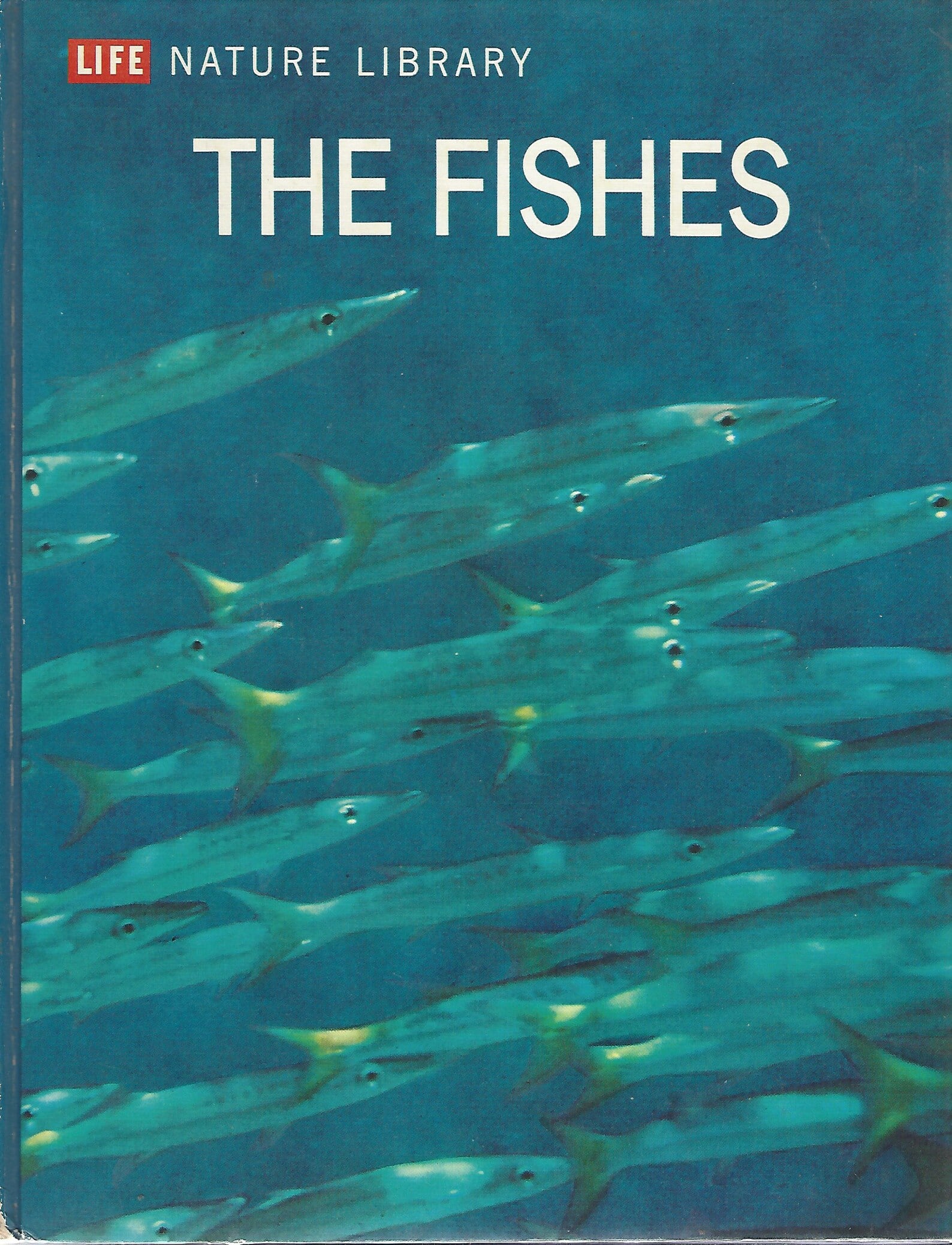
When I was very small, it was the TimeLife book of The Fishes, by F. D. Ommanney, which I remember endlessly poring over, my child’s mind gripped, in total fascination. The cover illustration showed a shoal of barracuda, mid-water and heading upwards, lit up as an iridescent blue by a column of sunlight. Oddly, it is only the cover and the illustrations of the deep sea creatures which I now remember—but I loved that book, as the weakened spine, blunted pages and dog-eared corners attested.
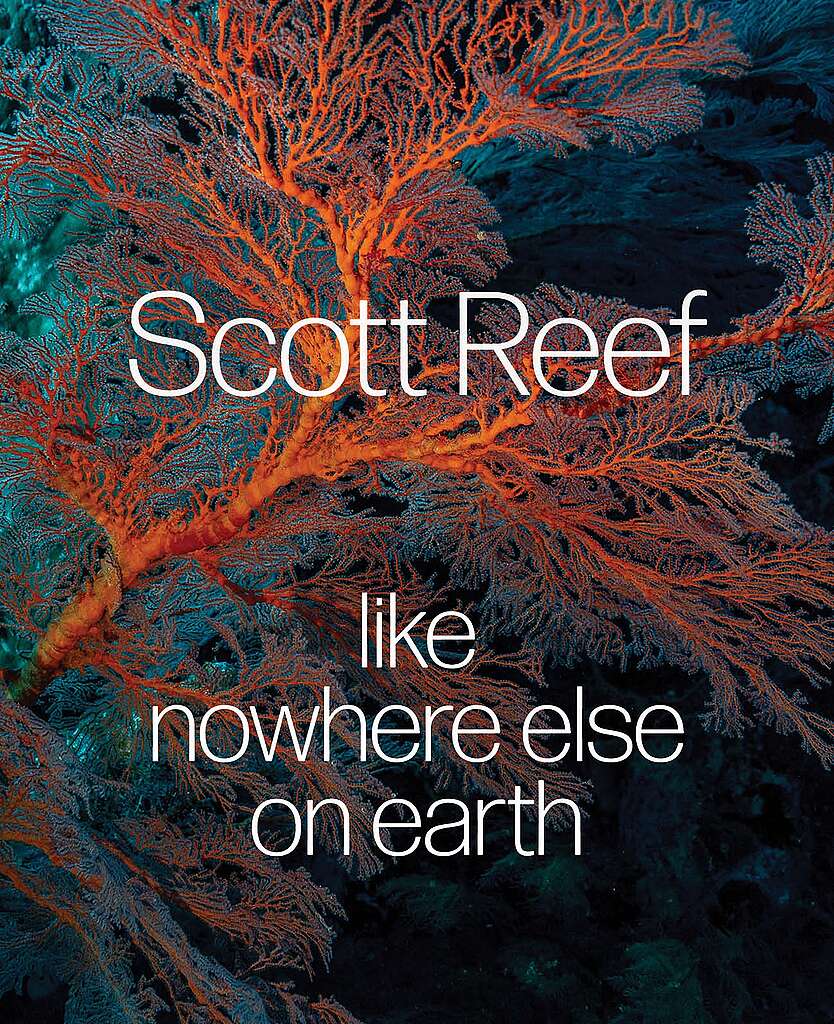
The Fishes has been on my mind recently, because I’ve been working with some dear friends on our own illustrated oceans book, to be published by Upswell Publishing. The book is called Scott Reef: Like Nowhere Else on Earth, and I want to share with you a bit of the story behind its creation.
Scott Reef is absolutely magnificent: Australia’s largest freestanding oceanic reef, brimming with life, including rare and threatened species such as a genetically distinct population of green sea turtles, pygmy blue whales and the wonderfully elegant dusky sea snake. But Scott Reef isn’t near our capital cities; it is way off the north-west coast of WA. And it is threatened with devastation by Woodside, which wants to drill up to 57 toxic wells at the Reef for its vast, dirty Browse gas project.
One of the main challenges in the fight to save Scott Reef from being turned into an industrialised gas zone by Woodside is bringing this incredible location to life for people who haven’t actually experienced it first hand. Because despite its ecological significance and dazzling beauty, ‘Scott Reef’ is also—at least not yet—exactly a household name.
To help get over this barrier, Greenpeace has enabled a number of photographers to travel to Scott Reef by boat (including the Rainbow Warrior) to document its astonishing diversity of colour and life. We then brought these images together in a remarkable photobook, produced by our talented in-house team, which we’ve been putting into the hands of as many leaders as possible—including the MPs whose decisions can determine the Reef’s future.
Back in June this year, I was sharing a copy of our in-house book at a business gathering in Perth when someone pulled me aside. Had we thought about publishing the book commercially? Apart from anything else, he wanted to buy a copy himself! He had a point. We were proud of what we’d created, but a commercially published version could reach a much wider audience and have even greater campaign impact. I immediately turned to my dear friend, Terri-ann White, who runs Upswell Publishing in WA, for advice.
Terri-ann has a huge heart and terrific vision. So many wonderful things in WA owe their existence to her doings, and, true to form, she was immediately encouraging and enthusiastic. “But,” she said, “it would add a whole new dimension if we had some words to accompany the incredible pictures.”
Fair enough, I thought. I could ask a few authors.
“And when would you like it published?” she asked.
“Ideally November,” I answered sheepishly.
Now, in publishing terms, nobody goes from idea to finished work, beautifully produced by a commercial publisher, in just four months. It. Just. Doesn’t. Happen. A book of this scale would ordinarily take nine months, I was told. But Terri-ann was undeterred. “If you can get a rapid turnaround on the writing, I will give it a shot.”
Over the following few days, I sent out 24 emails to prospective writers. To my joy and surprise 23 of them responded almost immediately with an enthusiastic yes!
Terri-ann was somewhat alarmed and perplexed when I told her the good news… we’d discussed a few authors, not more than twenty! “Impossible,” she texted. “Editing is important and you are talking about thousands of words!” But I also know Terri-ann. She does the impossible. And so, here we are… Terri-ann is going to hit that improbable deadline. Scott Reef: Like Nowhere Else on Earth will be on shelves in November.
The contributors are a wonderfully diverse bunch, united by their enthusiasm for Scott Reef — and their extraordinary speed!
It’s a brilliant mix. The book brings together national icons like Peter Garrett, Tim Winton, Mick Dodson, Janet Holmes à Court and Fiona Stanley; the intellectual heft of professors Frank Bongiorno, Jessica Meeuwig, Rick Steiner and Samantha Hepburn; the poetic vision of Prema Arasu, Berndt Sellheim and Saadiah Freeman; the field expertise and passionate first hand witnessing of Imogen Zethoven, Tooni Mahto, Ben Fitzpatrick, Geoff Bice, Olaf Meynecke, Paul Gamblin, Sarah Gittoes and Hayley Baillie; and the determination of emerging activist voices Jackson Reid and Emma Sangalli.
Their elegant words wrap themselves around the sheer wonder of the underwater world, brought to life by the work of the photographers — of whom one, Wendy Mitchell, has also contributed a wonderful essay.
Terri-ann showed me the full physical proofs this week and they are breathtaking. This book contains some of my absolute favourite images of wildlife beneath the waves -– and believe me, after almost 20 years at Greenpeace, I’ve been privileged enough to see some remarkable shots! The essays bring a whole new depth and richness to the story of Scott Reef.
If I am being honest, and maybe a bit sentimental, I hope that a four or five-year-old child somewhere in Australia will spend part of their summer holidays turning the pages of this book, wide-eyed with curiosity and awe at the beauty and strangeness of the creatures that call our oceans home.
Our shared commitment is to make sure that, as those children grow up, the wonders of Scott Reef will exist not just in the pages of the book, but out there in the wild waters off north-western Australia—alive, thriving, and every bit as extraordinary as they are today; a living wonder beneath the waves.
Pre-orders of Scott Reef: Like Nowhere Else on Earth are available here.


Q & A
Sometimes you get asked a question so often that you decide to produce a report to answer it!
We know there is strong public opposition to voter opposition to gas drilling at Scott Reef and fracking in the Kimberley in Western Australia. But I am frequently asked whether, even if people don’t want it, more gas drilling is a necessary evil to sustain WA’s prosperity?
The short answer is an unequivocal ‘No’. The longer answer is our new report, From Gas to Green: Building Western Australia’s Future State, which makes the comprehensive case that Asia’s gas market is declining — while WA has an enormous untapped opportunity to become a global leader in green industries and exports, helping drive the region’s shift away from fossil fuels. The faster that WA embarks on a decisive shift away from gas—and that includes no fracking in the Kimberley, or drilling at Scott Reef — so much the better for the state’s people, ecology and economy.